These Native Texas Plants Do More Than Crape Myrtle Ever Could
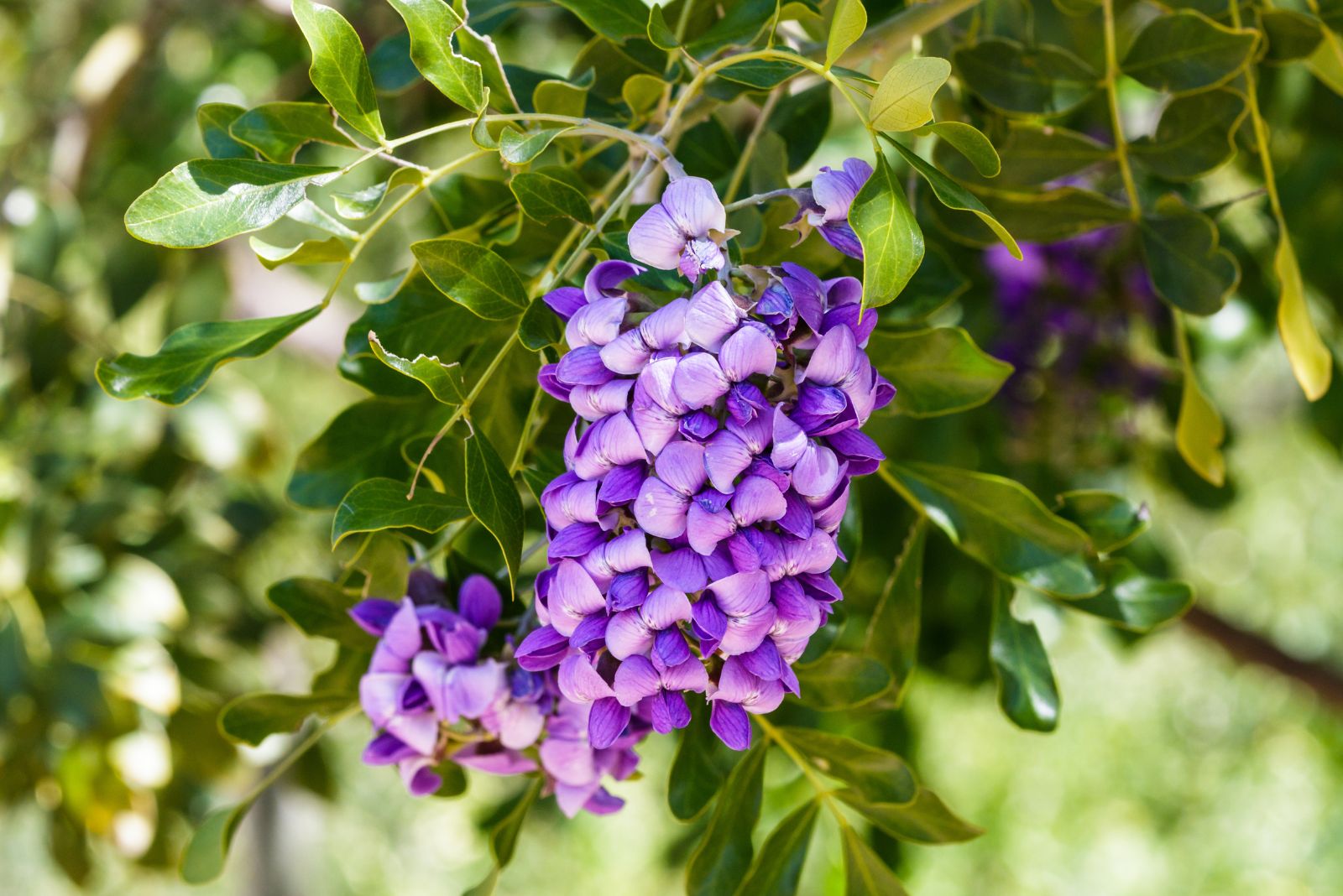
Crape myrtle gets a lot of attention in Texas, and it is easy to see why. It blooms for months, adds color fast, and shows up in neighborhoods all over the state.
But once you look beyond that familiar favorite, it becomes pretty clear that other plants bring a lot more to the table.
Some offer better support for pollinators, some handle local conditions with less fuss, and some bring a richer, more natural look that fits Texas landscapes far better. That matters if you want a yard that does more than just look nice from the street.
Native plants have a way of earning their keep. They are built for Texas heat, soil, and weather swings, which often makes them easier to grow and more useful in the long run.
Many provide food and shelter for birds, bees, and butterflies while still adding color, texture, and seasonal interest. If you are ready for plants that work harder and give back more, these Texas natives deserve a serious look.
1. Desert Willow (Chilopsis Linearis)
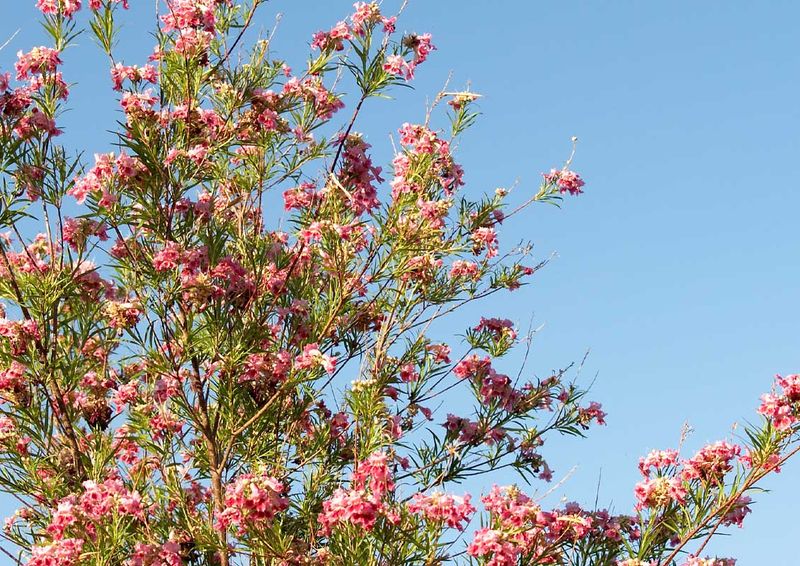
Picture a tree that laughs at drought, shrugs off scorching Texas heat, and still manages to put on a flower show that stops people in their tracks. That is Desert Willow for you.
Found naturally across West Texas and into the Trans-Pecos region, this small tree or large shrub grows where most plants would struggle to survive. It thrives in dry, rocky, or sandy soils and needs very little water once it gets established.
The flowers are the real showstopper. They are large, trumpet-shaped, and come in shades of pink, lavender, and white with deep purple streaks inside.
Hummingbirds absolutely love them. Bees and butterflies flock to them too, making this tree one of the best pollinator plants you can add to a Texas yard. Crape myrtle simply cannot compete when it comes to supporting local wildlife.
Desert Willow grows fast and can reach 15 to 25 feet tall, giving you real shade and structure in a hot, dry garden. It blooms from late spring all the way through fall, which is a much longer season than crape myrtle offers.
The long, narrow leaves give it a graceful, airy look that fits right into a natural Texas landscape.
If water conservation matters to you, and in Texas it really should, Desert Willow is a smarter and more beautiful choice than crape myrtle for sunny, dry spots in your yard.
2. Cenizo / Texas Sage (Leucophyllum Frutescens)
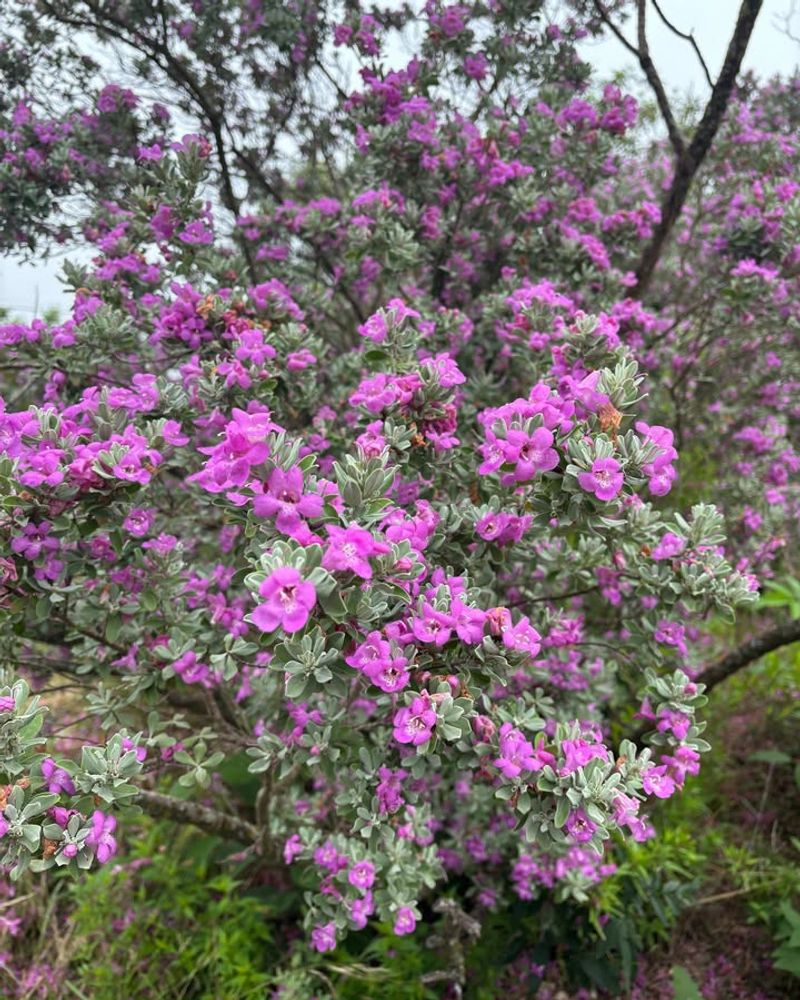
Walk through the Hill Country or South Texas after a summer rainstorm and you will likely spot a soft purple glow along the roadsides. That is Cenizo, also called Texas Sage, bursting into bloom right after moisture hits the air.
This plant is so in tune with Texas weather that old-timers used it to predict rain. When Cenizo blooms, a storm is usually on the way, which is why many locals call it the barometer bush.
Cenizo is evergreen across most of Texas, which means it gives your yard structure and color all year long. The silvery-gray leaves are beautiful on their own, and when the purple flowers pop, the contrast is stunning.
Your Texas Garden Changes Every Week. Your Plan Should Too.
Gardening in Texas changes quickly throughout the season. Every Friday you’ll receive a simple weekly plan showing exactly what to plant, prune, fertilize, harvest, and protect so you never miss the right timing.
It handles brutal sun, reflected heat from sidewalks and walls, and poor, rocky soils without complaint. Crape myrtle needs much more water and care to stay healthy, while Cenizo just keeps going.
For anyone building a low-water landscape in Texas, Cenizo is one of the best choices you can make. It grows 4 to 8 feet tall and wide, making it useful as a hedge, a screen, or a standalone specimen plant.
Birds and pollinators visit the flowers regularly, adding real ecological value to your yard. It also requires almost no pruning or fertilizing, which saves time and money.
If you want a tough, beautiful, and truly Texan plant that outperforms crape myrtle in almost every category, Cenizo belongs in your landscape plan.
3. Texas Mountain Laurel (Dermatophyllum Secundiflorum)
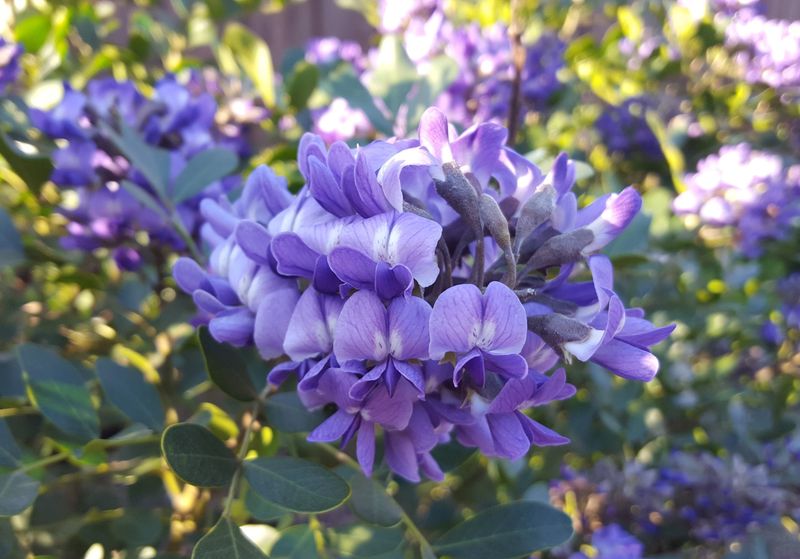
Every spring in the Texas Hill Country, something magical happens. A sweet, grape-like scent drifts through the air, and if you follow it, you will find Texas Mountain Laurel in full bloom.
The fragrance is so strong and so delightful that people stop their cars just to breathe it in. No other native Texas plant delivers that kind of sensory experience, and crape myrtle certainly does not come close.
Texas Mountain Laurel is an evergreen tree or large shrub, meaning it looks good every single month of the year. The leaves are dark, glossy, and tough, standing up to heat, cold snaps, and drought without fuss.
It is perfectly adapted to the rocky limestone soils found across central and western Texas, where it grows naturally in canyons and on hillsides. Once established, it needs almost no irrigation, making it an ideal choice for water-conscious Texas gardeners.
The flower clusters are dense, drooping, and a rich shade of purple that is hard to match in the plant world. They bloom in late winter to early spring, often when not much else is flowering, which makes them even more valuable to early pollinators.
Bees go absolutely wild for them. After blooming, the plant produces bright red seeds inside woody pods that add another layer of visual interest.
Texas Mountain Laurel grows slowly, but the wait is completely worth it. For fragrance, year-round beauty, and a deep connection to the Texas landscape, nothing beats it.
4. Turk’s Cap (Malvaviscus Arboreus Var. Drummondii)
Most Texas gardeners have a shady corner they do not know what to do with. Crape myrtle will not help you there since it needs full sun to perform well.
Turk’s Cap, on the other hand, was practically made for those tricky shaded spots. This cheerful native shrub thrives under trees, along north-facing fences, and in any part of the yard where the sun only visits for a few hours a day.
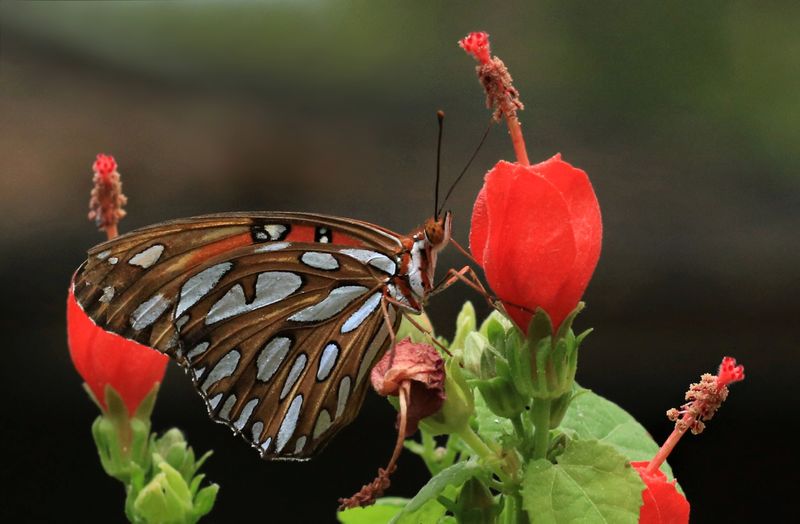
The flowers are one of a kind. They are bright red and never fully open, staying curled into a tight spiral that looks like a tiny red turban, which is exactly how the plant got its name.
Hummingbirds go absolutely crazy for these blooms because the shape is perfectly designed for their long beaks. Butterflies and bees are regular visitors too, making Turk’s Cap one of the most wildlife-friendly plants you can grow in a Texas shade garden.
What makes this plant even better is its incredibly long blooming season. It starts flowering in summer and keeps going all the way through fall, sometimes even into early winter in South Texas.
It can grow 3 to 9 feet tall depending on conditions and spreads out to fill a space naturally without needing much help from you. The large, soft leaves add a lush, tropical feel that looks nothing like the stiff branches of a crape myrtle.
If your yard has shade and you want color, wildlife, and low maintenance, Turk’s Cap is the answer.
5. Yaupon Holly (Ilex Vomitoria)
Yaupon Holly has one of the most unfortunate scientific names in the plant world, but do not let that fool you. This native Texas evergreen is one of the toughest, most versatile, and most wildlife-friendly shrubs you can grow in the state.
While crape myrtle drops its leaves in winter and leaves your yard looking bare, Yaupon Holly stays green and full all year long, giving you structure, privacy, and beauty in every season.
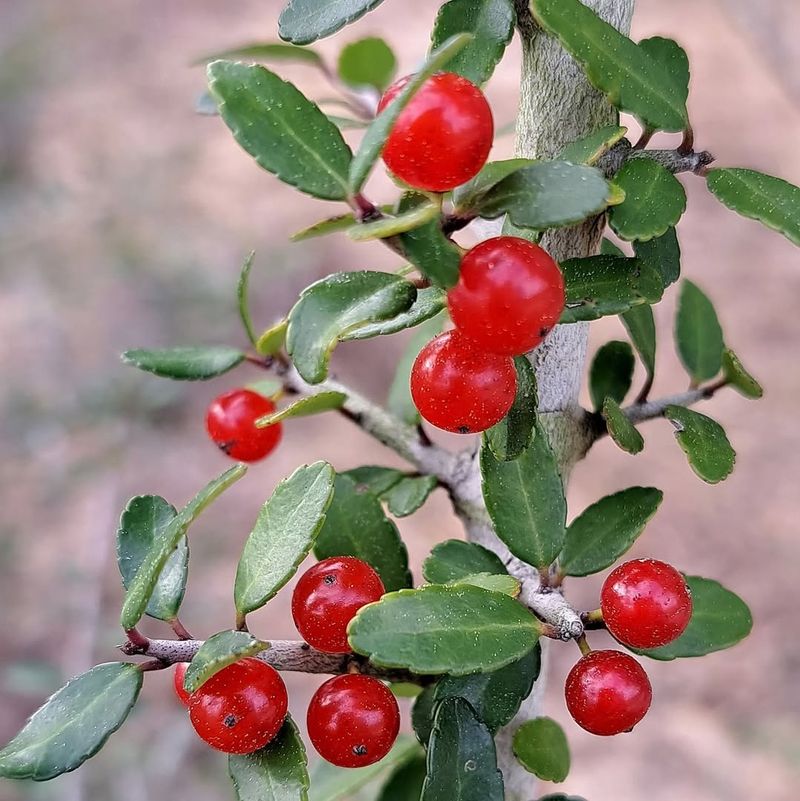
The berries are where Yaupon really shines over crape myrtle. Bright red clusters cover the female plants in fall and winter, and birds go absolutely wild for them.
Cedar waxwings, mockingbirds, robins, and many other Texas bird species rely on Yaupon berries as a critical food source during the colder months.
Crape myrtle offers no comparable food value for birds, which makes Yaupon a far stronger ecological choice for Texas landscapes.
Yaupon is also incredibly adaptable. It grows in sun or shade, wet or dry soil, coastal conditions or inland heat, and it handles the heavy clay soils found across much of Texas without complaint.
You can prune it into a formal hedge, a small tree, or let it grow naturally as a loose screen. It reaches 10 to 15 feet tall when left alone, but it responds well to shaping.
Nurseries now offer many cultivated varieties in different sizes, so there is a Yaupon Holly that fits almost any Texas yard. Few plants offer this much value with this little effort.
6. Flame Acanthus (Anisacanthus Quadrifidus Var. Wrightii)
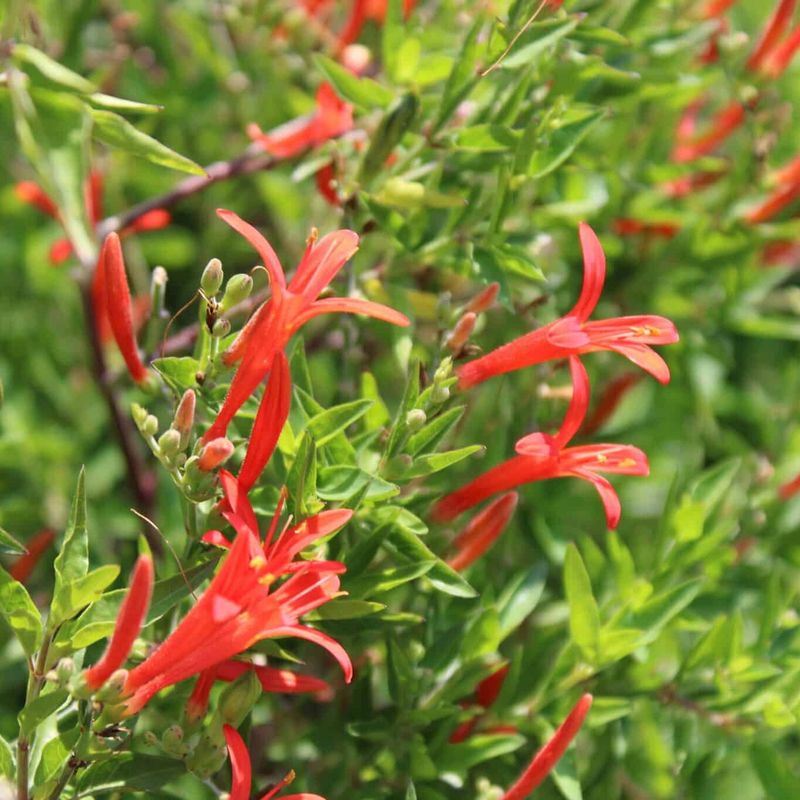
If hummingbirds had a favorite plant in all of Texas, Flame Acanthus would probably win the vote. This native shrub produces a nonstop supply of narrow, tubular flowers in blazing shades of orange and red that hummingbirds find completely irresistible.
From midsummer through fall, when many other plants are struggling in the Texas heat, Flame Acanthus is at its peak, feeding one of the most beloved backyard visitors in the state.
The plant itself is built for Texas conditions. It handles extreme heat, full sun, rocky or sandy soils, and long dry stretches without missing a beat.
Once established, it needs almost no supplemental watering, which is a huge advantage in a state where summer droughts are a regular reality.
The loose, natural growth habit gives it a wildflower-meadow feel that looks more at home in a Texas landscape than the stiff, manicured look of a crape myrtle ever does.
Flame Acanthus grows 3 to 5 feet tall and wide, making it a great mid-sized shrub for borders, slopes, or mixed native plantings. It goes dormant in winter and comes back strong each spring, often self-seeding gently to fill in nearby spaces over time.
Bees and butterflies also visit the flowers regularly alongside the hummingbirds, boosting the ecological value of your yard considerably.
For Texas gardeners who want a tough, colorful shrub that genuinely supports local wildlife without demanding much in return, Flame Acanthus is a plant you will never regret adding to your yard.
7. Buttonbush (Cephalanthus Occidentalis)
Not every yard in Texas is dry and rocky. Some properties have low spots where water collects after rain, soggy areas near creeks, or pond edges that stay moist for weeks at a time.
Crape myrtle struggles badly in those conditions, but Buttonbush was practically born for them. This native Texas shrub thrives in wet soils, making it one of the only truly ornamental plants that can handle standing water with ease.
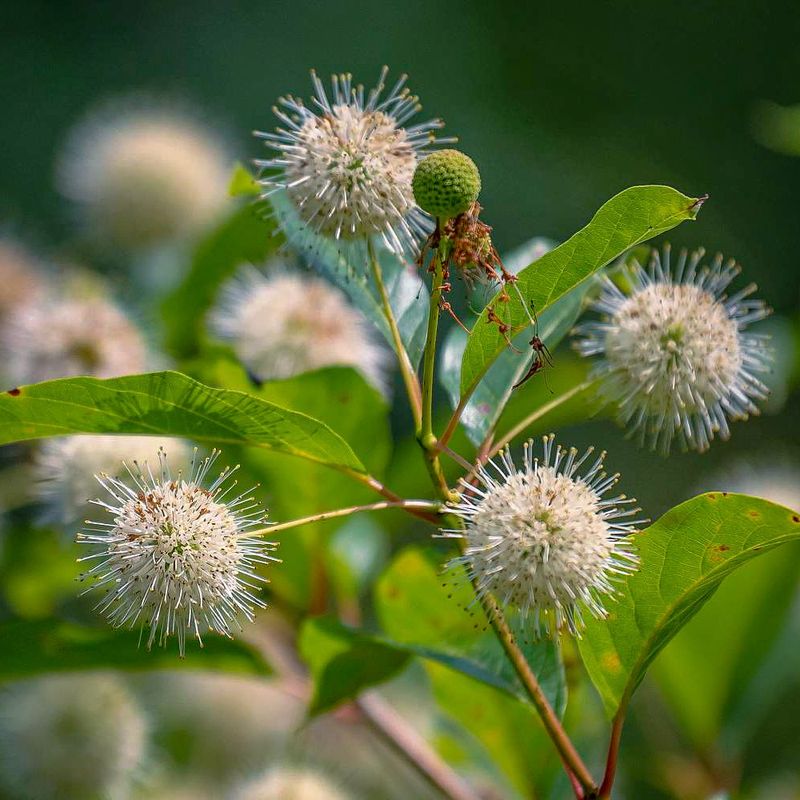
The flowers are unlike anything else in the Texas native plant world. They form perfect round clusters, about an inch across, that look like small white pincushions or golf balls covered in tiny blooms.
The effect is quirky, eye-catching, and completely unique. Pollinators go absolutely wild for them.
Bees, butterflies, and even hummingbirds visit Buttonbush flowers in large numbers, and the plant is considered one of the top nectar sources for native bees found across the eastern half of Texas.
After the flowers fade, round seed clusters form and persist through fall and winter, attracting ducks, wood ducks especially, and shorebirds that eat the seeds.
This makes Buttonbush an exceptional choice for anyone with a rain garden, a pond edge, or a drainage swale on their property.
It grows 6 to 12 feet tall and can spread into a multi-stemmed thicket that provides excellent wildlife cover.
For the wet corners of Texas yards that most plants cannot handle, Buttonbush offers beauty, ecological richness, and a genuinely unique look that no crape myrtle could ever deliver.