10 Flowering Plants That Create Privacy In Florida Gardens
A plain fence can block a view, but it rarely adds much personality to a Florida yard. Many homeowners are turning to flowering plants instead, looking for privacy that feels lush, colorful, and alive.
In a state with long growing seasons, strong sun, and steady warmth, it’s possible to build screens that do more than just separate spaces.
From tight neighborhoods in Tampa to larger South Florida lots, the right flowering plants can create layered privacy while adding seasonal color and texture.
With thoughtful choices, you can shape a garden that offers both coverage and visual interest without relying on a solid wall.
1. Hibiscus Brings Bold Tropical Color To Privacy Hedges
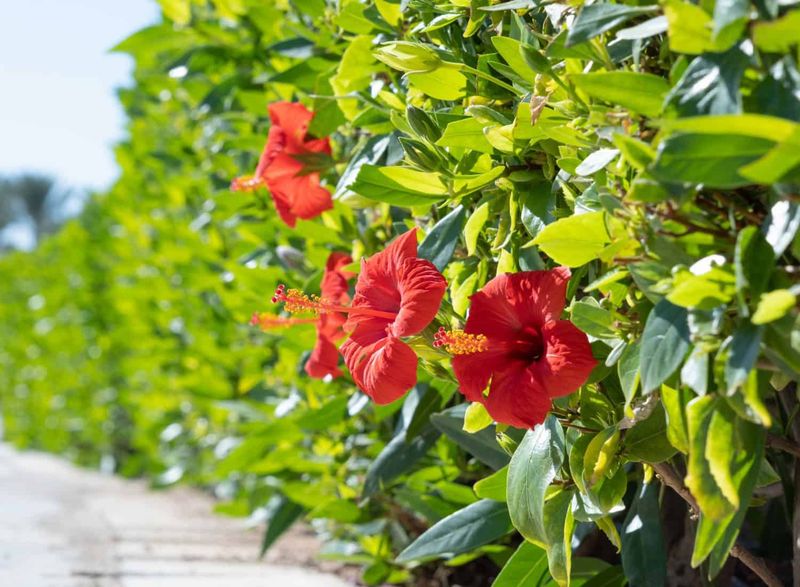
Few plants say “Florida” quite like hibiscus, and when planted in a row, these shrubs transform a plain yard boundary into a wall of color.
The tropical hibiscus (Hibiscus rosa-sinensis) is a fast-growing shrub that can reach 8 to 15 feet tall, making it a solid choice for a living privacy screen.
With the right spacing and occasional pruning, it fills in quickly to block sightlines between neighboring yards.
Planted about 3 to 5 feet apart, hibiscus forms a thick hedge that stays full from top to bottom. Florida’s warm temperatures support nearly year-round blooming, especially in South and Central Florida, where the growing season barely slows down.
The blooms come in shades of red, orange, pink, yellow, and white – sometimes all on the same property.
Hibiscus grows best in full sun with well-drained soil and regular watering during dry spells. Fertilizing every few weeks during the growing season keeps the foliage dense and the flowers coming in strong.
Light pruning after a flush of blooms encourages branching and helps maintain the hedge shape.
In North Florida, a light frost may slow growth temporarily, but most established plants bounce back without much trouble.
For homeowners who want bold tropical color alongside real privacy, hibiscus is one of Florida’s most rewarding flowering hedge plants.
2. Ixora Forms Dense Flowering Shrubs In Florida Heat
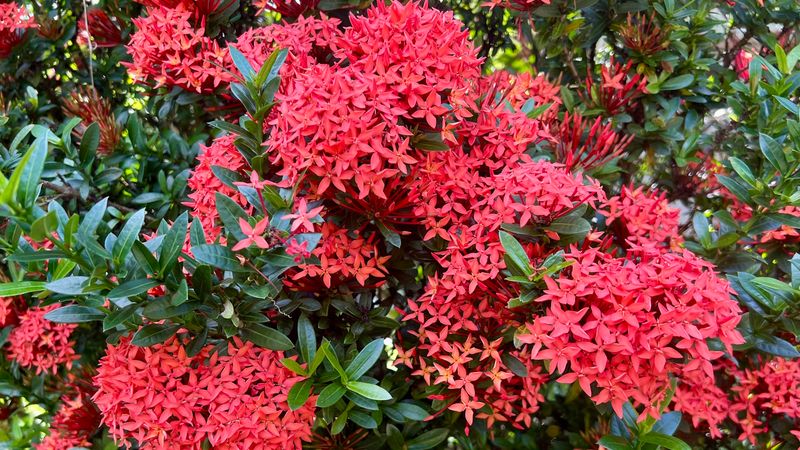
Walk through almost any South Florida neighborhood and you will spot ixora growing along fences, driveways, and property lines.
This compact, evergreen shrub is a staple of Florida landscaping for good reason – it handles the heat and humidity that would stress many other plants.
Ixora coccinea, the most common species, produces tight clusters of small flowers in shades of red, orange, yellow, and pink throughout the warmer months.
Ixora grows slowly to moderately, typically reaching 4 to 6 feet tall, though some varieties can push higher. Planted 2 to 3 feet apart, it forms a neat, dense screen that holds its shape well with minimal pruning.
The foliage is thick and glossy, giving the hedge a full, finished look even between bloom cycles.
One thing to keep in mind is that ixora strongly prefers acidic soil, which is common in many parts of Florida but may need amendment in areas with alkaline soil.
Using an acidic fertilizer formulated for ixora or gardenias helps maintain healthy growth and vibrant bloom color.
Your Florida Garden Changes Every Week. Your Plan Should Too.
Gardening in Florida changes quickly throughout the season. Every Friday you’ll receive a simple weekly plan showing exactly what to plant, prune, fertilize, harvest, and protect so you never miss the right timing.
It does best in full sun to partial shade and needs consistent moisture, especially during Florida’s dry season.
Cold temperatures below 35 degrees Fahrenheit can cause leaf damage, so ixora is best suited for Central and South Florida gardens where winters stay mild and the growing season stretches nearly all year.
3. Gardenia Adds Fragrant Blooms To Classic Hedges
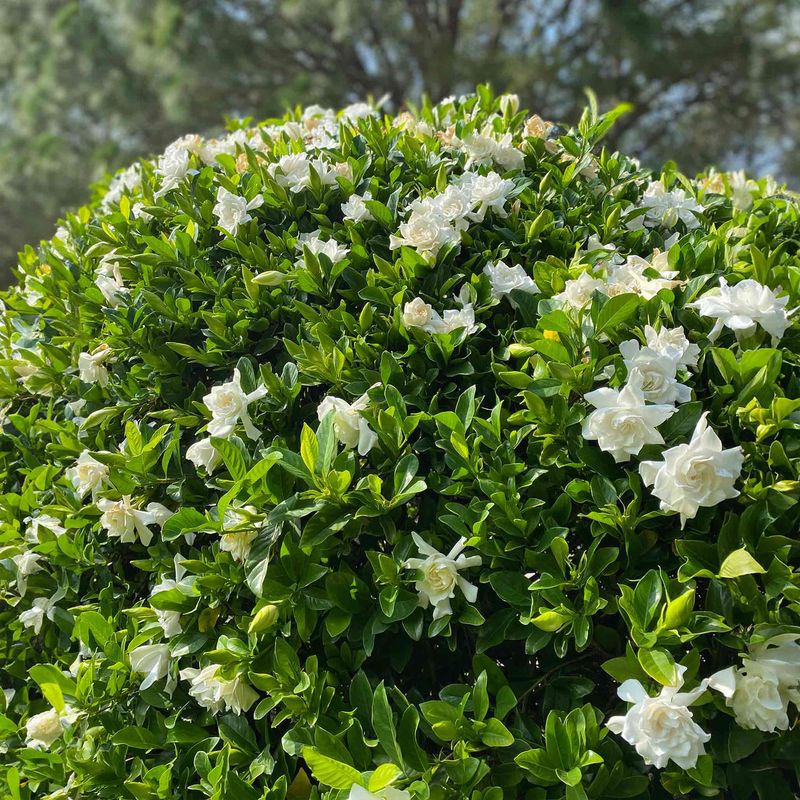
There is something deeply satisfying about stepping outside on a warm Florida morning and being met with the rich, sweet scent of gardenia in bloom.
Gardenia jasminoides has long been a favorite in Southern gardens, and its combination of fragrant white flowers and glossy evergreen leaves makes it one of the most elegant choices for a flowering privacy hedge.
The blooms typically appear in late spring and early summer, with occasional repeat flowering through fall in warmer Florida zones.
Gardenias grow at a moderate pace, usually reaching 4 to 6 feet tall, though some varieties like ‘August Beauty’ can stretch a bit taller with time. Spacing plants about 3 feet apart allows them to fill in and form a solid screen without crowding.
The dense, dark green foliage stays attractive year-round, providing privacy even when the plant is not actively blooming.
Like ixora, gardenias thrive in acidic, well-drained soil and benefit from fertilizers designed for acid-loving plants. They do best in partial sun to partial shade – too much direct afternoon sun in Florida’s intense summer heat can cause leaf scorch.
Regular watering during dry periods keeps the foliage healthy and supports consistent bloom production.
Gardenias are well suited to Central and North Florida gardens, where their fragrance can fill an entire yard during peak bloom season, creating both a visual and sensory barrier that no plain fence can match.
4. Oleander Builds Tall Flowering Privacy Screens
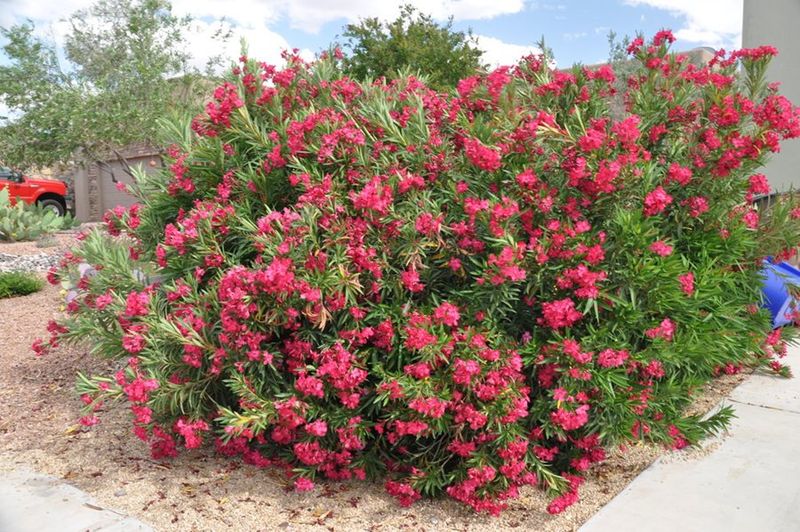
Oleander is one of the most reliable plants for building a tall, fast-growing privacy screen in Florida, and it has been used along highways, commercial properties, and residential lots across the state for decades.
Nerium oleander is an evergreen shrub that can grow anywhere from 6 to 20 feet tall depending on the variety, making it one of the most versatile height options for a flowering hedge.
The blooms appear in clusters at the branch tips and come in shades of pink, red, white, and yellow.
Growth is notably fast under Florida’s sunny conditions, which means a newly planted row of oleanders can begin providing meaningful privacy within a season or two.
Spacing plants 4 to 6 feet apart encourages the branches to knit together into a thick, wind-resistant screen.
Oleander also tolerates drought, salt spray, and poor soils – qualities that make it especially useful in coastal Florida landscapes where other plants may struggle.
Pruning oleander after flowering helps control height and encourages a denser canopy, which improves the screen effect over time.
It is worth noting that all parts of the oleander plant are toxic if ingested, so it may not be the right fit for homes with young children or pets that spend time in the garden.
For properties where that concern is not a factor, oleander remains one of Florida’s most dependable, low-maintenance options for tall flowering privacy screens.
5. Firebush Adds Bright Color And Wildlife Interest
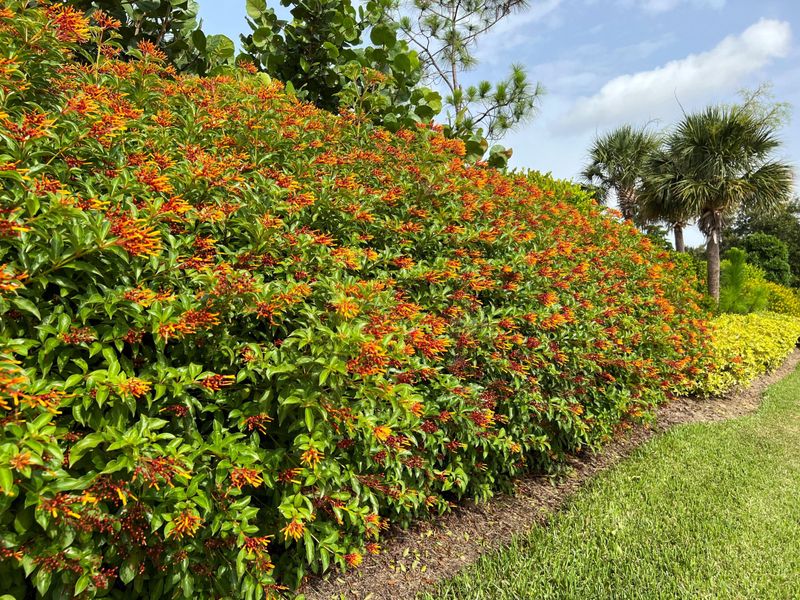
Hamelia patens, commonly called firebush, is one of those plants that earns its spot in a Florida garden many times over.
The clusters of tubular orange-red flowers bloom almost continuously from spring through fall, and the color intensifies during the cooler months when the foliage takes on red and orange tones.
Hummingbirds, butterflies, and other pollinators are drawn to firebush consistently, making it one of the most wildlife-friendly choices for a flowering privacy planting.
Firebush grows quickly, often reaching 5 to 10 feet tall in a single growing season under ideal Florida conditions. This rapid growth makes it a practical option for homeowners who want results sooner rather than later.
Planted 3 to 4 feet apart, a row of firebush fills in fast and creates a colorful, layered screen that looks intentional and well-designed.
As a Florida native plant, firebush is well adapted to the state’s climate and soil conditions. It thrives in full sun but can handle partial shade, and once established, it shows solid drought tolerance.
Regular watering during the dry season encourages faster growth and more consistent flowering. Firebush can be cut back hard in late winter to encourage fresh, vigorous new growth in spring.
For Florida gardeners who want color, movement from visiting wildlife, and genuine privacy all in one plant, firebush delivers in a way that few non-native alternatives can match.
6. Jatropha Produces Red Blooms In Warm Florida Gardens
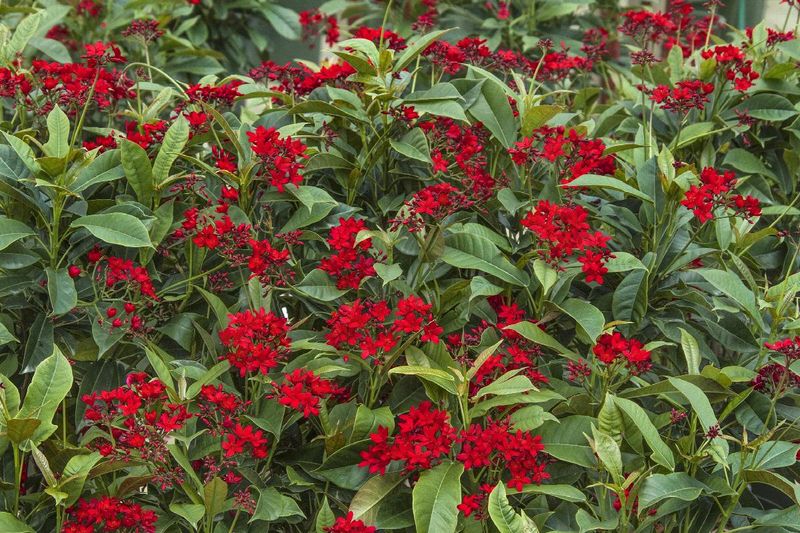
Jatropha integerrima, sometimes called peregrina or spicy jatropha, brings a steady parade of bright red blooms to Florida gardens throughout most of the year.
The flowers are small and star-shaped, appearing in clusters above large, glossy leaves that give the plant a full, tropical appearance.
Jatropha works well as a specimen plant but really shines when planted in a row to form a colorful, medium-height privacy screen.
In South and Central Florida, jatropha can reach 10 to 15 feet tall over time, though it is more commonly maintained at 6 to 8 feet with regular pruning. Spacing plants about 4 to 5 feet apart allows the canopy to fill in without overcrowding.
The foliage is dense enough to provide meaningful privacy even between bloom cycles, and because jatropha blooms so frequently in Florida’s warm climate, there is rarely a long gap in color.
Jatropha grows best in full sun and well-drained soil, and it has good drought tolerance once established. It is sensitive to frost, so it is better suited to Central and South Florida where freezing temperatures are rare.
Light pruning helps maintain shape and encourages branching for a denser hedge effect.
Like oleander, jatropha has toxic properties if ingested, so placement should be considered carefully in households with children or pets.
For warm-climate Florida gardens, few flowering shrubs offer such consistent color with so little fuss.
7. Duranta Creates Thick Screens With Colorful Blooms
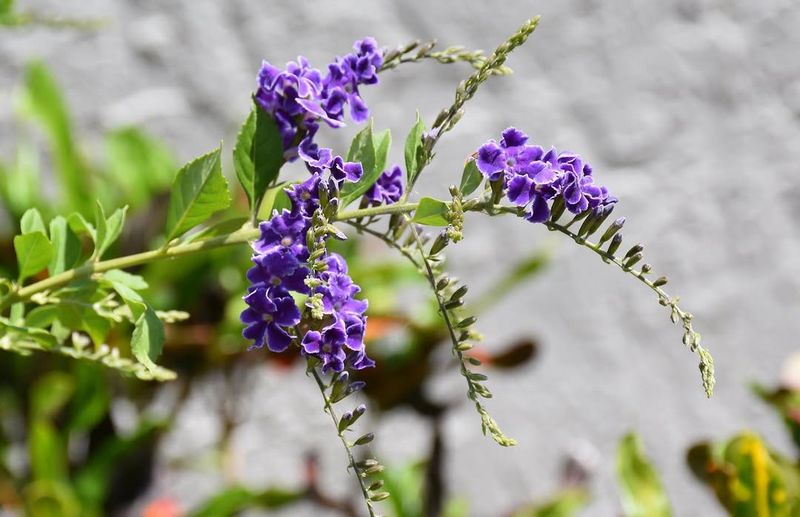
Duranta erecta, known by names like golden dewdrop or sky flower, is a shrub that earns attention both for its blooms and its structure.
The small, lavender-blue flowers appear in graceful drooping clusters from late spring through fall, and they are followed by bright golden-yellow berries that add another layer of visual interest.
Both the flowers and berries appear on the plant at the same time during peak season, creating a remarkably colorful display along a hedge line.
Duranta grows vigorously in Florida’s warm, sunny climate and can reach 6 to 18 feet tall without much encouragement. This fast growth rate is one of its biggest advantages for privacy planting.
Spacing plants 4 to 6 feet apart allows them to merge into a thick screen within a relatively short time. The foliage is dense and stays evergreen in South and Central Florida, providing year-round coverage.
Full sun brings out the best flowering in duranta, though it tolerates partial shade reasonably well. It is drought tolerant once established but responds well to occasional deep watering during dry stretches.
Pruning can be done throughout the year to manage height and encourage a fuller, more compact form. The berries are toxic to people and pets, so that is worth keeping in mind during placement decisions.
For Florida gardeners who want a fast-growing, colorful screen with real visual personality, duranta is a strong and often underused option.
8. Confederate Jasmine Covers Fences With Fragrant Flowers
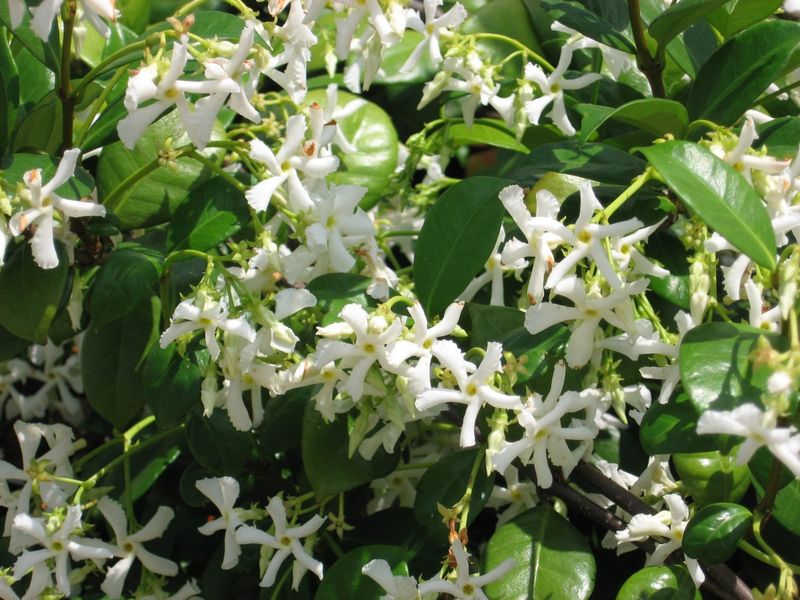
Trachelospermum jasminoides, better known as Confederate jasmine, is the kind of plant that makes neighbors stop and ask what that wonderful smell is.
In spring, this vigorous climbing vine produces masses of small, white, pinwheel-shaped flowers with a sweet fragrance that carries across a yard on a warm Florida breeze.
The blooms typically last for several weeks, and the glossy dark green foliage provides dense coverage throughout the rest of the year.
Confederate jasmine is especially useful for covering fences, trellises, walls, and pergolas where a flowering screen is needed but a freestanding shrub is not practical.
It climbs by twining and can spread 20 feet or more with support, filling in gaps quickly once it gets established in Florida’s warm soil.
For homeowners who already have a fence but want to soften it with greenery and blooms, this vine is one of the most effective options available.
It grows well in full sun to partial shade and tolerates a range of soil types, including the sandy soils common across much of Florida. Watering needs are moderate, and established plants handle short dry periods reasonably well.
Annual pruning after the spring bloom helps manage growth and keeps the vine tidy.
Confederate jasmine is cold hardy enough to grow throughout most of Florida, including the northern parts of the state where some tropical plants struggle.
Its combination of fragrance, coverage, and low maintenance makes it a standout choice for fence-line privacy planting.
9. Allamanda Adds Bright Yellow Blooms To Tropical Screens
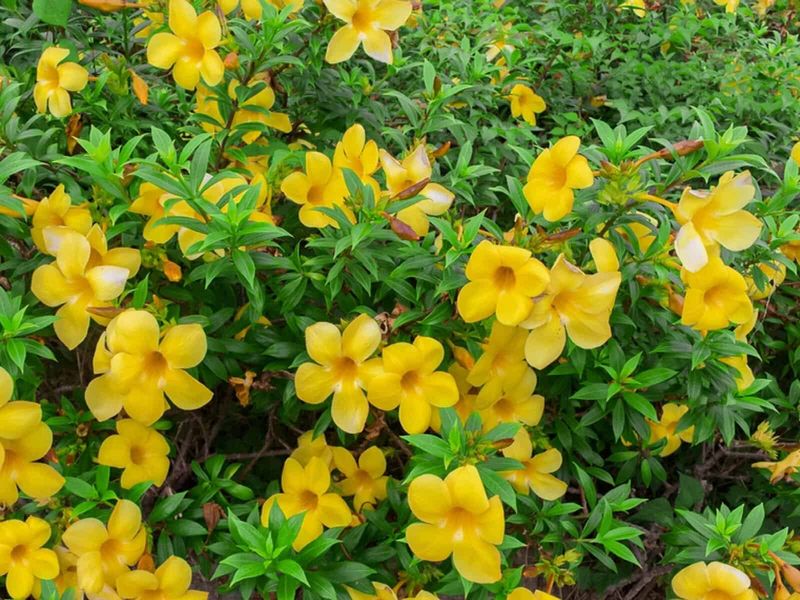
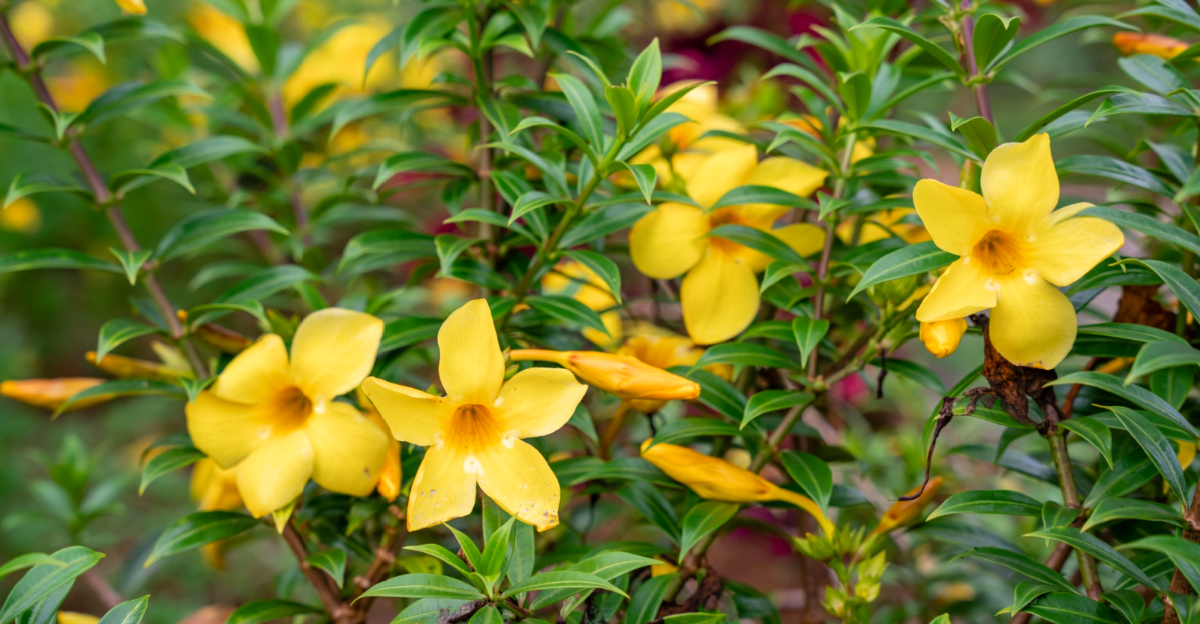
Golden trumpet, or Allamanda cathartica, brings a bold splash of sunshine yellow to Florida garden borders that few other flowering plants can match. The blooms are large, funnel-shaped, and a rich golden yellow that stands out even from a distance.
In South Florida, allamanda blooms nearly year-round, making it one of the most consistently colorful options for a tropical privacy screen in the state’s warmest zones.
Allamanda can be grown as a sprawling shrub or trained onto a fence or trellis as a vine, depending on the variety. The shrub form typically reaches 5 to 10 feet tall and wide, while the climbing form can extend much farther with support.
Planting shrub types about 4 feet apart creates a dense, flowering hedge that fills in well over a season or two. The foliage is glossy, thick, and stays evergreen in frost-free areas of Florida.
Full sun is essential for the best bloom production – allamanda that gets shaded out tends to flower sparsely and grow more loosely.
It prefers well-drained, fertile soil and benefits from regular fertilization during the growing season to maintain that signature flower abundance.
Allamanda is frost sensitive, so it performs most reliably in South Florida and along the coast of Central Florida.
Like several other tropical privacy plants, all parts of allamanda are toxic if ingested, so thoughtful placement in the landscape is recommended for households with children or pets.
10. Bottlebrush Shows Unique Red Blooms On Hardy Shrubs
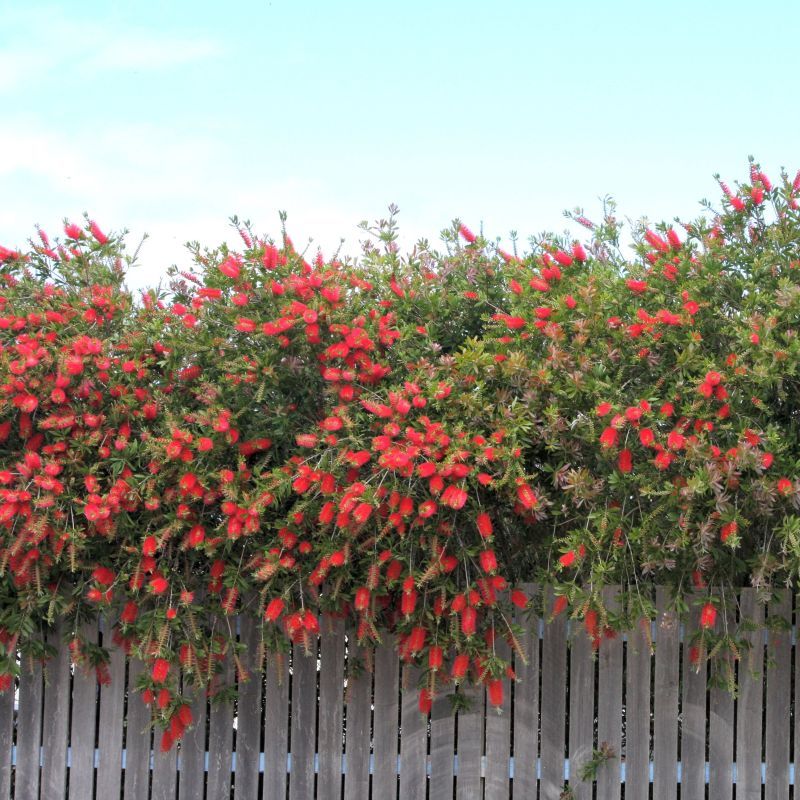
Callistemon citrinus, commonly called bottlebrush, gets its name from the unmistakable shape of its flowers – long, cylindrical spikes of bright red stamens that look exactly like the brushes used to clean bottles.
These eye-catching blooms appear from spring through fall, with peak flowering in spring and early summer.
Hummingbirds and butterflies are reliably drawn to the flowers, adding lively movement to any Florida garden where bottlebrush is planted.
Bottlebrush can grow into a large shrub or small tree, reaching 10 to 15 feet tall in Florida conditions, though regular pruning keeps it at a more manageable hedge height.
Planted 5 to 6 feet apart, a row of bottlebrush forms a full, layered screen with distinctive texture and color.
The narrow, willowy leaves stay green year-round, maintaining privacy coverage between bloom periods.
One of bottlebrush’s standout qualities is its toughness.
It handles drought, poor soil, salt spray, and occasional flooding better than many ornamental shrubs, which makes it a practical option across a wide range of Florida landscapes.
Full sun produces the densest growth and the most abundant flowering. Pruning right after the main spring bloom encourages a second flush of flowers and keeps the hedge from becoming too open or leggy.
For Florida gardeners who want something that looks unusual, attracts wildlife, and holds up to the state’s challenging weather patterns, bottlebrush is a reliable and rewarding choice.