These Young Trees In Georgia Benefit Most From April Fertilizer
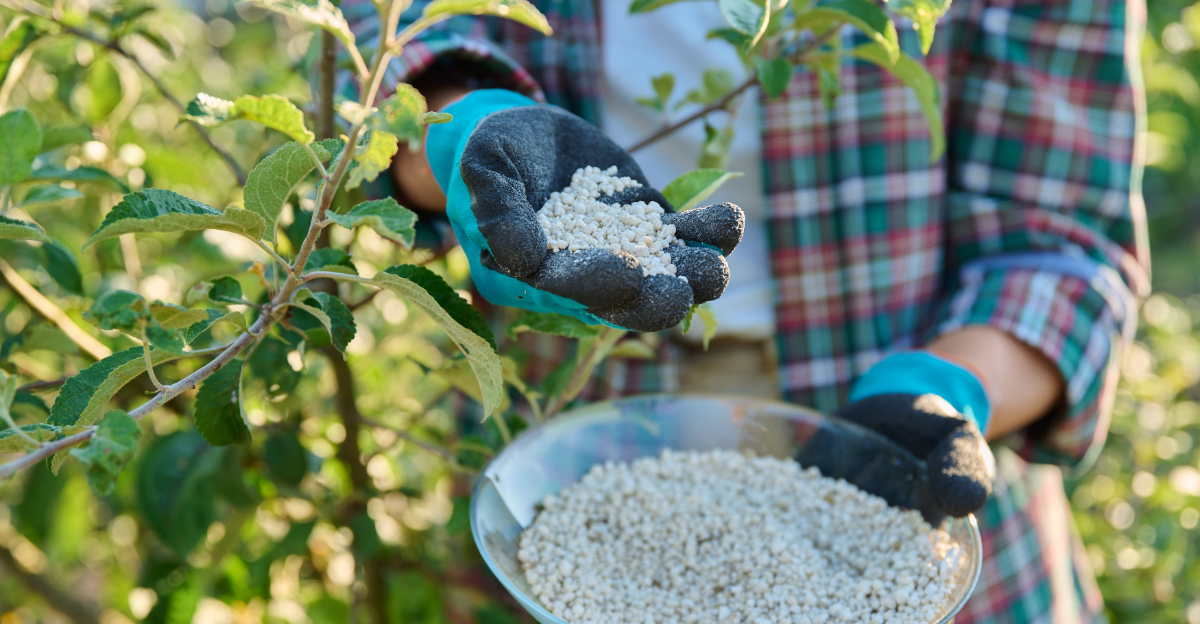
Spring in Georgia moves quickly, and young trees enter an active growth phase as soil warms and roots begin to expand. This period sets the foundation for structure, leaf development, and overall stability through the season.
Not all young trees respond the same way to early feeding. Some show stronger canopy growth and better root establishment when nutrients are available at the right time, while others may develop more slowly without that support.
Applying fertilizer too early, too late, or to the wrong tree can limit results instead of improving them.
Understanding which young trees benefit most from April applications helps support steady growth and more consistent development as temperatures continue to rise.
1. Dogwood Benefits From Light Feeding During Early Growth
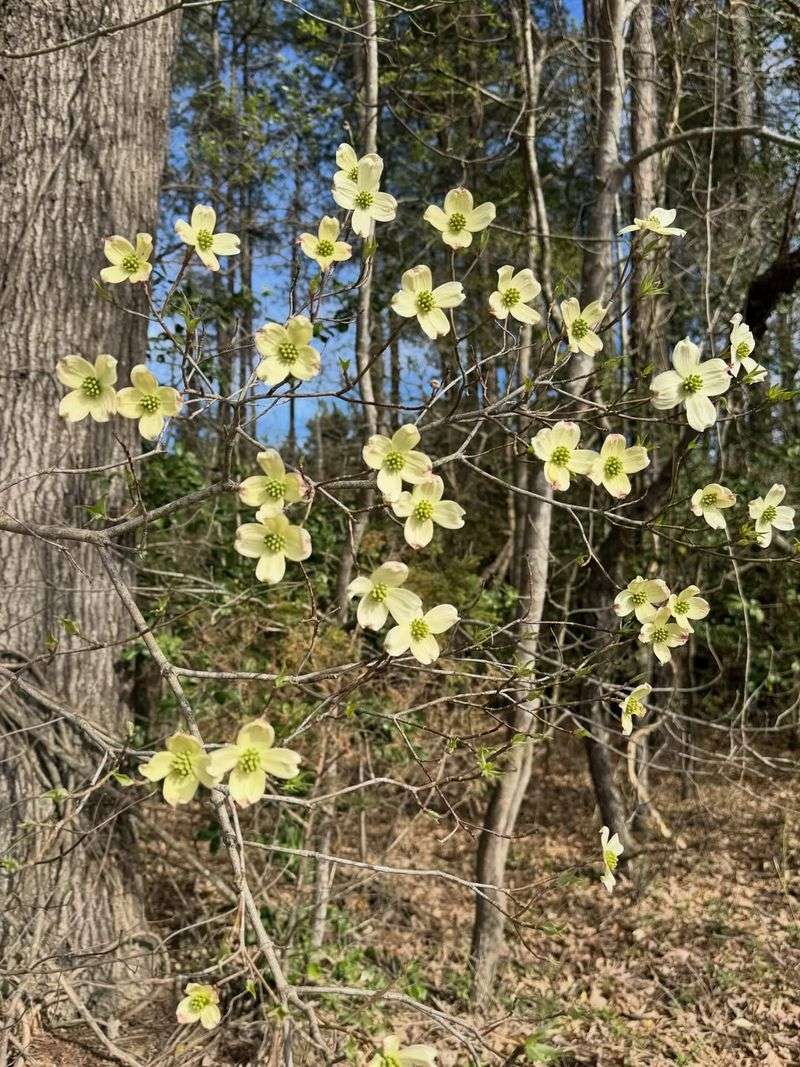
Dogwoods are finicky about too much of a good thing. Push too many nutrients at a young dogwood and you might get fast, weak growth that struggles through summer heat.
A light, balanced fertilizer in April works better than anything heavy or high in nitrogen.
According to University of Georgia Extension, a general-purpose fertilizer like 12-4-8 or 16-4-8 suits dogwoods well. For a newly planted tree around 6 feet tall, roughly a quarter cup of fertilizer spread evenly about 2 feet out from the trunk is a reasonable starting point.
Always water the area thoroughly right after applying so nutrients can reach the feeder roots below.
Across Georgia, dogwoods planted in partial shade tend to handle feeding better than those baking in full afternoon sun. Stress from heat and drought can make even a light fertilizer application feel like too much.
Mulching around the base helps hold moisture and keeps the root zone cooler during warm spells.
Avoid fertilizing a dogwood that was just planted within the last few weeks. Let it settle in first.
Feeding a stressed tree too soon can push tender growth that has no real root support behind it yet. Patience with young dogwoods usually pays off more than rushing the process.
A slow and steady approach helps dogwoods build stronger roots instead of putting all their energy into quick top growth. Paying attention to how the tree responds over time often matters more than sticking to a strict feeding schedule.
2. Redbud Responds Well To Gentle Nutrient Support
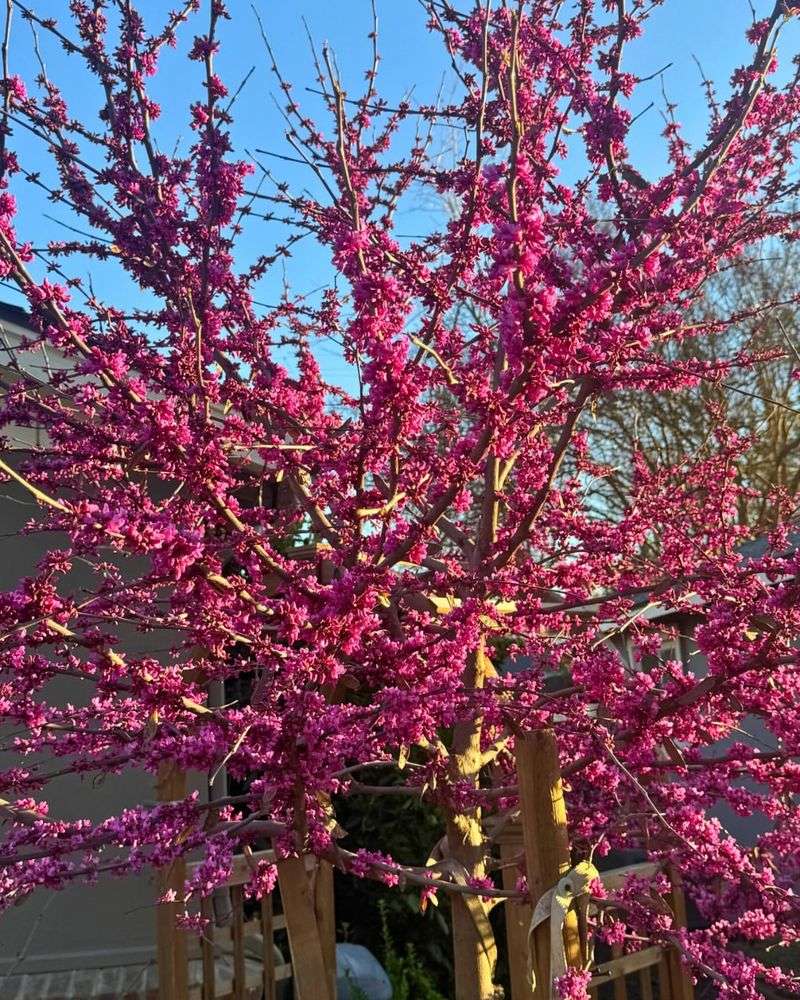
Right before a redbud leafs out, those bright pink blooms show up along bare branches like a signal that spring has arrived in Georgia.
Young redbuds are already putting a lot of energy into that bloom show, and a light feeding in April can support what comes next: the leaf-out phase and early branch development.
A balanced slow-release fertilizer with roughly equal parts nitrogen, phosphorus, and potassium works well for young redbuds. You do not need a heavy dose.
Spreading a small amount evenly around the root zone, starting a few inches away from the trunk and reaching out to the drip line, is usually enough to give the tree a useful boost without overwhelming it.
Redbuds growing in Georgia clay soil sometimes struggle with compaction and drainage issues. If the soil around your tree drains poorly, nutrients from fertilizer can sit too long near the roots.
Your Georgia Garden Changes Every Week. Your Plan Should Too.
Gardening in Georgia changes quickly throughout the season. Every Friday you’ll receive a simple weekly plan showing exactly what to plant, prune, fertilize, harvest, and protect so you never miss the right timing.
Loosening the soil surface slightly before applying and watering deeply after helps move nutrients downward where roots can actually reach them.
Soil pH matters here too. Redbuds prefer a slightly acidic to neutral range.
If your Georgia soil runs very acidic, a soil test will tell you whether lime is needed before fertilizing. Adding fertilizer to a pH-imbalanced soil can limit how well the tree absorbs nutrients anyway.
3. Sweetgum Shows Faster Growth With Added Nutrients
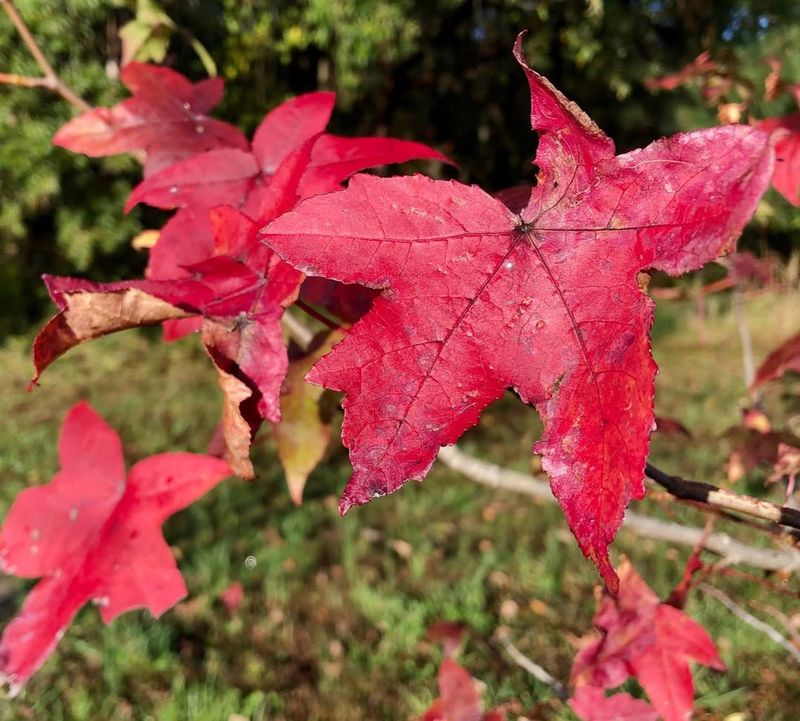
Sweetgums have a reputation for growing quickly once they get going, and young trees in Georgia can really take off during April if the soil has what they need. That said, faster growth does not automatically mean better growth.
The goal with fertilizing a young sweetgum is steady, solid development rather than a burst of tender new shoots.
A balanced granular fertilizer applied in early April, right as new leaves begin to emerge, gives the tree nutrients during peak uptake. Broadcast the fertilizer lightly across the root zone and water it in well.
Avoid piling granules near the trunk base, which can concentrate salts and irritate bark tissue on young trees.
Sweetgums growing in sandy Georgia soils may need slightly more frequent nutrient support since sandy ground holds fertilizer less effectively than clay. If your yard has sandy loam, consider splitting the application into two smaller doses rather than one larger one in April.
This approach can reduce the chance of nutrients leaching past the root zone before the tree can use them.
One thing worth knowing about sweetgums in Georgia: they tend to be more drought-tolerant as they age, but young trees still need consistent moisture right after fertilizing.
Water the root zone thoroughly the day you apply fertilizer, and check soil moisture over the following week, especially during dry April stretches.
4. Loblolly Pine Gains Strength During Establishment With Feeding
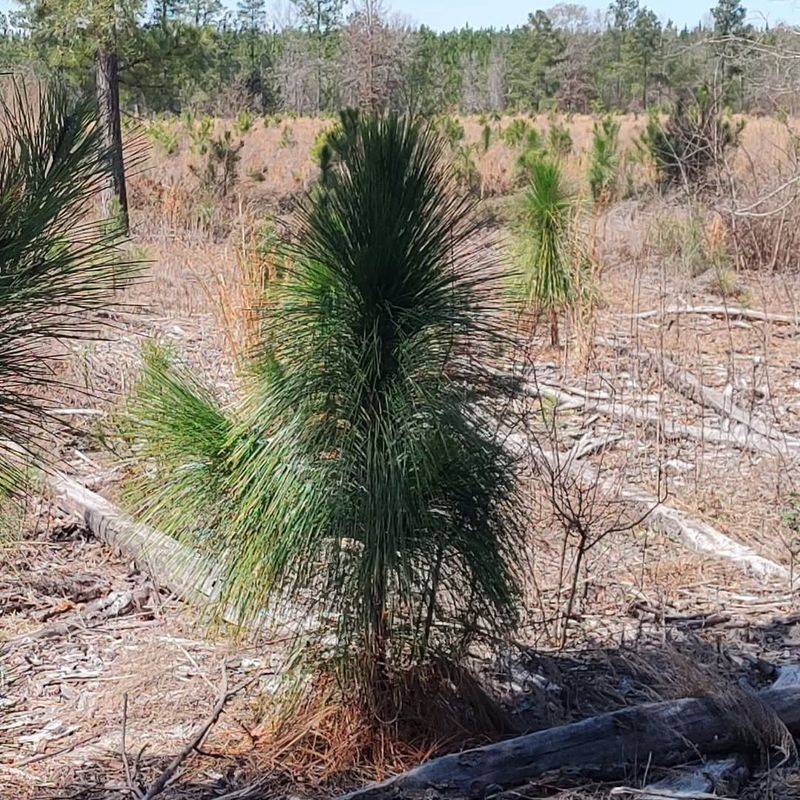
Loblolly pine is one of Georgia’s most common trees, and young specimens planted in residential yards often go unfertilized simply because people assume pines take care of themselves.
They mostly do once they mature, but during the first few years after planting, a modest nutrient boost in April can help roots spread more confidently into surrounding soil.
Slow-release fertilizers formulated for conifers or general trees work reasonably well here. Loblolly pines tend to prefer slightly acidic soil, which is common across much of Georgia, so pH is usually less of a concern than it might be for other species.
Still, a quick soil test before fertilizing is never a bad idea, especially if the tree was planted in fill dirt or disturbed soil.
Apply fertilizer evenly under the canopy and just beyond the branch tips. Young pines have feeder roots that extend outward, not just straight down, so spreading the application broadly gives more roots a chance to access nutrients.
Water the area well after applying.
Do not expect dramatic visible changes after a single April feeding. With loblolly pines, the benefit of early fertilization tends to show up gradually over the season as the tree builds stronger root mass and pushes new needle growth.
Healthy needle color and steady height gains are the signs to watch for rather than sudden spurts.
5. Willow Oak Supports Strong Development With Early Nutrients
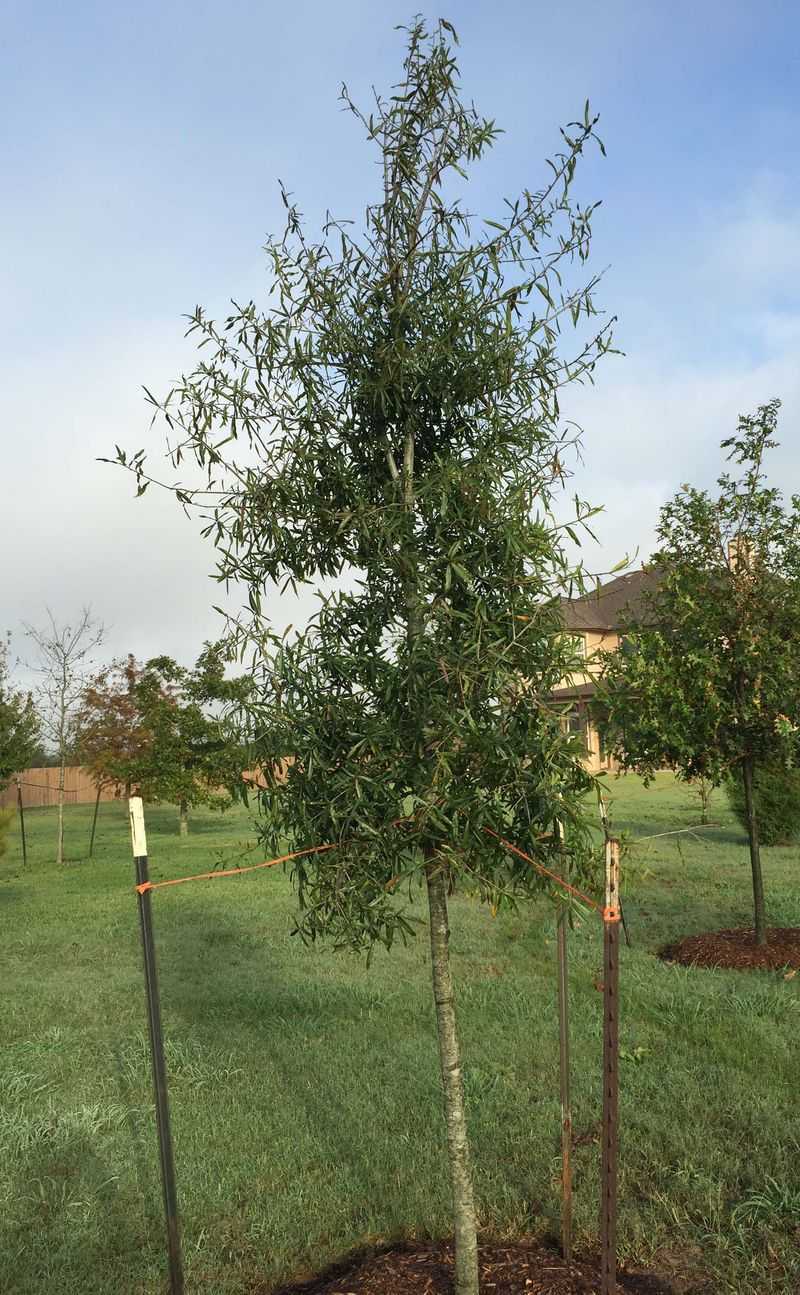
Willow oaks are popular street and yard trees across Georgia, valued for their narrow leaves and upright form.
Young willow oaks planted in the last year or two benefit noticeably from a light April fertilizer application because their root systems are still expanding and actively seeking nutrients in the surrounding soil.
A balanced fertilizer with moderate nitrogen works well. Avoid anything with very high nitrogen percentages, since pushing too much leafy growth early in the season can stress a young oak that does not yet have the root structure to support it.
Spread granules evenly from just outside the trunk zone out to and slightly beyond the drip line.
Georgia soils around urban and suburban plantings are often compacted from construction activity. Compacted soil limits root penetration and reduces how well fertilizer moves through the ground.
If the soil around your willow oak feels hard and dense, aerating the surface before applying fertilizer can make a meaningful difference in how well nutrients reach the roots.
Watering thoroughly after fertilizing is especially important for willow oaks in Georgia’s variable spring weather.
April can swing from wet to dry quickly, and if fertilizer sits in dry soil for too long without moisture to carry it downward, very little of it ends up where roots can use it.
A deep watering right after application helps move nutrients into the active root zone.
6. River Birch Responds Well To Nutrients In Moist Soil
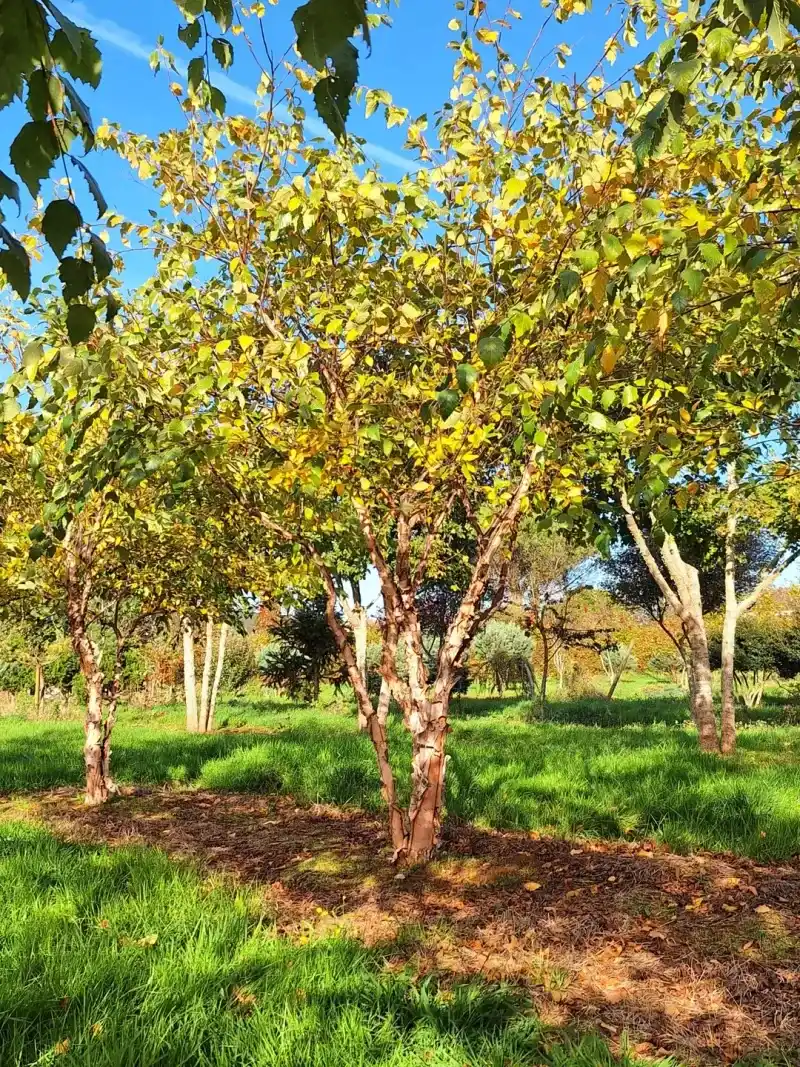
River birch has some of the most distinctive bark of any tree you can plant in Georgia, and young specimens grow surprisingly fast when conditions suit them.
Moist, slightly acidic soil is where river birch feels most at home, and that same moist environment also helps fertilizer move efficiently through the root zone in April.
Because river birch naturally grows near water and in bottomland areas, it tends to have a robust root system that responds readily to nutrients.
A slow-release balanced fertilizer applied in April, once soil temperatures have warmed a bit, gives the tree something to work with during its most active spring push.
Avoid high-phosphorus formulas unless a soil test shows a real deficiency.
In Georgia, river birch planted in drier upland soils may need supplemental watering alongside fertilization to get the best results. Without enough moisture, even a good fertilizer application may not translate into visible growth improvement.
Mulching heavily around the base helps retain soil moisture and keeps roots cooler during warm stretches.
Young river birch trees can show signs of chlorosis, a yellowing between leaf veins, if soil pH climbs too high. Georgia soils in some areas can be alkaline, especially near concrete foundations or in fill areas.
If your river birch looks pale after leafing out, a soil test will help you figure out whether pH adjustment or a different fertilizer formula is the right fix.
7. Tulip Poplar Grows Rapidly With Early Season Feeding
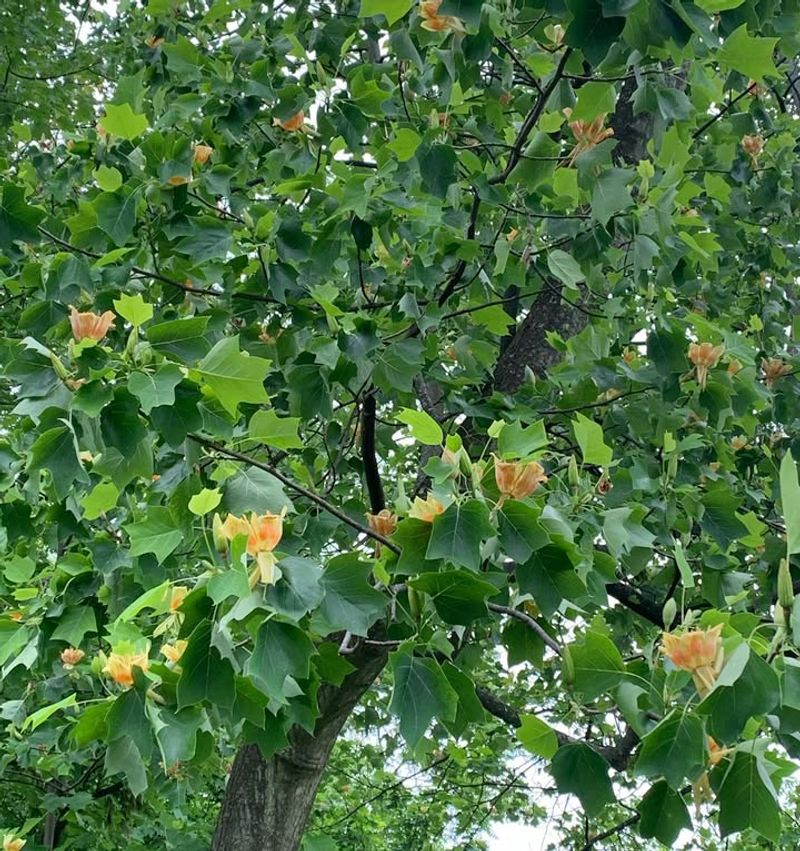
Few trees in Georgia grow as fast as a young tulip poplar with good soil and decent moisture. Even without fertilizer, this tree tends to put on impressive height in its early years.
Add a thoughtful April feeding to the mix, and the growth during that first warm season can be quite noticeable, though results depend heavily on your specific soil and site conditions.
A balanced fertilizer applied in early April, just as leaves begin to unfurl, gives tulip poplars nutrients right when they are ramping up photosynthesis. Broadcast the fertilizer broadly across the root zone rather than concentrating it near the trunk.
Young tulip poplars develop wide-reaching lateral roots fairly quickly, so covering a larger area makes more sense than a tight ring application.
Tulip poplars prefer well-drained soil with decent organic content. If your Georgia planting site has heavy clay that stays wet for days after rain, nutrients from fertilizer may not move well through the soil profile.
Mixing compost into the planting area before establishing the tree is one of the better long-term investments you can make for tulip poplar success.
One thing to watch after fertilizing: tulip poplars can drop leaves in mid-summer during drought stress, even healthy ones. Do not confuse that normal response with a fertilizer problem.
Keep up with watering through Georgia’s hot summer months and the tree should recover its canopy without much trouble.
8. American Holly Benefits From Light Nutrient Support
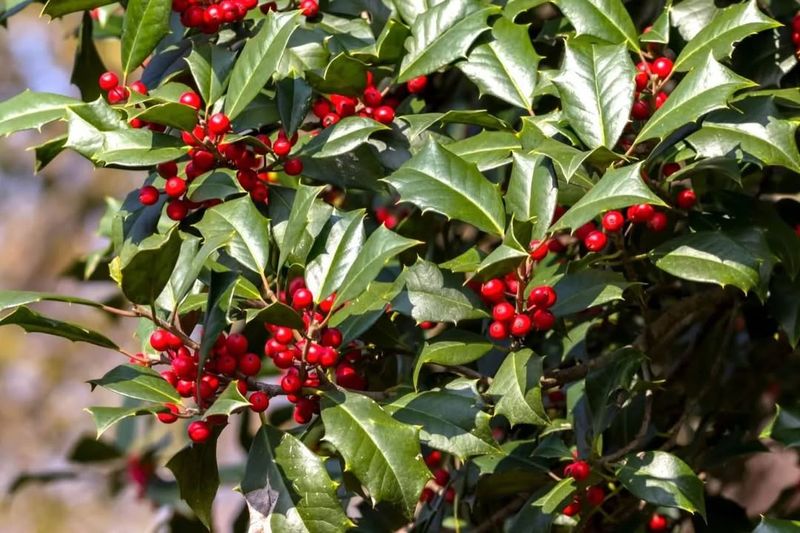
American holly is a tough, versatile tree that holds its deep green leaves all year long, making it a popular choice for Georgia yards and property borders.
Young hollies are not heavy feeders, but a light, well-timed fertilizer application in April can support healthy leaf color and steady branch development during the spring growth flush.
Acidic soil suits American holly well, and Georgia’s naturally acidic soils in many parts of the state are actually a good fit. A fertilizer formulated for acid-loving plants, or a general balanced formula applied at a conservative rate, works reasonably well.
If your holly shows pale or yellowish foliage, a soil test may reveal whether pH adjustment or a micronutrient supplement is more appropriate than a standard fertilizer.
Apply fertilizer in a wide band around the tree, extending from a few inches away from the base out to the edge of the canopy. Water thoroughly after application.
American hollies have fairly shallow root systems, so surface-applied fertilizer that gets watered in promptly tends to reach roots more effectively than deep soil injection methods.
Keep the amount modest. Young hollies in Georgia do not need aggressive feeding, and pushing too much nitrogen can encourage soft, fast growth that looks lush but may not harden well before summer heat arrives.
A conservative April application followed by a soil test later in the season gives you the best information for adjusting your approach going forward.