8 Outdoor Hanging Basket Plants For Sunny Spots In Georgia
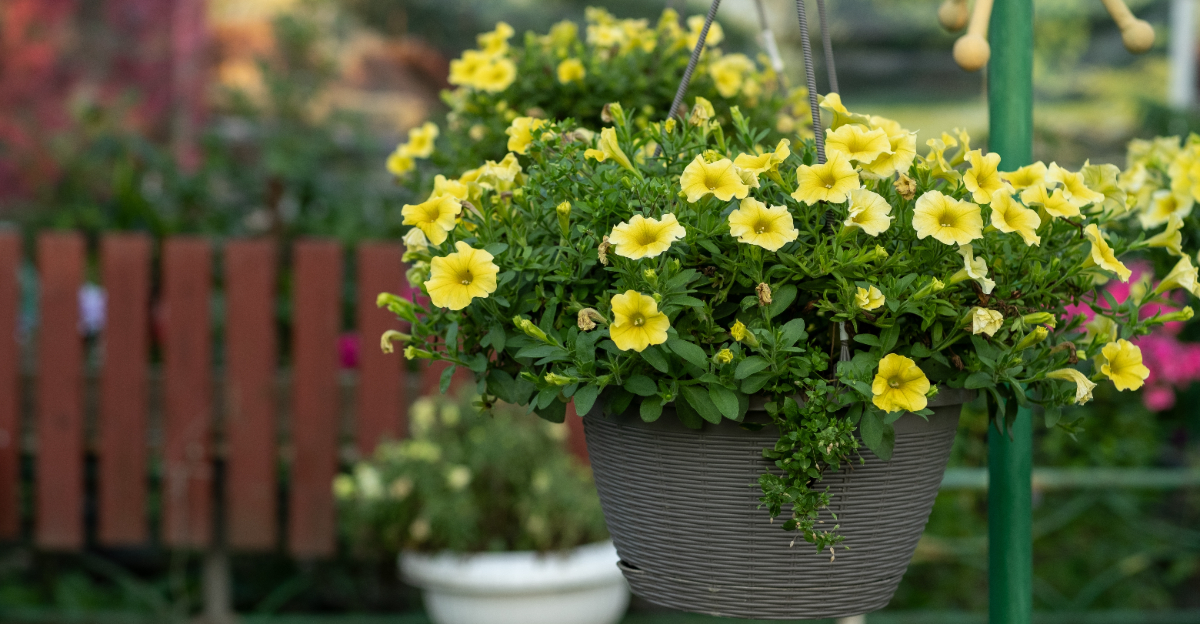
Sunlight can be relentless in Georgia once the season settles in, and not every hanging basket holds up the way it should under that kind of exposure.
You set them up expecting full color and steady growth, then certain plants start to fade while others keep going strong.
Placement alone does not guarantee success, especially when heat reflects off nearby surfaces and dries containers faster than expected. What looked like a perfect spot can quickly become too much for the wrong plant.
Some varieties handle that intensity without losing their shape or color, even when conditions stay bright and warm through the day. Those are the ones that keep baskets looking full instead of thinning out halfway through the season.
Choosing plants that can handle that level of sun makes a noticeable difference and keeps outdoor spaces looking fresh without constant replacement.
1. Petunias Bloom Continuously In Full Sun
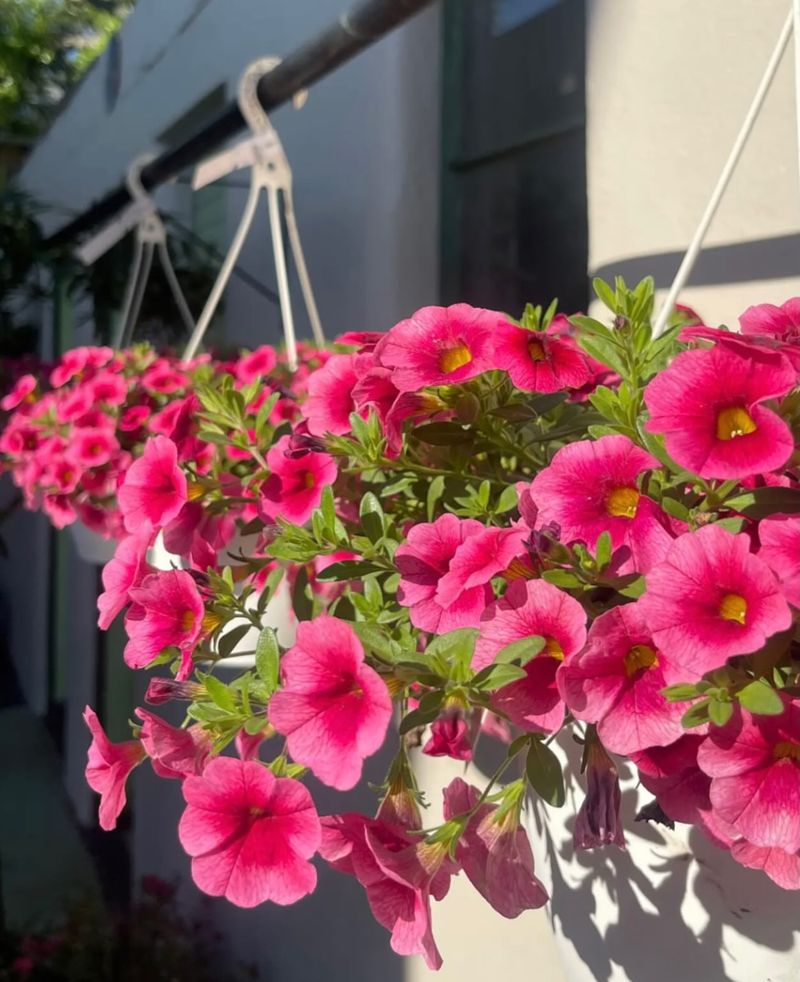
Few plants put on a show quite like petunias do in a Georgia summer. Hang a basket in full sun, water it consistently, and you’ll get waves of color from late spring through early fall without much fuss.
Colors range from soft pastels to deep purples and bold reds, so there’s a lot of flexibility depending on your porch style.
Trailing varieties like Wave or Supertunia work especially well in baskets because they spill over the sides and keep spreading outward as the season goes on. Spreading types tend to fill in faster and hold up better in heat than older upright varieties.
If you’re in a warmer part of Georgia like Savannah or Brunswick, look for varieties specifically labeled heat-tolerant.
Watering is the one area where petunias demand real attention. Baskets in full sun can dry out fast, sometimes needing water every single day during peak summer heat.
Letting them wilt repeatedly will stress the plant and slow bloom production noticeably. Feed every ten to fourteen days with a balanced liquid fertilizer to keep blooms coming strong.
Deadheading spent flowers helps, but many newer varieties are self-cleaning, which cuts down on that task. Petunias are one of the most reliable choices for sunny Georgia spots when you stay on top of watering.
Keeping the soil consistently moist without letting it dry out completely is what keeps those blooms coming nonstop.
2. Calibrachoa Trails Well And Handles Heat
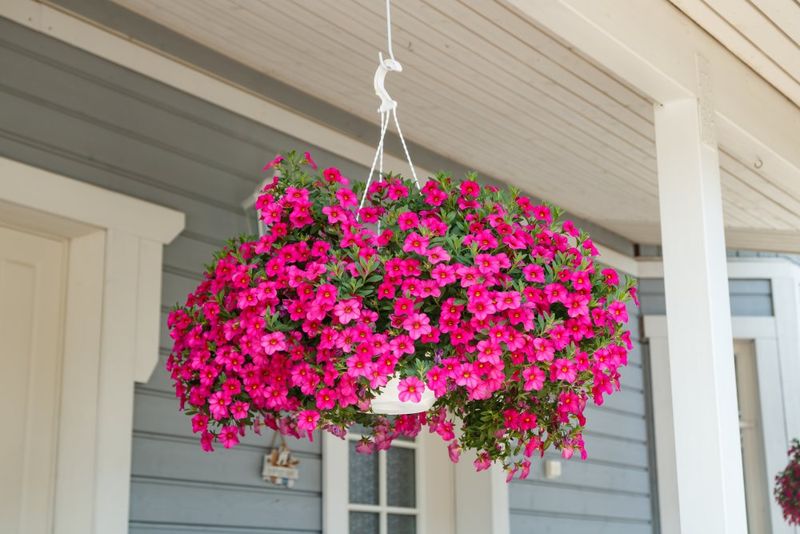
Calibrachoa looks like someone shrank a petunia down to about the size of a quarter and told it to bloom constantly.
Sold under names like Million Bells or Superbells, this plant trails beautifully from a basket and keeps pushing out flowers without much deadheading required.
It’s a reliable performer in Georgia’s full sun conditions from spring into fall.
Heat tolerance is solid across most calibrachoa varieties, but they do appreciate consistent moisture. Baskets can dry out fast in direct afternoon sun, especially during July and August when Georgia temperatures regularly push past 90 degrees.
Checking soil moisture daily is a smart habit during those peak heat months. Morning watering works best so the roots stay cool heading into the hottest part of the day.
Your Georgia Garden Changes Every Week. Your Plan Should Too.
Gardening in Georgia changes quickly throughout the season. Every Friday you’ll receive a simple weekly plan showing exactly what to plant, prune, fertilize, harvest, and protect so you never miss the right timing.
Fertilizing matters more with calibrachoa than some other plants. Without regular feeding, the foliage can start to yellow and bloom output drops off noticeably.
A slow-release granular fertilizer at planting, plus a liquid feed every one to two weeks, keeps things on track. Calibrachoa prefers slightly acidic soil, so if your basket mix is on the alkaline side, growth may slow.
Iron deficiencies show up as yellowing between leaf veins, and a quick dose of chelated iron usually corrects it. Overall, it’s a strong choice for sunny spots across Georgia with just a bit of extra feeding attention.
3. Lantana Thrives In Sun With Minimal Water
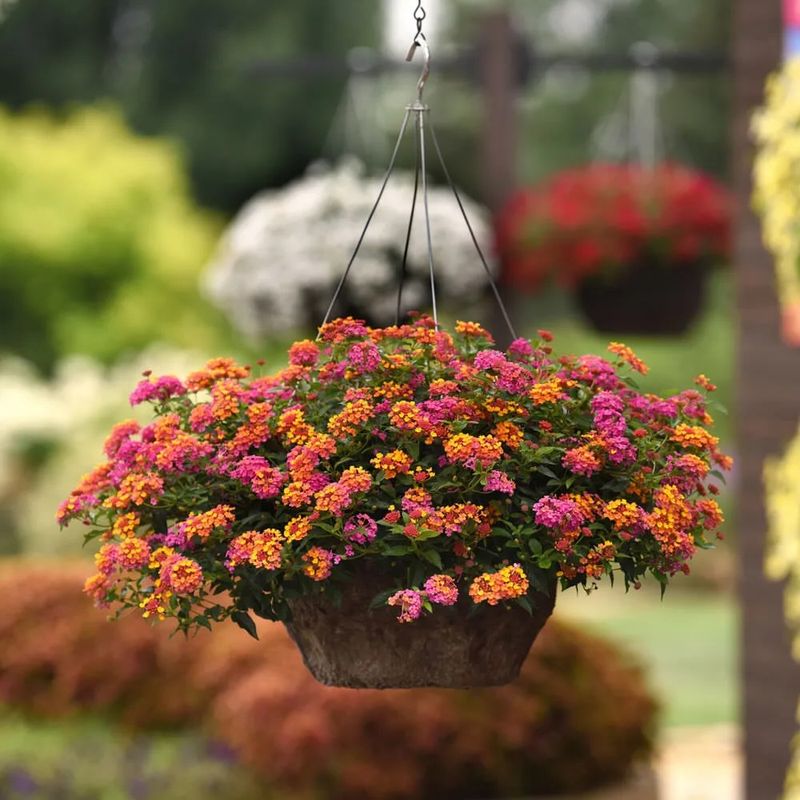
Lantana is built for heat. Seriously, the hotter and sunnier the spot, the better this plant tends to perform.
In Georgia, where summer temperatures can stay above 90 degrees for weeks at a stretch, lantana keeps blooming when other plants start to struggle. Flower clusters come in bold combinations of yellow, orange, red, and pink, often with multiple colors on a single cluster.
One of lantana’s standout traits is its ability to handle dry spells without much visible stress. It doesn’t need daily watering the way petunias do.
Letting the soil dry out slightly between waterings actually suits lantana better than keeping it constantly wet. Overwatering leads to root problems faster than underwatering does with this plant, so err on the drier side if you’re unsure.
Trailing lantana varieties are the best pick for hanging baskets since they cascade nicely over the sides and keep a full, rounded shape through the season. Deadheading isn’t strictly necessary, but removing old flower clusters can encourage a fresh flush of blooms.
Watch for lace bugs in Georgia, especially in drier conditions, as they can cause leaf stippling and reduce the plant’s overall appearance. A simple insecticidal soap spray handles minor infestations well.
Lantana is also a strong pollinator plant, so expect butterflies and bees visiting regularly throughout the season.
4. Verbena Spreads And Blooms In Hot Conditions
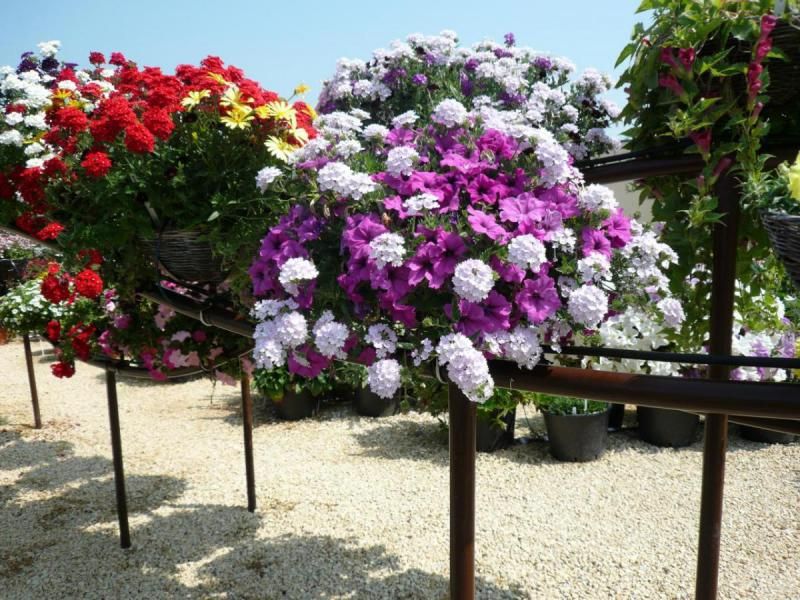
Verbena hits its stride in exactly the kind of hot, bright conditions that Georgia delivers from May through September. Trailing varieties spill over basket edges in thick waves of clustered flowers, producing color in shades of purple, red, coral, pink, and white.
Newer hybrid varieties have noticeably better heat and disease resistance than older types, so look for those when shopping at local garden centers.
Powdery mildew is the main challenge with verbena in Georgia’s humid summers. Good airflow around the basket helps reduce that risk, so avoid crowding baskets too close together or tucking them into corners where air circulation is limited.
Watering at the base rather than overhead also keeps foliage drier and less susceptible to fungal issues. If mildew does appear, a copper-based fungicide applied early usually slows the spread.
Verbena responds well to light trimming mid-season. If plants start looking leggy or bloom production slows in midsummer, cutting stems back by about a third encourages a fresh round of growth and flowers.
Fertilize every two weeks with a balanced liquid fertilizer and water consistently, though verbena tolerates short dry periods better than plants like petunias.
In the warmer parts of Georgia, verbena can sometimes continue blooming into November if temperatures stay mild.
It’s a dependable, colorful option for sunny basket spots across the state.
5. Geraniums Perform Well In Bright Sunlight
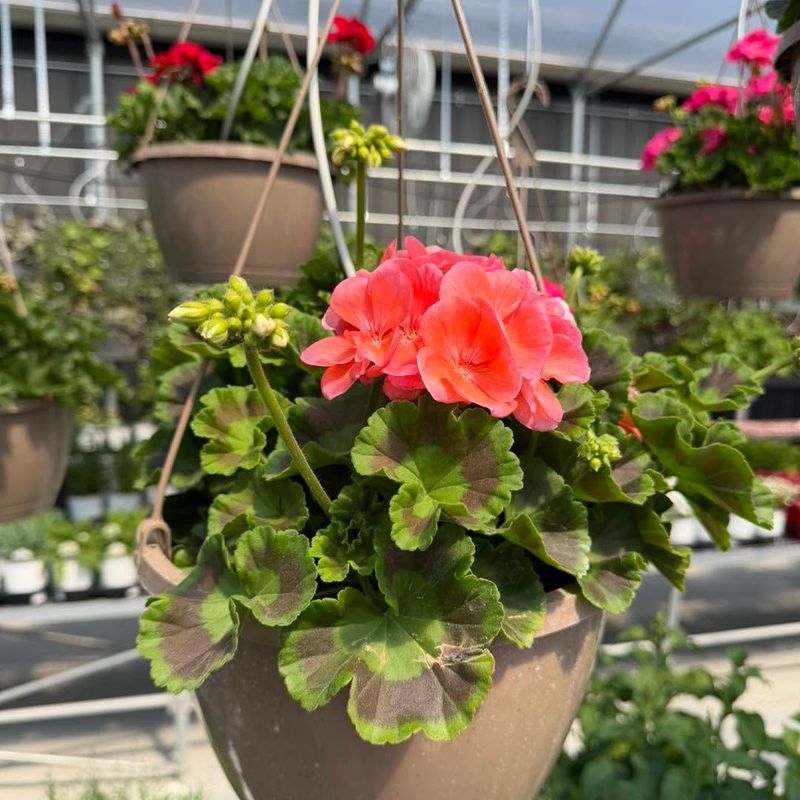
Geraniums have earned their reputation as a go-to basket plant, and in Georgia, they hold up well in full sun as long as a few basic needs are met.
Zonal geraniums, the classic rounded-cluster type, are the most common choice for baskets and come in red, salmon, pink, white, and bicolor options.
Ivy geraniums trail more loosely and can give baskets a softer, more cascading look.
Georgia’s summer heat can push geraniums hard, especially during the peak of July and August. Morning sun with some afternoon shade is genuinely ideal, but many zonal varieties handle all-day sun reasonably well when watered properly.
Letting the soil dry slightly between waterings is better than keeping it constantly saturated, as geraniums are prone to root rot in poorly draining basket mixes. A quality potting mix with good drainage makes a real difference here.
Deadheading spent flower clusters keeps the plant tidy and encourages new buds to form more consistently. Fertilize every two weeks with a fertilizer lower in nitrogen and higher in phosphorus to support flower production over leafy growth.
Geraniums in Georgia can sometimes slow down during the hottest weeks of summer but often rebound nicely once temperatures drop back into the mid-80s in late August and September.
They’re a reliable, familiar choice that holds its own in bright Georgia sunshine through most of the growing season.
6. Portulaca Handles Intense Sun And Dry Conditions
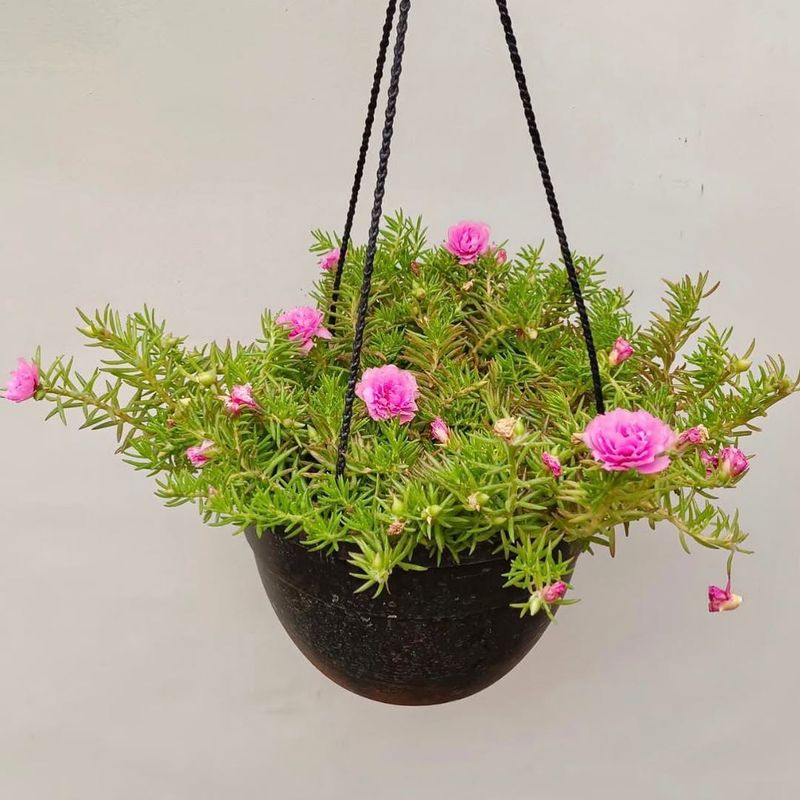
If you’ve ever forgotten to water a hanging basket for a few days during a Georgia heatwave and watched everything else struggle, portulaca is the plant you wish you’d planted.
Its thick, succulent-like leaves store moisture, letting it shrug off dry spells that would send most flowering annuals into visible distress.
Full sun and heat are genuinely where portulaca thrives, not just tolerates.
Flowers open in the morning sunshine and close in the evening or on cloudy days, which is just the natural rhythm of this plant. Colors are bold and warm, with plenty of orange, yellow, red, hot pink, and white options available.
Newer varieties stay open longer than older types, so if consistent color display matters to you, look for those when shopping. Baskets planted in late spring can stay colorful well into fall across most of Georgia.
Portulaca needs very little fertilizer compared to other basket plants. Heavy feeding actually encourages more foliage than flowers, so a light application of slow-release fertilizer at planting is usually enough.
Overwatering is the main thing to avoid, as roots in constantly wet soil break down quickly. Baskets should have excellent drainage, and watering only when the top inch of soil feels dry is the right approach.
Portulaca is one of the most forgiving basket options for busy Georgia gardeners who can’t always keep up with a daily watering schedule.
7. Sweet Potato Vine Trails Well With Regular Water In Heat
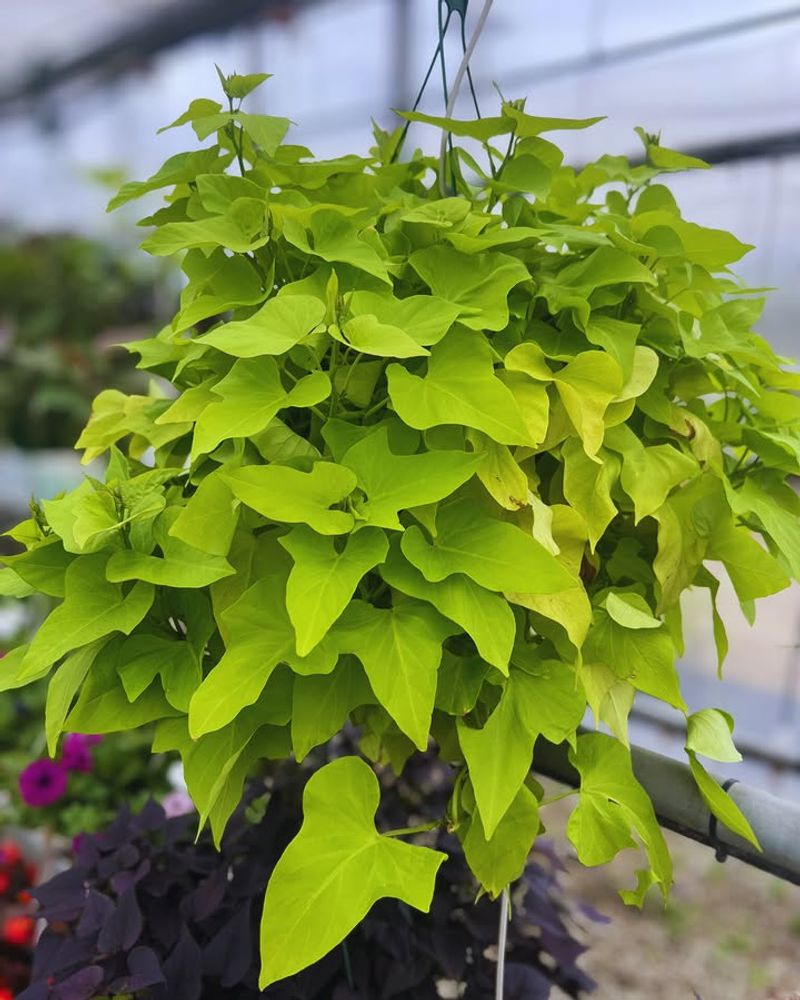
Sweet potato vine isn’t grown for flowers, and that’s actually what makes it so useful. Bold, fast-growing foliage in chartreuse, deep purple, bronze, or variegated patterns adds color and texture to baskets in a way that purely flowering plants can’t always match.
Paired with petunias or calibrachoa, it fills in gaps and spills over basket edges with real visual impact.
Growth rate in Georgia’s summer heat is genuinely fast. A small plant dropped into a basket in May can be trailing several feet by July with regular watering and feeding.
That speed is an asset for filling out a basket quickly, but it does mean you may need to trim it back occasionally if it starts overtaking neighboring plants in a mixed basket arrangement. Light trimming every few weeks keeps things balanced.
Water needs are higher for sweet potato vine than for drought-tolerant options like portulaca or lantana. Baskets in full sun should be checked daily during peak summer heat since the large leaves lose moisture quickly.
Consistent feeding with a balanced liquid fertilizer every two weeks supports that rapid, healthy growth without causing the vine to get too leggy. Root rot can develop in baskets that stay waterlogged, so drainage matters.
Across Georgia, sweet potato vine is a reliable, low-fuss foliage option that holds up well from spring through the first cool nights of fall.
8. Scaevola Blooms Steadily In Heat And Sun
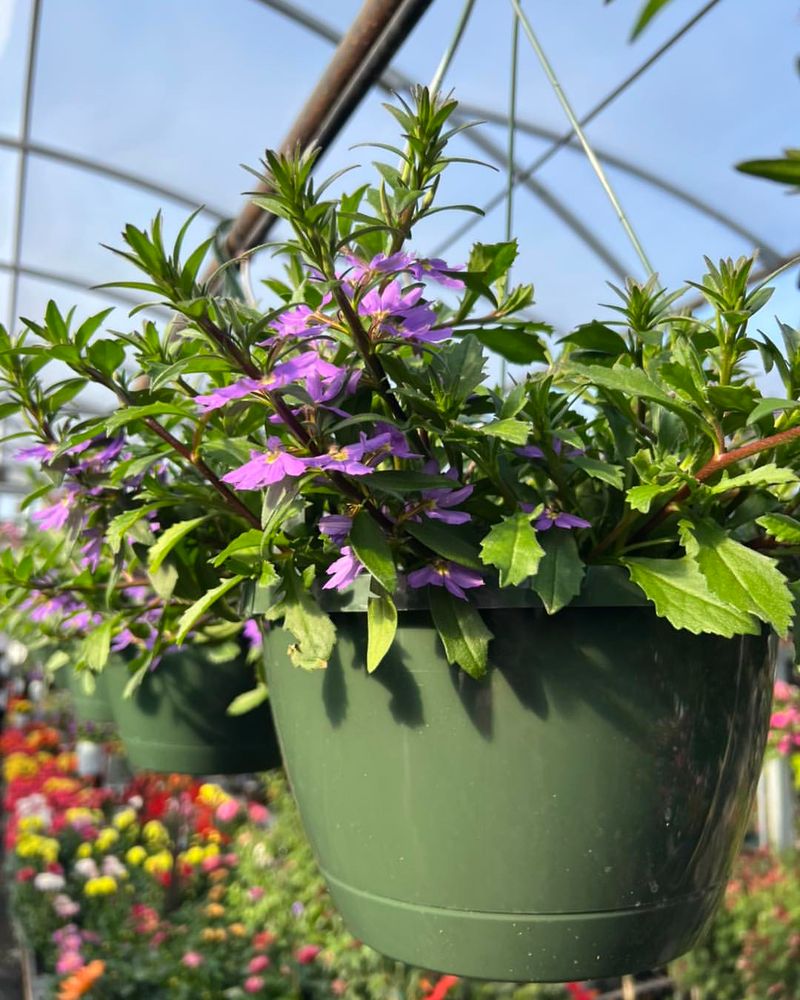
Scaevola doesn’t get nearly as much attention as petunias or calibrachoa, but gardeners who’ve grown it in Georgia tend to become real fans.
The fan-shaped flowers, usually in shades of purple, lavender, pink, or white, bloom continuously through the hottest months without the kind of mid-summer slump you sometimes see with other basket plants.
Heat genuinely doesn’t slow it down much.
Trailing stems spread outward and downward naturally, giving baskets a loose, flowing look that fills in well over a full season. Unlike some plants that need regular deadheading to keep producing flowers, scaevola is mostly self-cleaning.
Old flowers drop on their own and new ones take their place without much intervention from the gardener. That makes it a practical choice for anyone who wants reliable color without a lot of hands-on maintenance time.
Watering consistently is still important, especially during the peak heat of a Georgia summer. Baskets in full afternoon sun can dry out fast, so checking soil moisture every day or two is a reasonable habit.
Fertilize every two weeks with a balanced liquid fertilizer to keep the plant pushing new growth and flowers through the season. Scaevola is generally resistant to most common pests and doesn’t have major disease issues in Georgia’s climate.
If you haven’t tried it yet, it’s worth picking up a basket at a local garden center this spring and seeing how it performs in your sunny spot.