8 Herbs You Can Grow In Water Indoors In Georgia
There is something extra satisfying about cutting fresh herbs in your own kitchen when the weather outside is doing whatever it wants. In Georgia, that can mean muggy summer afternoons, chilly winter mornings, and enough seasonal mood swings to make indoor growing feel like the smarter option.
That is part of the appeal of starting herbs in water. A simple jar on a windowsill feels low-effort, low-mess, and surprisingly useful.
You can watch roots develop, keep fresh greenery close by, and figure out which plants are worth giving a permanent spot in pots later on.
The key thing to know is that water works best as a starting point for most herbs, not always the forever plan. Some will hold in water for a while, but many grow stronger, fuller, and more productive once they move into potting mix or a hydroponic setup.
That does not make the water stage any less helpful. In fact, it is one of the easiest ways to multiply herbs and keep your kitchen garden going year-round.
A few herbs adapt especially well to this routine, and once you get the hang of it, the whole process feels almost suspiciously easy.
1. Basil Fast-Growing And Easy To Root
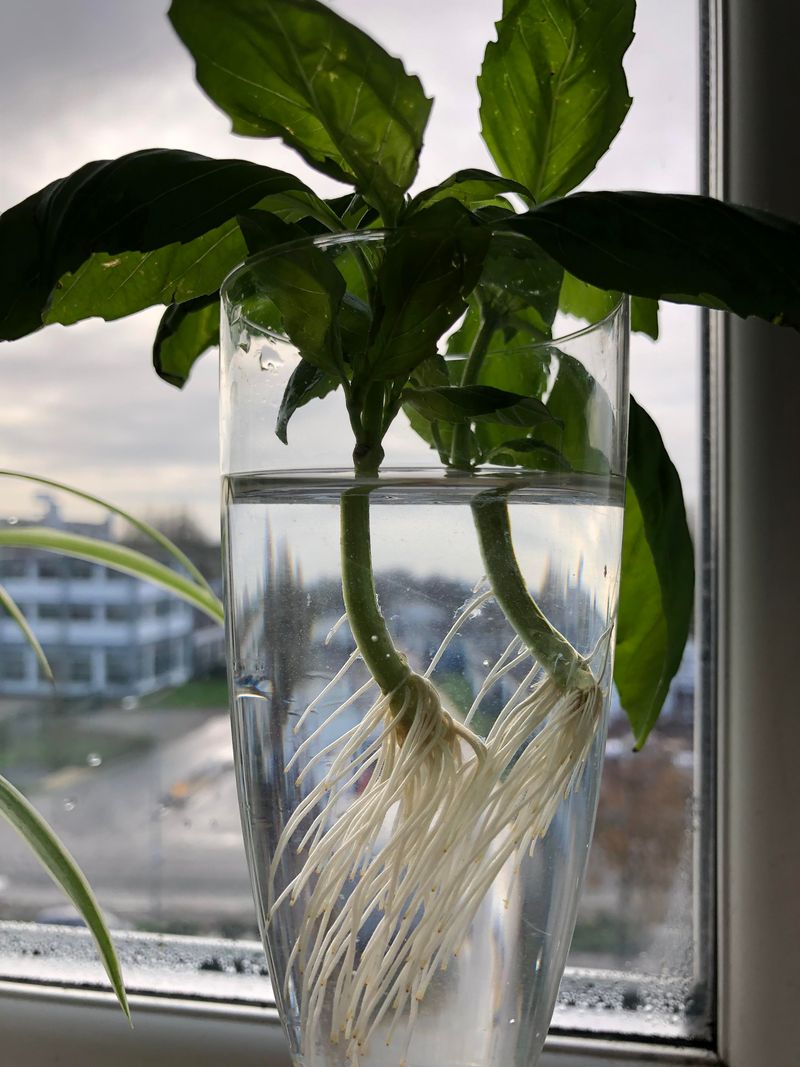
Nothing makes a kitchen feel more alive than a jar of basil cuttings rooting on a bright windowsill. The stems look simple at first, then tiny white roots begin showing up, and suddenly the whole thing feels a little addictive.
For Georgia gardeners, basil is one of the easiest herbs to start in water because it loves warmth and responds quickly when indoor conditions stay bright and cozy.
Start with a healthy cutting about four to six inches long, taken just below a leaf node. Remove the lower leaves so no foliage sits in the water, then place the stem in a clear jar near a bright south-facing or west-facing window.
Change the water every two to three days so it stays fresh and clear. In a warm room, basil usually begins rooting within a week or two.
That water stage is great for getting the cutting started, but basil is not one of the best herbs to leave in plain water forever. Once the roots are about one to two inches long, move it into a small pot filled with light, well-draining potting mix, or place it in a hydroponic setup if that is your style.
From there, keep it in bright light and pinch the tips often so the plant stays bushy instead of tall and floppy. With regular harvesting, basil can keep producing fresh leaves for pesto, salads, pasta, and sandwiches for a long stretch indoors.
2. Oregano Compact Growth With Big Flavor
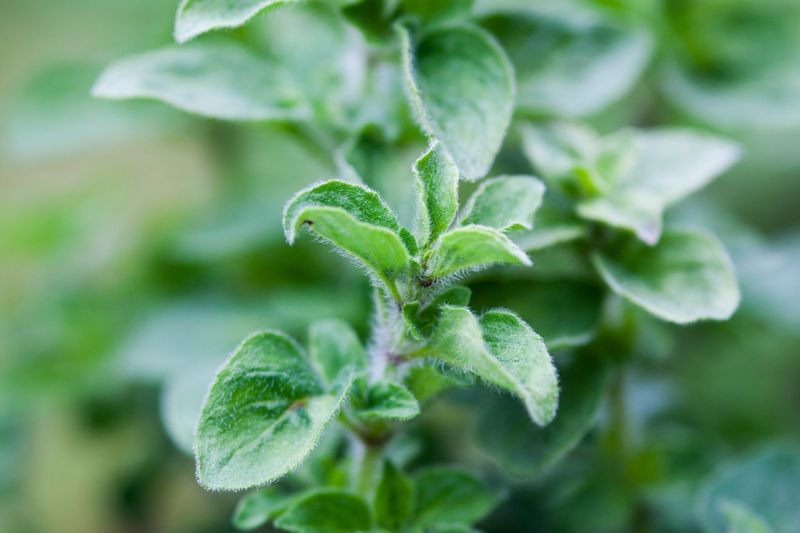
When you want an herb that feels a little tougher and more grounded, oregano is a great one to start with. It does not root quite as quickly as mint, but it is still very manageable in water, and once it gets going, it earns its keep in the kitchen fast.
Your Georgia Garden Changes Every Week. Your Plan Should Too.
Gardening in Georgia changes quickly throughout the season. Every Friday you’ll receive a simple weekly plan showing exactly what to plant, prune, fertilize, harvest, and protect so you never miss the right timing.
That bold, earthy flavor is reason enough to make room for it indoors.
Use fresh, non-woody tip cuttings about four to five inches long. Strip off the leaves from the lower half of each stem and place the cuttings in a small jar of clean water.
Keep them in a bright spot, ideally with several hours of direct sun each day. Oregano likes strong light, and without it, the stems can stretch and weaken before they ever become useful.
Refresh the water every couple of days and be patient while roots begin to form, usually within two to three weeks.
This is one of those herbs that is best treated as a water starter rather than a permanent water herb. Once the roots are visible and reasonably strong, move oregano into a pot with fast-draining potting mix.
A gritty mix works especially well because oregano does not enjoy staying soggy. After transplanting, let the top of the soil dry slightly between waterings and keep the plant in the brightest window you have.
Pinching it back helps it stay compact and leafy instead of leggy. Once established, oregano gives you steady harvests for sauces, roasted vegetables, grilled meats, and homemade pizza nights, which is exactly why it deserves a spot in an indoor Georgia herb setup.
3. Mint Nearly Impossible To Stop Once Started
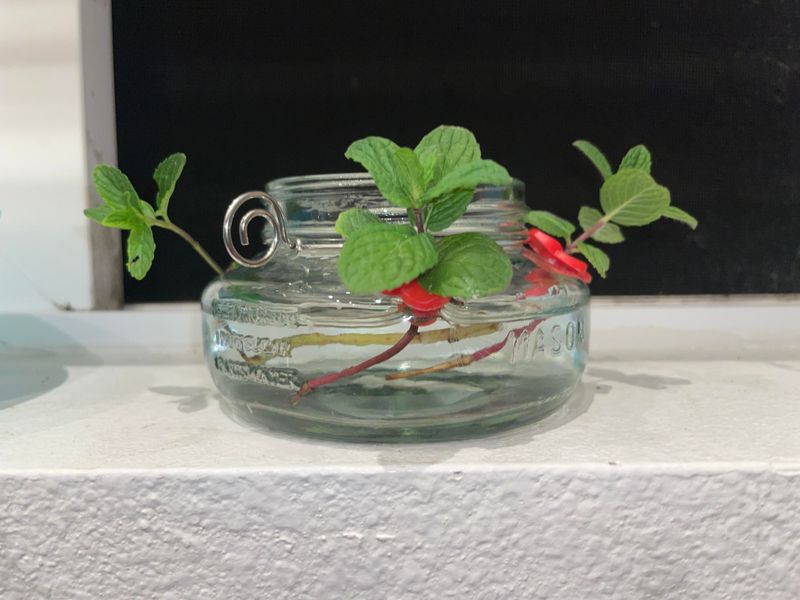
Drop a fresh cutting into water, set it near a bright window, and it usually starts acting like it owns the place almost immediately. That vigorous growth is exactly why mint is such a good candidate for indoor water rooting in Georgia, especially for anyone who wants quick results and a little confidence boost.
Take a four to five inch cutting from a healthy stem and remove the lower leaves. Set it in a glass or jar with enough water to cover the bare stem, but not so much that the leaves touch the surface.
Mint tends to root fast, often within just a few days to a week, especially in a warm kitchen or sunny breakfast nook. East-facing windows work beautifully, though bright indirect light is usually enough to keep it moving.
Mint can sit in water longer than many herbs and still look pretty good for a while, which is part of its charm. Still, for fuller growth and more reliable leaf production, it is smarter to move rooted stems into potting mix after the roots get established.
A container is the better long-term home anyway, since mint likes to spread and can get a little unruly. Indoors, that is actually a good thing because a potted mint plant can keep supplying leaves for tea, fruit salads, cold drinks, and desserts without much drama.
Keep the soil lightly moist once transplanted, give it bright light, and trim often to encourage fresh new shoots.
4. Thyme Small But Packed With Flavor
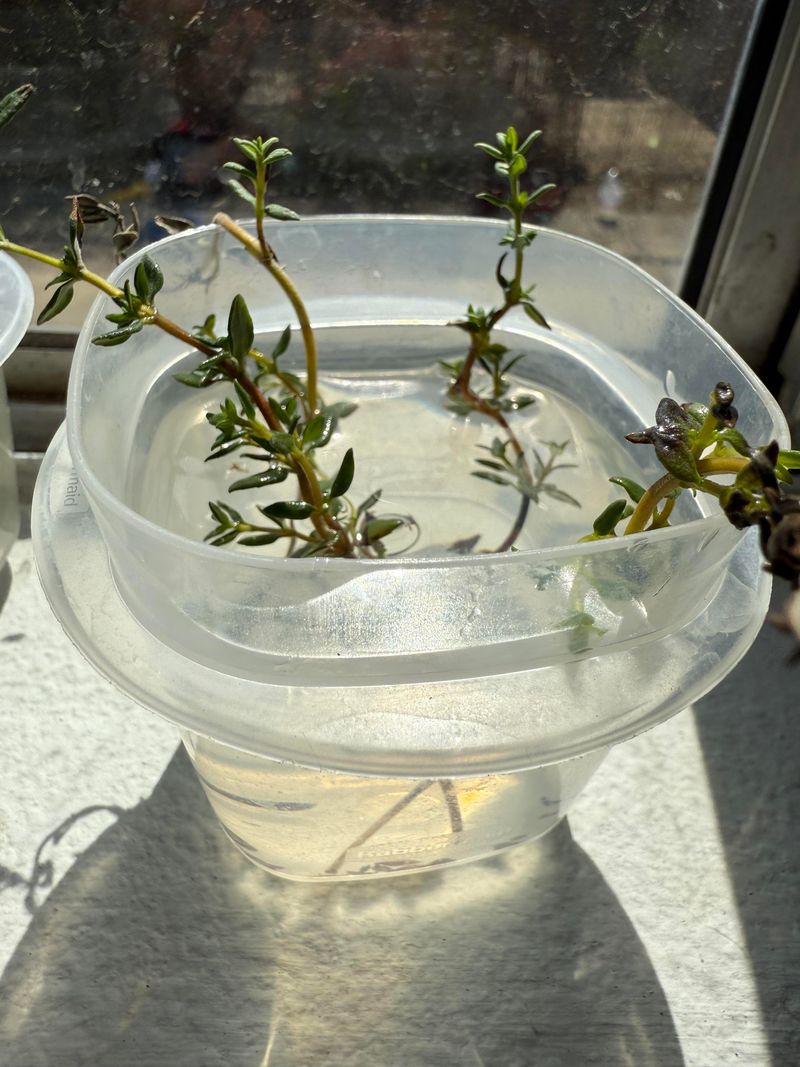
Some herbs ask for a little more patience, and thyme definitely falls into that category. It is not difficult, but it does take its time, which makes it a good choice for anyone willing to let the process unfold without poking at the roots every five minutes.
Once it settles in, though, thyme is wonderfully useful and surprisingly charming to keep indoors.
Start with young green stems rather than older woody ones. Cut sections about four inches long, remove the lower leaves, and place them in a small jar with just enough water to cover the bare stems.
Keep the jar near a bright window where the cuttings get strong light and steady warmth. Change the water every two to three days, and do not worry if it seems slow at first.
Thyme often takes two to four weeks to produce roots, especially compared to faster herbs like basil or mint.
Although thyme can begin life in water, it usually performs much better once it moves into a pot. After the roots form, transplant it into a container filled with very well-draining potting mix, ideally something light and sandy rather than rich and moisture-holding.
Thyme likes bright light and does not appreciate wet feet, so let the soil dry slightly between waterings. Once settled, it becomes a tidy little plant you can snip from regularly for soups, chicken dishes, roasted vegetables, and breads.
Indoors, it brings a neat, fragrant, almost cottage-garden feel to the windowsill, and in a Georgia kitchen, that kind of low-key usefulness is hard to beat.
5. Lemon Balm Fresh Citrus Scent Indoors
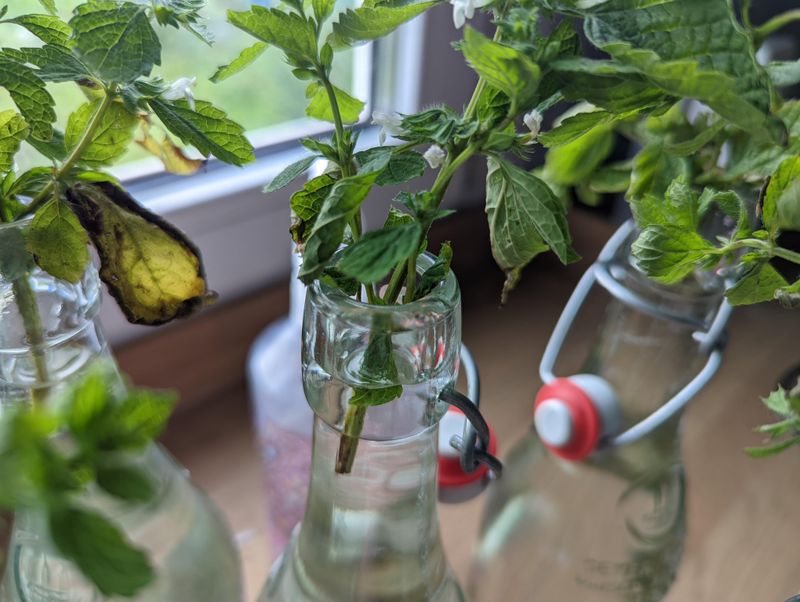
A windowsill herb that smells fresh before you even touch it already feels like a win, and lemon balm absolutely has that effect. Its soft citrus scent brightens up a room, and it is one of the easiest herbs to get started in water, which makes it especially appealing for indoor growing in Georgia.
Take a healthy cutting about four to six inches long and remove the lower leaves. Place the stem in a jar of clean water near a bright window with gentle light.
Lemon balm does not need the harshest direct sun all day, so an east-facing window or a bright room with filtered light usually works well. Change the water every few days, keep the leaves above the surface, and you should start seeing roots within about a week or so.
Like mint, lemon balm roots eagerly in water, but it is still happier long term in soil. Once the roots are established, move it into a pot with regular well-draining potting mix and keep it in a bright indoor spot.
It likes even moisture more than drought, but it still should not sit in soggy soil. Pinching the stems encourages bushier growth and helps keep it from getting lanky.
Once established, lemon balm is easy to harvest for tea, fruit dishes, lemonade, and simple homemade syrups. It is also one of those herbs that makes indoor gardening feel pleasant even when you are not cooking with it, because the plant itself looks cheerful and smells clean every time you brush past it.
6. Stevia Naturally Sweet Leaves Year-Round
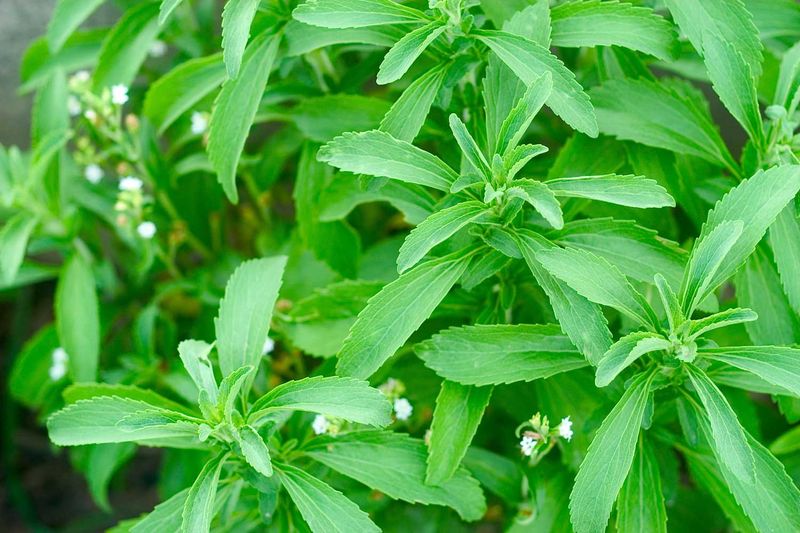
Sweet herbs always feel a little surprising, and stevia has that effect right away. One small leaf can taste far sweeter than people expect, which makes it a fun one to keep indoors if you like herbal tea, smoothies, or homemade drinks.
Starting it in water is simple enough, especially in a warm Georgia home where cuttings do not have to fight cold indoor conditions.
Take a three to five inch cutting from a healthy plant and remove the lower leaves. Place the stem in a jar of fresh water and set it near a bright sunny window.
Stevia likes warmth and plenty of light, so this is not the herb to tuck into a dim corner and hope for the best. Change the water every two to three days and watch for roots, which usually begin appearing within one to two weeks in good conditions.
The water stage works well for propagation, but stevia is much better once it moves into a pot. After rooting, transplant it into a container with light, well-draining potting mix and keep it in the brightest spot available.
It can be a little sensitive to weak light indoors, so a grow light may help during darker stretches of winter. Once established, pinch the tips often to encourage branching and a fuller shape.
That matters because more stems mean more leaves to harvest. Fresh stevia leaves can sweeten tea and lemonade naturally, and the plant itself stays neat and useful indoors once it finds its rhythm in soil.
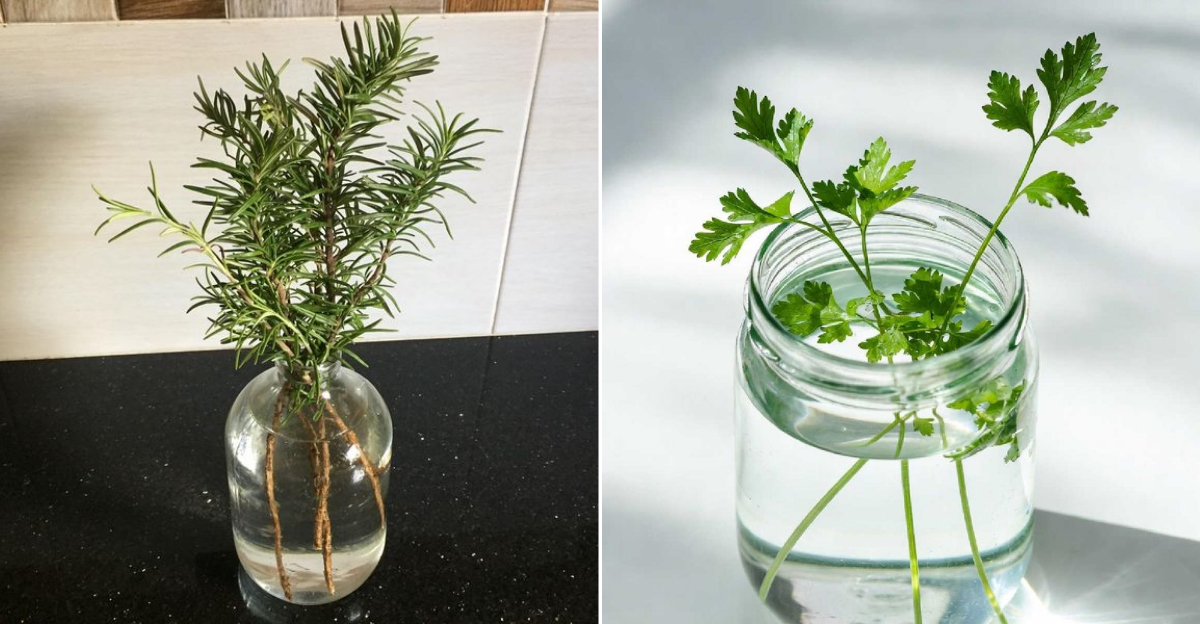
7. Rosemary Slow Growing But Worth It
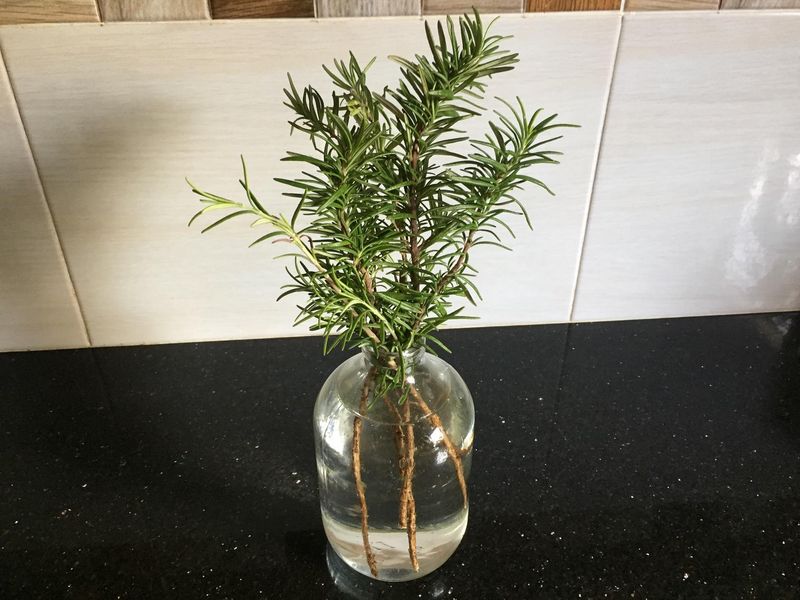
Some herbs feel instantly cooperative, and then there is rosemary, which tends to make you earn it a little. It is slower, woodier, and less forgiving than basil or mint, but it is also one of the most rewarding herbs to keep once it finally settles in.
That piney scent alone makes it worth trying.
Use fresh tip growth about four to six inches long and strip the leaves from the lower portion of the stem. Set the cutting in a jar of clean water and keep it in the sunniest window you have.
Rosemary likes bright light from the start, and rooting can take a while, sometimes several weeks, so patience really matters here. Change the water every few days and make sure only the bare stem sits below the surface.
This is not an herb that should stay in plain water as its permanent setup. Once roots appear, move rosemary into a small pot filled with sharply draining potting mix, ideally something airy and gritty rather than dense.
Place it back in bright sun and water carefully. Rosemary prefers to dry slightly between drinks, and too much moisture can knock it back fast.
Indoors in Georgia, good light and airflow are the big keys to success. Once the plant is established, trim lightly and regularly to encourage branching.
Fresh rosemary can lift roasted potatoes, bread, chicken, vegetables, and even simple cocktails. It may not be the fastest herb on the list, but once it gets going, it brings a lot of personality to the kitchen.
8. Parsley Crisp, Clean Flavor Anytime
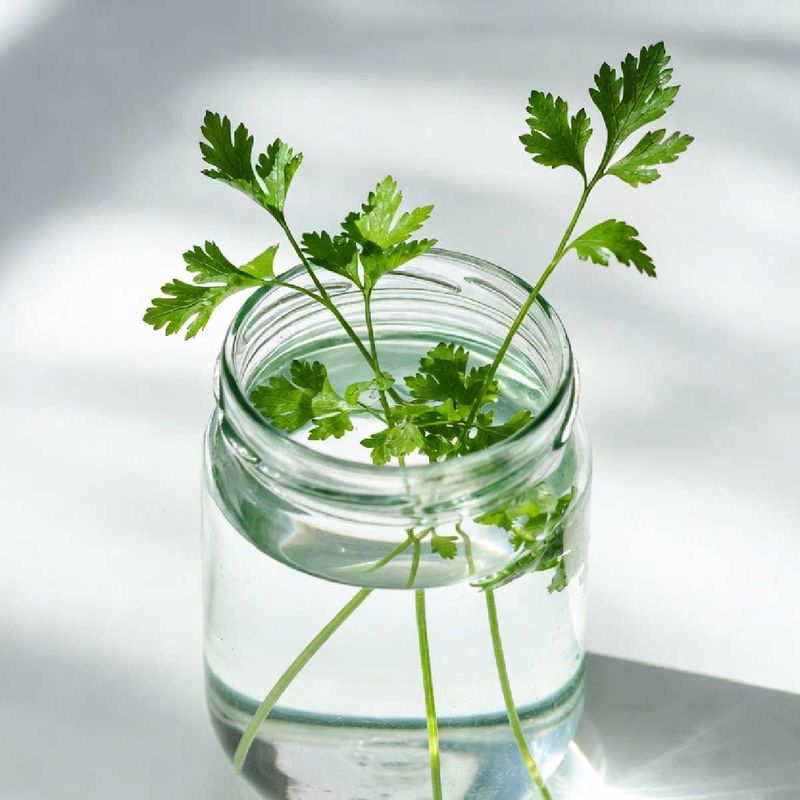
A kitchen herb garden feels incomplete without parsley somewhere in the mix. It is familiar, useful, and easy to reach for in everyday cooking, which makes it one of the most practical herbs to start indoors.
Water propagation can work with parsley cuttings, though it is a little less eager than mint or basil, so it helps to go in with realistic expectations.
Take healthy stems about four to six inches long and remove the lower leaves before placing them in a jar of fresh water. Set the jar in a bright window with plenty of light, ideally six hours or more a day.
Flat-leaf parsley is usually the more flavorful choice for cooking, but curly parsley can be started the same way. Change the water every couple of days and watch for root development over the next couple of weeks.
Even when cuttings do root, parsley is not really a long-term plain-water herb. Once it has a decent set of roots, transplant it into a pot with quality potting mix so it can continue growing strongly.
Parsley prefers consistent moisture and bright light, and it responds well to regular harvesting from the outer stems first. That keeps the center growing and helps the plant stay productive longer.
Indoors in Georgia, parsley can be a dependable little workhorse once it moves past the water stage and into soil. It brings freshness to soups, pasta, roasted vegetables, salads, sauces, and grain dishes, and it earns its place on the windowsill simply by being so useful almost every week of the year.