5 Underused Native Michigan Small Trees That Work In Front Yards
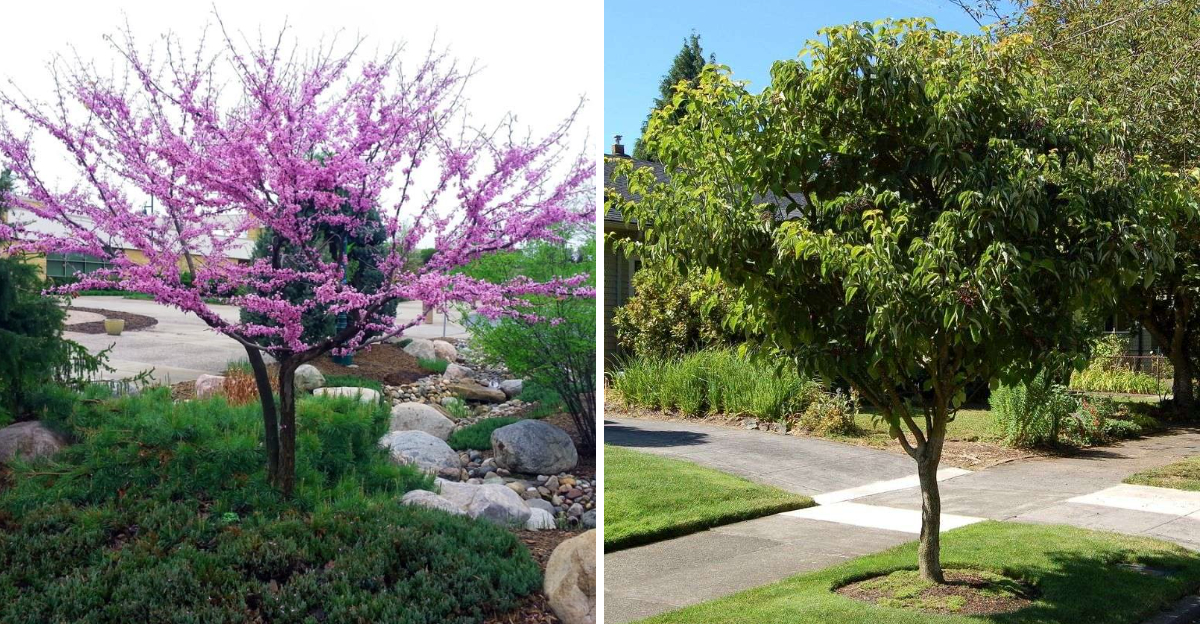
Picking the right tree for a Michigan front yard can be trickier than it looks. A sapling that seems small at the garden center can grow into something that crowds a walkway or blocks a view faster than expected.
That’s why many gardeners play it safe and choose the same familiar trees. The downside is that some fantastic native options often get overlooked.
These smaller Michigan trees bring spring flowers, fall color, and wildlife value without taking over the space.
With a little planning, you can add structure and year-round interest to your yard while keeping things manageable.
1. Serviceberry Brings Flowers And Berries
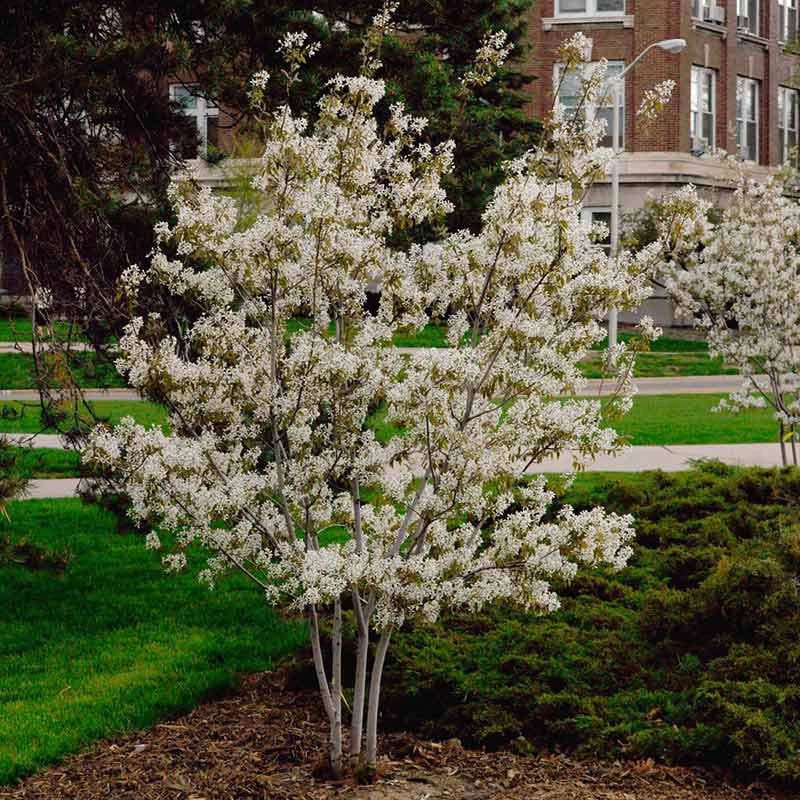
Few sights in a Michigan spring are as quietly stunning as a serviceberry tree covered in soft white blossoms before most other plants have even woken up.
Serviceberry, known botanically as Amelanchier canadensis, earns its place in front yards by delivering interest across multiple seasons without demanding much in return.
It typically reaches 15 to 25 feet tall, which keeps it well within the scale of most residential lots.
Spring brings clusters of delicate white flowers that attract early pollinators like native bees just emerging from winter.
By early summer, small reddish-purple fruits ripen on the branches, drawing robins, cedar waxwings, and other birds that Michigan gardeners love to watch.
The berries are also edible for people and have a mild, sweet flavor similar to blueberries.
Fall color on serviceberry ranges from warm orange to deep red, giving the tree one more moment to stand out before leaves drop.
It adapts well to Michigan’s variable soils, tolerating both moist and moderately dry conditions, and performs in full sun to partial shade.
Serviceberry is underused largely because it lacks the name recognition of ornamental cherries or crabapples, but its four-season value makes it genuinely competitive.
Gardeners who plant one rarely regret it, and the wildlife activity it brings to a front yard adds a lively, natural energy that more common tree choices simply cannot match.
2. Eastern Redbud Adds Early Color
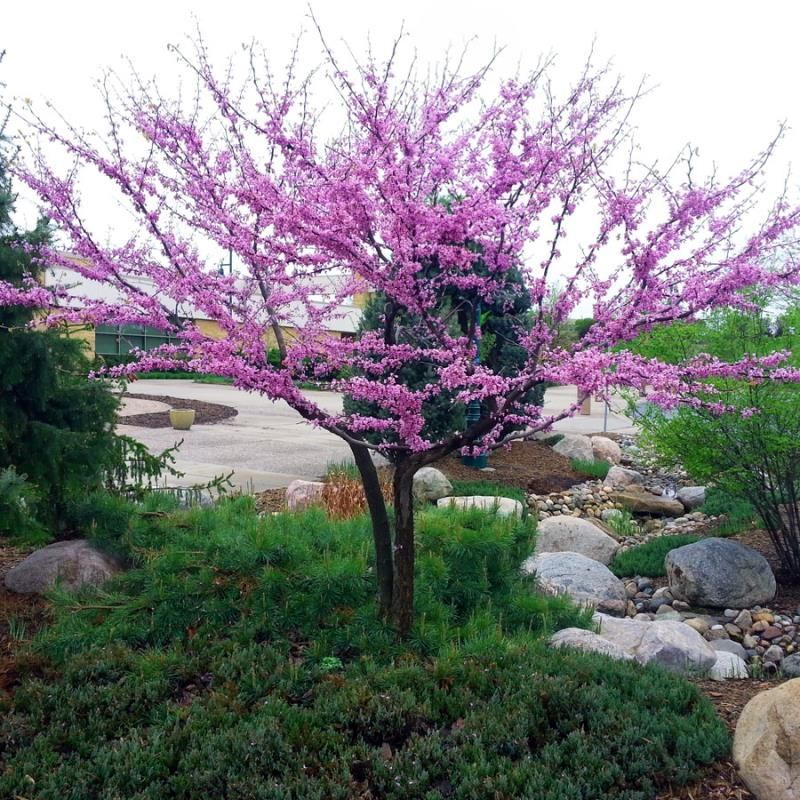
Before the grass turns green and before most Michigan trees have leafed out, Eastern Redbud puts on one of the most memorable shows in the residential landscape.
Cercis canadensis blooms in early to mid-spring, covering its bare branches with clusters of rosy-pink to magenta flowers that practically glow against a gray Michigan sky.
That early burst of color is something neighbors notice and remember.
Eastern Redbud typically matures between 20 and 30 feet tall with a spread that can match or exceed its height, creating a broad, rounded canopy that works beautifully as a specimen tree in a front yard.
Heart-shaped leaves follow the flowers and hold their fresh green color through summer before shifting to yellow in fall.
The tree prefers well-drained soil and does well in full sun to partial shade, conditions that are easy to find across much of Michigan.
One reason this tree stays underused in Michigan is a common misconception that it is too tender for colder northern areas.
Your Michigan Garden Changes Every Week. Your Plan Should Too.
Gardening in Michigan changes quickly throughout the season. Every Friday you’ll receive a simple weekly plan showing exactly what to plant, prune, fertilize, harvest, and protect so you never miss the right timing.
While it performs most reliably in the southern lower peninsula, many Michigan gardeners in moderate zones have grown it successfully for years.
Choosing a locally sourced or cold-hardy cultivar reduces weather-related risk considerably. Eastern Redbud also tends to stay manageable in size, rarely overwhelming a modest front yard.
For homeowners wanting a tree that makes an immediate visual impact without requiring complicated maintenance, it is a genuinely rewarding choice.
3. American Hornbeam Builds Strong Structure
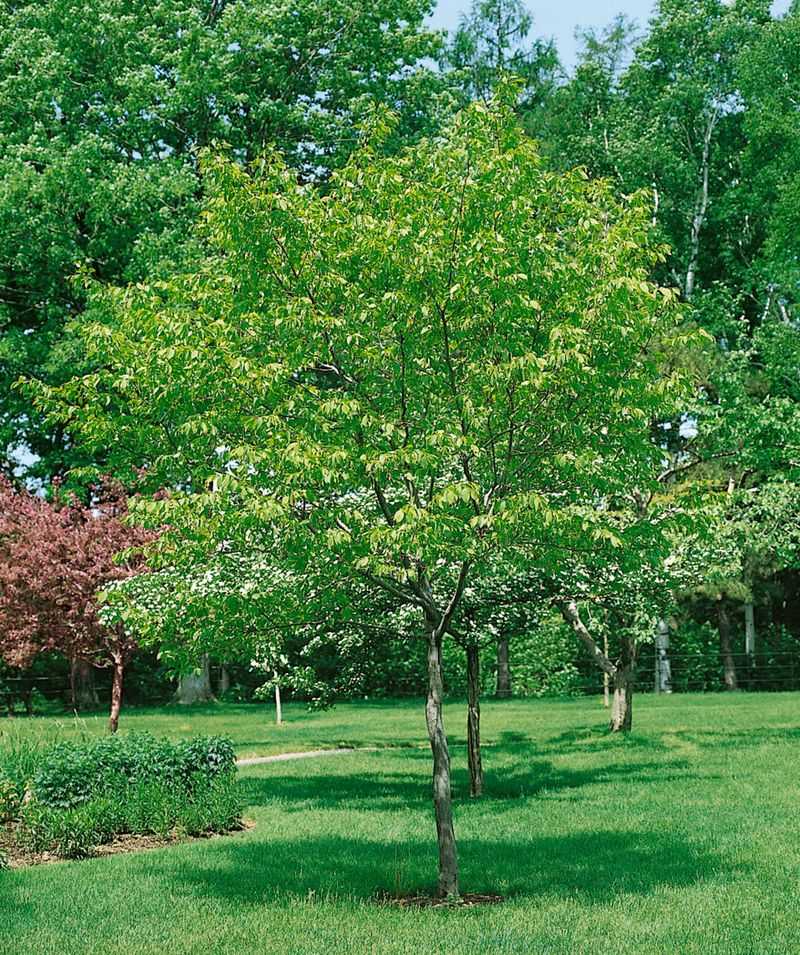
Walk up to an American Hornbeam and the first thing you notice is the trunk – smooth, gray, and rippled with muscle-like ridges that give the tree its common nickname, musclewood.
Carpinus caroliniana is a native Michigan understory tree that brings genuine structural beauty to front yards, especially those with partial to full shade where other small trees struggle to thrive.
That shade tolerance alone sets it apart from most ornamental options.
American Hornbeam grows slowly, typically reaching 20 to 30 feet at maturity over many years, which means it stays in scale with a residential front yard for a long time.
Its dense, multi-stemmed form creates a layered, natural silhouette that looks intentional and elegant without requiring pruning to maintain its shape.
In fall, the foliage shifts to orange, red, and yellow, adding warm seasonal color to shaded spots that often look dull at that time of year.
Michigan’s native woodland understory is where this tree evolved, so it handles the state’s range of soil types, moisture levels, and temperature swings with quiet reliability.
It supports caterpillars of several native moth and butterfly species, making it a low-key but meaningful contributor to local food webs.
Homeowners often overlook American Hornbeam because it grows slowly and lacks flashy flowers, but its architectural bark, reliable fall color, and shade adaptability make it one of the most underappreciated small trees available for Michigan front yards.
Patience with this tree pays off well.
4. Pagoda Dogwood Shows Layered Form
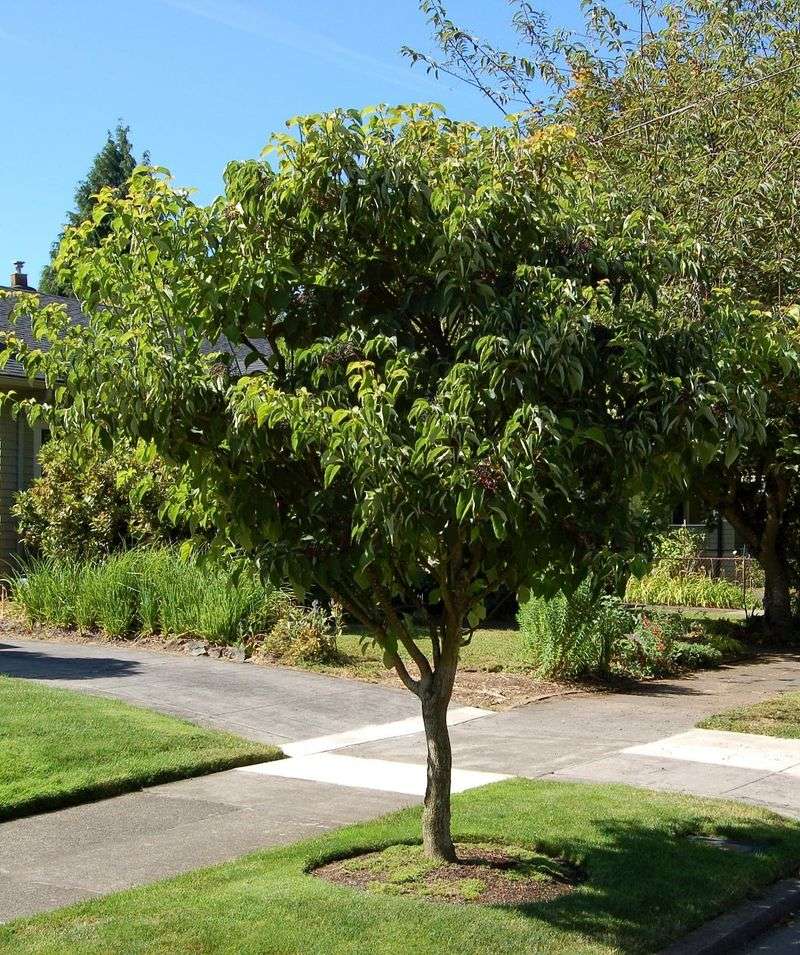
Not every front yard gets full sun, and in those shadier spots along the north side of a house or beneath a larger canopy, options for small ornamental trees get thin quickly. Pagoda Dogwood, Cornus alternifolia, was practically built for those conditions.
Its naturally horizontal branching creates a striking tiered silhouette that looks architectural even in winter when the leaves are gone, giving the yard year-round visual interest without any shaping required.
In late spring, flat-topped clusters of small creamy-white flowers cover the horizontal branches, creating a layered effect that looks almost like a living sculpture.
Bluish-black berries follow in summer, and birds – particularly thrushes and vireos – seek them out eagerly.
Fall foliage on Pagoda Dogwood shifts to rich red and burgundy, adding another layer of seasonal color before the tree goes dormant for Michigan’s cold months.
Mature trees typically reach 15 to 20 feet tall with a spread that can be wider than the height, so placement matters.
Giving it room to extend its horizontal branches without interference lets the tree express its best natural form.
Pagoda Dogwood prefers moist, well-drained, slightly acidic soils and benefits from a layer of organic mulch that keeps roots cool and moisture consistent.
It is genuinely uncommon in Michigan front yards, which is surprising given how well it handles shade, supports wildlife, and delivers multi-season beauty.
For yards with challenging light conditions, few native trees offer this much visual reward.
5. Hop Hornbeam Stays Tough And Compact
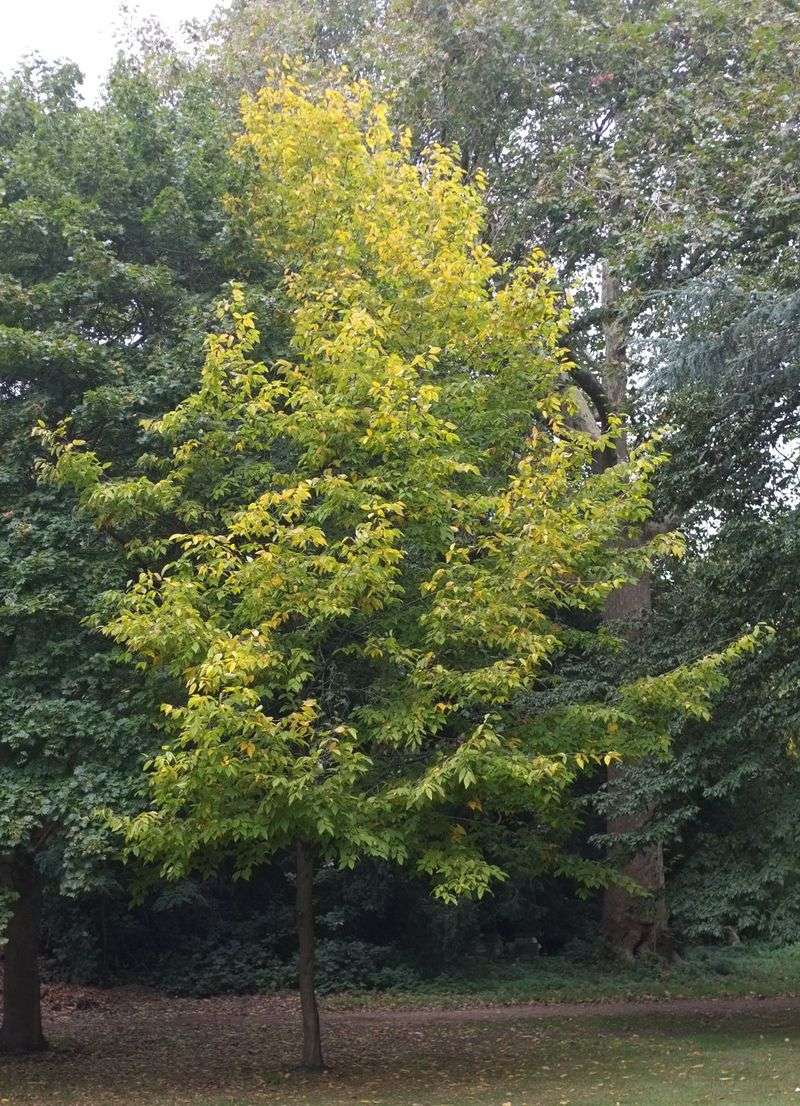
Reliability is one of the most underrated qualities in a front yard tree, and Hop Hornbeam, Ostrya virginiana, has it in abundance.
This native Michigan tree handles drought, compacted soil, and deep shade with a steadiness that few small trees can match.
It tends to fly under the radar at most nurseries, but for gardeners tired of babying finicky ornamentals, Hop Hornbeam offers a refreshing change of pace.
The tree gets its common name from the papery, hop-like seed clusters that hang from the branches in late summer and fall, giving it a distinctive textured look that stands out in a residential landscape.
Mature size typically ranges from 25 to 40 feet tall, though it grows slowly enough that it stays compact and manageable for many years after planting.
The bark is shaggy and finely shredded, adding winter interest when the tree is bare.
Hop Hornbeam grows naturally across Michigan’s forests, which means it is well adapted to the state’s soils and climate without needing extra coddling.
It tolerates both dry upland sites and moist woodland conditions, making it flexible enough to work in a range of front yard situations.
Fall foliage turns a soft yellow before dropping, a subtle but pleasant seasonal shift. Because it grows slowly and lacks showy flowers, many gardeners overlook it in favor of faster-growing options.
That patience, though, rewards homeowners with a long-lived, low-maintenance tree that holds its structure and character for decades across Michigan landscapes.