Shrubs Michigan Homeowners Are Planting Instead Of Arborvitae That Deer Won’t Touch
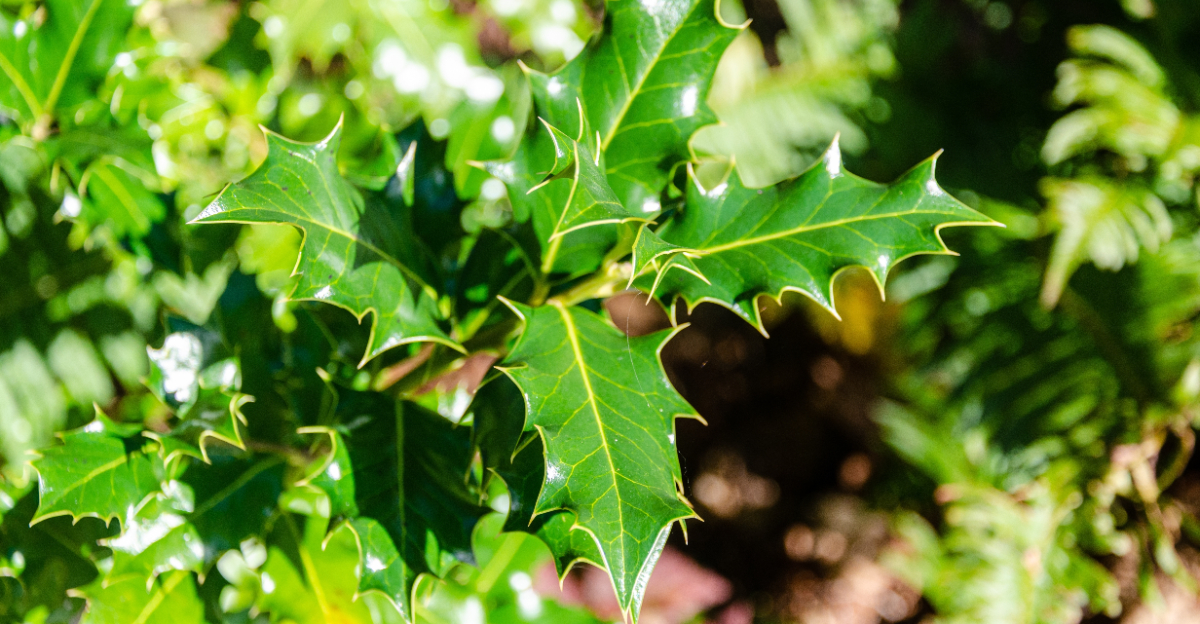
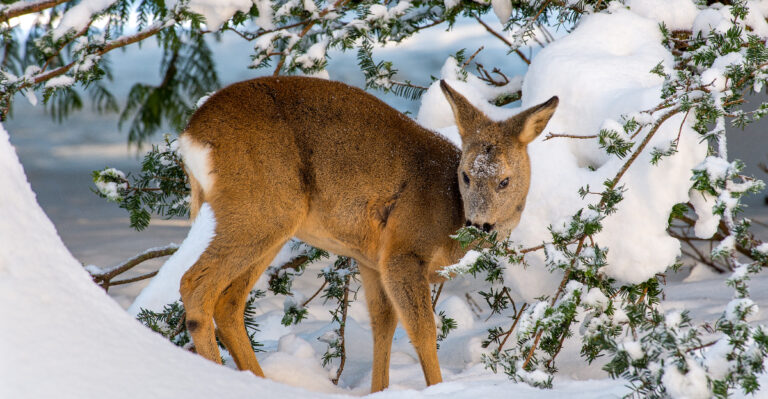
Arborvitae has long been a go to choice for privacy in Michigan yards, but many homeowners are getting tired of watching deer treat them like an open buffet.
After one rough winter or a few hungry visits, those once full green shrubs can end up thin, patchy, and disappointing.
That is why more people are looking for better options that still offer privacy without inviting constant damage. The good news is there are shrubs that can handle Michigan weather and are far less tempting to deer.
Some stay dense and tidy, while others add flowers, texture, or seasonal color along the way. Choosing the right replacement can save time, money, and a lot of frustration.
If you want a landscape that looks strong and attractive without becoming a favorite snack, these shrubs are worth a serious look.
1. Northern Bayberry (Myrica pensylvanica)
Few shrubs can handle the rough edges of Michigan living quite like Northern Bayberry. Salt spray from winter road treatments, strong winds off the Great Lakes, and poor sandy soils are no match for this tough native plant.
Deer tend to avoid it almost entirely because of its strongly aromatic foliage, which smells pleasant to humans but is a real turnoff for browsing animals.
Northern Bayberry grows naturally along roadsides and coastal areas across Michigan, making it perfectly suited to the local climate. It reaches about five to twelve feet tall, forming a dense, rounded hedge that works beautifully as a privacy screen or windbreak.
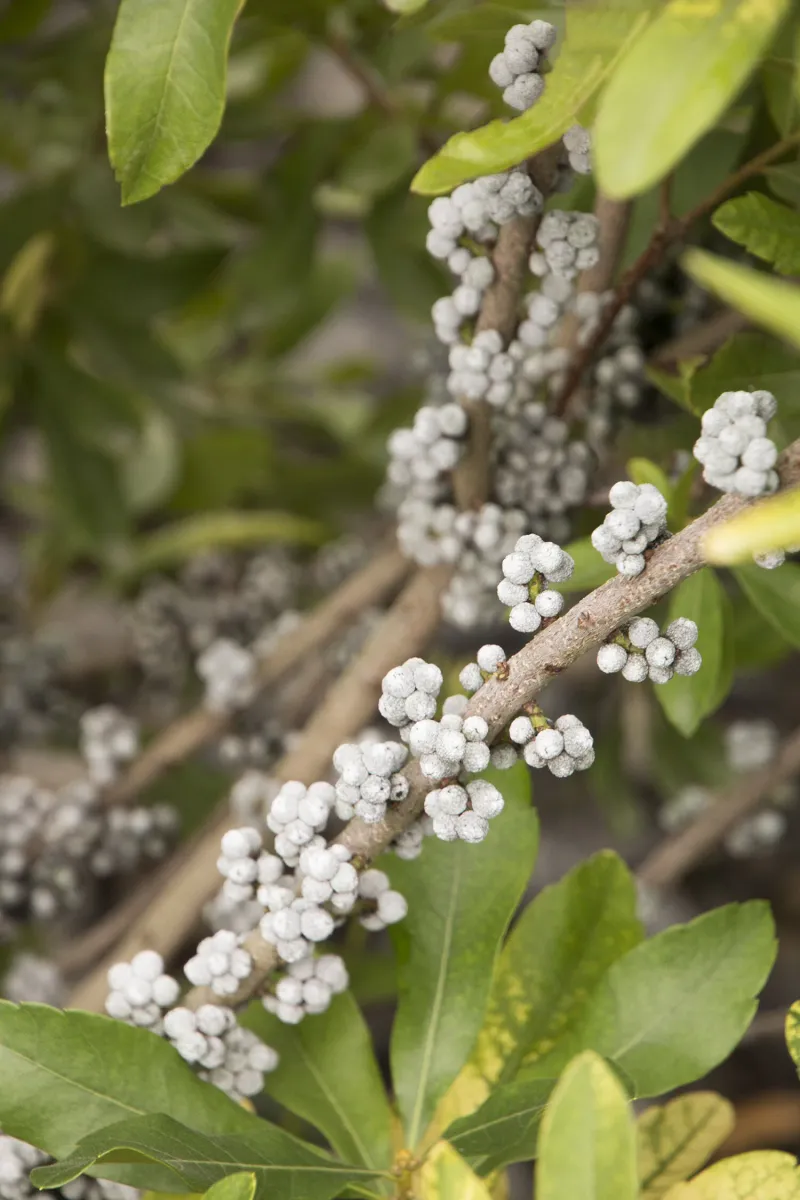
The gray-green leaves hold on late into the season, and the waxy silver-gray berries that appear in fall attract birds through winter.
Planting it in groups of three or more gives you the thick, layered look that arborvitae used to provide. It spreads slowly by root suckers, filling in gaps over time without much effort from you.
Michigan gardeners who switch to Northern Bayberry often say they wish they had done it sooner. Low maintenance, native, wildlife-friendly, and virtually ignored by deer, this shrub checks every box for a smart, long-lasting Michigan landscape.
2. Inkberry Holly (Ilex glabra)
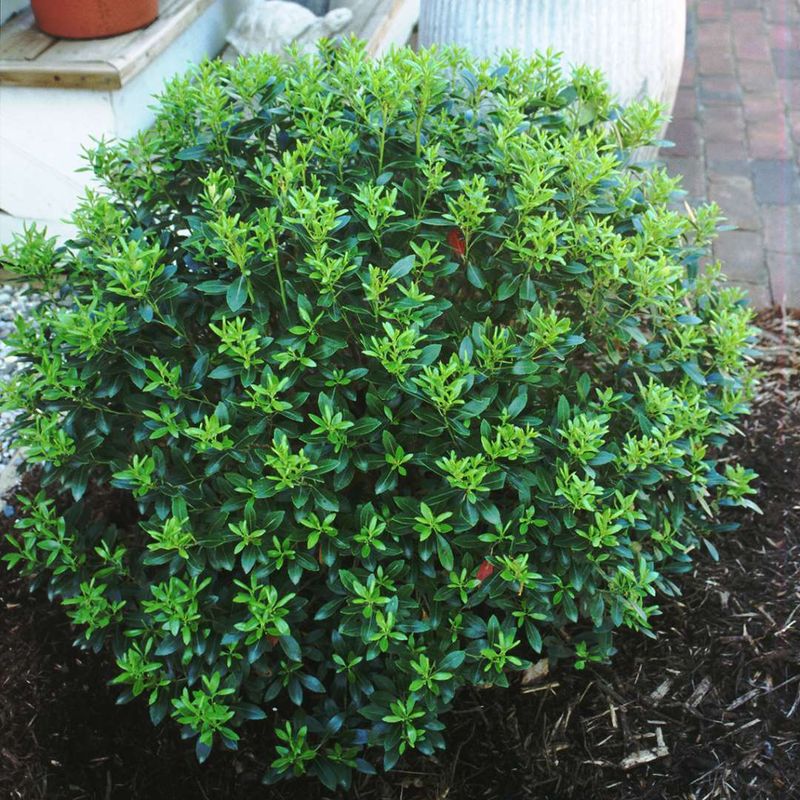
Inkberry Holly is one of those quietly impressive plants that earns its place in a Michigan yard without demanding much attention. Unlike arborvitae, which deer treat like a salad bar, Inkberry Holly is far less appealing to browsing animals thanks to its bitter foliage.
It stays green year-round, giving you the same structured, evergreen look that homeowners love about arborvitae, but with far better resistance to wildlife damage.
This native shrub thrives in wet or acidic soils, which makes it a perfect fit for low-lying Michigan yards that tend to stay soggy after heavy rain or snowmelt. It grows four to eight feet tall and spreads steadily, forming a tidy, dense hedge when planted in rows.
The small black berries that appear in fall are a favorite food source for birds like bluebirds and robins, adding life and movement to your yard through the colder months.
Inkberry Holly handles full sun and partial shade equally well, giving you flexibility when planning your landscape layout. Pruning it once a year keeps it neat and encourages thicker growth.
Your Michigan Garden Changes Every Week. Your Plan Should Too.
Gardening in Michigan changes quickly throughout the season. Every Friday you’ll receive a simple weekly plan showing exactly what to plant, prune, fertilize, harvest, and protect so you never miss the right timing.
Michigan homeowners who grow it along fences and property lines consistently report that deer walk right past it. For a native, low-fuss evergreen that delivers real screening power, Inkberry Holly is a genuinely smart swap.
3. Common Juniper (Juniperus communis)
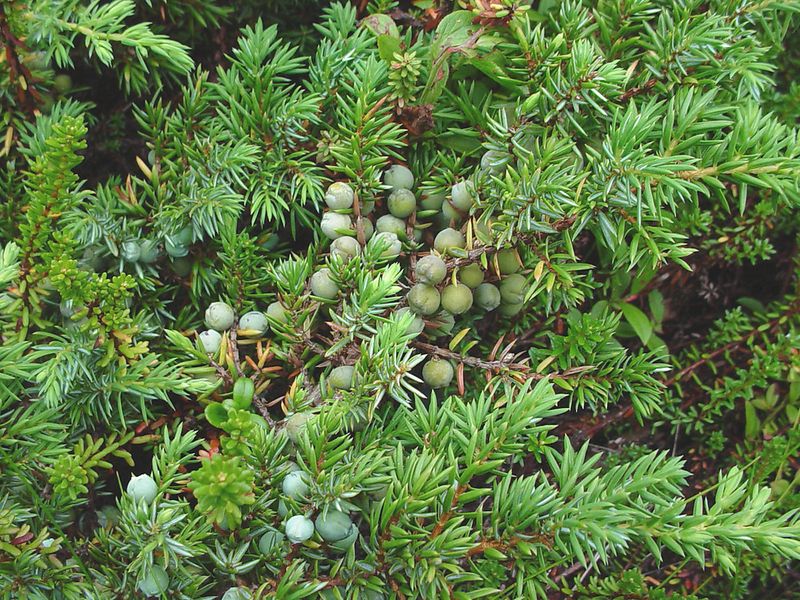
Michigan State University Extension has specifically noted that junipers are among the shrubs deer most consistently avoid, and Common Juniper is one of the best examples of why.
Those sharp, stiff needles are simply uncomfortable for deer to chew, and the strong resinous scent acts as a natural deterrent.
In areas of Michigan where deer pressure is intense, Common Juniper holds its ground season after season without fencing or sprays.
Common Juniper is a native species that grows naturally across northern Michigan and the Upper Peninsula, thriving in rocky, sandy, or dry soils where many other shrubs struggle to survive.
It typically grows two to five feet tall in a spreading, mounded form, though some varieties grow more upright.
The blue-green needles stay vibrant through winter, and the small blue-gray berries add texture and wildlife value to your yard.
One of the biggest advantages over arborvitae is how little water and fertilizer Common Juniper needs once established.
It handles Michigan winters without browning, without deer damage, and without the constant replacement costs that frustrated arborvitae growers know too well.
Planting it along driveways, slopes, or sunny borders gives you a rugged, no-fuss hedge that looks great in every season. Tough, native, and genuinely deer-resistant, Common Juniper earns its spot on this list without question.
4. Ninebark (Physocarpus opulifolius)
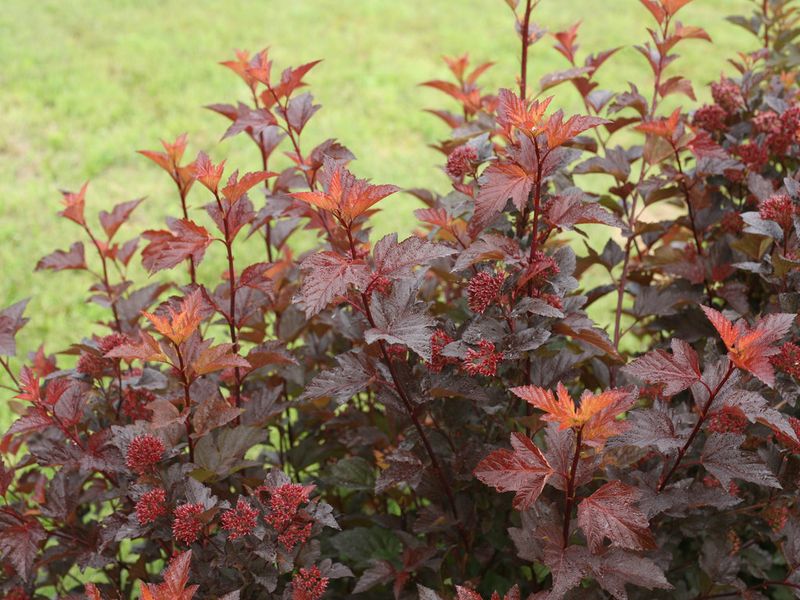
There is something almost theatrical about Ninebark in a Michigan garden. The peeling, layered bark catches the light in winter, the arching branches fill out into a lush screen by summer, and the clusters of white or pink flowers in late spring draw in pollinators by the dozens.
Deer browse it far less frequently than arborvitae, making it a reliable choice for yards where wildlife pressure is a constant challenge.
Ninebark adapts to a wide range of Michigan soil types, from heavy clay to dry, sandy ground, and it handles both full sun and partial shade without complaint.
It grows six to ten feet tall and nearly as wide, so planting it in a row creates a thick, natural-looking privacy hedge that fills in faster than you might expect.
Popular cultivars like Diabolo and Summer Wine offer deep burgundy or purple foliage that adds bold color contrast to any landscape.
Unlike arborvitae, Ninebark actually rebounds quickly even if deer do take a nibble during harsh winters when food is scarce. Its vigorous growth habit means minor browsing rarely causes lasting damage.
Michigan gardeners who plant it along sunny borders or as a backdrop for perennial beds often describe it as one of the most rewarding native shrubs they have ever grown. Versatile, beautiful, and tough as Michigan winters, Ninebark delivers all season long.
5. American Holly (Ilex opaca)
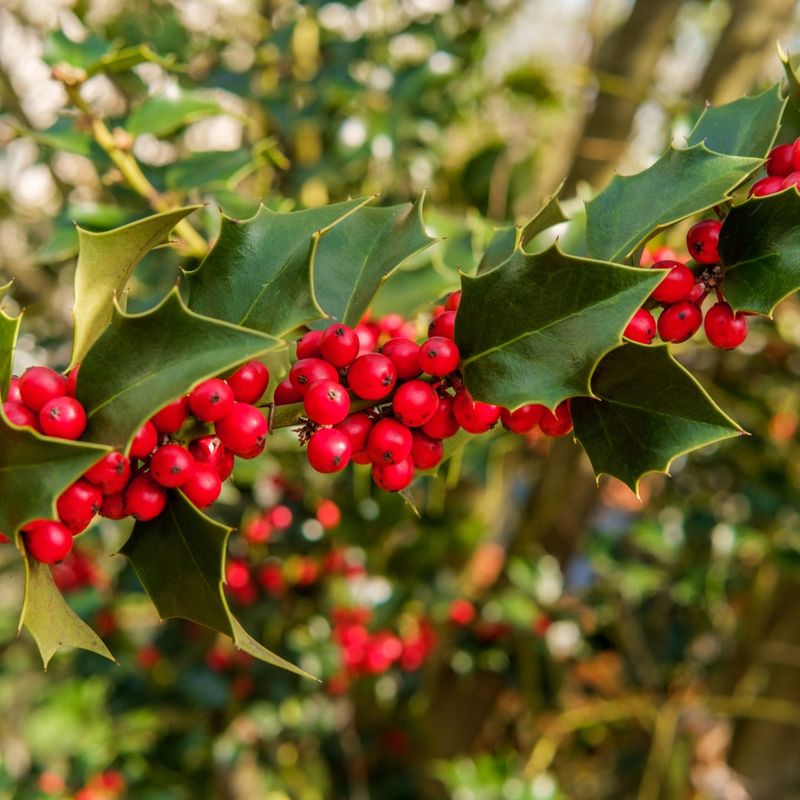
Walk up to an American Holly and run your fingers near the leaf edges, and you will immediately understand why deer give it a wide berth.
Those stiff, spiny leaves are sharp enough to discourage even the most determined browser, making American Holly one of the more naturally protected evergreen options available to Michigan homeowners.
It provides year-round screening just like arborvitae, but with a built-in defense system that arborvitae simply lacks.
American Holly grows slowly into a dense, pyramidal form that can reach fifteen to thirty feet at full maturity, though most residential plantings stay much smaller with occasional trimming.
The glossy, dark green leaves stay on through winter, and female plants produce clusters of bright red berries that look stunning against snow and attract cedar waxwings and other winter birds.
You do need both a male and female plant nearby for berry production, so plan accordingly when purchasing.
Michigan gardeners in the southern part of the state tend to have the best results with American Holly, as it prefers slightly milder winters and well-drained, slightly acidic soils.
Mulching around the base helps protect roots during cold snaps and retains moisture through dry summers.
Once established, it requires very little care and holds its shape beautifully for years. For a classic, stately evergreen that deer consistently avoid, American Holly is a standout choice.
6. Sweetfern (Comptonia peregrina)
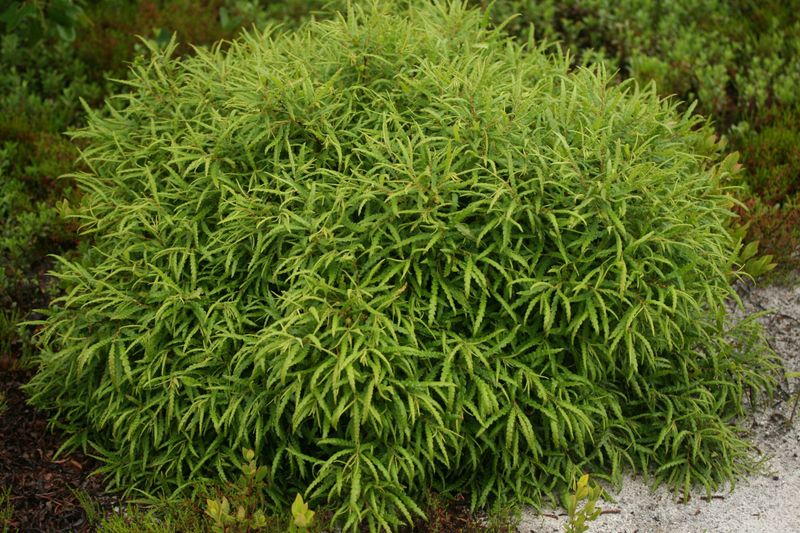
Sweetfern might be the most underrated native shrub growing across Michigan, and homeowners who discover it often wonder why it took them so long.
Despite its name, it is not actually a fern at all but a woody native shrub with finely cut, fern-like leaves that release a rich, spicy fragrance when brushed.
That strong scent is precisely why deer tend to leave it alone, finding the smell far less appealing than the neutral foliage of arborvitae.
Sandy, dry, nutrient-poor soils are where Sweetfern truly shines, which makes it ideal for Michigan roadsides, slopes, and areas where other shrubs struggle to establish.
It grows two to four feet tall and spreads slowly by underground runners, gradually forming a low, dense mass of fragrant foliage that works beautifully as a ground-level screen or slope stabilizer.
The foliage turns a warm golden-brown in fall before dropping, adding seasonal charm to the yard.
Sweetfern fixes its own nitrogen from the air, meaning it actually improves poor soil over time without any fertilizer input from you. It thrives in full sun and handles drought conditions that would stress most other shrubs.
Michigan homeowners planting along gravel driveways or sandy berms find it nearly impossible to beat for low-maintenance coverage. Tough, fragrant, native, and deer-resistant, Sweetfern is a hidden gem worth adding to any Michigan landscape.
7. Spicebush (Lindera benzoin)
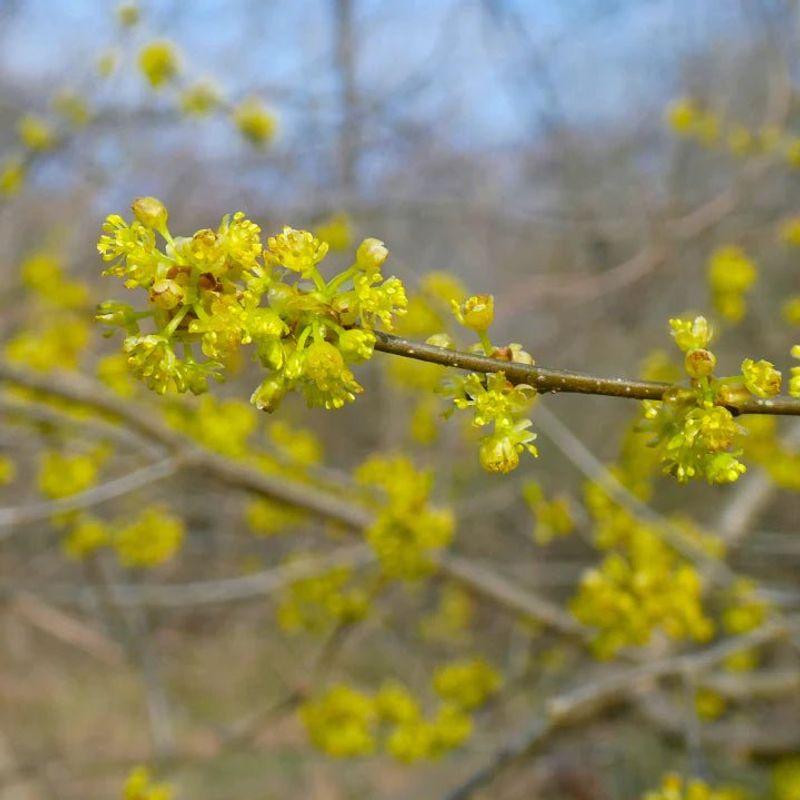
Before most Michigan trees have even thought about leafing out, Spicebush is already lighting up the woodland edges with tiny clusters of bright yellow flowers.
It is one of the earliest native shrubs to bloom in spring, which makes it a valuable early food source for pollinators and a cheerful sign that warmer days are coming.
Deer tend to browse it far less frequently than arborvitae, likely because of the spicy, aromatic oils found throughout its leaves, stems, and bark.
Spicebush grows naturally in the understory of Michigan forests, which means it is perfectly adapted to the partial shade conditions found along fence lines, near buildings, or under the canopy of larger trees.
It reaches six to twelve feet tall with a rounded, multi-stemmed form that creates a natural, layered look rather than the stiff, formal appearance of a clipped arborvitae hedge.
Female plants produce glossy red berries in late summer that are a critical food source for migrating birds like wood thrushes and veeries.
Fall color is another reason Michigan gardeners love Spicebush. The leaves turn a rich, buttery yellow that glows in the low autumn light, making it one of the most visually rewarding natives you can plant.
It handles clay soils and occasional wet conditions without trouble, and once established, needs very little care. For shaded or partly shaded Michigan yards, Spicebush fills the gap that arborvitae simply cannot.
8. Red Osier Dogwood (Cornus sericea)
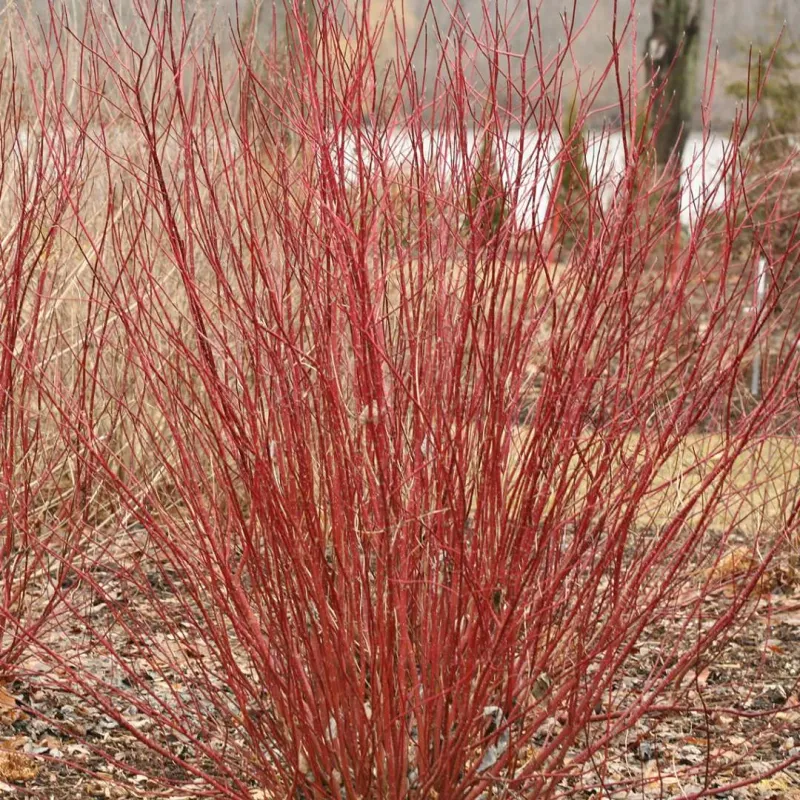
Few shrubs put on a winter show quite like Red Osier Dogwood. When snow blankets a Michigan yard and everything else looks gray and bare, those brilliant crimson stems glow like something out of a holiday card.
It is a native shrub built for Michigan conditions, tolerating wet, boggy soils that would quickly overwhelm arborvitae, and it bounces back readily even after heavy browsing, which makes it a practical choice for deer-prone neighborhoods.
Red Osier Dogwood grows six to nine feet tall and spreads by underground stems to form a dense, wide thicket over time. Planted along a property line or the edge of a wet area, it creates a natural privacy screen that fills in generously without much help from you.
In spring, flat-topped clusters of white flowers appear and attract butterflies, and by late summer the white or bluish berries ripen and draw in dozens of bird species.
While deer may occasionally nibble on young stems during the harshest Michigan winters when other food is scarce, the shrub’s vigorous growth habit means it recovers quickly and rarely shows lasting damage.
Cutting the oldest stems back to the ground every few years keeps the red stem color vivid and the plant looking its best.
Michigan homeowners with low spots, rain gardens, or wet ditches find Red Osier Dogwood to be absolutely irreplaceable. It thrives exactly where arborvitae would fail completely.
9. Boxwood (Buxus spp.)
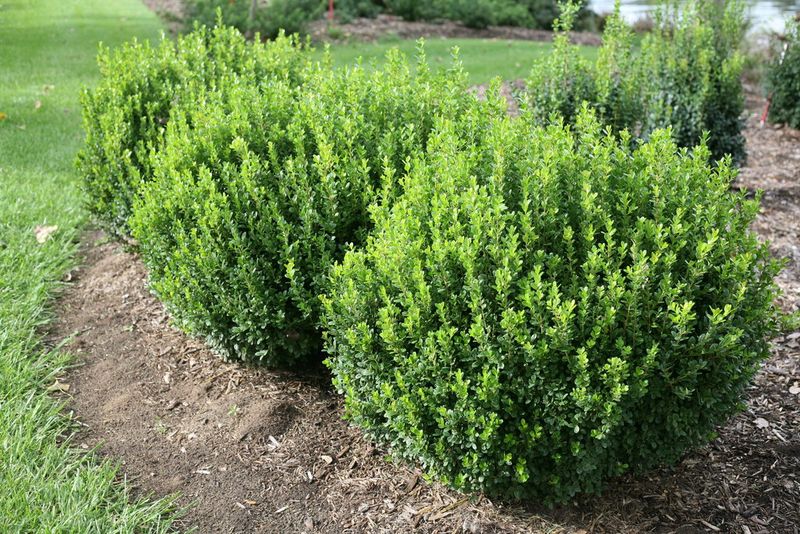
Boxwood has been a garden staple for centuries, and there is a very good reason why Michigan homeowners keep reaching for it when arborvitae lets them down.
Michigan State University Extension specifically lists boxwood among the shrubs that deer most consistently avoid, which gives it a level of credibility that goes beyond garden folklore.
The dense, fine-textured evergreen foliage holds its shape beautifully through pruning, making it one of the best choices for formal hedges and foundation plantings.
Boxwood grows slowly, which is actually an advantage for homeowners who want a tidy, structured look without constantly trimming it back. Most varieties reach two to five feet tall and wide, though some can grow larger over many years.
The small, oval leaves stay green through Michigan winters, though in exposed locations they can take on a slightly bronzed tone in the coldest months, returning to rich green when spring arrives.
Choosing cold-hardy varieties is important for Michigan gardeners, since not all boxwood types handle the state’s winters equally well. Green Mountain, Green Velvet, and Chicagoland Green are popular cultivars that perform reliably across most of Michigan.
Planting in a sheltered spot with protection from harsh northwest winds helps boxwood stay looking its best year-round.
For a classic, structured, deer-resistant hedge that gives your Michigan front yard a polished, well-kept appearance, boxwood remains one of the most dependable options available.
10. Viburnum (Viburnum dentatum and Others)
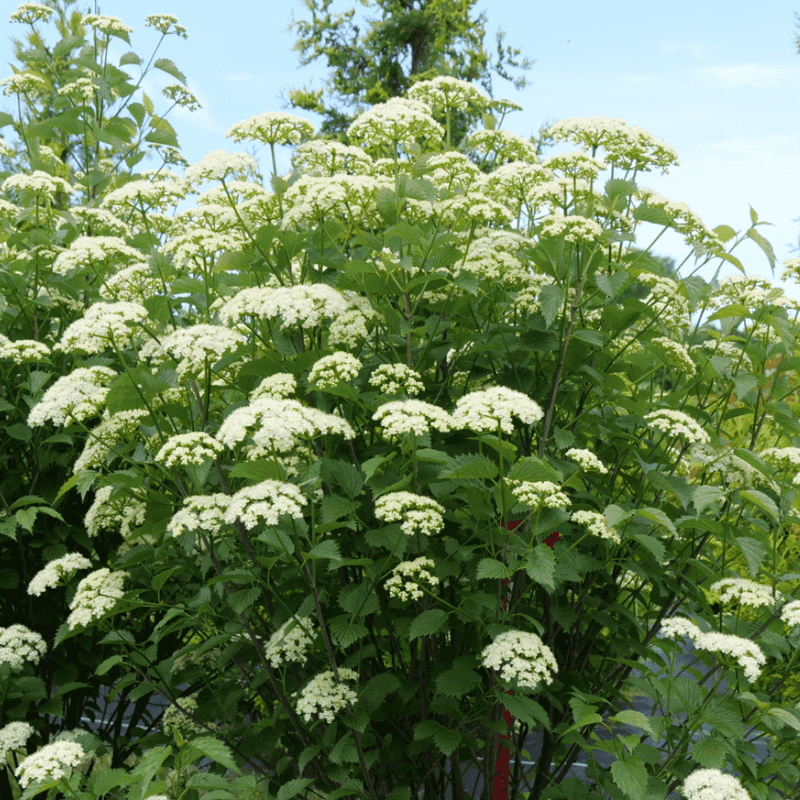
Arrowwood Viburnum is one of those native shrubs that seems almost too good to be true for Michigan homeowners tired of replacing damaged arborvitae.
It grows eight to ten feet tall with dense, multi-stemmed branching that creates a solid, natural privacy screen, and deer browse it far less aggressively than they do arborvitae.
The combination of reliable screening, seasonal beauty, and genuine deer resistance makes it one of the smartest swaps you can make in a Michigan landscape.
In early summer, flat clusters of creamy white flowers cover the plant and attract native bees and butterflies by the handful.
By late summer, those flowers give way to clusters of dark blue berries that birds absolutely love, drawing in cedar waxwings, robins, and bluebirds through fall.
The foliage then shifts to deep burgundy and orange-red tones in autumn, giving you a shrub that earns its keep in every single season of the Michigan year.
Arrowwood Viburnum adapts easily to clay soils, wet areas, and partially shaded spots, which makes it useful in the kinds of challenging locations where arborvitae tends to struggle.
Nannyberry Viburnum is another excellent option, reaching ten to fifteen feet tall and handling both wet and dry soils with equal ease.
Planting viburnums in staggered rows creates a lush, layered hedge that looks natural and full. Michigan yards with these shrubs look better, support more wildlife, and stay intact through even the hungriest deer seasons.