These Flower Pairings Make Spring Pots In Ohio Look Instantly Fuller
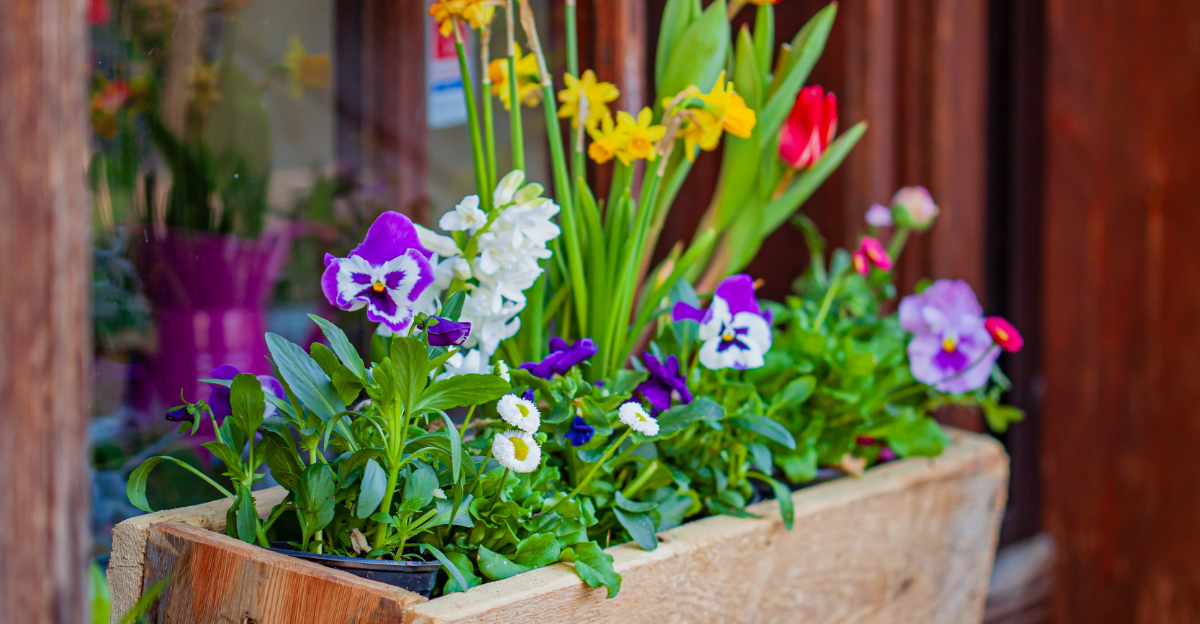
A spring pot can have all the right flowers and still look a little underwhelming. One plant sits upright, another blooms nicely, and somehow the whole container still feels sparse, flat, or like it needs a few more trips to the garden centre before it really comes together.
That is usually where the magic of pairing enters the picture. The right flowers do more than share a pot.
They play off each other, fill awkward gaps, soften the edges, and create that lush, overflowing look that makes a front step or porch feel dressed for the season. In Ohio, spring containers look especially good when they lean into contrast.
A mounded bloomer next to something airy, a trailing flower beside a fuller one, a mix of shapes that makes the whole pot look richer from day one. Get the combinations right, and even a simple container can look twice as full almost overnight.
1. Pansies And Sweet Alyssum Make Pots Look Plush
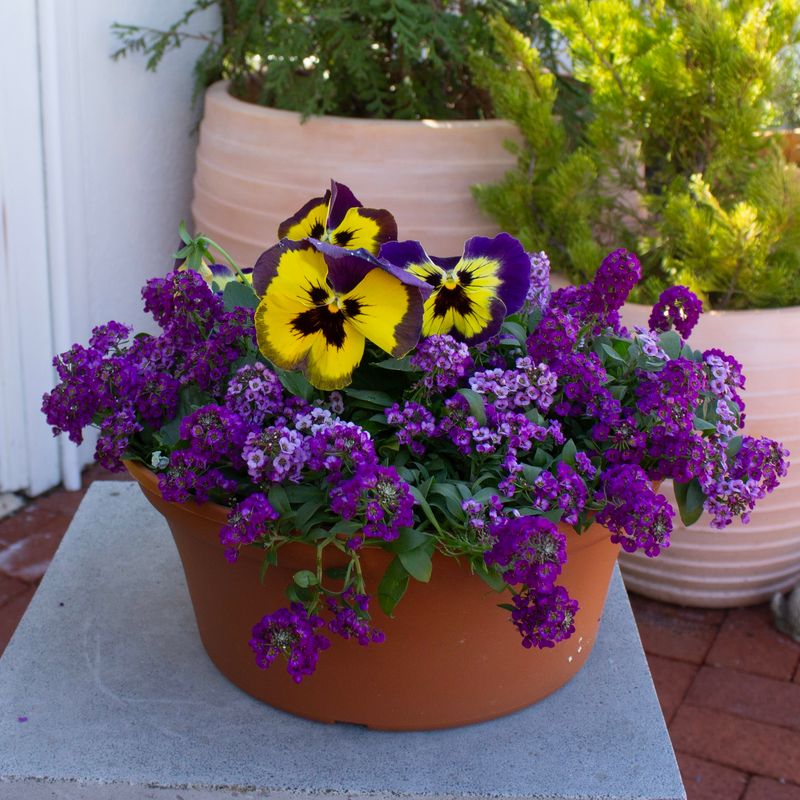
There is something almost magical about the way sweet alyssum softens the edges of a pot that pansies are working so hard to fill.
Pansies are bold, upright, and full of personality, offering wide, face-up blooms in rich purples, sunny yellows, and deep oranges that catch the eye from across the yard.
They hold up well in Ohio’s chilly spring temperatures and even bounce back after a light frost, making them one of the most dependable cool-season flowers available.
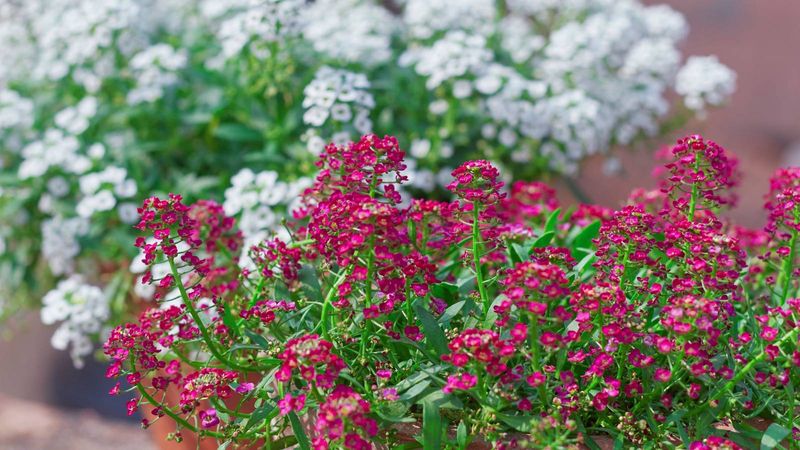
Sweet alyssum plays a completely different role in this pairing. Instead of competing with the pansies for attention, it tucks in around the edges and spills slightly over the rim of the pot, creating a soft, cloud-like border of tiny white or pale lavender flowers.
That trailing habit fills in gaps that pansies tend to leave near the base of the container, which is exactly where most pots look sparse and unfinished.
Together, these two plants create a layered look that feels intentional and lush. The contrast between the large, flat pansy blooms and the fine, honey-scented clusters of alyssum adds both texture and visual depth to even a simple round pot.
Ohio gardeners can plant this combo as early as late March or early April, since both plants handle cool soil and cold nights without complaint. Deadhead pansies regularly to keep them blooming through May.
2. Snapdragons And Violas Add Instant Spring Fullness
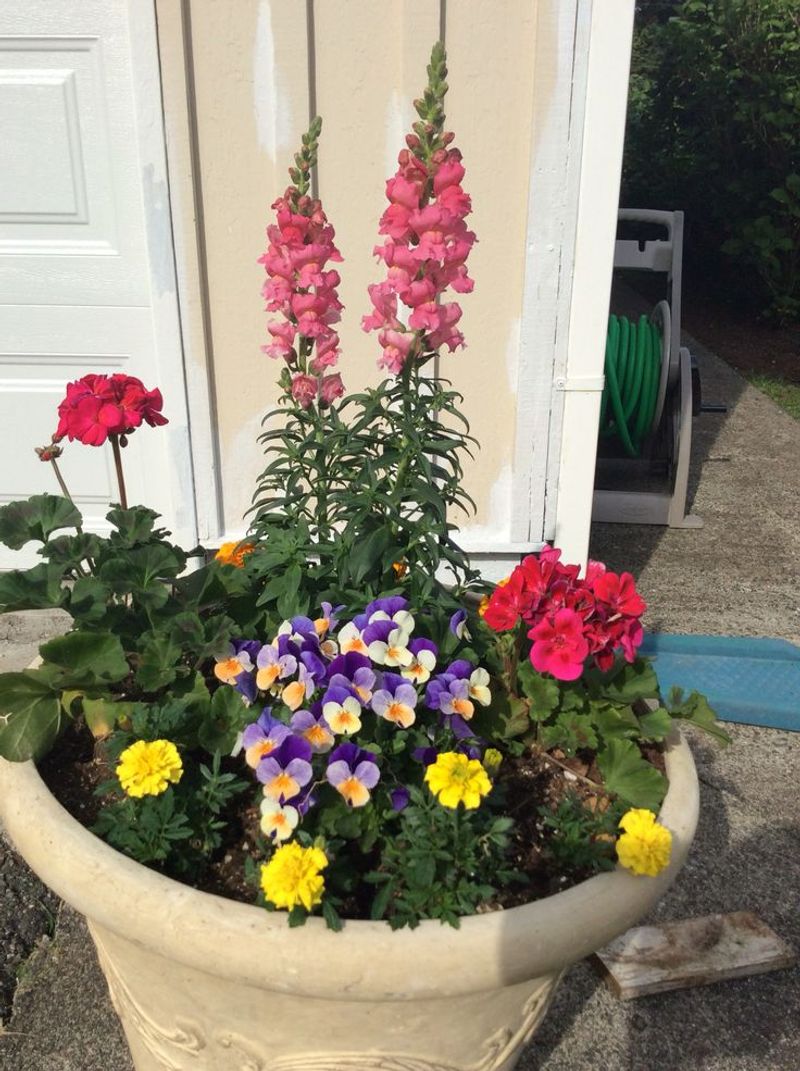
Walk past a pot with snapdragons in it and you almost always stop to look. Those tall, colorful spikes have a way of drawing the eye upward and making a container feel important.
In Ohio, snapdragons thrive in the cool air of April and May, putting on a strong show before summer heat arrives. They bring vertical structure that most spring containers desperately need, giving the whole arrangement a sense of height and drama.
Violas are the perfect answer to everything snapdragons cannot do on their own.
Where snapdragons rise tall and leave the lower half of the pot looking bare, violas move right in and take over that space with cheerful, small-faced blooms in purple, cream, yellow, and bi-color combinations.
Your Ohio Garden Changes Every Week. Your Plan Should Too.
Gardening in Ohio changes quickly throughout the season. Every Friday you’ll receive a simple weekly plan showing exactly what to plant, prune, fertilize, harvest, and protect so you never miss the right timing.
They grow in a mounded, spreading habit that fills the mid-level and base of a container without crowding out the snapdragons above them.
The layered effect this pairing creates is what makes it so satisfying to look at. You get height from the snapdragons, a full mid-section from the violas, and a pot that looks well-planned even if it came together in under an hour.
Both plants are cold-tolerant, which is a real bonus in Ohio where late April can still bring surprise temperature drops. Plant them in a container with good drainage and they will reward you with color from early spring well into late May or beyond.
3. Tulips And Sweet Alyssum Fill The Gaps Beautifully
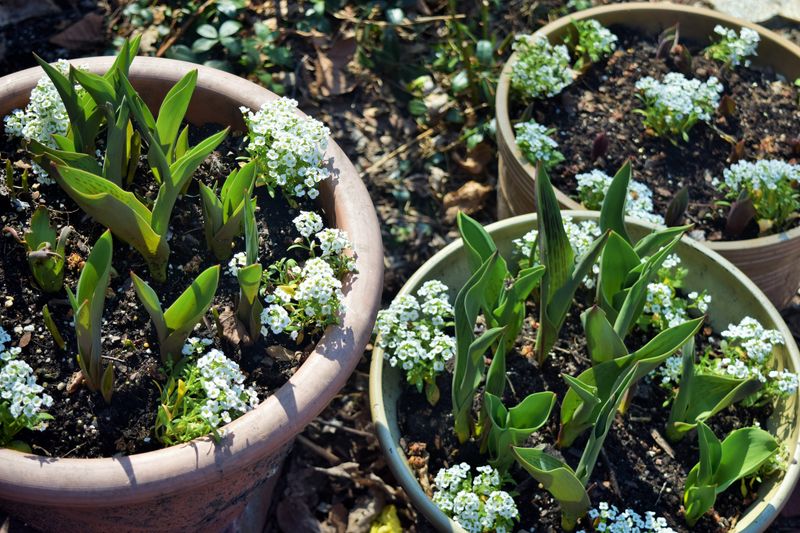
Tulips in a pot can be a little awkward at first glance. Those tall, straight stems shoot upward beautifully, but the area around the base of the bulbs often looks bare and unfinished, like someone forgot to add something.
That is exactly the problem sweet alyssum solves so well. Planted around the outer edges of the container, alyssum fills in the lower zone with a soft carpet of tiny, fragrant blooms that make the whole pot look complete rather than half-done.
The contrast between tulips and alyssum is striking in the best possible way. Tulips offer bold, cup-shaped blooms in classic spring shades of red, pink, yellow, and white.
Sweet alyssum brings fine texture, a low spreading habit, and that signature honey-like fragrance that makes spring porches smell incredible.
The combination of upright tulip stems and low, mounding alyssum creates a visual fullness that neither plant achieves on its own.
For Ohio gardeners, this pairing works best when tulip bulbs are pre-chilled and planted in fall or purchased as pre-started plants in spring from a local nursery. Alyssum can go in at the same time and tolerates the same cool temperatures that tulips prefer.
Water consistently but avoid soggy soil, since tulip bulbs are sensitive to standing water. This is a pairing that photographs beautifully and impresses neighbors without requiring a lot of fuss or maintenance once it is established.
4. Daffodils And Pansies Brighten Pots In A Flash
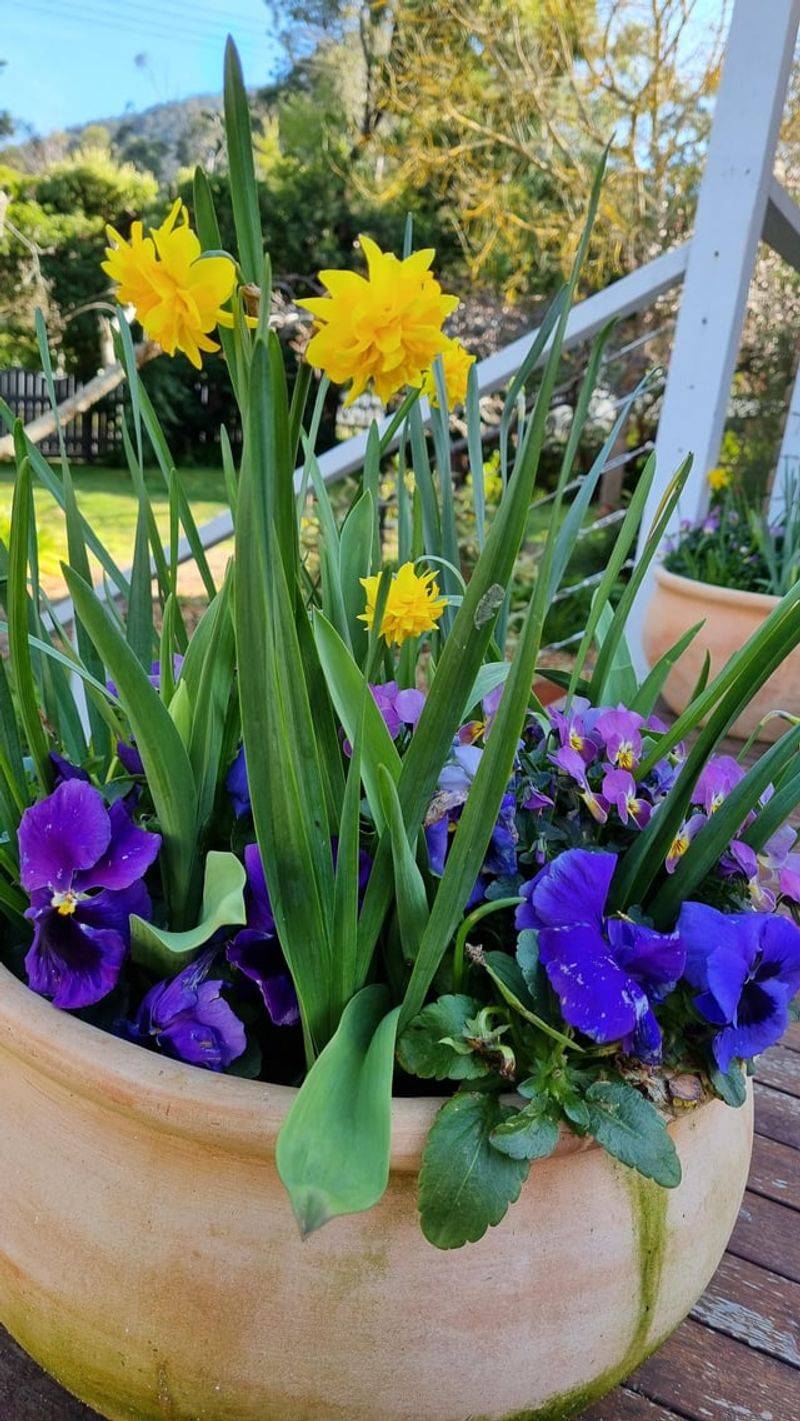
Few things say Ohio spring louder than a pot full of daffodils catching the morning light. These cheerful, sunny blooms are among the most cold-hardy spring flowers you can grow, and they look even better when paired with something that fills in the space around them.
Pansies are the natural choice here, and the pairing works so well it almost feels too easy. Daffodils bring height and that unmistakable pop of yellow or white, while pansies spread out beneath them to cover the soil and make the container look full from every angle.
Pansies come in a wide range of colors, which gives you a lot of room to play with contrast. Deep purple pansies alongside yellow daffodils create a classic, high-contrast look that feels bold and intentional.
Soft orange or peach pansies create something warmer and more romantic. Either way, the combination fills the container in a way that neither plant manages alone, with daffodils owning the upper portion of the pot and pansies owning everything below.
One practical note worth mentioning: daffodil sap can be irritating to other plants if stems are cut fresh and placed in the same water, but in a container setting with each plant rooted separately, they coexist without any issues.
Ohio gardeners can get this combo going in late March, and with regular deadheading of the pansies, the display stays looking fresh well into May.
It is one of the most rewarding and low-effort spring combinations available.
5. Violas And Dusty Miller Create A Fuller Finish
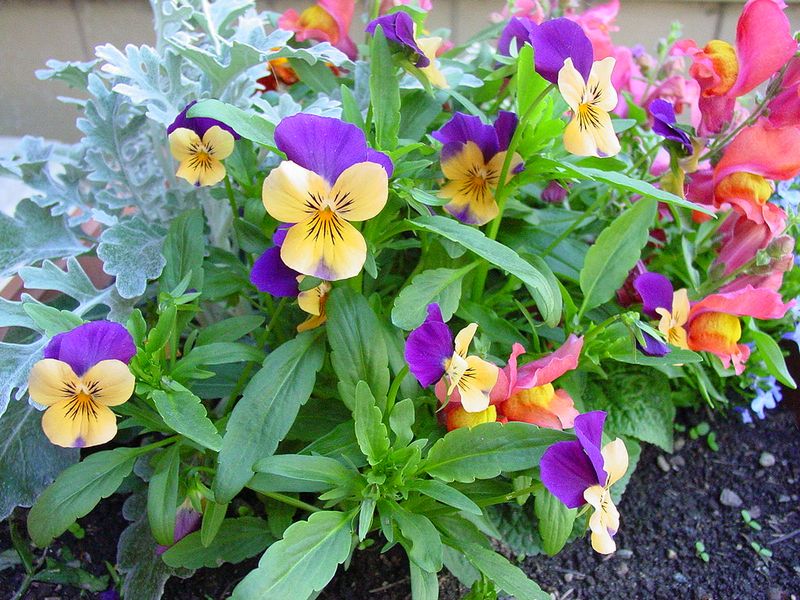
Not every spring pot needs to be about loud color. Sometimes the most eye-catching containers are the ones that play with texture and contrast in a quieter, more refined way.
Violas and dusty miller do exactly that, creating a combination that feels layered and full without relying on big, showy blooms.
The silvery, almost frosted-looking leaves of dusty miller act as a visual backdrop that makes the small, jewel-toned blooms of violas pop in a way that feels sophisticated rather than simple.
Violas are compact, mounding plants with a naturally spreading habit that fills containers well. Their blooms come in an impressive range of colors including deep purple, pale yellow, soft blue, and rich burgundy.
Dusty miller, on the other hand, contributes no blooms at all but earns its spot through its striking foliage. The finely cut, silver-white leaves add a completely different texture to the pot, creating contrast that makes the whole arrangement feel more intentional and designed.
Both plants handle Ohio spring temperatures well. Dusty miller is surprisingly cold-tolerant for a foliage plant, holding its color through light frosts without complaint.
Violas are famously tough in cool weather and continue blooming even when temperatures dip into the upper 20s. Together they fill a container with a combination of bloom and foliage that looks lush without overcrowding.
This pairing works especially well in window boxes or long rectangular planters where the contrast between silver and color really gets a chance to shine.
6. Osteospermum And Sweet Alyssum Bring On The Wow
If you have never grown osteospermum in a spring container, you are in for a real treat.
These bold, daisy-like flowers open wide in the sun and come in some of the most striking color combinations available in cool-season plants, including deep purple with a blue center, bright white with a yellow eye, and vivid magenta with a contrasting dark center.
They have a presence that instantly elevates the look of any pot, and when paired with sweet alyssum, the overall effect is dense, bright, and completely eye-catching.
Sweet alyssum fills in around and beneath the osteospermum in a way that makes the container look much fuller than it actually is.
The tiny, clustered blooms of alyssum create a soft, lacy base that contrasts beautifully with the wide, flat faces of the osteospermum blooms above.
That difference in scale and texture is what gives this pairing its visual punch. The pot looks layered, intentional, and full from the moment you set it on the porch.
Osteospermum thrives in cool weather, which makes it a strong performer during Ohio’s April and May growing window. It prefers full sun and well-draining soil, so choose a container with drainage holes and a quality potting mix.
Sweet alyssum is equally undemanding and tolerates the same cool conditions. Deadhead both plants regularly to encourage continuous blooming, and expect this combination to stay looking fresh and full for most of the spring season.
7. Nemesia And Lobelia Make Small Pots Feel Lush
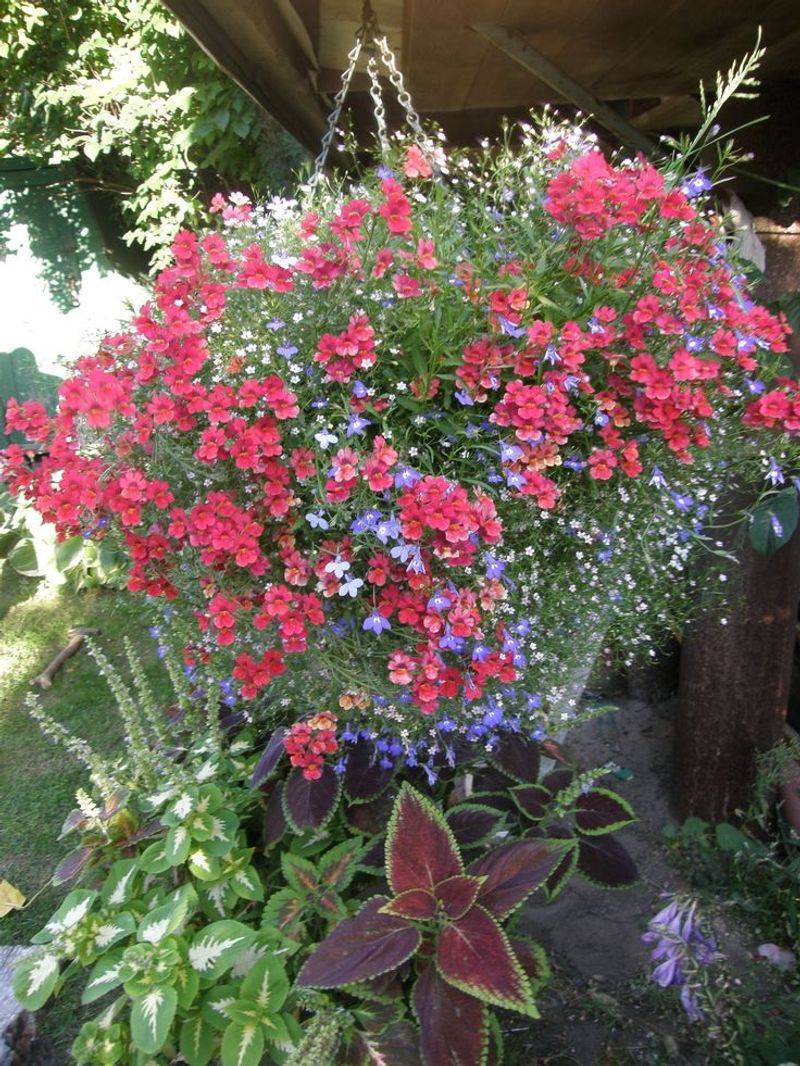
Small pots have a reputation for looking sparse no matter what you put in them, but nemesia and lobelia together completely change that story.
These two fine-textured bloomers are practically made for compact containers, filling every inch of available space with color and movement without ever looking crammed or crowded.
The result is a pot that looks abundant and overflowing, even if the container itself is only eight or ten inches wide.
Nemesia is a lesser-known cool-season annual that deserves far more attention in Ohio spring gardens. It produces clusters of small, orchid-like blooms in vibrant bi-color combinations of pink and white, orange and yellow, or deep purple and cream.
The plant has a naturally mounding, slightly spreading habit that fills the upper and middle portions of a container beautifully.
Lobelia, with its trailing stems and tiny jewel-bright flowers in blue, purple, or white, spills over the edges and fills in the sides and lower rim of the pot.
Together, they create a layered, cascading effect that makes even the smallest container look like it was styled by a professional. Both plants prefer cool temperatures and partial to full sun, fitting right into Ohio’s spring climate from mid-April onward.
Water regularly and avoid letting the soil dry out completely, as both nemesia and lobelia perform best with consistent moisture.
This pairing is an especially great choice for balcony gardeners or anyone working with limited outdoor space who still wants a big spring impact.
8. Tulips And Violas Keep Spring Containers Looking Full
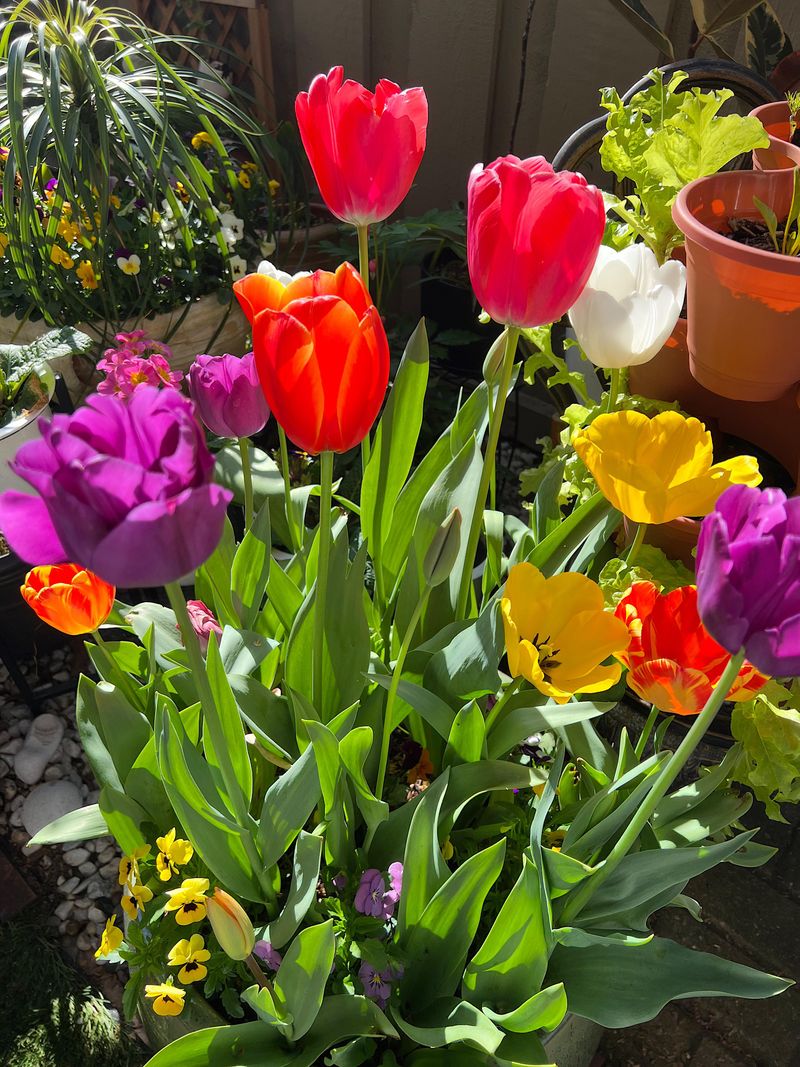
There is a reason this pairing shows up on porches and patios all across Ohio every spring. Tulips are gorgeous but they have one real weakness in a container setting: the space around their bases almost always looks bare and unfinished.
Violas solve that problem completely. They spread out in a low, dense mound that covers the soil and fills the lower portion of the pot with continuous color, making the whole arrangement look polished and full from the ground up.
What makes violas such a reliable companion for tulips is their growth habit and timing.
Violas are already blooming when tulips are just pushing up their first leaves, which means the pot looks good from the very beginning of spring rather than only when the tulips finally open.
As the tulips rise and bloom, the violas continue filling in beneath them, creating a two-level display that looks far more intentional than a single-plant pot ever could.
Color coordination is part of the fun here. Deep purple violas beneath red or yellow tulips create a bold, high-contrast look.
Soft cream or pale yellow violas beneath pink tulips feel romantic and light. Ohio gardeners can plant this combo in early spring using nursery-grown tulip starts or pre-chilled bulbs alongside viola transplants.
Both plants handle cool temperatures well and keep the container looking full and colorful through most of May, giving you a long window to enjoy the display before summer annuals take over.