Use This Sweet Flower To Pull More Hummingbirds To Your Ohio Feeder
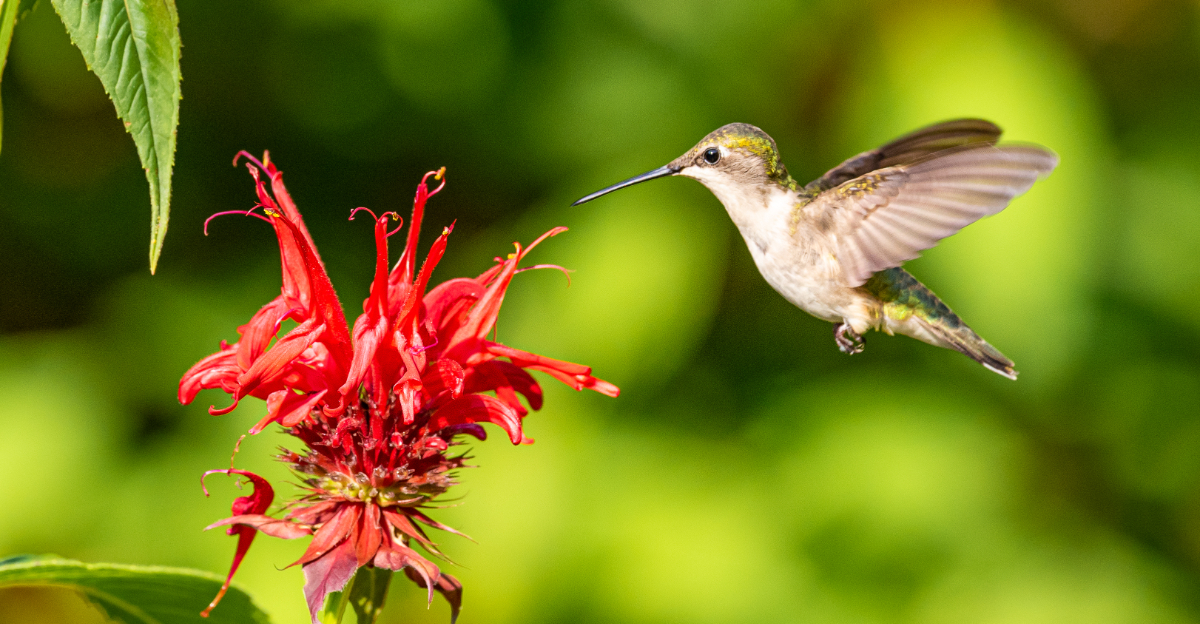
Hummingbird feeders may grab the spotlight, but they are rarely the whole show. In Ohio yards, the real magic starts when a feeder has the right flower nearby, something bright, nectar-rich, and impossible for those tiny speedsters to ignore.
That extra burst of color can turn a quick sip into a longer visit, and suddenly the yard feels a whole lot more alive. The best picks do more than look pretty.
They help create a landing zone, add summer charm, and keep the space around the feeder from feeling flat or forgettable. One flower does that job especially well, with vivid blooms, a sweet pull, and the kind of wild, cheerful look hummingbirds seem to spot in a heartbeat.
The secret star that can make your Ohio feeder even more irresistible is bee balm.
1. Bee Balm Is The Flower That Changes The Whole Feeder Game
Picture your feeder hanging there on a warm July afternoon, full of sugar water, waiting. Now picture a bold cluster of red, pink, or purple blooms swaying just a few feet away, practically glowing in the Ohio summer sun.
That second image is what bee balm brings to the table, and it changes the whole dynamic of your outdoor space.
Bee balm, known botanically as Monarda, is a native perennial that belongs to the mint family. It grows naturally across much of the eastern United States, including Ohio, which means it is already adapted to local soils, rainfall patterns, and seasonal rhythms.
According to Ohio State University Extension, native plants like bee balm tend to establish well in Ohio landscapes and provide reliable support for local wildlife, including pollinators and nectar-seeking birds.
The reason bee balm works so well near a hummingbird feeder is straightforward. Hummingbirds are already wired to seek out tubular, nectar-rich flowers in bright colors.
Bee balm delivers exactly that. Its spiky, layered blooms sit atop tall stems and produce nectar that hummingbirds find genuinely appealing.
When you place a patch of bee balm near your feeder, you are not tricking the birds. You are simply creating a space that feels familiar and rewarding to them.
For Ohio gardeners, this is a practical and low-maintenance way to make a feeder setup feel more complete. The flower does real work, and the results show up fast once the blooms open.
2. Those Fuzzy Blooms Are Hard For Hummingbirds To Miss
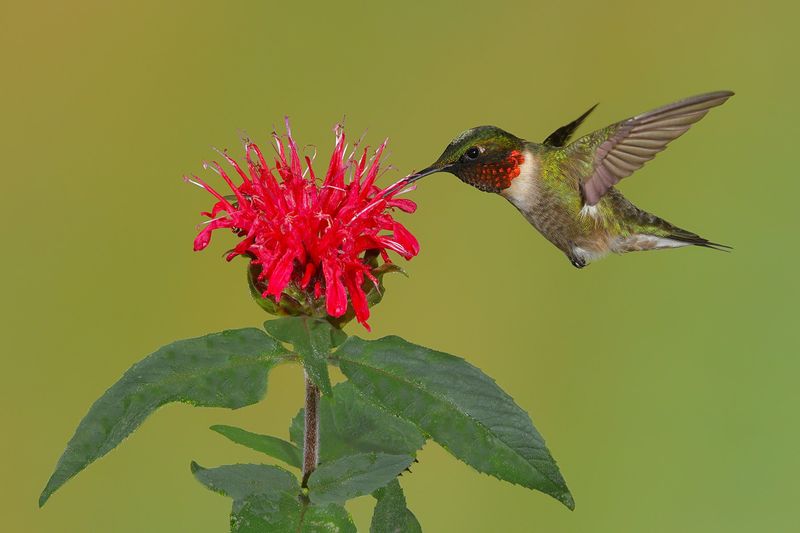
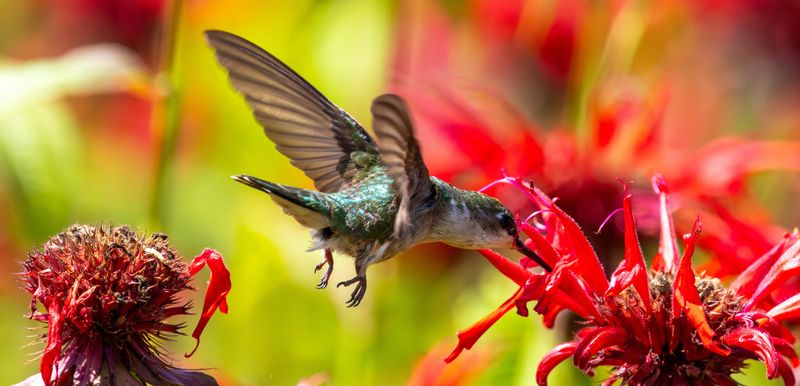
Walk up to a bee balm plant in full bloom and the first thing you notice is the texture. The flowers look almost architectural, with layers of thin, tubular petals arranged in a starburst pattern around a central head.
Each individual petal is a small tube, and that tube shape is not accidental from a hummingbird’s perspective. It is exactly the structure these birds are built to feed from.
Ruby-throated hummingbirds, the species that visits Ohio feeders from roughly late April through early October, are strongly attracted to tubular flowers in red, orange, and pink tones. Bee balm covers all of those bases.
Your Ohio Garden Changes Every Week. Your Plan Should Too.
Gardening in Ohio changes quickly throughout the season. Every Friday you’ll receive a simple weekly plan showing exactly what to plant, prune, fertilize, harvest, and protect so you never miss the right timing.
Varieties like Monarda didyma, commonly called scarlet bee balm, produce deep red blooms that practically signal to passing hummingbirds from a distance.
Pink and purple cultivars are also attractive, though red tends to generate the strongest and quickest response.
The visual impact of bee balm goes beyond color alone. The flower heads sit on stems that can reach three to four feet tall, which puts the blooms right in the sightline of a hovering hummingbird.
They are not hidden low in the garden. They stand up and wave, which makes them easy to spot during the fast, scanning flights hummingbirds use to locate food sources.
Beyond the visual cues, the nectar quality matters too. Bee balm produces accessible, sweet nectar that rewards a hummingbird’s visit quickly, reinforcing the habit of returning to that spot again and again throughout the season.
3. It Makes A Feeder Setup Feel Less Random
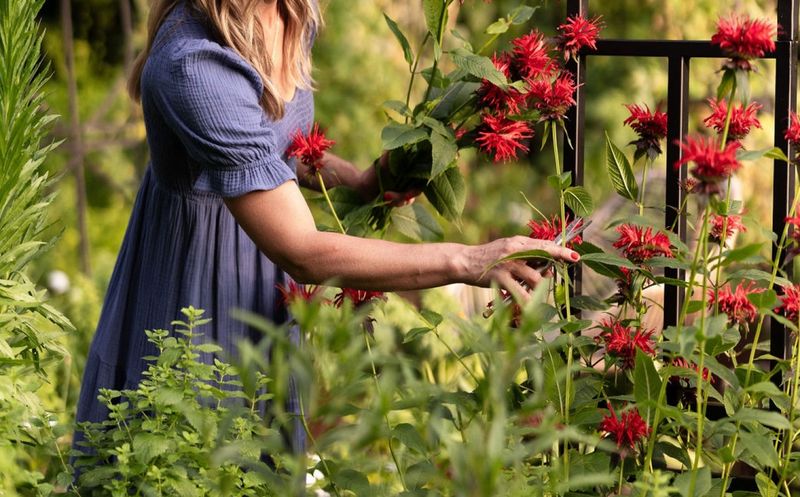
Hanging a feeder on a hook and filling it with sugar water is a good start, but on its own it can feel a little disconnected from the rest of the yard. The feeder is doing its job, but nothing around it signals to a hummingbird that this is a safe, rewarding place to linger.
Adding bee balm nearby changes that feeling entirely.
Think of it like setting a table instead of just leaving food on the counter. The feeder provides the sugar water, but the bee balm provides context.
It tells the hummingbird that this corner of the yard has something real going on. Natural flower cues, familiar scent, and visible color work together to make the feeder area feel like a destination rather than a random object in the yard.
This kind of intentional pairing also helps during migration. Ruby-throated hummingbirds passing through Ohio in late summer are actively scanning for reliable food sources.
A yard that has both a feeder and a flowering plant in close proximity is more likely to catch and hold their attention than a feeder alone.
OSU Extension resources on creating wildlife-friendly landscapes consistently emphasize that combining food sources, both natural and supplemental, creates stronger habitat value.
Practically speaking, bee balm is a perennial, so once it is established it comes back every year without much effort.
You plant it once, and it continues to anchor your feeder setup season after season, making the whole arrangement feel purposeful and well thought out rather than accidental.
4. Ohio Gardens Get A Bigger Show When This Flower Joins In
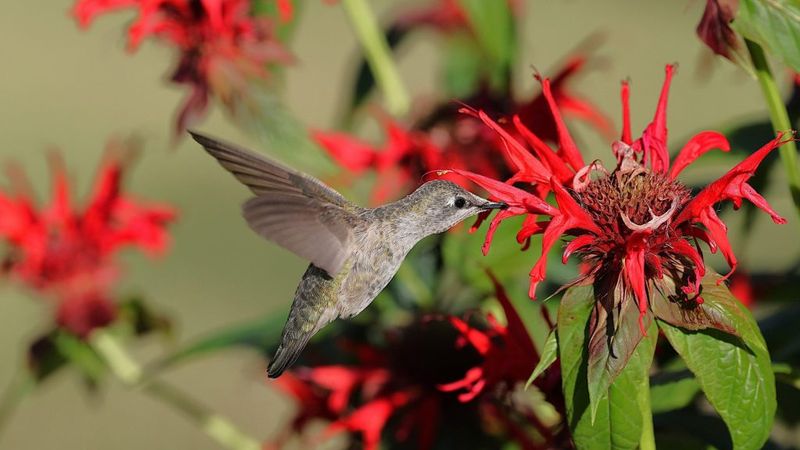
There is a noticeable difference between a yard that gets the occasional hummingbird flyby and a yard that genuinely buzzes with activity on a summer afternoon. Bee balm is one of the plants that tips the balance toward the latter.
Once it is blooming and the hummingbirds have found it, the energy in that part of the garden picks up considerably.
Ohio’s primary hummingbird visitor, the ruby-throated hummingbird, is a territorial and curious bird. When one individual finds a reliable food source, others often follow or compete for access.
A bee balm patch near a feeder can create a situation where multiple birds are working the same small area, hovering, chasing, and returning in quick loops. For anyone sitting on a porch or looking out a kitchen window, that kind of activity is genuinely exciting to watch.
Bee balm typically blooms from mid-June through August in Ohio, depending on variety and conditions. That window lines up well with peak hummingbird activity in the state, which runs through late summer before the birds begin moving south.
Planting early-blooming and late-blooming Monarda varieties together can extend the floral show and keep the garden corner productive for a longer stretch of the season.
The visual effect is also worth noting for its own sake. Tall stems loaded with bright blooms, combined with the flash of a hummingbird’s wings in the sunlight, create a garden moment that feels genuinely alive.
It is the kind of backyard scene that makes people stop what they are doing and just watch for a while.
5. It Pulls More Interest Into One Small Corner
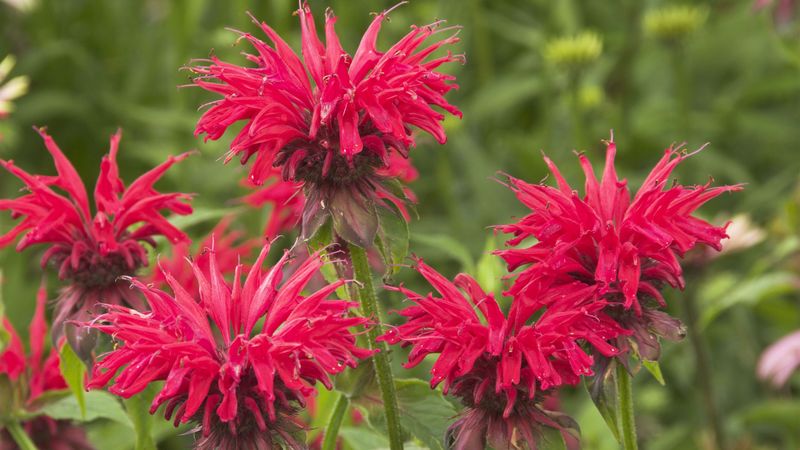
You do not need a large garden to make this work. A single well-placed clump of bee balm near a feeder pole, porch railing, or garden edge can turn a quiet corner into one of the most active spots in your entire yard.
Placement matters more than quantity when you are trying to draw hummingbirds into a specific area.
The goal is proximity. Bee balm planted within ten to fifteen feet of a feeder gives hummingbirds a natural reason to enter that zone and stay longer.
They may visit the flowers first, then discover the feeder, or arrive at the feeder and immediately notice the blooms nearby. Either way, the two elements reinforce each other and keep the birds returning to that same small area throughout the day.
From a practical standpoint, bee balm grows best in full sun to partial shade and prefers moist, well-drained soil, conditions that are common across much of Ohio.
OSU Master Gardener resources note that Monarda performs reliably in Ohio landscapes and can spread over time, so giving it a defined space near the feeder from the start helps keep the planting tidy and intentional.
A clump of three to five plants is usually enough to create a visible, fragrant presence without overwhelming the space.
If you are working with a small patio or a narrow garden strip, compact Monarda cultivars like Pardon My Pink or Petite Wonder fit nicely without crowding other plants.
The result is a focused, purposeful corner that hummingbirds learn to visit reliably, which is exactly what you want near a feeder.
6. The Color Does A Lot Of Heavy Lifting Here
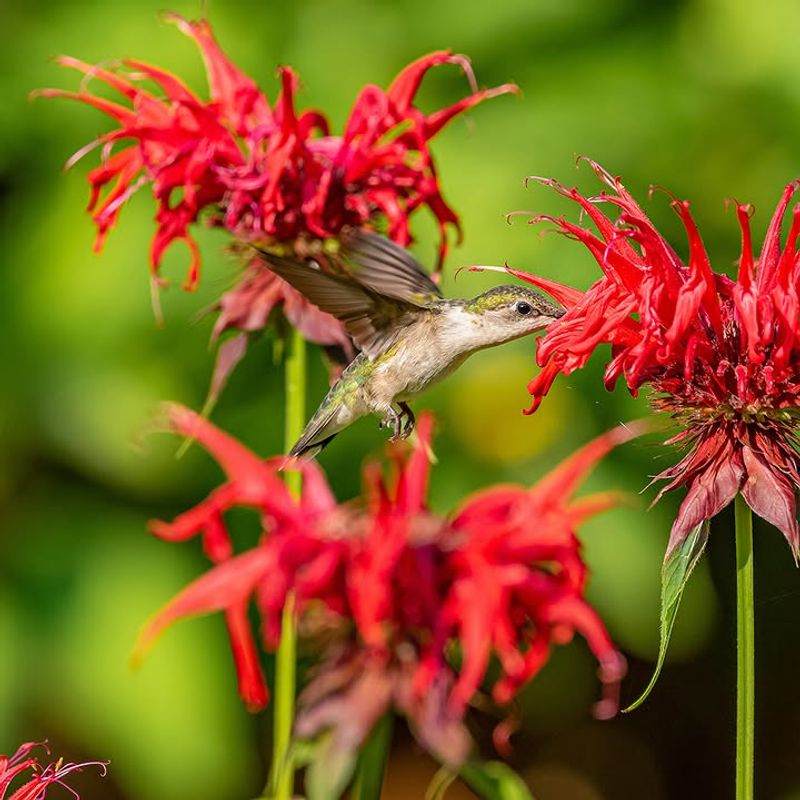
Color is one of the first things a hummingbird responds to, and bee balm happens to produce some of the most hummingbird-friendly colors in the garden palette.
Researchers studying hummingbird foraging behavior have consistently found that these birds show a strong preference for red, followed by orange, pink, and purple tones.
Bee balm covers nearly all of those shades depending on the variety you choose.
Monarda didyma, the scarlet bee balm species, produces the deepest red blooms and tends to generate the fastest hummingbird response. The color is saturated and bold, especially in direct sunlight, which makes it visible from a surprising distance.
A ruby-throated hummingbird flying a wide search pattern over a neighborhood can spot a patch of red bee balm from well above the roofline, which is part of why the plant works so effectively as a draw.
Beyond red, cultivars like Jacob Cline, Raspberry Wine, and Fireball offer varying intensities of red and pink that all perform well in Ohio gardens.
Lighter pink and lavender varieties are still attractive to hummingbirds, though the response is generally stronger with deeper, warmer tones.
If your main goal is maximum hummingbird traffic near the feeder, sticking with a red or deep pink variety gives you the best visual signal.
It is also worth noting that bee balm holds its color well through the heat of an Ohio summer.
The blooms do not fade or wash out quickly, which means the visual signal stays strong for weeks at a time, keeping the feeder area looking active and inviting throughout the peak of hummingbird season.
7. One Good Clump Can Make The Feeder Area Buzz
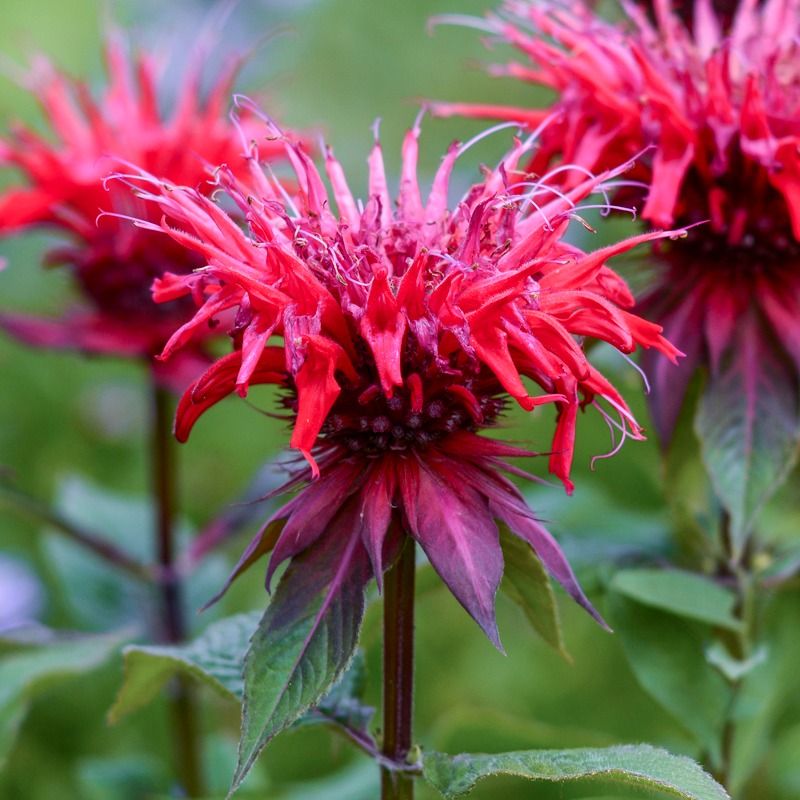
Bee balm earned its common name for a reason. Long before it became a go-to hummingbird plant, this flower was known for drawing in bees, and that reputation still holds.
A healthy clump of bee balm in bloom near your feeder will attract not just hummingbirds but also bumblebees, native bees, and butterflies, turning the whole area into a genuinely lively outdoor scene.
For Ohio gardeners interested in supporting pollinators, this is a meaningful bonus. OSU Extension and the Ohio Department of Natural Resources both recognize Monarda as a valuable native plant for supporting local pollinator populations.
The nectar and pollen it produces benefit a wide range of insects that are important to Ohio ecosystems and home gardens alike.
The added pollinator activity does not compete with hummingbirds in any harmful way.
Hummingbirds and bees generally work different parts of the flower or visit at different times, and the overall buzz of activity in the area can actually make hummingbirds more likely to investigate.
A space that already feels alive with movement and foraging tends to attract more attention from curious, food-seeking birds.
From a feeder standpoint, having bee balm nearby means the area around your setup stays interesting even on days when hummingbird traffic is light.
Bees working the blooms, butterflies drifting through, and the occasional hummingbird zipping in create a layered, dynamic scene that rewards anyone who takes a few minutes to sit and watch.
It is one of those garden combinations that gives back more than you put in.
8. After Bee Balm Opens Up Everything Feels More Alive
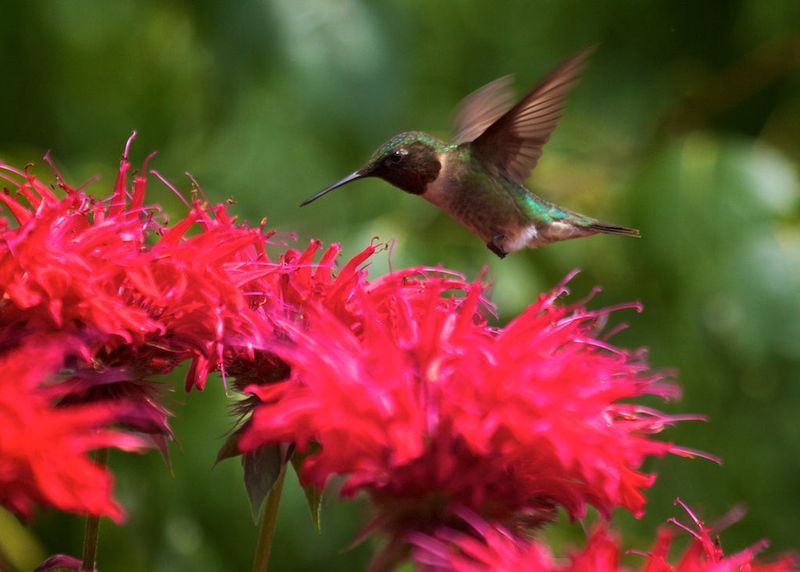
There is a specific moment in mid-summer when a well-planted Ohio garden shifts from simply looking nice to feeling genuinely electric. For a lot of backyard gardeners, that moment arrives right when the bee balm opens.
The blooms come in fast, the color hits hard, and within days the whole feeder area feels different in a way that is hard to put into words but easy to notice.
The combination of a stocked feeder and a blooming bee balm patch creates a feedback loop that builds on itself. Hummingbirds find the space, return to it, and eventually claim it as part of their daily territory.
Once that happens, you will start to recognize individual birds by their behavior, noticing which one guards the feeder in the morning and which one prefers the flowers in the afternoon.
That kind of close observation is one of the quiet rewards of setting up a thoughtful backyard habitat.
Bee balm also has a pleasant herbal fragrance that adds another layer to the experience of being outside near the garden. The scent is light and fresh, not overwhelming, and it makes time spent on the porch or patio feel more connected to the natural world around you.
For Ohio gardeners who want more from their feeder setup without adding a lot of complexity, bee balm is a genuinely smart choice. It is native, reliable, visually striking, and ecologically useful.
Plant it once near your feeder and watch how quickly the whole corner of your yard comes to life in a way that no amount of sugar water alone could ever quite achieve.