Why Newly Planted Arborvitae In Michigan Often Struggle Their First Spring
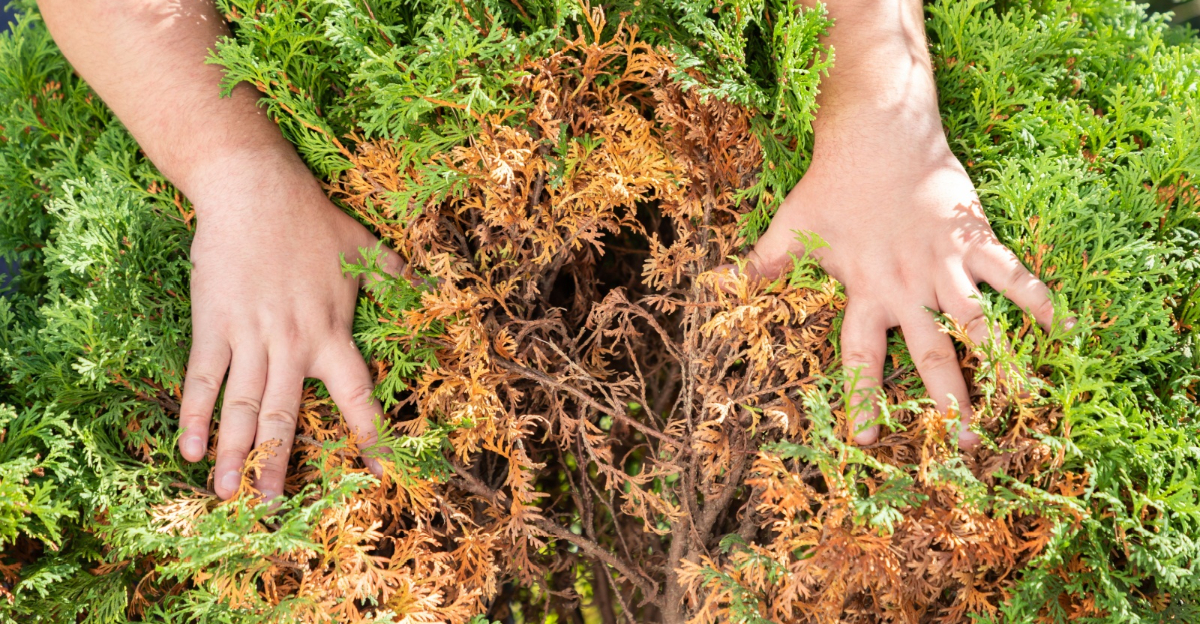
You plant arborvitae expecting a lush green screen by spring, then April arrives and something looks off.
Browning tips, uneven color, and drooping branches can catch Michigan homeowners by surprise.
It’s a common first-year struggle, especially after a long winter.
Newly planted arborvitae have not had time to build strong root systems, which leaves them more exposed to cold, wind, and shifting spring conditions.
Michigan weather does not ease them in gently. Understanding what’s behind that early stress can help you respond with confidence and give your trees a better shot at settling in for the seasons ahead.
1. Winter Burn Can Cause Browning On New Growth
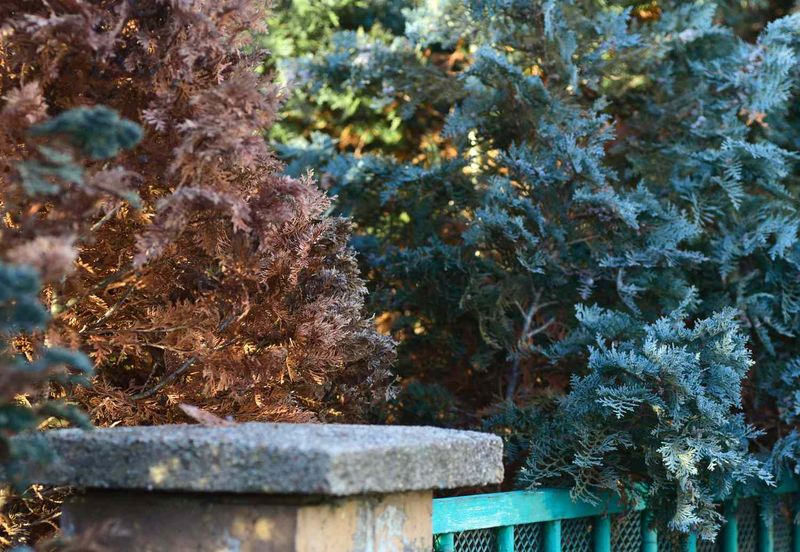
Walking out to check your arborvitae on a bright March morning in Michigan and spotting patches of rusty brown foliage can be unsettling.
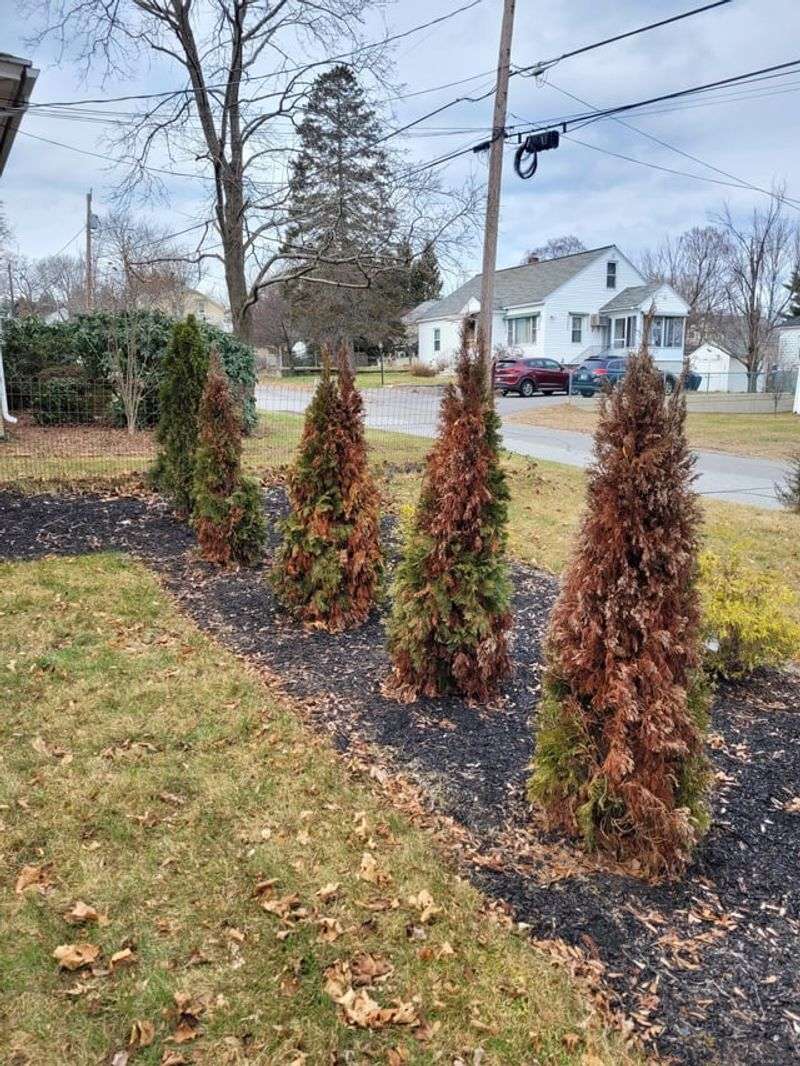
That browning is often winter burn, one of the most common reasons newly planted arborvitae look stressed when spring arrives.
It happens when evergreen foliage loses moisture faster than the roots can replace it during cold, windy winters.
In Michigan, late fall and winter conditions can be especially harsh. Frozen soil prevents roots from drawing up water, while dry winter winds and even bright winter sun continue pulling moisture from the needles.
Newly planted trees are at higher risk because their root systems have not yet spread wide enough to store and access adequate moisture reserves.
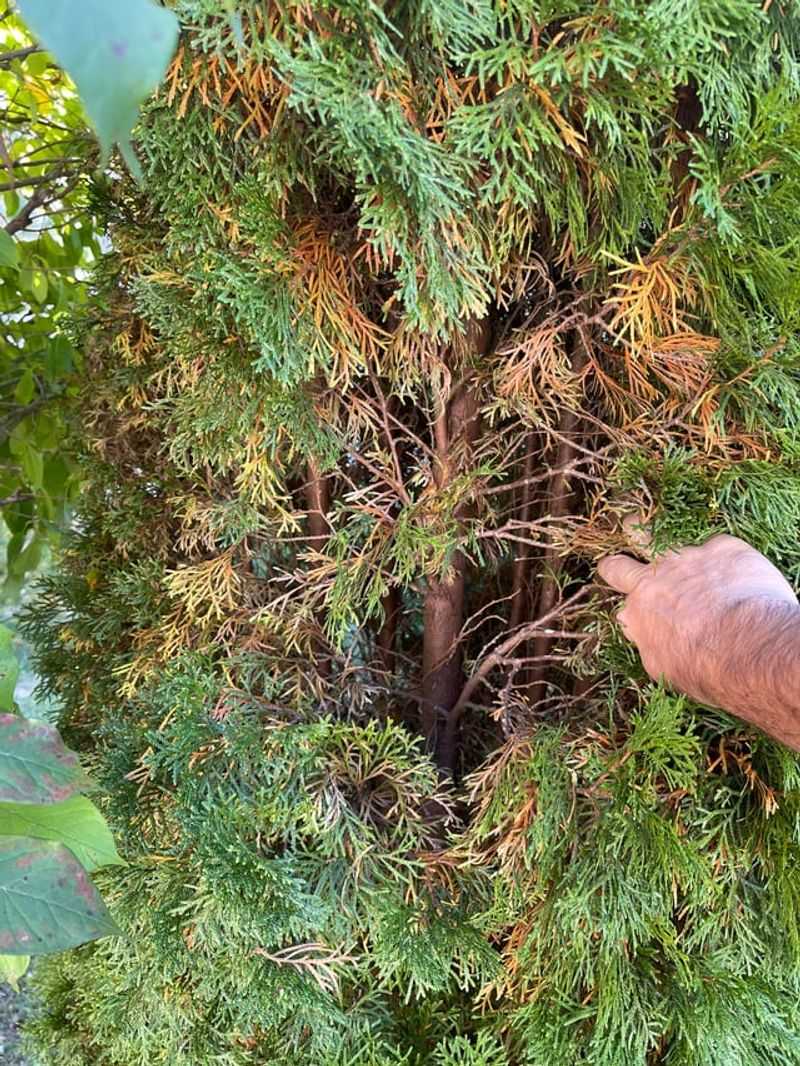
The damage usually shows up as brown or tan coloring on the outer or south-facing tips of branches. In many cases, the inner foliage and newer growth close to the trunk remain green.
Applying burlap wrap before winter arrives can reduce wind and sun exposure significantly.
Giving trees a deep, thorough watering before the ground freezes in late fall also helps reduce the chances of winter burn showing up on your Michigan arborvitae come spring.
2. Shallow Roots Struggle To Access Moisture Early On
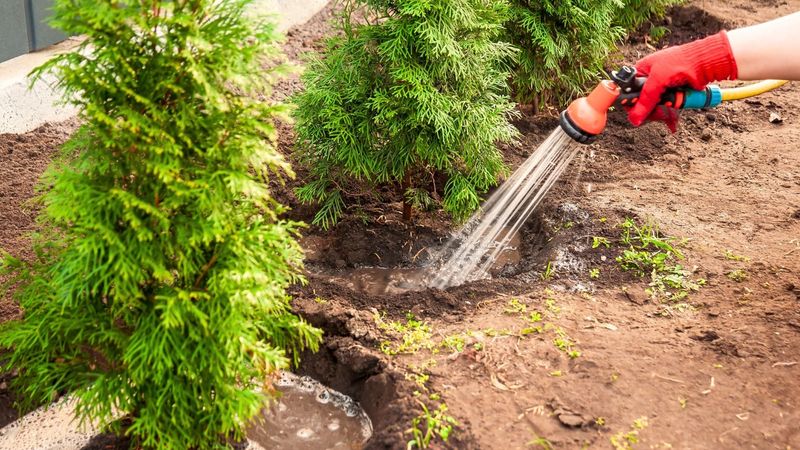
Root development is one of the most critical factors in how well a newly planted arborvitae handles its first Michigan spring.
When a tree is freshly transplanted, it arrives with a limited root ball that represents only a fraction of the root system it had before being dug up.
Those roots need time and favorable conditions to spread out into the surrounding soil.
During early spring in Michigan, soil temperatures warm unevenly. The upper layers of soil may thaw first while deeper zones stay cold and compacted.
Shallow roots sitting near the surface can dry out quickly as spring winds pick up and sunny days become more frequent, especially before the tree has had a chance to send roots deeper into the ground.
Homeowners sometimes notice wilting or dull foliage color in early spring even when there has been rain, because the roots simply cannot access moisture efficiently yet.
Watering deeply and consistently during the first growing season encourages roots to grow downward rather than staying near the surface.
Applying a 2 to 3 inch layer of mulch around the base, keeping it away from the trunk, helps retain soil moisture and moderates temperature swings that can stress shallow root systems in Michigan landscapes.
Your Michigan Garden Changes Every Week. Your Plan Should Too.
Gardening in Michigan changes quickly throughout the season. Every Friday you’ll receive a simple weekly plan showing exactly what to plant, prune, fertilize, harvest, and protect so you never miss the right timing.
3. Spring Sun And Wind Increase Moisture Loss
Spring in Michigan can feel deceptive. Temperatures climb, skies brighten, and it seems like a great time for plants to wake up and grow.
For newly planted arborvitae, though, that combination of increasing sun intensity and gusty spring winds creates a serious moisture challenge before the root system is ready to keep up.
Transpiration, the process by which plants release water vapor through their foliage, speeds up significantly as temperatures rise and wind increases. Established arborvitae with deep, well-spread root systems can compensate for this water loss.
Newly planted trees with limited roots often cannot pull moisture fast enough, leading to foliage that looks dull, dry, or slightly curled even in mild spring weather.
Michigan’s spring wind patterns can be particularly intense near open fields, along fence lines, or in newer subdivisions where there is little surrounding windbreak.
Planting arborvitae in a location with some natural wind protection, or installing a temporary burlap barrier during the first spring, can reduce moisture stress noticeably.
Checking soil moisture an inch or two below the surface every few days during dry spring stretches, rather than relying on rainfall alone, gives newly planted Michigan arborvitae a much better chance of pushing through the season with minimal stress and consistent new growth.
4. Poor Drainage Can Stress Newly Planted Roots
Not all Michigan soil drains the same way, and for newly planted arborvitae, sitting in waterlogged soil can be just as stressful as drought.
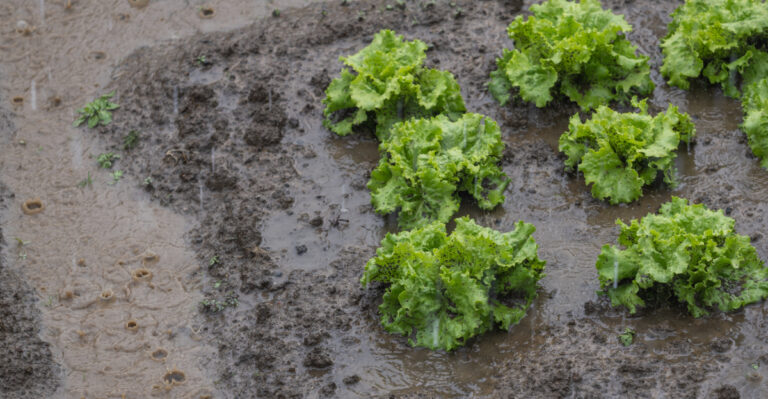
Heavy clay soils, common across many parts of Michigan, tend to hold water for extended periods after spring rains or snowmelt.
When roots stay submerged in saturated soil for too long, oxygen levels drop and root health declines.
Signs of poor drainage stress can look surprisingly similar to drought stress, which confuses many homeowners. Yellowing foliage, dull color, and slow new growth can all point to roots that are struggling in wet conditions rather than dry ones.
Digging a small hole near the planting site and checking how quickly water drains away is one of the easiest ways to assess your soil’s drainage capacity before assuming a tree needs more water.
Improving drainage before planting is the most effective approach. Raised planting beds, amended backfill soil, or choosing a site with naturally better drainage can make a significant difference in how well arborvitae establish in Michigan.
For trees already planted in low spots, reducing supplemental watering during wet spring periods and avoiding mulch piled against the trunk can help limit additional moisture retention around the root zone during the vulnerable first growing season.
5. Inconsistent Watering Slows Early Establishment
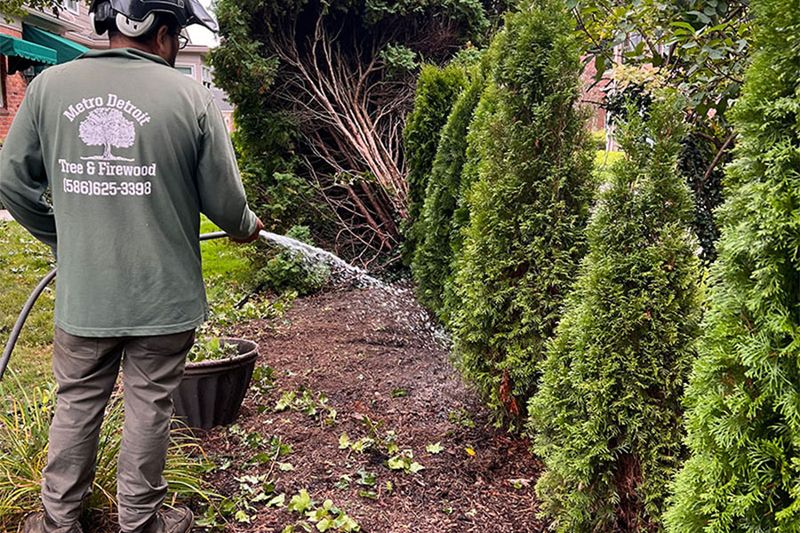
Few things slow down a newly planted arborvitae’s establishment quite like an irregular watering schedule.
Roots that experience cycles of drought followed by heavy watering have a harder time developing the consistent growth pattern needed to anchor the tree and support healthy foliage through Michigan’s spring and summer seasons.
During the first growing season, arborvitae need steady access to moisture without being overwatered.
A general approach that works well in Michigan is watering deeply two to three times per week during dry stretches, allowing the soil to partially dry between sessions rather than keeping it constantly saturated.
The goal is moist, not soggy, soil at a depth of several inches below the surface where active root growth is happening.
Relying entirely on rainfall in Michigan can be risky because spring precipitation is unpredictable. Some weeks bring plenty of rain while others stay surprisingly dry with strong wind and warm temperatures that pull moisture from the soil quickly.
Checking the soil manually near the root zone, rather than going by a fixed calendar schedule, gives a more accurate picture of when watering is actually needed.
Consistent attention during the first full growing season is one of the most impactful things a Michigan homeowner can do to support long-term arborvitae health and reduce early spring stress.
6. Heavy Snow Can Bend Or Split Young Branches
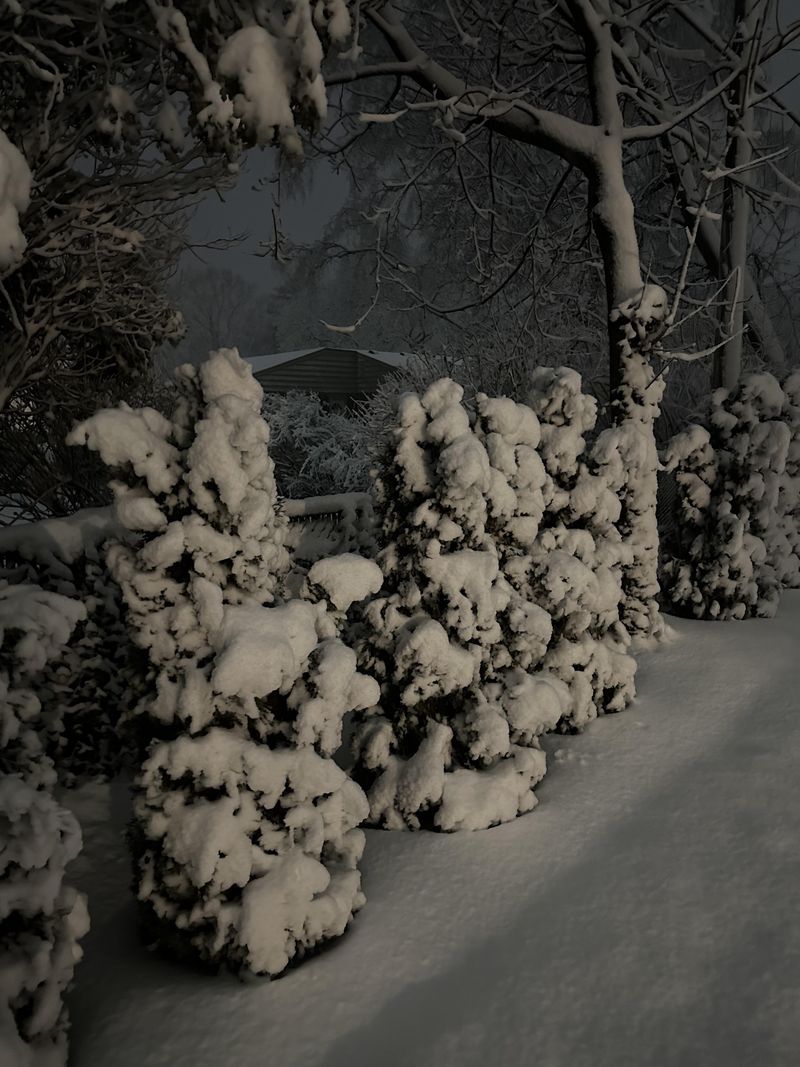
Michigan winters are known for delivering heavy, wet snow that clings to branches and builds up quickly during late-season storms. For mature, well-established arborvitae, a thick coat of snow is usually manageable.
For newly planted trees with flexible but undeveloped branch structure, heavy snow loads can bend branches at awkward angles or cause splits that take seasons to recover from.
The damage often becomes obvious in early spring when snow melts and branches that were bent under the weight do not fully spring back. Some branches may splay outward permanently, changing the tree’s natural upright shape.
In more severe cases, the central leader can be damaged, which affects how the tree grows for years afterward. Wet spring snow in April, which is common in Michigan, can be especially heavy and problematic for young trees.
Gently brushing snow off arborvitae branches with a soft broom after storms, using an upward sweeping motion rather than shaking, can reduce load stress significantly.
Some gardeners loosely tie the branches of young arborvitae together with soft twine or burlap strips before winter to help them resist spreading under snow weight.
Removing ties in early spring allows branches to resume natural growth while reducing the chance of long-term structural changes caused by Michigan’s unpredictable late-winter and early-spring snowfall.
7. Soil Compaction Limits Root Expansion
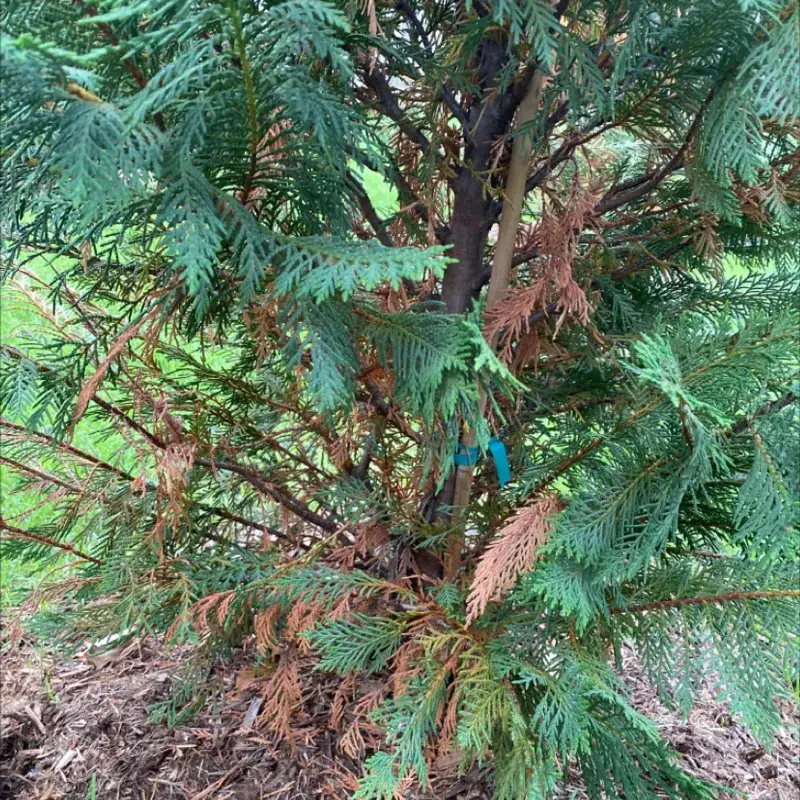
Compacted soil is one of those problems that does not always get the attention it deserves when homeowners plant new arborvitae in Michigan.
Construction activity, foot traffic, heavy equipment, and even repeated mowing near planting areas can compress soil particles tightly together, leaving very little pore space for roots, water, or air to move through freely.
When arborvitae roots encounter compacted soil, they tend to stay confined to the loose backfill in the planting hole rather than spreading outward.
This creates a situation where the tree is essentially root-bound in its own planting hole, limiting its ability to access water and nutrients from a wider area.
In Michigan’s variable spring conditions, a tree with restricted root expansion is far more vulnerable to moisture stress, nutrient deficiency, and general slow growth.
Breaking up compacted soil before planting, at least within a few feet of the planting site, gives roots a clear path to expand. Incorporating organic material like compost into heavy clay soil can improve structure over time.
Avoiding foot traffic and heavy equipment near the root zone after planting is equally important.
Mulching the area helps protect soil structure and encourages the biological activity that naturally loosens compacted Michigan soils over time, giving roots the open pathways they need to spread and anchor effectively during the first few growing seasons.
8. Improper Planting Depth Affects Long Term Health
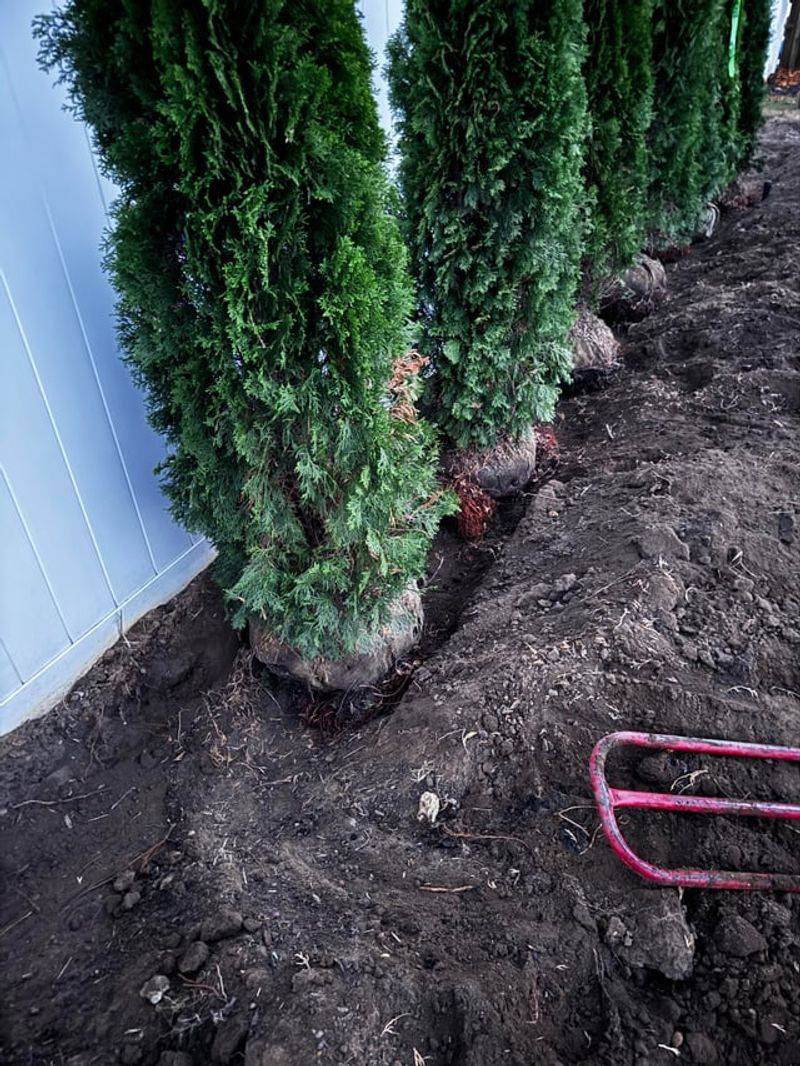
Planting depth might seem like a minor detail, but it has a surprisingly large impact on how well arborvitae survive their first spring and beyond in Michigan.
Trees planted too deeply have their root flare buried under soil, which restricts oxygen exchange around the base of the trunk and can lead to slow, persistent stress that shows up gradually over the first few seasons.
A tree planted too shallowly faces the opposite issue, with the root ball sitting too high and exposed to temperature extremes and moisture loss. Both scenarios can cause foliage to look off-color or grow more slowly than expected during spring.
Many homeowners and even some landscapers unknowingly plant arborvitae too deep, especially when backfilling soil settles after planting and gradually covers the root flare.
The root flare, the point where the trunk begins to widen and transition into the root system, should sit at or very slightly above the surrounding soil level.
Before backfilling, it helps to set the tree in the hole and view it from the side to confirm correct depth.
In Michigan, where spring soil can shift and settle after frost heave, checking planting depth after the first winter and adjusting mulch levels to avoid burying the base can make a meaningful difference in how confidently the tree grows through its first full spring and summer.
9. Deer Browsing Can Damage Tender Growth
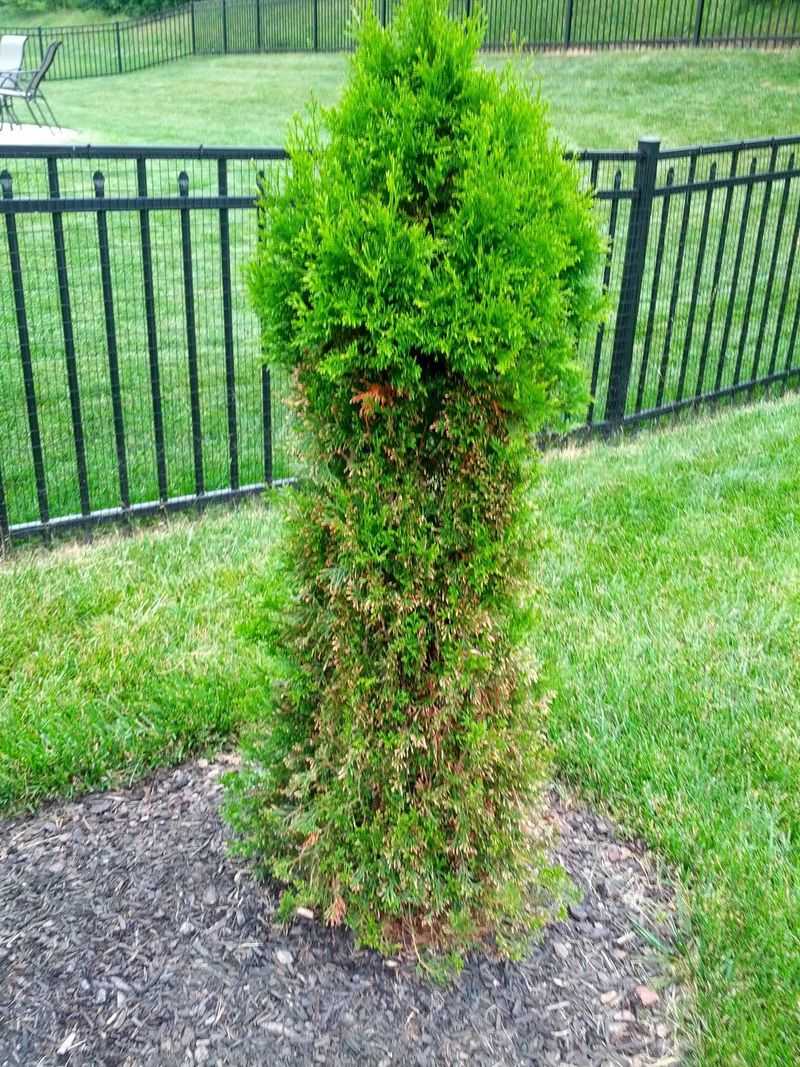
Anyone who has planted arborvitae near wooded areas or open fields in Michigan knows how much deer love them.
Newly planted trees are especially appealing to deer in early spring when other food sources are still scarce and tender new arborvitae growth is just beginning to emerge.
A single night of browsing can strip entire sections of a young tree’s lower foliage.
Unlike clean pruning cuts, deer browsing leaves behind ragged, torn branch tips that are slower to heal and more susceptible to secondary issues.
Repeated browsing over multiple seasons can permanently alter the shape of a young tree and significantly slow its overall development.
In Michigan, deer pressure tends to peak in late winter and early spring, which lines up almost exactly with when newly planted arborvitae are at their most vulnerable.
Protecting young arborvitae with wire cages, plastic mesh tubes, or deer-repellent sprays applied regularly through the season can reduce browsing damage considerably.
Repellent sprays work best when applied before deer establish a feeding habit on your plants rather than after the damage has already started.
Reapplying after rain is important for continued effectiveness.
In areas of Michigan with high deer populations, physical barriers tend to offer more reliable protection than repellents alone, especially during the first two or three growing seasons when trees are most exposed and vulnerable to setbacks.