These 6 Trees Can Get California Homeowners In Trouble If Not Removed Or Managed
Some trees give a yard instant character. They add shade, privacy, and that settled California look people love.
But not every tree stays charming once it starts dropping heavy limbs, cracking pavement, tangling with power lines, or creeping a little too close to a property line. That is where trouble starts.
A tree that once seemed like a great idea can turn into a safety risk, a legal headache, or a very expensive problem if it is ignored for too long.
California homeowners often focus on what a tree looks like right now, not what it may do a few years later. Fast growth, invasive roots, storm damage, fire risk, and local rules can all make certain trees far more troublesome than they first appear.
Some need regular pruning to stay safe. Others become a bigger issue once they are mature.
In some neighborhoods, the problem is not just the tree itself, but where it is planted and how little attention it gets over time. A neglected tree near a driveway, fence, sidewalk, or roofline can quietly create bigger and bigger problems without seeming urgent at first.
Knowing which trees deserve closer attention can save homeowners a lot of stress, money, and neighbor drama down the line. It can also help prevent the kind of costly surprise that turns a beautiful yard feature into a major burden.
1. Tree Of Heaven
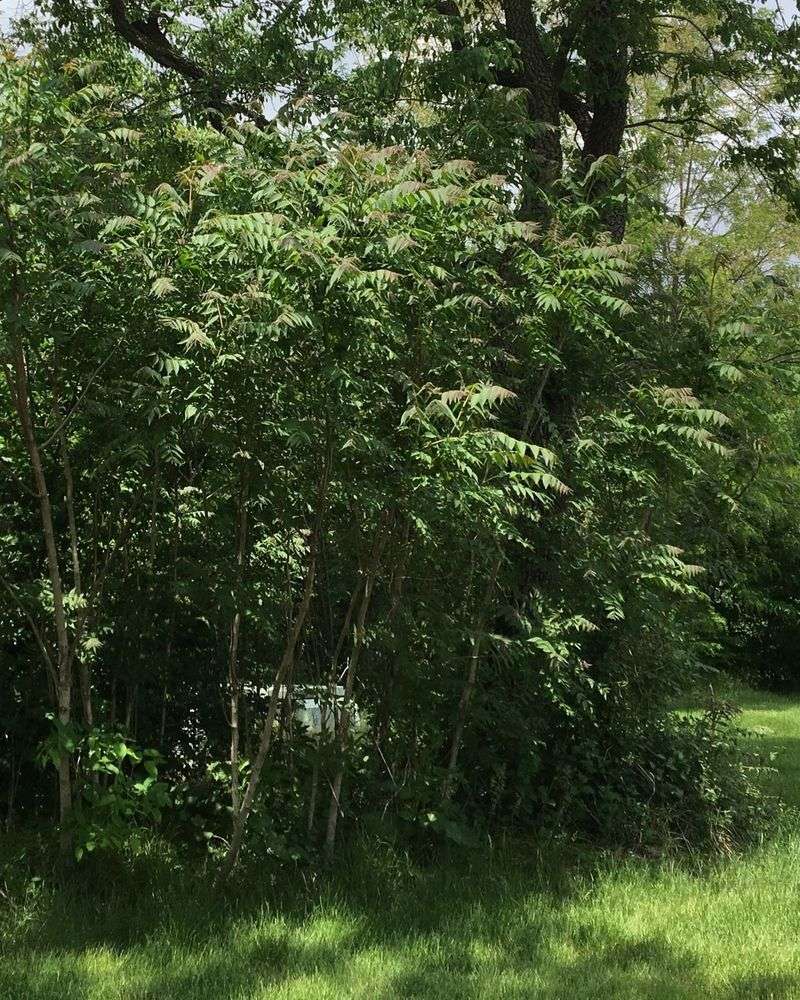
Don’t let the name fool you. The Tree of Heaven, known scientifically as Ailanthus altissima, is one of the most troublesome invasive trees in California.
It spreads fast, grows almost anywhere, and its roots are incredibly aggressive. In vacant lots, fence lines, neglected corners, and even narrow cracks near buildings, it can take hold with surprising speed.
What starts as a small volunteer seedling can turn into a much bigger problem before many homeowners realize what they are dealing with.
Those roots can crack sidewalks, damage sewer lines, and even push against your home’s foundation. Once it gets established, it’s extremely hard to get rid of.
New shoots keep sprouting even after the trunk is cut down. It also has a strong tendency to form dense colonies, which makes the problem spread beyond a single trunk and into the surrounding area.
California classifies this tree as a noxious weed, and several counties have mandatory removal ordinances in place. If you ignore those rules, you could face fines or be held liable for any property damage it causes to your neighbors.
That can turn one overlooked tree into a costly issue involving repairs, complaints, and repeat removal work.
The tree also releases chemicals into the soil that prevent other plants from growing nearby. This makes it harmful to your garden and local ecosystem.
If you spot one growing on your property, contact a certified arborist right away. Early removal is much easier and far less expensive than dealing with a fully grown Tree of Heaven later on.
2. Blue Gum Eucalyptus
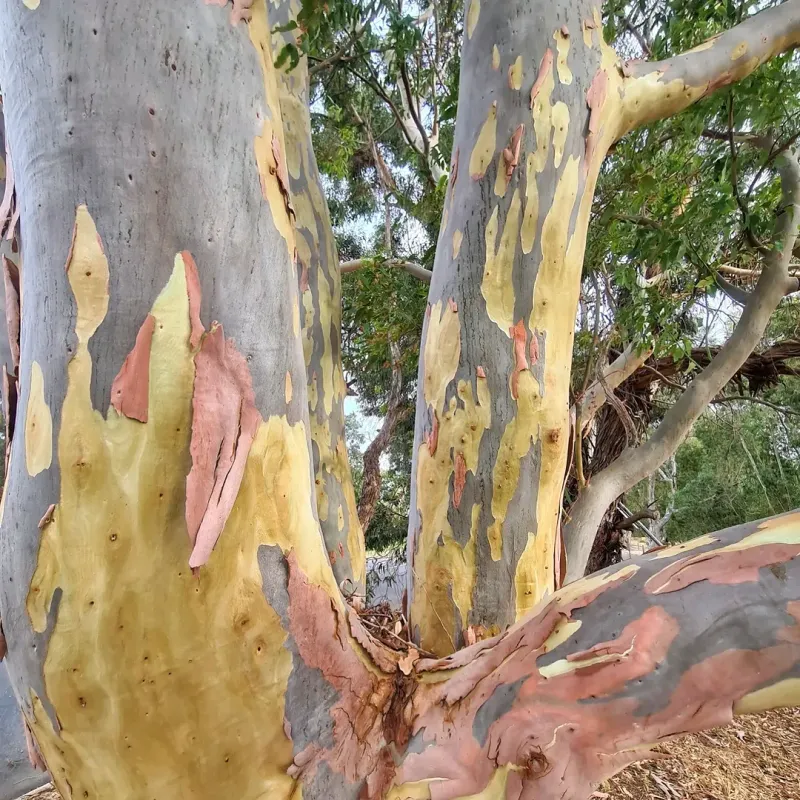
Few trees in California have caused as much controversy as the Blue Gum Eucalyptus. Originally brought over from Australia, this towering tree has made itself very much at home across the state, and not always in a good way.
Your California Garden Changes Every Week. Your Plan Should Too.
Gardening in California changes quickly throughout the season. Every Friday you’ll receive a simple weekly plan showing exactly what to plant, prune, fertilize, harvest, and protect so you never miss the right timing.
In some areas, it became popular for fast growth and dramatic height, but those benefits have come with long-term concerns that many homeowners and land managers now take much more seriously.
The biggest concern is fire. Blue Gum Eucalyptus trees are packed with flammable oils in their leaves, bark, and branches.
During dry California summers, these trees can act like giant torches. Fallen bark and leaves also pile up quickly, creating thick layers of highly combustible material on the ground.
That buildup can spread risk beyond the tree itself, especially when debris collects near structures, dry slopes, fences, or road edges.
On top of the fire risk, the trees have shallow root systems that make them unstable in strong winds. A falling Blue Gum can cause serious structural damage to homes, fences, and vehicles.
Large limbs can also drop without much warning, creating another hazard for people and property below. Many California municipalities have already banned new plantings and require removal in high-risk fire zones.
If you have one of these trees on your property, check with your local fire department or city planning office to find out what the rules are in your area. A certified arborist can help you assess the risk level and plan a safe removal if needed.
3. River Red Gum Eucalyptus
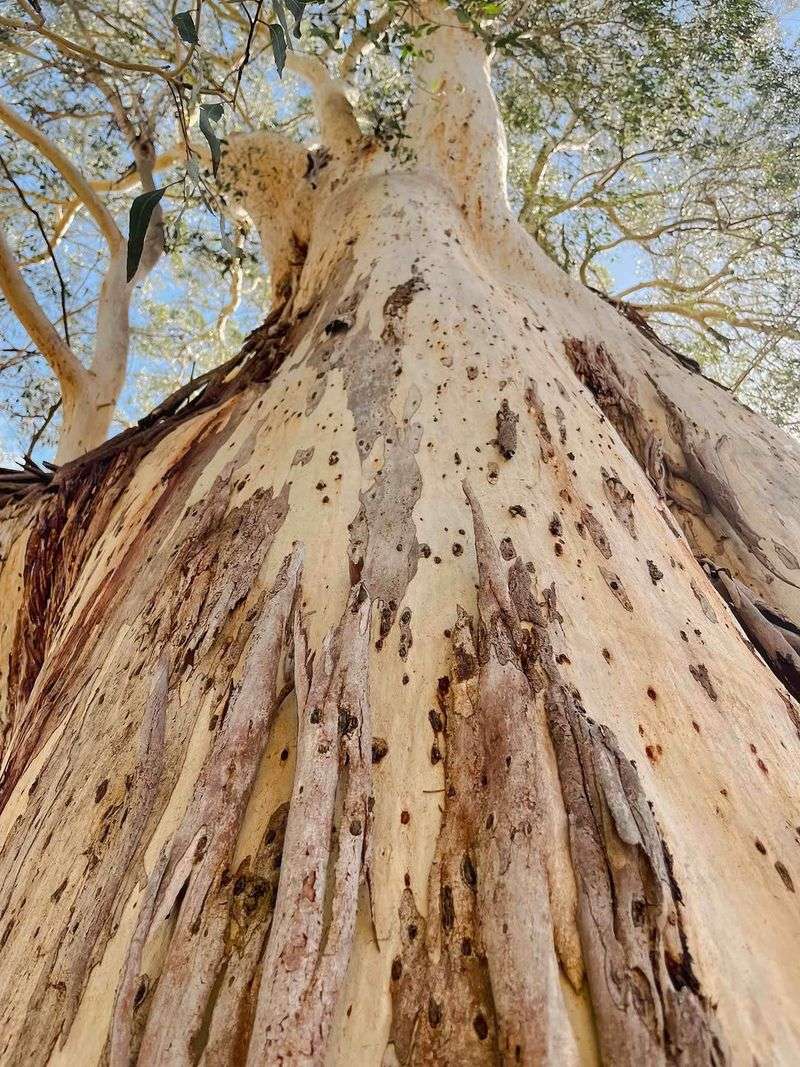
Here’s a tree that looks sturdy and impressive but hides some serious problems underneath. The River Red Gum Eucalyptus is another Australian native that has spread widely across California, especially in parks, roadsides, and residential neighborhoods.
Like its Blue Gum cousin, the River Red Gum is a fire hazard. Its leaves are rich in flammable oils, and the tree sheds large amounts of bark and leaf litter throughout the year.
In dry conditions, that debris becomes a wildfire waiting to happen.
The root system is another major issue. River Red Gums develop massive surface roots that spread far beyond the tree’s canopy.
These roots can buckle driveways, crack patios, and damage underground pipes. Homeowners are often shocked at how much damage the roots can cause before they even notice the tree is a problem.
California homeowners in fire-prone areas should take this tree especially seriously. Some local governments require permits or mandatory removal when the tree poses a clear risk.
Getting an inspection from a qualified arborist is the best first step. Catching root damage early can save you thousands of dollars in repairs down the road.
4. Bailey Acacia
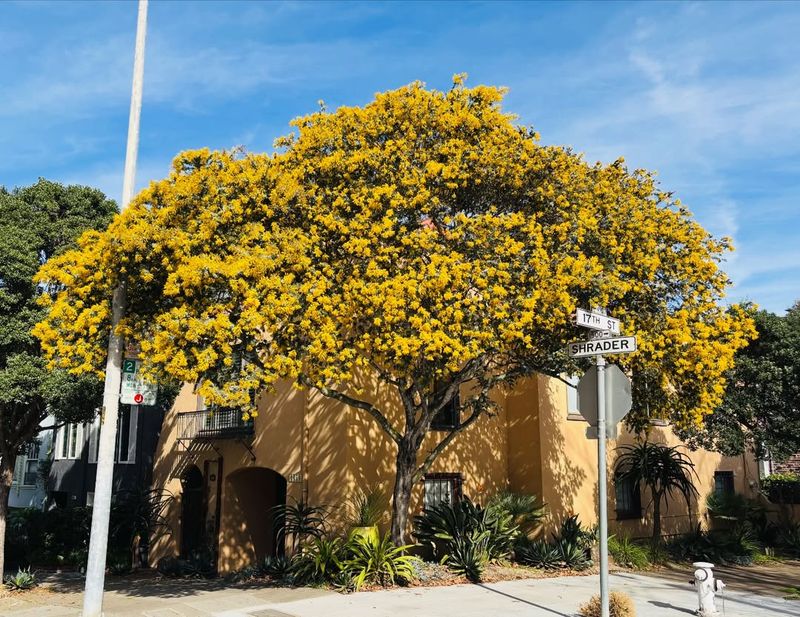
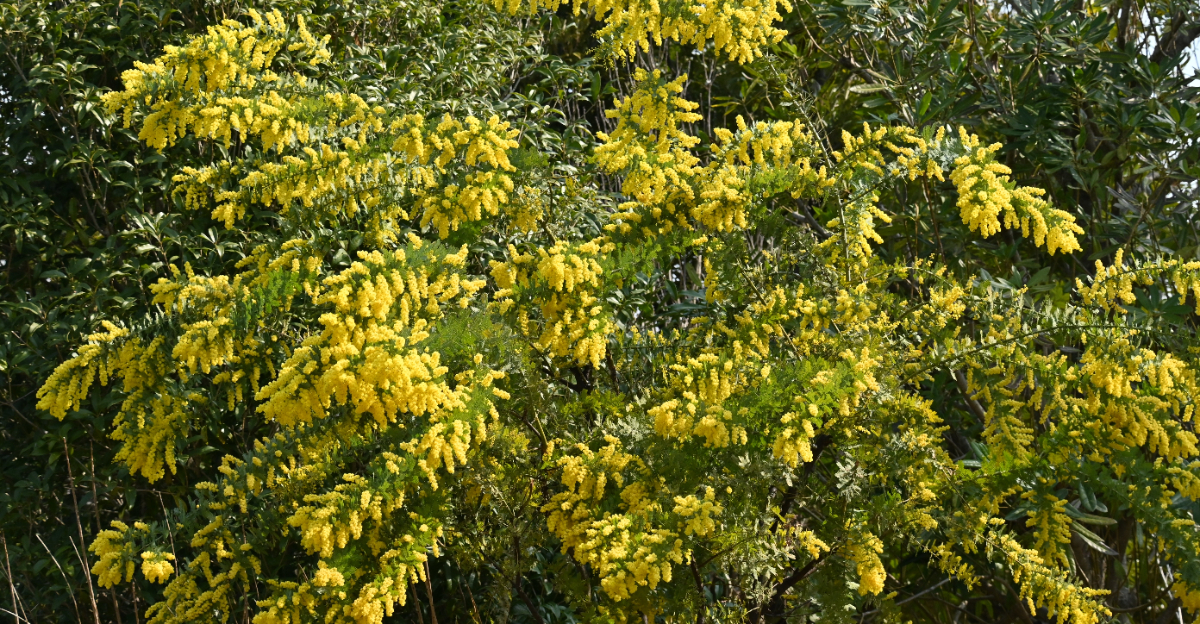
Bright yellow flowers and fast growth make the Bailey Acacia look like a great choice for a California yard. But behind that cheerful appearance is a tree that can quickly become a serious headache for homeowners.
Bailey Acacia grows at a surprisingly rapid pace. That sounds convenient, but it means the tree can reach power lines, rooftops, and neighboring properties faster than most homeowners expect.
In California, you are responsible for any damage your tree causes to utility infrastructure. If your Bailey Acacia knocks out power lines or sparks a fire, you could be on the hook for significant costs.
The tree is also considered invasive in many parts of California. It spreads through seeds and can crowd out native plants, disrupting local ecosystems.
Some California counties have restrictions on planting or require removal of established trees in sensitive habitats.
Regular pruning is essential if you plan to keep this tree. But pruning near power lines should always be handled by a licensed professional, not a DIY project.
Check with your local utility company and city regulations before doing any trimming. Staying on top of maintenance is the best way to avoid expensive problems with this fast-growing tree.
5. Tamarisk
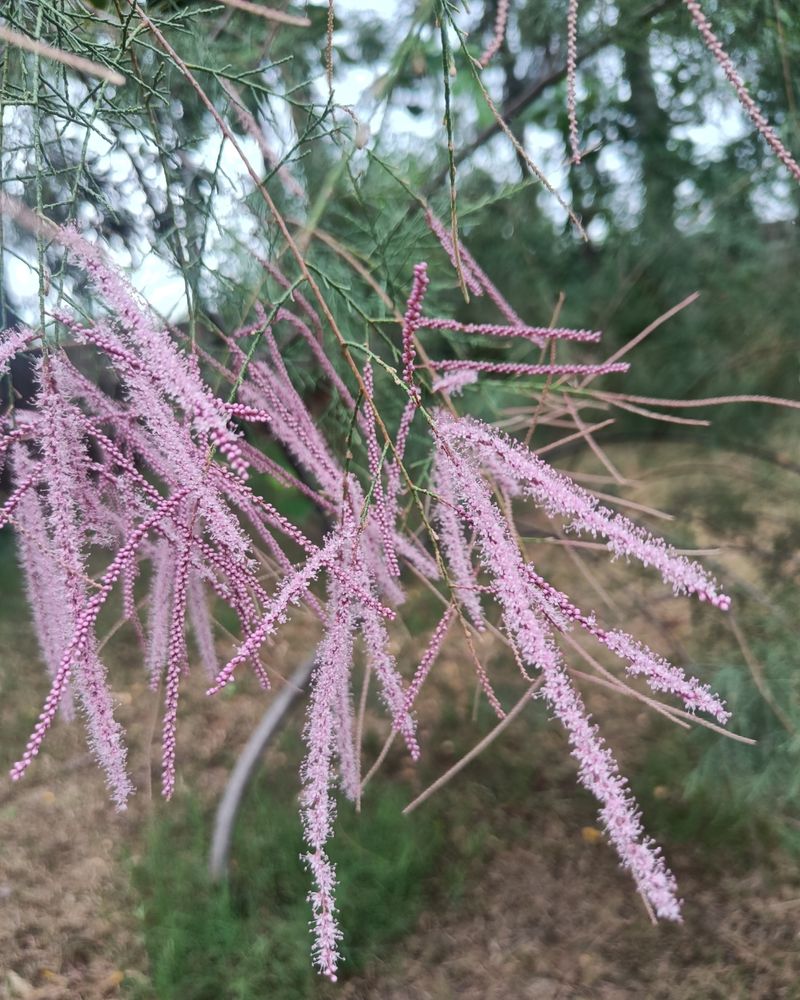
Tamarisk, sometimes called saltcedar, might look delicate with its feathery branches and soft pink flowers. But this tree is one of the most destructive invasive species in California, especially near rivers, streams, and wetlands.
One of the biggest problems with Tamarisk is how much water it drinks. A single mature tree can absorb up to 200 gallons of water per day.
In California, where water is already scarce, this puts serious strain on local water sources and native plants that depend on them. Tamarisk essentially takes over riparian areas, pushing out willows, cottonwoods, and other native species.
The tree also increases wildfire risk. It accumulates large amounts of dry, flammable material and burns easily.
After a fire, it regrows quickly, often before native plants get a chance to recover.
California has designated Tamarisk as an invasive weed, and removal is required in many protected areas. Homeowners near waterways who have Tamarisk on their property should act quickly.
Removal can be complex because the roots go deep and the tree resproutes aggressively. Working with an experienced arborist or invasive species specialist is strongly recommended for effective and lasting removal in the California landscape.
6. California Pepper Tree
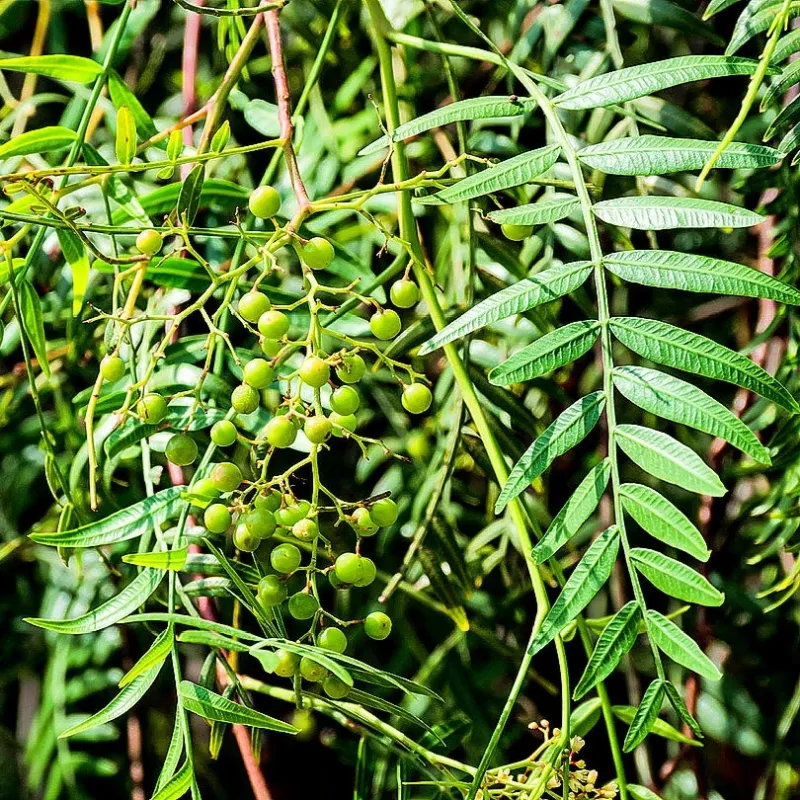
The California Pepper Tree has a romantic, weeping look that makes it popular in yards and along streets across the state. But despite the name, this tree is actually native to South America and has a long history of causing problems for California property owners.
The root system is where most of the trouble starts. California Pepper Trees develop thick, spreading roots that aggressively seek out water.
They can crack driveways, lift sidewalks, and invade underground plumbing systems. Homeowners who plant these trees close to their homes often end up with expensive foundation or pipe repairs within just a few years.
The tree also spreads easily through its bright red berries, which birds love to eat and then scatter widely. This makes it an invasive concern in natural areas throughout California.
Some regions have placed restrictions on new plantings near parks or open spaces.
If you already have a California Pepper Tree on your property, regular root barriers and professional pruning can help manage the damage.
But if the tree is planted too close to your home or a public sidewalk, removal might be the safer and more cost-effective long-term solution. Always consult a certified arborist before making that call.