The Smart Way To Help Florida Plants Through A Dry Spell
A dry spell in Florida can fool people fast. The grass still looks decent, a few plants hold their color, and it is easy to think the yard is doing just fine.
Then all at once, leaves start drooping, blooms fizzle out, and stressed plants begin to look tired in a hurry. That is where many gardeners make things worse.
A little panic sets in, the hose comes out, and everything gets soaked too often, too fast, or at the wrong time of day. The smarter move is not more water just for the sake of it.
It is knowing how to water in a way that actually helps roots stay stronger and plants ride out the dry stretch with less stress. In Florida, that can make all the difference.
A few simple choices can keep a garden looking steady, healthy, and far less rattled when rain decides to take its sweet time.
1. Start With A Deep Watering Habit Instead Of Daily Sprinkles
Sandy soil is one of Florida’s most common landscape challenges, and it becomes especially unforgiving during a dry spell. Water moves through it quickly, often draining past the root zone before roots have a chance to absorb much of it.
That is exactly why daily light sprinkles tend to do more harm than good when rainfall turns scarce.
According to UF/IFAS guidance, deep and thorough watering encourages plants to push roots further down into cooler, more consistently moist soil layers. Shallow, frequent watering does the opposite.
It keeps roots hanging near the surface, where soil dries out fastest and temperatures climb highest during a Florida afternoon. Over time, those shallow roots make plants more fragile, not more resilient.
A practical target during dry conditions is applying roughly half to three-quarters of an inch of water per session, enough to push moisture eight to twelve inches into the soil. Checking the soil a few inches down before watering is a smart habit.
If it still feels damp at that depth, the plants likely do not need more water yet.
Watering deeply every few days, rather than lightly every day, gives roots a reason to grow downward and builds the kind of root structure that helps plants handle Florida’s unpredictable dry stretches far better over time.
2. Use Mulch To Slow Moisture Loss Around Roots
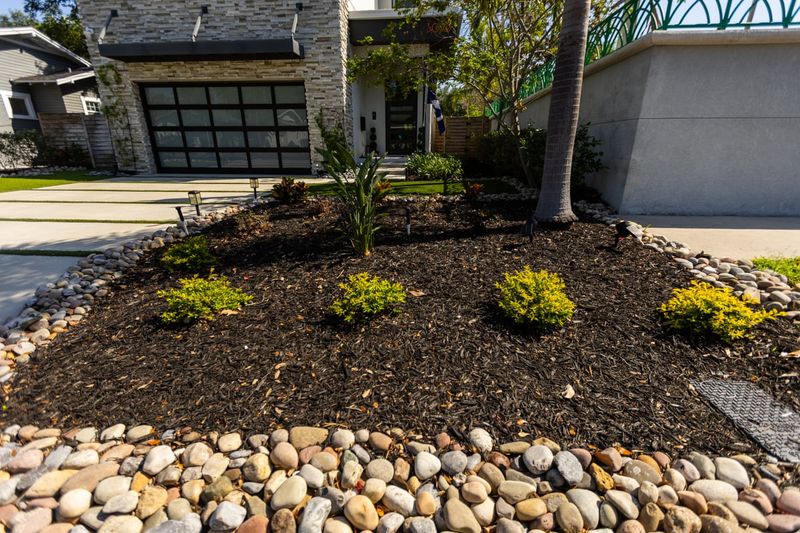
Walk through any well-maintained Florida landscape during a dry stretch and you will notice something consistent around the healthiest plants: a generous ring of mulch covering the soil. That is not a coincidence.
Mulch is one of the most effective and affordable tools a Florida gardener has for protecting soil moisture when rain stops showing up on schedule.
UF/IFAS recommends applying organic mulch such as pine bark, pine straw, or eucalyptus to a depth of two to four inches around landscape plants.
At that depth, mulch significantly slows the evaporation of soil moisture, moderates soil temperature, and reduces competition from weeds that would otherwise compete with your plants for whatever water remains.
Your Florida Garden Changes Every Week. Your Plan Should Too.
Gardening in Florida changes quickly throughout the season. Every Friday you’ll receive a simple weekly plan showing exactly what to plant, prune, fertilize, harvest, and protect so you never miss the right timing.
During a Florida dry spell, those benefits add up quickly.
One detail worth paying attention to is placement. Mulch should be kept a few inches away from plant stems and tree trunks.
Piling it directly against woody stems can trap moisture against the bark and invite rot or pest issues over time. Spreading it out in a wide, even layer rather than mounding it is the better approach.
Refreshing mulch before a dry spell hits, or right at the start of one, gives plants the best possible buffer. Even a modest layer makes a measurable difference in how long soil retains usable moisture between waterings.
3. Water Early So Plants Face Less Stress By Afternoon
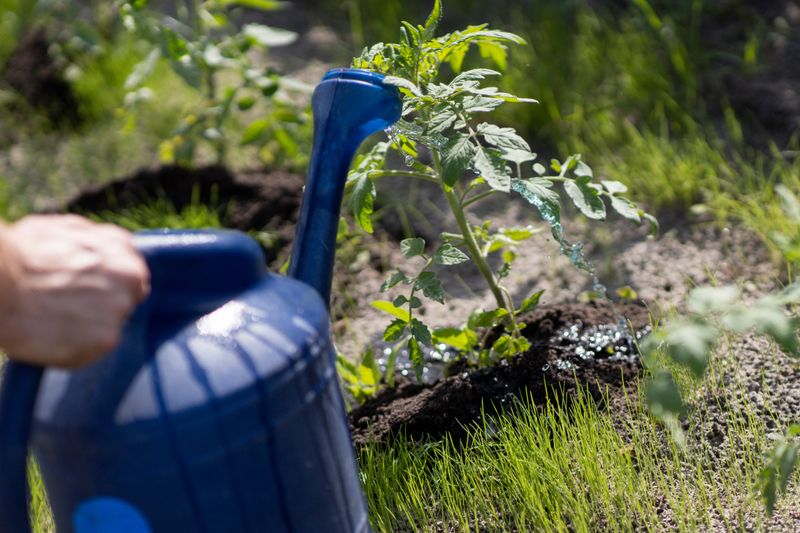
By two in the afternoon on a Florida summer day, air temperatures can be scorching and the sun angle is punishing. Plants that went into that heat without adequate soil moisture face a much harder recovery than those that started the day with a good drink.
Timing a watering session is not just a convenience choice; it is a practical strategy for reducing plant stress during a dry spell.
Morning watering, ideally before nine or ten in the morning, gives soil time to absorb moisture before peak evaporation sets in.
Roots get access to water during the cooler part of the day, which is when plants can move that moisture through their systems most efficiently.
Foliage that gets wet during morning watering also has time to dry off as temperatures rise, which helps reduce the risk of fungal issues that can develop when leaves stay damp through warm, humid overnight hours.
Watering late in the evening is a common habit that can backfire in Florida’s climate. Wet foliage sitting through a warm, humid night creates conditions that some fungal pathogens find very favorable.
Early morning avoids that problem entirely. It also means less water is lost to evaporation before it can reach the root zone.
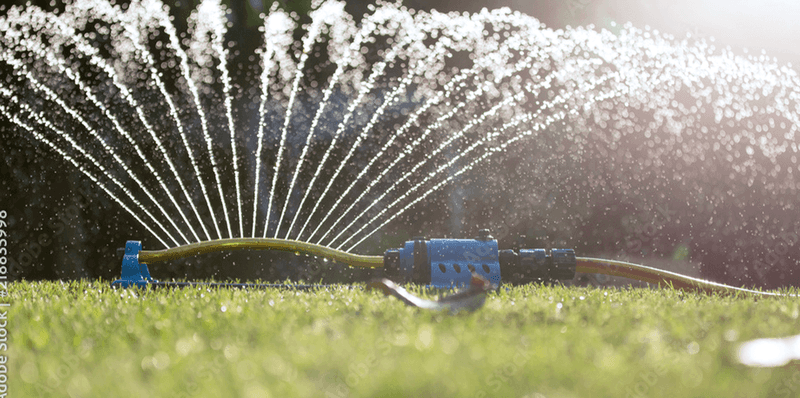
For gardeners running irrigation systems, setting the schedule to run in the early morning hours rather than midday or evening is one of the simplest adjustments that pays off noticeably during dry stretches.
4. Skip Fertilizer Until Plants Are Growing Comfortably Again
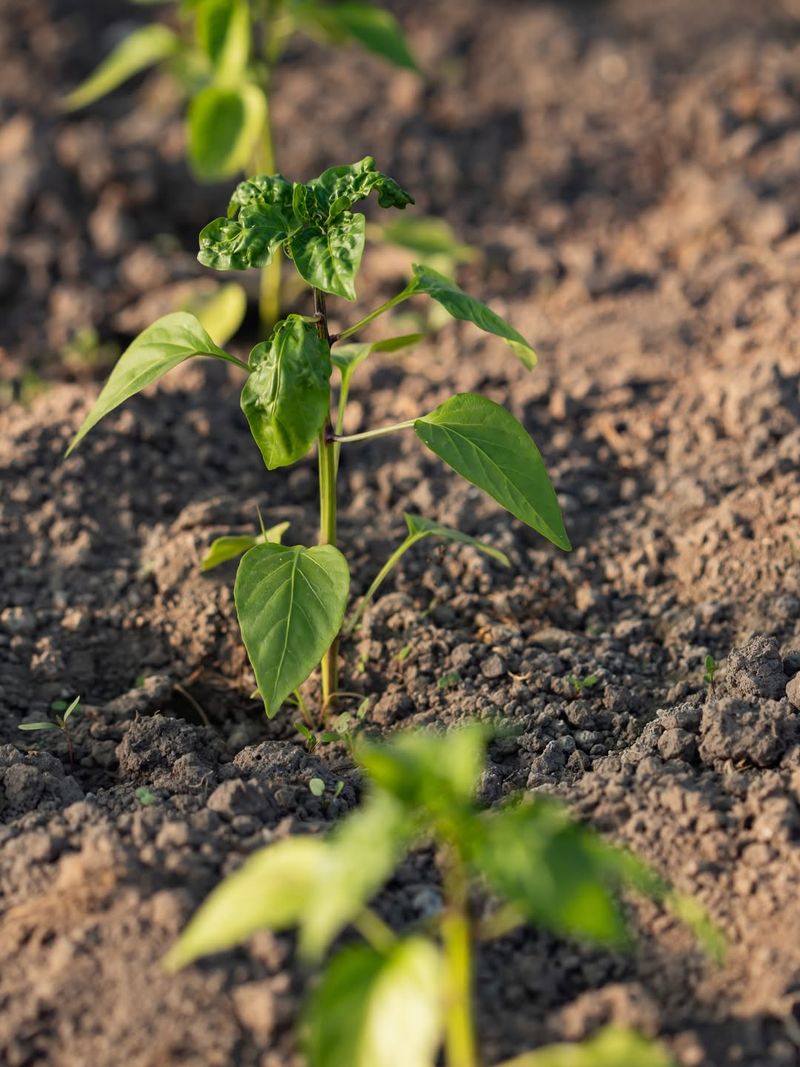
Fertilizer might seem like a logical way to give struggling plants a boost during a dry spell, but reaching for it too soon usually backfires. Plants under drought stress are already working hard just to stay stable.
Pushing them to produce new growth at that moment asks more from a root system that is already stretched thin.
UF/IFAS drought guidance specifically advises holding off on fertilizer applications when plants are under stress from dry conditions. The reasoning is straightforward.
Fertilizers, especially nitrogen-heavy ones, stimulate soft new growth. That tender growth needs consistent moisture to develop properly.
During a dry spell, that moisture is exactly what is in short supply. The result is often growth that wilts quickly, struggles to harden off, and leaves the plant more vulnerable than it was before the application.
There is also a soil chemistry angle worth knowing. Fertilizer salts in dry soil can pull moisture away from roots rather than supporting them, which adds another layer of stress the plant does not need.
The smarter move is to focus on watering and mulching first, then wait until the dry stretch breaks and plants show signs of healthy, active growth again before resuming any fertilizer program. Patience here is not passive; it is protective.
Giving plants time to stabilize before pushing growth is one of the more effective things a Florida gardener can do during a rough dry stretch.
5. Shade The Most Vulnerable Plants During Harsh Heat
Not every plant in a Florida yard handles a dry spell the same way. Established native shrubs that have been in the ground for years often manage heat and dry conditions reasonably well.
But recently planted specimens, container plants sitting on a sun-baked patio, or tender ornamentals that prefer filtered light can hit a wall fast when temperatures climb and rain disappears for days at a stretch.
Temporary shade is a practical option that many gardeners overlook because it sounds more complicated than it is.
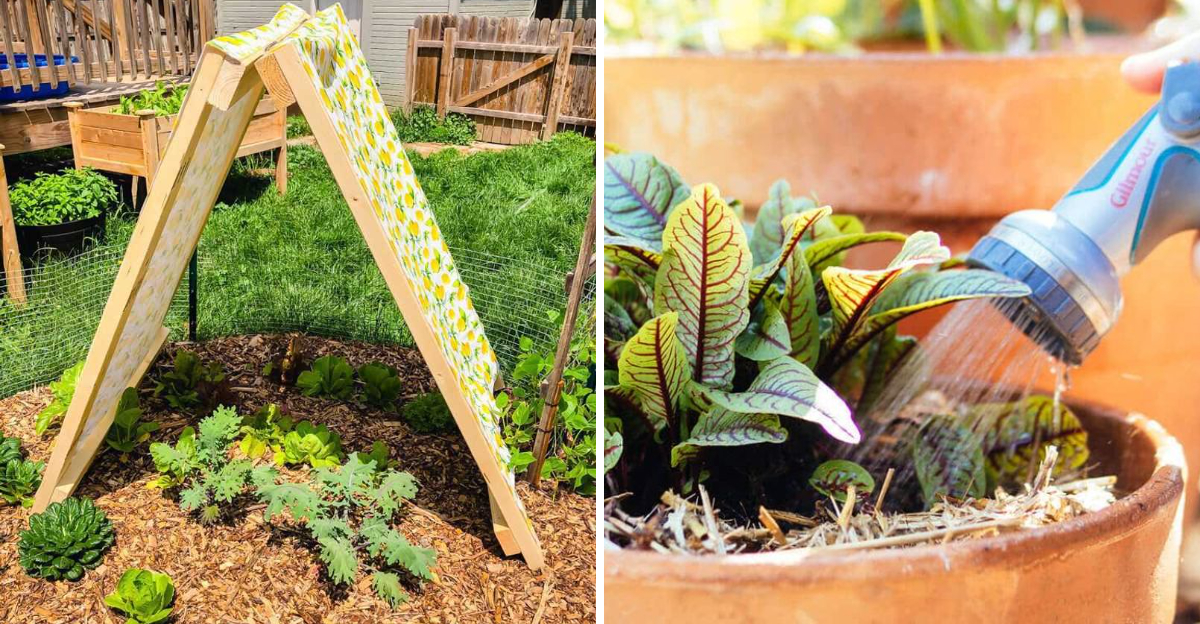
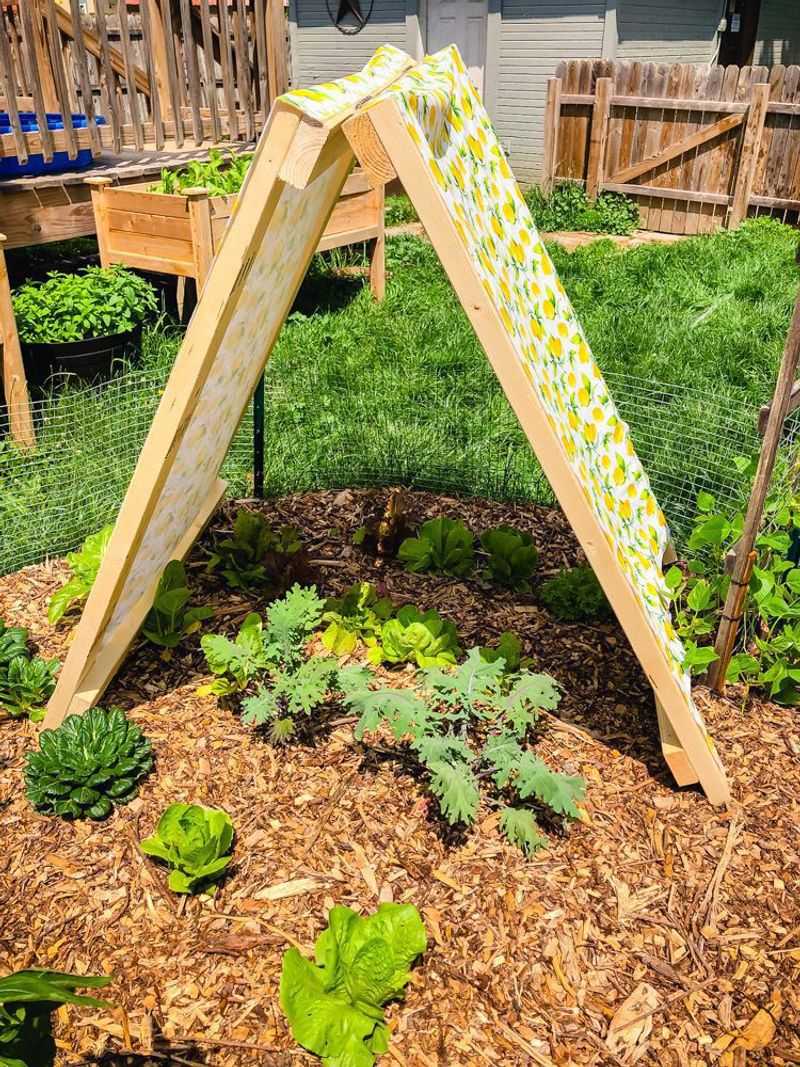
A simple shade cloth draped over a frame or a few strategically placed potted plants moved to a shadier spot can meaningfully reduce the heat load on vulnerable plants during the worst afternoon hours.
This is not about creating permanent shade structures. It is about getting specific plants through a tough stretch without adding unnecessary stress.
Afternoon shade matters most in Florida because that is when temperatures peak and evaporation is most aggressive. Even reducing direct sun exposure for two or three hours in the afternoon can lower leaf temperature noticeably and slow moisture loss through the leaves.
New plantings are especially worth protecting this way, since their root systems have not yet had time to establish the depth and spread needed to pull water efficiently from a larger soil volume.
A little temporary shade during a dry spell buys those roots the time they need to catch up.
6. Focus On New Plantings Before Established Beds
There is a meaningful difference between a shrub that went in the ground last month and one that has been growing in the same spot for five years. During a dry spell, that difference becomes very clear, very fast.
Established plants have had time to push roots deep and wide, giving them access to moisture from a much larger soil volume. New plantings have not had that chance yet.
Newly installed plants, whether trees, shrubs, or ground covers, typically need closer attention and more consistent watering during dry weather than mature, well-rooted plants nearby.
Their root balls are still relatively compact, often matching roughly the size of the container they came from.
Until those roots expand outward into surrounding soil, the plant depends heavily on whatever moisture is available in that small zone directly around the root ball.
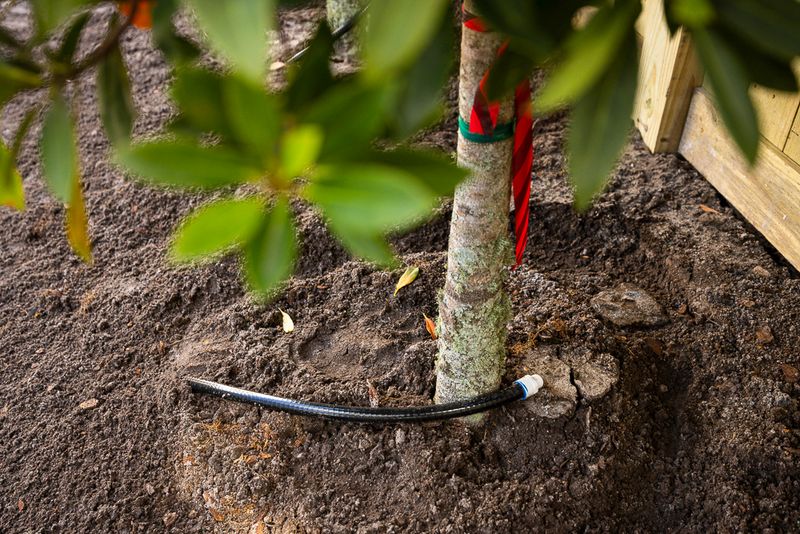
A practical approach is to prioritize hand watering or drip irrigation directly at the base of new plantings during a dry stretch, rather than relying on a general irrigation zone that may be calibrated for established beds.
UF/IFAS planting guides suggest that newly installed landscape plants in Florida may need regular watering for weeks to months after installation, depending on the season and conditions.
During a dry spell, that timeline extends. Checking the soil directly at the root ball, not just the surrounding area, gives the most accurate picture of whether a new plant is getting what it needs.
7. Watch Containers Closely As Potting Soil Dries Faster
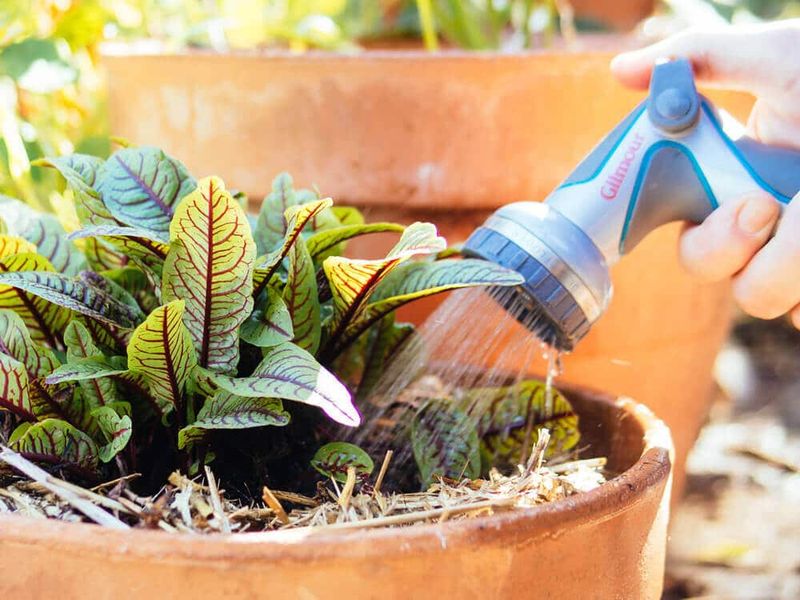
Container plants live by different rules than anything growing in the ground.
The limited soil volume in a pot means there is simply less moisture available to begin with, and that moisture disappears much faster than most gardeners expect, especially during a Florida dry spell when temperatures are high and sun exposure is relentless.
Terracotta pots are especially quick to dry out because the clay is porous and allows moisture to evaporate through the sides of the container, not just from the soil surface.
Dark-colored plastic containers sitting in direct sun can heat up significantly, which speeds up moisture loss from the root zone and can stress roots directly.
Even containers tucked against a wall or under an overhang dry out faster than in-ground plants because they have no connection to deeper soil moisture reserves.
Checking container soil daily during a dry stretch is a smart habit. Pushing a finger an inch or two into the potting mix gives a quick, reliable read on whether watering is needed.
Wilting in containers can escalate quickly in Florida heat, and by the time a potted plant looks severely stressed, recovery takes longer. Grouping containers together in a spot with afternoon shade, or moving them temporarily to a shadier location during the worst of a dry spell, helps slow moisture loss and reduces the frequency of emergency watering sessions that can disrupt root health.
8. Cut Back On Extra Pruning While Plants Are Under Stress
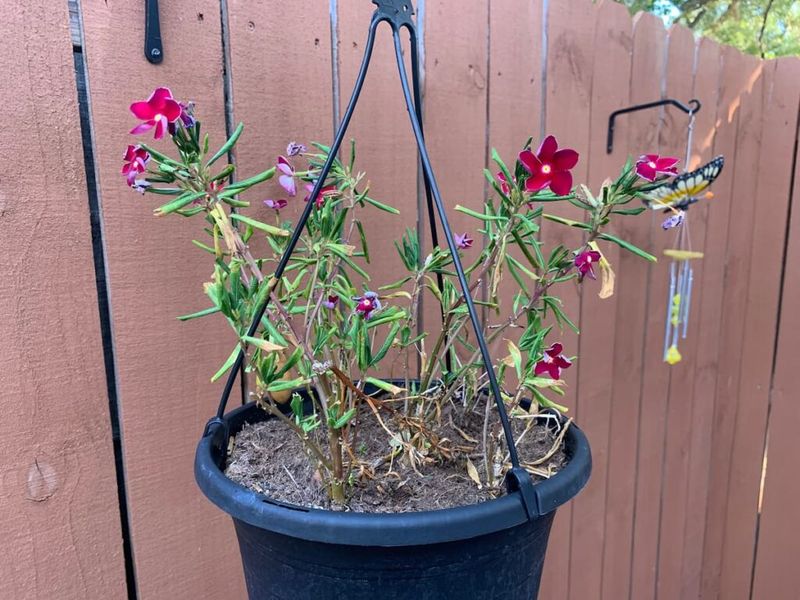
Pruning feels productive. There is something satisfying about tidying up a shrub or trimming back overgrown branches, and it is easy to fall into the habit of doing it whenever you are out in the yard.
During a dry spell, though, that impulse is worth resisting, at least for any pruning that is not strictly necessary.
Every cut made on a plant creates a wound that the plant must heal. Healing takes energy and resources, including water.
A plant that is already managing stress from dry conditions has fewer resources available to handle that extra demand. Heavy pruning during a dry stretch can push a stressed plant further in the wrong direction, slowing recovery rather than supporting it.
There is also a growth-response factor to consider. Pruning often triggers new growth, especially in actively growing Florida landscapes during warm months.
That new growth is soft, tender, and particularly sensitive to moisture stress. Encouraging it during a dry spell sets up that new growth to struggle almost immediately after it emerges.
The better approach is to hold off on major shaping, hard cutbacks, or cosmetic trimming until the dry stretch breaks and plants are showing signs of comfortable, steady growth again.
Light cleanup of clearly damaged or broken material is fine, but saving the bigger pruning sessions for a time when plants are better resourced is a straightforward way to reduce unnecessary stress during tough conditions.