11 Types Of Invasive Plants In Florida And How To ID Them
Some Florida plants look harmless right up until they take over half the yard. One day you spot a pretty vine or lush ground cover, and the next it acts like it owns the place.
That is how a lot of trouble starts. In Florida, invasive plants do not waste time.
They creep, climb, spread, and crowd out the good stuff before most people know what they are up against. That is why plant ID matters so much.
A fast glance is not enough when a familiar leaf or flower can fool even seasoned gardeners. Some of the worst offenders look ornamental, neat, and totally innocent at first.
Then they turn into a real headache. This list will help you spot the red flags early, so you can tell the difference between a garden guest and a plant that came to raise Cain in your yard for breakfast before summer ends.
1. Brazilian Pepper Moves In Fast
Walk along almost any Florida roadside, coastal edge, or disturbed open area, and chances are good you will spot Brazilian Pepper (Schinus terebinthifolius) without even realizing it.
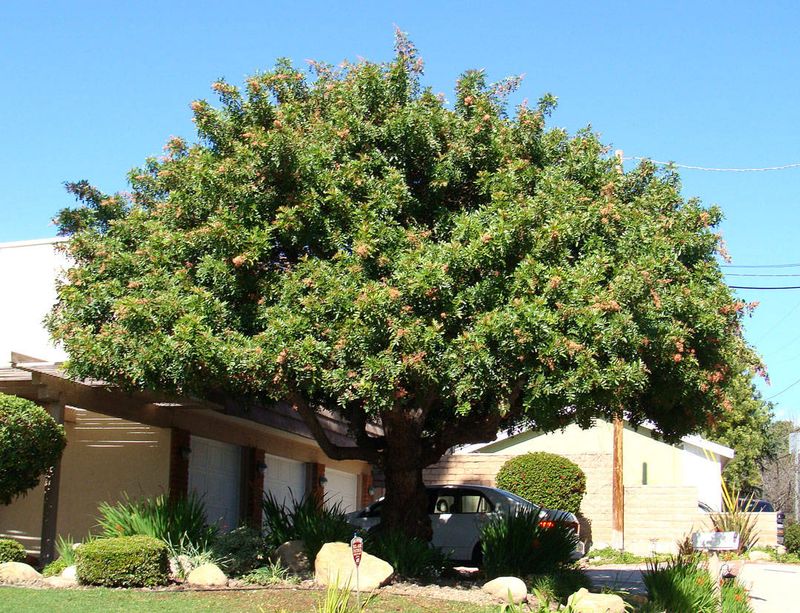
Brought to Florida in the 1800s as an ornamental plant, it has since become one of the state’s most widespread woody invasives according to UF/IFAS.
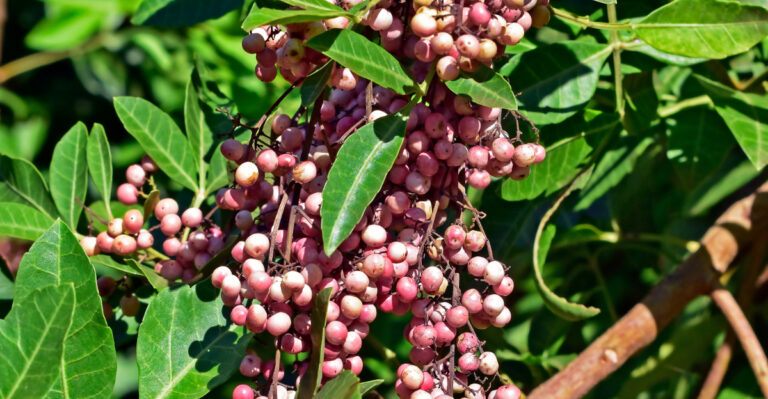
The leaves are the first giveaway. Brazilian Pepper has dark, glossy, compound leaves with five to eleven leaflets arranged along a central stalk.
When you crush them, they release a strong smell similar to turpentine or pepper, which is how the tree earned its name. The branches often arch and sprawl outward, creating a dense, tangled canopy that blocks sunlight from reaching anything below it.
From late fall into winter, the clusters of small, bright red berries are hard to miss. Birds love those berries, which is exactly how the seeds spread so effectively across Florida.
You are most likely to spot Brazilian Pepper along roadsides, disturbed lots, forest edges, and coastal hammocks throughout the state. South Florida has some of the heaviest infestations, but it has spread well into Central Florida too.
If you see a dense shrubby tree with red berry clusters, take a closer look at those leaves.
2. Air Potato Keeps Coming Back
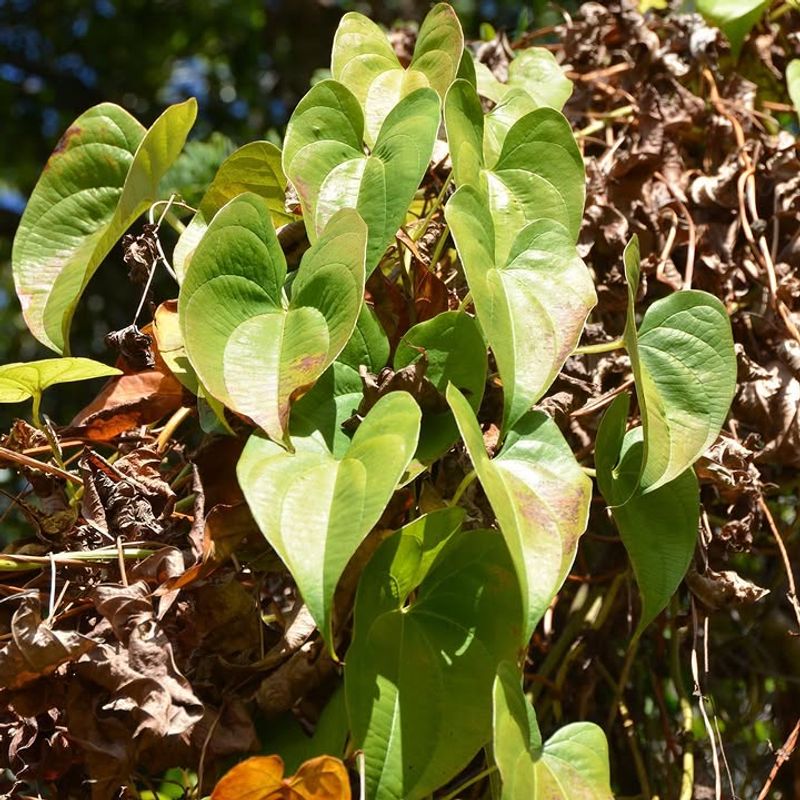
Few plants in Florida are as stubborn as Air Potato (Dioscorea bulbifera). You can pull it down from a fence or tree, and within days it seems to be right back where it started.
Originally from Asia and Africa, this fast-growing vine was introduced to Florida in the early 1900s and has been spreading aggressively ever since, landing on Florida’s list of prohibited aquatic plants and noxious weeds.
The most distinctive feature of Air Potato is the bulbils, which are small, round, potato-like growths that hang directly from the vine’s stems. These bulbils can range from marble-sized to almost baseball-sized, and they drop to the ground to sprout new plants.
The leaves are large, heart-shaped, and have a smooth texture with prominent veins running from the base outward, giving them an easy-to-recognize look.
Your Florida Garden Changes Every Week. Your Plan Should Too.
Gardening in Florida changes quickly throughout the season. Every Friday you’ll receive a simple weekly plan showing exactly what to plant, prune, fertilize, harvest, and protect so you never miss the right timing.
Air Potato climbs aggressively over fences, shrubs, and tall trees, sometimes covering entire tree canopies in a single growing season. You will commonly spot it along roadsides, forest edges, and disturbed areas throughout much of Florida.
The vine can grow up to eight inches per day during warm months, which explains why it shows up so fast after being removed. Those hanging bulbils are your clearest ID clue.
3. Old World Climbing Fern Takes Over Trees
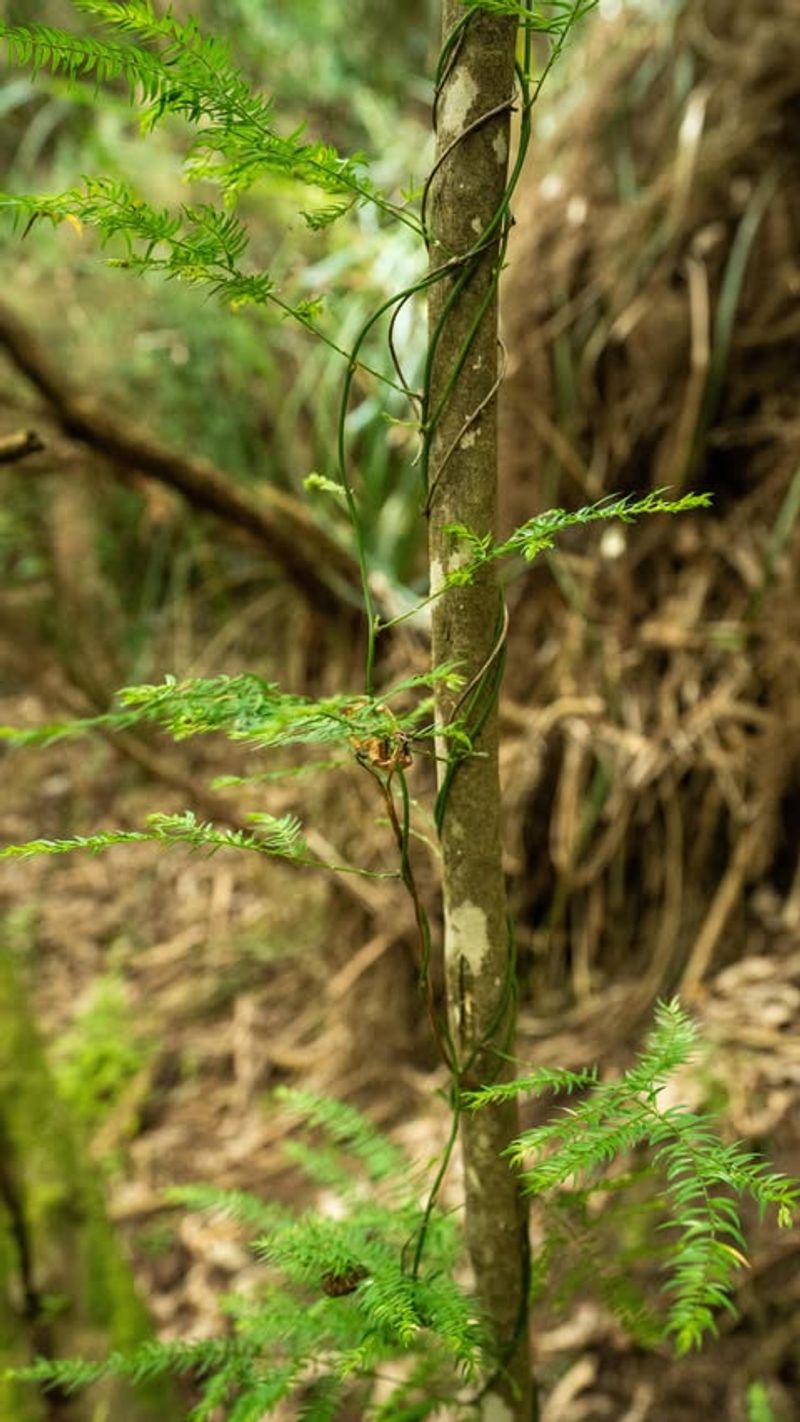
Most ferns grow low to the ground and stay put, but Old World Climbing Fern (Lygodium japonicum) does not follow those rules.
This invasive fern from Asia and Australia actually twines and climbs like a vine, sending its fronds spiraling up trees, shrubs, and anything else it can grab onto.
UF/IFAS considers it one of the most damaging invasive plants in Florida’s natural areas.
The fronds have a lacy, delicate appearance with small, deeply lobed leaflets arranged along wiry, twisting stems. Up close, the texture looks almost like a regular fern, but the climbing and twining behavior immediately sets it apart from Florida’s native fern species.
It creates a thick blanket of growth that smothers trees from the ground all the way to the canopy.
One particularly dangerous side effect of Old World Climbing Fern is that it creates what land managers call a fire ladder, carrying ground fires up into treetops that would otherwise be protected.
You are most likely to spot it in wet flatwoods, cypress swamps, and disturbed natural areas across Central and South Florida.
Look for lacy, twining fronds climbing high into trees and wrapping densely around branches. That climbing fern behavior is your clearest signal that something invasive is at work.
4. Cogongrass Spreads Like Crazy
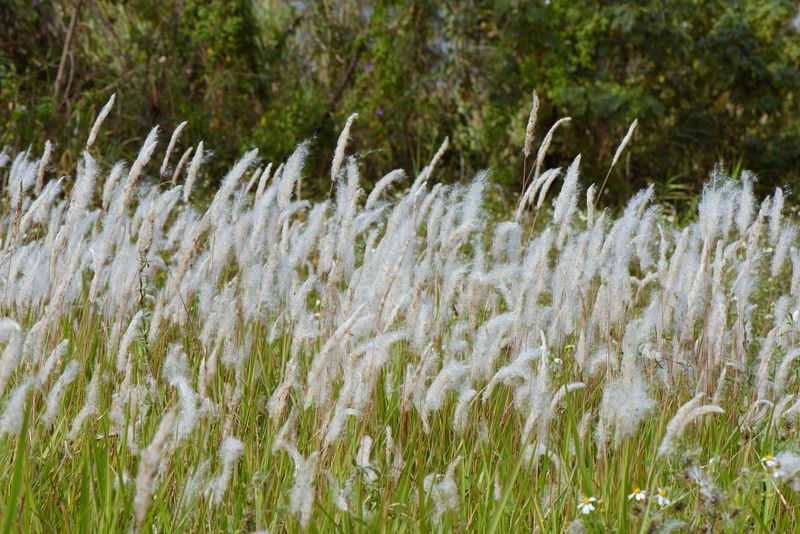
At first glance, Cogongrass (Imperata cylindrica) just looks like an ordinary clump of grass, and that is exactly what makes it so tricky to catch early. By the time most people realize what they are looking at, it has already spread across a wide area.
According to UF/IFAS, Cogongrass is one of the worst invasive plants in the world and a serious problem across Florida’s roadsides, forests, and open lands.
The easiest way to identify it is by the seed heads, which are white, fluffy, and silvery, resembling a soft feather plume. These appear in spring and early summer and are very noticeable when the wind catches them.
The grass blades themselves are flat, upright, and have a distinctive off-center midrib, meaning the central vein runs slightly to one side of the blade rather than down the middle. That off-center midrib detail is a reliable ID feature that sets it apart from common grasses.
Cogongrass often grows in dense circular patches that spread outward over time, crowding out native grasses and understory plants. The edges of the patches tend to stay green while the center may appear more tan or dried out.
You will spot it along Florida highways, in open fields, and in disturbed forest areas throughout the state. Early identification makes a real difference with this one.
5. Skunk Vine Creeps In Everywhere
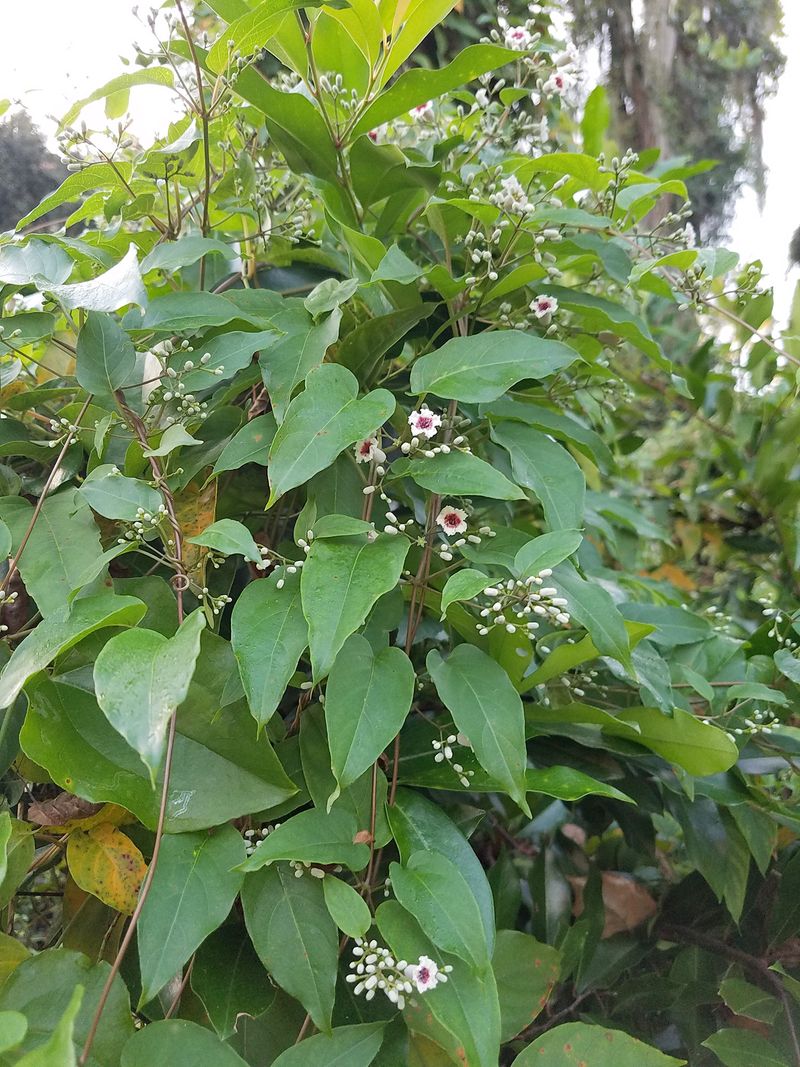
The moment you brush against Skunk Vine (Paederia foetida), you will know something is off. This invasive twining vine from Asia gives off a sharp, unpleasant odor when its leaves or stems are crushed, which is exactly how it got its memorable name.
Florida’s Fish and Wildlife Conservation Commission and UF/IFAS both flag it as a Category I invasive, meaning it is actively causing documented harm to Florida’s native plant communities.
Skunk Vine has arrow-shaped or heart-shaped leaves that grow opposite each other along twining stems. The leaves are smooth and medium green with a slightly pointed tip.
From summer into fall, it produces small, tubular flowers that are pale pinkish-white on the outside and purple inside. The flowers are subtle but worth looking for if you want a confident ID.
The vine trails along the ground or climbs aggressively over fences, shrubs, trees, and garden structures.
You will commonly find it in disturbed areas, roadsides, forest edges, and residential landscapes throughout much of Florida, particularly in North and Central Florida.
The smell alone is often the first tip-off that something unusual is growing nearby. If you notice a vine with opposite arrow-shaped leaves and a strong unpleasant odor when touched, Skunk Vine is almost certainly what you have found.
6. Melaleuca Gets Out Of Hand Fast
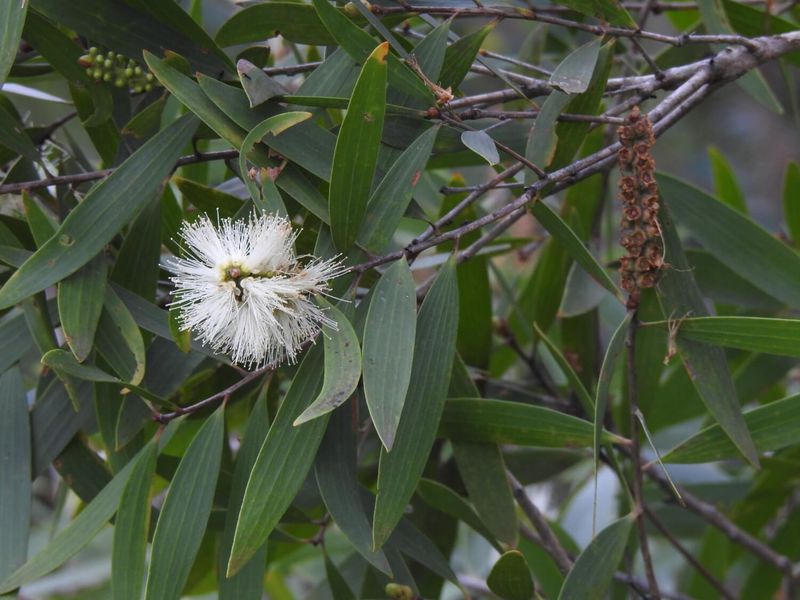
Melaleuca (Melaleuca quinquenervia) was intentionally planted in South Florida decades ago with the idea of draining wetlands for development. That plan backfired badly.
Instead of staying put, Melaleuca spread aggressively across the Everglades and surrounding wetlands, forming dense monocultures that replaced native sawgrass prairies and wet forests. UF/IFAS describes it as one of the most aggressive invasive trees ever introduced to Florida.
The bark is the easiest identification feature. Melaleuca has thick, spongy, papery bark that peels away in multiple layers, ranging in color from white to tan to light brown.
Up close, it looks almost like layers of paper stacked on top of each other. The leaves are narrow, grayish-green, and pointed, and when crushed they release a strong medicinal smell similar to eucalyptus.
During bloom, Melaleuca produces creamy white, bottlebrush-style flower spikes that cover the branch tips and are quite striking up close. The tree can reach 80 feet tall in ideal conditions and thrives in wet, disturbed, and flooded areas.
You are most likely to encounter it in South Florida, particularly in and around the Everglades, though it has spread into Central Florida as well.
That peeling papery bark combined with the medicinal leaf smell makes it one of the easier invasive trees to identify once you know what to look for.
7. Australian Pine Brings More Trouble Than Charm
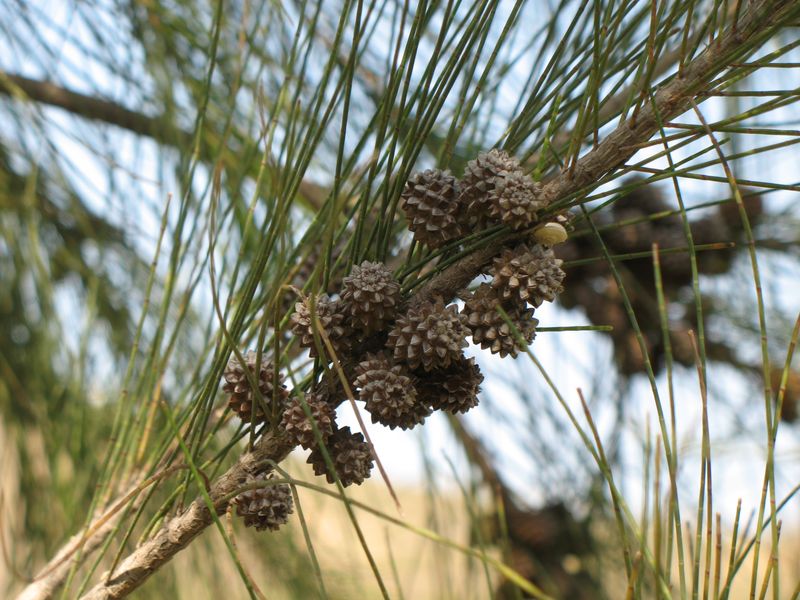
Despite the name, Australian Pine (Casuarina equisetifolia) is not actually a pine tree at all. It belongs to the Casuarina family and is more closely related to flowering plants than to true conifers.
The confusion is understandable because its long, wispy, drooping branchlets look remarkably like pine needles from a distance, giving it that familiar evergreen silhouette.
Florida Fish and Wildlife Conservation Commission lists it as a Category I invasive that has caused serious damage to coastal habitats.
Up close, those apparent pine needles are actually jointed, gray-green branchlets, and the true leaves are tiny scales pressed tightly against the stem. The trees grow very tall and straight, sometimes reaching over 100 feet, and produce small, round, cone-like fruits that are woody and spiky.
The overall look is airy and feathery, with branches that sway dramatically in coastal winds.
Australian Pine thrives along Florida’s beaches, coastal dunes, and disturbed shorelines, where it outcompetes native dune vegetation and destabilizes sand with its shallow root system.
You will spot it most often along South Florida’s coastlines, though it has spread to other coastal areas of the state as well.
The combination of tall straight form, wispy drooping branchlets, and small spiky fruits makes it straightforward to identify once you know it is not a true pine.
8. Chinese Tallow Spreads Before You Notice
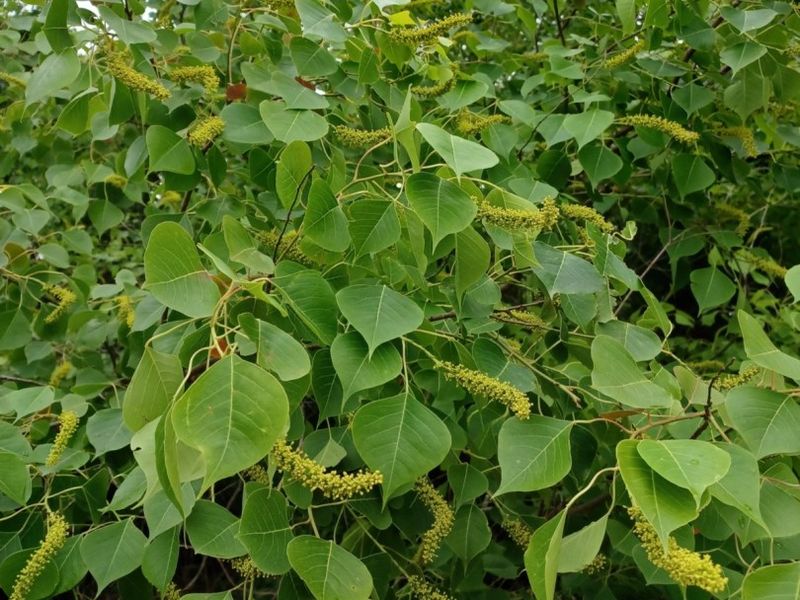
Plenty of people have admired Chinese Tallow (Triadica sebifera) before realizing it is one of Florida’s more problematic invasive trees.
In fall, the heart-shaped leaves turn brilliant shades of red, orange, and yellow, giving it the kind of seasonal color that is rare in Florida’s mostly evergreen landscape.
That visual appeal is part of why it was planted widely as an ornamental before its invasive nature became clear.
The leaves are the most reliable ID feature year-round. They are broadly heart-shaped or diamond-shaped with a pointed tip and a long, slender leaf stalk.
In late summer and fall, the tree produces clusters of small, round fruits that split open to reveal white, waxy seeds that cling to the branch long after the leaves drop. Those white seeds are distinctive and easy to spot from a distance during winter months.
Chinese Tallow spreads quickly in disturbed areas, floodplains, forest edges, and open fields, particularly in North and Central Florida. Birds and water both help distribute the seeds widely.
According to UF/IFAS, it can form dense stands that shade out native understory plants and change the character of natural areas significantly over time.
If you spot a tree with heart-shaped leaves turning red in fall and white waxy seed clusters, Chinese Tallow is a strong candidate worth confirming.
9. Coral Ardisia Sneaks Through Shade
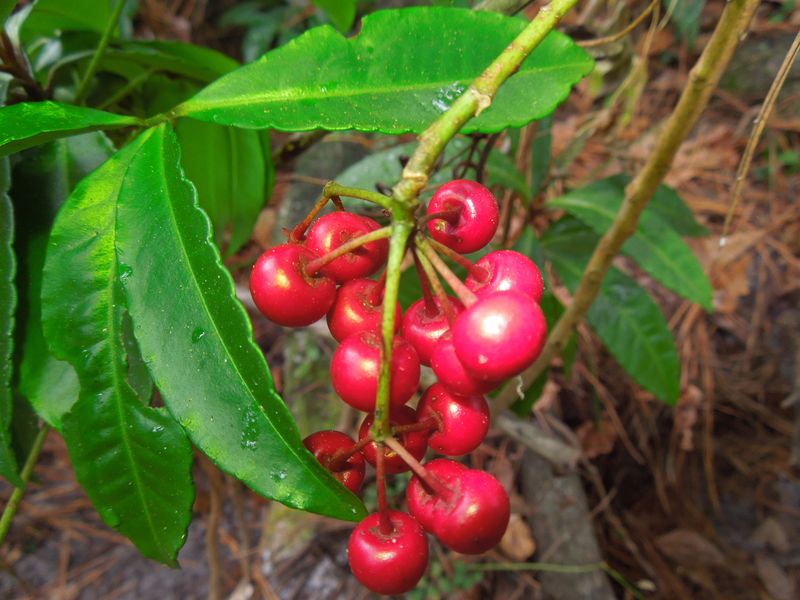
Shaded backyards, wooded neighborhoods, and forested parks across North and Central Florida are exactly where Coral Ardisia (Ardisia crenata) likes to set up shop.
Originally from Asia and introduced as a popular ornamental houseplant and landscape shrub, it has escaped cultivation and spread into natural areas where it forms a dense, low-growing layer that crowds out native wildflowers and seedlings.
UF/IFAS and the Florida Invasive Species Council both list it as a Category I invasive.
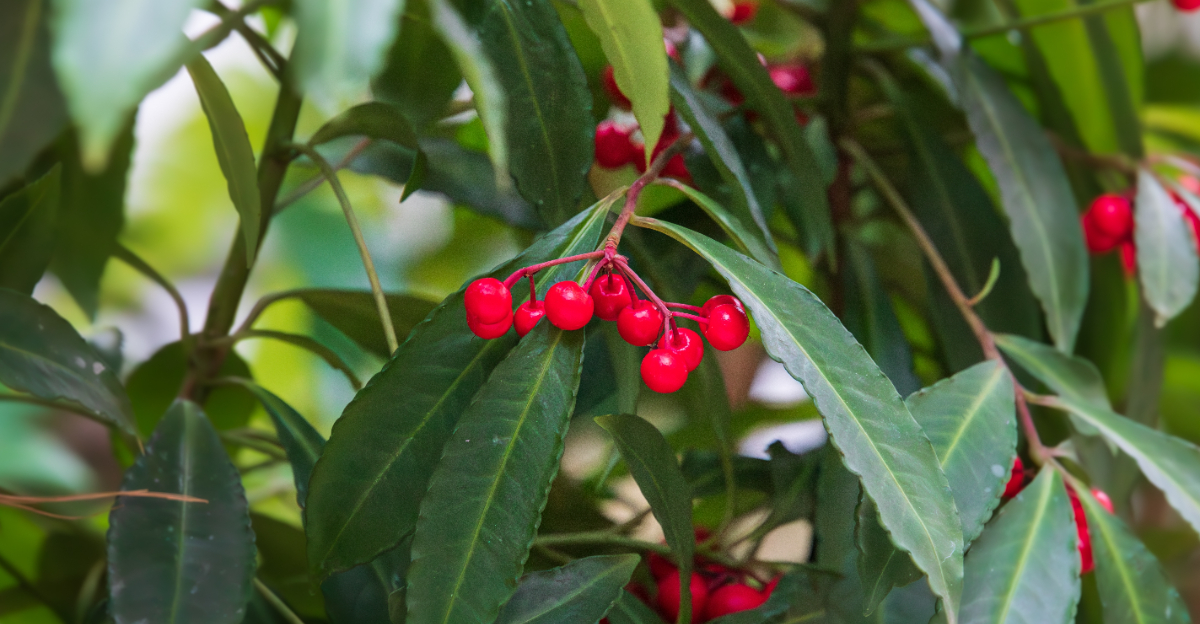
The leaves are one of the first things to notice. They are dark, glossy green with distinctly wavy or scalloped edges, giving them an almost decorative look.
The plant typically grows as a small, upright shrub reaching two to five feet tall, with leaves clustered near the top of mostly unbranched stems. That tidy, compact form made it attractive to gardeners for decades.
The most eye-catching feature is the berries, which hang in a ring just below the leaf cluster in bright, glossy red clusters that persist on the plant for months. Birds spread those berries enthusiastically through wooded areas.
You are most likely to spot Coral Ardisia growing in shaded spots under tree canopies, along woodland trails, or in the understory of disturbed forests.
The combination of wavy-edged glossy leaves and that distinctive ring of red berries makes it fairly easy to recognize once you know the pattern.
10. Water Hyacinth Takes Over Waterways
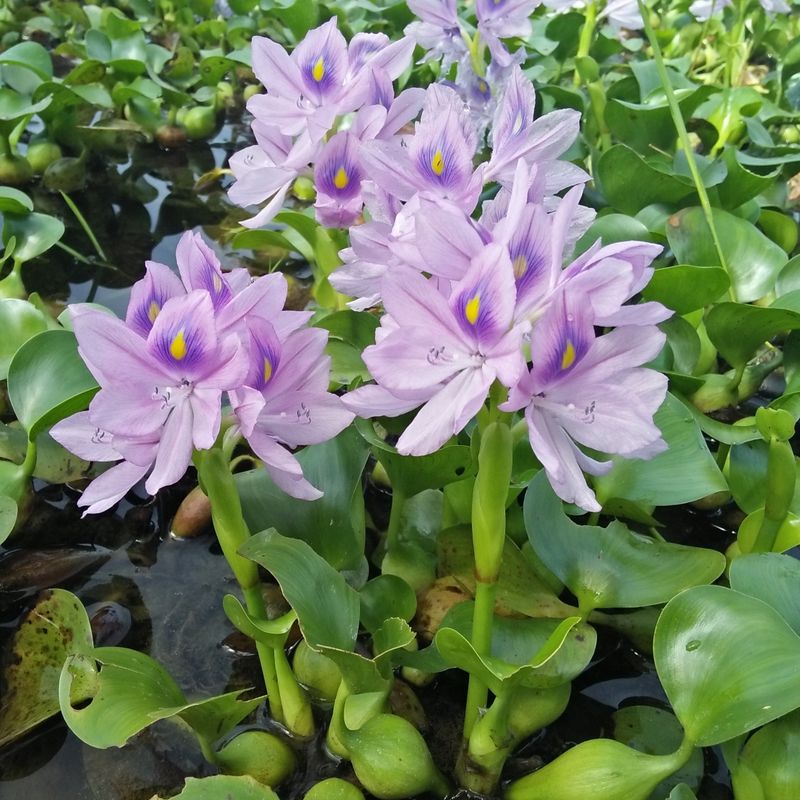
Floating mats of Water Hyacinth (Eichhornia crassipes) can cover entire lakes and slow-moving rivers in Florida, turning open water into an impenetrable green carpet almost overnight.
Native to South America, this floating aquatic plant was introduced to North America in the 1880s and has been one of Florida’s most persistent invasive water plants ever since.
The Florida Fish and Wildlife Conservation Commission actively manages it across the state.
Identifying Water Hyacinth is not hard once you know what to look for. The leaves are rounded, glossy, and dark green, growing on stalks that are noticeably swollen and spongy near the base.
That swollen stalk acts like a float, keeping the plant buoyant on the surface. During bloom, Water Hyacinth sends up tall spikes of lavender to pale purple flowers with a yellow spot on the upper petal, making it genuinely striking to look at despite the damage it causes.
Dense mats block sunlight from reaching underwater plants, reduce oxygen levels in the water, and create conditions that harm fish and other aquatic life. Slow-moving rivers, lakes, ponds, and drainage canals throughout Florida are common spots to encounter it.
The plant reproduces rapidly through both seeds and runners, which is why a small patch can explode into a massive coverage area within a single season. Those swollen leaf stalks and purple flower spikes are your clearest visual ID clues.
11. Hydrilla Hides A Bigger Problem Below
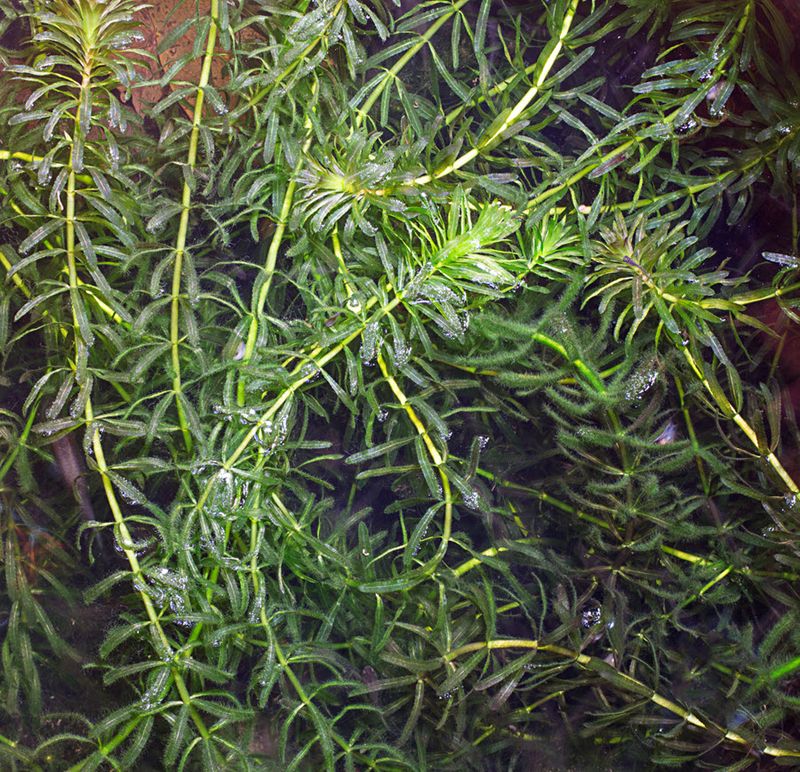
Unlike most of the plants on this list, Hydrilla (Hydrilla verticillata) does its damage mostly out of sight.
Growing entirely underwater in Florida’s lakes, rivers, springs, and canals, this invasive aquatic plant from Asia forms dense, tangled mats below the surface that can extend from the bottom all the way to the waterline.
UF/IFAS and the Florida Fish and Wildlife Conservation Commission both consider it one of the most troublesome aquatic invasives in the state.
Identifying Hydrilla requires getting a closer look at what is growing beneath the surface. The stems are slender and branching, with small leaves arranged in whorls of four to eight around each stem.
Those leaves are narrow, bright green, and have distinctly serrated or toothed edges, which you can feel if you run a leaf between your fingers.
Small, white, tooth-like projections along the midrib are another feature that distinguishes Hydrilla from similar-looking native aquatic plants.
From above the water, Hydrilla often appears as a dense green mass just below or at the surface, sometimes breaking through in thick clumps. Boaters notice it when it wraps around propellers, and swimmers encounter it as a thick, tangled underwater layer.
Spring-fed rivers, freshwater lakes, and slow-moving canals throughout Florida are common habitats. Because it grows submerged, it can establish widely before anyone spots the problem from shore.