The Right Way To Trim Florida Plumeria Trees For More Fragrant Blooms
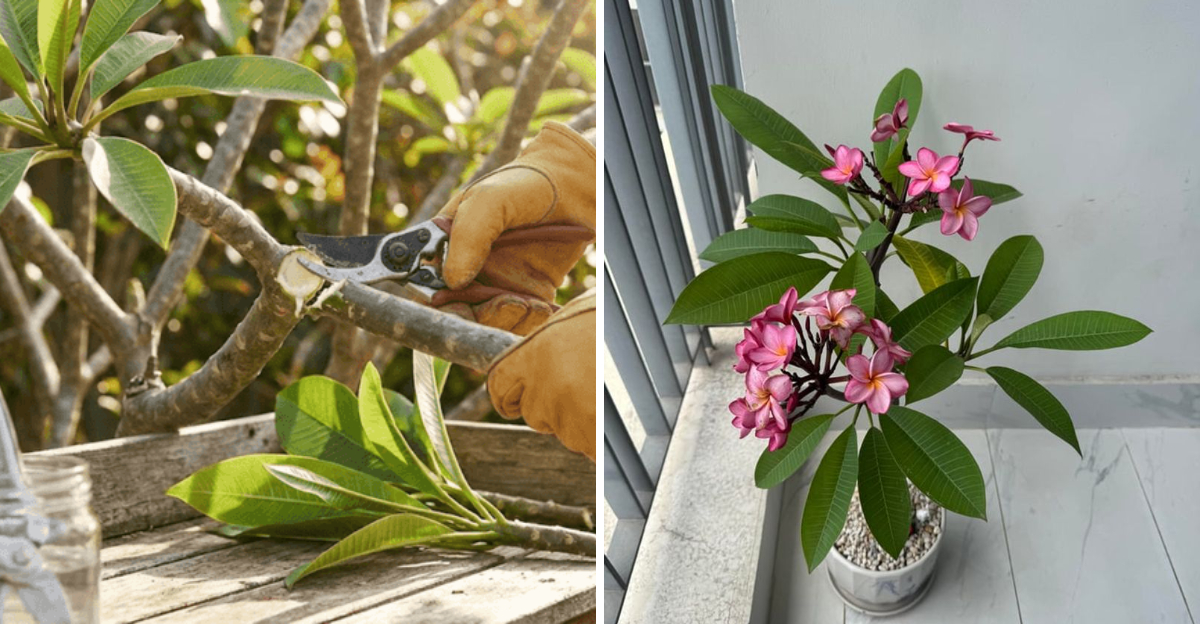
Some Florida plants forgive almost anything. Plumeria is not one of them.
It will put up with heat, sun, and sandy soil, but a bad trim can throw the whole show off balance. Suddenly the shape looks odd, the branches feel chopped up, and the blooms you were counting on seem to take the scenic route.
That is where a lot of gardeners get tripped up. Plumeria looks tough, so people treat it like a shrub that just needs a quick cutback.
Big mistake. This tree plays by its own rules, and a snip in the wrong spot can cost you both form and fragrance.
The trick is not cutting more. It is cutting with purpose.
When you understand how plumeria grows in Florida, when to step in, and when to leave well enough alone, the whole plant starts working in your favor. That is when you get the fuller shape, stronger branching, and those sweet blooms that stop people in their tracks.
1. Wait Until Blooming Slows Before You Cut
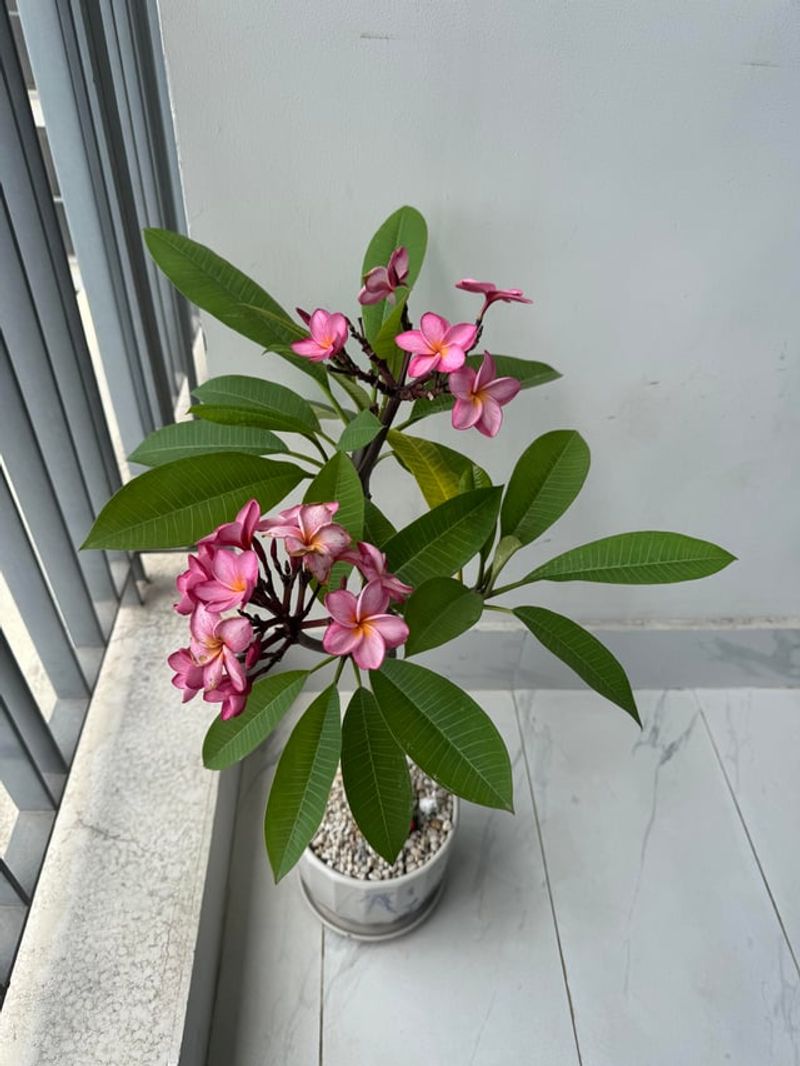
Reaching for the pruning shears while your plumeria is still covered in blooms is one of the most common mistakes Florida gardeners make. Cutting too early can interrupt the plant’s natural rhythm and reduce the number of flowers you see in the next cycle.
Plumeria blooms from the tips of its branches, so any cut you make removes a potential flowering point.
Florida’s warm climate means plumeria can hold onto its blooming period well into fall in many parts of the state. South Florida gardeners often see flowers lingering longer than those in Central or North Florida, where cooler nights arrive earlier.
Paying attention to your specific location matters more than following a one-size-fits-all calendar.
The smartest move is to wait until the main flush of blooming has clearly slowed and the flower clusters have faded. Once the tips look spent and new flower buds are no longer forming, that is your signal to consider light trimming.
Rushing that window shortchanges the plant and shortchanges you.
Late winter to early spring, just before new growth pushes out, is generally the most recommended window for pruning plumeria in Florida according to horticultural guidance.
At that point, the plant is transitioning out of dormancy and a well-timed cut can encourage fresh branching.
Letting the blooming season play out fully before you cut is the kind of patience that pays off with a more rewarding show the following year.
2. A Light Trim Can Bring A Fuller Shape
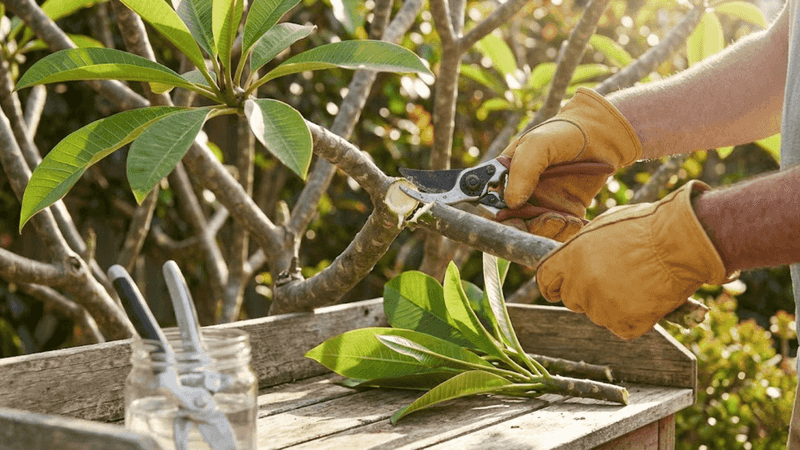
Some gardeners assume that harder pruning means faster results, but plumeria tends to reward a gentler hand. A light, selective trim done at the right point on the branch can actually encourage two or more new shoots to form where there was only one before.
That kind of branching is what builds a fuller, more balanced canopy over time.
When you prune just above a node, which is the small bump where a leaf or branch once emerged, you give the plant a clear signal to redirect its energy outward.
Your Florida Garden Changes Every Week. Your Plan Should Too.
Gardening in Florida changes quickly throughout the season. Every Friday you’ll receive a simple weekly plan showing exactly what to plant, prune, fertilize, harvest, and protect so you never miss the right timing.
Instead of continuing to push one long stem skyward, the plant can begin developing lateral branches that spread the structure and create more tip growth.
More tips generally means more opportunities for flower clusters to form.
The key word here is selective. You do not need to cut every branch to improve the shape of your plumeria.
Identify the stems that are throwing off the balance of the tree or growing in an awkward direction, and focus your cuts there. Leaving the rest of the canopy untouched protects the existing tips that are already primed to bloom.
A plumeria that has been lightly shaped over a few seasons will look noticeably more open and proportional than one that was either left completely alone or cut back too aggressively.
Think of it less like a haircut and more like a conversation with the plant, where you are guiding it rather than forcing it into a shape it was never meant to hold.
3. Tall Bare Branches Need A Smarter Approach
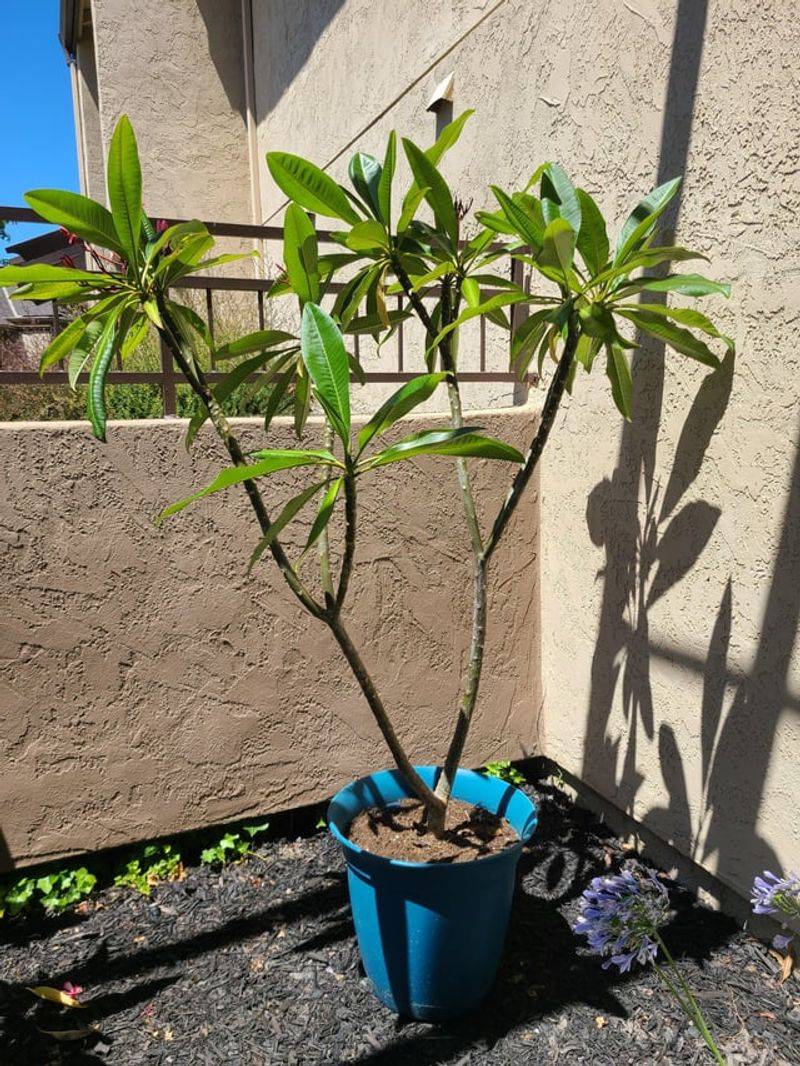
A plumeria that has stretched itself upward for several seasons without any pruning can start to look top-heavy, with all the flowers crowded at the very top and long bare branches below.
It is a common sight in Florida yards, and it can feel discouraging when you realize the blooms are way above eye level.
The good news is that this kind of leggy growth can be corrected, though it takes some thought before you start cutting.
Not every long branch needs to be shortened by the same amount. Look at the overall structure of the tree first and figure out which stems are creating the imbalance.
Sometimes one or two oversized branches are responsible for most of the top-heavy look, and addressing just those can make a noticeable difference without stripping the tree of all its existing tips.
When you do cut back a long bare branch, aim to make your cut just above a node or a visible lateral branch. This gives the plant a better chance of pushing out new growth from that point rather than leaving a long stub that may not respond well.
Stubs also create entry points for pests and pathogens, so cutting to a purposeful location matters.
Reshaping a leggy plumeria is usually a multi-season process rather than a single dramatic cutback. Gradual correction tends to produce a more natural-looking result and puts less stress on the plant overall.
Patience and a clear picture of the shape you are working toward will serve you better than going after every long branch at once.
4. Clean Cuts Help New Branches Start Strong
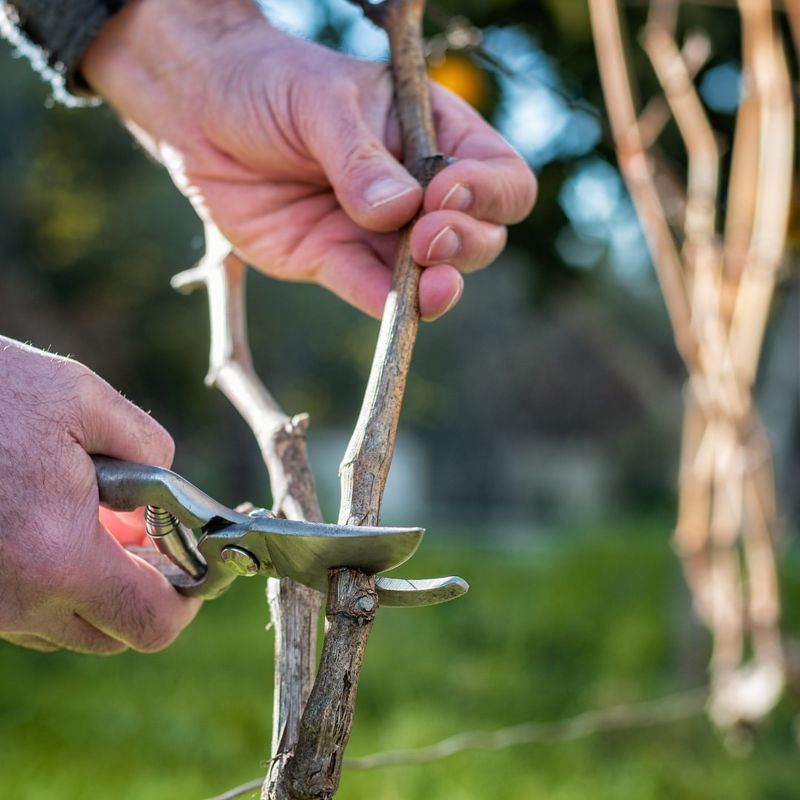
There is a real difference between a clean cut and a ragged one, and plumeria notices. When you use dull or dirty tools, you can crush the plant’s tissue instead of slicing through it cleanly, and that kind of damage slows the healing process and creates a more vulnerable wound.
Sharp bypass pruners or a sharp pruning saw are the right tools for the job, depending on the size of the branch.
Sterilizing your tools before you start and between cuts is not just a cautious habit, it is genuinely important for protecting your plumeria.
Plumeria stem rot and other fungal issues can spread from plant to plant or from one cut to another on the same tree if your blades carry contaminated sap.
A quick wipe with rubbing alcohol between cuts takes only seconds and can save you a lot of trouble later.
The angle of your cut also plays a role in how well the wound handles Florida’s frequent rain. A cut made at roughly a 45-degree angle allows water to run off rather than pool on the exposed surface.
Pooling moisture on a fresh cut raises the risk of rot setting in, which is something you want to avoid in a climate as humid and rainy as Florida’s.
After pruning, allow the cut ends to callous over naturally for a few days before heavy watering resumes. Florida’s heat helps speed up that callousing process.
There is no need to apply wound paint or sealant, as most credible horticultural sources do not recommend it for plumeria and it can actually trap moisture under the surface.
5. Cold Damaged Wood Should Not Be Rushed
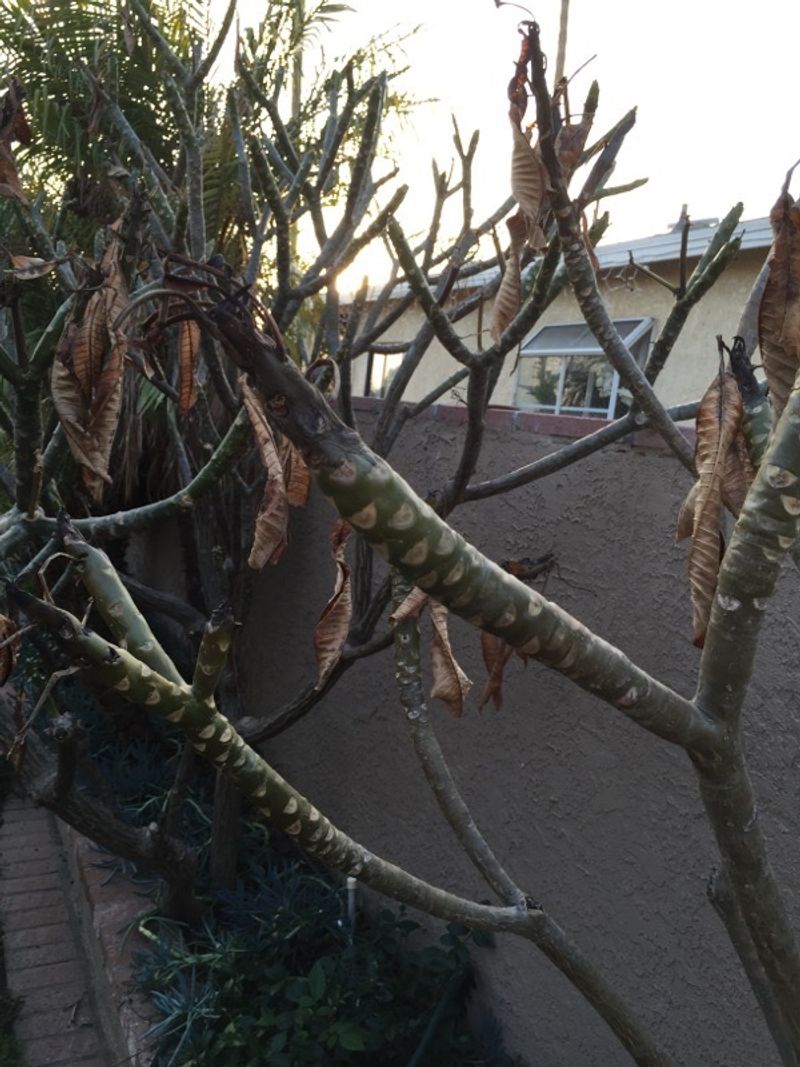
North and Central Florida gardeners know that occasional cold snaps can catch a plumeria off guard, especially in January and February when temperatures dip unexpectedly.
The branch tips may turn dark, soften, or look shriveled after a cold event, and the natural instinct is to grab the shears and remove everything that looks damaged right away.
Waiting, however, is almost always the smarter choice.
Cold injury on plumeria can look far worse on the outside than it actually is on the inside. The outer tissue may appear completely gone while the inner wood is still alive and capable of pushing out new growth once temperatures warm up.
Cutting too early based on surface appearance alone can lead you to remove branches that would have recovered on their own.
Horticulturalists generally recommend waiting until you see clear signs of new growth emerging before removing cold-damaged wood. That new growth tells you exactly where the living tissue ends, giving you a much more accurate guide for where to make your cut.
Trimming to that point rather than guessing conserves as much healthy branch structure as possible.
South Florida gardeners rarely deal with this issue, but for those in the northern half of the state it is a real seasonal consideration. Covering your plumeria during a cold event and keeping it in a well-drained location can reduce the severity of cold damage in the first place.
When damage does occur, patience and observation are your best tools, not a hurried pruning session on a cold February morning.
6. Overpruning Can Cost You Future Flowers
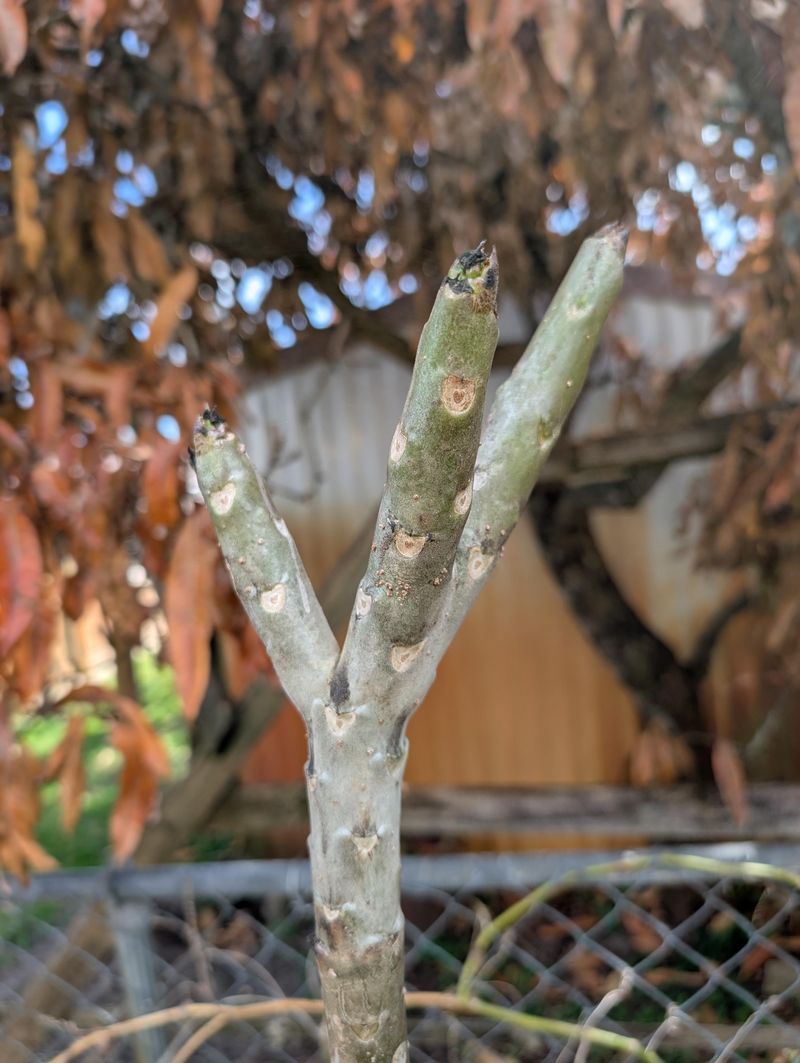
Cutting too much off your plumeria in one session is a mistake that shows up in the form of fewer blooms the following season.
Since plumeria flowers form at the tips of branches, every tip you remove is a potential flower cluster that will not be there when the next blooming cycle begins.
The more aggressively you cut, the longer it takes for the plant to rebuild those blooming points.
Some gardeners fall into the trap of thinking that a harder cutback will force the plant to grow back bigger and bloom more abundantly. That logic works for some plants but it does not reliably apply to plumeria.
Heavy pruning redirects a lot of the plant’s energy toward producing new vegetative growth, which means more leaves and stems and, at least in the short term, fewer flowers.
A good general guideline is to avoid removing more than a third of the plant’s total branch structure in any single pruning session. This keeps the tree’s overall energy balance intact and preserves enough existing tips to maintain a reasonable blooming capacity.
If your plumeria needs more significant reshaping, spreading that work across two or three seasons is a much gentler approach.
The fragrance that makes plumeria so beloved in Florida yards comes from healthy, well-formed flowers on a plant that has not been stressed by overly aggressive cutting. Smart restraint is what protects that experience.
Removing only what genuinely needs to go, and leaving the rest of the canopy untouched, gives your plumeria the best conditions for a rewarding bloom season ahead.
7. Crowded Growth Blocks Light And Airflow
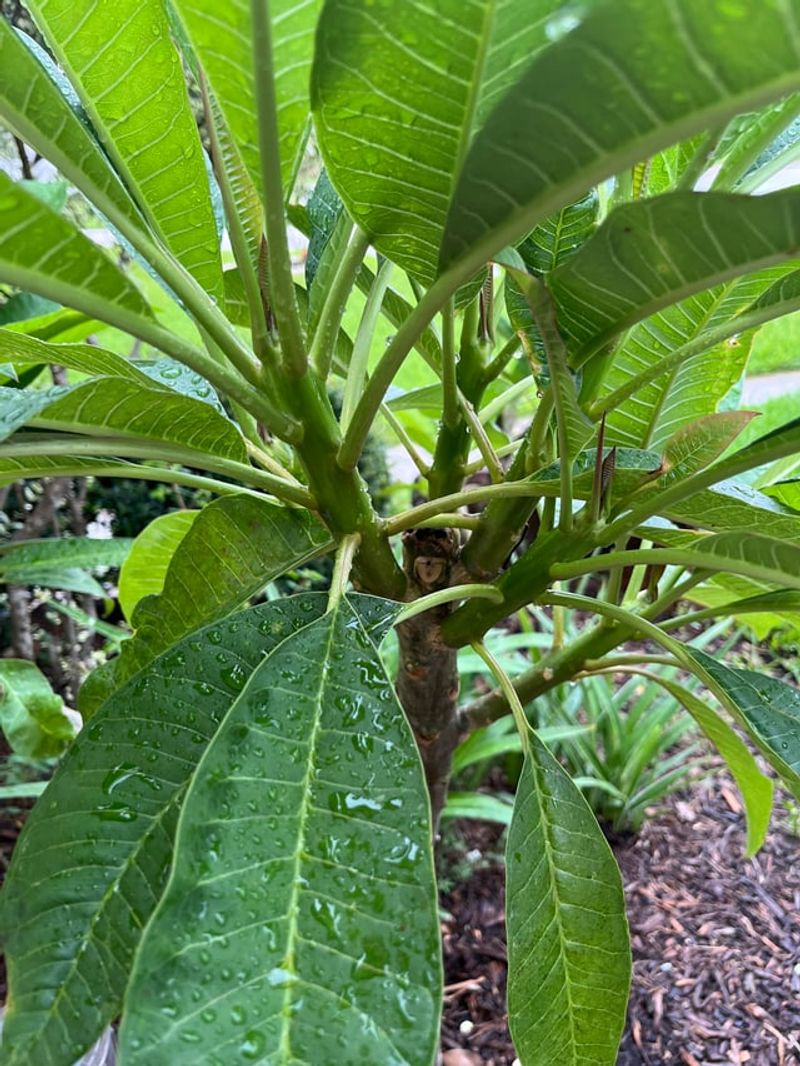
When plumeria branches start growing in on each other, the inside of the canopy can turn into a congested tangle that traps humidity and blocks sunlight from reaching the lower parts of the tree.
In Florida’s warm and frequently wet climate, that combination creates exactly the kind of environment where fungal problems and pests prefer to set up.
Thinning out the most crowded sections can make a real difference in the overall health of the plant.
Selective thinning means removing specific branches that are crossing, rubbing against each other, or growing inward toward the center of the canopy rather than outward.
The goal is to open up the interior so that air can move through more freely and light can reach more of the plant.
This kind of pruning is about improving the growing environment rather than changing the overall size or height of the tree.
One useful way to assess crowded growth is to step back and look at the tree from several angles before you start cutting. Branches that are clearly heading in the wrong direction or pressing against others are the ones to target first.
Removing just a few well-chosen stems can dramatically improve the light and airflow situation without taking too much off the tree at once.
Thinning is not the same as shearing or cutting everything back to a uniform length. Shearing would remove tips indiscriminately and reduce flowering potential across the whole canopy.
Thoughtful thinning, by contrast, improves the tree’s health and structure while leaving the bloom-producing tips in place where they can do their job.
8. The Best Shape Still Looks Like Plumeria
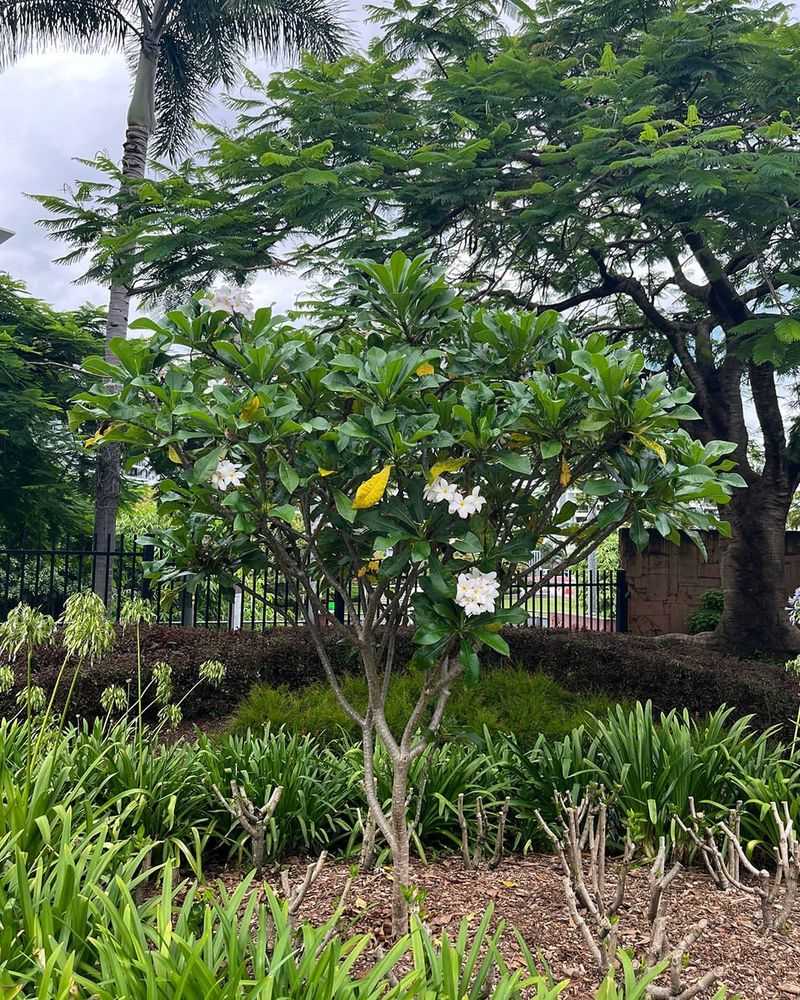
After all the careful timing, clean cuts, and thoughtful thinning, the goal is not a plumeria that looks like it has been forced into a ball or a box.
The best-shaped plumeria trees in Florida yards are the ones that still look like themselves, open and spreading, with branches that reach outward in a way that feels natural rather than manufactured.
Pruning should enhance the plant’s character, not erase it.
Plumeria naturally grows in a loose, somewhat irregular branching pattern, and that is part of what makes it so visually appealing. Trying to impose a tight symmetrical shape on a plant that does not grow that way will only lead to frustration and more frequent cutting.
Working with the plant’s natural tendency to branch outward and upward produces a much more satisfying result over time.
A well-maintained plumeria also signals something about the gardener behind it. It shows patience, an understanding of how the plant works, and a preference for guiding over controlling.
That approach tends to produce trees that are healthier, more structurally sound, and more generous with their blooms than ones that have been pushed around with heavy pruning year after year.
As a final takeaway for Florida gardeners, the best pruning sessions are often the shortest ones. Assess the tree carefully, remove what genuinely needs to go, make your cuts cleanly and at the right time of year, and then step back and let the plant do the rest.
A plumeria that is respected and well-timed will reward you with fragrant, abundant blooms that make every careful cut worth it.