Flowering Shrubs That Thrive In Western North Carolina Better Than Crape Myrtle
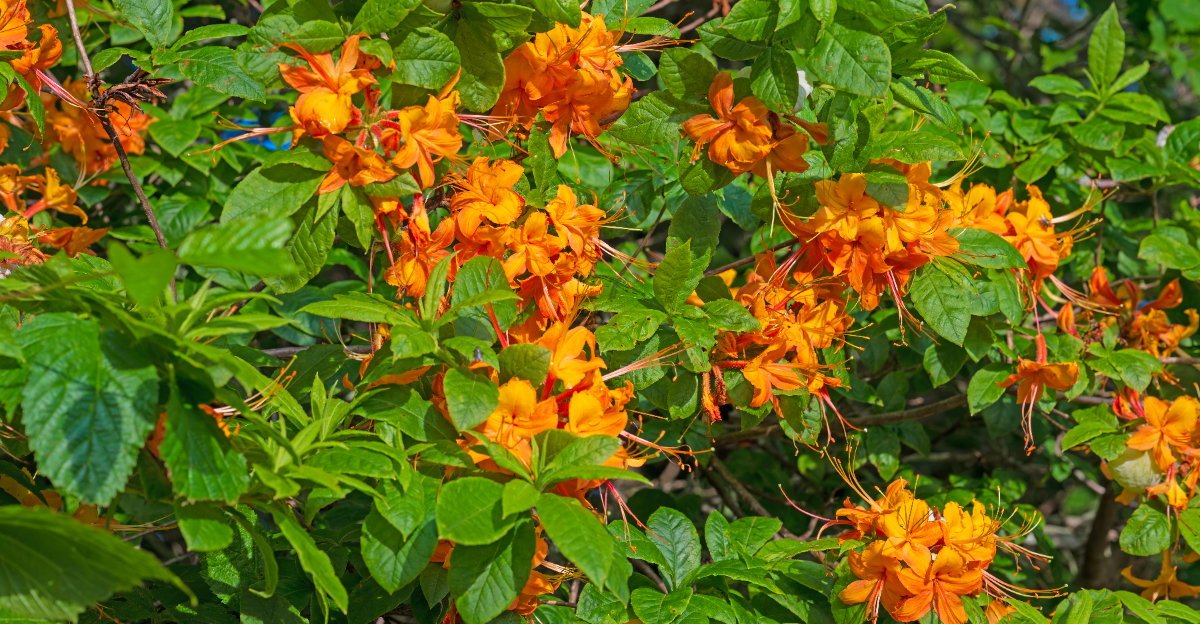
Crape myrtles may be a common choice, but they are not always the best fit for every yard in western North Carolina. This region brings cooler mountain air, changing elevations, and different soil conditions that can affect how well certain plants grow.
While crape myrtles love heat, they may not always perform at their best in these settings. That is where other flowering shrubs can step in and truly shine.
Many are better suited to local conditions, offering strong growth, reliable blooms, and less stress over time. Some bring soft, natural color, while others stand out with bold flowers and rich foliage.
These shrubs can add just as much beauty, if not more, while fitting more naturally into the landscape. If you want a yard that feels full, vibrant, and well matched to its surroundings, these flowering shrubs are worth a closer look.
1. Catawba Rhododendron (Rhododendron Catawbiense)
Few shrubs can claim to be as deeply rooted in western North Carolina as the Catawba rhododendron. Named after the Catawba River region of the Blue Ridge Mountains, this plant did not just wander into Appalachian landscapes by accident.
It evolved here, shaped by the very same cold winters, acidic soils, and mountain ridges that challenge so many other plants.
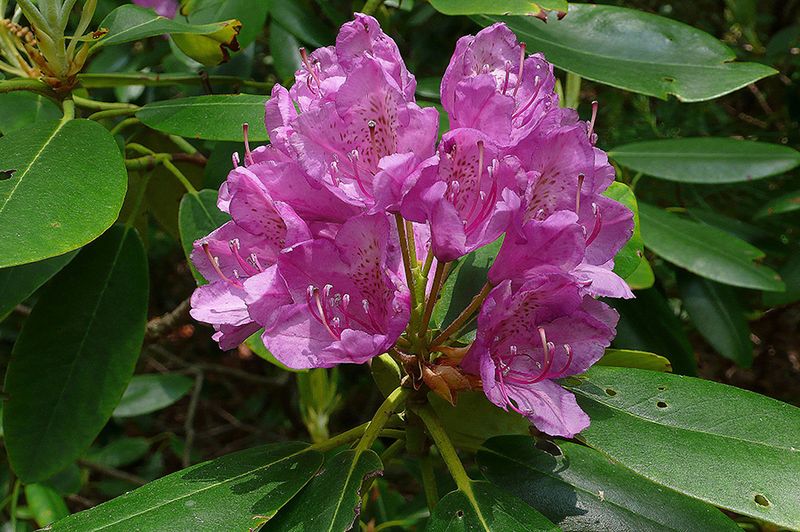
The Catawba rhododendron stays evergreen all year long, giving your garden structure and color even when nothing else is blooming. In late spring, it bursts into generous clusters of lavender-purple flowers that cover the entire shrub.
The display is bold, cheerful, and unmistakably mountain-born. Unlike crape myrtle, which depends on long stretches of summer heat to perform well, this rhododendron is naturally adapted to woodland slopes and cooler temperatures.
It thrives in partial shade under taller trees, making it a natural fit for the forested yards common across western North Carolina.
Plant it in well-drained, acidic soil and give it room to spread, because a mature Catawba rhododendron can reach eight to twelve feet wide.
It is a long-lived shrub that rewards patience with decades of stunning bloom seasons, and it supports pollinators along the way.
For mountain gardeners seeking something truly suited to the region, this native beauty is a top-shelf choice.
2. Rosebay Rhododendron (Rhododendron Maximum)
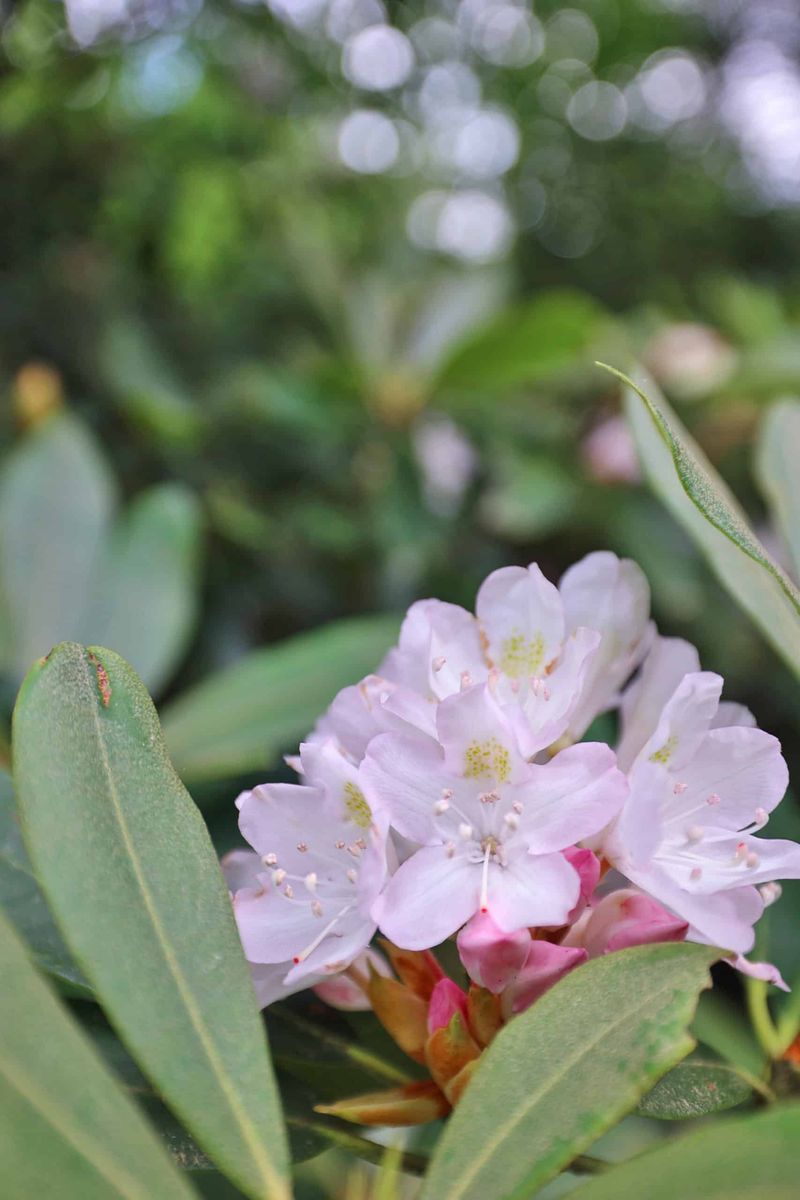
Walk along almost any shaded mountain hollow in western North Carolina and you will likely meet the rosebay rhododendron growing thick and tall along the stream banks.
Locals sometimes call the dense tangles of this shrub “rhododendron hells” because they grow so full and wild that hiking through them is nearly impossible.
That same vigor is exactly what makes it such a reliable and rewarding garden plant. Rosebay rhododendron is the largest of the native rhododendrons found in the southern Appalachian Mountains, often reaching fifteen to twenty feet in height when fully mature.
Its flowers are white to pale pink and appear in large rounded clusters from late June into July, blooming later than most other rhododendrons and extending the flowering season in your yard beautifully.
Because it stays evergreen through the year, it works as a living privacy screen or windbreak in western North Carolina gardens.
Your North Carolina Garden Changes Every Week. Your Plan Should Too.
Gardening in North Carolina changes quickly throughout the season. Every Friday you’ll receive a simple weekly plan showing exactly what to plant, prune, fertilize, harvest, and protect so you never miss the right timing.
It thrives in part shade to full shade with consistently moist, acidic soil, making it a natural partner for stream-side plantings or shaded hillsides.
Crape myrtle simply cannot compete in these cooler, shadier spots where rosebay rhododendron absolutely flourishes. Pollinators love it, deer tend to avoid it, and the deep green foliage looks handsome in every season.
For anyone gardening in the mountains, this shrub delivers serious value with very little fuss.
3. Mountain Laurel (Kalmia Latifolia)
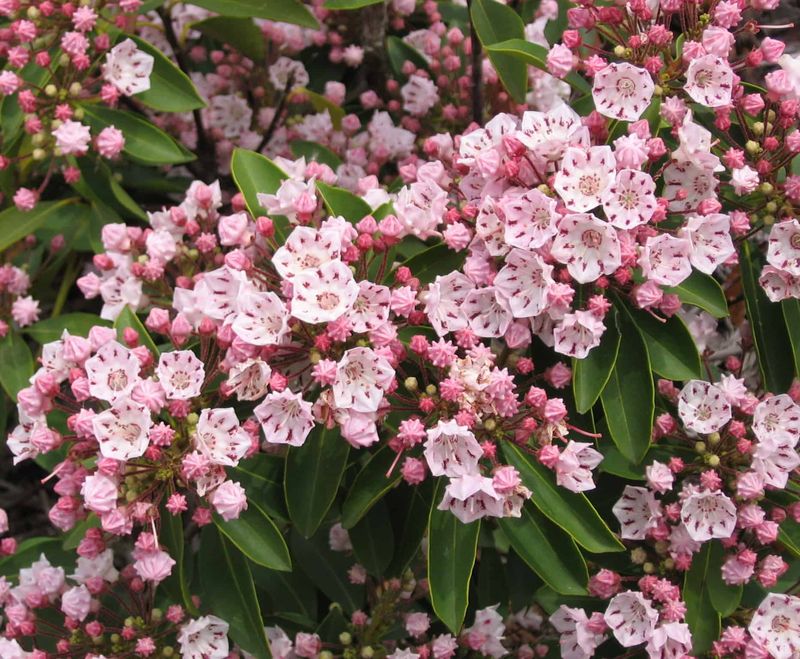
There is something almost magical about the way mountain laurel blooms. The flower buds look like tiny geometric sculptures before they open, each one a perfectly star-shaped package that eventually bursts into delicate pink and white cups.
No other shrub in western North Carolina offers quite the same combination of architectural beauty and floral drama in a single plant.
Mountain laurel is the state flower of both Pennsylvania and Connecticut, but it thrives just as brilliantly across the Appalachian Mountains, including throughout western North Carolina.
It blooms from late May into June, filling woodland edges and rocky slopes with soft color right when spring is at its peak.
The shrub is evergreen, dense, and remarkably long-lived, with some specimens known to grow for many decades in the right conditions.
It performs best in well-drained, acidic soil with partial sun, which describes a huge portion of western North Carolina gardens perfectly. Unlike crape myrtle, mountain laurel does not need a long hot summer to look its best.
NC State University extension resources note it can develop into a substantial, multi-stemmed shrub throughout the Appalachian Mountain region.
Give it good drainage, a little afternoon shade, and acidic soil, and it will reward you with decades of spectacular spring bloom. Pollinators, especially native bees, are especially drawn to its unique flowers.
4. Flame Azalea (Rhododendron Calendulaceum)
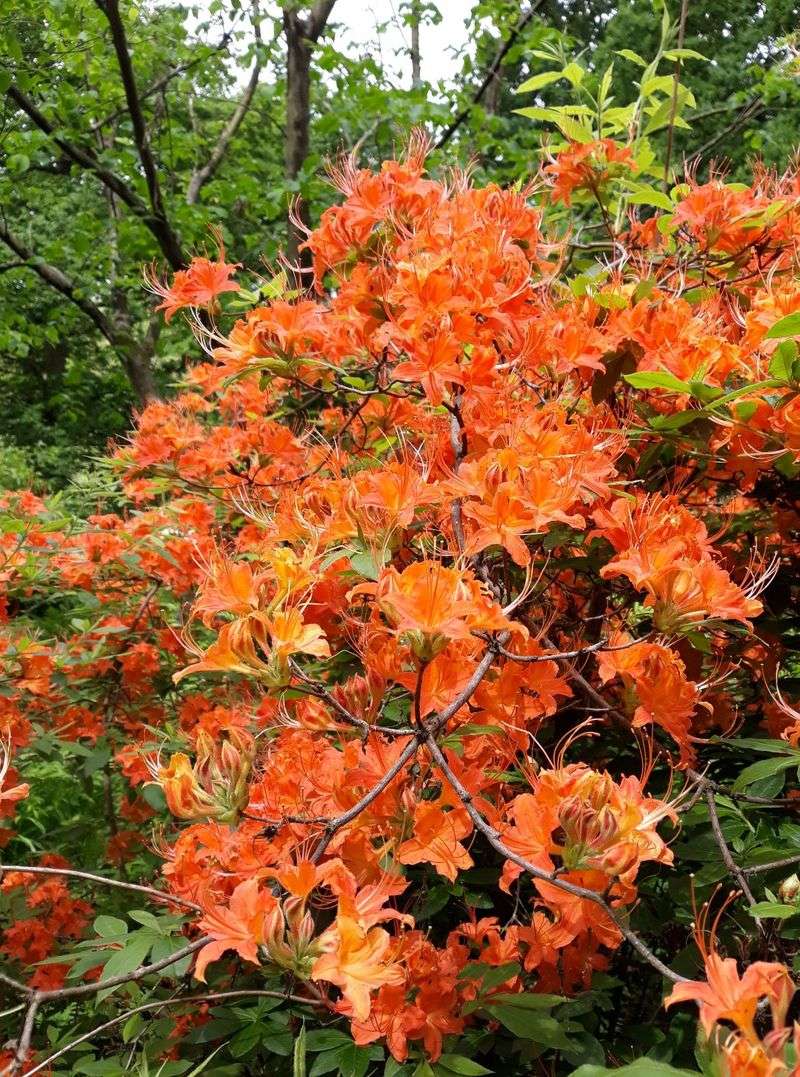
Imagine hiking a mountain trail in western North Carolina and suddenly coming across a shrub that looks like it is actually on fire.
That is the experience flame azalea delivers every single spring, and it is one of the most dramatic native flowering moments in the entire Appalachian region.
The flowers range from deep orange to golden yellow, and they show up in such abundance that the whole plant seems to glow.
Flame azalea is a deciduous native shrub that grows naturally on woodland slopes and open mountain balds throughout the southern Appalachians, including many areas of western North Carolina.
It typically blooms in May, though the exact timing shifts slightly depending on elevation. Higher up the mountains, you might catch the show a week or two later, which is a wonderful excuse to plan multiple hikes.
In the garden, flame azalea grows to about four to eight feet tall and wide, making it a manageable size for most landscapes. It prefers partial shade and acidic, well-drained soil, conditions that are easy to find across western North Carolina.
Unlike crape myrtle, which struggles after harsh mountain winters, flame azalea is completely cold-hardy in this region. It also supports native pollinators beautifully, with hummingbirds especially fond of its tubular blooms.
For pure spring flower impact that feels genuinely at home in the mountains, very few shrubs can match it.
5. Cumberland Azalea (Rhododendron Cumberlandense)
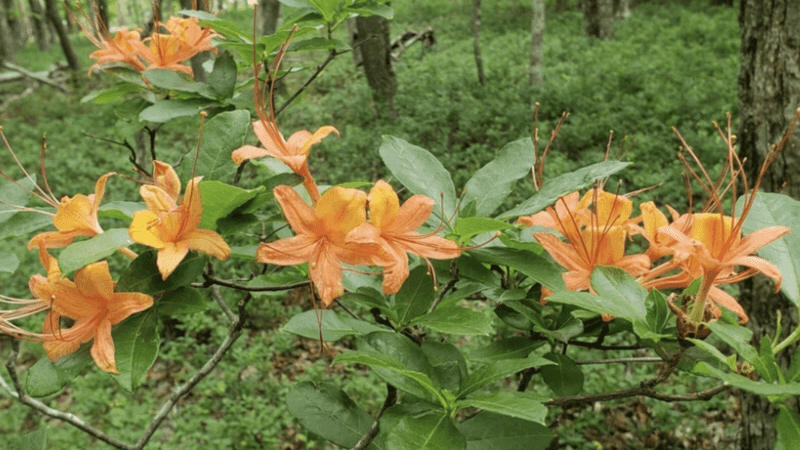
Not as widely known as its flashier cousin the flame azalea, the Cumberland azalea quietly earns a loyal fan base among gardeners who know the Appalachian Mountain region well. What sets it apart is its bloom timing.
While most native azaleas peak in spring, the Cumberland azalea tends to bloom from late May into June, sometimes even into early July at higher elevations, extending the color season in western North Carolina gardens in a really satisfying way.
The flowers are bright orange to orange-red and appear after the leaves have already emerged, which gives the plant a slightly different look than other azaleas where blooms appear on bare stems.
The foliage itself is attractive, clean, and medium-green, so the shrub earns its space in the landscape even when it is not in flower.
Cumberland azalea is native to the mountains of North Carolina and neighboring Appalachian states, which means it is completely at home in the rocky, acidic soils and cool mountain climate of western North Carolina.
It typically grows four to six feet tall, stays tidy without heavy pruning, and fits naturally into woodland-edge plantings or naturalized garden areas.
Crape myrtle is built for flat, hot, humid lowland summers, while Cumberland azalea is built for exactly the kind of mountain landscape that makes western North Carolina so special. Supporting native bees and butterflies is another bonus this shrub brings effortlessly.
6. Oakleaf Hydrangea (Hydrangea Quercifolia)
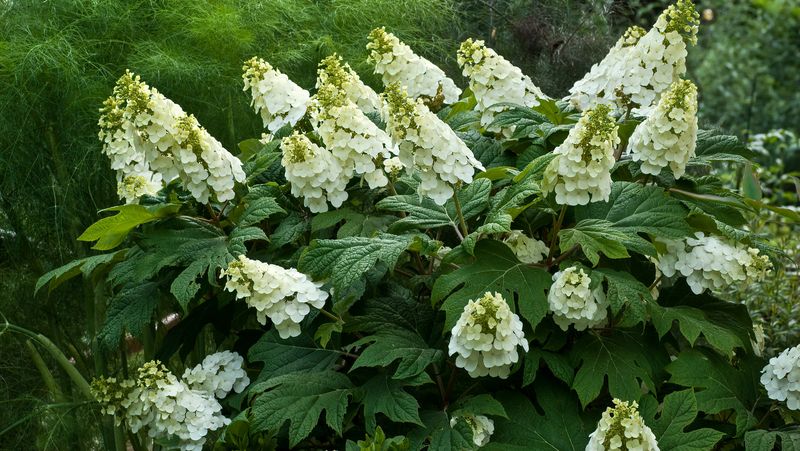
Most flowering shrubs ask you to pick one season to love them. Oakleaf hydrangea refuses to play by those rules.
It brings something beautiful to the yard in spring, summer, fall, and even winter, which makes it one of the most genuinely useful four-season shrubs you can plant in western North Carolina.
The large, cone-shaped flower panicles open creamy white in early summer and gradually age to a warm parchment-pink as the season progresses.
By fall, the bold oak-shaped leaves turn rich shades of burgundy, orange, and red, rivaling the fall foliage show happening in the surrounding Appalachian forests.
Once the leaves drop, the exfoliating cinnamon-brown bark on the stems becomes a beautiful winter feature all on its own.
Oakleaf hydrangea thrives in full sun to part shade with medium moisture and well-drained soil, which fits a wide range of western North Carolina garden conditions beautifully.
It grows four to six feet tall in most garden settings, though some cultivars reach eight feet or more.
Crape myrtle can struggle badly after a cold mountain winter, sometimes failing to leaf out properly until midsummer. Oakleaf hydrangea, by contrast, is cold-hardy and bounces back reliably every spring.
If cold temperatures do affect the tips of the stems, simply remove the affected portions in early spring and the plant rebounds quickly. Pollinators absolutely love the blooms, making it an ecologically smart choice too.
7. Large Fothergilla (Fothergilla Major)
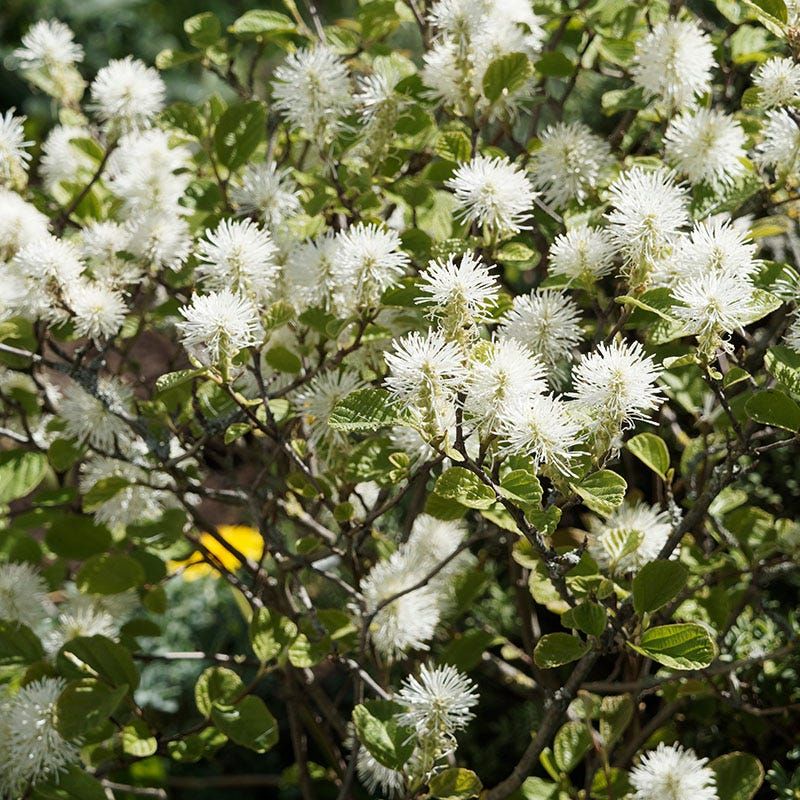
Some shrubs bloom beautifully and then fade quietly into the background for the rest of the year. Large fothergilla is not one of them.
It opens the spring season with creamy white, honey-scented bottlebrush flowers that appear before the leaves, giving the plant a bright and airy look in early April.
Then, just when you think it has done its job for the year, fall arrives and the whole shrub transforms into a bonfire of yellow, orange, and scarlet foliage.
Large fothergilla is native to the Appalachian Mountain region, making it a genuinely natural fit for western North Carolina landscapes. It grows as a rounded, multi-stemmed shrub reaching four to ten feet tall depending on the site and cultivar.
The leaves are thick and attractive through the summer, giving the plant a clean, tidy presence even between its two big seasonal moments.
It performs best in full sun to part shade with acidic, well-drained soil, which is exactly the kind of growing environment that western North Carolina offers in abundance.
Unlike crape myrtle, which focuses almost entirely on summer bloom and then offers little else, large fothergilla brings fragrant spring flowers, handsome summer foliage, and one of the most spectacular fall color displays of any shrub in the region.
Pollinators are strongly attracted to the early spring flowers, making it a great ecological addition to any mountain garden. It truly earns its space every single month of the year.