10 Flower Bed Ideas For Full Sun That Thrive In North Carolina Gardens
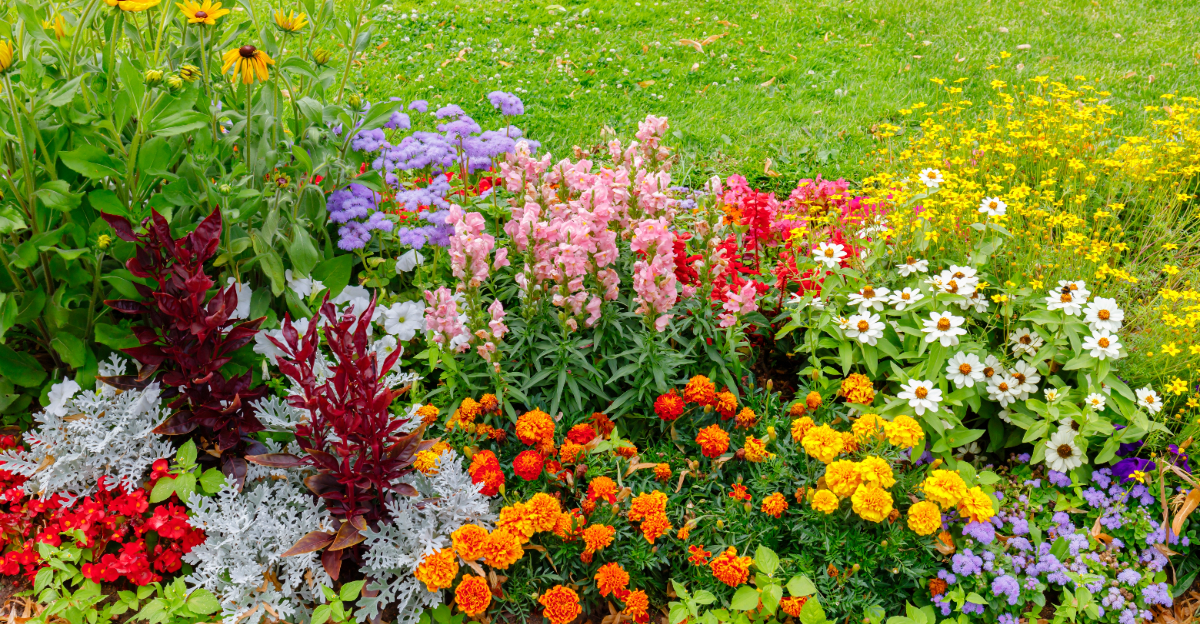
North Carolina is a true paradise for anyone who loves a bright and glowing flower bed. Our long summers and warm southern sunshine create the perfect home for plants that love to soak up the heat.
Whether you live near the sandy coast or in the rolling green foothills, your yard has so much potential for a colorful display.
You can grow a massive variety of stunning flowers that stay vibrant and strong all season long. We have put together ten amazing ideas to help you transform your outdoor space into a local masterpiece.
These choices are tough enough to handle the hottest afternoons while still looking like a dream. You will love how easy it is to make your home the most beautiful spot in the neighborhood. It is time to get outside and enjoy the best of our local weather.
1. Native Pollinator Garden
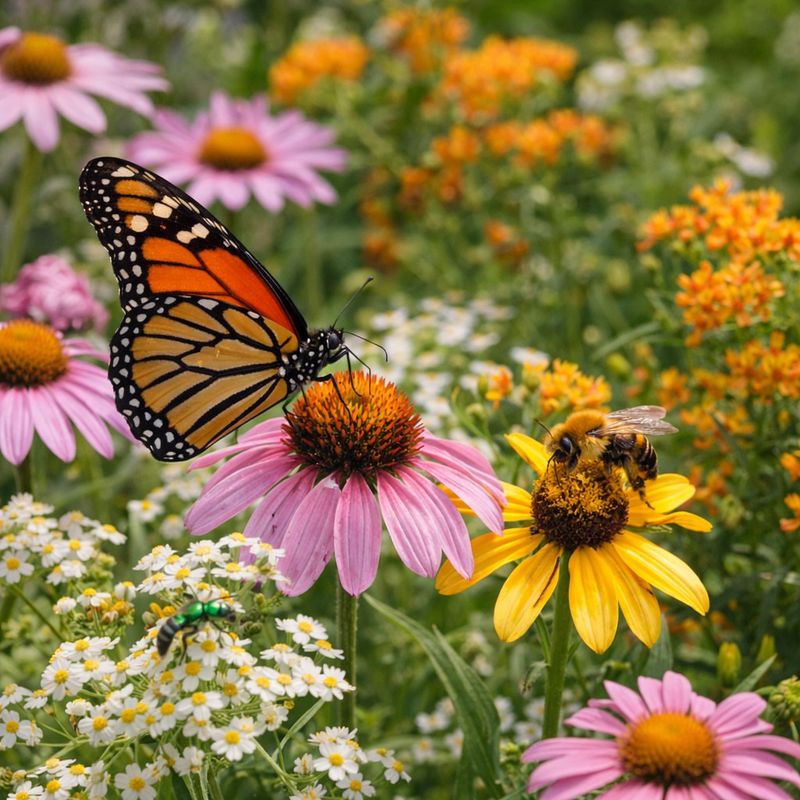
Few things are more satisfying than watching bees and butterflies dart around a garden you planted yourself.
A native pollinator garden is one of the smartest and most rewarding flower bed ideas you can try in North Carolina.
Plants like Black-eyed Susan (Rudbeckia hirta), Purple Coneflower (Echinacea purpurea), and Bee Balm (Monarda fistulosa) are all native to this region and absolutely love full sun.
These flowers are tough, cheerful, and built for the Carolina heat. Black-eyed Susans bloom from midsummer through early fall, painting your yard in warm golden tones.
Purple Coneflowers follow close behind, offering soft pink and purple hues that butterflies simply cannot resist.
Bee Balm adds a wild, cottage-style flair with its shaggy red and pink blooms. Because these are native plants, they have already adapted to North Carolina’s climate and soil, meaning they need very little extra care once they settle in.
Grouping them in clusters creates a naturalistic, lush look that feels like a meadow right in your backyard.
Adding mulch around the base of these plants helps retain moisture during hot, dry stretches, which is common in North Carolina summers.
This garden type also supports local ecosystems by feeding pollinators that help other plants in your yard thrive. It is a win for your garden and for nature at the same time.
2. Cottage Garden Style
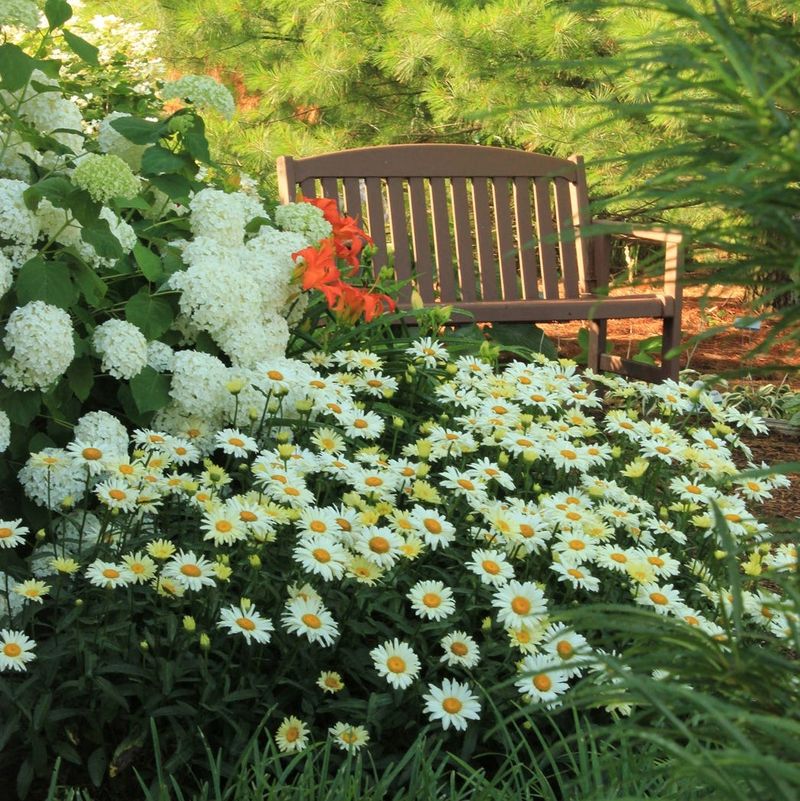
There is something magical about a cottage garden that feels both wild and wonderfully intentional at the same time.
Packed with colorful blooms and a relaxed, informal style, this flower bed look is perfect for North Carolina gardeners who want big visual impact without a rigid layout.
Shasta daisies (Leucanthemum x superbum), hollyhocks (Alcea rosea), and lavender (Lavandula spp.) are standout choices for a sunny cottage-style bed.
Shasta daisies are absolute showstoppers, producing classic white petals around bright yellow centers from early to late summer.
They attract pollinators and hold up beautifully in the Carolina heat when planted in well-drained soil.
Hollyhocks add dramatic vertical interest, sending tall spires of blooms in shades of pink, red, and white that can reach over six feet high. Lavender brings a soft, aromatic quality to the mix that no other plant quite matches.
Your North Carolina Garden Changes Every Week. Your Plan Should Too.
Gardening in North Carolina changes quickly throughout the season. Every Friday you’ll receive a simple weekly plan showing exactly what to plant, prune, fertilize, harvest, and protect so you never miss the right timing.
It thrives in full sun and loves the warm, well-drained conditions common across much of North Carolina.
The silvery-green foliage adds texture even when the plant is not in bloom, keeping the bed interesting all season.
Mixing different heights is a key trick with cottage gardens. Tall hollyhocks at the back, medium daisies in the middle, and low lavender along the edges creates a layered, full look. This style feels personal, charming, and totally at home in a North Carolina yard.
3. Drought-Tolerant Xeriscape Garden
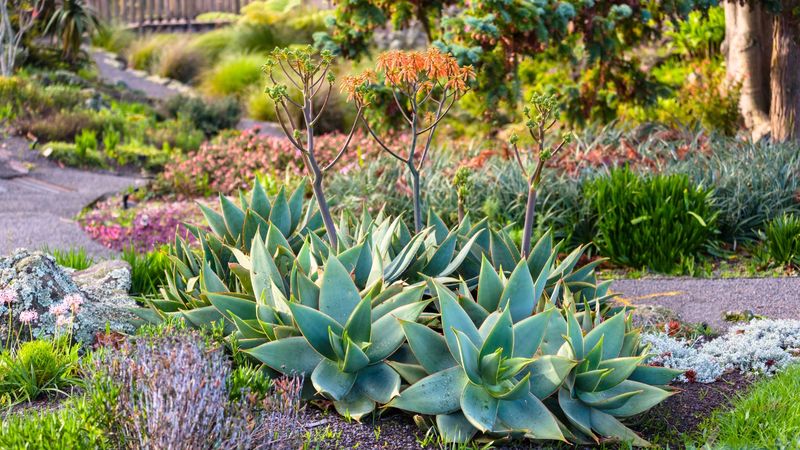
North Carolina summers can get seriously hot and dry, especially in the Piedmont and western regions.
A xeriscape garden is designed specifically for those conditions, using plants that look gorgeous without needing constant watering.
Lantana (Lantana camara), Blanket Flower (Gaillardia pulchella), and Salvia (Salvia spp.) are three powerhouse plants that thrive in exactly these tough, sunny conditions. Lantana is a true survivor.
Once it establishes in your garden, it produces non-stop clusters of tiny flowers in fiery shades of orange, yellow, red, and pink from late spring all the way through fall.
Butterflies and hummingbirds flock to it, making your yard feel alive and buzzing with energy even during the driest weeks of summer.
Blanket Flower earns its name by spreading cheerful red and yellow blooms across the bed like a patchwork quilt. It handles dry soil like a champion and keeps blooming from late spring into early fall.
Salvia adds vertical structure with tall, elegant spikes of purple, blue, or red that pair beautifully with the lower-growing Lantana and Blanket Flower.
One of the biggest advantages of a xeriscape garden is the reduced need for irrigation, which saves both time and money.
Planting in well-drained soil and adding a layer of gravel or mulch around the roots makes these plants even more efficient. For busy North Carolina gardeners, this low-maintenance setup is a total game changer.
4. Butterfly Garden
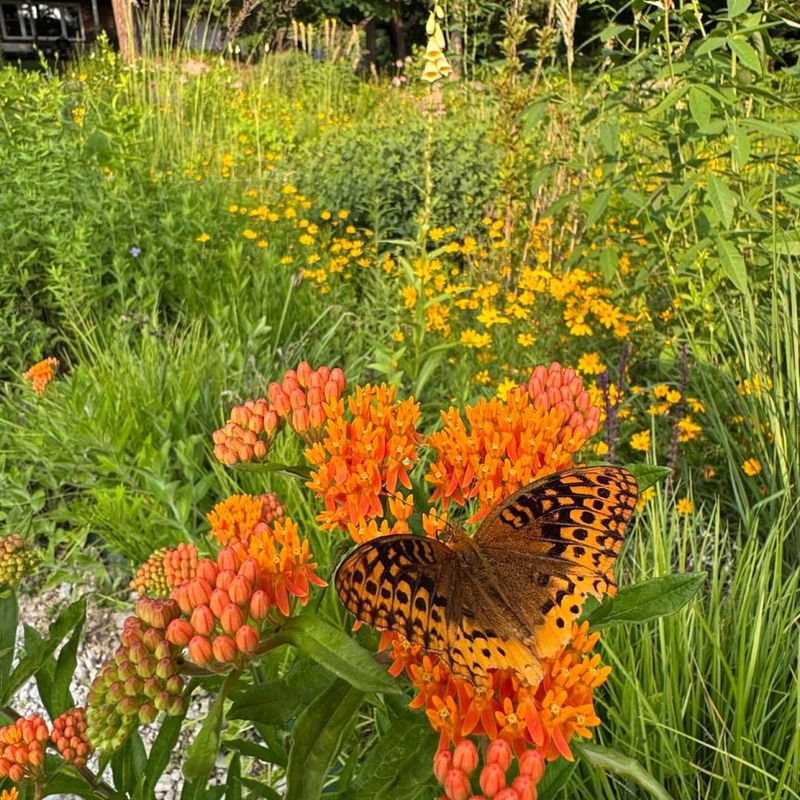
Imagine stepping outside every morning and watching a dozen butterflies float lazily through your flower bed.
A butterfly garden makes that dream a reality, and it is surprisingly easy to create in North Carolina’s sunny yards.
Milkweed (Asclepias tuberosa), Zinnias (Zinnia elegans), and Coreopsis (Coreopsis spp.) are the dream team for attracting these beautiful winged visitors.
Milkweed is the single most important plant for Monarch butterflies, serving as the only plant where Monarchs lay their eggs.
Butterfly Weed, the most common variety for North Carolina gardens, produces vivid orange blooms and handles full sun and dry soil with ease. Watching Monarchs visit your garden feels like something truly special.
Zinnias are among the easiest flowers to grow from seed, and they reward gardeners with an explosion of color in shades of red, pink, orange, yellow, and white all summer long.
They are heat-loving, sun-craving plants that perform beautifully in North Carolina’s climate.
Coreopsis adds cheerful yellow blooms from late spring through midsummer, filling in the gaps between other plants.
Planting in large, dense clusters rather than single rows makes the garden more visible to passing butterflies and creates a stronger visual impact.
Skipping pesticides is also essential since butterflies are sensitive to chemicals. With the right plant mix and a little patience, your North Carolina yard can become a genuine butterfly haven all season long.
5. Bold And Bright Tropical Garden
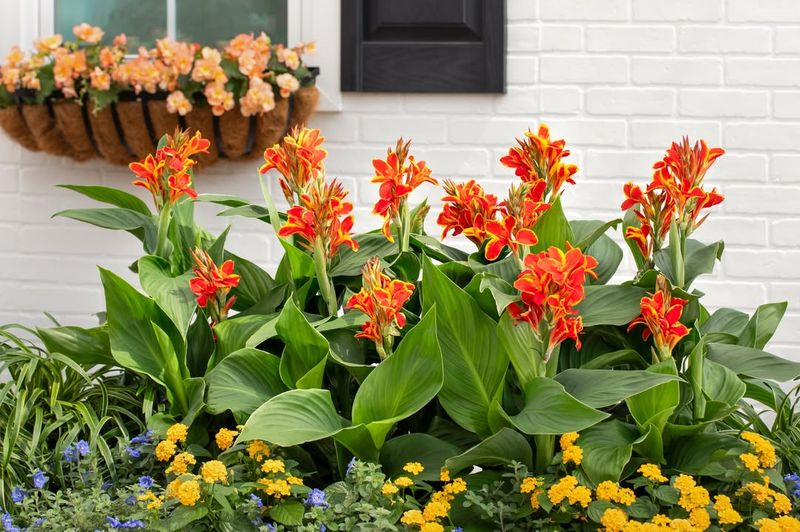
Not every garden has to look subtle. Sometimes, you want your flower bed to stop people in their tracks, and a tropical-themed garden does exactly that.
North Carolina’s hot, humid summers create surprisingly ideal conditions for bold tropical plants like Canna lilies (Canna spp.), Agapanthus (Agapanthus spp.), and Lantana to absolutely flourish in full sun. Canna lilies are the undisputed stars of a tropical garden.
Their enormous, paddle-shaped leaves in shades of green, burgundy, and bronze create a dramatic backdrop, while their tall flower spikes in red, orange, yellow, and pink add intense color.
They grow fast in the Carolina heat and can reach heights of four to six feet, creating an instant wow factor.
Agapanthus, also known as Lily of the Nile, produces stunning globe-shaped clusters of blue or white flowers on tall, elegant stems.
It thrives in full sun and well-drained soil, making it a perfect companion for the bold Canna.
Lantana weaves through the base of the bed, adding layers of smaller, fiery blooms that attract hummingbirds and butterflies throughout the season.
The key to a successful tropical garden in North Carolina is choosing a sheltered spot that gets at least six hours of direct sun daily.
Feeding these plants with a balanced fertilizer every few weeks during summer keeps the growth lush and the blooms coming. The result is a garden that looks like it belongs somewhere far more exotic.
6. Herb And Flower Combo Bed
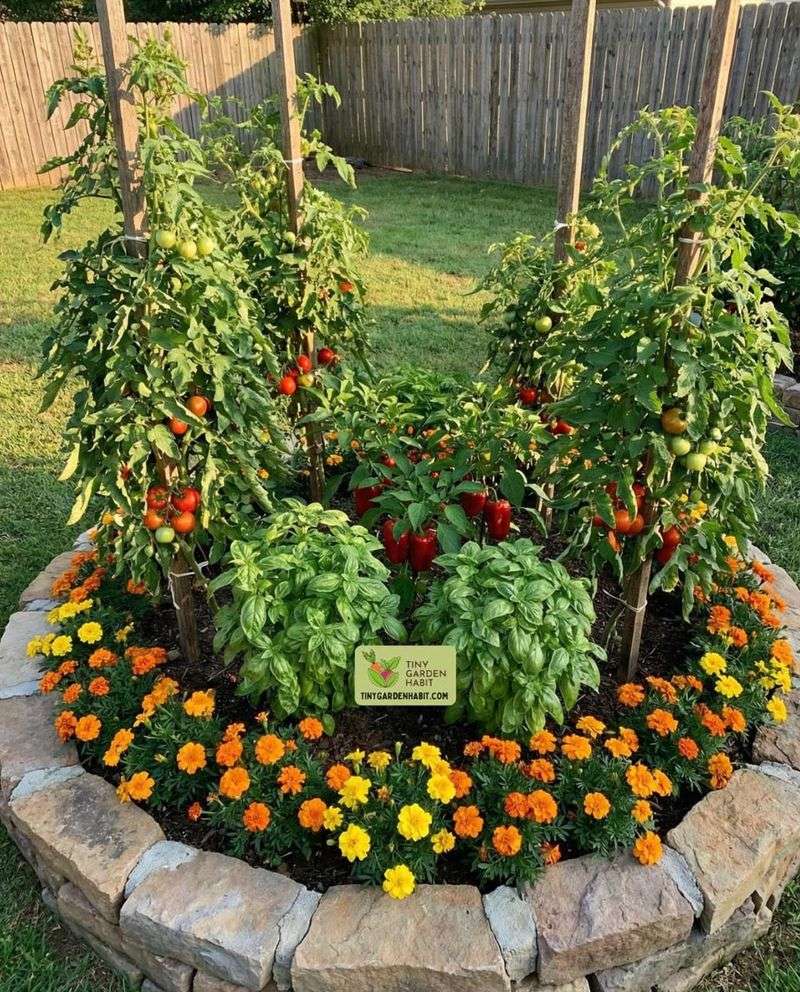
Who says a flower bed has to be purely decorative? Combining herbs and flowers in the same sunny bed is one of the cleverest gardening tricks around, and it works beautifully in North Carolina gardens.
Pairing Marigolds (Tagetes spp.) and Geraniums (Pelargonium spp.) with herbs like Thyme, Oregano, and Basil creates a bed that is both beautiful and genuinely useful.
Marigolds are workhorses in any mixed bed. Their bright yellow and orange blooms add cheerful color from summer through fall, and they naturally repel certain garden pests, which is great news for your herbs.
Geraniums bring soft pinks, reds, and whites to the mix and handle full sun and heat with impressive toughness.
Thyme, Oregano, and Basil all thrive in the same sunny, well-drained conditions that Marigolds and Geraniums love.
Thyme and Oregano are especially heat-tolerant and will keep producing fragrant leaves throughout North Carolina’s long summers.
Basil loves warmth above all else and will reward you with lush, aromatic growth when planted in a sunny spot with rich soil.
From a design perspective, placing taller Basil toward the back, medium Marigolds and Geraniums in the middle, and low-growing Thyme and Oregano along the edges creates a nicely layered look.
You get fresh herbs for your kitchen and gorgeous blooms for your yard all from the same small patch of soil. It is practical, beautiful, and totally satisfying.
7. Sun-Soaked Wildflower Meadow
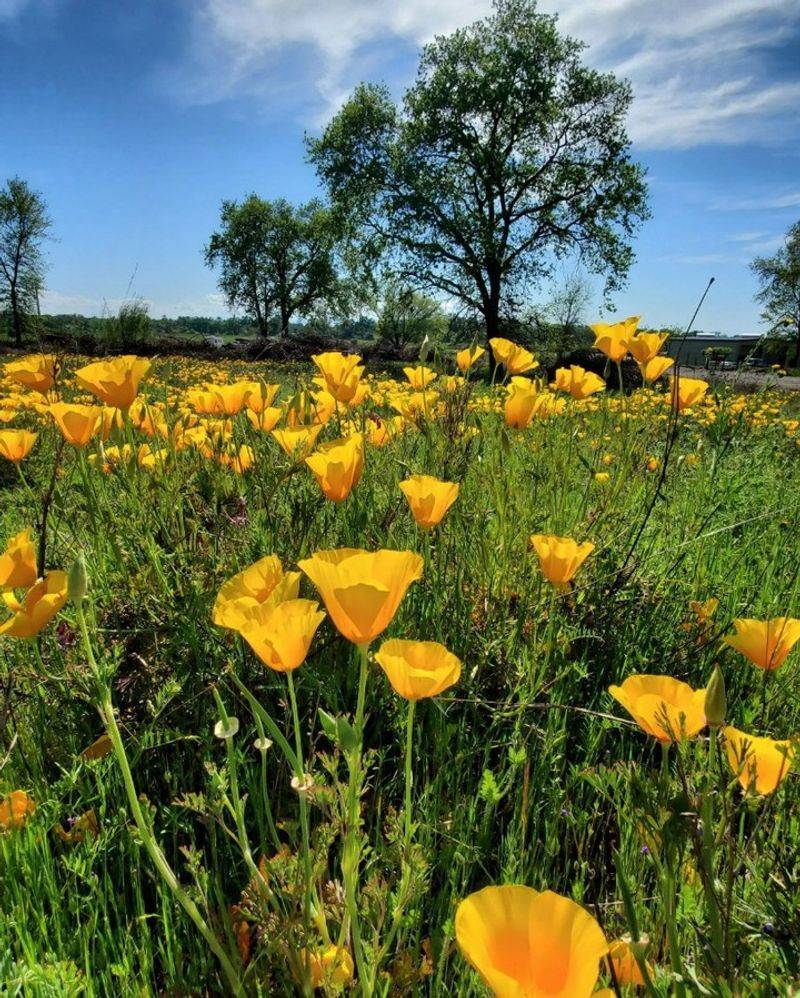
Picture a corner of your yard transformed into a swaying, colorful sea of wildflowers.
A wildflower meadow garden is one of the most effortlessly beautiful flower bed styles you can create in North Carolina, and the plants practically take care of themselves once established.
Black-eyed Susan, Indian Blanket (Gaillardia pulchella), and Bluebonnet (Lupinus texensis) are stunning choices for a full-sun wildflower display.
Black-eyed Susans are already well-suited to North Carolina’s climate, thriving in poor to average soil with minimal care.
Their golden petals and dark centers create that iconic wildflower look that feels both rustic and refined.
Indian Blanket adds bold red and yellow tones that pop against the softer colors of surrounding plants, blooming from late spring right through early fall.
Bluebonnets bring cool blue and purple shades that balance out the warm tones of the other flowers perfectly.
They prefer well-drained soil and full sun, making them a natural fit for sunny Carolina garden beds.
Planting a mix of these species together creates continuous color from spring all the way through autumn.
Starting a wildflower meadow is as simple as scattering a seed mix over prepared soil in early fall or early spring. Once the plants establish their root systems, they require very little watering or fertilizing.
This makes a wildflower meadow one of the most eco-friendly and low-effort flower bed options available to North Carolina gardeners who want maximum beauty with minimum fuss.
8. Clematis And Daylily Combo
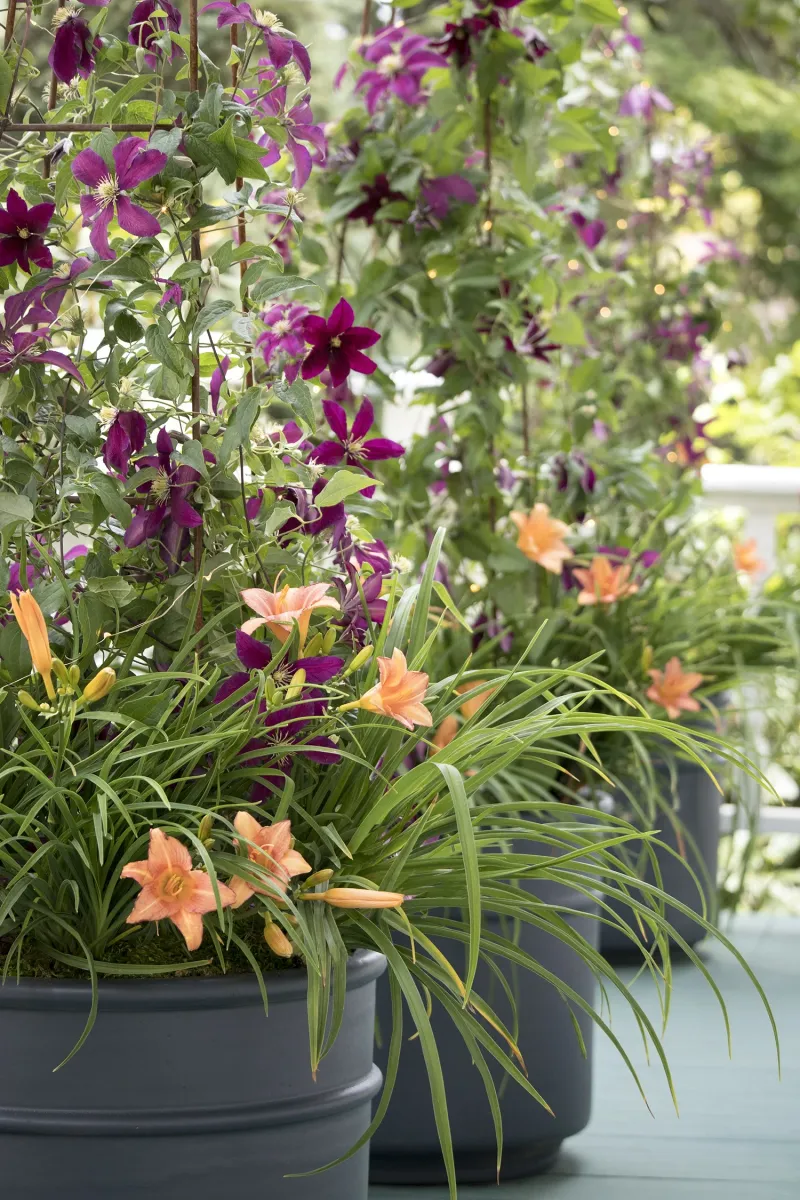
Vertical gardening meets horizontal color in one of the most dynamic flower bed combinations you can plant in North Carolina.
Pairing climbing Clematis with cheerful Daylilies (Hemerocallis spp.) creates a display that uses every inch of your garden space beautifully.
The result is a layered, multi-dimensional bed that keeps drawing the eye upward and outward all season long.
Clematis vines are famous for their stunning, large blooms in shades of purple, pink, white, and deep red.
They climb trellises, fences, or garden obelisks with enthusiasm and thrive in full sun, especially when their roots are kept cool with a layer of mulch.
In North Carolina, Clematis typically blooms in late spring and again in late summer, giving you two spectacular shows per year. Daylilies are among the most adaptable plants in any North Carolina garden.
They come in hundreds of colors and varieties, bloom reliably in full sun, and spread naturally over time to fill your bed with dense, colorful clumps.
Unlike true lilies, each Daylily flower lasts only one day, but each plant produces dozens of buds, keeping the color going for weeks.
Planting Clematis at the back of the bed against a support structure while allowing Daylilies to fill the foreground creates a beautifully balanced composition.
Both plants are heat-tolerant and low-maintenance once established, making this pairing a smart and visually rewarding choice for sunny North Carolina gardens of all sizes.
9. Rock Garden With Sun-Loving Succulents
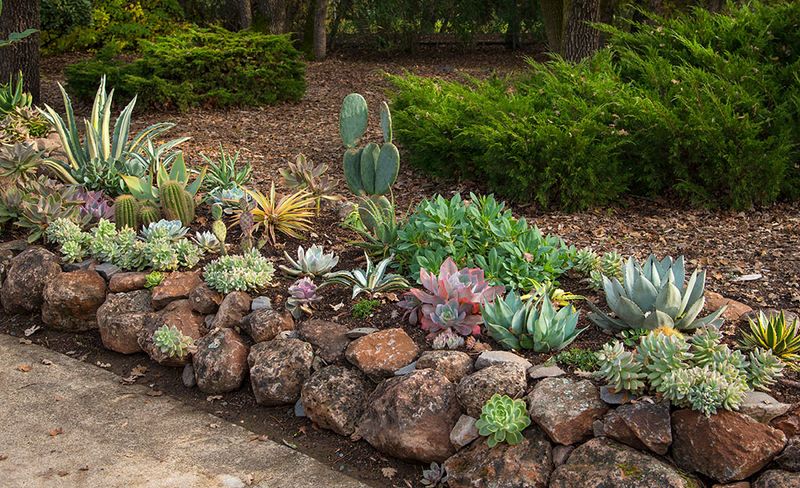
Rock gardens have a quiet, sculptural beauty that sets them apart from every other flower bed style.
When you fill them with sun-loving succulents and drought-tolerant plants, they become nearly effortless to maintain.
In North Carolina, a rock garden featuring Sedum (Sedum spp.), Yucca (Yucca filamentosa), and Agave is an eye-catching and practical solution for hot, dry, sunny spots.
Sedum is a groundcover superstar, spreading low and wide across rocks and dry soil with minimal care.
It comes in a range of textures and colors, from bright green to burgundy red, and produces small star-shaped flowers in late summer that attract pollinators.
Sedum handles North Carolina’s summer heat without complaint and looks great even during dry spells. Yucca is a bold structural plant that adds dramatic height and form to a rock garden.
Its tall, creamy white flower spikes emerge in late spring and summer, standing several feet above the sharp, sword-like foliage.
Agave echoes this architectural quality with its rosette form and thick, sculptural leaves that create a striking focal point among the stones. Building a rock garden requires good drainage above all else.
Mixing gravel into the soil and choosing a naturally sloped or raised area helps water drain away from the roots quickly, which is exactly what these plants need.
For North Carolina gardeners dealing with clay-heavy soils, raised rock garden beds offer the perfect workaround for growing these beautiful, low-water plants successfully.
10. Classic Rose Garden
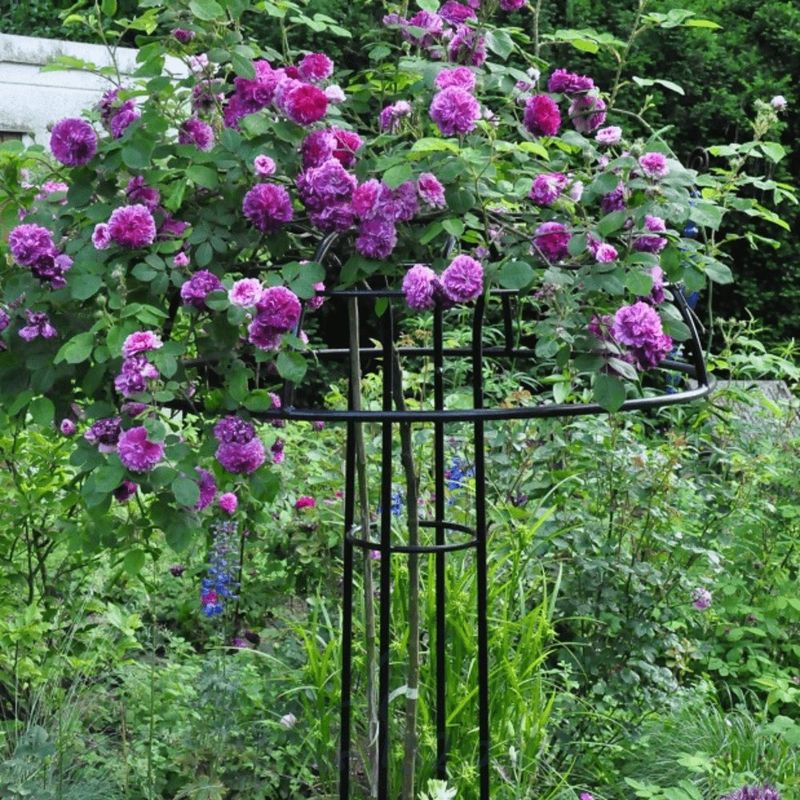
Roses have been the crown jewel of gardens for centuries, and North Carolina’s warm, sunny climate gives them exactly what they need to perform at their best.
A well-planned rose garden filled with Knockout roses, hybrid tea roses, and climbing roses can deliver stunning color and sweet fragrance from spring all the way through fall without overwhelming you with complicated care routines.
Knockout roses are arguably the most popular rose variety in North Carolina right now, and for good reason.
They are disease-resistant, bloom repeatedly throughout the season, and come in a range of colors from cherry red to soft pink and white.
They require very little fussing and handle the Carolina heat with remarkable ease, making them a top pick for beginner and experienced gardeners alike.
Hybrid tea roses bring classic elegance with their large, perfectly formed blooms and rich fragrance.
They need a bit more attention than Knockout varieties, including regular pruning and feeding, but the reward is a truly spectacular display.
Climbing roses add vertical drama when trained over arches, fences, or pergolas, covering structures in cascading blooms each season.
Planting roses in a spot that gets at least six hours of direct sun per day is essential for strong blooming.
Deadheading spent flowers regularly encourages new buds to form, extending the display well into autumn.
Adding a slow-release fertilizer in spring and a fresh layer of mulch around the base helps North Carolina rose gardens stay healthy, vibrant, and full of life all season long.