8 Low Effort Flowers That Grow Around Trees In Georgia
Shade under trees in Georgia rarely looks finished, even when the rest of the yard comes together. The ground feels uneven, light keeps shifting, and most plants never hold their place long enough to make it look intentional.
Yet some yards manage to turn that same space into something that feels complete without drawing attention to the effort behind it. The area blends in, stays full, and does not need constant fixing to keep it looking decent.
Not every flower can handle those conditions, especially where roots compete for moisture and sunlight never stays consistent through the day.
Finding the ones that can settle in and hold up there changes how that part of the yard looks, and it no longer feels like the one section that never works.
1. Woodland Phlox Grows Well In Light Shade Under Trees
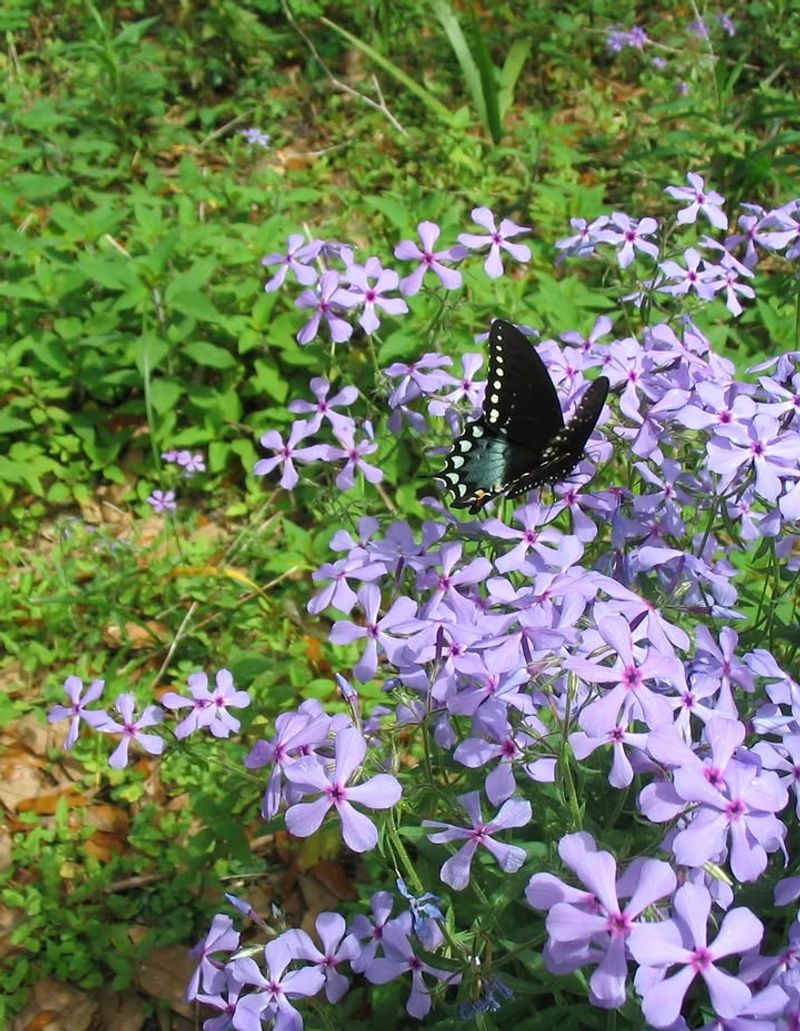
Soft lavender flowers showing up in April without you doing much of anything — that is pretty much what woodland phlox delivers in a Georgia yard.
It blooms when most of the tree canopy is still filling in, which means it catches enough filtered light to put on a solid show each spring.
Woodland phlox handles the kind of light shade you get under oaks and maples without struggling. Soil does not need to be perfect.
It prefers something slightly moist and loose, but it adjusts to the drier, root-heavy soil you often find under established trees in Georgia’s piedmont region.
Spreading slowly by rhizomes, it gradually fills in bare patches without taking over the whole bed. You will not be fighting it back every season.
Plant it in fall or early spring, water it through the first dry stretch, and it tends to settle in on its own from there.
Butterflies and early pollinators are drawn to the blooms, which is a nice bonus when everything else in the yard is still waking up. Heights stay low, usually around twelve inches, so it layers well with taller shade plants.
If your Georgia yard has a shady tree bed that sits empty every spring, woodland phlox is a solid and unfussy choice to fill it.
A light layer of mulch helps keep the soil evenly moist through spring while protecting those shallow roots from drying out too quickly.
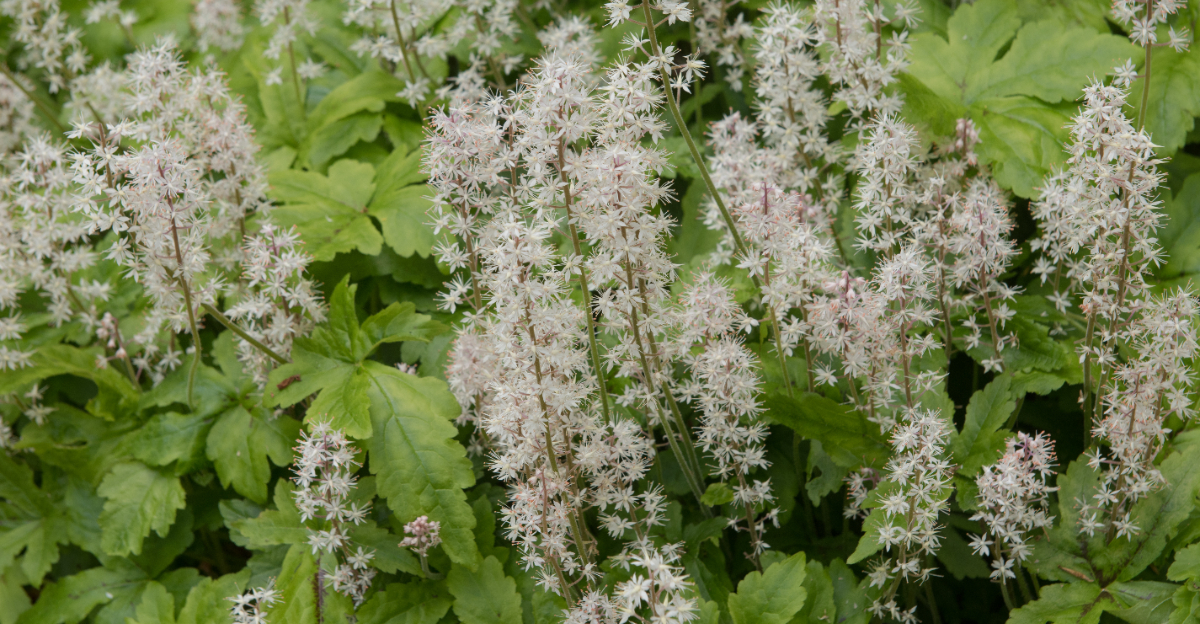
2. Foamflower Spreads Easily In Shady Soil
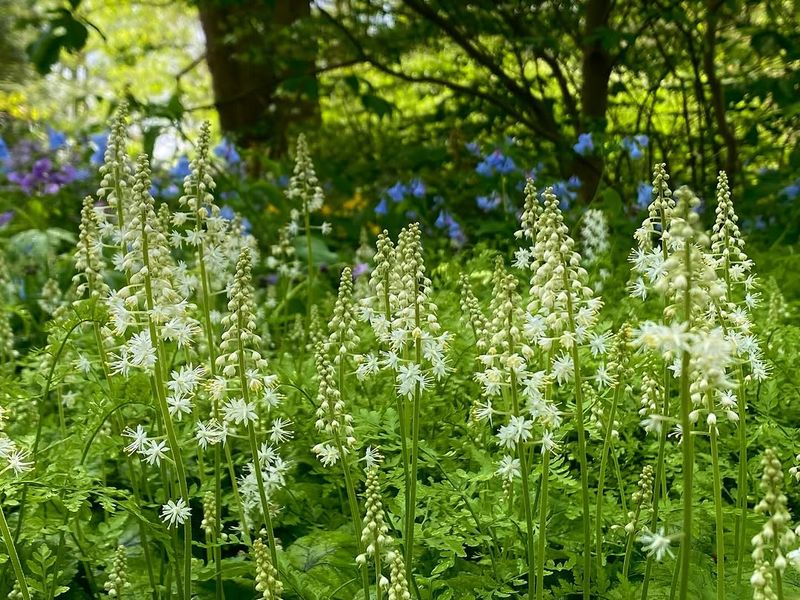
Foamflower earns its spot in Georgia shade gardens by doing something most plants refuse to do — it spreads into dense, dry, root-tangled soil without complaining.
Underneath a canopy of oaks or tulip poplars, where the ground gets packed and dry by midsummer, foamflower keeps pushing outward.
Blooms arrive in early spring, usually March into April depending on where you are in Georgia. Creamy white flower spikes rise just above the foliage and catch the eye even from a distance.
The heart-shaped leaves stay attractive through the growing season, adding texture long after the flowers fade.
It spreads by runners, slowly building a ground-level mat that fills awkward spots between tree roots. It is not aggressive, so you are not going to wake up one spring and find it has jumped into your lawn.
Your Georgia Garden Changes Every Week. Your Plan Should Too.
Gardening in Georgia changes quickly throughout the season. Every Friday you’ll receive a simple weekly plan showing exactly what to plant, prune, fertilize, harvest, and protect so you never miss the right timing.
Control is rarely needed unless you want to keep it within a tight boundary.
Moisture helps during establishment, but once the roots settle into the soil, foamflower handles dry spells better than you might expect for a plant that looks this delicate.
In the shadier corners of a Georgia yard where grass refuses to grow and bare soil looks tired, foamflower is one of the more reliable solutions you can plant without a complicated setup.
Cutting back spent flower spikes after blooming can help keep the plant looking tidy and direct energy back into the foliage for the rest of the season.
3. Wild Geranium Handles Dry Shade With Little Care
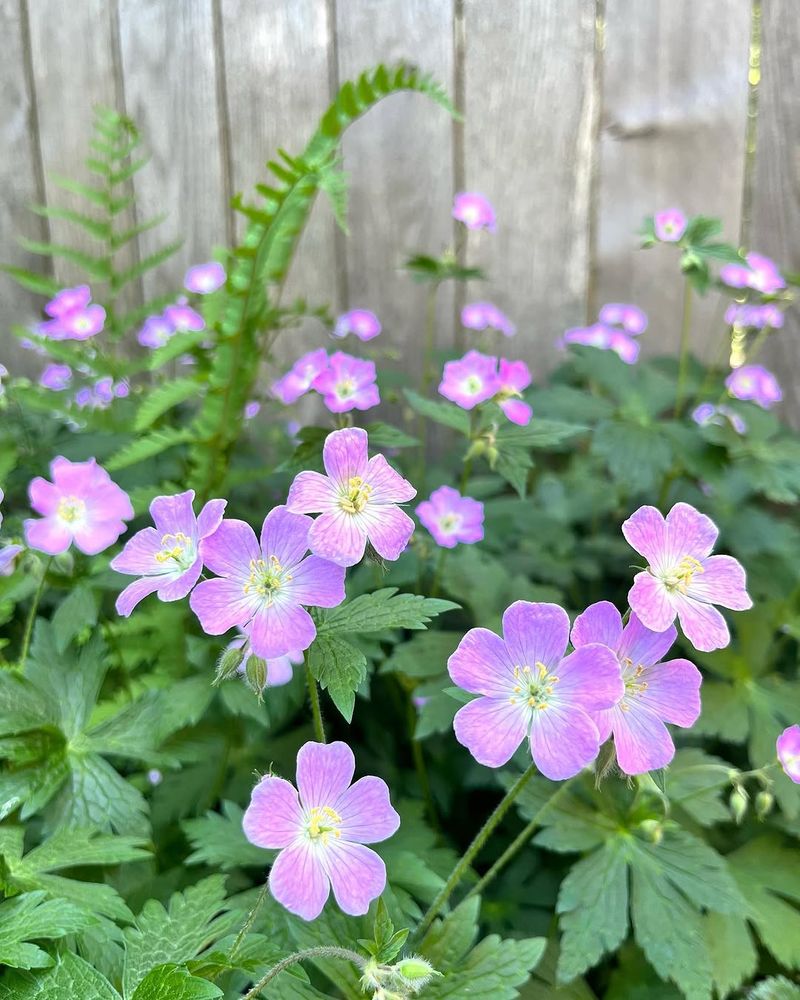
Dry shade is one of the hardest gardening problems to solve in Georgia, and wild geranium is one of the few flowers that genuinely handles it.
Under mature trees where the soil dries out fast and roots leave little room, wild geranium holds its own without needing supplemental watering past the first season.
Rosy pink to lavender flowers appear in spring, typically from late March through May across most of Georgia. The bloom period is not the longest, but the foliage stays attractive well into summer, with the leaves developing reddish tones as temperatures climb.
That seasonal color shift adds something extra to a bed that could otherwise look flat.
Root depth is part of why it survives where other plants struggle. Wild geranium develops a thick rhizome that stores moisture and energy, which helps it push through dry stretches without visible stress.
You do not need to amend the soil heavily before planting — it is more adaptable than most flowering perennials.
Clumps expand gradually over the years, but splitting them every few seasons keeps growth manageable and actually encourages better blooming.
If you have a shady area in your Georgia yard that gets summer-dry and you want something flowering without a lot of intervention, wild geranium is worth trying.
It asks very little and still shows up reliably each spring.
4. Coral Bells Add Color In Partial Shade
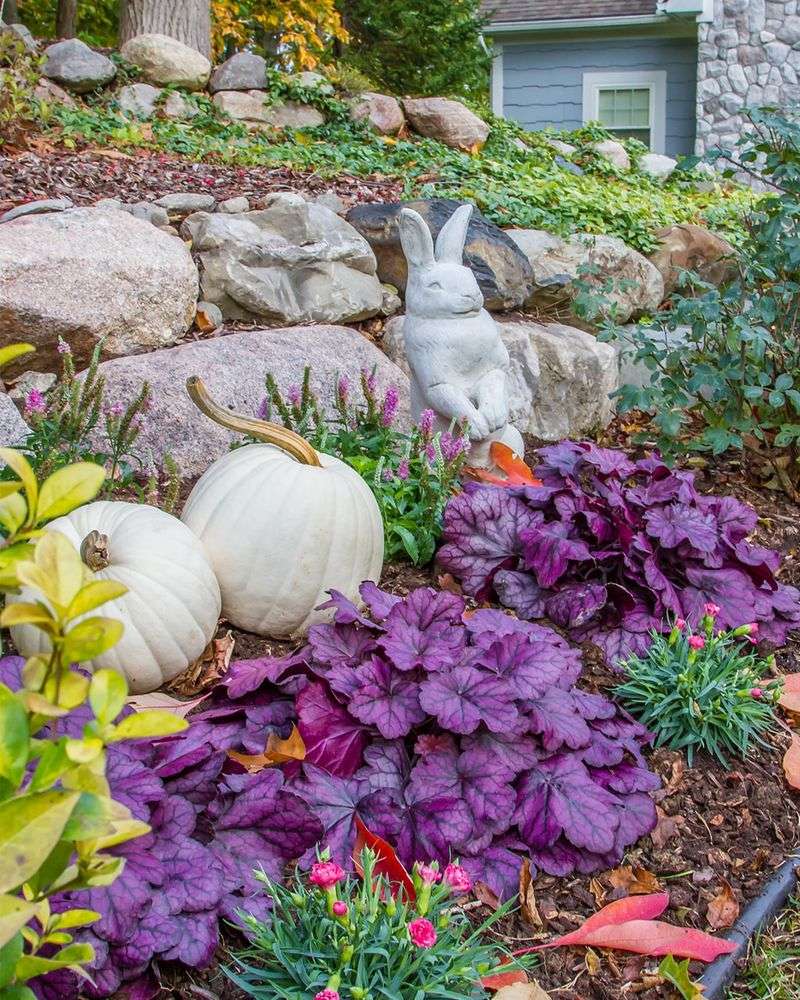
Most of coral bells’ appeal in a Georgia yard comes not from the flowers but from the foliage, and that is actually a good thing.
The leaves hold their color through the entire growing season — deep burgundy, lime green, silver-streaked — giving you something worth looking at even when nothing is blooming nearby.
Partial shade under trees suits them well. Too much direct afternoon sun in Georgia’s summer heat can scorch the leaves, especially the darker-leaved varieties.
The filtered light you get under a high canopy is close to ideal, giving them enough brightness to keep the color vivid without the stress of full exposure.
Thin wiry stems carry small bell-shaped flowers in late spring and early summer, usually in shades of pink, red, or white depending on the variety. Hummingbirds visit them regularly.
The blooms are not showy from a distance, but up close they have a quiet charm that rewards a closer look.
Drainage matters more than moisture for coral bells. Sitting in wet soil through a Georgia winter is harder on them than summer drought.
Plant them slightly elevated or in beds with decent drainage, and they tend to hold up well year after year. Varieties like Caramel, Palace Purple, and Obsidian have all performed reliably in Georgia’s climate across a range of soil types and light conditions.
5. Columbine Thrives In Dappled Light
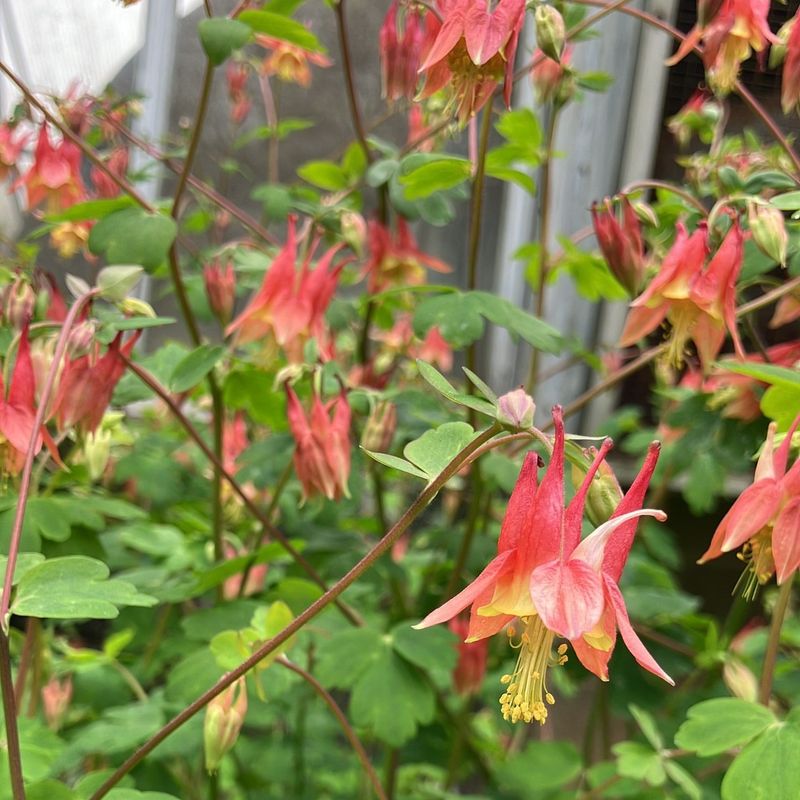
Columbine has a short season, but it packs a lot into those weeks. Spurred flowers in red, yellow, purple, or bi-color combinations open in early spring when the light under Georgia’s deciduous trees is still relatively bright, before the canopy fully closes in.
Dappled light is where columbine performs best. Direct afternoon sun in Georgia bakes the foliage and shortens the bloom period noticeably.
But under a canopy that filters the light, the plants stay fresher longer and produce more flowers per stem. That timing also lines up well with hummingbird migration through Georgia each spring.
Seeds drop freely after flowering, and seedlings pop up nearby the following season. Over a few years, a small planting tends to build into a larger colony without any deliberate effort on your part.
Seedlings can vary in color from the parent plant, which keeps things visually interesting year after year.
Columbine does not have a long lifespan as an individual plant — three to four years is typical — but because it reseeds, the colony renews itself. Soil should drain reasonably well.
Consistently soggy spots cause root problems faster than drought does. In Georgia’s piedmont or mountain foothills, columbine fits naturally into tree beds and rocky slopes where the light shifts through the day.
6. Solomon’s Seal Handles Deep Shade Under Trees
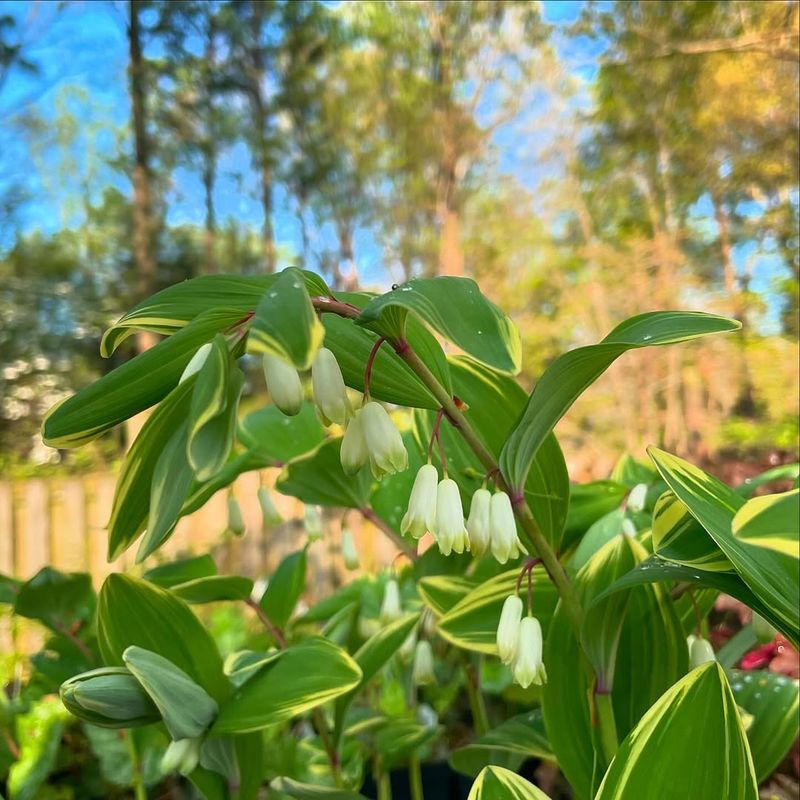
Almost nothing flowers well in the deep shade under a large Georgia pine or magnolia, but Solomon’s seal is one of the exceptions worth knowing about.
Arching stems lined with paired leaves give it an elegant, almost architectural look that stands out even without the flowers.
Small white bell-shaped blooms hang along the undersides of the stems in spring, usually April into May. They are not loud or showy, but they have a quiet elegance that works well in shaded spaces.
By fall, blue-black berries replace the flowers and birds occasionally pick at them.
Root competition does not slow Solomon’s seal down the way it stops other plants. It spreads by underground rhizomes and gradually extends its reach without needing loose, amended soil to do it.
Under conditions where other flowering plants get outcompeted by tree roots, Solomon’s seal tends to keep expanding slowly and steadily.
Height varies by species, with native varieties in Georgia typically reaching two to three feet. Larger cultivars can push higher.
Either way, the arching habit creates a layered look in a shaded bed that is hard to replicate with most other plants. Moisture helps in the first season, but established plants handle the dry summers that are common across much of Georgia without significant setback.
It is a patient, undemanding plant that suits deep shade better than almost anything else on this list.
7. Black Eyed Susan Works Best At Sunny Tree Edges
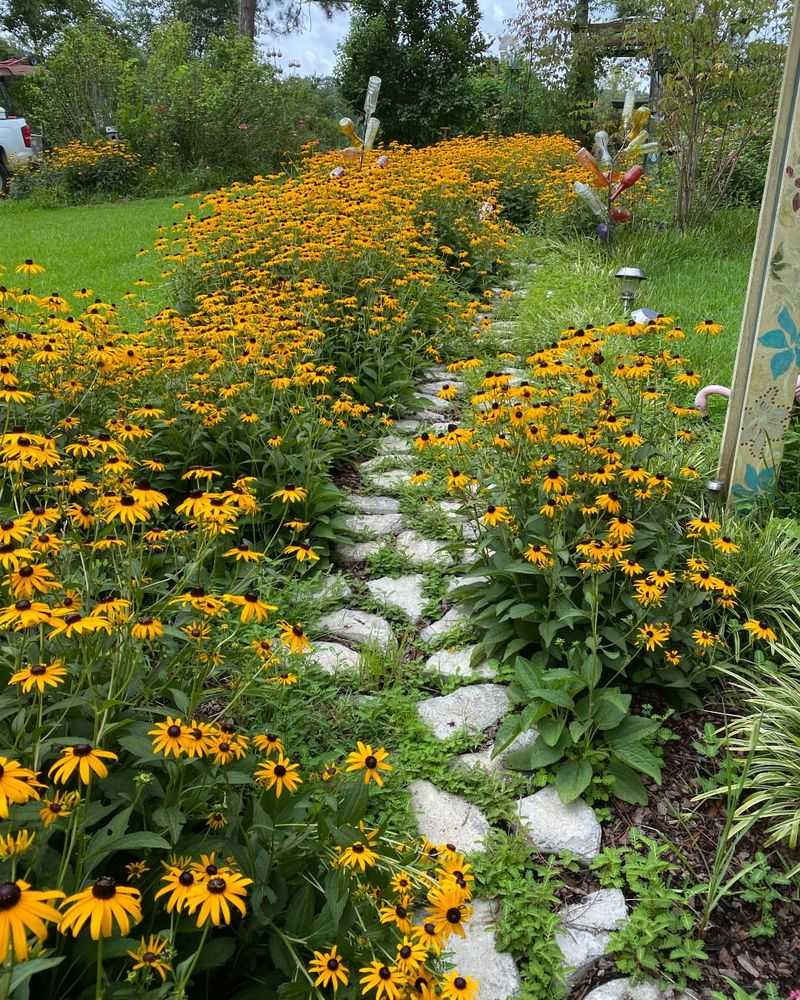
At the sunny edge of a tree line, where the canopy pulls back and full sun takes over, black-eyed Susan fills in with bright yellow blooms from midsummer through fall.
Not many flowers are this reliable through Georgia’s hottest months, but black-eyed Susan handles the heat without much visible stress.
Dry soil does not stop it. Rocky or sandy soil does not stop it either.
Black-eyed Susan is genuinely adaptable in ways that make it a practical choice for the transition zone between a shaded tree bed and an open lawn. It does need sun, though — pushing it into actual shade reduces blooming noticeably.
Bloom time stretches from July into October across most of Georgia, which makes it useful for filling the late-season gap when spring flowers are long finished.
Goldfinches are drawn to the seed heads, and leaving them standing through fall and winter provides food and some structural interest in the garden.
Reseeding is common, so expect new plants to show up near the original clump each year. That is generally a good thing in a naturalistic planting, but if you prefer tighter edges, deadheading before seeds fully mature keeps the spread in check.
Plants grow two to three feet tall and hold their shape without staking. In Georgia’s warm growing season, few flowers perform as consistently at a tree’s sunny edge.
8. Golden Ragwort Spreads Easily In Shade
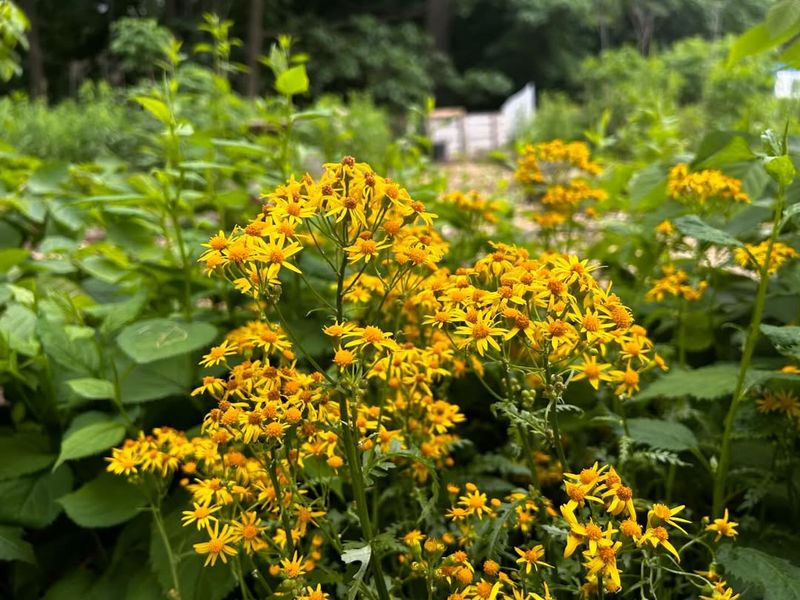
Golden ragwort is one of those plants that solves a real problem — it actually spreads in shade, covers bare soil under trees, and blooms bright yellow in early spring when most of the garden is still quiet.
In Georgia, it starts flowering as early as March, which makes it one of the first colors to show up under a tree canopy.
Shade that would shut down most flowering plants does not slow golden ragwort much. It handles the full range from partial sun to fairly dense shade, adjusting its growth accordingly.
Under heavy tree cover, it stays lower and spreads more than it blooms, but it still provides solid ground coverage.
Spreading happens through both runners and self-seeding, which means a small planting can fill a decent-sized area within a couple of seasons. That coverage is actually useful under trees where bare soil erodes during Georgia’s heavy spring rains.
Keeping it from moving into areas where you do not want it is the main management task.
Moisture helps early on, but once established in a Georgia yard, golden ragwort is surprisingly tolerant of dry spells under a tree canopy. The foliage is semi-evergreen in milder Georgia winters, which gives the bed some structure even in the coldest months.
Pollinators visit the blooms heavily in early spring when other food sources are still limited, adding ecological value alongside the visual appeal.