Flowering Vines That Actually Work Well In Western North Carolina Gardens
Flowering vines can add height, color, and movement to a garden, but not all of them perform well in western North Carolina.
With changing elevations, humid summers, and cooler mountain conditions, some vines struggle to grow or bloom the way gardeners expect. That is why choosing the right varieties makes such a big difference.
The best vines for this region are ones that can handle local weather, adjust to different soil types, and grow steadily without constant attention.
When you find the right match, they can quickly transform fences, trellises, and walls into vibrant focal points.
Some offer bold flowers, while others bring a softer, natural look that blends into the landscape.
If you want to make the most of vertical space in your garden, these flowering vines can deliver beauty, coverage, and reliable growth all season long.
1. Trumpet Honeysuckle (Lonicera sempervirens)
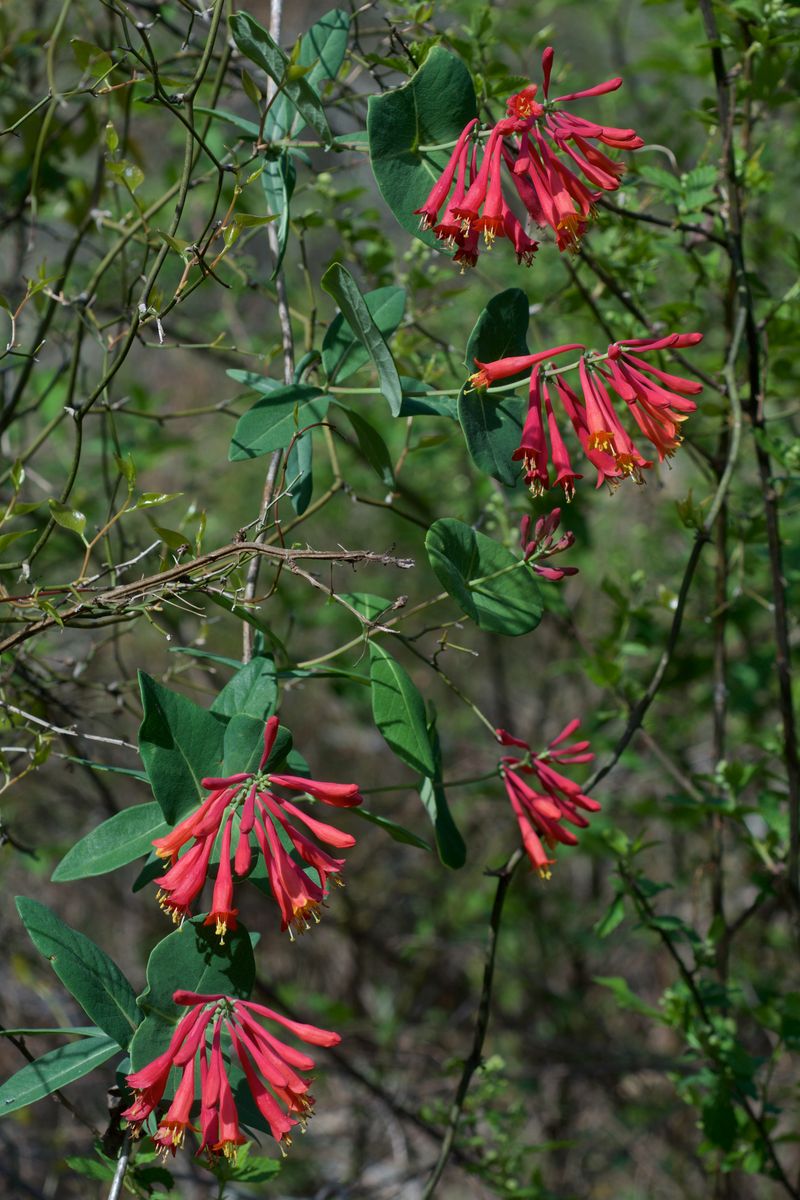
Trumpet Honeysuckle is the honeysuckle you actually want growing in your Western North Carolina yard.
Unlike the invasive Japanese honeysuckle that takes over roadsides and woodland edges across the region, this native version is well-behaved, beautiful, and incredibly valuable to local wildlife.
The tubular flowers bloom in shades of coral-red to orange from March all the way through July, giving hummingbirds a reliable nectar source for months.
This woody vine twines naturally around trellises, fences, and railings, reaching about 10 to 20 feet in length.
It grows best in full sun to partial shade and prefers well-draining soil, which is easy to find in most Western North Carolina gardens.
Bees and butterflies visit the flowers regularly too, making this vine a genuine pollinator magnet from spring into summer.
What makes Trumpet Honeysuckle especially appealing is how low-maintenance it really is once established.
Water it through the first season, give it something to climb, and it will reward you with color and wildlife activity for years.
You can prune it lightly after each bloom cycle to encourage fresh growth and more flowers.
Gardeners across the Appalachian foothills and mountain valleys have relied on this vine for decades, and for good reason. It is one of those rare plants that looks great, supports nature, and asks very little in return.
2. Climbing Hydrangea (Hydrangea barbara / Decumaria barbara)
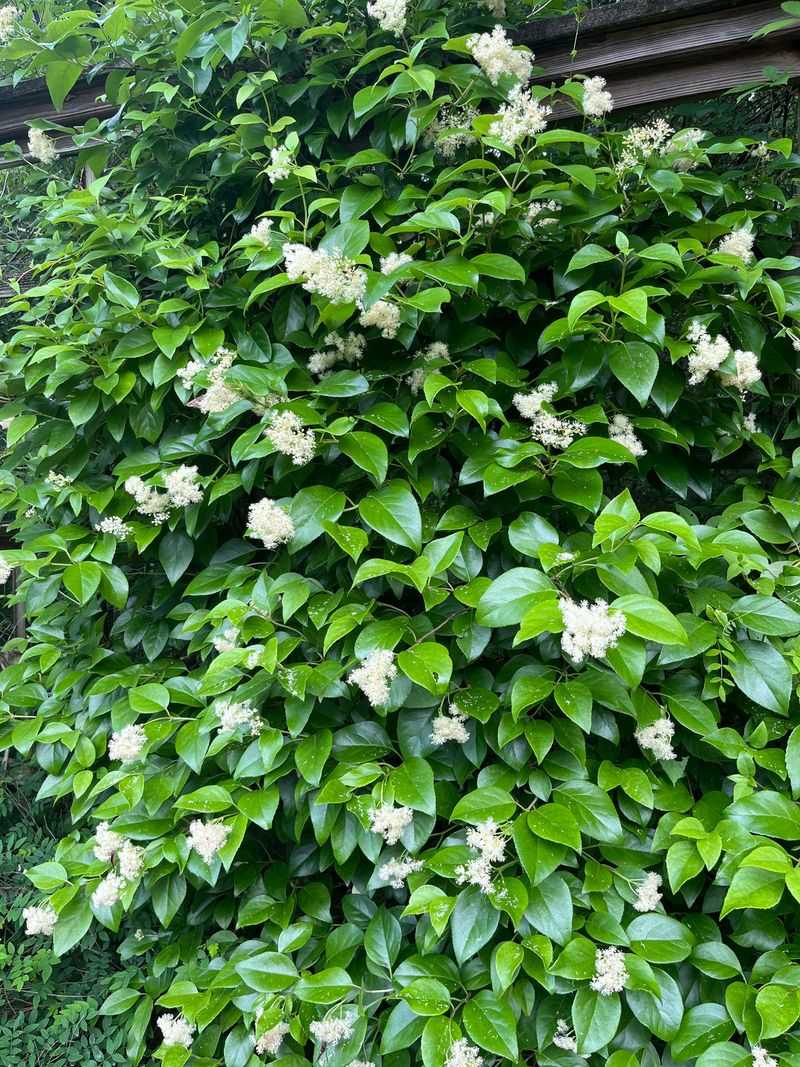
Shady spots in Western North Carolina gardens can be tricky to fill with flowering plants, but Climbing Hydrangea handles that challenge beautifully.
Known botanically as Decumaria barbara, this native vine climbs by aerial rootlets and produces flat clusters of small white flowers in spring, filling shaded walls, tree trunks, and stone surfaces with quiet, elegant beauty.
The glossy green foliage stays attractive all season long even after the blooms have faded. This vine is native to both the mountain regions and the coastal plain of North Carolina, which speaks to its adaptability.
It grows best in moist, fertile, well-drained soil with part shade to full shade exposure, making it ideal for the cool, sheltered hollows and woodland garden spaces common throughout the WNC mountains.
It is not a fast grower in its first year or two, but once the root system establishes, it climbs with purpose and fills in beautifully over time. Patience is the one thing this vine asks for.
Your North Carolina Garden Changes Every Week. Your Plan Should Too.
Gardening in North Carolina changes quickly throughout the season. Every Friday you’ll receive a simple weekly plan showing exactly what to plant, prune, fertilize, harvest, and protect so you never miss the right timing.
Give it a couple of seasons to settle in before expecting dramatic coverage, but trust that the wait is worth it.
Unlike some aggressive climbers, it stays manageable and does not threaten nearby plants or structures.
Gardeners in the Asheville area and surrounding mountain communities have embraced it as a refined, low-maintenance solution for shaded walls and naturalistic garden spaces that need a touch of spring flowering beauty.
3. Trumpet Vine (Campsis radicans)
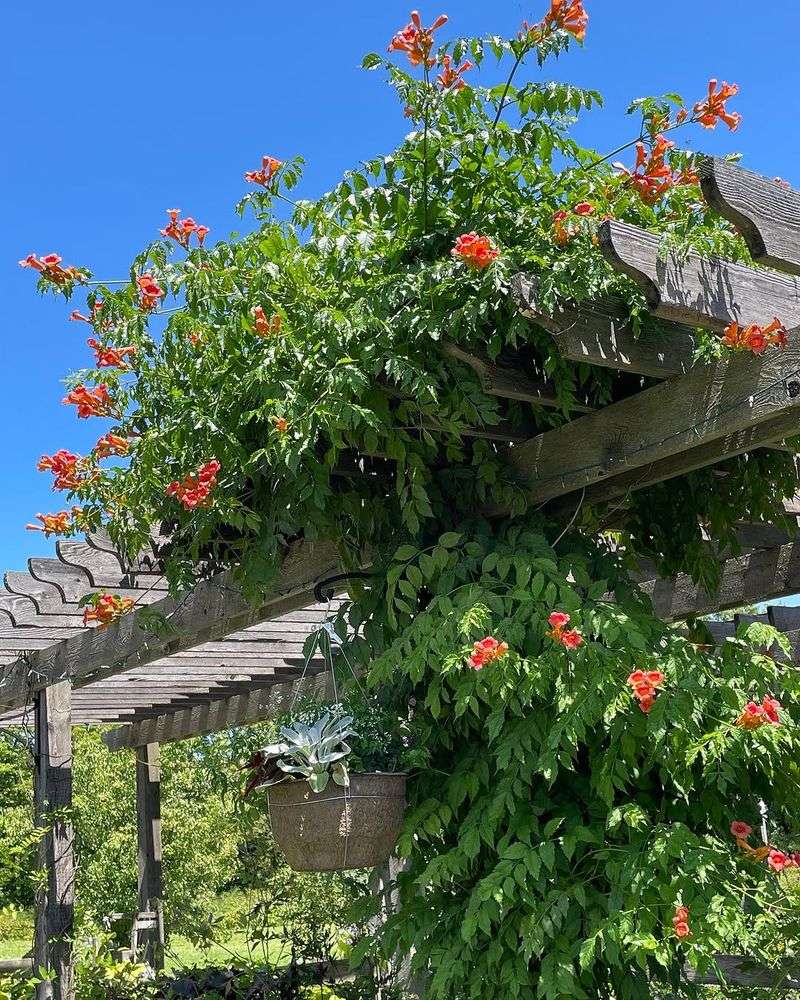
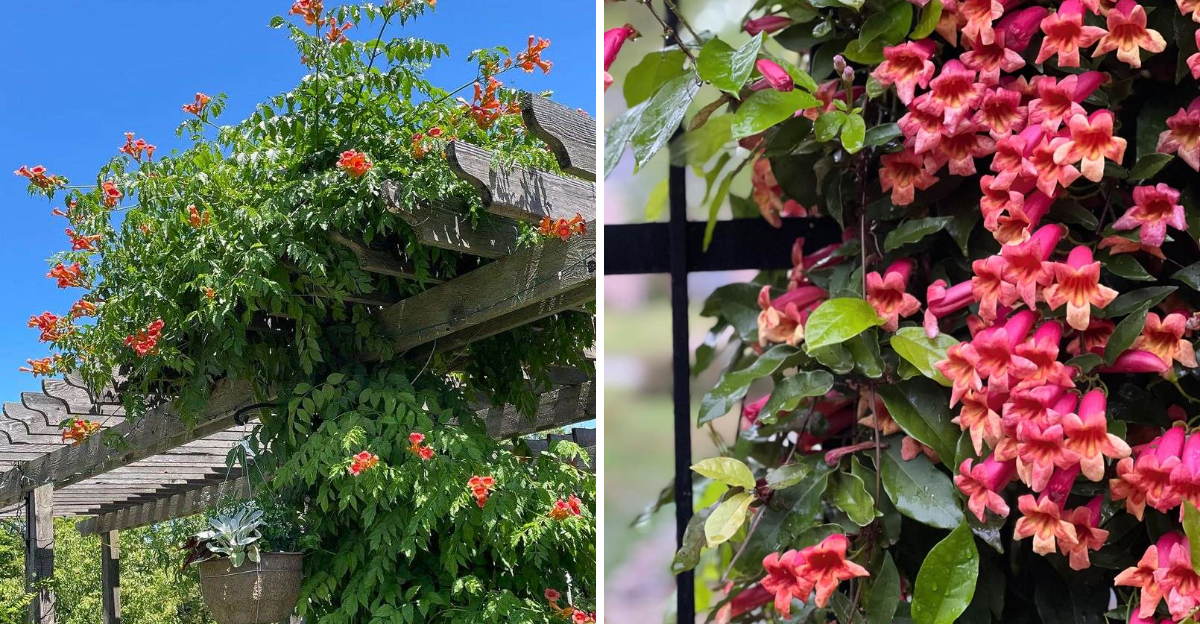
If you have a big fence, a sturdy pergola, or a barn wall that needs covering, Trumpet Vine is ready for the job.
This native powerhouse produces some of the most eye-catching orange blooms you will ever see in a summer garden, and hummingbirds treat it like an all-you-can-eat buffet from July through September.
In Western North Carolina, where warm summers and cool nights create ideal growing conditions, Trumpet Vine absolutely thrives and puts on a spectacular seasonal show. One thing to know upfront: this vine is vigorous.
It can spread by underground runners and self-seeds readily, so plant it where its energy is an advantage rather than a headache.
A large arbor, a chain-link fence along a property line, or a sturdy outbuilding wall are all great candidates.
Give it full sun for the best bloom production, and make sure whatever it climbs is strong enough to handle its weight over time.
Established plants need very little watering and almost no fertilizing. In fact, too much fertilizer pushes leafy growth at the expense of flowers.
The aerial rootlets it uses to climb grip surfaces firmly, which is worth keeping in mind if you plan to use it on painted wood.
Gardeners in the WNC mountains who give Trumpet Vine the right spot are rarely disappointed.
Bold, native, and genuinely hummingbird-friendly, it delivers maximum visual impact with minimal effort.
4. Virgin’s-Bower (Clematis virginiana)
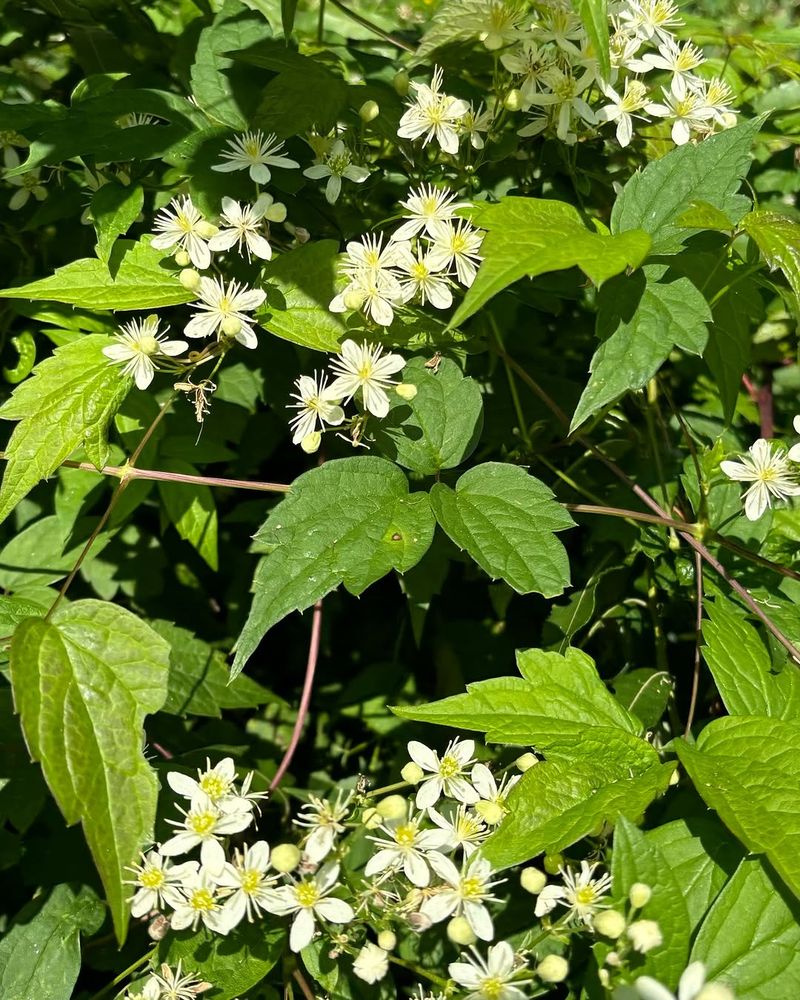
Not every garden calls for bold and dramatic, and that is exactly where Virgin’s-Bower finds its moment to shine.
This native clematis produces masses of small, starry white flowers in late summer, creating a soft, airy look that feels perfectly at home in naturalistic Western North Carolina gardens.
It scrambles easily over fences, shrubs, and rustic structures, giving your landscape a relaxed, woodland-edge character that is hard to replicate with any other vine.
Virgin’s-Bower is a smart alternative to Sweet Autumn Clematis, which looks similar but is considered invasive in North Carolina and can crowd out native plants.
The native version supports local pollinators just as well, attracting bees and small butterflies throughout its late-season bloom window.
After flowering, it develops feathery, silvery seed heads that catch the light beautifully and extend the visual interest well into fall.
Growing this vine in Western North Carolina is refreshingly straightforward. It prefers moist, fertile soil and does well in part shade, which makes it an excellent fit for the shaded slopes and woodland garden edges common across the Appalachian region.
Prune it back hard in late winter to keep growth manageable and encourage strong flowering the following season.
For gardeners who want a native vine with a light touch and genuine ecological value, Virgin’s-Bower delivers charm, pollinator support, and seasonal beauty all in one easy-growing package.
5. Crossvine (Bignonia capreolata)
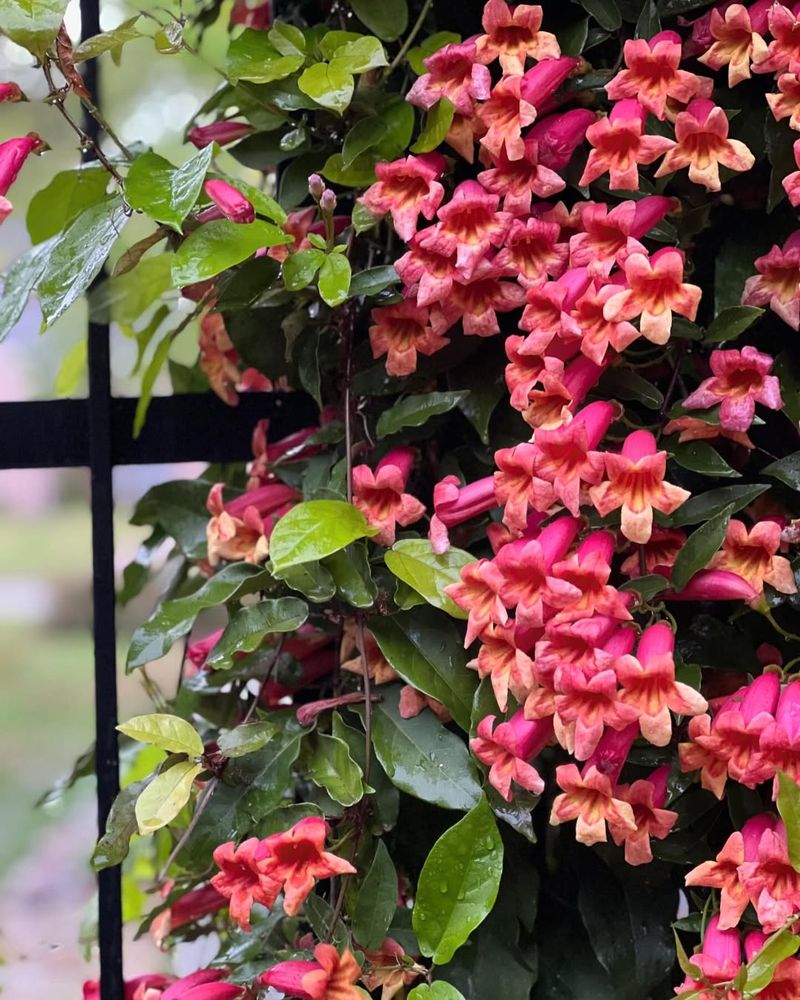
Few vines announce spring quite like Crossvine does in a Western North Carolina garden.
Those bold, trumpet-shaped blooms in shades of orange, red, and yellow start appearing as early as late winter, giving your garden a burst of color before most other plants even wake up.
Hummingbirds absolutely love it, and once you see one hovering near those vivid flowers, you will understand why gardeners keep coming back to this plant year after year.
Crossvine is a semi-evergreen native that can grow 30 to 50 feet, so give it a strong structure like a pergola, fence, or arbor.
It handles everything from full shade to full sun, though it blooms best when it gets plenty of light.
One of the coolest things about growing it in the mountains is the winter foliage, which turns a rich purple-red in colder temperatures, adding unexpected color through the off-season.
Planting Crossvine in Western North Carolina is a smart, low-effort choice. It adapts well to a wide range of soil conditions and does not need much fussing once established.
Trim it back after blooming if you want to keep it tidy. It climbs using tendrils with adhesive discs, so it grips surfaces naturally without needing extra support.
For gardeners who want a native vine that delivers season after season, this one consistently earns its place in Appalachian gardens.
6. Maypop (Passiflora incarnata)
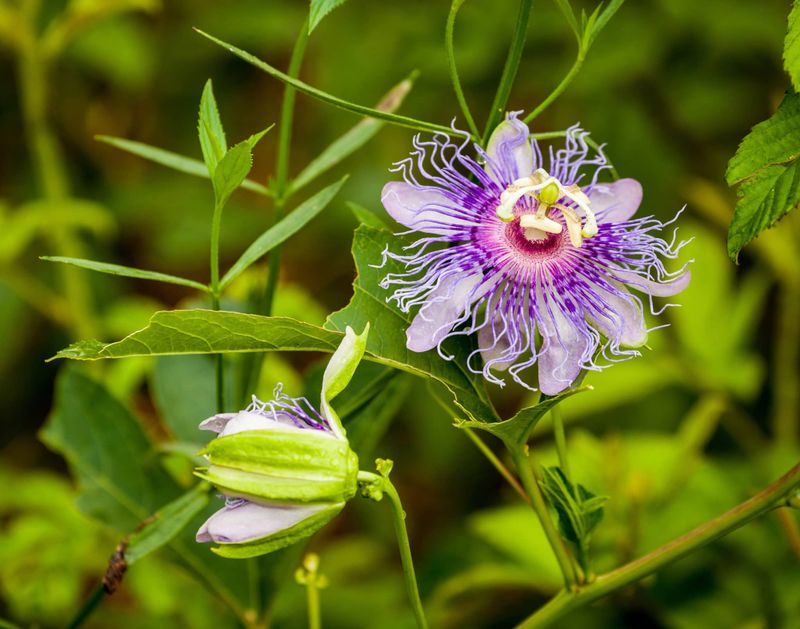
There is nothing quite like the moment a first-time gardener sees a Maypop flower up close.
The blooms look almost otherworldly, with white to lavender petals surrounded by a fringe of purple and pink filaments that give the whole flower a dramatic, tropical appearance.
Yet Maypop is completely native to the eastern United States, and it grows with genuine enthusiasm in sunny Western North Carolina gardens where it has room to spread and climb.
Passiflora incarnata is a fast-growing deciduous vine that works well on trellises, fences, or even scrambling along a sunny bank. It blooms from summer into early fall, attracting bees, butterflies, and even hummingbirds.
The flowers also develop into edible egg-shaped fruits called maypops, which ripen in late summer and have a sweet, tropical flavor that surprises most people who try them for the first time.
One thing worth knowing is that Maypop spreads by underground runners and can pop up several feet from the original planting, which is where its common name comes from.
In a relaxed, naturalistic garden setting in Western North Carolina, this quality is a feature rather than a flaw.
Plant it in full sun with well-draining soil, and it will reward you with one of the most visually stunning flower displays of the entire summer season.
For gardeners who love bold, native plants with genuine personality, Maypop is an absolute must-try.
7. Pipevine (Aristolochia macrophylla)
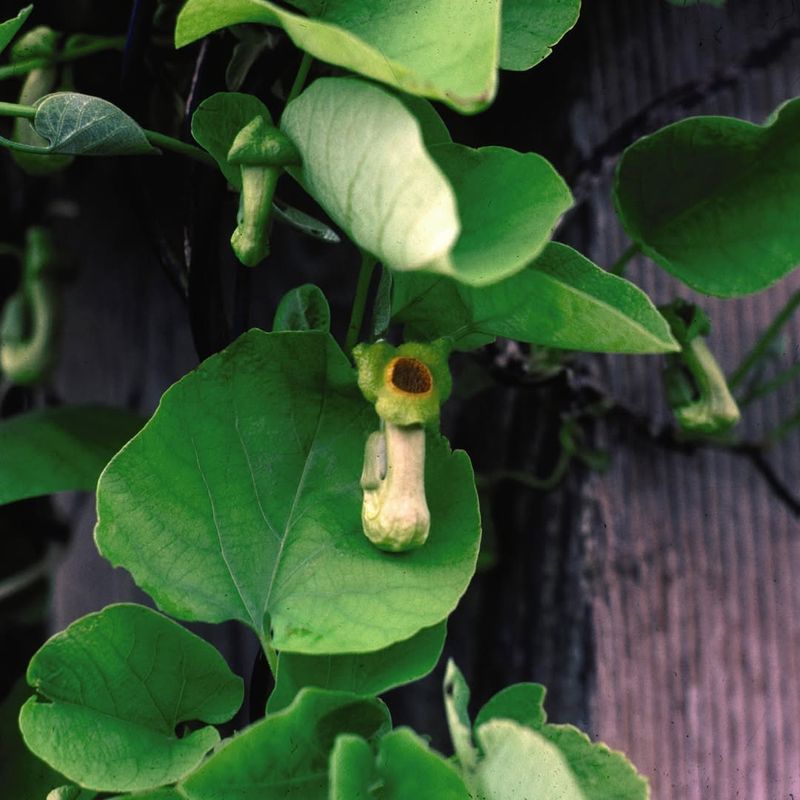
Bold foliage is sometimes exactly what a garden needs, and Pipevine delivers it on a grand scale.
Aristolochia macrophylla grows enormous heart-shaped leaves that overlap densely to create a lush, living screen perfect for shaded arbors, pergolas, and woodland-style structures throughout Western North Carolina.
The flowers are small and pipe-shaped, tucked beneath the foliage where they are easy to miss from a distance, but the dramatic leaf coverage is the real reason most gardeners grow this vine.
Beyond its visual appeal, Pipevine plays an important ecological role. It is the host plant for the Pipevine Swallowtail butterfly, a stunning iridescent blue species that lays its eggs exclusively on Aristolochia.
Planting this vine in your WNC garden essentially invites those gorgeous butterflies to complete their entire life cycle right in your backyard, which is a meaningful contribution to local biodiversity.
Pipevine grows best in moist, humus-rich soil with part to full shade, conditions that are easy to find across the forested slopes and stream-side settings common in Western North Carolina.
It is a vigorous grower once established and can cover a large structure within a few seasons.
Prune it back in late winter to manage its size and encourage fresh, dense growth each spring.
For gardeners who want a native vine that combines dramatic texture, ecological value, and genuine mountain character, Pipevine is one of the most rewarding choices you can make.