The One April Palm Care Mistake Arizona Homeowners Keep Making
Heat is rising across Arizona, and palms do not always respond the way expected, even when they looked completely fine just days earlier.
During this time, how palms use water begins to shift, and rising temperatures start to put more pressure on the root zone than most people realize.
What worked earlier in the season can start to fall short, especially when care stays the same while conditions keep changing.
That is where the problem begins to show up in many yards, and it often has nothing to do with neglect or poor effort. A small detail gets overlooked during this window, and it affects how palms handle the heat that follows.
Catching that detail early helps palms stay stronger and avoid the kind of stress that becomes much harder to fix later.
1. Overwatering Palms As Temperatures Start Warming In April
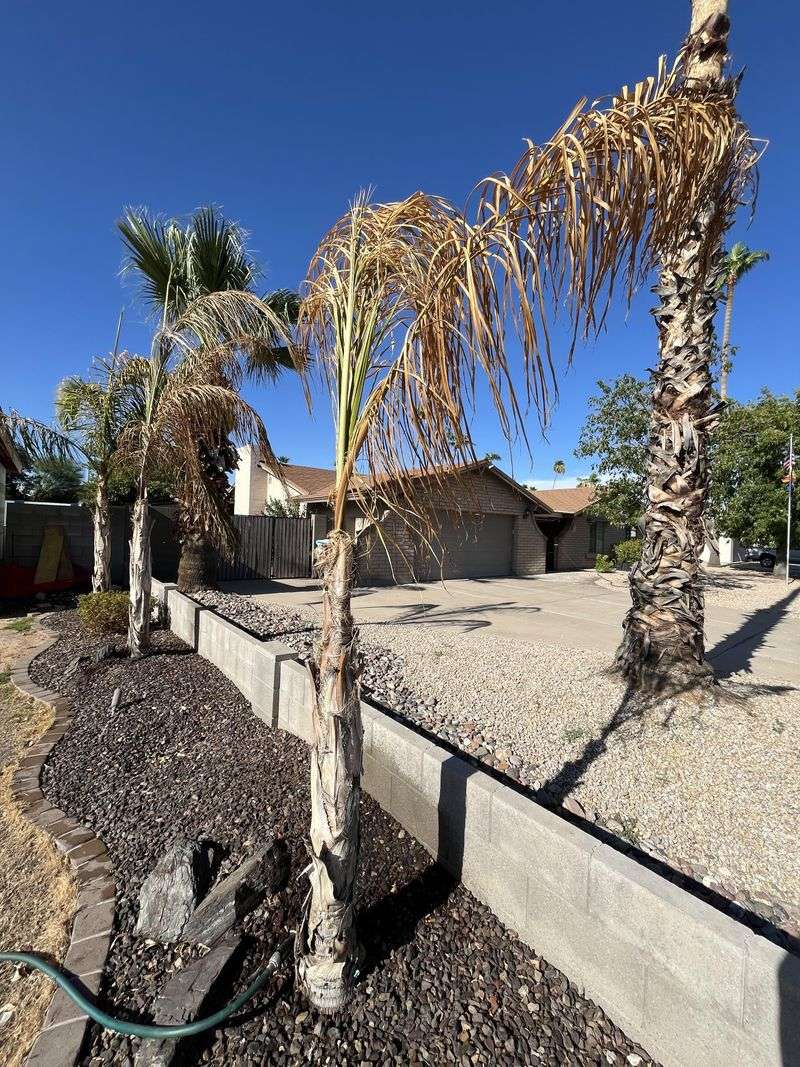
Soggy roots in April are a real threat to palms across Arizona, and most homeowners never see the damage coming. When temperatures start climbing from mild winter lows toward the intense heat of late spring, many people assume their palms are suddenly thirsty.
So they crank up the irrigation system, sometimes doubling how often they water. That instinct makes sense for some plants, but palms handle moisture very differently.
Palms in Arizona actually prefer to dry out somewhat between watering sessions. Their root systems are built for desert and semi-arid conditions, meaning they are more tolerant of dry spells than of constant moisture sitting around the roots.
When soil stays wet too long, especially in the clay-heavy soils common in parts of the Phoenix metro area and Tucson, roots can suffocate and start to break down.
April is tricky because the air feels warm, but soil temperatures and evaporation rates are still catching up. Ground moisture lingers longer than it will in June or July.
Watering on a summer schedule when the soil still behaves like it is March is a recipe for root stress. Pull back on frequency first, then gradually increase as genuine heat arrives.
A simple soil check before each watering session goes a long way toward keeping your palms in solid shape through the season transition.
2. Let The Soil Dry Deeper Before Each Watering Cycle
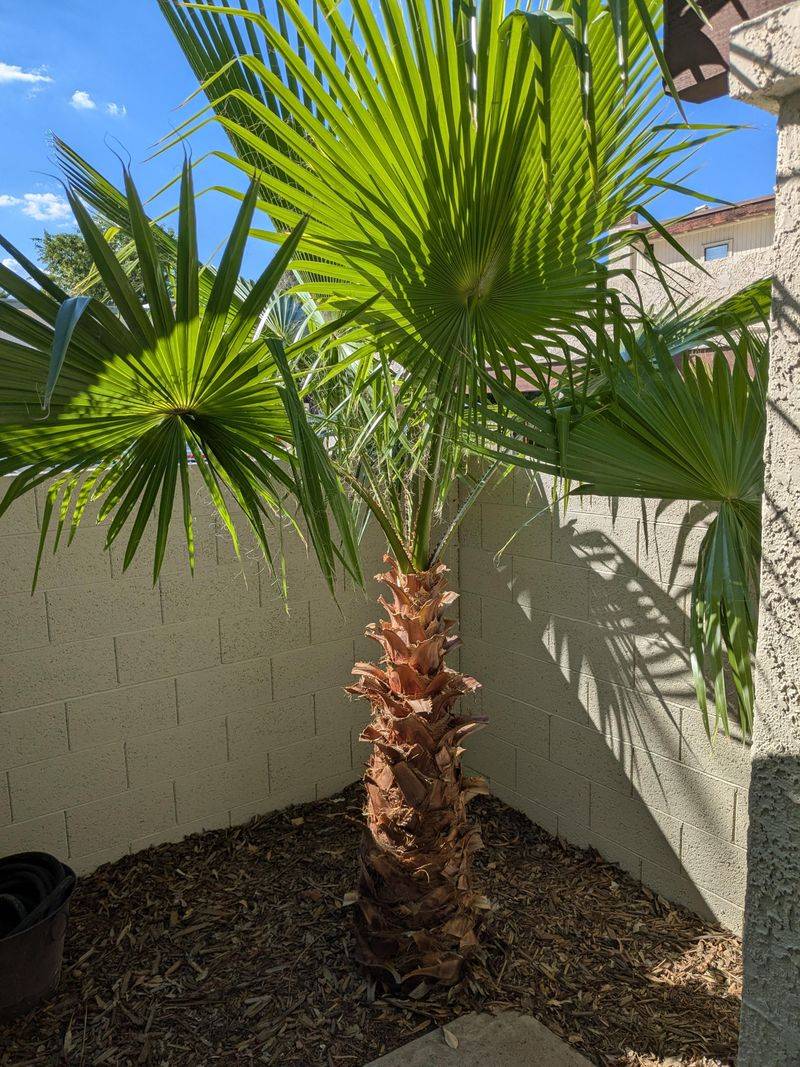
Sticking your finger an inch into the soil and calling it dry is not enough when you are watering a palm.
Palms have roots that extend much deeper than most people realize, and checking only the surface tells you almost nothing about what is happening where it matters.
In Arizona, where soil composition varies widely from sandy washes to compacted caliche layers, moisture can behave unpredictably at different depths.
Before running your irrigation, push a wooden dowel or a long screwdriver six to eight inches into the ground near the root zone. If it comes out with damp soil clinging to it, hold off.
Palms in April across the Phoenix, Scottsdale, and Mesa areas generally do not need water more than once every ten to fourteen days, depending on how warm it has been and how much direct sun the tree receives.
Your Arizona Garden Changes Every Week. Your Plan Should Too.
Gardening in Arizona changes quickly throughout the season. Every Friday you’ll receive a simple weekly plan showing exactly what to plant, prune, fertilize, harvest, and protect so you never miss the right timing.
Letting the soil dry adequately between cycles encourages roots to reach deeper in search of moisture. Deeper roots mean a more stable, resilient tree when Arizona summer storms roll through.
Shallow, wet root systems are more vulnerable and less anchored. The goal is not to stress the tree with extreme drought, but to avoid keeping the root zone in a constant state of saturation.
3. Water Slowly And Deeply Instead Of Frequent Shallow Watering
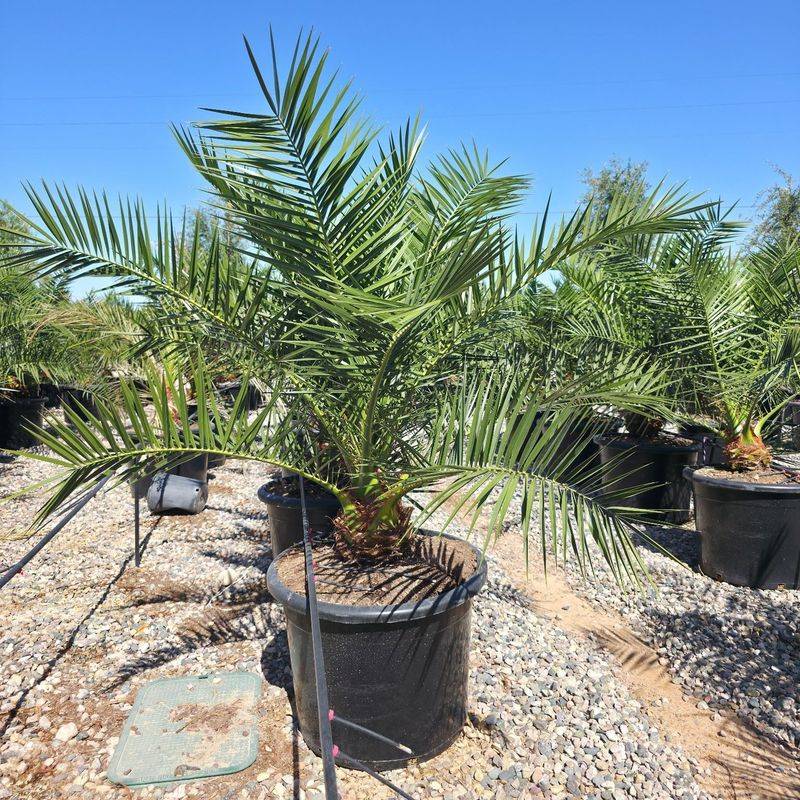
Running a sprinkler system for ten minutes every other day around your palms might seem like consistent care, but shallow watering can actually work against you. Short, frequent watering keeps moisture near the surface and trains roots to stay close to the top of the soil.
In Arizona, where summer ground temperatures can get brutal, surface roots are at a real disadvantage.
Deep watering means letting water run slowly long enough to penetrate twelve to eighteen inches into the soil. Drip emitters work well for this when they are positioned correctly, roughly two to three feet from the trunk rather than right at the base.
Flooding the area directly around the trunk can cause the crown to stay wet, which creates conditions that invite fungal issues in Arizona palms during warm months.
A slow, extended soak once every week and a half to two weeks in April allows water to reach the deeper root zone without oversaturating the upper layers.
After a good deep watering session, the top few inches of soil should actually feel dry within a day or two in typical Arizona spring conditions.
That cycle of deep moisture followed by a dry surface is much closer to what palms experience naturally in arid and semi-arid regions.
Adjusting emitter output and run time, rather than just watering more often, is the practical shift that makes the biggest difference for Arizona palm health in spring.
4. Adjust Irrigation Timing As Days Get Hotter
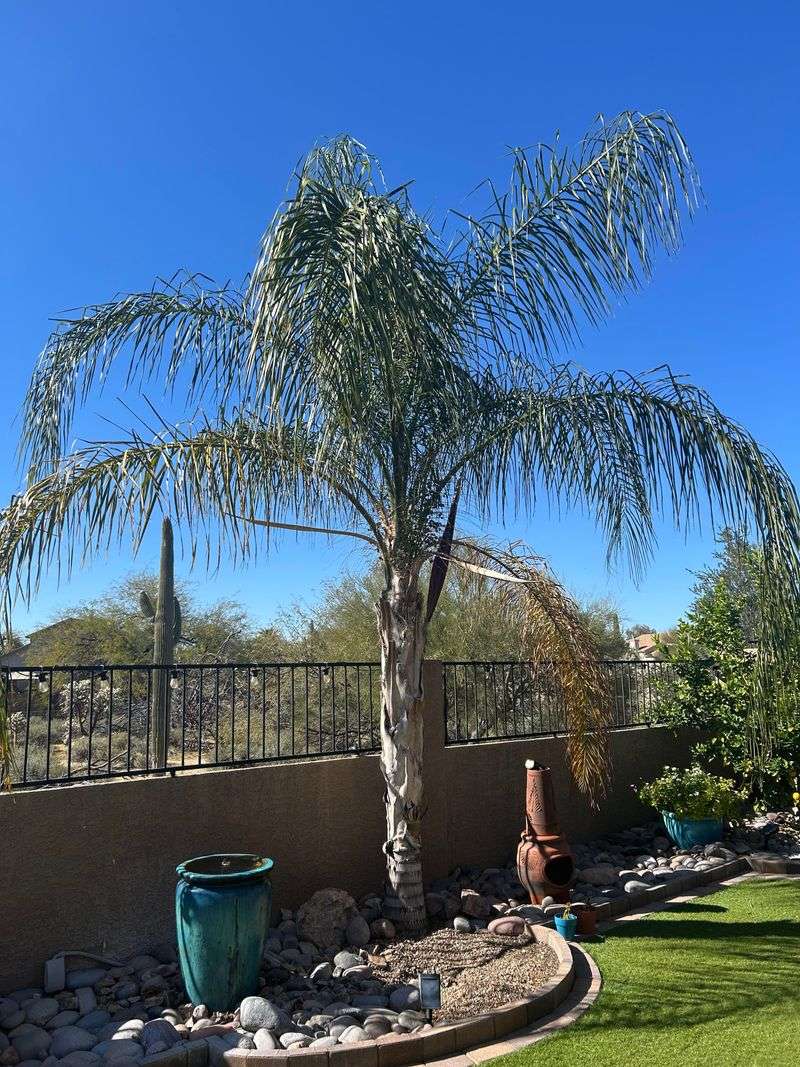
Watering at the wrong time of day in Arizona can undo a lot of good effort. Early spring mornings in April still feel manageable, but by mid-month the sun angle is already intense enough that water evaporates from the soil surface surprisingly fast.
Afternoon watering loses a significant portion of moisture before it can soak in, particularly on sandy soils common in many parts of the Valley.
Early morning is the most practical window for irrigation in Arizona from April onward. Watering between 4 a.m. and 7 a.m. gives moisture time to penetrate the soil before heat ramps up, and it allows any surface wetness around the trunk to dry out during the day.
Wet crowns sitting through the heat of the afternoon are not ideal, but wet crowns sitting overnight can be worse, creating conditions favorable for fungal problems in warm weather.
As April progresses and daytime highs push into the upper 90s or beyond in places like Phoenix and Yuma, soil dries faster and your palms may genuinely need slightly more frequent watering than they did in March.
But the increase should be gradual and based on actual soil checks, not just the temperature on the thermostat.
5. Check Drainage Around The Root Zone To Prevent Standing Water
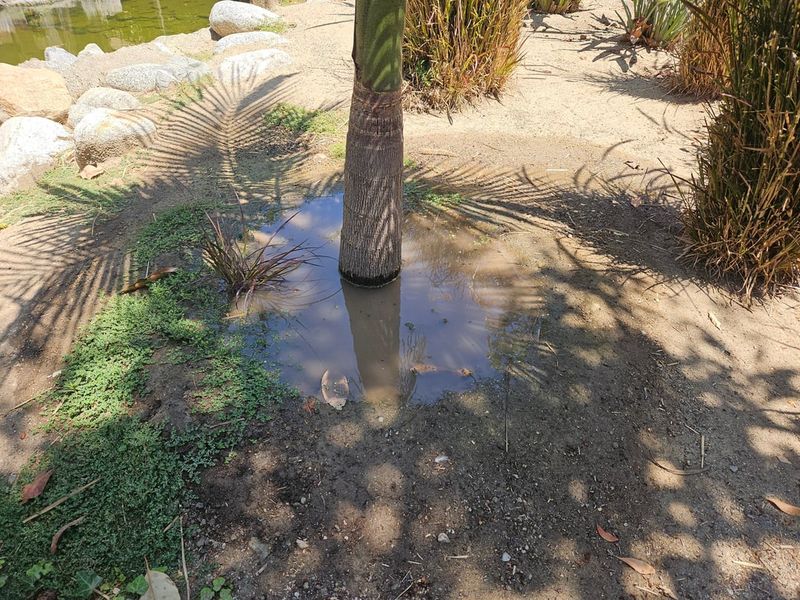
Standing water around a palm’s root zone is one of the fastest ways to create serious problems, and Arizona yards can be surprisingly prone to pooling despite the dry climate.
Low spots in the landscape, compacted caliche layers just below the surface, and poorly graded areas near patios or walls all contribute to water sitting where it should not.
April is a good time to walk your yard after an irrigation cycle and look for spots where water is not moving.
If you notice water still sitting thirty minutes after irrigation ends, that is a drainage problem worth addressing before summer arrives.
Options range from simple fixes like redirecting emitters to more involved solutions like installing a French drain or breaking through a shallow caliche layer with a soil auger.
In Tucson and parts of the East Valley, caliche can sit just twelve to eighteen inches down, essentially creating a hard pan that blocks downward water movement.
Palms can tolerate a lot of things, but roots sitting in stagnant water for extended periods is not among them. Root systems that stay waterlogged lose their ability to absorb oxygen, which they need just as much as moisture.
Checking drainage now, before the monsoon season adds extra water to the equation, puts you in a much better position.
6. Hold Off On Heavy Fertilizing Until Active Growth Picks Up
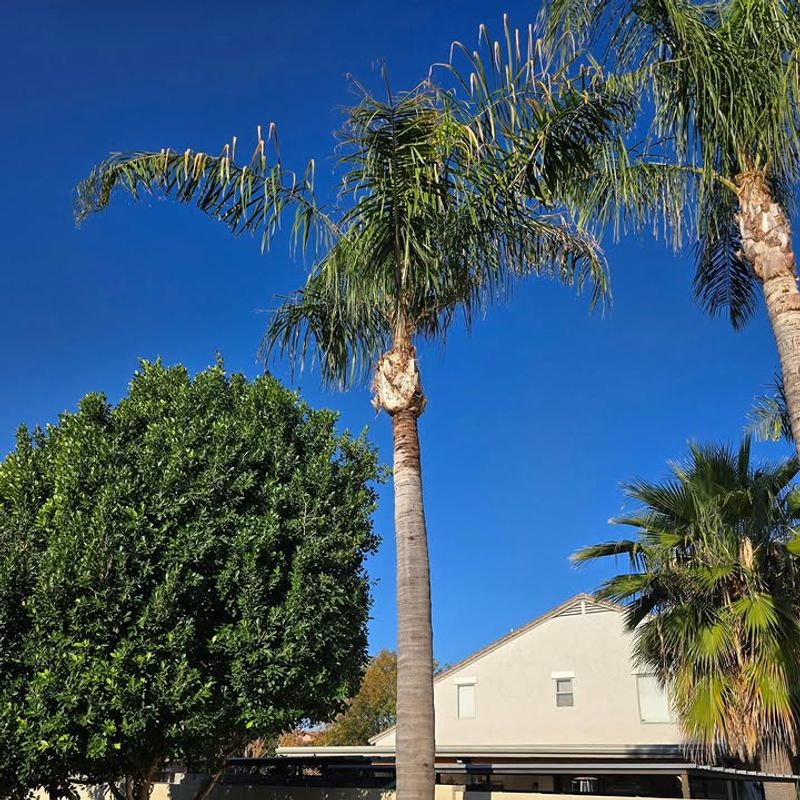
Reaching for a bag of fertilizer the moment April hits is a habit worth reconsidering. Palms in Arizona are just starting to shake off their slower winter period in early spring, and their root systems are not yet running at full capacity.
Dumping a heavy dose of fertilizer into soil that is still cool and not fully active can leave nutrients sitting unused, and in some cases, excess salts from fertilizer can irritate roots that are already managing the stress of seasonal transition.
Palms generally benefit from fertilizing when they are actively pushing out new growth, which in most Arizona locations tends to happen more reliably in late April through May.
A slow-release palm-specific fertilizer with a balanced ratio of nitrogen, potassium, and magnesium is a reasonable choice for most landscape palms in the state.
Magnesium deficiency shows up fairly often in Arizona palms and causes older fronds to yellow from the edges inward, which is worth knowing before you assume the tree just needs more water.
Applying fertilizer too early, before growth is actually moving, is a bit like cooking a meal before anyone is hungry. The timing matters as much as the product.
If you are unsure whether your palm is actively growing, look at the crown for signs of new frond emergence.
7. Watch Frond Color Changes To Fine Tune Watering
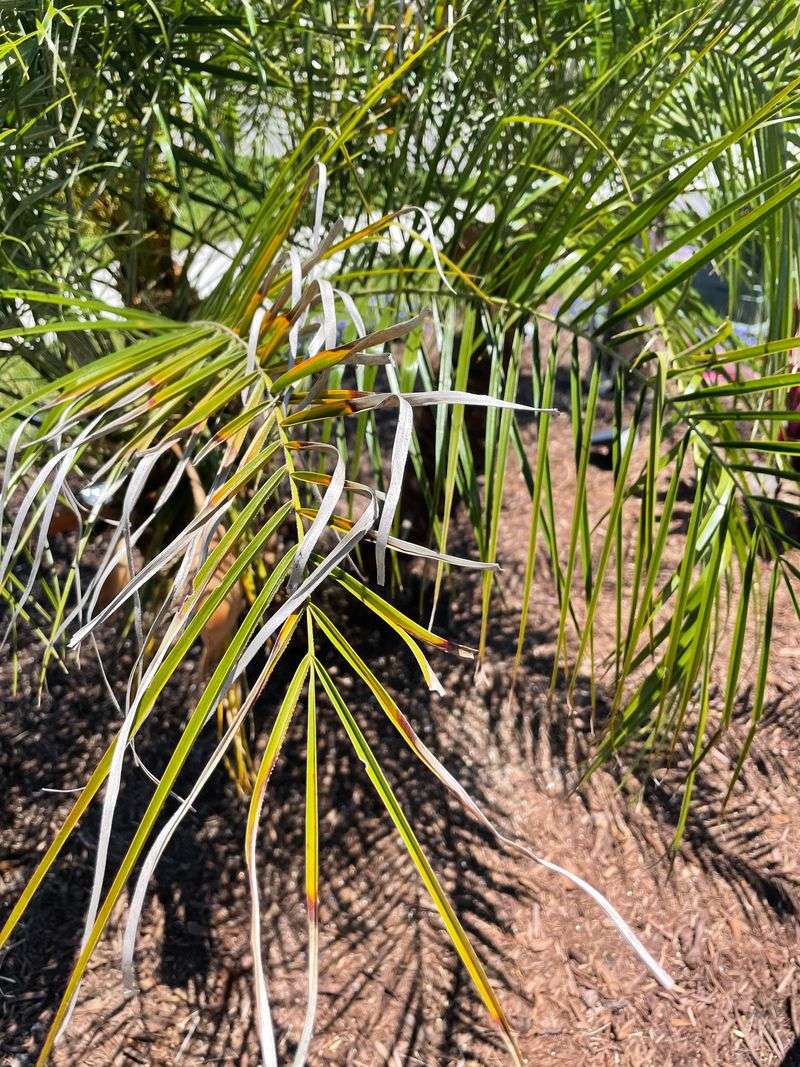
Your palm tree is already telling you what it needs, and the fronds are where that conversation is happening. Color changes in palm fronds are one of the more reliable indicators of whether watering is on track or needs adjustment.
Knowing what to look for saves a lot of guesswork and helps you respond to actual conditions rather than a fixed schedule.
Yellowing on the oldest, lowest fronds in April is not automatically a sign of underwatering. In Arizona, older fronds naturally yellow and drop as the tree pushes energy into new growth at the crown.
That kind of yellowing typically starts at the tips and works inward slowly.
Overwatering, on the other hand, can cause yellowing that appears across multiple frond layers, not just the oldest ones, and may be accompanied by a generally dull or washed-out green across the canopy.
Fronds that are turning a grayish or olive-drab color rather than a clean yellow may point to heat stress or nutrient issues rather than water problems.
Brown tips on otherwise green fronds can indicate inconsistent watering or high salt content in the soil, which is a real consideration in parts of Arizona where water quality varies by municipality.