The One Mistake Texas Gardeners Make With Citrus Trees Before Summer Heat
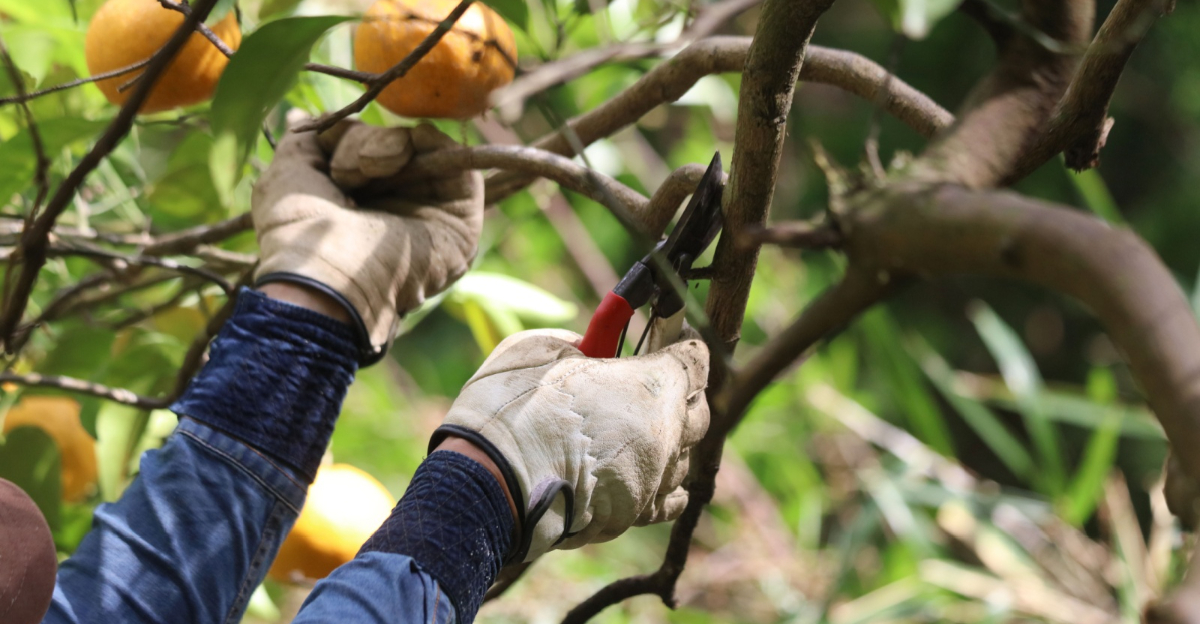
Before you grab your pruning shears for that annual spring cleanup, you might want to put them down. In Texas, a “neat and tidy” citrus tree is often a vulnerable one.
Our relentless sun, scorching temperatures, and dry south winds create a brutal environment for fruit trees. Many well-meaning gardeners accidentally sabotage their harvest by overpruning.
When you cut away those low-hanging “apron” branches, you expose the sensitive trunk and root zone to the intense heat. Think of those bottom leaves as a built-in parasol.
Keeping them intact is the simplest way to shield your tree from the Texas summer and ensure a healthy, productive crop when the temperatures finally break.
1. Why Citrus Should Not Be Pruned Like Shade Trees
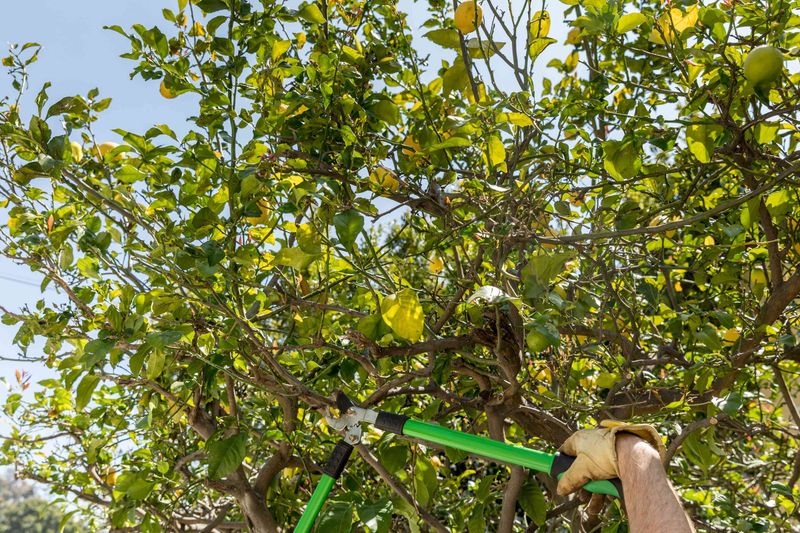
Most Texas gardeners learned pruning habits from working with oak trees, crape myrtles, or other common landscape trees that actually benefit from being lifted and opened up. Citrus does not work the same way.
While shade trees are built to handle exposed bark and open canopies, citrus bark is thin and surprisingly sensitive to direct sun exposure, especially in a Texas spring that can shift from mild to intense within just a few weeks.
Citrus trees naturally grow with branches that hang low and sweep outward, forming what growers call an apron.
That low, full shape is not accidental. It is the tree protecting itself.
When gardeners prune citrus the way they would a live oak or a red tip photinia, they strip away the very structure the tree depends on to manage heat and moisture at the base.
In Texas, the south and west sides of a citrus trunk face the harshest afternoon sun. Removing branches on those sides before summer heat peaks can leave bark exposed to temperatures that cause real damage.
A citrus tree heading into a Texas summer with a thinned-out lower canopy is already working harder than it needs to.
Keeping that natural, rounded, low-hanging shape through late spring is one of the most practical things a Texas gardener can do for their tree.
2. How The Lower Apron Helps Protect Citrus Bark
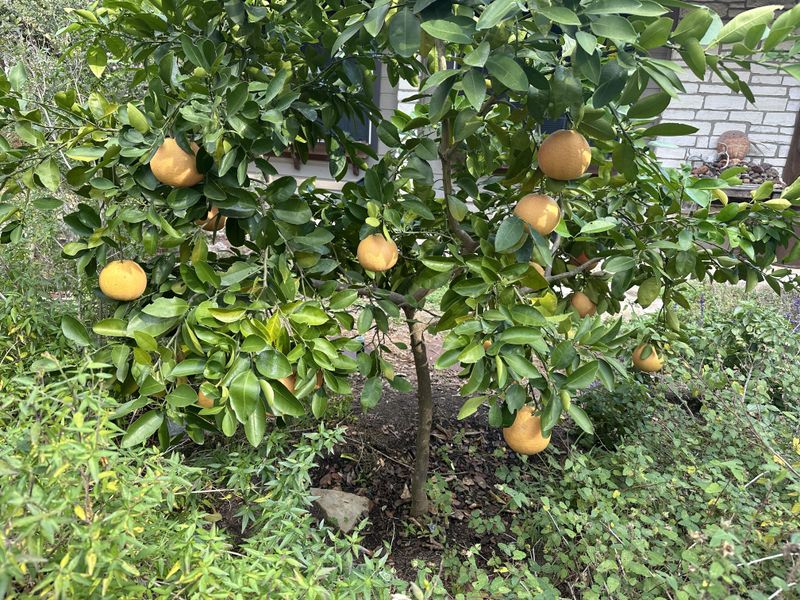
On a Texas citrus tree, the low skirt of leafy branches does more than make the canopy look full. Those lower limbs help shade the trunk and interior scaffold wood from intense sun exposure, which matters a great deal as spring turns into summer.
Citrus is not typically pruned like peach, plum, or other deciduous fruit trees because it can fruit well without routine opening of the canopy, and it does not need to be “cleaned up” underneath just for appearance.
Citrus care guidelines note that skirting is largely aesthetic, and trees can be allowed to grow naturally toward the ground. Low-hanging branches are typically removed only when access to the soil, irrigation system, or the tree’s interior is needed.
The same guidance also warns that exposed wood should be protected from the sun, which tells you how valuable natural shade is on citrus in hot climates.
That natural lower apron can be especially helpful in Texas yards where reflected light from gravel, stone, pale fencing, driveways, and bare soil raises bark temperatures even more.
Your Texas Garden Changes Every Week. Your Plan Should Too.
Gardening in Texas changes quickly throughout the season. Every Friday you’ll receive a simple weekly plan showing exactly what to plant, prune, fertilize, harvest, and protect so you never miss the right timing.
Trees with foliage and branches that shade the trunk are less prone to sun injury than trunks left exposed.
Guidance on sunscald prevention specifically recommends avoiding excessive pruning of lower branches for the first several years and keeping trees adequately irrigated, since water stress and bark exposure together can intensify damage.
In practical terms, leaving the lower canopy in place helps buffer the trunk during the hottest part of the day, reduces the amount of direct radiation hitting the bark, and buys the tree some protection while summer heat builds.
It also keeps the tree closer to its natural form, which Texas citrus guidance favors in general.
3. What Happens When Summer Heat Hits An Exposed Trunk
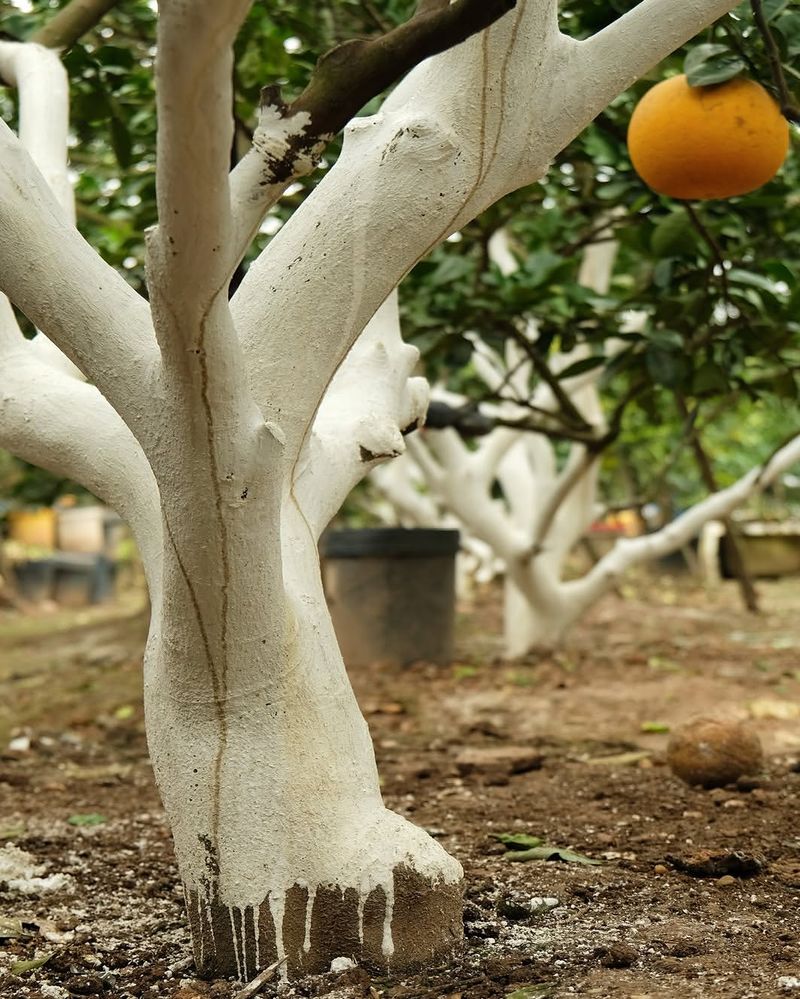
When a citrus trunk is exposed just before Texas summer, the bark can end up facing more heat and sunlight than it can handle well.
Citrus guidance for hot climates warns against pruning from May into mid-October because exposed trunks and limbs can be harmed by intense summer sun.
Even earlier pruning should leave enough time for new growth to develop and shade freshly exposed wood.
That matters in Texas, where removing the lower canopy or inner leaf cover can shift the trunk and scaffold limbs from filtered light to long hours of direct sun very quickly.
One possible result is sunscald, a heat and light injury that can slow growth and make the tree more vulnerable to stress. Lower branches and leafy cover help shield the trunk, which is why keeping natural shade on citrus matters so much.
If wood has already been exposed, white trunk paint or whitewash can help reflect sunlight. Good irrigation also matters, and a coarse mulch layer on the soil can help reduce reflected heat, as long as the mulch is kept away from the trunk itself.
In Texas yards, exposed bark may also face strong afternoon sun from the south or west, along with extra heat rising from dry soil.
When bark is injured, the tree has to use energy to recover that area instead of putting that energy into roots, canopy balance, and fruit.
That is why a citrus tree that looked cleaner after spring pruning can look more stressed as summer heat builds.
4. Why Removing Lower Growth Can Lead To More Suckers
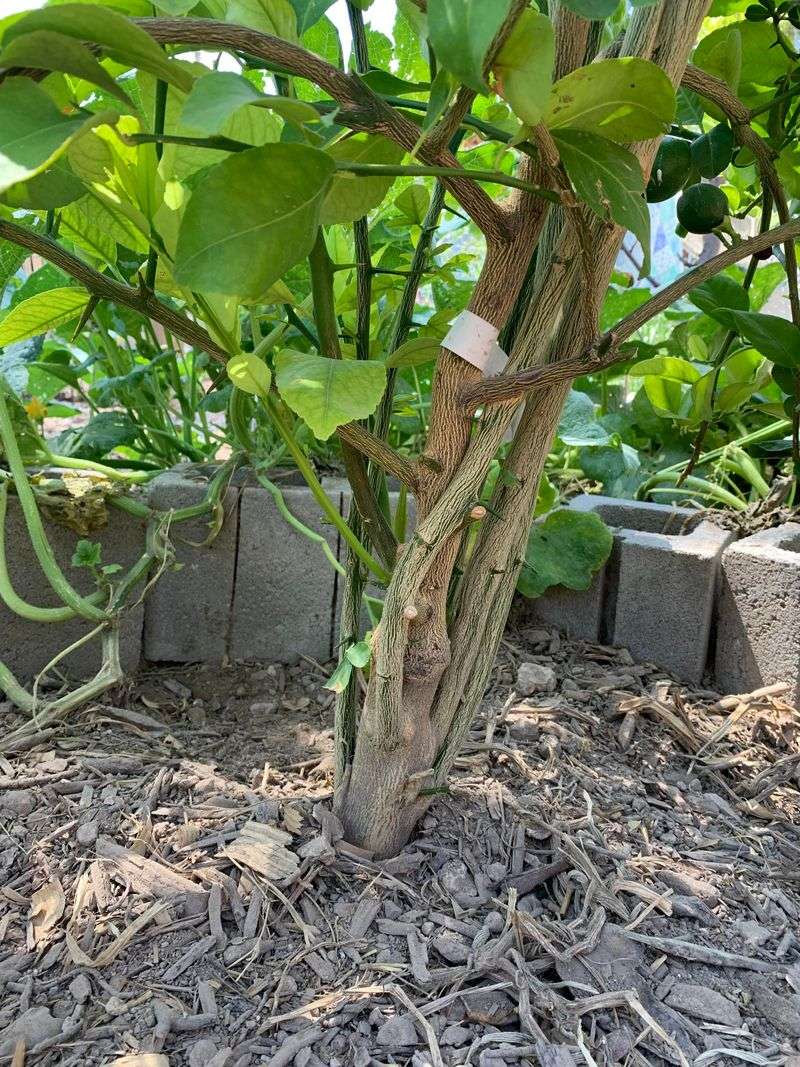
A heavily lifted citrus canopy often triggers more cleanup work later, not less. Citrus naturally produces vigorous sprouts and suckers, and extension guidance recommends removing sprouts originating from the trunk, ideally while they are still small.
Citrus also needs far less structural pruning than most deciduous fruit trees, so when gardeners remove a lot of low growth for shape or appearance, the tree may respond with a flush of upright vegetative shoots that then need attention.
Pruning references for citrus consistently focus on light correction rather than routine reshaping: remove sprouts, weak or crossing wood, and a limited amount of crowded growth if needed, but do not treat citrus as a tree that benefits from regular hard lifting and opening.
There is also a practical issue with grafted citrus. Shoots that arise from the trunk or below the graft line can be rootstock growth rather than growth from the desired variety, which is one reason extension advice says to remove trunk sprouts promptly.
When lower growth is stripped away and the trunk is exposed, the gardener often ends up monitoring the trunk more closely anyway because new shoots keep appearing where the tree is trying to replace lost leaf area or where latent buds have been stimulated.
General pruning guidance across fruit trees notes that suckers and water sprouts are strongly vegetative growth, and citrus-specific guidance says those shoots are best removed early, before they get large and divert more energy.
In Texas landscapes, that means aggressive spring cleanup can set up a cycle where the tree is more exposed to heat and the gardener has more vigorous nonproductive growth to manage through the warm season.
Light, selective pruning is usually the steadier approach.
5. How Grass And Weeds Compete With Citrus For Moisture
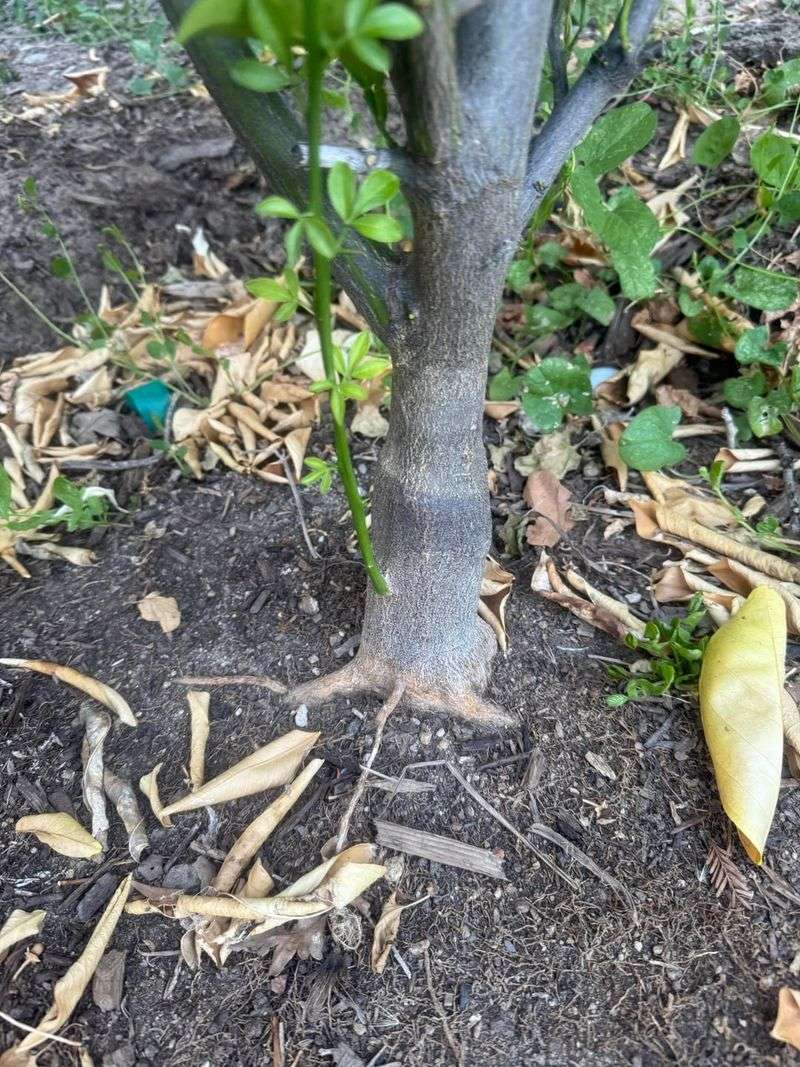
A ring of turf right up to the trunk may look neat, but it can work against citrus in several ways. Texas citrus guidance says grass and weeds beneath citrus trees should be controlled because they compete with the tree for water and fertilizer.
It also notes that mowing under citrus can damage bark or fruit. That competition becomes more important as temperatures rise, since turf and weeds draw from the same rainfall and irrigation the citrus root zone needs.
In spring, the loss may not seem dramatic.
By the time serious Texas heat arrives, though, the tree may be entering summer with less moisture than the gardener realizes, especially if irrigation is set up more for lawn coverage than for deep soaking around the tree.
Weeds also compete for nutrients and can make watering less effective. Dense grass and weed growth can intercept moisture near the surface, take up fertilizer, and make it harder to tell whether the soil under the canopy is actually staying moist enough.
In Texas yards, that issue is even more noticeable when citrus is planted in or near thirsty warm-season turf.
Keeping a weed-free zone under the canopy helps reduce that competition and allows irrigation to benefit the tree more directly. It also reduces the need to mow close to the trunk, which lowers the chance of accidental injury.
For Texas gardeners trying to help citrus head into summer in better shape, pulling grass and weeds back from the root zone is one of the simplest improvements they can make.
6. Why Mulch Piled Near The Trunk Can Create Problems
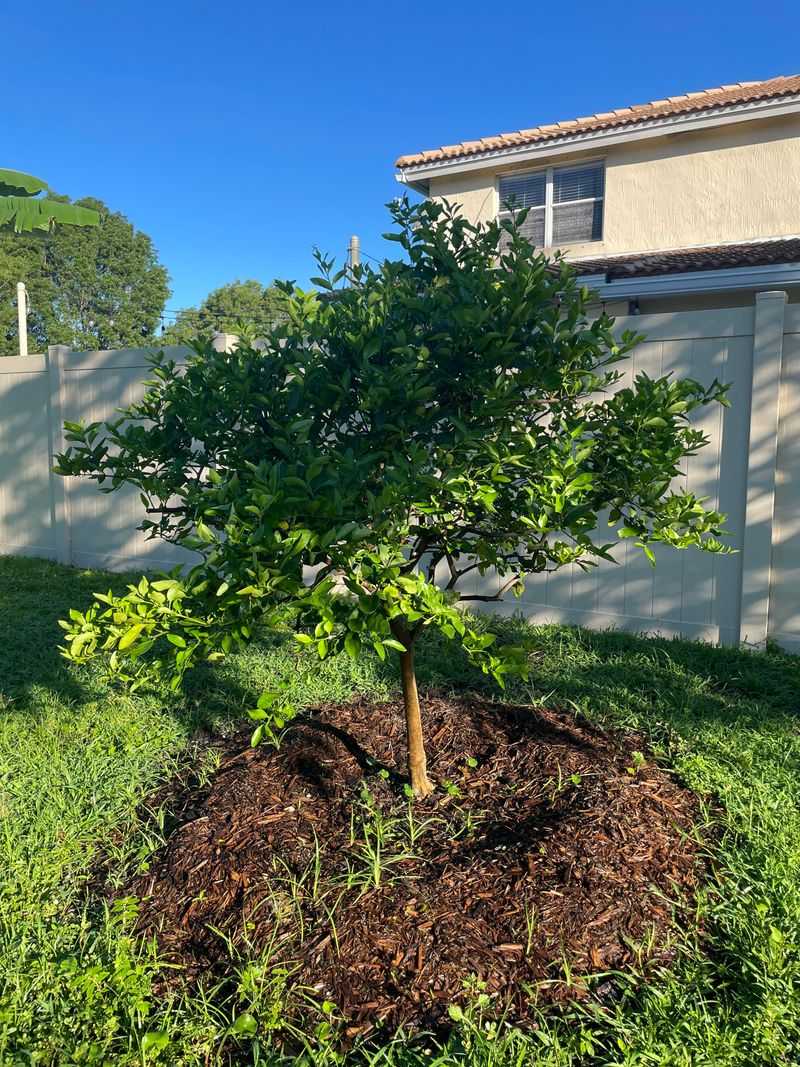
Mulch can be helpful around citrus, but placement matters.
General Texas watering guidance explains that mulch moderates soil temperature, reduces evaporation, and can sharply reduce weed germination, all of which can support steadier root conditions in hot weather.
Sunscald guidance also notes that a coarse mulch layer can help retain irrigation water and reduce reflected light and heat. That sounds ideal for Texas citrus, and in many ways it is.
The problem starts when mulch is piled directly against the trunk or mounded high around the crown, because the base of the tree needs airflow and should not stay damp.
Texas citrus guidance is explicit here: because foot rot can be an issue in citrus, organic mulches are not recommended right up against the tree, and if they are used, they should be kept at least a foot away from the trunk.
The same Texas source explains that foot rot becomes a problem when the tree is planted too low and the bud union is exposed to soil or standing water.
Other university guidance on tree watering reaches a similar conclusion from a different angle, warning that soggy conditions near the trunk favor root and crown diseases. Put together, that means the classic “mulch volcano” is a poor fit for citrus.
On a Texas property, a better setup is a broad mulch ring over the root zone, with the mulch kept pulled back from the bark so the crown stays drier and better ventilated.
That way the gardener gets the moisture-conserving and weed-suppressing benefits of mulch without creating a damp collar around the trunk just as heat and irrigation demands increase.
7. How Shallow Watering Adds Stress Before Peak Heat
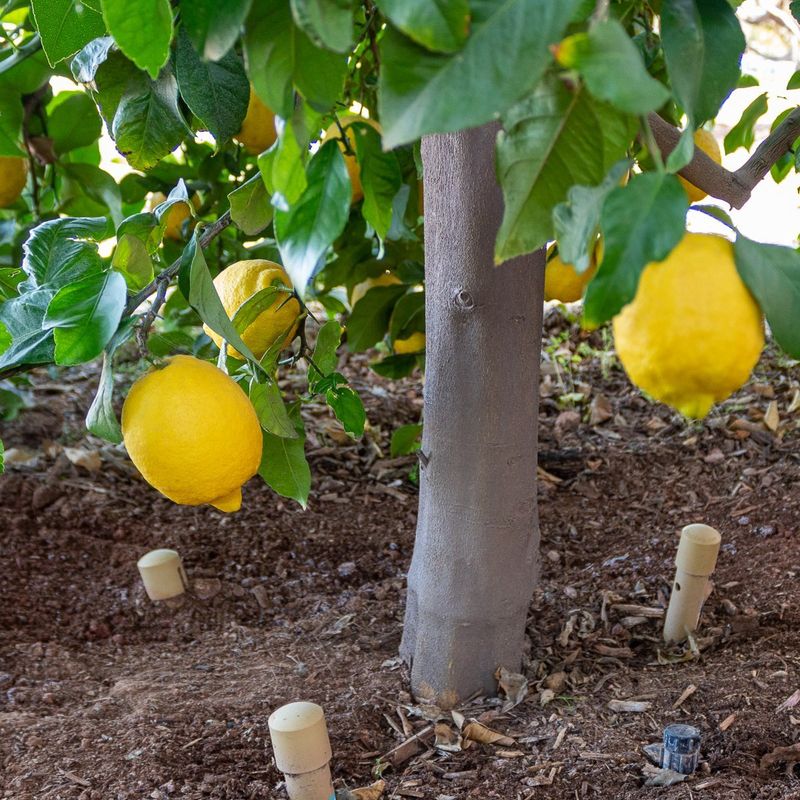
One of the easiest ways to leave citrus underprepared for Texas summer is to water lightly and often instead of deeply enough to reach the active root zone.
Texas watering guidance says frequent light sprinklings are harmful because they wet less than an inch of soil, while most roots extend much deeper.
That kind of surface wetting may settle dust, but it does little to ease drought stress in hot, dry conditions. The same guidance recommends soaking the soil to a depth of about 5 to 6 inches, then letting plants use much of that moisture before watering again.
For gardeners used to lawn schedules, that can be a major adjustment, because citrus does not respond well to the same quick, shallow irrigation that keeps turf green.
Shallow watering can also be misleading. When the top layer looks damp, it is easy to assume the tree has enough moisture, even though the deeper root zone may still be dry.
As heat builds, the tree can start showing stress because the roots are not drawing from a meaningful reserve of water.
University guidance for landscape trees also recommends infrequent but deep irrigation and warns against frequent shallow watering.
It also notes that overly wet soil near the trunk can create problems by limiting oxygen in the root zone.
For Texas citrus, the goal is not constant dampness but a thorough soaking that reaches the roots, followed by enough time for the soil to aerate properly.
8. What To Do Instead Before Texas Summer Settles In
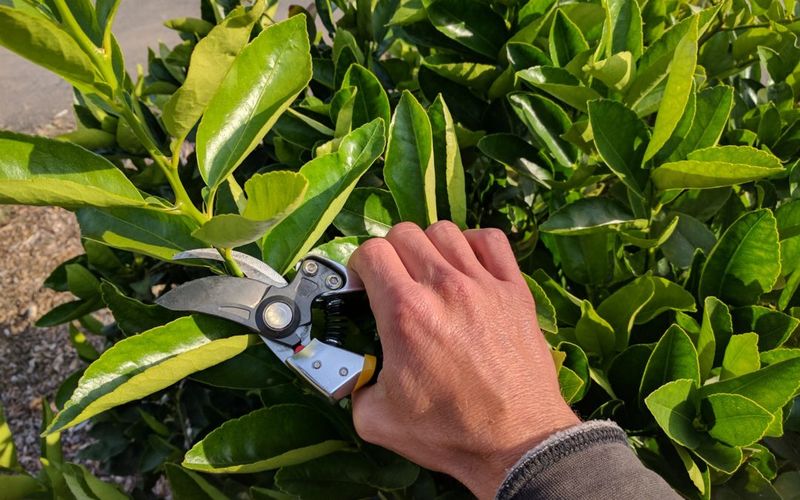
A steadier pre-summer plan for Texas citrus starts with restraint. Rather than lifting the canopy hard or trying to make the tree look like a shade tree, keep pruning light and selective.
Texas guidance says citrus should be allowed to grow naturally without pruning, apart from removing damaged wood and controlling size when truly needed.
Citrus pruning guidance from hot-climate extension programs says the tree does not need regular shaping, does not need skirting just for appearance, and benefits from prompt removal of trunk sprouts while they are still small.
If pruning exposes wood, that exposed area should be protected from sun with white latex paint or whitewash.
Next, clean up the root zone, not the canopy. Pull grass and weeds back from beneath the tree to reduce competition for water and fertilizer.
Use mulch over the soil surface to conserve moisture and moderate heat, but keep it away from the trunk so the crown does not stay damp. Water deeply enough to recharge the root zone rather than relying on quick lawn-style sprinkling.
Texas guidance suggests checking soil moisture where roots are actually growing and irrigating thoroughly when needed, not by the calendar alone.
In practical terms, that means a broad, weed-free basin or mulched area under the canopy, deeper irrigation, and a trunk that stays shaded either by its natural lower apron or by protective white coating if wood has already been exposed.
That approach fits the way citrus grows, reduces avoidable heat stress, and helps Texas trees move into summer with less strain on both bark and roots.