How To Prune Rhododendrons In Oregon Without Losing Next Year’s Blooms
Rhododendrons have a way of making Oregon gardens look effortlessly gorgeous, right up until pruning season makes everybody nervous. One wrong cut at the wrong time, and suddenly that full spring show can feel a lot less guaranteed next year.
That is why so many gardeners hesitate, even when their shrubs are getting leggy, crowded, or a little too wild for the space.
The good news is that rhododendrons are not nearly as mysterious as they seem. In Oregon, timing matters, and so does knowing where those future flower buds are getting ready behind the scenes.
A quick trim can freshen the shape, improve airflow, and keep the plant looking far more polished without accidentally snipping away next spring’s color. That is the sweet spot every gardener wants.
A rhododendron should look cared for, not hacked into regret. Get the timing and cuts right, and you can clean things up now without sacrificing the blooms that make these shrubs such Oregon favorites.
Prune Right After Bloom
Timing is everything when it comes to rhododendrons, and Oregon gardeners know that getting it right can mean the difference between a spectacular spring show and a whole lot of green leaves with nothing to look at.
The best time to prune is right after the flowers fade, usually between late April and early June in Oregon, depending on your variety and local weather. As soon as those blooms drop, new buds start forming for next year.
If you wait too long, you risk cutting off buds that are already developing.
Pruning right after bloom gives the shrub the whole growing season to push out new growth and set fresh flower buds. Think of it like a reset button.
The plant redirects all its energy from seed production into building strong new shoots.
In the Willamette Valley and along the Oregon coast, rhododendrons often bloom a bit earlier than in higher elevations. Pay attention to your specific plant and local conditions.
A quick look at the base of old flower clusters will tell you when tiny new buds are starting to swell, and that is your signal to get to work.
Do Not Wait Until Late Summer
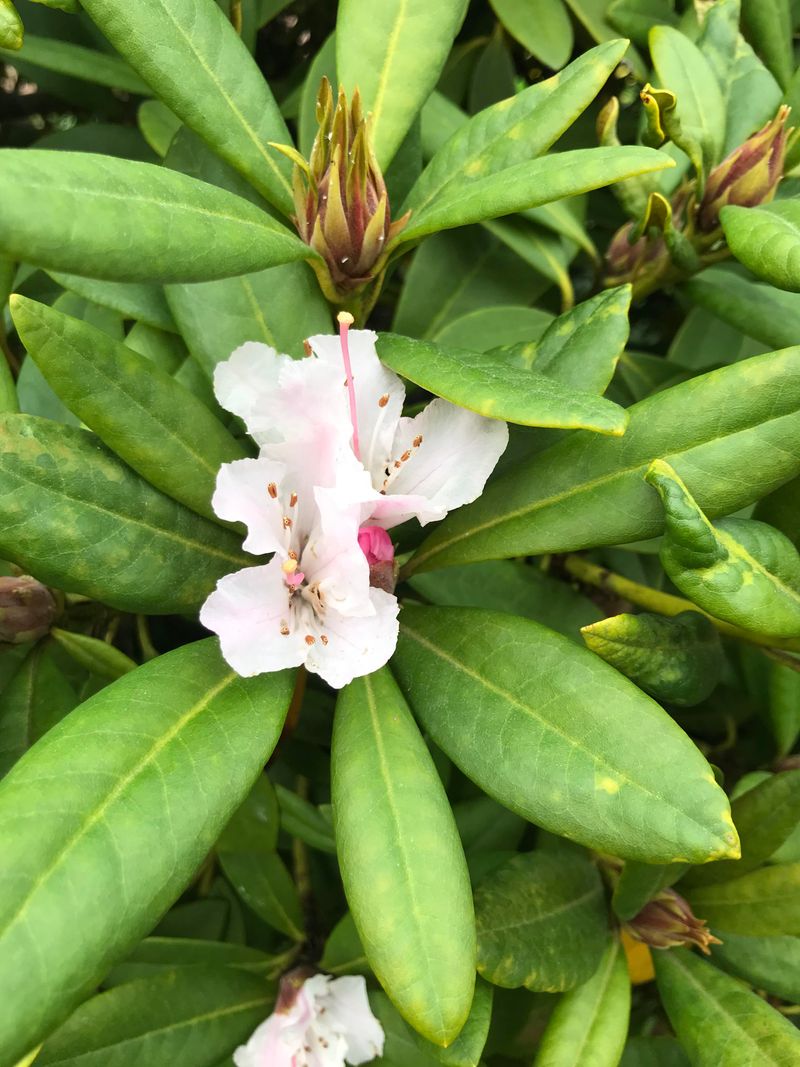
Many gardeners make the mistake of putting off pruning until late summer or fall, thinking they still have time. In Oregon, that is a gamble you do not want to take with your rhododendrons.
By midsummer, most rhododendrons have already started forming next year’s flower buds right at the tips of their branches. Those small, round buds might look like nothing special, but they are next spring’s blooms just waiting to open.
Cut them off in August or September and you will have a very green, very flowerless shrub come April.
Late-season pruning also stresses the plant right before it needs to prepare for winter. Oregon winters can bring cold snaps, heavy rain, and occasional frost, especially in inland areas like the Rogue Valley.
A freshly pruned shrub heading into those conditions has less time to harden off properly.
Your Oregon Garden Changes Every Week. Your Plan Should Too.
Gardening in Oregon changes quickly throughout the season. Every Friday you’ll receive a simple weekly plan showing exactly what to plant, prune, fertilize, harvest, and protect so you never miss the right timing.
Stick to the post-bloom window and your rhododendrons will thank you with a full flush of color next spring. If you missed the window this year, just skip pruning altogether and wait until after next year’s bloom.
One year without shaping is far better than two years without flowers.
Remove Spent Flower Trusses First
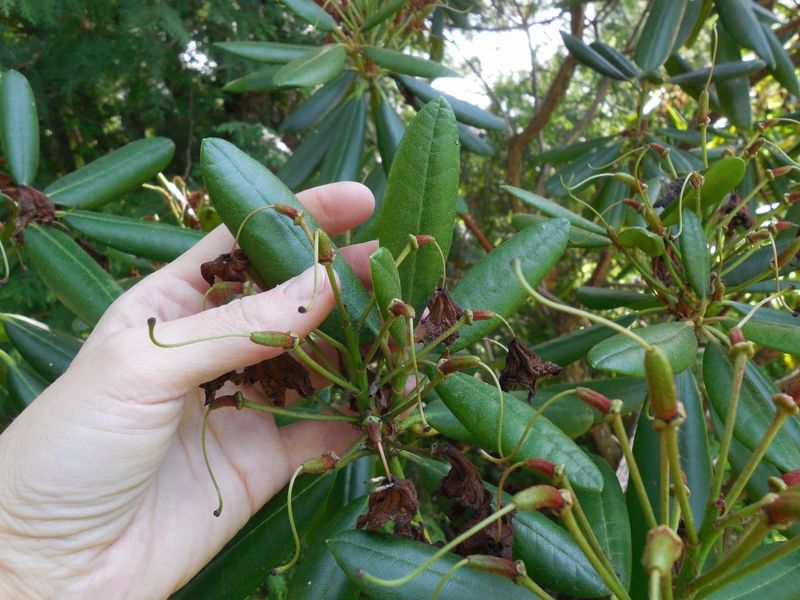
Right after the flowers fade, the first job on your list should be removing those spent flower clusters, also called trusses. It sounds simple, and it is, but it makes a real difference in how well your rhododendron performs the following year.
When the plant is left to form seed pods, it puts a surprising amount of energy into that process. By snapping off the old trusses before seed pods develop, you redirect that energy straight into new shoot growth and bud development.
Most of the time, you can do this with just your fingers. Gently snap or twist the spent cluster off just above the new growth buds that are already forming below it.
Be careful not to damage those tiny new shoots. They are fragile and important.
In Oregon’s mild spring climate, new growth often appears quickly after bloom, so you may already see small green shoots poking out right below the old flower head.
Deadheading, as this process is called, is especially helpful for younger rhododendrons that are still establishing themselves in the garden. It helps them put their energy into building a strong root system and healthy new growth rather than producing seeds that will likely never be planted anyway.
Cut Out Damaged Wood
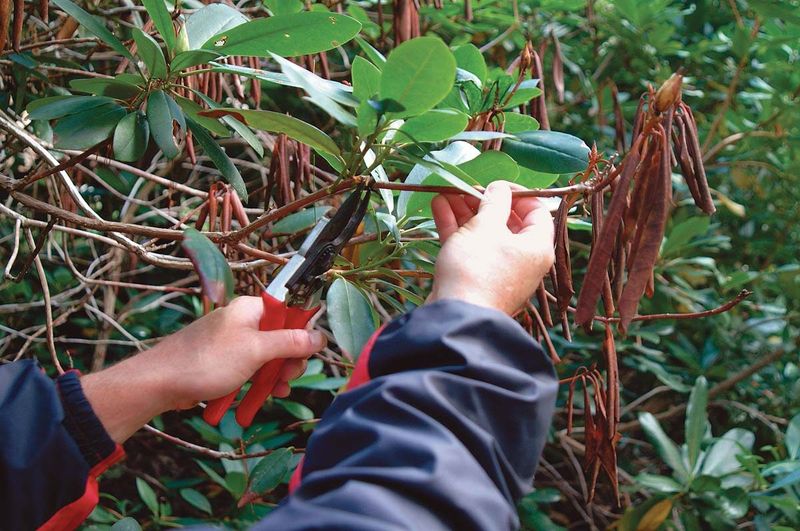
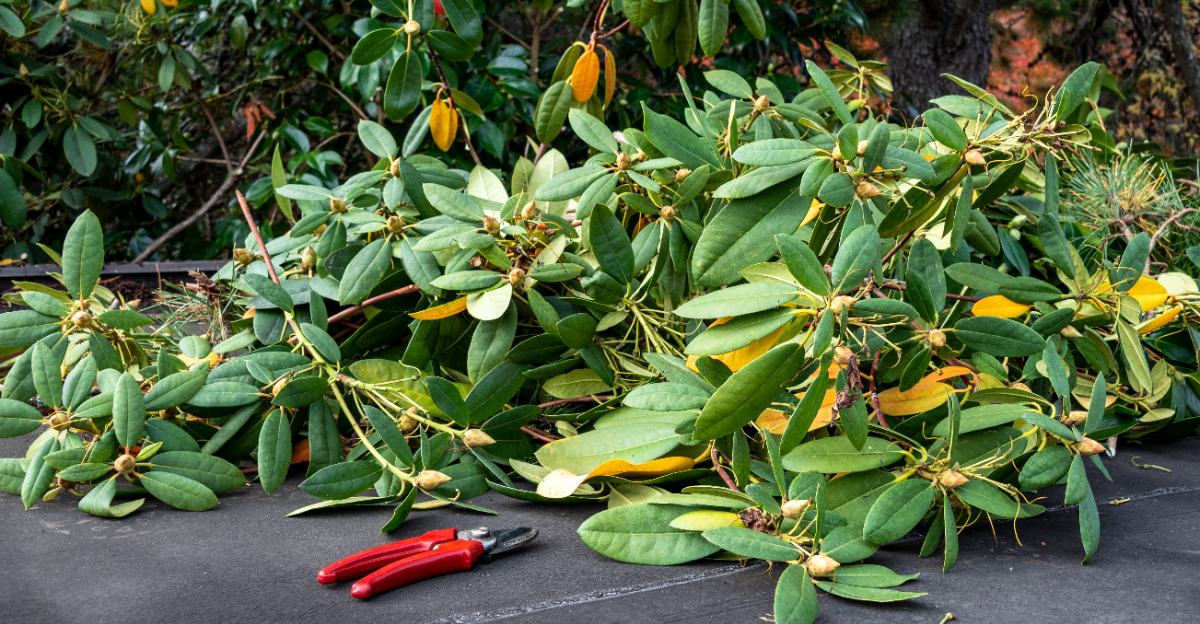
Healthy rhododendrons start with clean plants, and that means getting rid of any wood that is no longer doing its job. Damaged or diseased branches drag down the whole shrub and can invite pests and fungal problems, which are already a concern in Oregon’s wet climate.
Grab a pair of sharp bypass pruners and walk around your shrub. Look for branches that are gray, brittle, or hollow.
Scratch the bark lightly with your fingernail. If you see green underneath, the branch is alive.
If it is brown or dry all the way through, cut it out. Make your cut just above a healthy bud or back to the main branch, leaving no stubs.
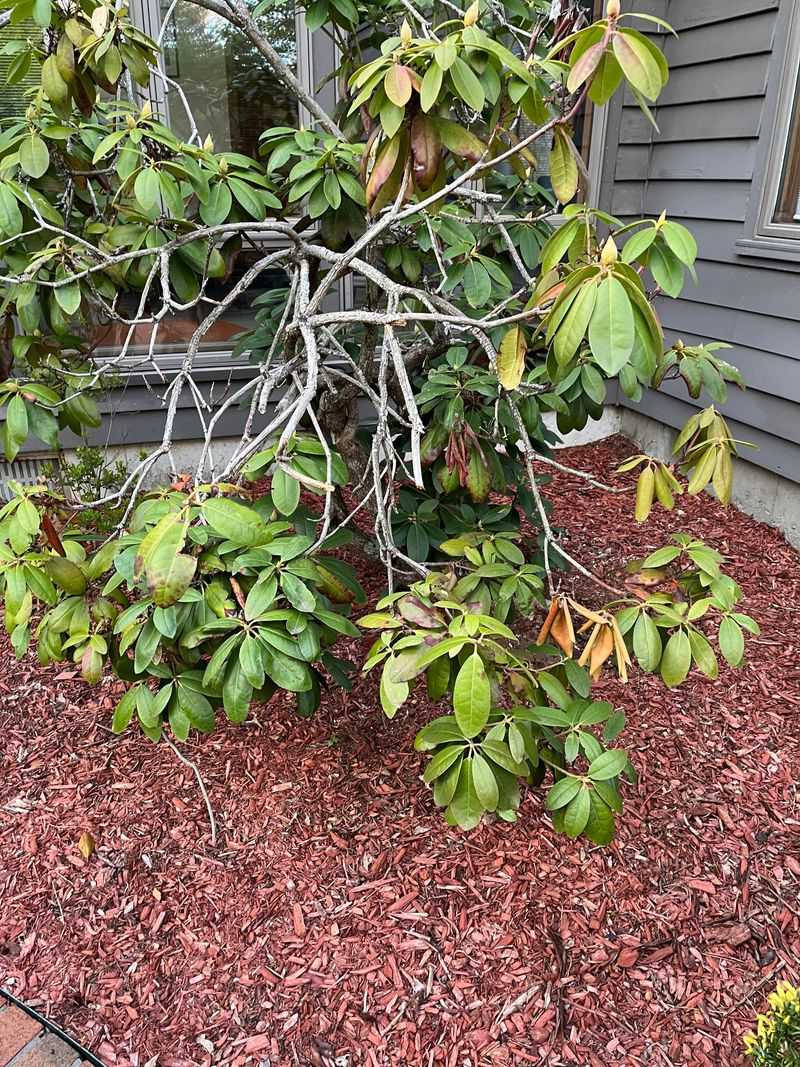
Damaged wood from winter storms or heavy snow loads is also worth removing. Oregon’s coast range and Cascade foothills can get rough weather, and branches that were bent or cracked during winter will not recover well.
Removing them early keeps the plant looking tidy and growing strong.
You can remove dead and damaged wood at any time of year without harming next year’s blooms. This type of pruning is maintenance, not shaping, so do not hold back.
A clean, healthy structure gives your rhododendron the best possible start each growing season.
Thin Crowded Branches Lightly
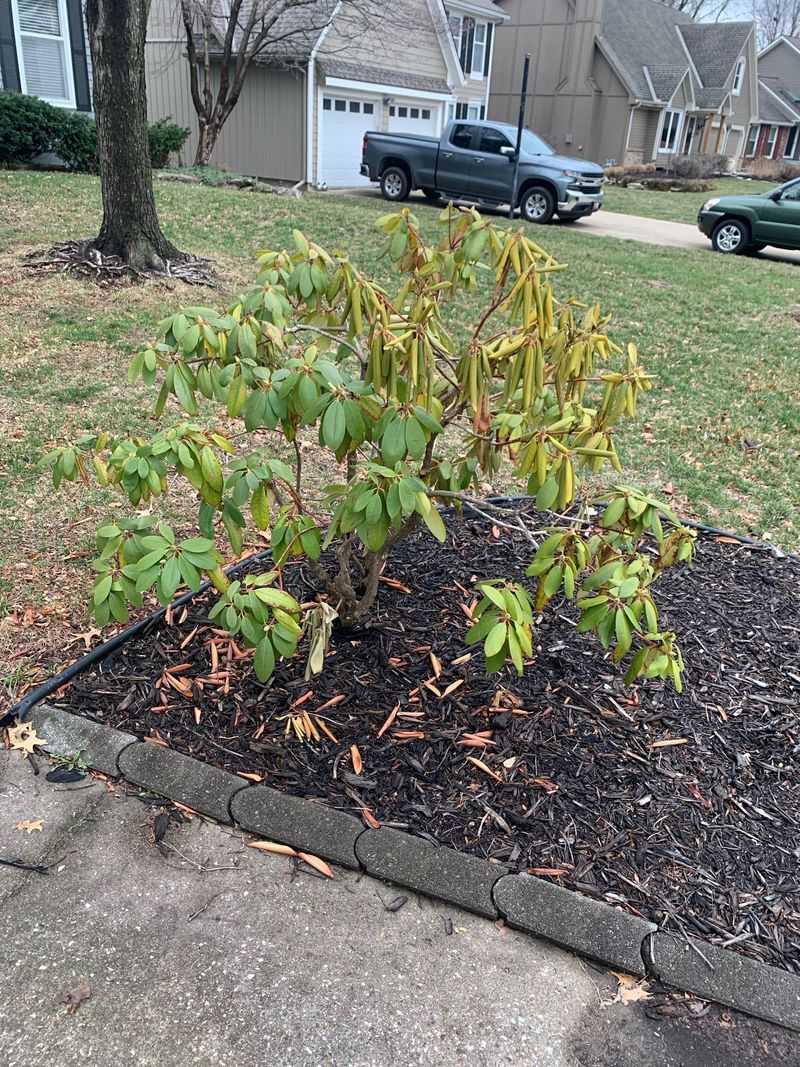
Over time, rhododendrons can get pretty dense inside, especially the older, well-established plants you find in many Oregon yards. All those crossing and crowded branches block light and airflow, which can lead to weak growth and fungal issues in the moist Pacific Northwest climate.
Light thinning after bloom helps open up the plant without taking away too much. Focus on branches that are rubbing against each other or growing inward toward the center of the shrub.
Remove the weakest of any two crossing branches. Try to create a more open, airy structure that lets sunlight reach the inner leaves.
Avoid the temptation to go overboard. Removing too many branches at once shocks the plant and can actually reduce blooming the following year.
A good rule of thumb is to remove no more than one-third of the total branches in any single pruning session.
For large, overgrown plants in Eugene, Medford, or anywhere else in Oregon, spreading thinning work over two or three years is the smarter approach. Each year, remove a few of the oldest or most congested branches.
This gradual process keeps the plant healthy and ensures you still get flowers every spring while slowly improving the shrub’s overall shape and vigor.
Shape The Shrub Without Shearing
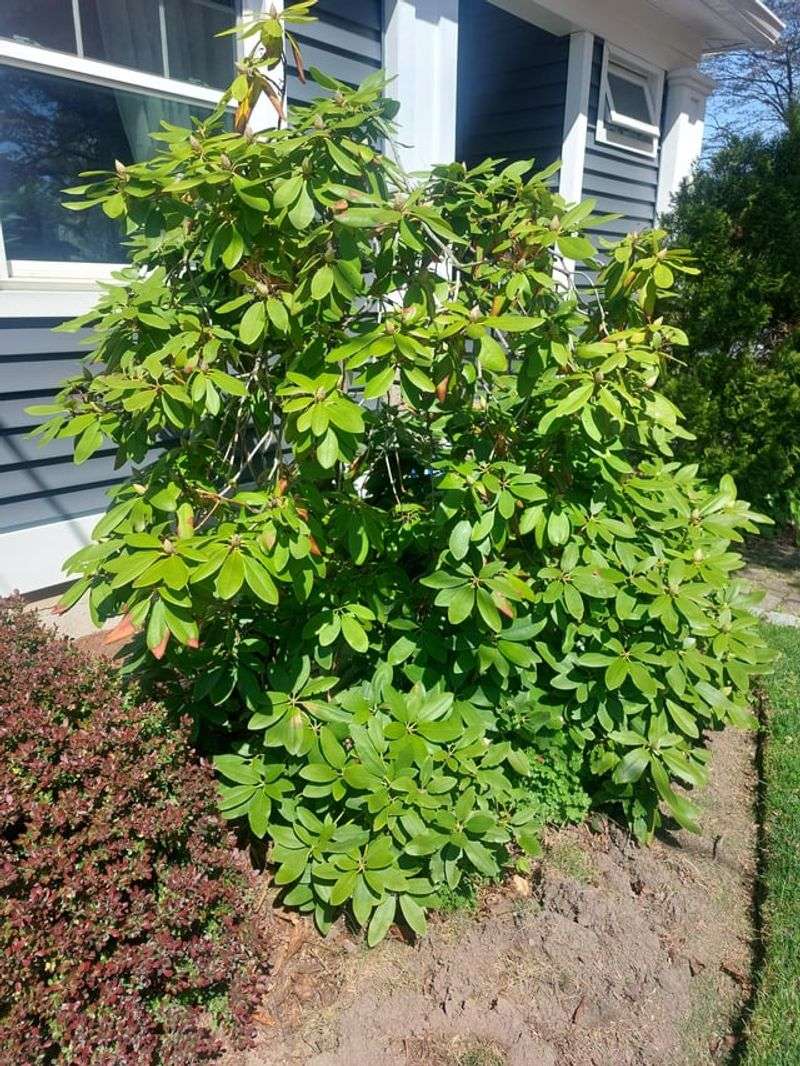
One of the most common mistakes people make with rhododendrons is treating them like a hedge and running a pair of electric shears straight across the top. That approach might look neat for a few weeks, but it causes real problems down the road.
Shearing cuts through leaves and branches randomly, leaving ugly stubs and creating an unnatural boxy shape that goes against how rhododendrons naturally grow. Worse, shearing removes the branch tips where next year’s flower buds form, so you end up with a flat-topped shrub that barely blooms.
Instead, use bypass hand pruners and cut individual branches back to a natural branching point or just above a leaf node. Step back often and look at the overall shape as you go.
Work with the plant’s natural form, which tends to be rounded and layered, rather than fighting it.
Oregon’s native landscape is full of beautifully shaped rhododendrons that have never seen a pair of hedge shears. Letting the plant keep its natural structure makes it look more at home in the garden and keeps it healthier overall.
A little patience and selective cutting goes a long way toward creating a shrub that looks gorgeous and blooms reliably every spring season.
Spread Hard Pruning Over Time
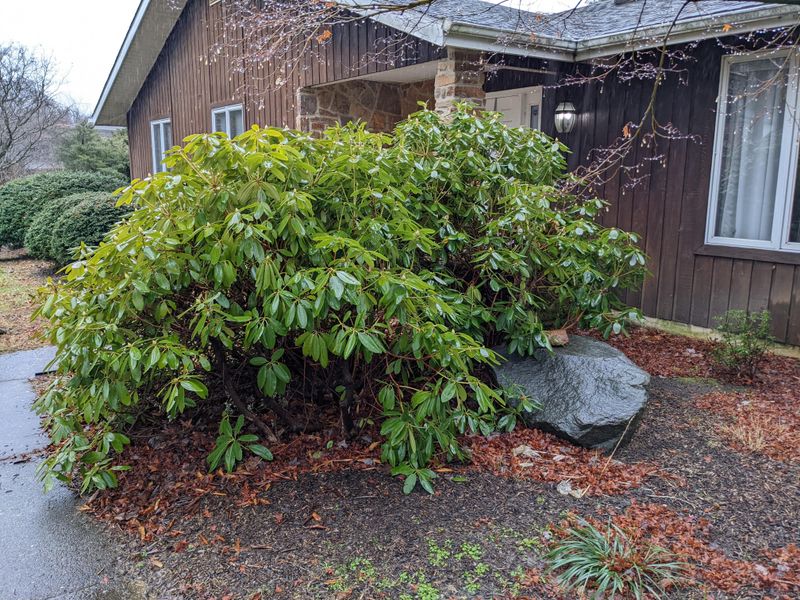
Sometimes a rhododendron gets completely out of hand. Maybe it has not been touched in years, or maybe the previous homeowner let it grow into a towering, leggy mess.
In Oregon, where rhododendrons can get quite large, this is not an uncommon situation.
Hard pruning, also called rejuvenation pruning, can bring an overgrown shrub back to a manageable size. But cutting everything back at once is too much stress for the plant.
Spreading the work over two or three years is the smarter, kinder approach that keeps the shrub alive and still producing some flowers each season.
In year one, remove about one-third of the oldest, thickest branches, cutting them down low to encourage new growth from the base. The following year, remove another third.
By year three, you will have a fully refreshed plant with a younger, more vigorous structure. New shoots from the base grow quickly and will start blooming within a couple of years.
Portland and Salem gardeners dealing with older landscape rhododendrons often find this gradual method works beautifully. You get to enjoy some blooms each year while the plant slowly transforms.
It takes a bit of patience, but watching a tired old shrub come back to life branch by branch is genuinely satisfying work in any Oregon garden.