Beautiful Ways To Use California Fuchsia In California Landscapes
Have you ever noticed how most gardens seem to simply give up once the California summer hits its peak?
As the heat builds and the rain disappears, many landscapes turn brown and brittle.
In our hot inland valleys and dry coastal slopes, it is a real challenge to keep a yard looking lively without an astronomical water bill.
Fortunately, California fuchsia is the ultimate late-summer hero.
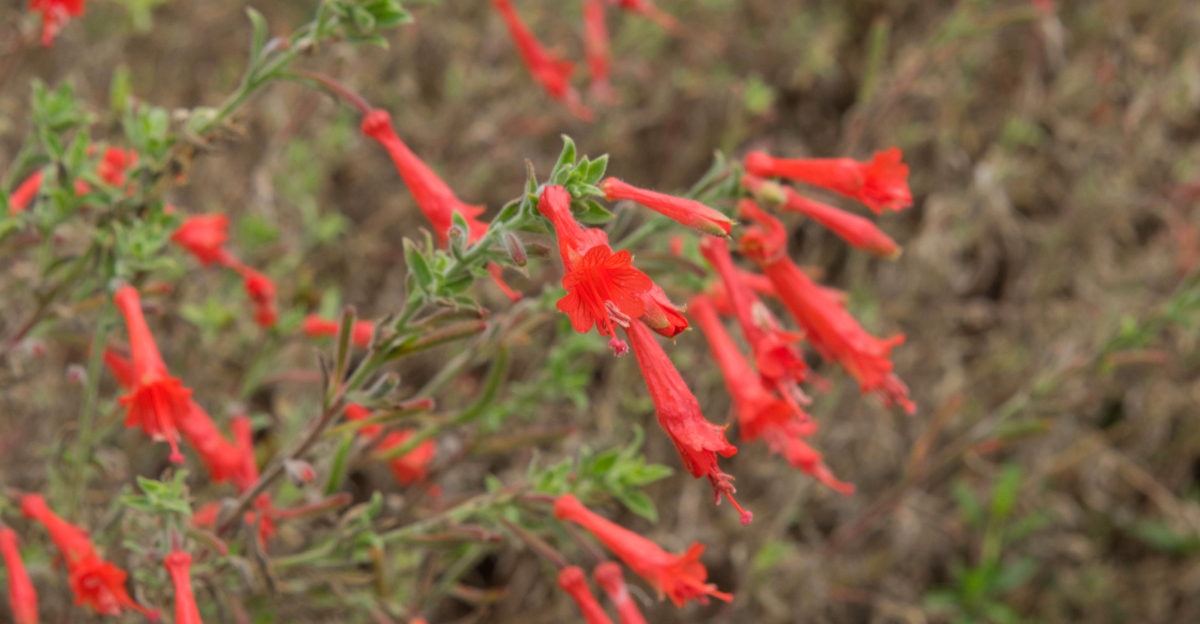
This native powerhouse thrives in the exact conditions that harm other plants, and it bursts into a sea of vivid red-orange flowers just when you need them most.
If you want a tough, nectar-rich plant that handles the state’s harshest dry spells with ease, this is the perfect addition to your garden.
1. As A Late Season Color Drift In Dry Borders
By August, most California garden borders have lost their spark. Lavender has finished, salvias are resting, and the dry season has stripped the color from many beds.
That is exactly when California fuchsia steps in and earns its place.
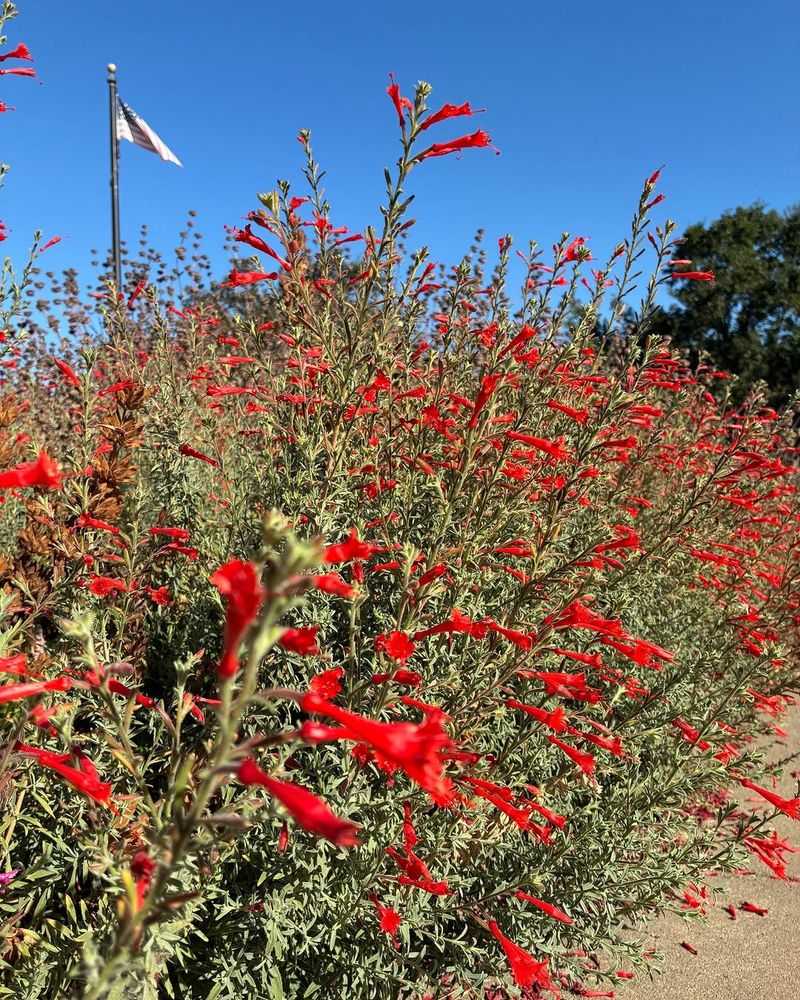
Starting in late summer and carrying well into fall, Epilobium canum produces masses of narrow, tubular flowers in a bold red-orange that reads beautifully against bleached gravel, dry mulch, and the muted tones of drought-dormant neighbors.
In California’s inland valleys, where summer heat can be relentless, this plant blooms without complaint.
Along the coast, it performs just as reliably, often extending its show well into November.
Using California fuchsia as a color drift means planting several plants together in a loose, flowing grouping rather than spotting them individually through a border.
A drift of five to seven plants creates enough visual mass to hold the eye and anchor the late-season garden.
The gray-green foliage reads as a soft, neutral backdrop that makes the flower color pop even harder. Spacing plants about two feet apart allows them room to spread and fill in naturally over a season or two.
Cutting the planting back hard in late winter or early spring keeps it tidy and encourages dense, fresh growth before the next bloom cycle begins. This simple maintenance step makes a real difference in how clean and full the border looks each fall.
2. Along Slopes And Banks With Good Drainage
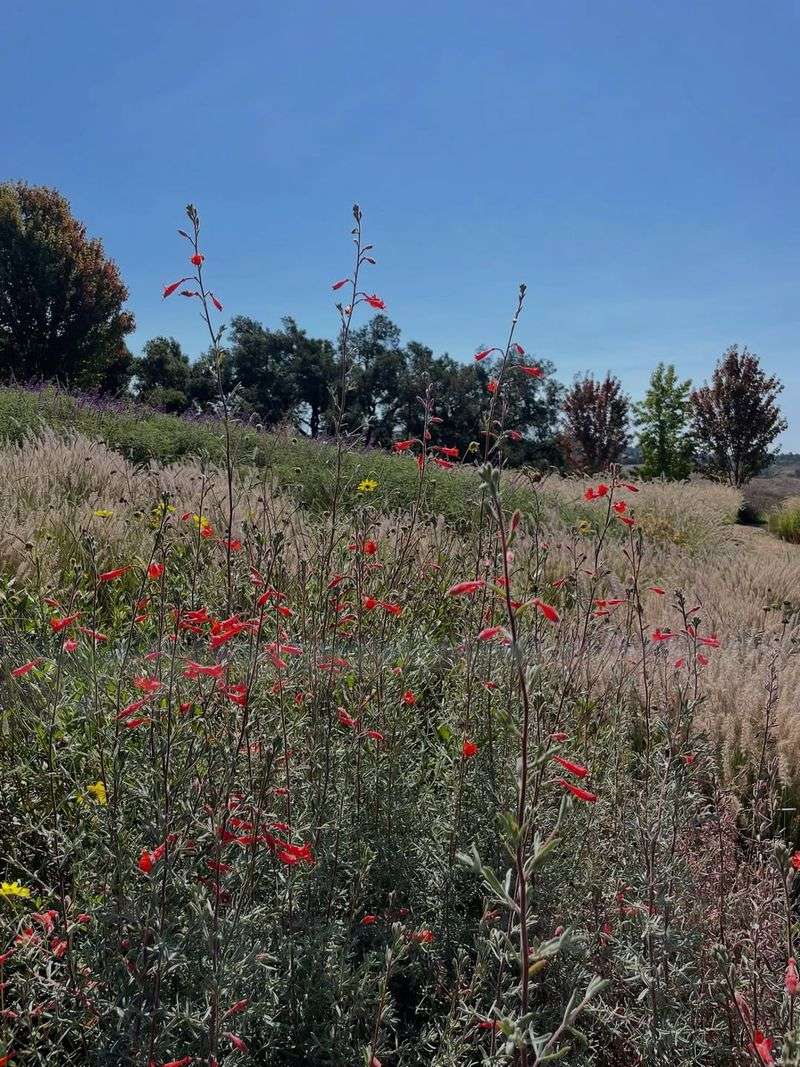
Slopes and banks are some of the trickiest spots in any California garden. Erosion is a real concern, irrigation is hard to manage evenly, and many ornamental plants simply refuse to root in fast-draining, often shallow hillside soils.
California fuchsia was practically made for these conditions.
Its spreading, rhizomatous habit allows it to knit together over time, sending out stems that root as they go and gradually cover ground in a way that helps hold soil in place.
On sunny, well-drained banks in California, this plant can spread to several feet wide from a single planting point.
That spreading nature is a feature rather than a flaw when you need coverage on a difficult slope.
Full sun is where California fuchsia performs best, though it can handle a bit of afternoon shade in hotter inland California locations.
Your California Garden Changes Every Week. Your Plan Should Too.
Gardening in California changes quickly throughout the season. Every Friday you’ll receive a simple weekly plan showing exactly what to plant, prune, fertilize, harvest, and protect so you never miss the right timing.
On south- and west-facing slopes, where reflected heat and dry soil would challenge most plants, this native handles the exposure without much fuss.
Good drainage is the key requirement – soggy soils or areas where water pools after rain are not suitable spots for this plant.
During the first growing season, some supplemental watering helps plants establish and spread more quickly.
Once rooted in, they need very little irrigation through California’s long dry summers, which makes slope maintenance far more manageable over time.
3. At The Front Of Low Water Garden Beds
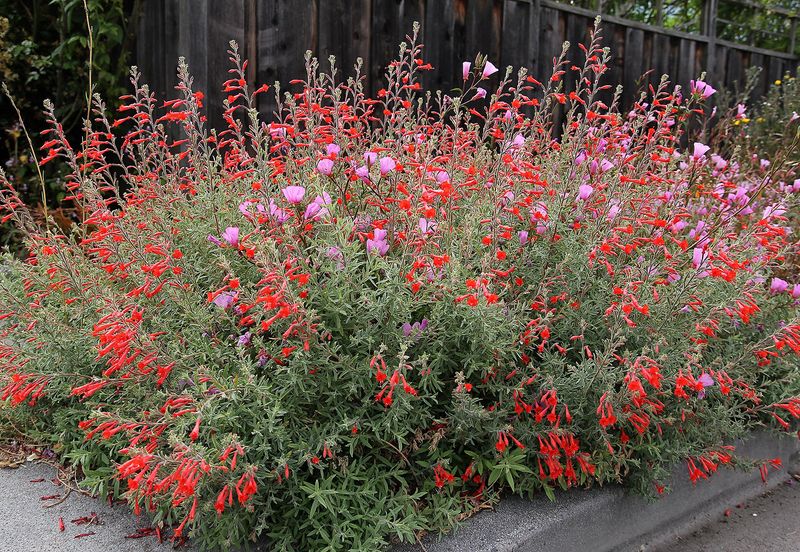
Front yard garden beds in California have become a showcase for water-smart design, and the plants chosen for the front edge of those beds carry a lot of visual responsibility.
They set the tone for the whole planting, and they need to look good for as long as possible through the dry season.
California fuchsia works well at the front of low-water beds because its natural height – generally between one and two feet – keeps it from blocking shorter neighbors while still providing enough presence to anchor the bed edge.
The sprawling stems soften the transition between planted areas and walkways, driveways, or gravel paths in a way that feels relaxed and naturalistic rather than stiff or formal.
Pairing California fuchsia at the bed edge with slightly taller plants behind it creates an easy layered look. Sages, buckwheats, and native grasses all work well as mid-bed companions.
The red-orange flower color reads warmly against silver or blue-gray foliage, so plants like white sage or Cleveland sage make excellent backdrops.
In California’s hotter inland regions, planting near a light-colored wall or path can add reflected heat that extends the bloom season slightly.
Keep in mind that this plant does spread, so leaving a little room at the front edge prevents it from creeping onto pavement.
A simple trim in spring keeps the front edge tidy and encourages fresh growth.
4. In Pollinator And Hummingbird Plantings
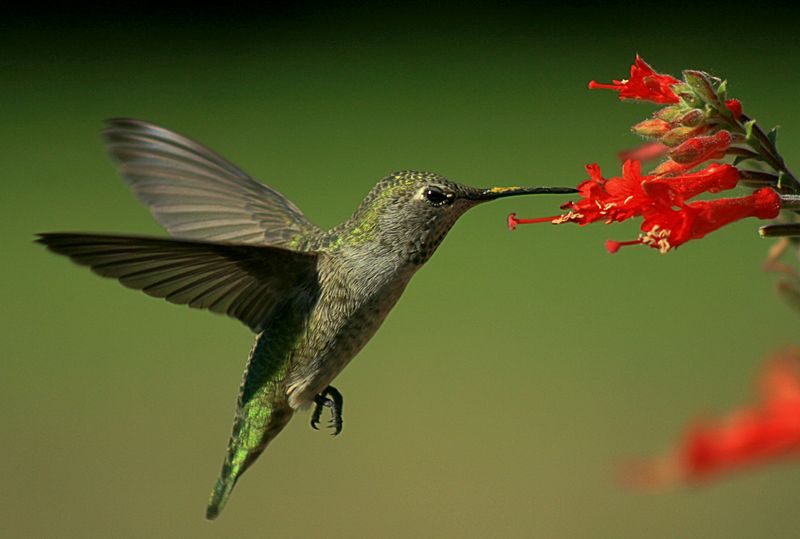
Watch a planting of California fuchsia on a warm September morning and you will likely see hummingbirds moving from flower to flower in a quick, purposeful rhythm.
The long, tubular shape of the blooms is essentially a hummingbird feeder built by nature, and California’s resident and migrating hummingbirds find it reliably.
Anna’s hummingbirds, which stay in California year-round, are among the most frequent visitors. During fall migration, other species pass through and are drawn to the bright red-orange color from a surprising distance.
Beyond hummingbirds, bees – including native bee species – work the flowers actively, making this plant a genuine multi-species resource in the garden.
Building a pollinator planting around California fuchsia means combining it with other native bloomers that extend the season in both directions.
Earlier-blooming natives like ceanothus, penstemon, and native phacelia fill the spring and early summer gap before California fuchsia takes over in late summer.
This approach keeps the garden productive for wildlife across a much longer stretch of the California growing season.
Grouping plants in clusters rather than scattering single specimens increases the garden’s visibility to pollinators and hummingbirds. A mass of five or more California fuchsia plants creates a feeding station that wildlife can locate easily and return to repeatedly.
Avoid placing these plantings too close to high foot-traffic areas, since the steady wildlife activity is part of what makes the planting so rewarding to watch.
5. In Rock Gardens Or Gravelly Planting Areas
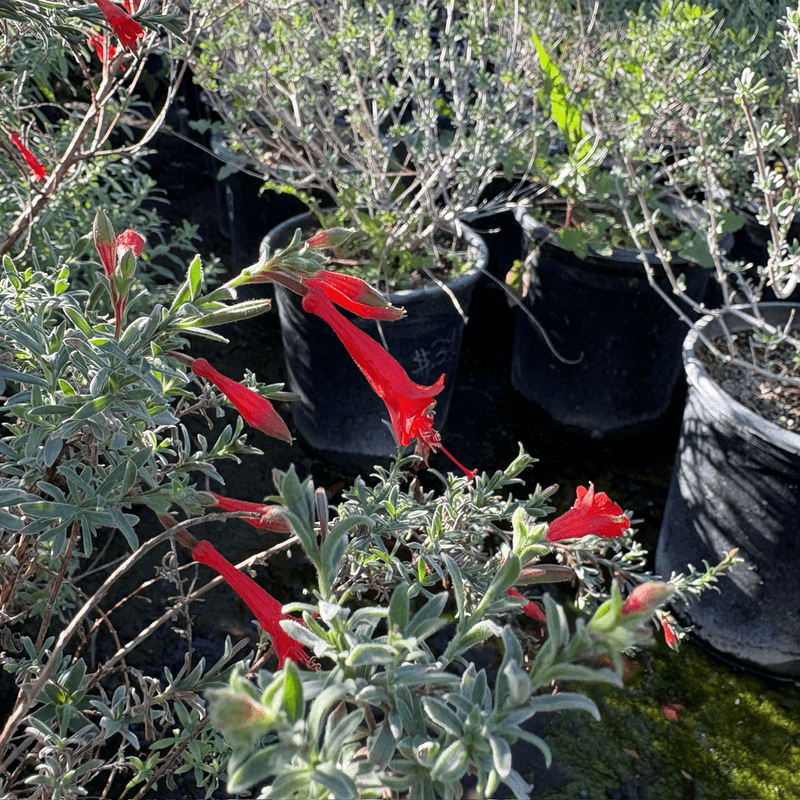
Gravelly soil and rocky terrain are conditions that send many gardeners searching for solutions.
For California gardeners working with decomposed granite, rocky hillside soil, or constructed rock garden areas, California fuchsia is one of the most reliable options available.
Sharp drainage is what this plant asks for above almost anything else. In heavy clay soils that hold moisture through winter, root problems can develop.
But in the fast-draining, low-nutrient conditions of a rock garden or gravel bed, California fuchsia tends to settle in and spread with very little intervention.
The gray-green foliage even picks up a slightly silvery quality in lean soils, which looks striking against darker rock surfaces.
Rock gardens in California often rely on a mix of textures and forms to stay interesting across seasons. California fuchsia adds a soft, spreading element that contrasts well with the hard angles of boulders and the fine texture of gravel mulch.
The bright flower color reads especially well against tan or gray stone, creating a natural-looking composition that feels intentional without requiring much design effort.
Planting California fuchsia at the edge of raised rock garden areas or along the top of a low stone retaining wall lets the stems cascade slightly, softening the hard edges of the construction.
In California’s warmer inland rock gardens, a little afternoon shade from a nearby boulder or wall can reduce heat stress and extend bloom time into late fall.
6. As A Soft Spiller Near Paths Or Bed Edges
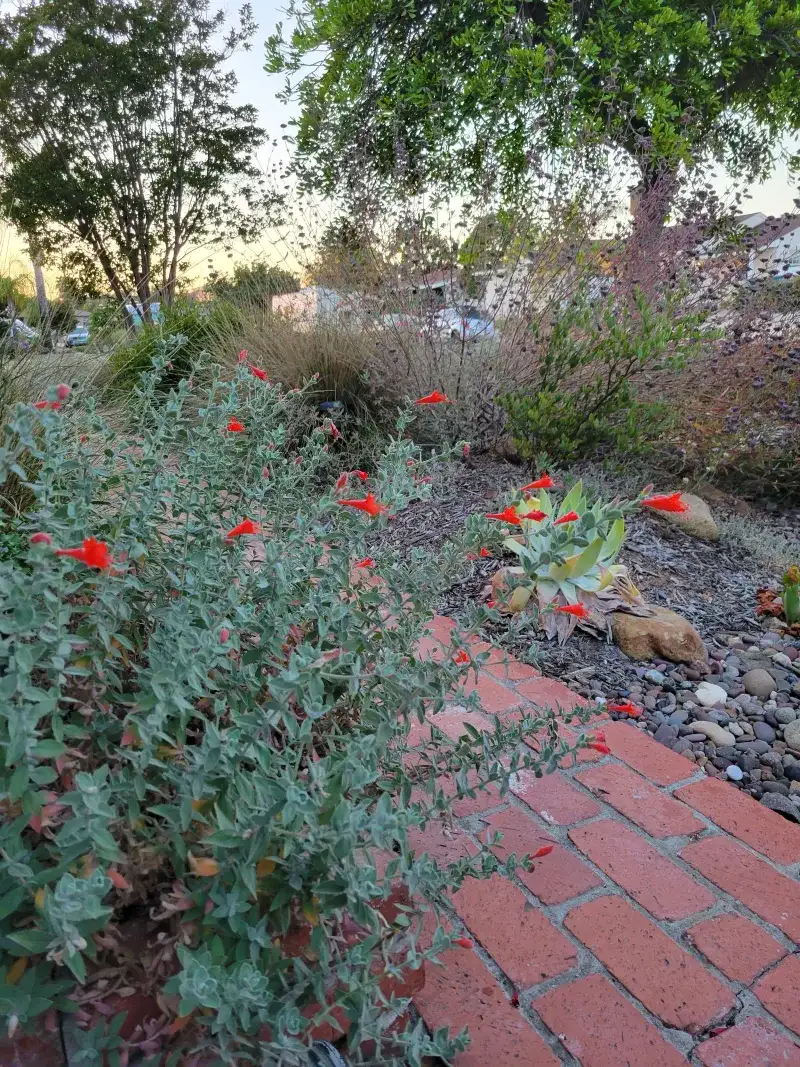
Some of the most satisfying moments in garden design come from plants that blur the line between structure and softness.
Near paths, stepping stone areas, and bed edges, California fuchsia has a natural tendency to arch and spread in a way that makes hard lines feel more relaxed and inviting.
The stems of California fuchsia grow outward rather than strictly upward, giving the plant a loose, flowing quality that works especially well along the edges of decomposed granite paths or gravel walkways common in California low-water gardens.
As the plant matures and spreads, its stems lean gently over the path edge, softening the boundary without blocking foot traffic when kept lightly trimmed.
Color is the other reason this placement works so well. The red-orange flowers at path edges catch the eye and draw visitors through the garden in a natural way.
In California’s long, dry summers, when most of the landscape has shifted to browns and tans, those flowers at eye level along a path edge create a warm, welcoming effect that is hard to achieve with other low-water plants blooming at the same time.
Keep in mind that California fuchsia spreads over time, so placing it where some outward growth is acceptable works better than forcing it into a tight, confined spot.
Trimming back stems that extend too far onto the path takes only a few minutes and keeps the planting looking intentional.
A light shaping in late winter is usually all it needs to stay tidy.
7. In Mixed Native Plant Combinations
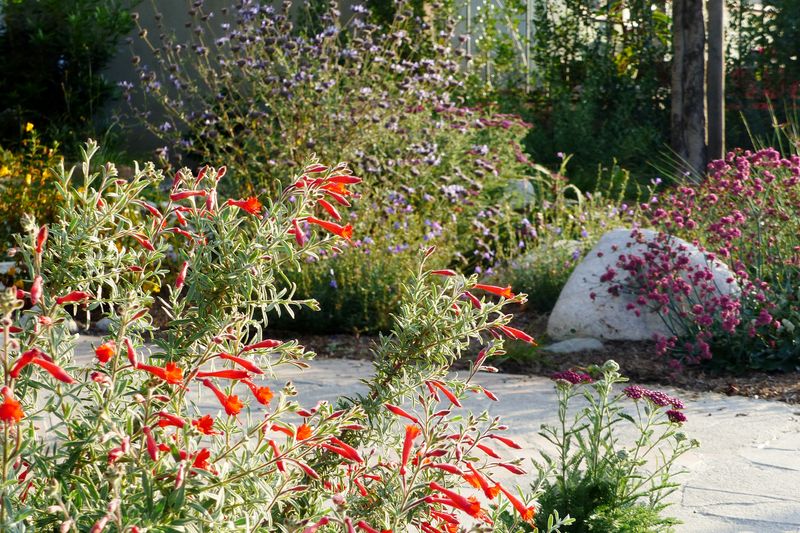
One of the real pleasures of working with California native plants is discovering how well many of them grow together.
California fuchsia slots into mixed native plant combinations with an ease that reflects the fact that it evolved alongside many of its potential garden companions.
From a design standpoint, the red-orange flower color is one of the warmest tones in the California native palette, and it pairs naturally with the cooler blues and purples of native sages, the soft yellows of buckwheat, and the fine texture of native bunch grasses.
Cleveland sage, blue-eyed grass, and California poppy all work well in the same planting zone and share similar water and sun needs.
Mixing California fuchsia with plants of varying heights and bloom times creates a layered planting that stays interesting across more of the year. Ceanothus and manzanita provide woody structure and spring bloom.
Salvias bridge the gap into early summer. Then California fuchsia takes the lead in late summer and fall, giving the planting a strong finish just as other plants are winding down.
Soil drainage is the common thread that makes these combinations work well in California gardens.
Most California native plants prefer lean, well-drained soil, and keeping the planting area free from excess irrigation helps all the plants in the mix stay healthy.
Avoid combining California fuchsia with plants that need regular summer water, since the different needs can create management challenges over the long term.
8. In Smaller Spaces Using Compact Cultivars
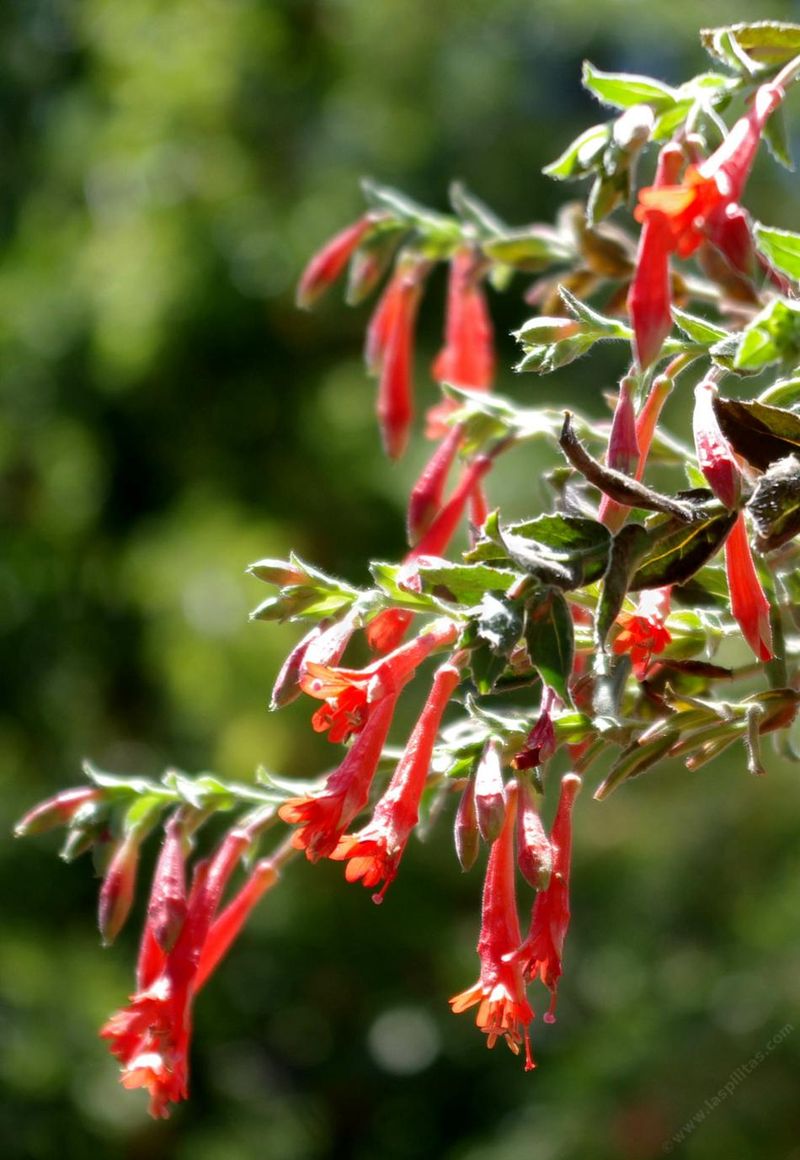
Not every California garden has room for a spreading groundcover that runs several feet in all directions.
Smaller front yards, narrow side yards, courtyard gardens, and urban lots all present real size constraints, and that is where compact cultivars of California fuchsia become genuinely useful.
Selections like ‘Calistoga’ and ‘Select Mattole’ tend to stay more compact and tidy than the straight species, making them better suited to smaller planting areas where the spreading habit of a standard California fuchsia would quickly become a management challenge.
These selections still produce the same vivid red-orange flowers and attract the same hummingbirds and pollinators, but they do so in a footprint that works with limited space.
In raised beds or contained planting areas, compact cultivars can be used as seasonal color anchors that carry the late-summer and fall display without overwhelming neighboring plants.
Pairing them with lower-growing natives like native strawberry or creeping sage creates a small-scale layered planting that looks intentional even in a tight spot.
Container growing is another option worth considering for California gardeners with paved courtyards or rooftop gardens.
A compact California fuchsia in a well-draining container placed in full sun can bloom reliably through fall with modest supplemental water.
Choosing a container large enough to accommodate some root spread helps the plant stay healthy and productive. Repotting every couple of years keeps the root system from becoming too restricted.