How To Grow Plumeria In Pots In Arizona For Strong Healthy Plants
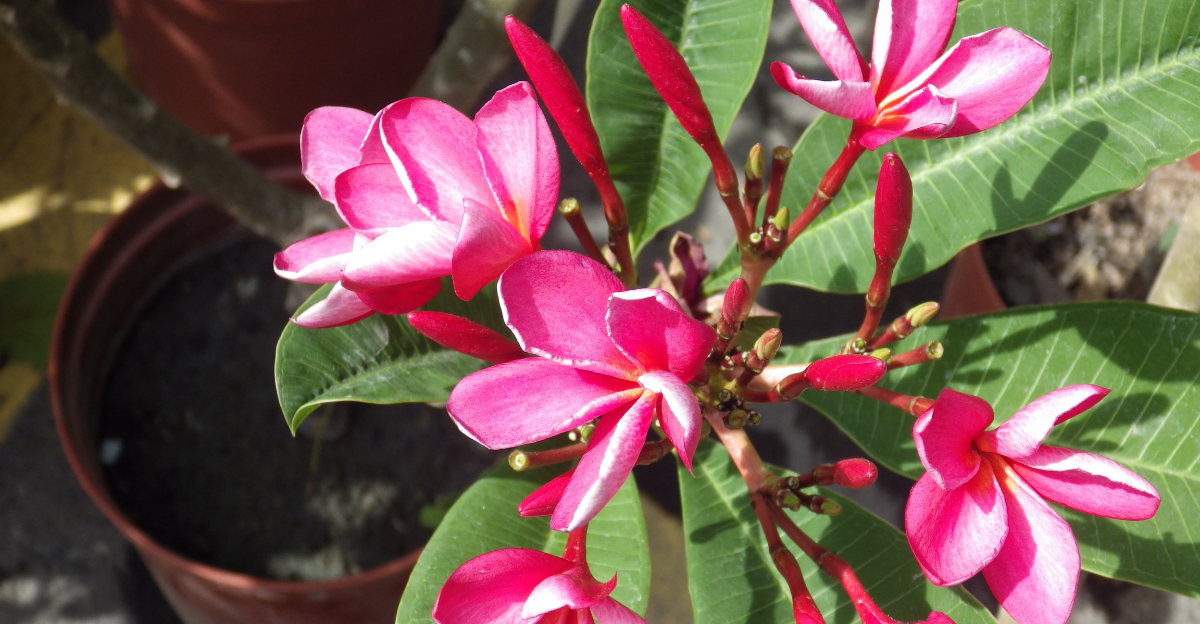
Plumeria in pots often starts off strong in Arizona, then something changes once real heat settles in. Leaves lose that rich color, new growth slows, and the plant never looks as full as expected.
More water seems like the fix, but it can make things worse instead of better.
Pots heat up fast under desert sun, and what works in the ground does not translate the same way in containers. Soil dries unevenly, roots get stressed, and small setup choices begin to matter more each day.
Growth depends on how those conditions are handled from the start. Getting the setup right early keeps plumeria steady instead of struggling through the hottest stretch.
1. Use Fast Draining Soil To Prevent Root Rot
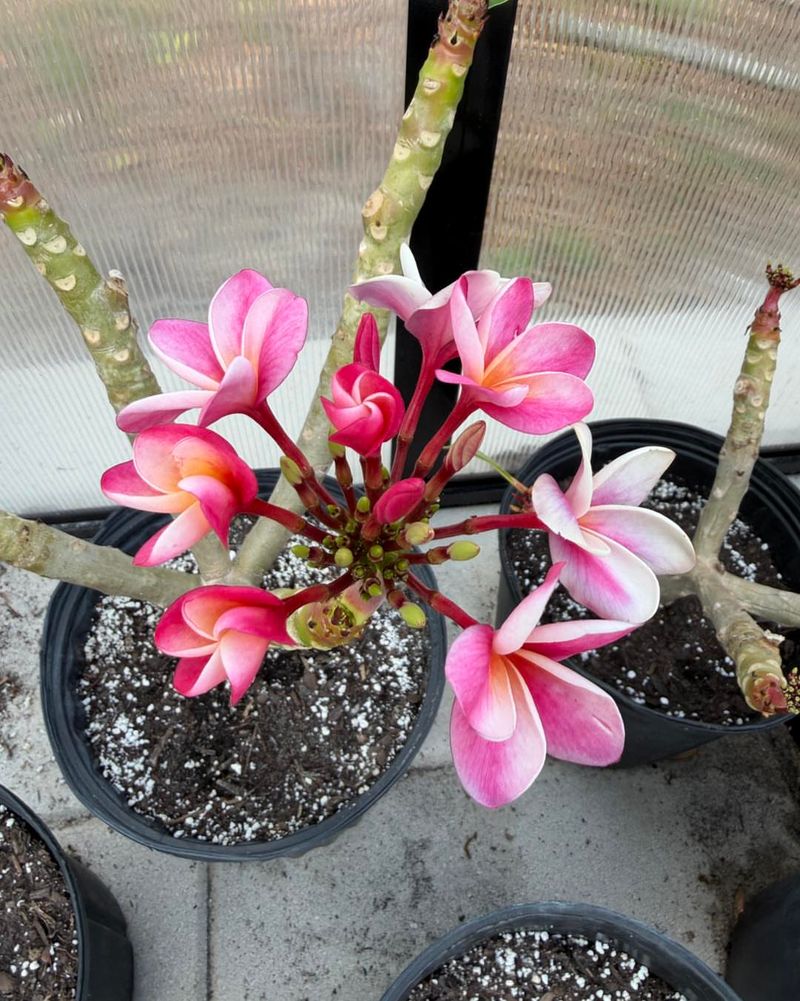
Soggy roots are one of the fastest ways to weaken a plumeria — and in Arizona’s intense heat, the damage can happen faster than you’d expect. Standard potting mixes hold moisture too long, especially inside a pot where airflow around the roots is limited.
Plumeria roots need to breathe between waterings, and dense soil just won’t allow that.
A cactus or palm potting mix works really well as a base. From there, blend in equal parts coarse sand and perlite to open up the structure and speed drainage.
Some Arizona growers also add a small amount of bone meal at the bottom of the pot before planting — it breaks down slowly and feeds roots without forcing rapid, weak growth.
Soil sulfur is another useful addition, especially in areas with alkaline tap water, which is common across much of Arizona. It helps keep the pH in a range that allows plumeria to actually absorb nutrients.
Without that balance, even well-fertilized plants can look pale and sluggish.
Avoid garden soil entirely. It compacts inside pots, reduces drainage, and can introduce pathogens that affect root health.
2. Choose A Pot With Strong Drainage Holes
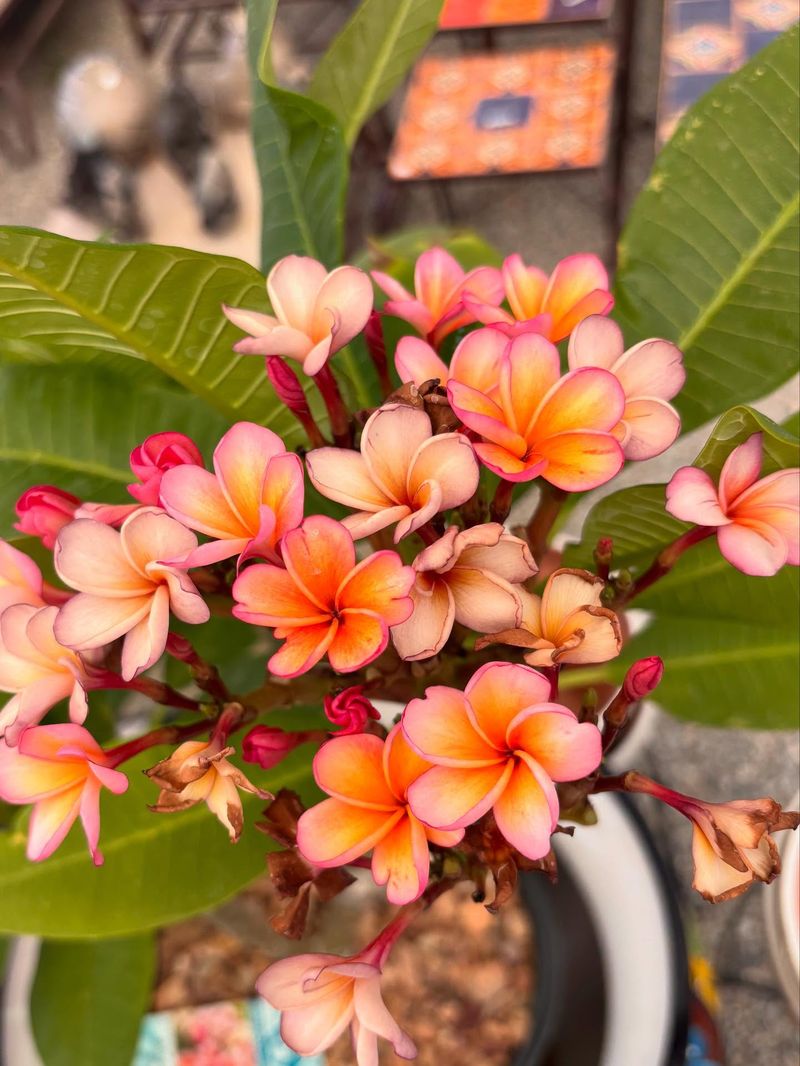
Not all pots are created equal when it comes to growing plumeria in Arizona. The pot you choose directly affects how well the roots stay healthy through the heat and the occasional heavy monsoon rain.
A container with weak or too-few drainage holes will trap water at the bottom, and that sitting moisture is trouble for plumeria roots.
Aim for a pot that is 14 to 16 inches in diameter — wide enough to support root spread without being so large that excess soil stays wet for too long. Ceramic pots with multiple drainage holes at the base are a solid choice.
Avoid dark-colored pots when possible; in full Arizona summer sun, dark containers absorb heat and can raise root-zone temperatures to damaging levels.
Light-colored or glazed ceramic pots reflect more heat and keep roots cooler during those brutal July and August afternoons. Plastic pots are lightweight and affordable, but they tend to flex and crack under prolonged UV exposure in the desert Southwest.
Elevating your pot slightly off the ground using pot feet or bricks improves airflow under the drainage holes and prevents the holes from getting blocked by debris or sitting flush against a hot surface. Check drainage holes before every watering season — roots can partially block them over time.
Your Arizona Garden Changes Every Week. Your Plan Should Too.
Gardening in Arizona changes quickly throughout the season. Every Friday you’ll receive a simple weekly plan showing exactly what to plant, prune, fertilize, harvest, and protect so you never miss the right timing.
3. Full Sun Supports Strong Growth And Flowering
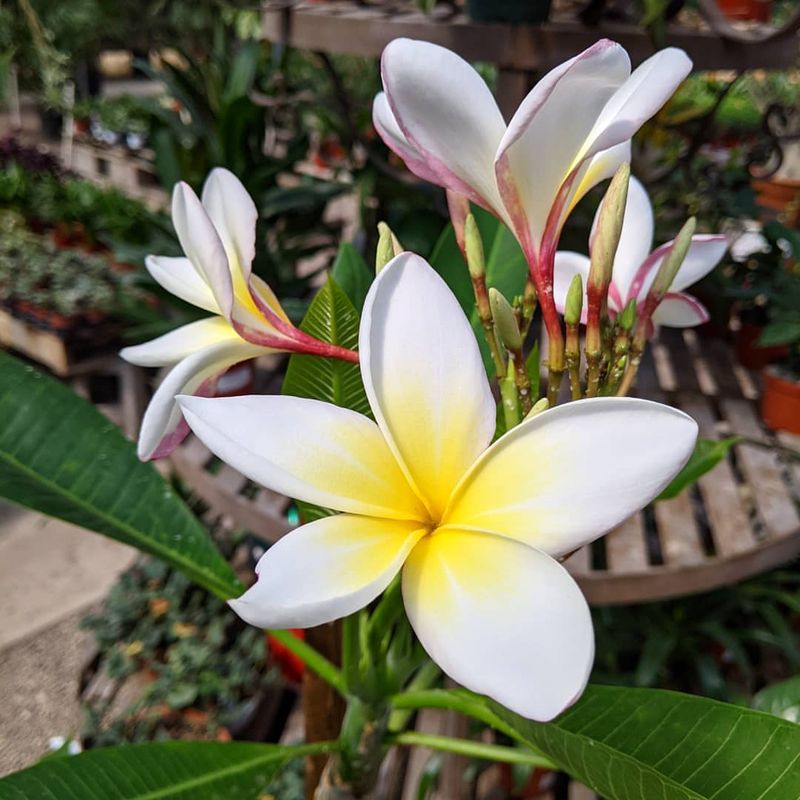
Plumeria flat-out needs sun — and Arizona has plenty of it. Placing your potted plumeria in a spot that gets at least six to eight hours of direct sunlight daily gives the plant the energy it needs to push out new branches and build toward blooming.
Low-light spots produce weak, stretched stems that rarely flower well.
That said, Arizona’s summer sun is not the same as a gentle tropical afternoon. During peak summer, especially in the lower desert regions around Phoenix and Tucson, afternoon temperatures can exceed 110 degrees Fahrenheit.
A location that gets morning sun and transitions to light shade by early afternoon can reduce the risk of leaf scorch without sacrificing the light the plant needs.
East-facing patios and walls work well for this reason. The plant gets strong morning light, and the structure blocks the harshest afternoon rays.
South-facing spots get the most total sun hours but may need a shade cloth rated around 30 to 40 percent during the hottest weeks of summer.
Watch the leaves as your guide. Pale yellow leaves often mean too little sun.
Dark brown crispy patches on leaf edges usually point to heat stress rather than a sunlight problem specifically.
4. Water Deeply But Let Soil Dry Between Watering
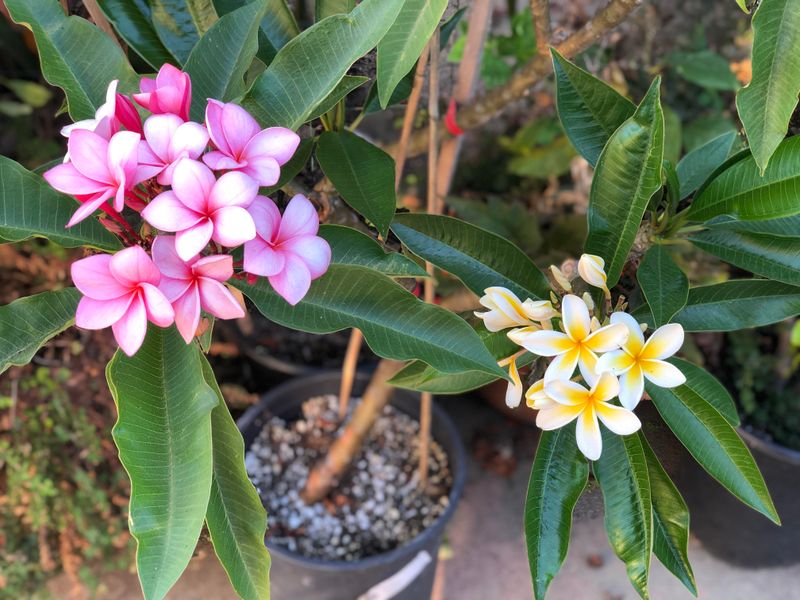
Watering plumeria in Arizona requires a bit of a mindset shift if you’re used to growing other tropical plants. More water is not better here.
Plumeria handles dry periods well, and consistent overwatering is more damaging to the plant than an occasional missed watering.
During the active growing season — roughly April through September in most parts of Arizona — water thoroughly until it drains freely from the bottom of the pot. Then wait.
Check the top inch or two of soil before watering again. If it still feels damp, hold off another day or two.
In triple-digit heat, soil in small pots can dry faster, so check more frequently rather than watering on a fixed schedule.
Deep watering encourages roots to grow downward in search of moisture, which builds a stronger root system over time. Shallow, frequent watering keeps roots near the surface and makes the plant less stable and less resilient during dry spells.
Arizona’s monsoon season, typically July through September, adds a variable that catches some growers off guard. Natural rainfall during this period can be heavy and sudden.
Move pots under a covered patio during sustained monsoon rain to avoid saturating the soil beyond what the drainage can handle quickly.
5. Protect Roots From Extreme Heat In Summer
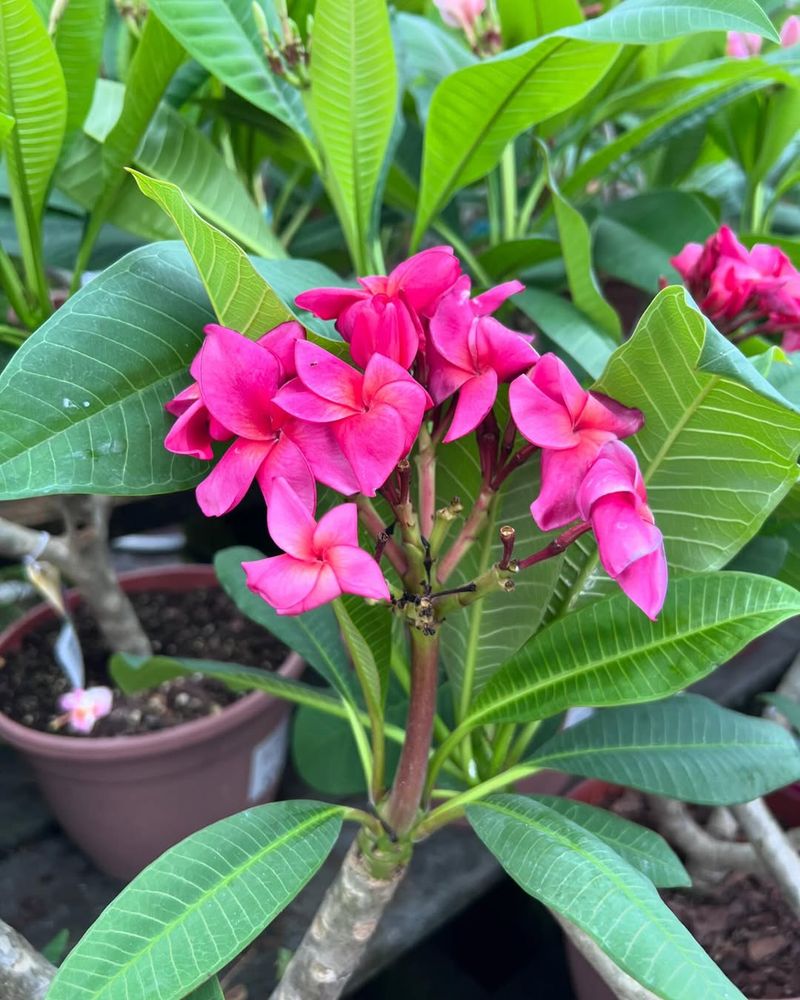
Arizona summers are no joke, and while plumeria loves heat, there is a real difference between warm and scorching.
Air temperatures above 110 degrees Fahrenheit are common in the low desert, and concrete patios can radiate heat that pushes root-zone temperatures even higher.
Roots sitting in superheated soil stop absorbing water and nutrients efficiently, even when everything else looks fine from the outside.
One of the easiest fixes is moving pots off direct concrete surfaces. Elevating containers on pot feet, wooden pallets, or even a folded towel creates an air gap that reduces heat transfer from the ground into the pot.
Light-colored surfaces reflect less heat than dark pavement, so placement matters too.
Grouping multiple pots together can help moderate temperature around the root zones through shared shade and reduced direct exposure.
Wrapping the outside of a pot with burlap or a light-colored fabric cover during the hottest weeks is a low-cost way to insulate against radiant heat without blocking airflow.
Mulching the top of the pot with a thin layer of coarse gravel or small rocks also helps slow moisture evaporation and keeps surface soil from overheating. Skip organic mulch inside containers — it can stay too moist and encourage fungal issues in the warm, humid conditions of Arizona’s monsoon months.
6. Reduce Watering During Winter Dormancy
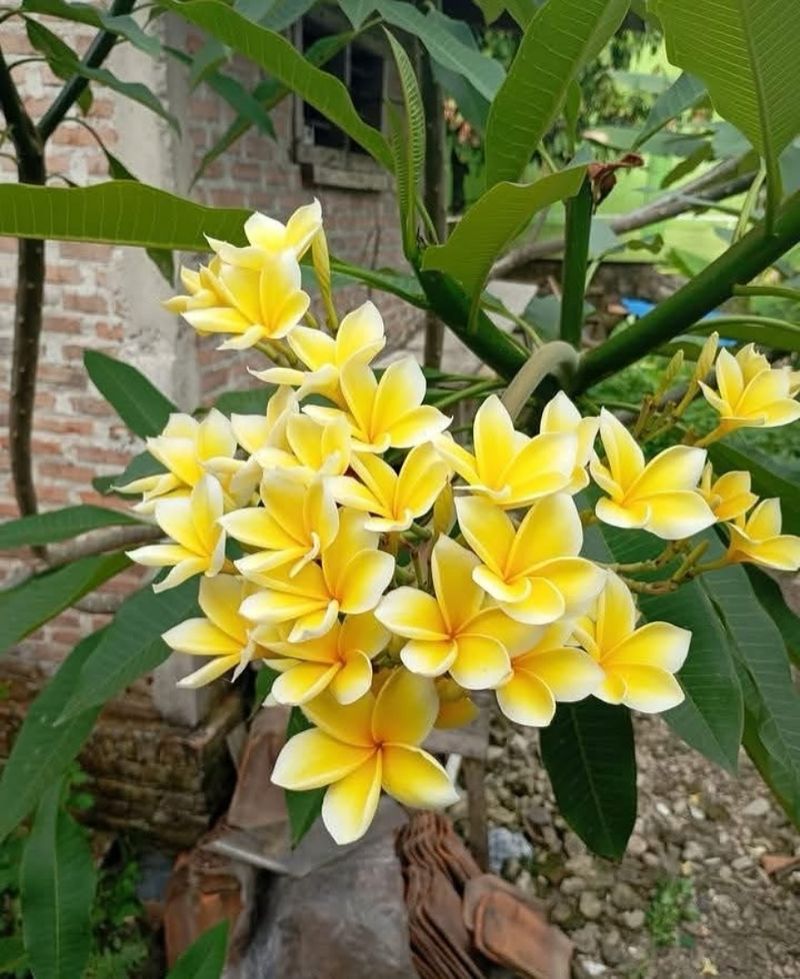
When fall arrives and temperatures in Arizona start dropping into the 60s at night, plumeria begins slowing down. Leaves yellow and drop, branches stop pushing new growth, and the whole plant shifts into a resting state.
Continuing to water at the same rate you used during summer is one of the most common mistakes during this period.
Cut back watering significantly once you see the first signs of dormancy — usually around October or November depending on your elevation and location within Arizona.
In the low desert around Phoenix, dormancy may arrive later than in higher elevation areas like Flagstaff or Prescott, where cooler nights come sooner.
Water only enough to keep the stems from shriveling, roughly once every three to four weeks depending on pot size and indoor conditions.
Dormant plumeria does not need fertilizer. Pushing nutrients into a resting plant can trigger soft, weak new growth that is vulnerable to cold snaps.
Hold off on any fertilizing until you see new leaf buds emerging in spring, which in southern Arizona can happen as early as March.
Check the stems occasionally during winter. Healthy dormant stems should feel firm and look slightly wrinkled at most.
7. Bring Pots Indoors When Temperatures Drop
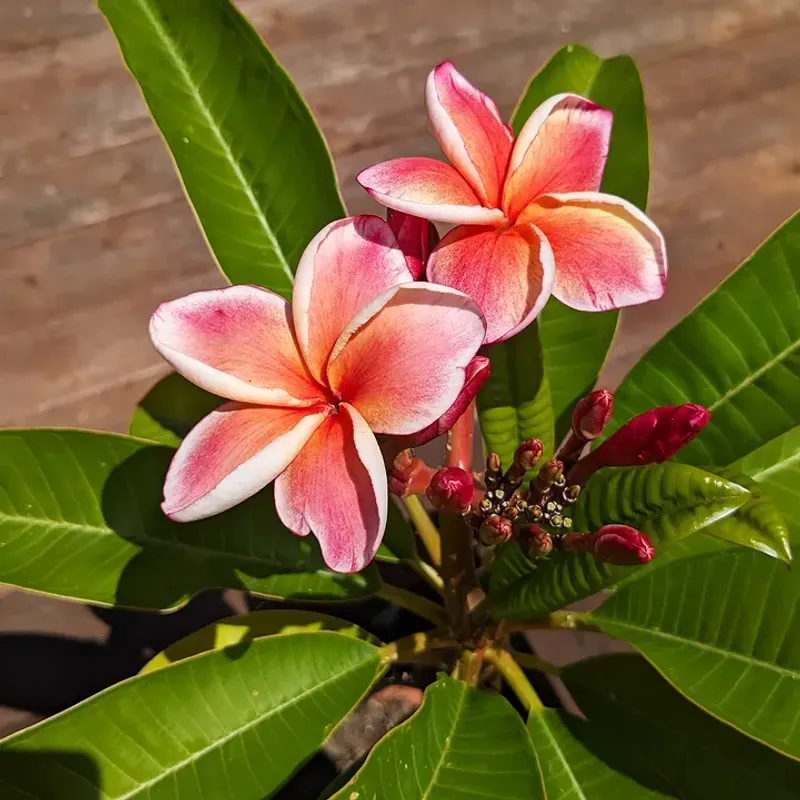
Plumeria can handle mild cool weather, but frost will damage stems and may affect the plant’s ability to recover and bloom the following season. In most of Arizona’s low desert areas, hard freezes are rare but do happen.
Higher elevation cities like Flagstaff regularly see freezing temperatures from November through March, making indoor protection essential there.
Move pots inside before overnight temperatures consistently drop below 40 degrees Fahrenheit. A garage, covered patio, or bright indoor room all work well.
The plant does not need a lot of light during dormancy since it isn’t actively growing, but a spot near a south-facing window helps if you want to encourage earlier spring activity.
Avoid placing dormant plumeria near heating vents. Forced hot air dries out the stems faster than natural dormancy allows and can cause premature, weak growth in the middle of winter when outdoor conditions won’t support it.
Consistent, cool, and dry indoor storage is the goal — not warm and stimulating.
Check stored plants once a month. Look over the stems for any signs of soft spots or unusual discoloration, and make sure the pot is not sitting in any collected moisture.
Pots stored on garage floors can wick up cold and moisture from concrete, so keep them elevated even indoors.