Native Michigan Plants That Handle Deer, Clay Soil, And Deep Shade All At Once
Finding plants that can handle deer, heavy clay soil, and deep shade in Michigan can feel almost impossible at first.
Many gardeners try one plant after another, only to watch them struggle in the same tough spots year after year. The good news is that some native Michigan plants are far more capable than most people expect.
These are the plants built for hard conditions, the kinds of spaces where sunlight is limited, soil stays dense, and hungry deer wander through without warning. Instead of fighting your yard, these natives work with it.
They bring texture, color, and life to places that often get ignored because they seem too difficult to plant.
Some offer bold leaves, some bring soft blooms, and others quietly fill in shady corners with lasting beauty.
If you have a problem area that never seems easy, these plants may be exactly what your garden has been missing.
1. Wild Ginger (Asarum canadense)
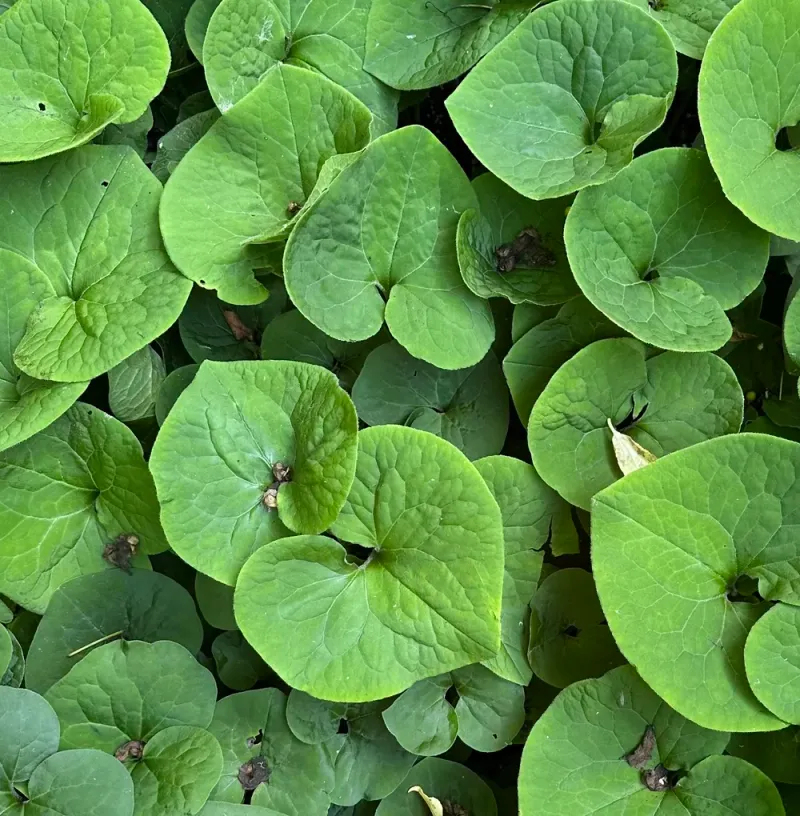
Walk through almost any shaded Michigan forest in spring and you will likely spot wild ginger spreading quietly across the ground like a living green blanket.
Its broad, heart-shaped leaves are bold and beautiful, filling in bare patches under trees where most plants simply refuse to grow.
Michigan gardeners love it because it genuinely thrives where other plants give up. Wild ginger handles clay soil surprisingly well, especially when the ground holds a bit of moisture from rain or snowmelt.
It does not need perfect drainage to look good, which makes it a standout choice for those tricky low spots in the yard.
The roots spread slowly but steadily, creating a dense mat that crowds out weeds over time.
Deer tend to leave wild ginger alone because its foliage has a spicy, aromatic scent that most deer find unappealing.
That natural deer resistance makes it one of the most reliable groundcovers in Michigan’s woodland gardens.
You can plant it in deep shade under mature oaks or maples and watch it fill in beautifully over a few seasons. Adding a little compost when planting helps it get established faster in heavy clay.
Once it settles in, wild ginger is remarkably low-maintenance and keeps spreading on its own without much help from you.
2. Pennsylvania Sedge (Carex pensylvanica)
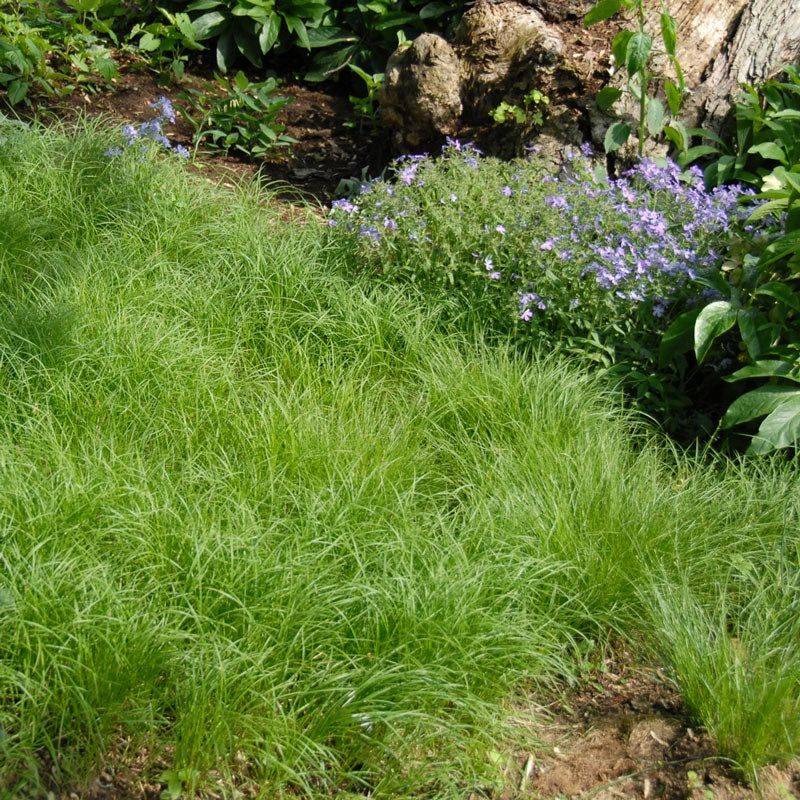
If you have ever wished for a lawn that does not need mowing every week, Pennsylvania sedge might just change your gardening life.
This native sedge grows in a soft, fine-textured carpet that looks like a tidy lawn but requires almost none of the same effort.
Michigan homeowners are increasingly using it as a grass alternative in shaded areas where traditional turf simply browns out and struggles.
Clay soil is no obstacle for Pennsylvania sedge, especially in spots that stay a bit dry under tree canopies where rain barely reaches.
It adapts to a wide range of conditions, from dry shade to average moisture, making it one of the most flexible native plants available in Michigan. The texture is fine and graceful, giving your yard a naturally polished look without any fuss.
Your Michigan Garden Changes Every Week. Your Plan Should Too.
Gardening in Michigan changes quickly throughout the season. Every Friday you’ll receive a simple weekly plan showing exactly what to plant, prune, fertilize, harvest, and protect so you never miss the right timing.
Deer generally avoid sedges entirely, which is a huge bonus for Michigan gardeners who live near wooded areas with active deer populations.
The plant stays green through much of the year and even retains some color in mild winters, adding quiet beauty to the landscape.
It spreads gently by rhizomes, filling in gradually without becoming aggressive or invasive. Planting it in drifts under trees creates a woodland feel that looks intentional and elegant.
For a truly low-maintenance Michigan garden, Pennsylvania sedge is hard to beat in deep shade situations.
3. Christmas Fern (Polystichum acrostichoides)
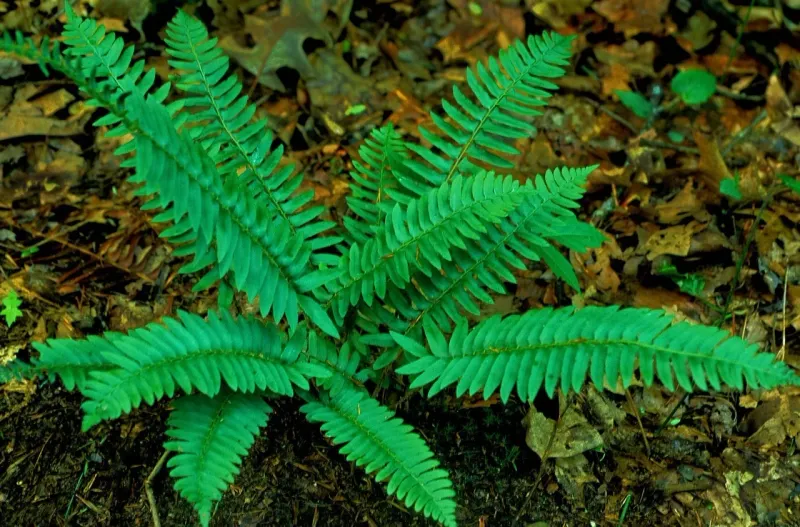
Few native plants in Michigan stay green and gorgeous all the way through winter quite like the Christmas fern.
Its dark, leathery fronds hold their color even under snow, which is exactly how it got its festive name.
Early settlers reportedly used the evergreen fronds for holiday decorations, and honestly, it is easy to see why they were so charmed by it.
Christmas fern is one of the toughest shade ferns you can grow in Michigan, handling heavy clay soils and deep shade without complaint.
It forms a tidy, arching clump that looks structured and clean in the garden, giving visual interest even in the darkest corner of your yard.
Unlike some ferns that flop around or spread aggressively, this one stays in a well-behaved mound that rarely needs dividing. Deer typically pass right by ferns, and Christmas fern is no exception to that pattern.
The thick, waxy texture of the fronds seems to make it unappealing to browsing deer, which is a major advantage in Michigan neighborhoods surrounded by woods. It pairs beautifully with wild ginger or foamflower in a layered shade planting.
Amending clay soil with some leaf compost before planting gives the roots a better start, though established plants are remarkably tough.
Over time, a single clump grows into a lush, full presence that anchors a shaded garden bed with real confidence.
4. Foamflower (Tiarella cordifolia)
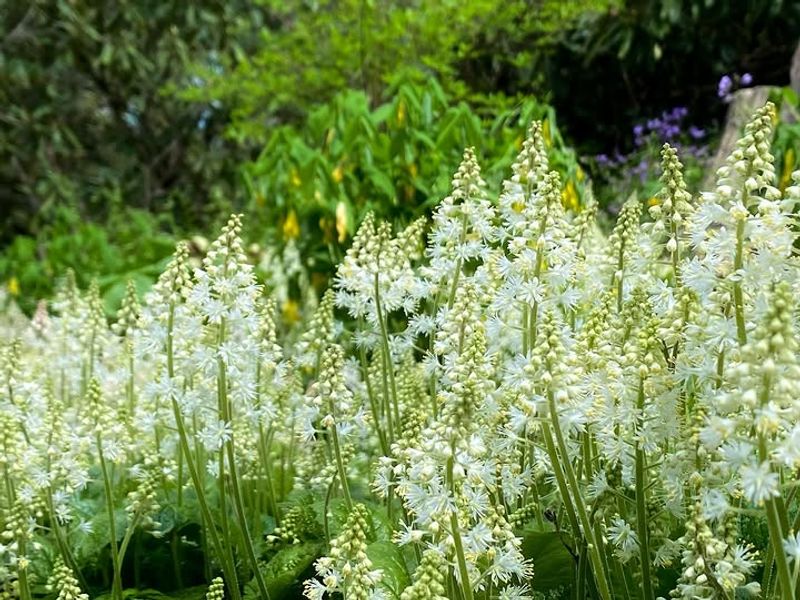
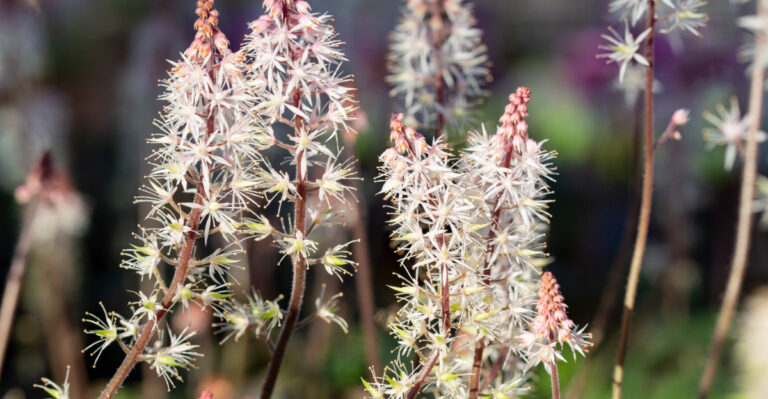
Foamflower earns its name every spring when it sends up delicate, frothy spikes of white blooms that look like tiny clouds hovering above the garden floor.
It is one of those plants that makes visitors stop and ask what it is, because the flowers are genuinely charming and unexpected in a shaded space. Michigan gardeners who plant it once almost always come back to plant more.
This native woodland perennial thrives in the kind of moist, shaded conditions found under Michigan’s hardwood forests, and it handles clay soil reasonably well when some organic matter is mixed in.
The leaves are attractive even when the plant is not blooming, with interesting lobed shapes and sometimes bronzy markings that add color through the growing season. It spreads gradually by runners, slowly filling in a shaded area with a lush, layered look.
Deer resistance with foamflower is strong, partly because of the texture and chemistry of its foliage, which deer tend to find unpleasant.
That makes it a trustworthy choice for Michigan properties where deer pressure is a regular problem.
Planting it alongside Christmas fern or wild ginger creates a woodland combination that looks professionally designed but is actually very easy to maintain.
Foamflower blooms in mid to late spring, which adds a bright, cheerful moment to shaded Michigan gardens just when everything else is waking up. It is genuinely one of the most rewarding native plants you can add to a difficult spot.
5. White Snakeroot (Ageratina altissima)
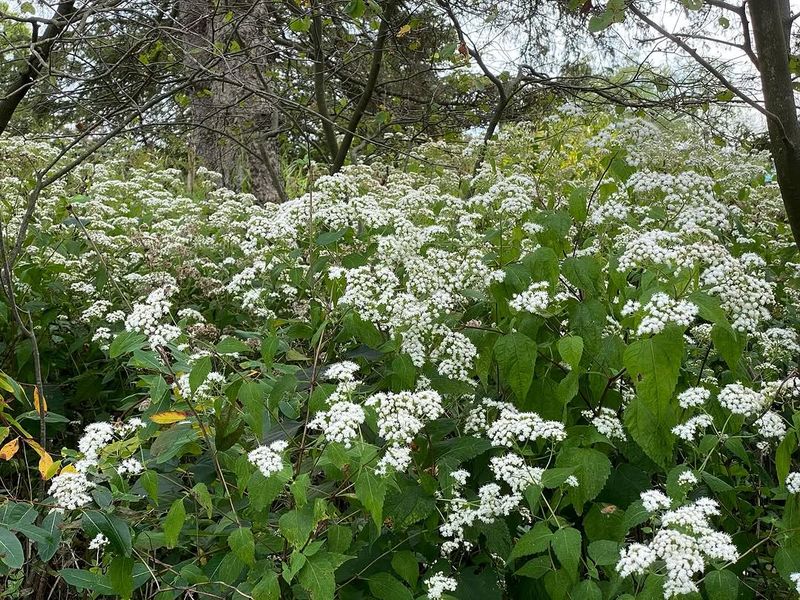
When late summer rolls around and most shade plants are looking tired and faded, white snakeroot steps up with a burst of bright, fluffy white flowers that light up the garden.
It blooms at a time when almost nothing else in deep shade is putting on a show, which makes it incredibly valuable for Michigan gardeners who want late-season color. The flowers attract pollinators too, adding life and movement to shaded spots.
White snakeroot is one of the most adaptable native plants in Michigan, handling deep shade and heavy clay soils with ease.
It grows vigorously once established, forming full, leafy clumps that fill in quickly and look lush through the growing season.
The plant is native to woodland edges and forest floors throughout Michigan, so it is perfectly suited to the local climate and soil conditions.
Deer strongly avoid white snakeroot because the plant contains compounds that make it unpalatable and even toxic to them, so browsing is rarely an issue.
This natural deer resistance is one of its biggest selling points for gardeners in areas with heavy deer traffic.
It self-seeds modestly, which means it can spread to fill a shaded area over time without becoming overwhelming.
Cutting it back after blooming helps keep it tidy and prevents too much self-seeding if you prefer a more controlled look.
For a reliable, no-fuss native that handles all three of Michigan’s toughest garden challenges, white snakeroot is a genuine standout.
6. Jack-In-The-Pulpit (Arisaema triphyllum)
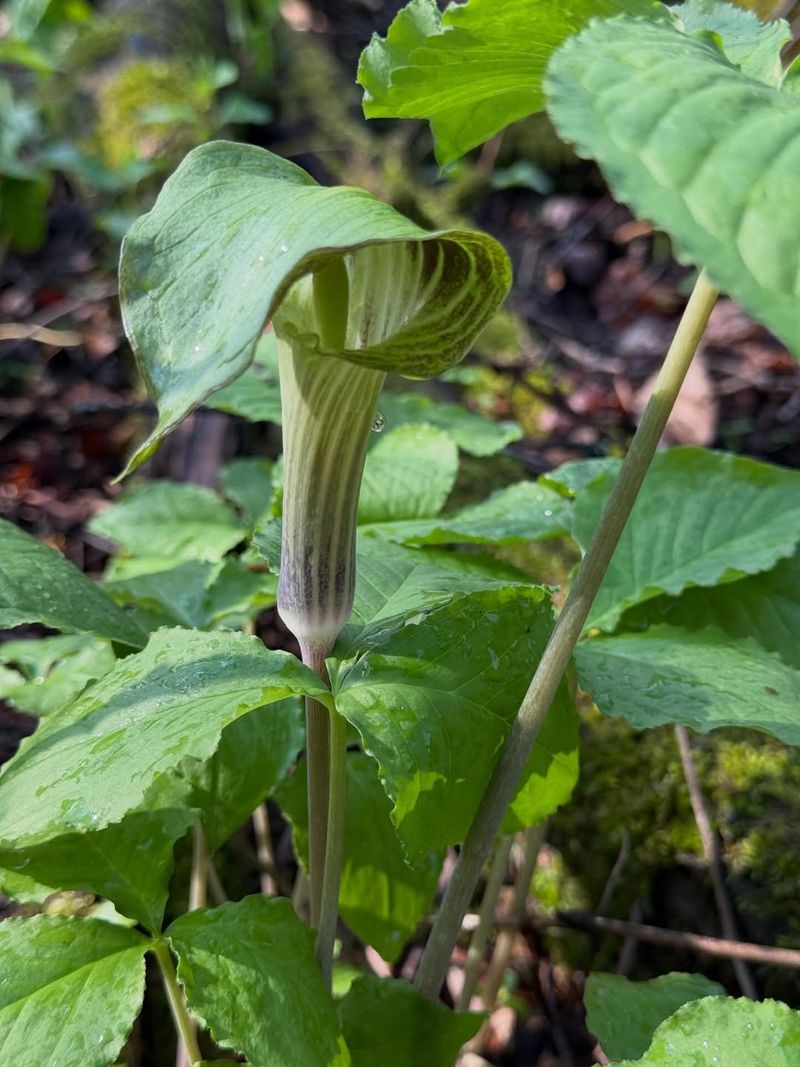
Few plants in Michigan’s native woodland flora are as fascinating and conversation-starting as jack-in-the-pulpit.
The hooded, striped flower structure that gives the plant its name looks almost tropical, like something you might expect to find in a rainforest rather than a shaded Michigan backyard.
Children especially love spotting it on nature walks, and it brings a real sense of wonder to any garden that includes it.
Jack-in-the-pulpit thrives in rich, moist clay soils and deep shade, conditions that mirror the forest floors where it naturally grows across Michigan.
It actually prefers consistently moist ground, so low spots in the yard where clay holds water work well for this plant.
The large, three-part leaves provide bold, tropical-looking texture through the growing season, and in fall the plant produces clusters of bright red berries that add another layer of visual interest.
Deer typically avoid jack-in-the-pulpit because the plant contains calcium oxalate crystals, which cause a strong burning sensation if eaten.
That chemical defense makes it naturally resistant to deer browsing, which is a real advantage in Michigan areas with high deer populations.
Planting it alongside ferns or wild ginger creates a layered woodland garden that looks lush and natural.
It grows from a corm that slowly increases in size each year, and larger corms sometimes produce plants with two hoods instead of one. Patience pays off with this plant, as it becomes more impressive with each passing season.
7. Mayapple (Podophyllum peltatum)
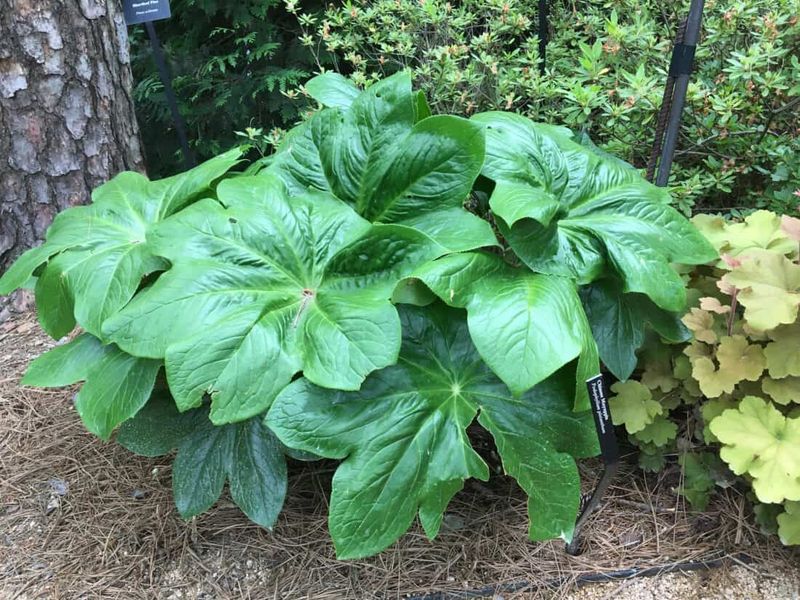
Mayapple is the plant that makes a Michigan woodland garden feel truly wild and alive. Its large, umbrella-like leaves push up through the soil in spring with surprising speed, unfurling into a dense, low canopy that covers the ground like a miniature jungle.
Once a colony gets going, it creates one of the most dramatic groundcover effects you can achieve in deep shade.
Heavy clay soil suits mayapple just fine, especially in spots that stay moist through spring and early summer.
It spreads by underground rhizomes, gradually expanding its colony year after year without needing any help from you.
The white flowers that bloom underneath the leaves in spring are hidden but lovely, and they eventually give way to the small, yellowish fruits that give the plant its name.
Deer almost always avoid mayapple because most parts of the plant contain compounds that are unappealing and harmful to them, making it one of the most reliably deer-resistant native plants in Michigan.
That strong natural protection means you can plant it in high-traffic deer areas without worrying about losing it to browsing.
Mayapple goes dormant by midsummer, so pairing it with ferns or sedges fills the gap it leaves behind.
The combination of fast spreading, bold texture, and genuine deer resistance makes it one of the most useful native plants for shaded Michigan gardens. It is low-maintenance, tough, and genuinely beautiful in a wild, effortless way.
8. Solomon’s Seal (Polygonatum biflorum)
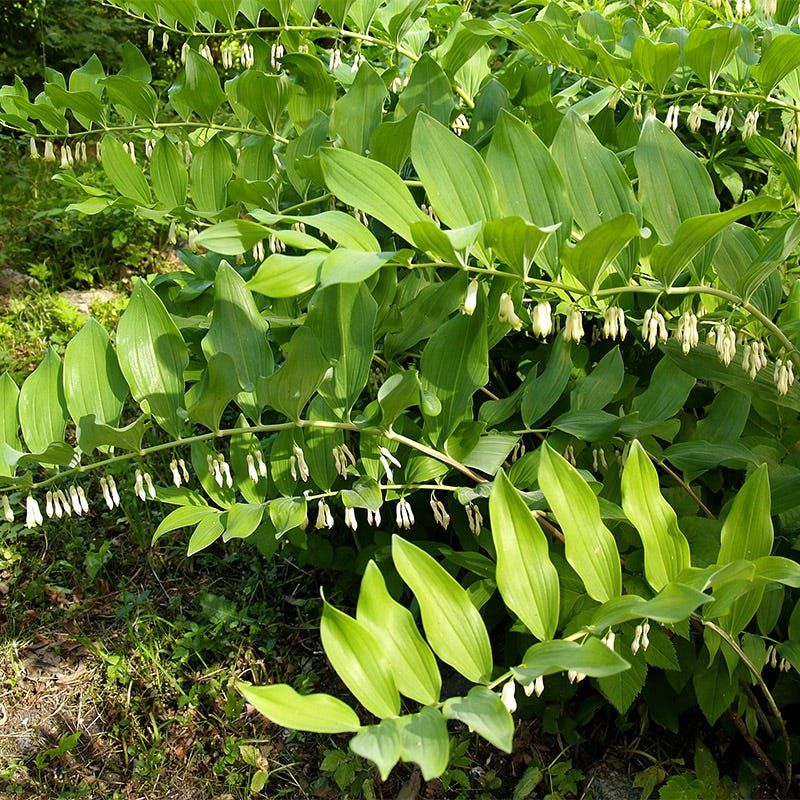
There is something undeniably elegant about Solomon’s seal, with its long, gracefully arching stems and the delicate white bell-shaped flowers that dangle underneath each leaf like tiny lanterns.
It brings a refined, architectural quality to shaded Michigan gardens that most other native plants simply cannot match.
Garden designers often use it as a structural anchor in shade plantings because its form is so naturally beautiful.
Solomon’s seal adapts well to clay soil as long as the ground does not stay waterlogged for extended periods.
It prefers moist, shaded conditions similar to those found in Michigan’s hardwood forests, where it naturally grows along stream edges and under mature tree canopies.
The stems can reach two to three feet tall, creating a lovely mid-height layer in a layered woodland garden design.
Deer resistance with Solomon’s seal is moderate to strong, and in most Michigan gardens it goes largely unbrowsed even in areas with heavy deer activity.
The plant spreads steadily by rhizomes, forming broader clumps over time that become more impressive each season.
In fall, the foliage turns a warm golden yellow before fading, adding one more season of beauty to its already long list of qualities.
Pairing it with foamflower or Christmas fern creates a shade planting that looks lush and layered all season long.
For Michigan gardeners who want both beauty and function in a challenging spot, Solomon’s seal consistently delivers on both counts.
9. Spicebush (Lindera benzoin)
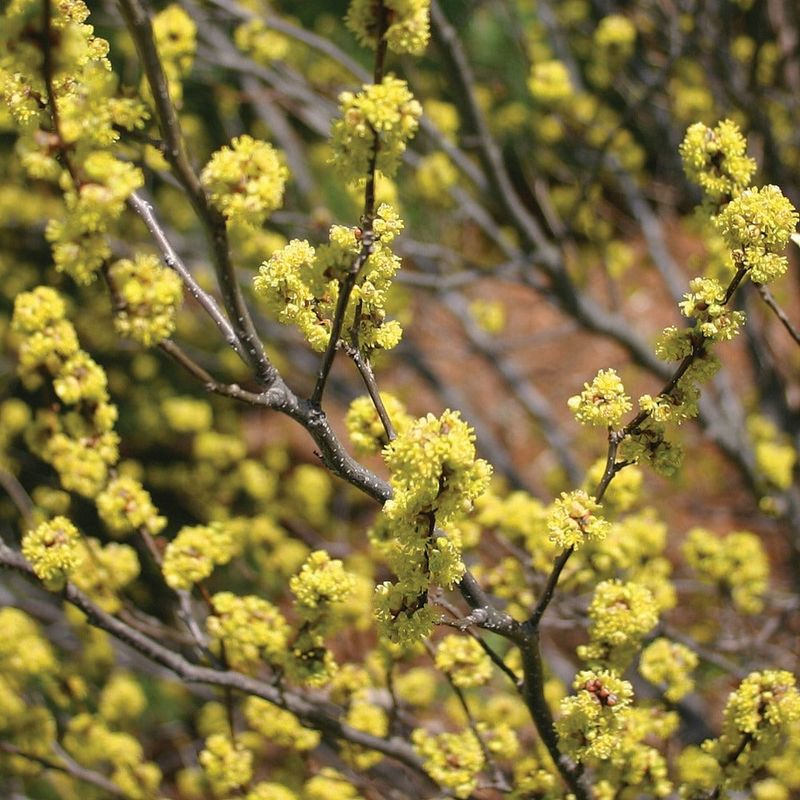
Spicebush is one of those native Michigan shrubs that rewards you in every single season, from the tiny yellow flowers that appear on bare branches in early spring to the brilliant red berries and blazing yellow fall foliage that close out the year.
It is one of the first signs of spring in Michigan woodlands, blooming weeks before most other plants even wake up. That early color is genuinely exciting after a long Michigan winter.
As a shrub, spicebush brings real structure and height to shaded garden areas, growing anywhere from six to twelve feet tall in the right conditions.
It tolerates heavier soils and shaded spots remarkably well, which reflects its natural habitat along Michigan’s wooded stream banks and forest edges.
The aromatic leaves and stems give off a spicy, pleasant scent when brushed, adding a sensory element that makes it even more enjoyable to grow.
Deer generally avoid spicebush more than they browse many other shrubs, likely because of the strong aromatic compounds in its foliage.
While no plant is completely deer-proof, spicebush holds up well even in Michigan areas with significant deer pressure.
It also supports native wildlife beautifully, serving as a host plant for spicebush swallowtail butterfly caterpillars and providing berries that migrating birds love.
Planting it along the back of a shaded garden bed creates a natural backdrop that looks full, lush, and effortlessly native. It is a true workhorse of the Michigan woodland garden.
10. American Beech Seedlings (Fagus grandifolia)
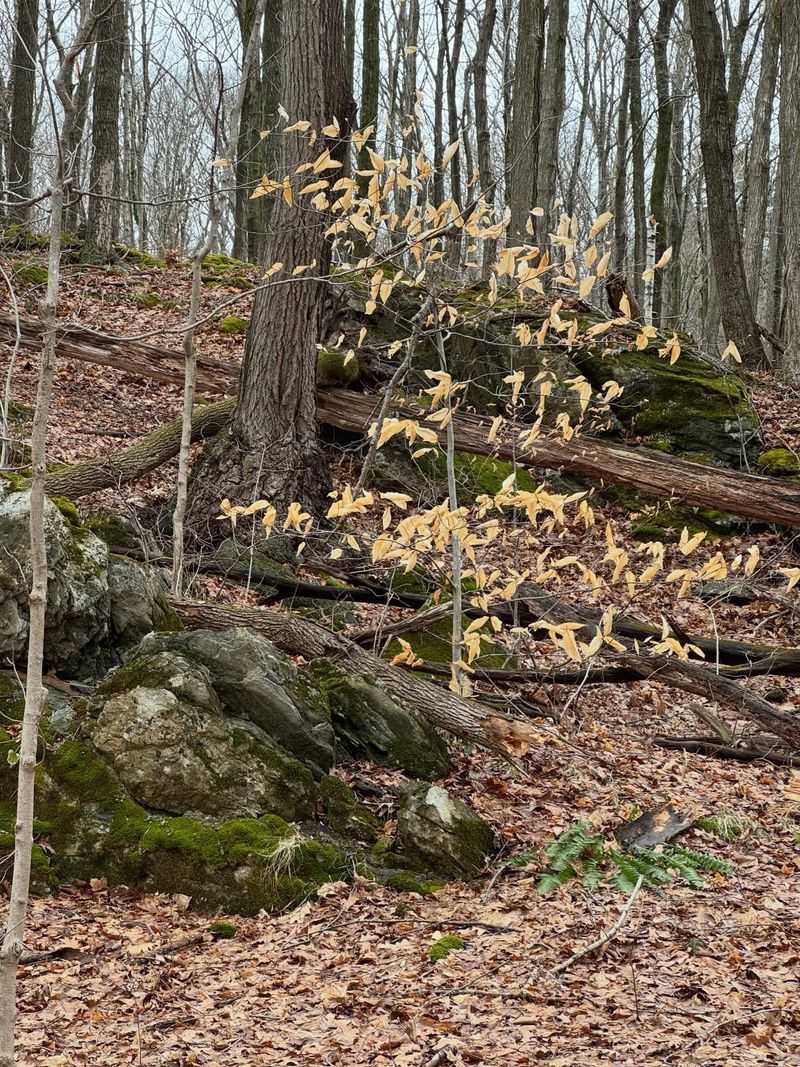
American beech is one of Michigan’s most iconic forest trees, and anyone who has run their hand along its smooth, silver-gray bark knows there is something almost magical about it.
In woodland gardens, young beech seedlings and small understory specimens bring a sense of timeless, deep-forest atmosphere that no ornamental plant can quite replicate.
Growing them from the seedling stage is a rewarding long-term investment in your Michigan landscape.
Beech naturally regenerates in deep shade under the canopy of mature trees, making it one of the few tree species genuinely adapted to low-light conditions in Michigan forests.
It grows in clay-rich forest soils throughout the state, thriving in the same heavy, organic-laden ground that challenges so many other plants.
Young plants establish slowly but grow steadily once their roots settle in, and they are remarkably resilient once past the early stages.
Deer do browse young beech plants, so some protection with fencing or repellent spray is helpful in the early years.
Once plants grow taller and the lower leaves are out of easy reach, browsing pressure drops significantly.
The papery, golden-bronze leaves that cling to beech branches through winter add stunning texture and sound to a Michigan garden even in the coldest months.
Planting young beech alongside ferns and sedges creates a truly authentic Michigan woodland feel.
For gardeners who think in decades rather than just seasons, American beech is one of the most rewarding native plants you can grow.