Popular Michigan Landscape Plants That Are Quietly Becoming Invasive Problems
Some of the most familiar plants in Michigan landscapes have a side that many homeowners do not notice at first.
They may start out as attractive, easy additions to a yard, but over time, a few of these popular choices can begin to spread beyond where they were planted.
What seems manageable in a garden bed can slowly move into nearby spaces, creating more work and unexpected problems.
In some cases, these plants push out native species and change the balance of the surrounding environment.
The tricky part is that many are still widely sold or shared, so their impact often goes overlooked. As more gardeners become aware of how these plants behave, they are starting to rethink what they grow.
Taking a closer look at these common landscape choices can help you avoid future issues and make smarter decisions for a healthier, more balanced yard.
1. Japanese Barberry (Berberis thunbergii)
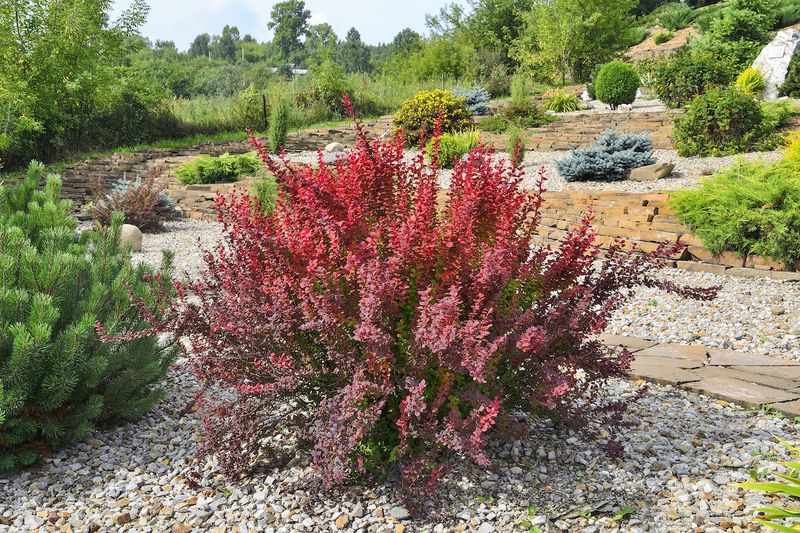
Walk through almost any Michigan neighborhood and you will likely spot a Japanese barberry tucked into a foundation planting, its deep red or purple leaves catching the light beautifully.
It looks harmless, even elegant, but this plant has a troubling secret life beyond your garden bed.
Japanese barberry is a recognized invasive shrub in Michigan, and its spread into natural areas is well documented by state ecologists and university researchers.
Birds eat the bright red berries and scatter seeds across woodland floors, where the plant germinates easily and forms dense, thorny thickets.
These thickets block sunlight from reaching native wildflowers and tree seedlings, slowly changing the character of Michigan’s forest understory.
The thorns make removal difficult and uncomfortable, so infestations often go unchecked for years before anyone notices the damage. There is also a lesser-known concern tied to this plant.
Research has shown that Japanese barberry thickets create humid, shaded conditions that support higher populations of deer ticks, which can carry Lyme disease.
Replacing barberry with native alternatives like Michigan holly, ninebark, or spicebush gives your yard color and texture without the ecological baggage.
Making that swap is genuinely one of the most impactful choices a Michigan homeowner can make for both the local environment and backyard safety.
2. Burning Bush (Euonymus alatus)
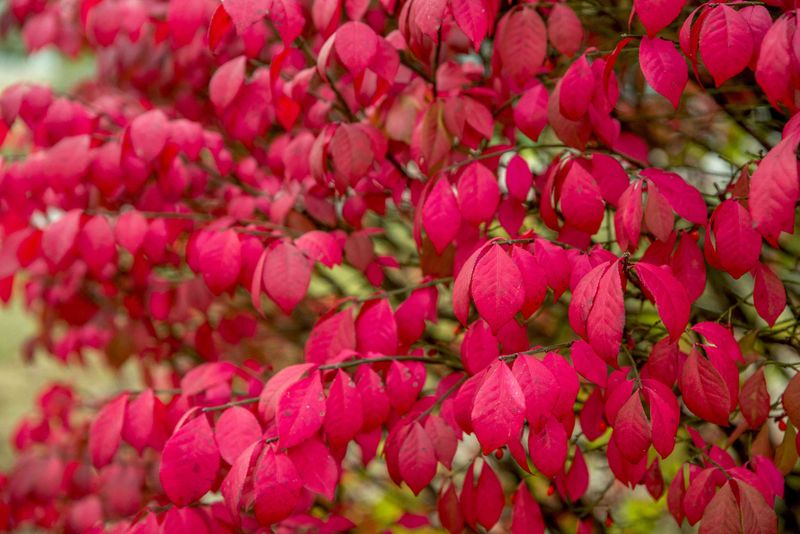
Few plants put on a fall show quite like burning bush. That electric red color lights up Michigan yards every October, and for decades it was one of the top-selling shrubs at nurseries across the state.
The problem is that the same birds drawn to your yard for its berries are also spreading its seeds far beyond your property line, into parks, nature preserves, and woodland edges throughout Michigan.
Once established in natural areas, burning bush forms thick stands that shade out native shrubs and wildflowers.
It leafs out early in spring and holds its leaves late into fall, giving it a competitive edge over native plants that follow the natural seasonal rhythm.
Michigan State University Extension has flagged it as a plant of concern, and several states have already moved to restrict its sale entirely.
Your Michigan Garden Changes Every Week. Your Plan Should Too.
Gardening in Michigan changes quickly throughout the season. Every Friday you’ll receive a simple weekly plan showing exactly what to plant, prune, fertilize, harvest, and protect so you never miss the right timing.
The good news is that native alternatives can match or even beat burning bush for fall color. Highbush blueberry turns brilliant red and orange in autumn while also producing edible fruit.
Chokeberry, native viburnums, and itea all offer stunning seasonal color without spreading aggressively beyond the yard.
If your landscape still has burning bush, consider replacing it gradually with one of these native options.
Your yard will still look amazing in October, and Michigan’s natural spaces will be better off for the change you make.
3. Periwinkle (Vinca minor)
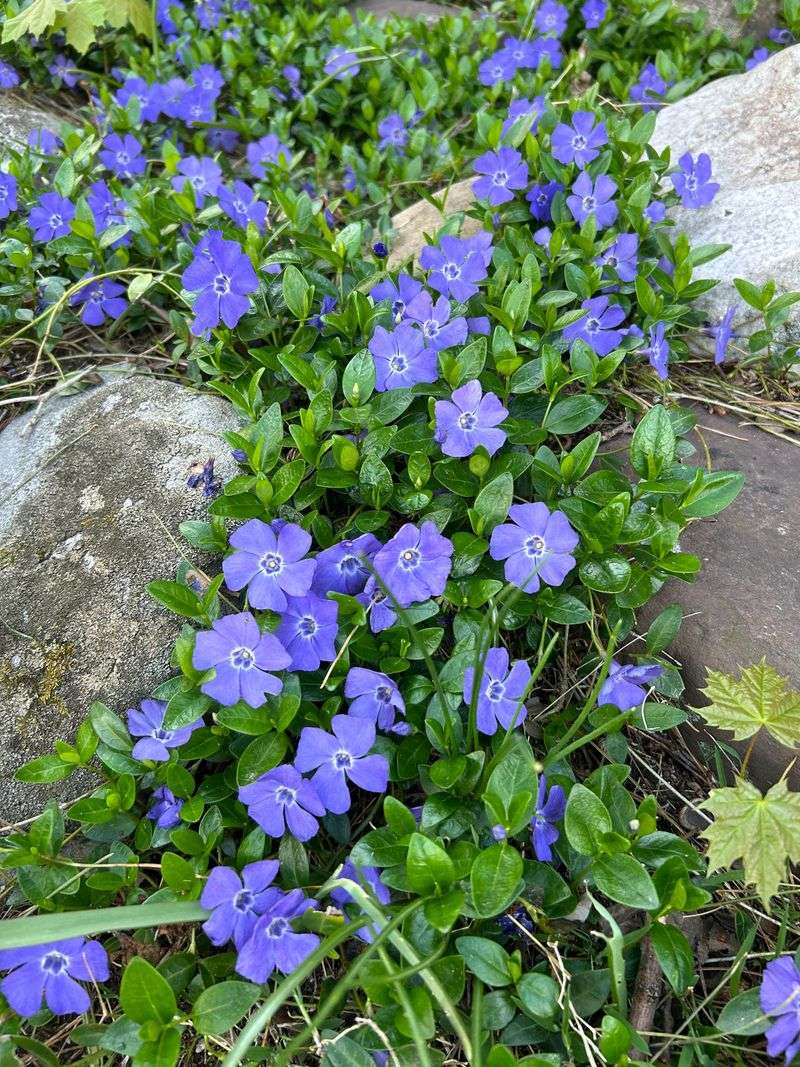
Periwinkle has been a go-to groundcover for shady Michigan yards for generations, and it is easy to understand why.
The glossy dark green leaves stay attractive year-round, the soft purple-blue flowers appear in spring, and it fills in bare spots under trees without much fuss.
Many gardeners still think of it as a low-maintenance, harmless plant, which is exactly what makes it such a sneaky problem.
Michigan guidance from conservation organizations and land managers warns that periwinkle can spread into adjacent woodland areas, where it forms dense mats that smother native spring wildflowers like trillium, wild ginger, and bloodroot.
These native wildflowers are slow-growing and cannot compete once a thick carpet of periwinkle takes hold.
Woodland edges near residential properties are especially vulnerable, since that is often where yards transition directly into natural areas.
Periwinkle spreads by trailing stems that root wherever they touch moist soil, so it does not need birds or wind to move it along. If your shade garden borders a wooded area, that is worth paying attention to.
Native groundcovers like wild ginger, Pennsylvania sedge, or golden groundsel provide similar coverage and stay within appropriate boundaries much more reliably.
Swapping out periwinkle near woodland edges in Michigan is a simple step that protects some of the most beautiful and delicate plants in the state’s natural landscape.
4. English Ivy (Hedera helix)
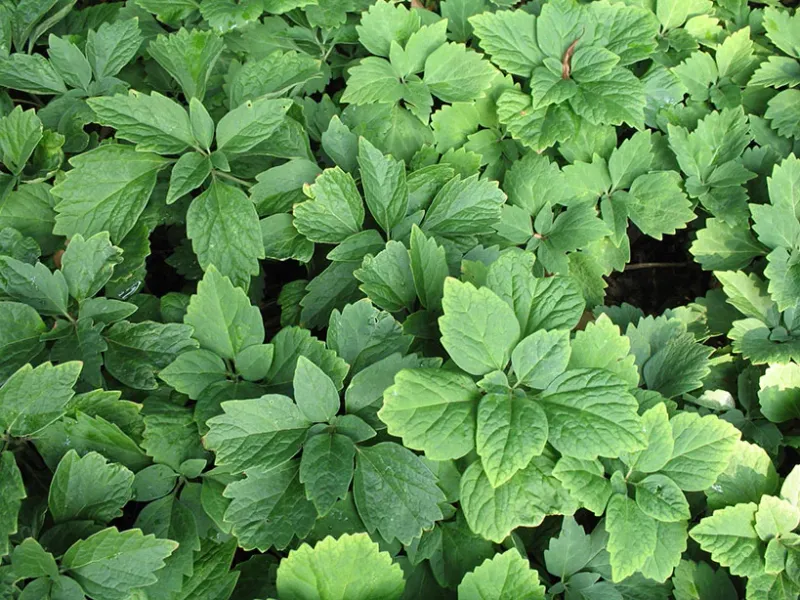
English ivy has a reputation for looking classic and refined, climbing stone walls and covering shaded slopes with lush, dark green foliage.
Many Michigan homeowners have planted it under trees or along fences where grass refuses to grow, and it does fill those spaces quickly.
That fast growth is actually the core of the problem, because English ivy does not stop at your property line.
In Michigan, English ivy can persist through winters in sheltered spots and spread steadily into wooded areas over time.
Once it climbs into tree canopies, it adds significant weight to branches and creates what arborists sometimes call a sail effect, making trees far more vulnerable to storm damage.
On the ground, the dense mats prevent native seedlings from establishing and can gradually change the entire character of a forest floor.
Michigan conservation groups have raised concerns about English ivy near natural areas, especially as milder winters allow it to survive and spread more aggressively than in decades past.
The plant also hosts bacterial leaf scorch, a disease that can affect native oaks and elms nearby.
Native alternatives for shady areas include wild ginger, native ferns, or Solomon’s seal, all of which provide beautiful texture without the aggressive tendencies.
If English ivy is already creeping beyond your intended planting area in your Michigan yard, pulling it back sooner rather than later makes a real difference for nearby natural spaces.
5. Callery Pear (Pyrus calleryana)
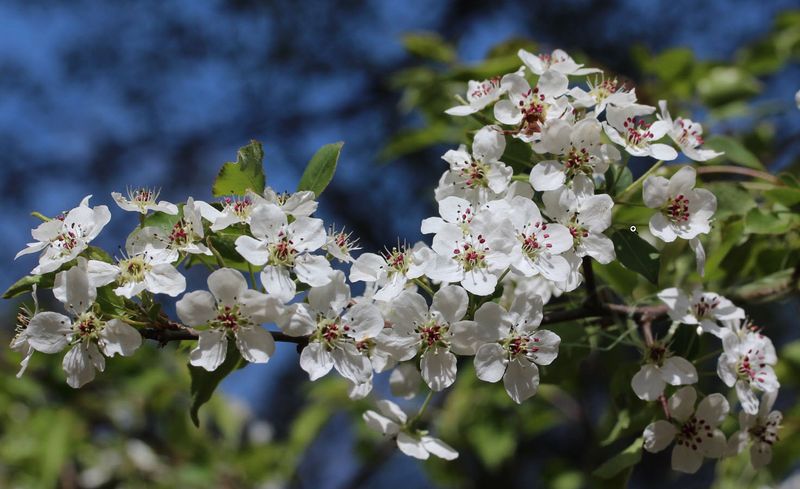
Every spring, streets across Michigan light up with the white blossoms of Callery pear trees, and for years they were considered nearly perfect ornamental trees.
They grow fast, tolerate pollution, and put on a spectacular show twice a year with flowers in spring and red or orange foliage in fall.
Nurseries sold them by the thousands, and municipalities planted them along roadsides and in parking lots across the state.
The problem became clear as these trees matured and began producing fruit. Birds eat the small pear-like fruits and scatter seeds widely, and Callery pear seedlings are now showing up in open fields, roadsides, and forest edges throughout Michigan.
Different cultivars of the tree cross-pollinate with each other, producing fertile offspring that grow into thorny, dense thickets very different from the tidy trees sold at garden centers.
Ohio and several other states have already banned the sale of Callery pear, and Michigan land managers are increasingly concerned about its spread in the southern part of the state.
Native flowering trees make genuinely excellent replacements. Serviceberry blooms just as beautifully in spring and produces berries that support Michigan’s native bird populations.
Redbud, native crabapple, and pagoda dogwood are other strong alternatives. If you are planning a new tree planting in your Michigan yard, skipping Callery pear entirely is a decision you will feel good about for years to come.
6. Common Buckthorn (Rhamnus cathartica)
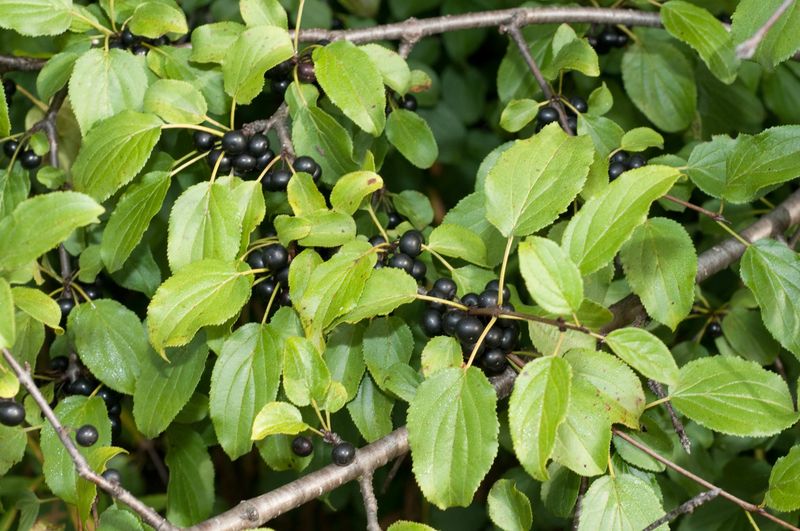
Common buckthorn has been in Michigan for well over a century, originally brought over from Europe as a hedge plant and for wildlife cover.
It does an excellent job of filling a space quickly, which is exactly why it became popular along property edges and in old farmstead plantings.
The trouble is that it does not stay where it is planted, and Michigan now considers it one of the most problematic invasive woody plants in the state.
Buckthorn spreads aggressively by seed, with birds dispersing berries across wide areas each year.
It leafs out earlier in spring than most native plants and holds its leaves much later in fall, giving it a longer growing season to outcompete native shrubs and tree seedlings.
In Michigan’s natural areas, common buckthorn has taken over large sections of woodland understory, eliminating the native shrubs and wildflowers that once grew there.
One particularly frustrating trait is that buckthorn resprouts vigorously from the base when cut, making it challenging to remove once established.
Early detection and consistent follow-up are the most effective strategies for managing it on residential properties in Michigan.
Native alternatives for hedging and screening include serviceberry, native viburnums, and elderberry, all of which support local wildlife far better than buckthorn ever could.
Choosing these plants for new plantings helps protect the broader Michigan landscape from further spread of this persistent invader.
7. Glossy Buckthorn (Frangula alnus)
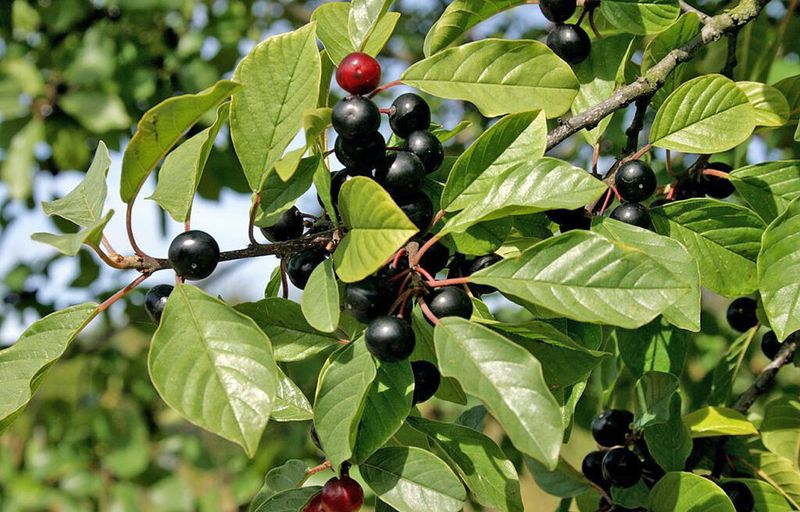
Glossy buckthorn might be less well-known than its relative common buckthorn, but it is every bit as problematic in Michigan, especially in wet and moist habitats.
It was introduced from Europe and has been used in landscaping for screening and wildlife plantings, with its dark green, shiny leaves giving it an attractive appearance through much of the growing season.
That appealing look has helped it slip into many Michigan yards without much scrutiny. What makes glossy buckthorn particularly concerning is its ability to thrive in conditions that challenge most other invasive shrubs.
It tolerates wet soils, shade, and poor drainage, which means it moves readily into Michigan’s wetlands, stream edges, bog margins, and moist forest areas.
Once it establishes in these sensitive habitats, it outcompetes native wetland shrubs like buttonbush, native willows, and meadowsweet, reducing habitat quality for birds, amphibians, and other wildlife.
Michigan classifies glossy buckthorn as a prohibited invasive species, which means it is illegal to sell, plant, or introduce it in the state.
If you have glossy buckthorn on your property and it borders a wetland or moist natural area, addressing it promptly is important for protecting those nearby ecosystems.
Native alternatives for moist screening situations include buttonbush, native willows, or swamp rose, all of which fit naturally into Michigan’s landscape and actively support the native food web rather than disrupting it.
8. Border Privet (Ligustrum obtusifolium)
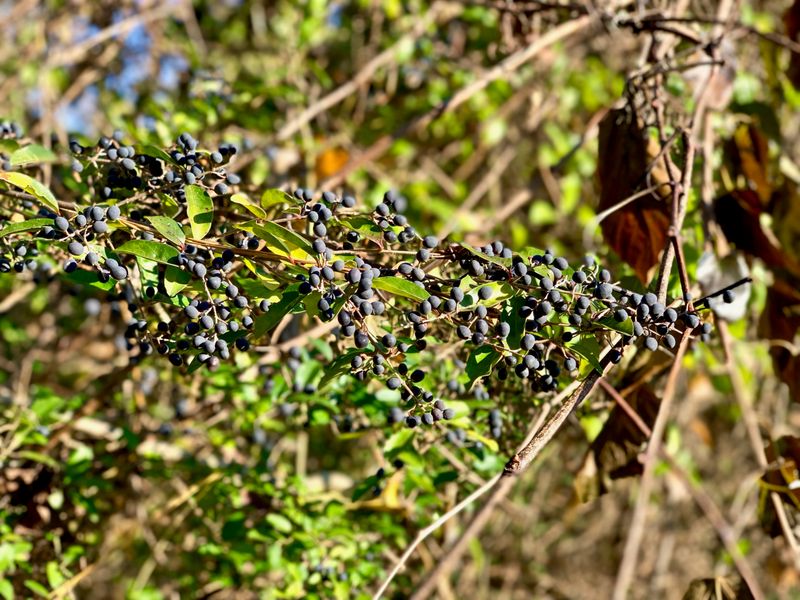
Border privet is one of those plants that has flown under the radar for years in Michigan, quietly sitting in hedgerows and property borders while more notorious invasives grabbed all the attention.
It clips neatly, grows quickly, and tolerates a range of conditions, making it a practical choice for homeowners who want a fast, low-maintenance screen.
Michigan State University Extension, however, has specifically called it out as a plant that can produce heavy fruit crops and form dense thickets beyond the landscape.
Birds are enthusiastic consumers of privet berries, and they distribute seeds broadly across Michigan’s roadsides, woodland edges, and disturbed areas. Seedlings establish readily and grow into dense stands that shade out native vegetation.
Because privet is semi-evergreen in milder Michigan winters, it can maintain a competitive advantage over native deciduous shrubs for much of the year, giving it extra time to establish and spread.
Older neighborhoods and properties with established privet hedges are the most common source of spread, since mature plants produce the largest fruit crops.
Keeping privet heavily trimmed can reduce fruiting, but replacing it with native hedging plants is a far more reliable long-term solution.
Native alternatives like arrowwood viburnum, native ninebark, or American hazelnut provide excellent screening, support pollinators and birds, and stay well-behaved within the Michigan landscape without seeding aggressively into surrounding natural areas.
9. Norway Maple (Acer platanoides)
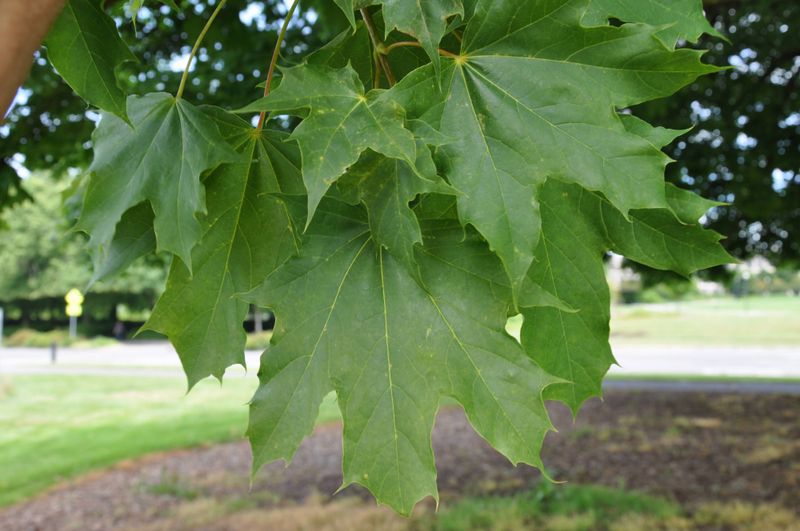
Norway maple has been one of the most widely planted street and yard trees in Michigan for decades, valued for its fast growth, tolerance of urban conditions, and dense shade.
Drive through almost any older Michigan neighborhood and you will see them lining the streets, their broad canopies meeting overhead in a green tunnel that feels almost idyllic in summer.
The problem with that dense shade is precisely what makes Norway maple such a troubling invasive species.
Norway maple seeds prolifically and the winged seeds travel easily on the wind into natural areas.
Once in the woods, Norway maple seedlings grow quickly and eventually produce a canopy so dense that native tree seedlings, including oak, hickory, and sugar maple, cannot regenerate beneath it.
Over time, this reshapes Michigan’s forests in ways that ripple through the entire ecosystem, affecting the birds, insects, and mammals that depend on native tree species.
Michigan conservation organizations have documented Norway maple spreading into natural areas throughout the Lower Peninsula, and the concern is growing as existing trees mature and produce more seeds each year.
Native alternatives for shade and street tree plantings include sugar maple, red maple, and bur oak, all of which support Michigan’s native wildlife far more effectively.
If you are planting a new tree in your Michigan yard, choosing a native maple or oak is a straightforward way to add lasting beauty while giving back to the local ecosystem.
10. Tree Of Heaven (Ailanthus altissima)
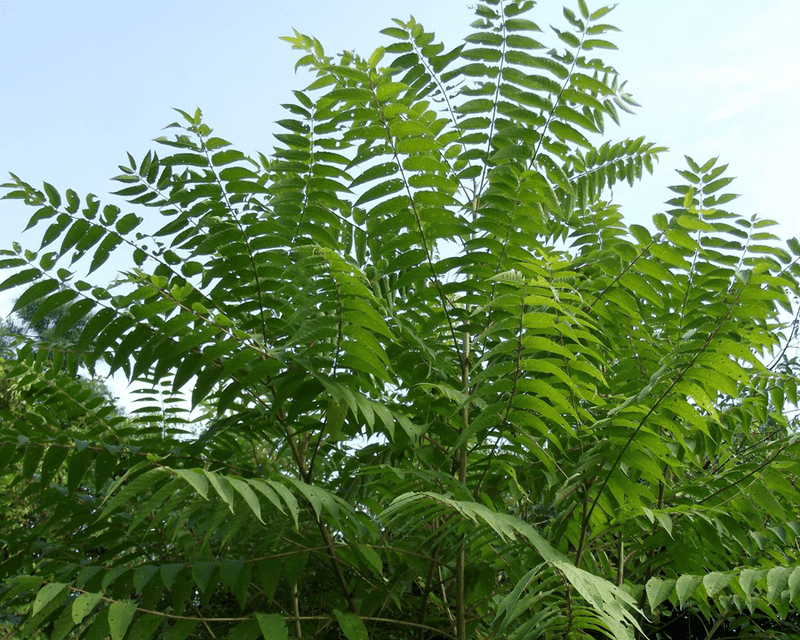
Tree of heaven arrived in the United States from China in the 1700s and was once genuinely celebrated for its ability to grow in the harshest urban conditions, pushing up through cracked pavement, poor soil, and polluted air where almost nothing else would survive.
That toughness made it seem like a practical solution for difficult spots in Michigan cities and towns.
Over time, though, that same unstoppable resilience turned it into one of the most aggressive invasive trees in the state.
A single female tree of heaven can produce up to 300,000 seeds per year, and those seeds travel on the wind to germinate in roadsides, vacant lots, forest edges, and utility corridors throughout Michigan.
The tree also spreads through root sprouts that emerge far from the parent plant, creating dense clusters that are genuinely difficult to manage once established.
It produces chemicals in its roots and leaves that suppress the growth of nearby plants, giving it an additional edge over native vegetation.
Tree of heaven has gained extra attention in recent years because it serves as a host for the spotted lanternfly, an invasive insect that threatens Michigan’s agricultural and forest industries.
Identifying and removing tree of heaven from your Michigan property, especially near natural areas or farmland, is increasingly considered an important step in protecting the broader landscape.
Native fast-growing alternatives like tulip tree or black cherry provide similar visual impact with far better ecological outcomes for Michigan’s environment.