Spring Flower Pairings That Look Beautiful Together In Michigan Gardens
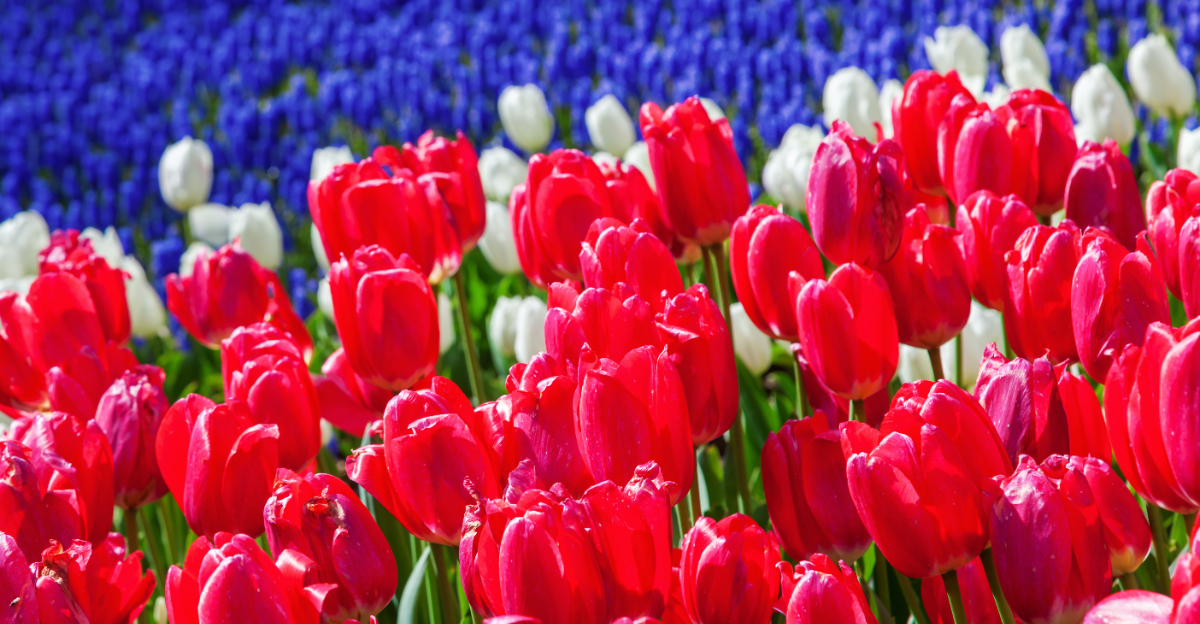
Spring in Michigan brings a fresh wave of color, and the right flower pairings can make that display even more eye catching.
Instead of planting flowers on their own, combining the right varieties can create layers of color, texture, and timing that keep your garden looking full.
Some flowers bloom at the same time and complement each other perfectly, while others take turns, extending the show through the season. Michigan’s cool spring weather gives many classic blooms a chance to shine, especially when they are paired thoughtfully.
Mixing heights, colors, and bloom shapes can turn a simple planting into something that feels carefully designed. Whether you prefer soft, calming tones or bold, bright combinations, the right pairings can bring your garden to life.
With a little planning, your spring garden can feel more balanced, vibrant, and full of visual interest from start to finish.
1. Tulips And Daffodils
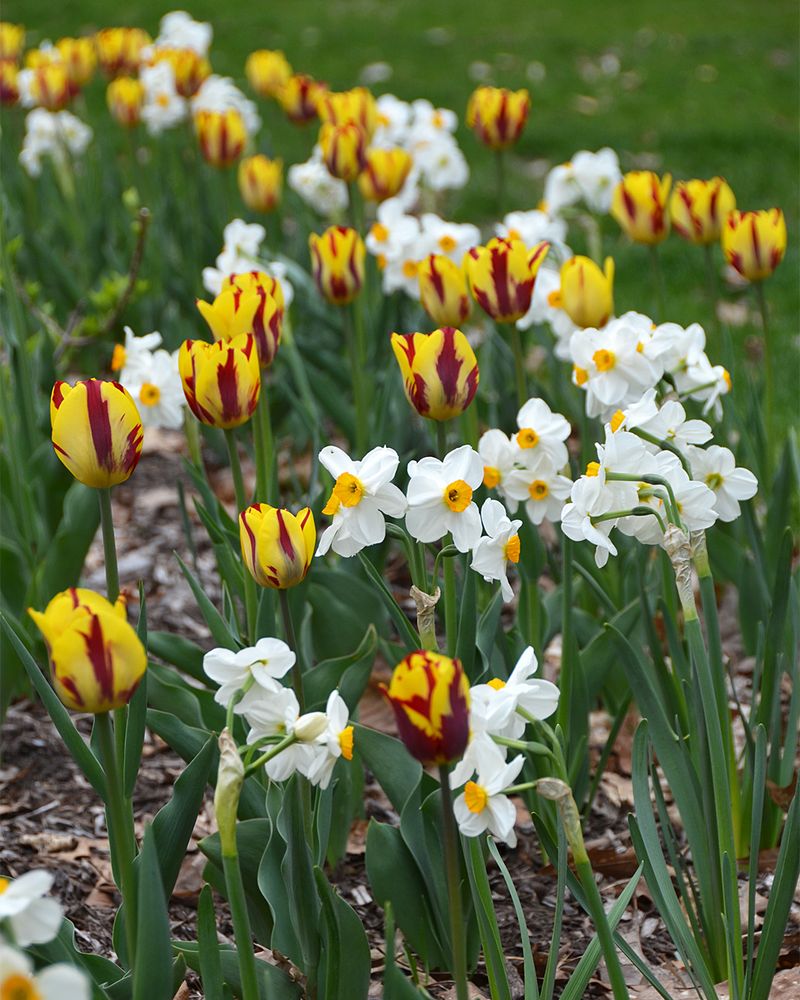
Walk past any well-loved Michigan garden in mid-spring and you will likely spot this classic pairing stealing the show. Tulips and daffodils bloom at nearly the same time, making them natural partners in any sunny garden bed.
Their colors mix beautifully, with daffodils offering bright yellows and creamy whites while tulips bring bold reds, pinks, and purples into the picture.
One of the best reasons to plant these two together is that daffodils naturally help protect tulips from certain pests. The natural compounds in daffodil bulbs are unappealing to animals like squirrels and deer, which often bother tulip bulbs on their own.
Planting them side by side gives your tulips a better chance of surviving the season in great shape.
Both plants love full sun and well-drained soil, so caring for them together is simple and straightforward. In Michigan, plant the bulbs in the fall before the ground freezes and they will reward you generously come spring.
Try mixing warm tulip shades like orange and red with soft yellow daffodils for a sunrise-inspired look. You can also go bold with deep purple tulips paired against bright white daffodils for high contrast.
Either way, this combination creates a cheerful, layered effect that feels both classic and fresh in any Michigan garden setting.
2. Virginia Bluebells And Woodland Phlox
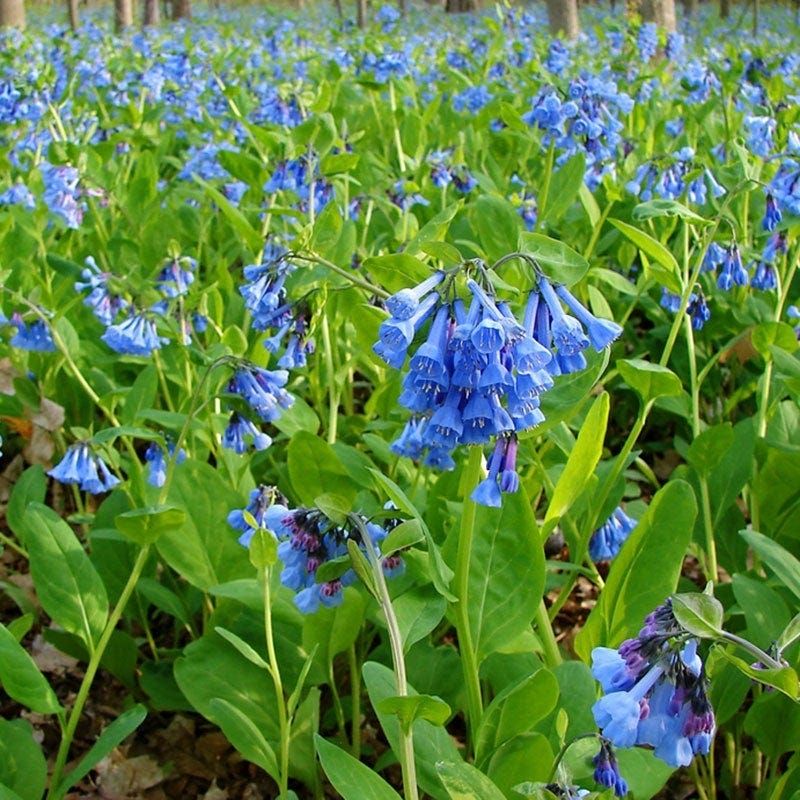
Not every Michigan garden gets full sun all day, and shaded spots deserve just as much beauty as sunny ones.
Virginia Bluebells and Woodland Phlox are two native plants that absolutely thrive in part shade, making them a go-to pairing for wooded or sheltered garden areas across the state.
When they bloom together in mid-spring, the effect is soft, layered, and genuinely breathtaking.
Virginia Bluebells open as pink buds and shift to a stunning sky blue as they mature, while Woodland Phlox spreads low to the ground in gentle shades of lavender and pale violet.
Together, they create a cool-toned color palette that feels calm and natural, almost like a piece of wild Michigan woodland brought right into your backyard.
Both plants prefer moist, rich soil and do best with a good layer of organic mulch to keep roots cool.
Your Michigan Garden Changes Every Week. Your Plan Should Too.
Gardening in Michigan changes quickly throughout the season. Every Friday you’ll receive a simple weekly plan showing exactly what to plant, prune, fertilize, harvest, and protect so you never miss the right timing.
Because both species are native to Michigan, they support local pollinators like bumblebees and early butterflies that are searching for food in spring.
Planting native species also means less maintenance over time, since these plants are already adapted to the local climate and soil conditions.
If you have a shaded corner of your garden that feels bare each spring, this pairing is a simple and rewarding solution that brings real life and movement to the space.
3. Creeping Phlox And Rock Cress
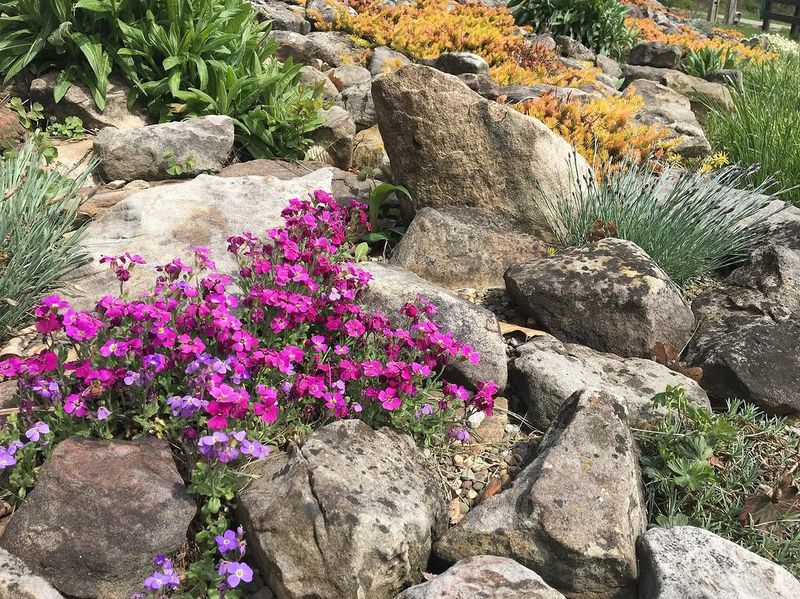
Few things in a Michigan garden are as satisfying as watching low-growing flowers cascade over rocks and spill across pathways in early spring. Creeping Phlox and Rock Cress do exactly that, and they do it with incredible color.
These two plants are early bloomers, often appearing while other garden plants are still waking up, which makes them an exciting and welcome sight after a long Michigan winter.
Creeping Phlox forms a dense mat of bright blooms in shades of pink, purple, white, and magenta, while Rock Cress adds clusters of small, fragrant white or pale pink flowers on top of silvery-green foliage.
The contrast in texture between the two plants makes the combination feel visually rich and layered without being overwhelming.
Both love full sun and sharp drainage, so rocky slopes, raised beds, and stone garden walls are their ideal home.
Rock gardens in Michigan benefit hugely from this pairing because both plants spread steadily over time, filling gaps between stones and reducing the need for weeding.
They are also drought-tolerant once established, meaning less watering work for you during dry spring stretches.
Planting them together along a sunny slope or border edge creates a flowing, colorful ground cover that looks professionally designed. For the best display, plant groups of each close together and let them naturally blend as they grow across the season.
4. Bleeding Heart And Foamflower
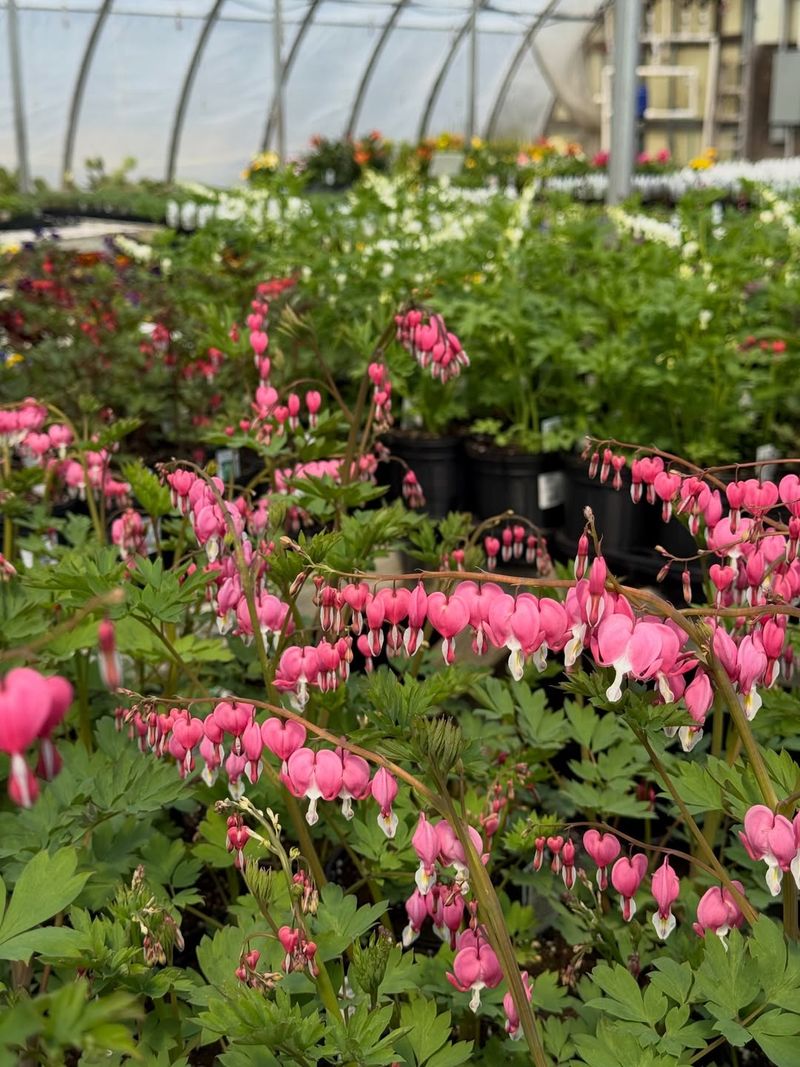
There is something almost fairy-tale-like about a Michigan woodland garden filled with Bleeding Heart and Foamflower blooming together in early spring.
Both are native perennials that thrive in cool, shaded conditions, and their combined look is delicate, elegant, and completely effortless.
If your garden has a shaded section with rich, moist soil, this pairing is practically made for it.
Bleeding Heart produces arching stems lined with small, heart-shaped white flowers that dangle gracefully above the soil. Foamflower grows low and spreads outward, sending up airy white flower spikes that seem to float above the lush green foliage below.
The contrast between the dangling Bleeding Heart blooms and the upright Foamflower spikes creates a layered texture that looks beautiful from every angle. Both plants bloom in early to mid-spring, so their timing lines up perfectly in Michigan gardens.
Foamflower also works as a ground cover, slowly spreading to fill in bare patches beneath larger plants and trees. This makes it an especially practical choice for shaded Michigan gardens where grass struggles to grow.
Bleeding Heart pairs well with ferns and hostas for a fuller woodland scene once the spring bloom fades.
Adding these two plants to your shaded beds means you get stunning early-season color alongside a low-maintenance ground cover that keeps the area looking tidy and green throughout the growing season. It is a combination that rewards you all spring long.
5. Grape Hyacinth And Early Tulips
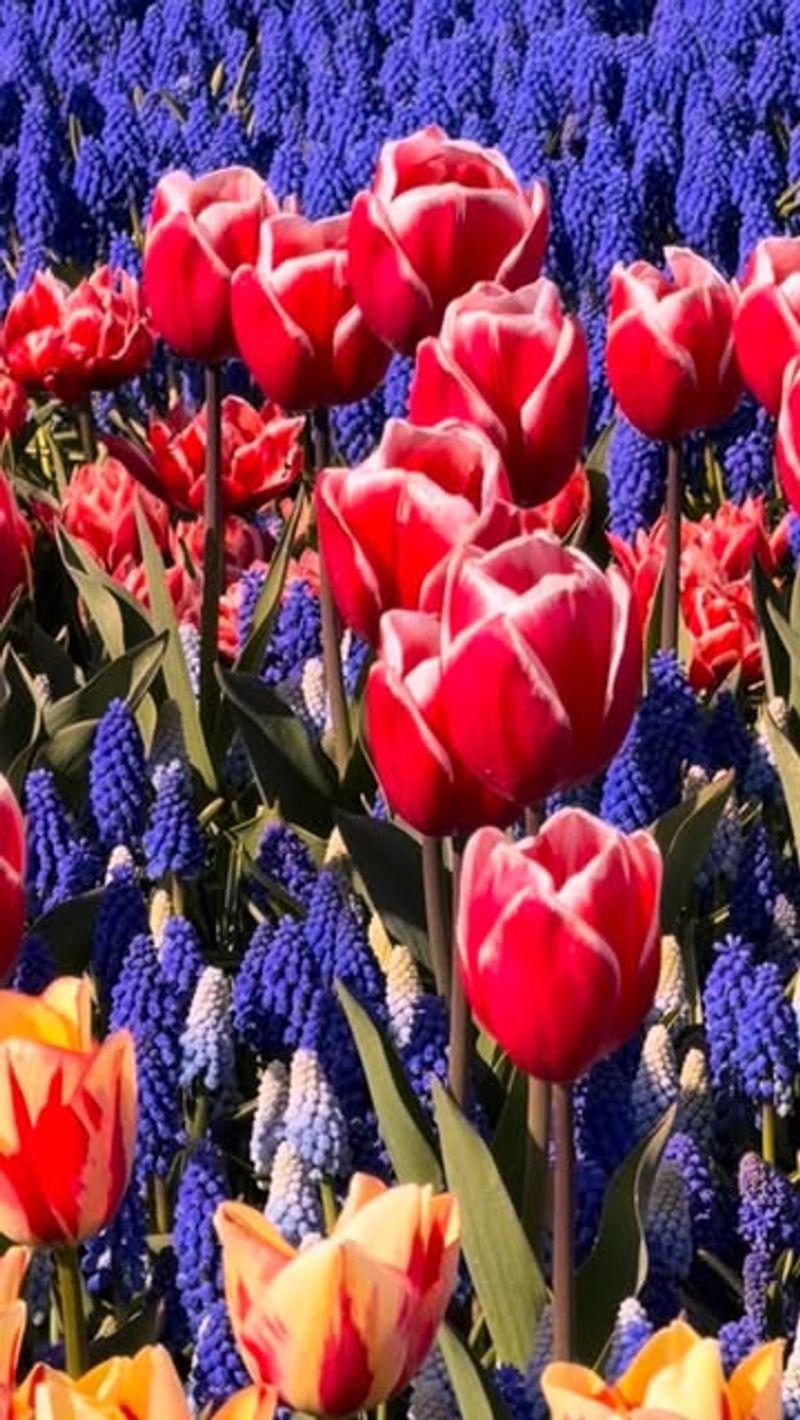
If you want a spring garden that stops people in their tracks, plant Grape Hyacinth beneath a sweep of early Tulips and watch the magic happen.
The deep, rich blue of Grape Hyacinth clusters creates a stunning base layer that makes any tulip color above it look more vivid and alive.
This pairing is one of the most photographed combinations in Michigan gardens for a very good reason.
Grape Hyacinth bulbs are tiny, affordable, and incredibly easy to plant in large numbers. Tuck them between tulip bulbs in the fall and they will emerge first in early spring, creating a carpet of blue just as the tulips begin to rise.
Bright red or orange tulips paired above deep blue Grape Hyacinth create a bold, high-energy look, while yellow or white tulips above the blue give a softer, more romantic feel.
Both plants love full sun and well-drained soil, so they thrive in the same conditions across Michigan.
One fun detail about Grape Hyacinth is that it multiplies quickly over the years, meaning your display gets fuller and more impressive each spring with almost no extra effort.
The small flowers also carry a light, sweet fragrance that adds another layer of enjoyment to the garden.
For Detroit-area gardeners working with smaller beds or containers, this compact pairing delivers maximum visual impact without taking up much space at all.
6. Wild Columbine And Golden Ragwort
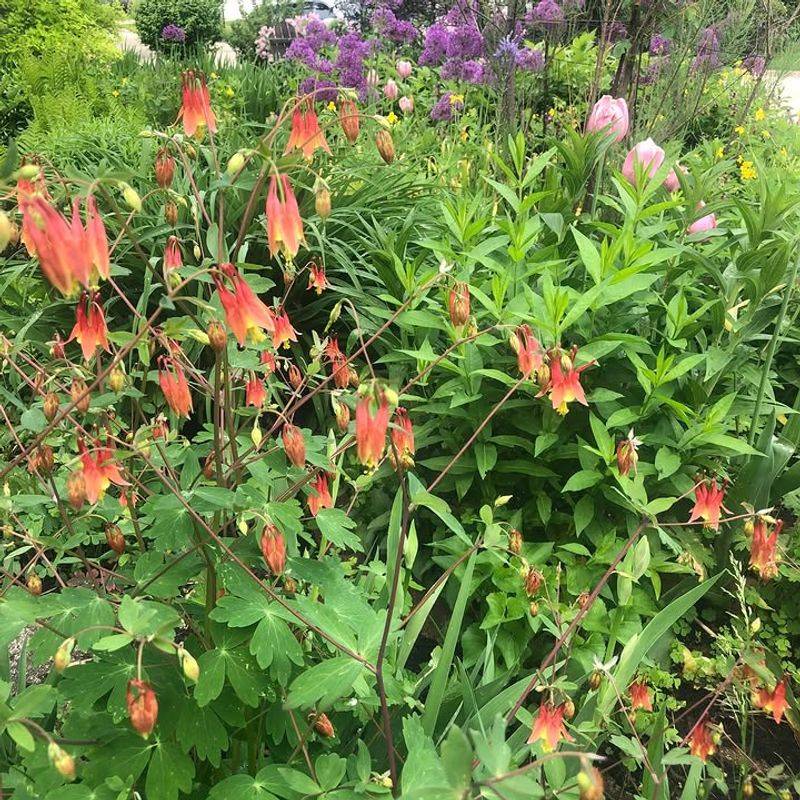
Bold, bright, and buzzing with pollinators, the combination of Wild Columbine and Golden Ragwort brings serious energy to Michigan gardens in mid-spring.
Both are native wildflowers that naturally grow together in woodland edges and meadow borders across the state, so pairing them in a garden setting feels completely at home.
If you want a planting that supports local wildlife and looks spectacular at the same time, this is it.
Wild Columbine produces nodding, lantern-shaped flowers in a striking red and yellow combination that hummingbirds absolutely love.
Golden Ragwort spreads low and wide, covering the ground with bright golden-yellow daisy-like blooms that bees and butterflies flock to throughout spring.
The warm color tones of both plants complement each other beautifully, creating a cheerful, sun-drenched look even in partly shaded spots. Both plants handle part shade and are comfortable in Michigan’s variable spring weather.
Golden Ragwort is also a fantastic ground cover for areas where grass or other plants struggle, particularly under trees or along shaded slopes. Wild Columbine self-seeds gently over time, gradually filling in nearby spaces with new plants each year.
Together, they form a low-maintenance, wildlife-friendly pairing that actually improves with age.
Michigan gardeners who want a naturalistic, cottage-style look will find this duo especially rewarding, since it grows beautifully without much fussing, trimming, or intervention throughout the spring season.
7. Trillium And Jack-In-The-Pulpit
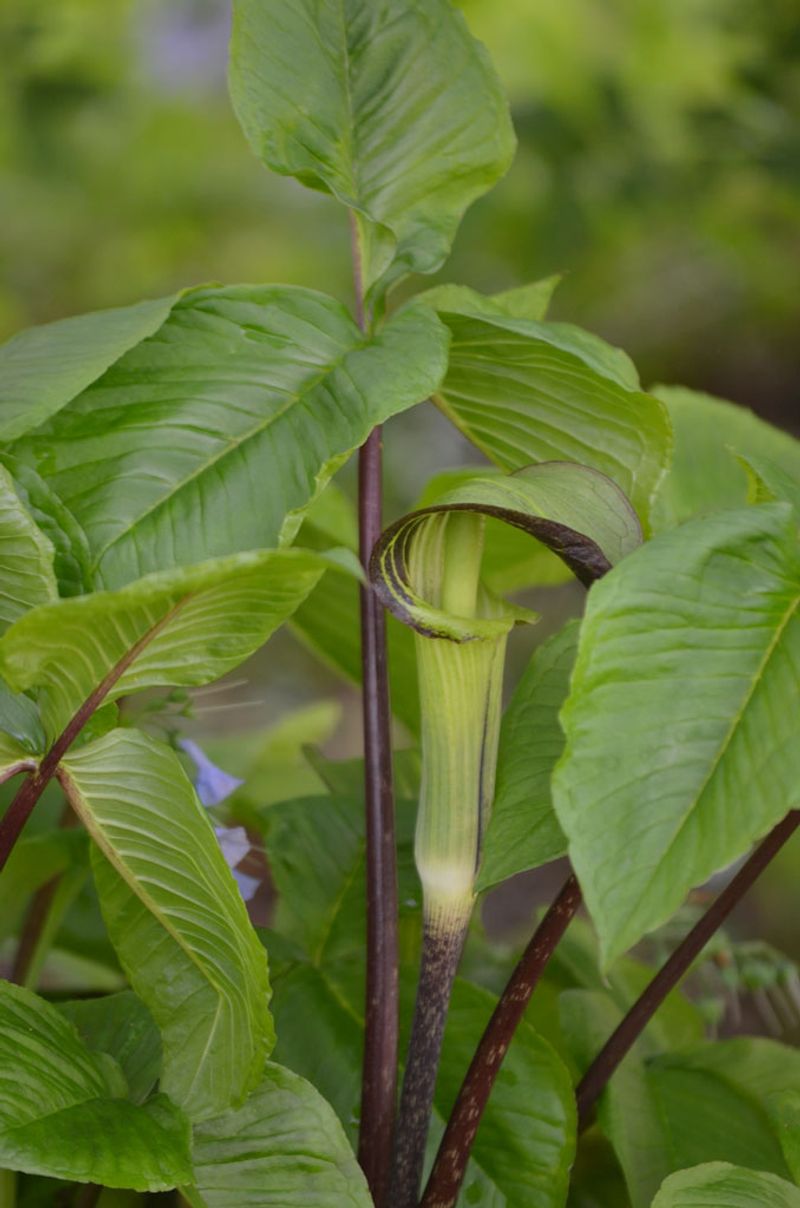
Few plant combinations feel as deeply connected to Michigan’s natural landscape as Trillium and Jack-in-the-Pulpit growing side by side in a shaded garden.
Both are native woodland plants that emerge in spring, and both have a quiet, unusual beauty that feels nothing like the typical garden flower.
If you have a shaded, moist corner of your yard, this pairing transforms it into something that looks like a true Michigan forest floor.
Trillium grandiflorum, Michigan’s state wildflower, produces large, three-petaled white flowers that stand proudly above a trio of broad green leaves.
Jack-in-the-Pulpit grows alongside it with a unique hooded structure, striped in green and purple, that looks more like a sculpture than a flower.
The contrast between Trillium’s clean white blooms and Jack-in-the-Pulpit’s architectural, unusual form creates a planting that feels rich and interesting from every angle. Both plants prefer deep shade and consistently moist, humus-rich soil.
It is worth noting that Trillium is a protected plant in Michigan, so always purchase it from reputable native plant nurseries rather than collecting it from the wild.
Both plants are slow to establish but extremely long-lived once they settle in, meaning a single planting can reward you for many decades.
For Michigan gardeners who want a shaded bed that feels genuinely wild and special, this combination is one of the most meaningful and memorable choices you can make.
8. Hyacinths And Pansies
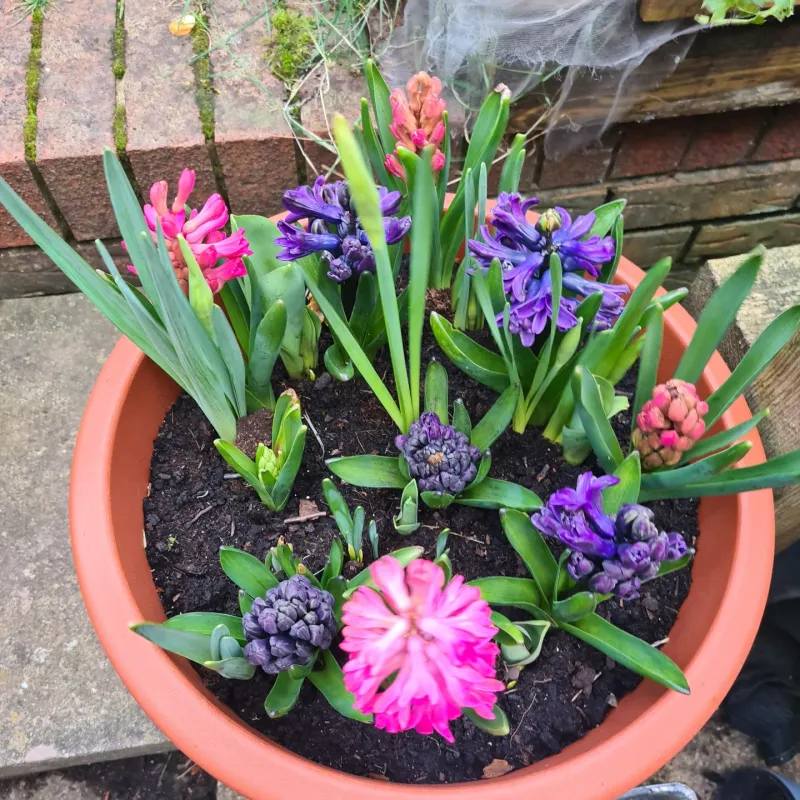
Some flower pairings are just pure joy, and Hyacinths with Pansies is exactly that. Both plants bloom early in the Michigan spring season and handle cool temperatures like champions, making them perfect for gardens, window boxes, and containers across the state.
Together they create a layered, colorful display that feels festive and welcoming from the very first warm days of the year.
Hyacinths are famous for their intensely fragrant, densely packed flower clusters in shades of purple, blue, pink, and white. Pansies grow low around the base of Hyacinth stems, adding cheerful faces in yellow, orange, violet, and bi-color patterns that fill in the space beautifully.
The combination of Hyacinth height and Pansy spread creates a full, lush look that works especially well in raised beds and decorative containers on porches or patios. In Detroit and other Michigan cities, this pairing is a popular choice for front yard garden beds that face the street.
Pansies are also remarkably cold-tolerant, often bouncing back after light frosts without missing a beat. Hyacinths add that irresistible spring fragrance that drifts through the garden on warm afternoons, making the whole outdoor space feel alive and inviting.
Plant Hyacinth bulbs in fall and tuck Pansy transplants in around them the following spring for a seamless, coordinated display. For anyone who wants instant color and fragrance without a lot of complexity, this pairing is the easiest and most rewarding place to start.