7 Pomegranate Care Tips That Keep Trees Productive In Arizona Heat
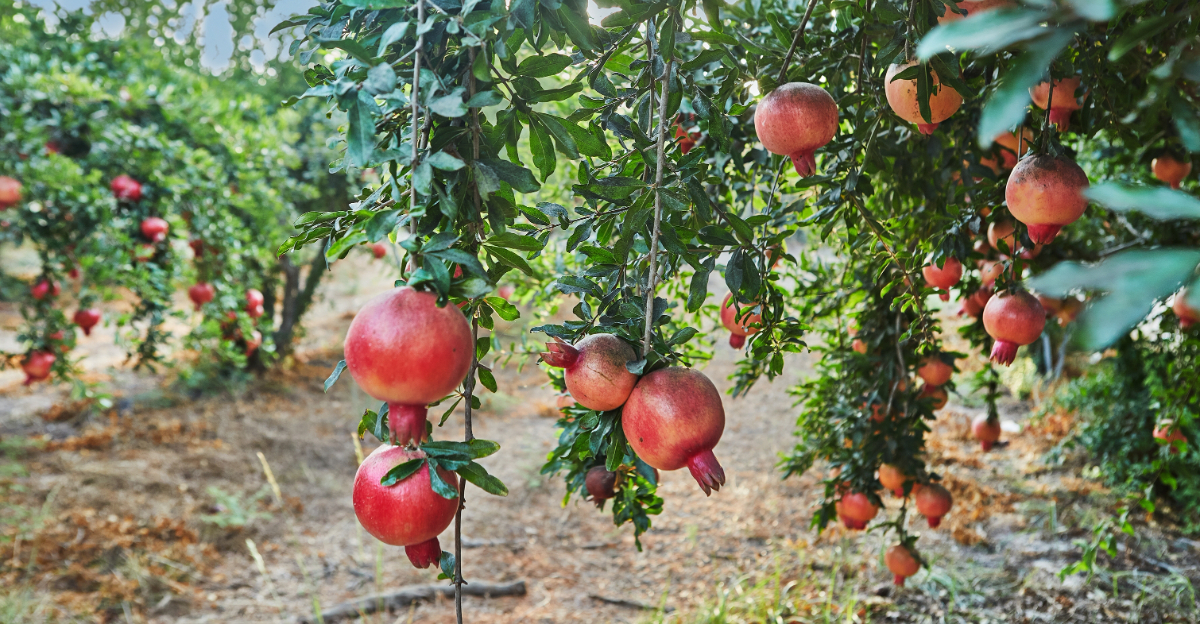
Arizona heat pushes pomegranate trees hard once temperatures stay high, even when everything looks fine on the surface. Leaves stay green, branches keep growing, and nothing seems wrong at first glance.
Look closer and the signs start to show. Flowers drop too early, fruit stays small, and growth slows down when it should be stronger.
Many gardeners go through this without knowing what caused it.
Simple care habits decide how well a tree handles that stress. Watering too lightly, feeding at the wrong time, or missing a few key steps can limit production more than expected.
Fixing those small details changes how the tree responds, and results improve fast once everything lines up the right way.
1. Deep Watering Keeps Roots Hydrated During Extreme Heat
Shallow watering is one of the most common mistakes Arizona pomegranate growers make. When water only reaches the top few inches of soil, roots stay near the surface where temperatures get brutally high in summer.
Deep watering pushes moisture down into the root zone where the tree actually uses it.
Aim to soak the ground to a depth of at least 18 to 24 inches with each watering session. A slow drip for an extended period works better than a quick spray.
Drip irrigation systems are popular here in Arizona for good reason — they deliver water directly to the base without waste.
During peak summer heat, watering once or twice a week is usually enough for established trees. Newly planted trees need more frequent attention, sometimes every two to three days, until their roots spread out.
Always let the top few inches of soil dry out between sessions to avoid waterlogging.
Overwatering is just as harmful as underwatering. Soggy roots can develop rot, which weakens the tree and reduces fruit production over time.
Stick your finger a few inches into the soil before watering — if it still feels damp, hold off another day.
2. Well Drained Soil Prevents Root Stress And Rot
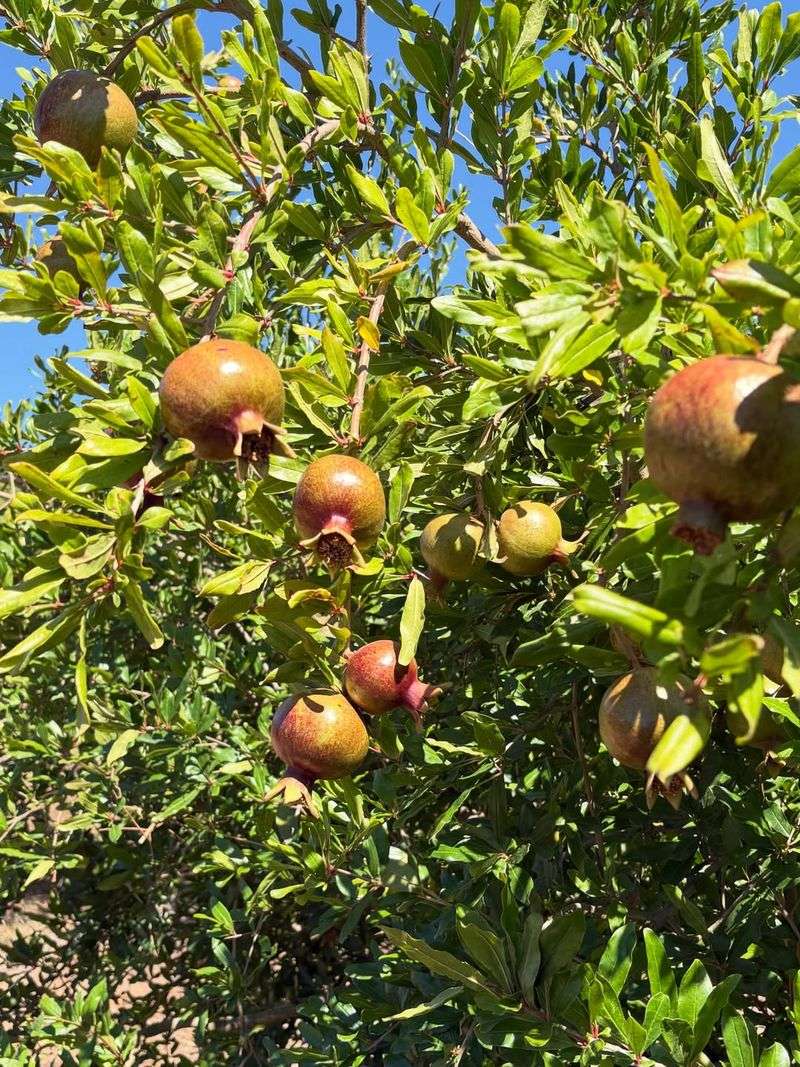
Arizona soil varies a lot depending on where you live. Some areas have sandy soil that drains fast, while others deal with heavy clay or caliche layers that hold water and cause real problems for pomegranate roots.
Getting the drainage right from the start saves a lot of headaches later.
Pomegranates do not tolerate standing water. When roots sit in wet soil for too long, oxygen cannot reach them and the roots begin to break down.
You might notice yellowing leaves, wilting, or a noticeable drop in fruit production before realizing the soil is the issue.
If your yard has caliche — that hard, calcium-rich layer common across much of Arizona — you may need to break through it before planting. A simple drainage test helps: dig a hole about 12 inches deep, fill it with water, and watch how fast it drains.
If water is still sitting there after an hour, drainage needs work.
Amending your soil with compost or coarse sand can improve structure significantly. Raised beds are another solid option in spots where drainage is consistently poor.
Your Arizona Garden Changes Every Week. Your Plan Should Too.
Gardening in Arizona changes quickly throughout the season. Every Friday you’ll receive a simple weekly plan showing exactly what to plant, prune, fertilize, harvest, and protect so you never miss the right timing.
Mixing in organic matter also helps soil hold just enough moisture without becoming waterlogged.
3. Full Sun Supports Strong Growth And Fruit Production
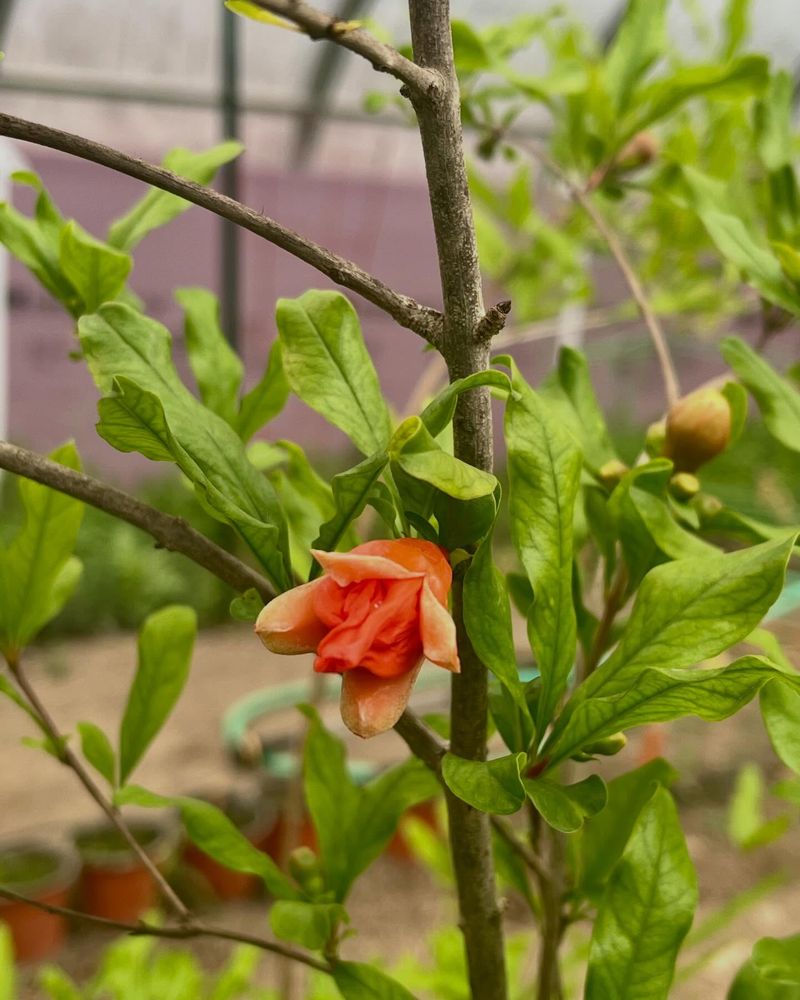
Pomegranates were practically made for places like Arizona. They thrive in long, hot days with intense direct sunlight, and they need at least six to eight hours of full sun daily to produce a solid fruit crop.
Shade from nearby trees or structures cuts into that light and directly reduces how much fruit you get.
Choosing the right planting spot matters more than most people realize. A south-facing location in your Arizona yard typically gets the most sun exposure throughout the day.
Avoid planting too close to block walls or large trees that cast afternoon shade, especially during the critical fruit development period in late summer.
Sun exposure does more than just fuel growth — it also affects fruit quality. Pomegranates that receive consistent full sun tend to develop richer color, better flavor, and thicker arils compared to those grown in partial shade.
The heat Arizona delivers in abundance actually works in your favor here.
Young trees need some care in their first summer. Intense afternoon sun combined with dry winds can stress a newly planted tree before its root system is fully established.
A shade cloth offering around 30 percent coverage can take the edge off during the hottest weeks without cutting too much light.
4. Mulch Helps Retain Moisture And Protect Roots
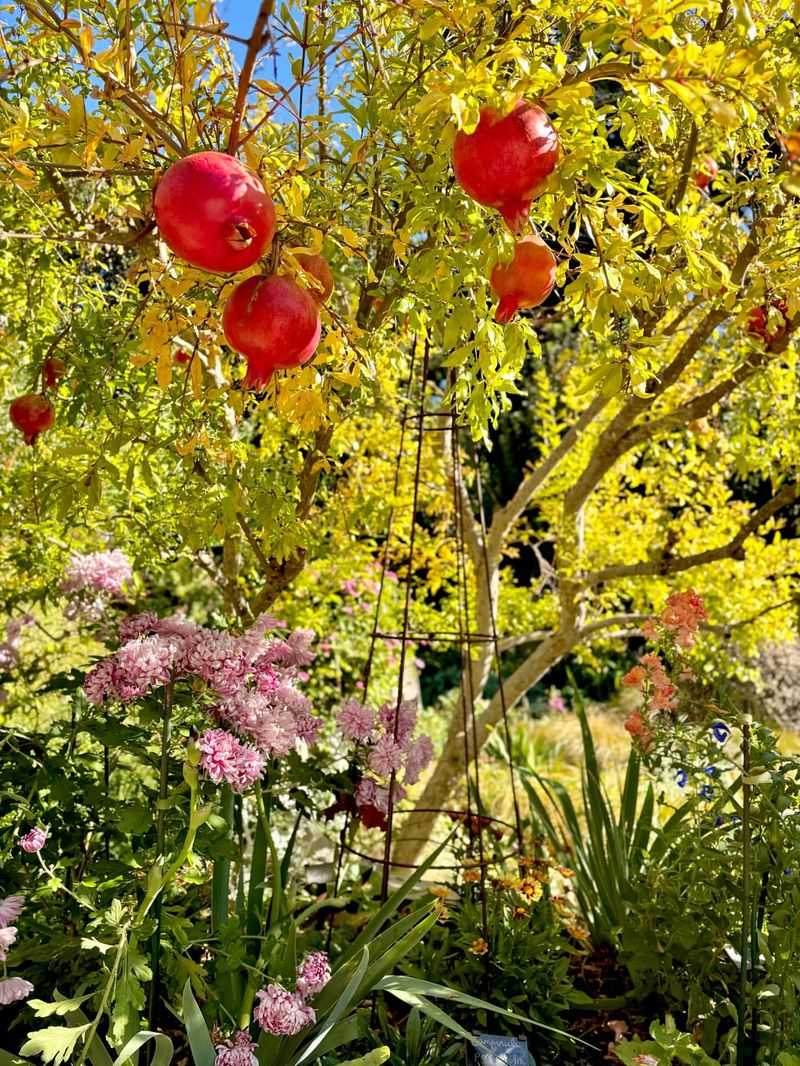
Bare soil in an Arizona summer gets scorching hot — sometimes hot enough to cook shallow roots near the surface. Mulch acts like a buffer between the blazing sun and your tree’s root zone, and it makes a noticeable difference in how well your pomegranate handles the heat.
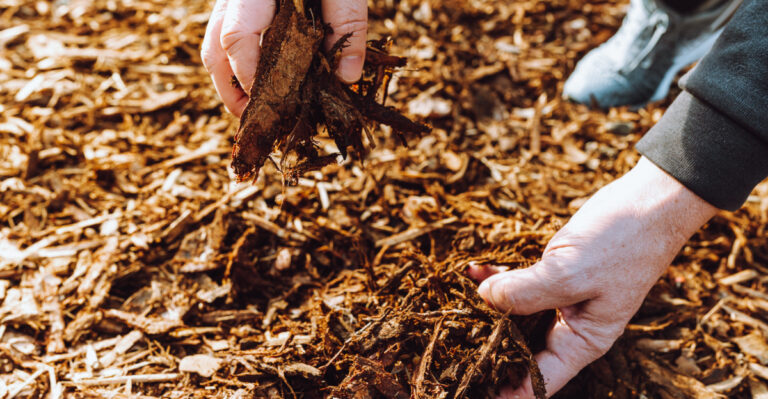
Apply a two to three inch layer of organic mulch around the base of your tree, spreading it out to cover the drip line area. Wood chips, straw, and shredded bark all work well.
Keep the mulch a few inches away from the trunk itself to prevent moisture from sitting against the bark.
Beyond temperature control, mulch slows down water evaporation significantly. In Arizona, where summer sun can dry out the top layer of soil within hours of watering, that moisture retention adds up quickly.
You may find yourself watering slightly less often once a good mulch layer is in place.
Mulch also suppresses weeds that compete with your pomegranate for water and nutrients. Weeds might not seem like a big deal in a desert yard, but even a few aggressive plants pulling moisture from the same root zone can stress a tree during a heat wave.
5. Pruning Improves Airflow And Increases Fruit Yield
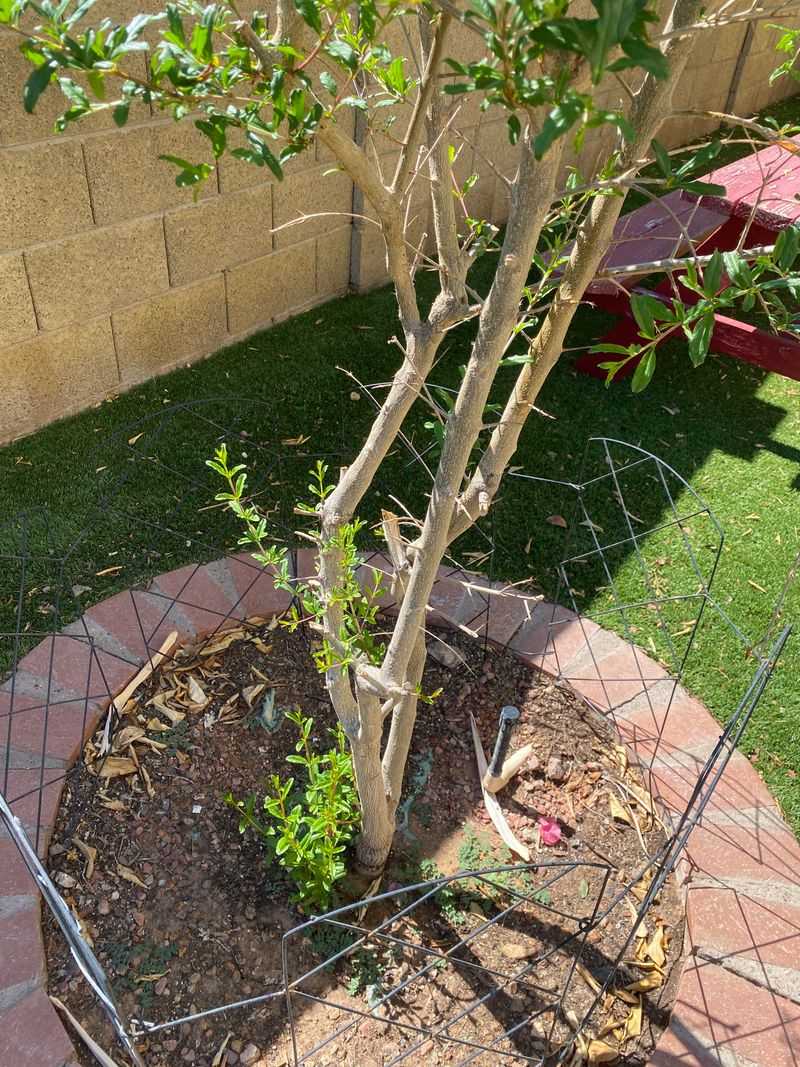
A cluttered canopy is bad news for any fruit tree, and pomegranates are no exception. When branches grow too dense, air cannot move through freely, humidity builds up inside the canopy, and fungal issues become more likely — even in dry Arizona.
Pruning keeps things open and productive.
Late winter, just before new growth begins, is the right window to prune pomegranates in Arizona. Pruning too early risks leaving fresh cuts exposed to occasional cold nights that still hit the Phoenix metro and Tucson areas in January and February.
Waiting until mid to late February usually hits the sweet spot.
Suckers pull energy away from the main canopy and fruit production. Removing them regularly keeps the tree focused on what you actually want — a healthy structure and a solid harvest.
You do not need to go heavy with the cuts. Pomegranates fruit on new wood and on older spurs, so removing too much at once can actually reduce your yield for that season.
Light to moderate pruning each year tends to produce better results than occasional aggressive cutting.
Sharp, clean tools matter more than most people think. Dull blades crush rather than cut, and rough cuts take longer to heal.
6. Fertilizing In Spring Supports Healthy Growth
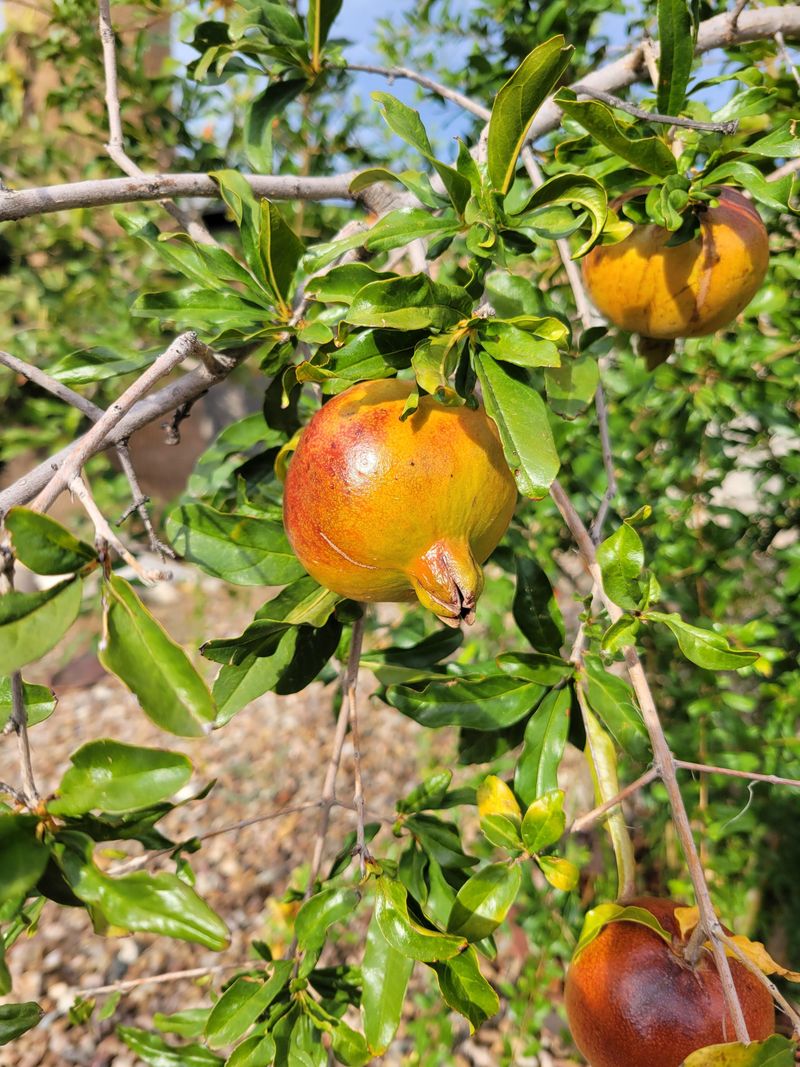
Spring is when pomegranate trees in Arizona shift into high gear. New leaves push out, flower buds start forming, and the tree demands more nutrients than it does during its dormant winter period.
Feeding at the right time supports that growth without pushing the tree in the wrong direction.
A balanced fertilizer with equal parts nitrogen, phosphorus, and potassium — something like a 10-10-10 blend — works well for most Arizona pomegranates. Apply it in early spring, around late February through March, just as you start seeing new leaf growth emerging.
Follow the package directions based on your tree’s size.
Nitrogen is the nutrient most likely to cause problems when overdone. Too much of it pushes the tree to produce lots of lush leafy growth while the flower and fruit development takes a back seat.
Modest, balanced feeding is the approach that keeps fruit production on track.
Avoid fertilizing during summer. Adding fertilizer when Arizona temperatures are already punishing can push tender new growth that gets stressed immediately in the heat.
Late spring is typically the cutoff — after that, let the tree focus its energy on developing the fruit already set.
Compost is a worthwhile addition alongside commercial fertilizer. Working a few inches of finished compost into the soil around the drip line in early spring adds organic matter and slow-release nutrients without the risk of burning roots.
7. Monitoring Pests Prevents Damage To Fruit And Leaves
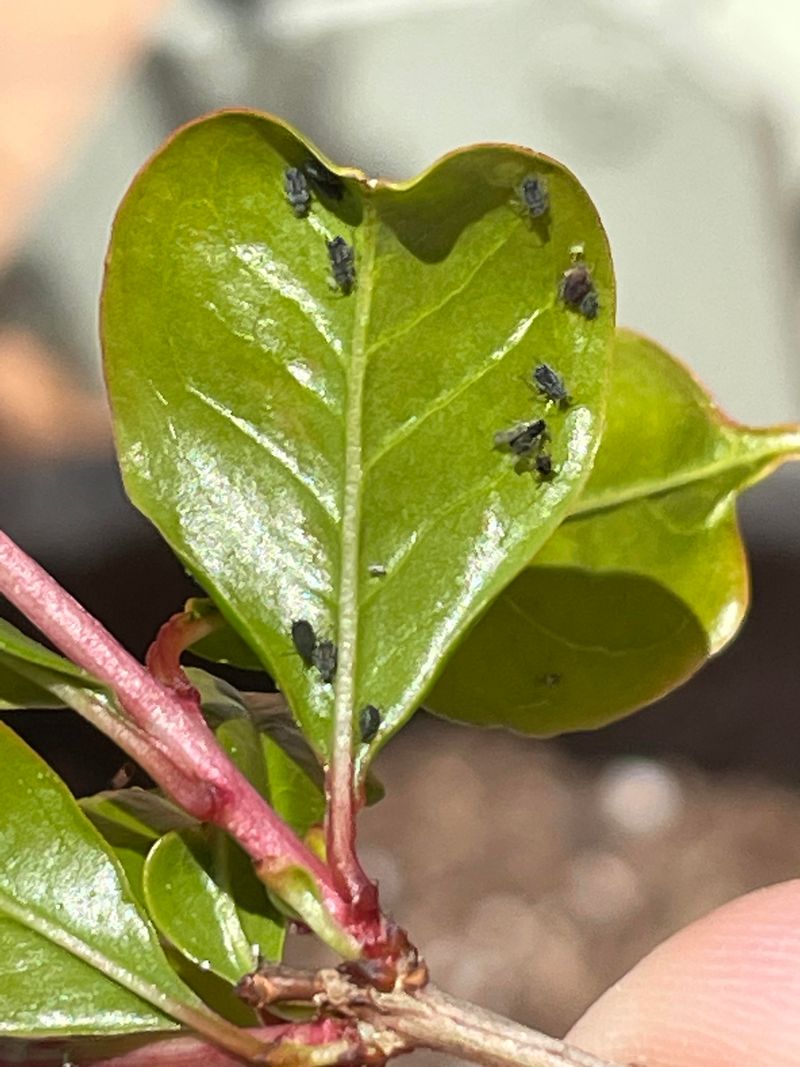
Pests do not take summers off in Arizona — if anything, some of the most damaging insects are most active when temperatures peak. Catching an infestation early is almost always easier and less disruptive than dealing with one that has spread across the entire tree.
Leaf-footed bugs are among the most frustrating pests for Arizona pomegranate growers. These large, dark insects pierce the fruit skin and feed on the juice inside, leaving behind damaged arils and entry points for secondary problems.
Hand-picking works for small numbers, but larger populations may need targeted treatment with an appropriate insecticide.
Aphids tend to cluster on new growth in spring and early summer. They are small, but a heavy infestation can curl leaves and weaken young shoots.
A strong stream of water knocks them off effectively, and insecticidal soap handles more stubborn colonies without introducing harsh chemicals into your garden.
Mealybugs show up as white, cottony clusters near the base of leaves or along stems. They move slowly and are easy to miss during a casual glance.
Check the undersides of leaves regularly, especially during warm stretches when pest populations build fast in Arizona’s climate.
Weekly walkthroughs during the growing season are worth the few minutes they take. Look at the leaves, the fruit surface, and the branch junctions where insects tend to hide.
Spotting a problem when it is small keeps your response simple and your fruit harvest intact.