These Border Plants Stay Neat In Ohio Without Constant Trimming
A neat garden border can change the whole feel of a yard. It makes beds look finished, frames walkways beautifully, and gives everything a more polished, cared-for look without needing anything flashy.
The best part is that in Ohio, you do not have to rely on fussy plants to get that effect.
Some border plants naturally keep a clean shape, stay where they belong, and look good without needing constant trimming to stay presentable.
That kind of easy structure matters, especially in a climate where spring takes off fast and summer can push growth into overdrive.
The real win is finding plants that bring color, texture, or height while still keeping the border looking calm and intentional. Instead of spending the season cutting things back, you get to enjoy a planting that mostly holds itself together.
That is exactly where the right plant choices make life easier. And if you are gardening in Ohio, there are some especially reliable options that do the job beautifully.
1. Dwarf Crested Iris Keeps Borders Low And Tidy
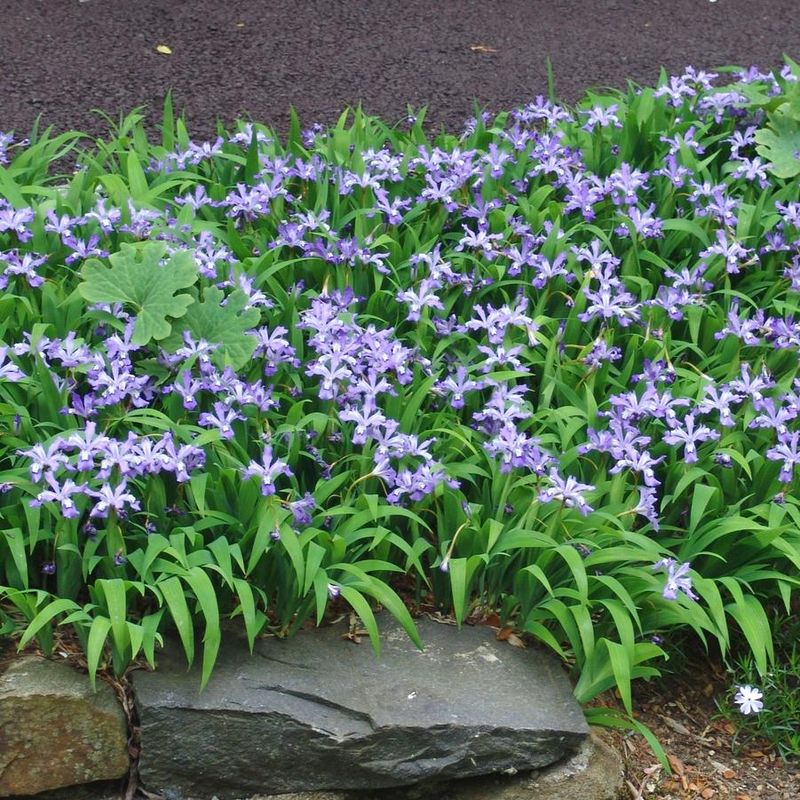
Early spring in an Ohio garden can feel like a guessing game, but dwarf crested iris always shows up right on time. This petite native perennial blooms in April and May with delicate purple and white flowers that sit just a few inches above the ground.
The whole plant typically stays under six inches tall, making it one of the most naturally controlled options available for low garden borders.
Unlike spreading ground covers that can quickly become invasive, dwarf crested iris spreads slowly and politely, forming neat colonies that fill in gaps without bulldozing neighboring plants.
It is a true colony-former, meaning it gradually expands in a controlled, predictable way.
Gardeners in Ohio who struggle with messy or aggressive ground covers often find this plant to be a welcome change.
Shaded or partially shaded borders are where this iris really shines. It performs beautifully along woodland edges, under deciduous trees, or beside shady house foundations.
The foliage stays attractive even after the blooms fade, remaining green and tidy through much of the growing season without any trimming required.
According to Ohio State University Extension, dwarf crested iris is well-suited to Ohio’s native plant communities and thrives in well-drained, slightly acidic soil. Because it grows so low and spreads so gradually, it rarely needs cutting back.
Simply plant it, let it settle in, and enjoy the results each spring without lifting a pair of shears.
2. Hairy Alumroot Adds Texture Without The Mess
Texture is one of the most underrated qualities in a border plant, and hairy alumroot delivers it in a package that never gets sloppy.
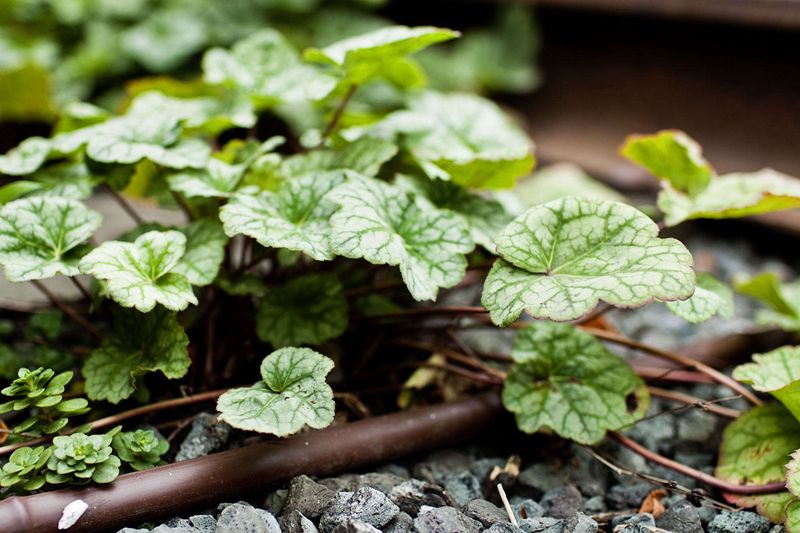
This Ohio native perennial forms a tidy, low mound of rounded, slightly hairy leaves that add visual interest to borders without ever sprawling beyond their welcome.
The foliage often develops attractive reddish or bronzy tones in cooler weather, giving the plant multi-season appeal.
Heuchera americana, commonly known as hairy alumroot, is a close relative of the popular coral bells sold in garden centers.
Your Ohio Garden Changes Every Week. Your Plan Should Too.
Gardening in Ohio changes quickly throughout the season. Every Friday you’ll receive a simple weekly plan showing exactly what to plant, prune, fertilize, harvest, and protect so you never miss the right timing.
Unlike some ornamental heucheras that can become crown-heavy and floppy over time, the native hairy alumroot tends to hold its shape reliably.
It stays mounded and compact, requiring no regular cutting or cleanup to maintain that polished look.
Slender flower stalks rise above the foliage in late spring and early summer, adding a light, airy quality to borders without creating bulk or disorder.
After blooming, the stalks can be left in place or removed, but neither choice significantly affects the plant’s overall appearance.
The foliage itself remains the star, staying attractive from spring through fall.
Hairy alumroot grows well in partial to full shade, making it an excellent choice for the north-facing borders or tree-lined edges that many Ohio yards feature. It tolerates Ohio’s clay-heavy soils reasonably well when drainage is adequate.
Plant it in groups of three or five for a border that looks intentional, layered, and completely under control without extra effort.
3. Wild Geranium Fills In Without Taking Over
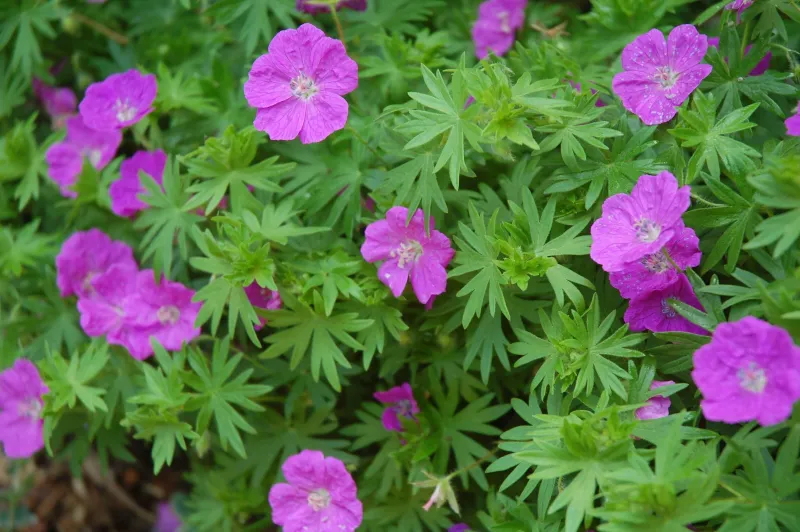
Some border plants fill in beautifully in spring and then become a tangled mess by July. Wild geranium is refreshingly different.
This Ohio native perennial forms well-defined clumps that bloom in April and May with soft lavender-pink flowers, then quietly settle into the background without throwing a fit or sprawling into neighboring plants.
Geranium maculatum, the species found growing natively across Ohio, is a clump-former rather than a spreader. Each plant grows to about one to two feet tall and wide, stays within that footprint, and does not send aggressive runners into surrounding soil.
For gardeners who want coverage without chaos, this is a genuinely satisfying plant to work with.
After blooming, the lobed, deeply cut foliage remains attractive through summer and often turns reddish-orange in fall, adding unexpected seasonal color.
The plant handles both partial shade and dappled sunlight well, making it adaptable to a wide range of Ohio border situations.
It works especially well beneath deciduous trees where spring light reaches the ground before the canopy fills in.
Ohio State University Extension recognizes wild geranium as a reliable native perennial for Ohio landscapes. Because it grows in a contained clump and does not reseed aggressively, borders stay looking tidy without regular intervention.
A light cleanup of spent foliage in late fall or early spring is all it really needs. For low-effort, high-reward border coverage, wild geranium earns its spot without demanding anything in return.
4. Blue Star Stays Neat All Season Long
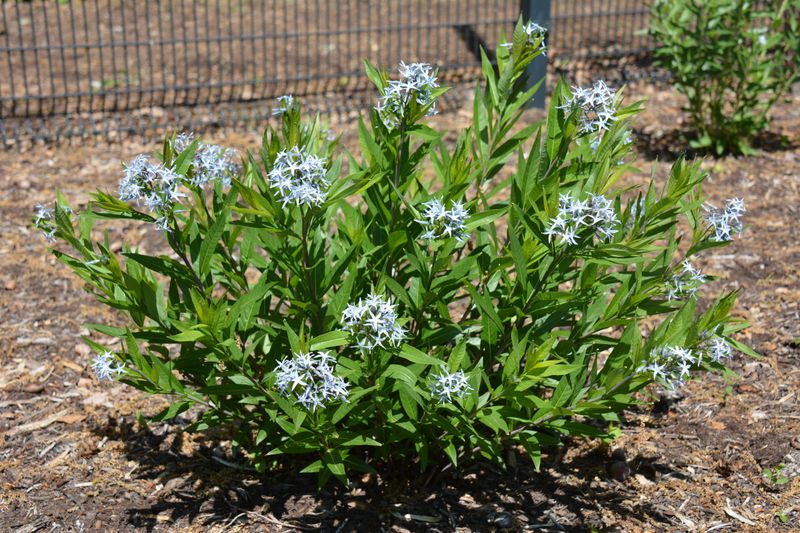
Few perennials offer the kind of all-season structure that blue star brings to an Ohio border.
From the moment its pale blue, star-shaped flowers open in late spring to the moment its golden-yellow foliage lights up in fall, this plant looks intentional and well-behaved every single week of the growing season.
That is not something most perennials can claim.
Amsonia tabernaemontana grows into a rounded, bushy clump reaching about two to three feet tall and wide. Unlike plants that bloom beautifully then collapse into a mess, blue star holds its rounded shape throughout the entire season.
The stems are sturdy and upright, the foliage is fine-textured and dense, and the overall silhouette stays tidy without any trimming required.
Ohio gardeners appreciate blue star because it is genuinely tough. It handles Ohio’s humid summers, clay soils, and temperature swings without complaining.
Full sun to partial shade works equally well, and once established, it is notably drought-tolerant. Deer tend to avoid it, which is a bonus for yards near wooded areas.
The fall color alone makes this plant worth growing. The foliage turns a rich, warm yellow in autumn, providing a display that rivals many ornamental grasses and shrubs.
Because the plant stays upright and structured even as it changes color, borders look polished rather than overgrown during the fall cleanup season.
Blue star is a true four-season performer that earns its space without requiring constant management or trimming.
5. Liatris Adds Height Without The Flop
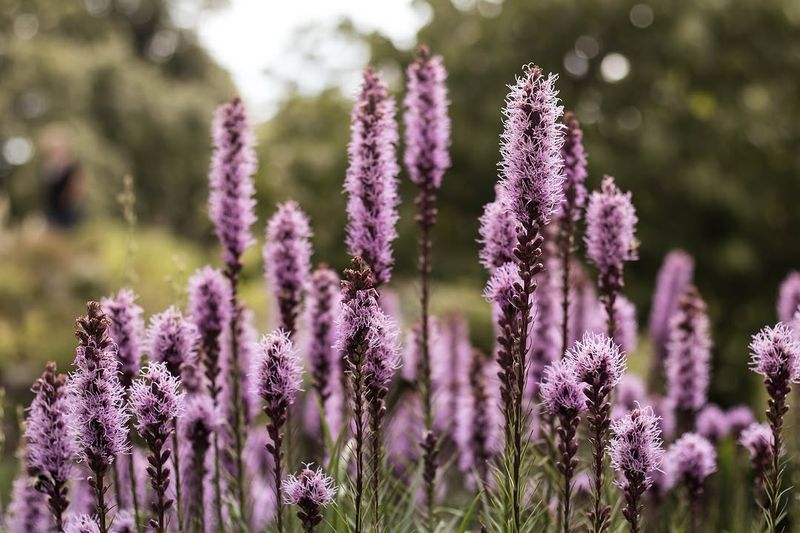
Tall border plants have a reputation for causing trouble, leaning over, flopping onto neighbors, or requiring staking by midsummer. Liatris breaks that pattern entirely.
Also called blazing star or gayfeather, this native Ohio perennial sends up stiff, upright spikes of rosy-purple flowers that stand straight and tall without any support structure needed.
Liatris spicata typically reaches two to four feet in height, depending on the cultivar and growing conditions.
The flower spikes bloom from the top down, which is unusual among flowering plants and gives borders a long season of visual interest from midsummer into early fall.
The upright stems hold their position even in wind and rain, making this a genuinely reliable vertical element for Ohio borders.
Full sun and well-drained soil are the main requirements, and liatris handles Ohio summers with ease once it gets established. It grows from corms, which develop into clumps that gradually expand but never become invasive or disruptive.
Pollinators, especially monarch butterflies and bees, are strongly attracted to the blooms, adding life and movement to the border throughout the season.
After the flowers fade, the seed heads attract goldfinches and other birds, extending the plant’s usefulness well into fall. Leaving the stalks standing through winter adds subtle structure to the border during the quiet months.
Cutting them back in late winter or early spring takes about two minutes and sets the plant up for another season of strong, upright growth without any fuss or staking required.
6. Sedum Stays Upright And Looks Good Year-Round
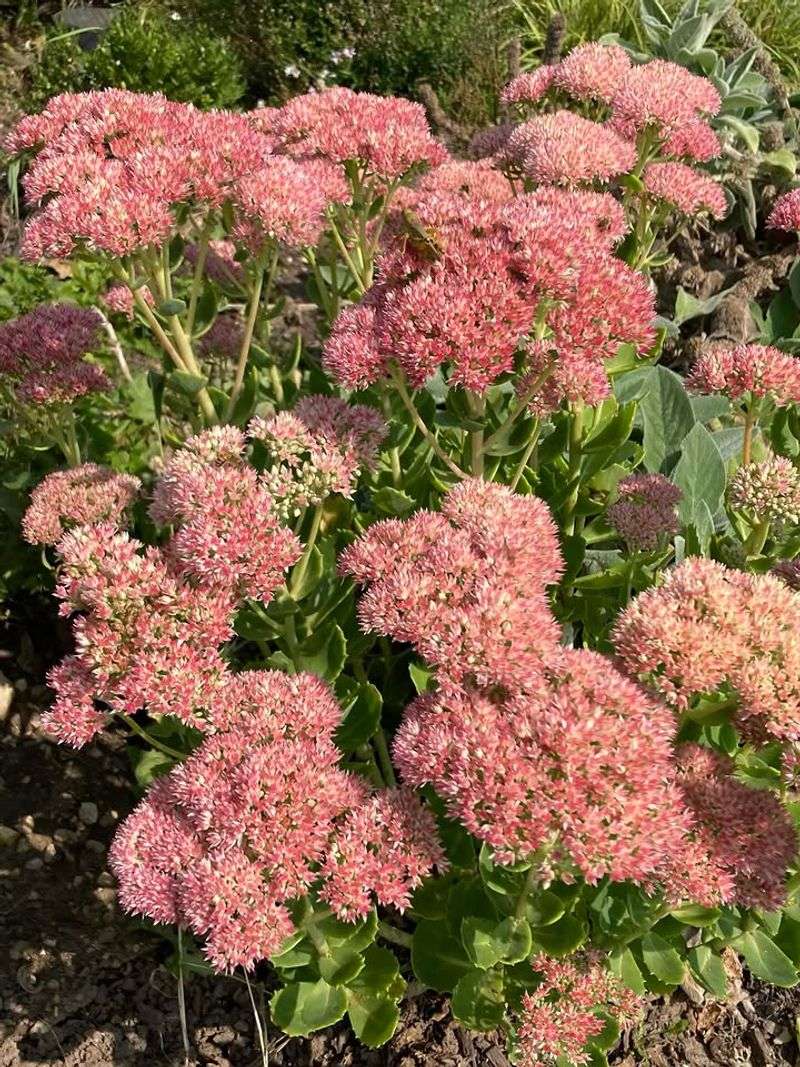
Walk past an Ohio garden in late August, and chances are good you will spot a sedum holding its ground while everything around it looks tired and worn out.
Upright sedum varieties, particularly those in the Hylotelephium group, are built for exactly this kind of endurance.
Thick, succulent stems carry flat-topped clusters of pink, rose, or burgundy flowers that open in late summer and persist well into fall.
Unlike sprawling ground cover sedums, upright varieties grow into solid, self-supporting clumps that rarely need any intervention to stay looking tidy. The stems are sturdy enough to remain upright through Ohio’s summer storms and humid stretches without flopping.
Foliage is attractive from the moment it emerges in spring, often featuring blue-green or burgundy-tinged leaves that add color to borders even before the flowers open.
Drought tolerance is one of sedum’s biggest selling points for Ohio gardeners.
Once established, upright sedums handle dry spells without wilting or looking stressed, making them ideal for borders along driveways, south-facing walls, or any spot where soil tends to dry out quickly.
Full sun brings out the best color and keeps the stems most compact.
Even in winter, upright sedum provides value. The dried flower heads and seed clusters hold their shape through cold months, adding quiet structure to borders when most other perennials have disappeared completely.
A single cleanup in late winter is all it takes to prepare the plant for a fresh season of tidy, upright, low-maintenance growth that requires almost no attention from you.
7. Hellebores Stay Clean Even In Tough Spots
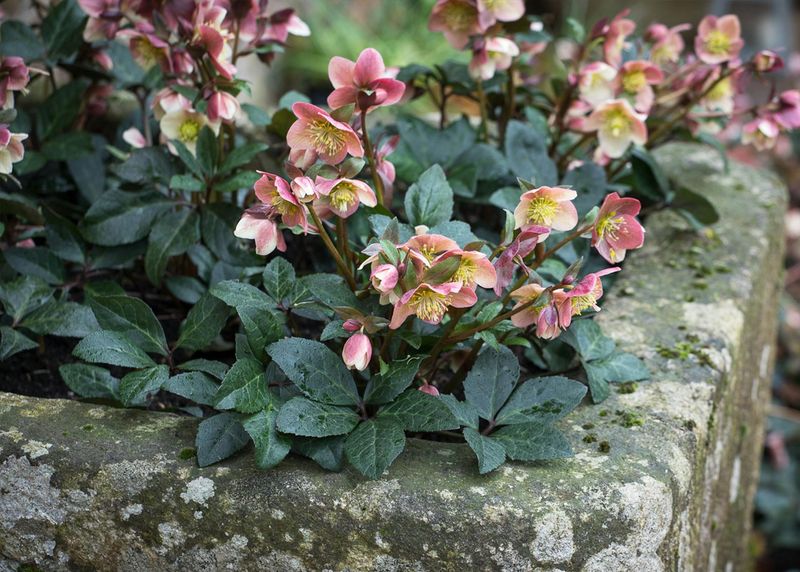
Shady spots under trees or along north-facing house walls can be genuinely difficult to fill with plants that stay attractive. Hellebores solve that problem with remarkable efficiency.
These semi-evergreen perennials hold their dark, leathery foliage through most of Ohio’s winters, providing structure and greenery during months when the rest of the border looks bare and empty.
Helleborus orientalis and its hybrids are the most commonly grown types in Ohio gardens, and they bloom in late winter or very early spring, often pushing out nodding flowers while snow is still possible.
The blooms come in shades of white, cream, pink, plum, and near-black, offering a range of color options for shaded borders.
Pollinators that emerge early in the season find them especially valuable.
Maintenance requirements for hellebores are refreshingly minimal. The foliage stays clean and attractive without any trimming throughout the growing season.
In late winter, old leaves from the previous year can be removed to make the new blooms more visible, but even that step is optional rather than necessary. The plant handles the rest on its own.
Ohio’s clay soils and fluctuating winters can challenge many shade perennials, but hellebores are notably adaptable. They prefer humus-rich, well-drained soil and consistent moisture but tolerate dry shade better than many alternatives once established.
Planting them in groups creates a lush, layered border effect that looks expensive and deliberate without requiring significant ongoing care. For difficult shaded spots, hellebores are genuinely hard to beat.
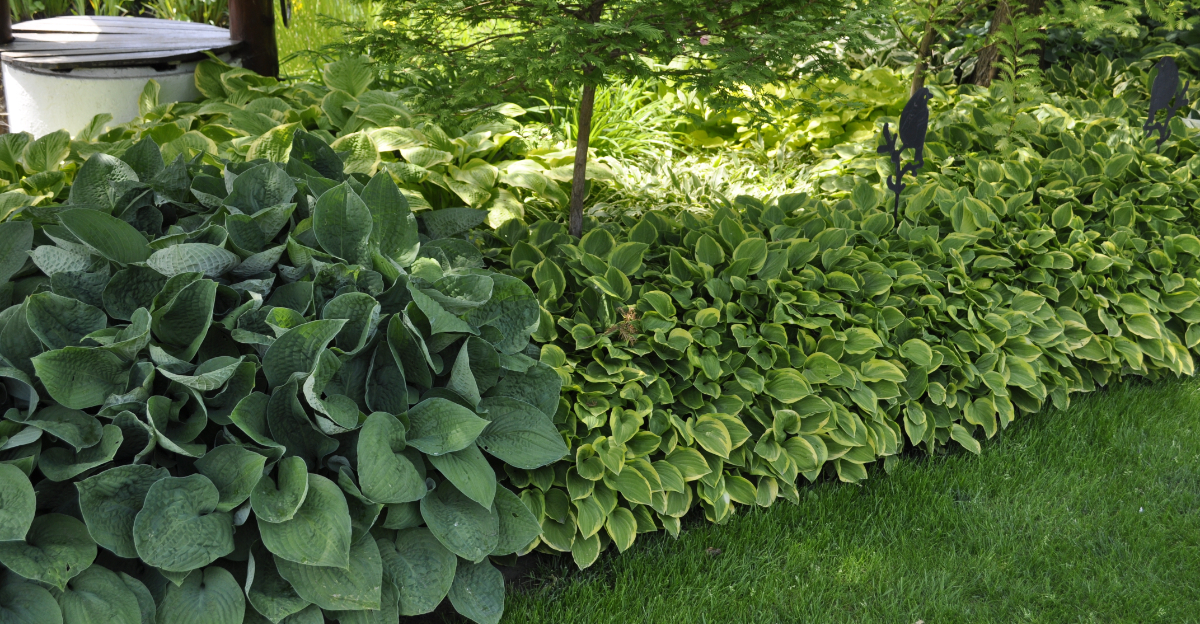
8. Hostas Keep Borders Full And Under Control
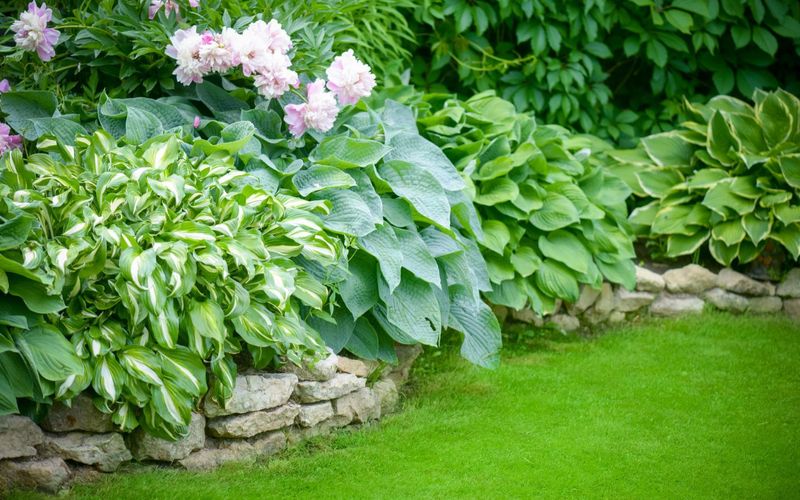
Ask any experienced Ohio gardener to name the most reliable shade border plant, and hostas will come up almost every time. There is a reason for that.
These mounding perennials are practically foolproof, growing into full, rounded clumps that fill border space beautifully without ever becoming weedy, invasive, or difficult to manage.
Hostas come in an enormous range of sizes, from miniature varieties that stay under six inches tall to giant types that can reach four feet wide or more.
That size range makes them useful in almost any border situation, from narrow strips along walkways to wide planting beds beneath mature trees.
Leaf color and texture vary just as dramatically, with options ranging from solid blue-green to gold, white-edged, and deeply textured varieties.
The mounded shape that hostas naturally form is one of their greatest assets. Each clump grows outward in a symmetrical, organized way that looks intentional and polished without any trimming or shaping required.
Borders filled with hostas have a clean, layered appearance that holds up from spring emergence through fall, when the foliage fades.
Ohio’s climate suits hostas well, particularly in zones 5 and 6 where most of the state falls. They prefer partial to full shade and consistently moist soil, though many varieties handle short dry periods without significant stress.
Dividing clumps every few years keeps them vigorous and refreshed. Beyond that simple occasional task, hostas ask for very little while delivering full, lush, tidy borders that genuinely look great all season long.