7 Heat-Tolerant Plumeria Varieties To Grow In Your Arizona Garden
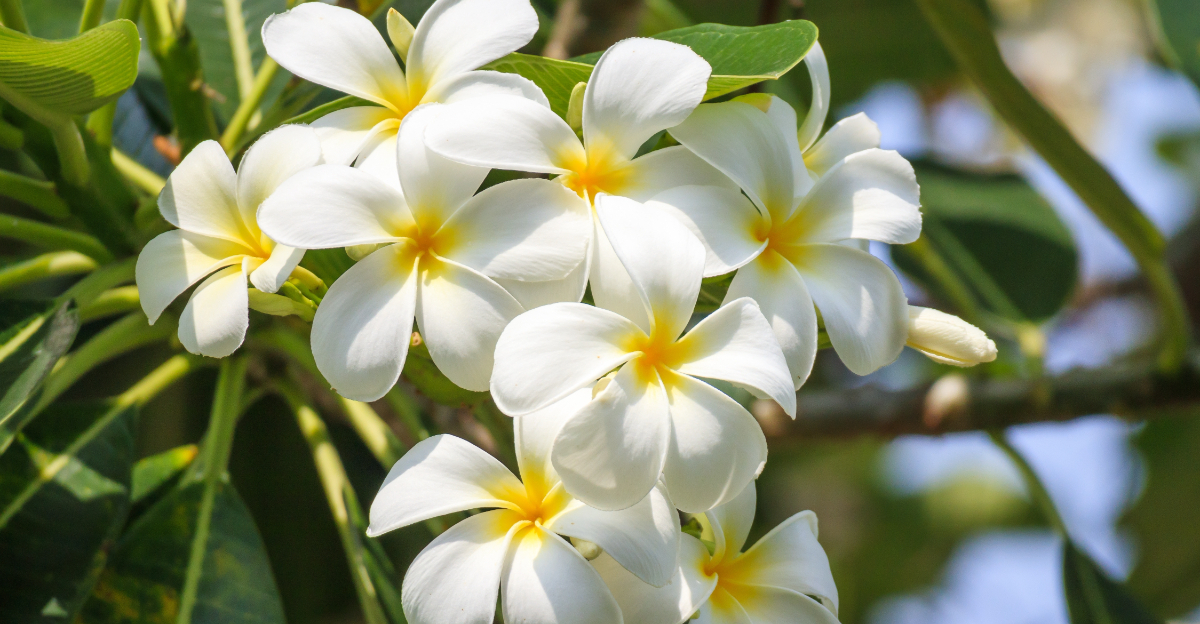
Arizona heat does not wait around, and plenty of plants show signs of stress long before summer fully settles in. Plumeria usually gets pushed aside for that reason, even though it can surprise people when the right type goes into the ground.
Strong blooms, rich color, and that tropical look can still hold up here without turning into a constant struggle.
Many gardeners assume every plumeria reacts the same way, but that is where things start to shift. Some handle rising temperatures far better, staying steady while others fade out early.
Choosing the right one changes how the whole plant behaves once the heat builds.
Get that choice right, and plumeria starts to feel like it actually belongs in an Arizona garden instead of fighting against it.
1. Singapore White Plumeria Handles Extreme Heat Better Than Most
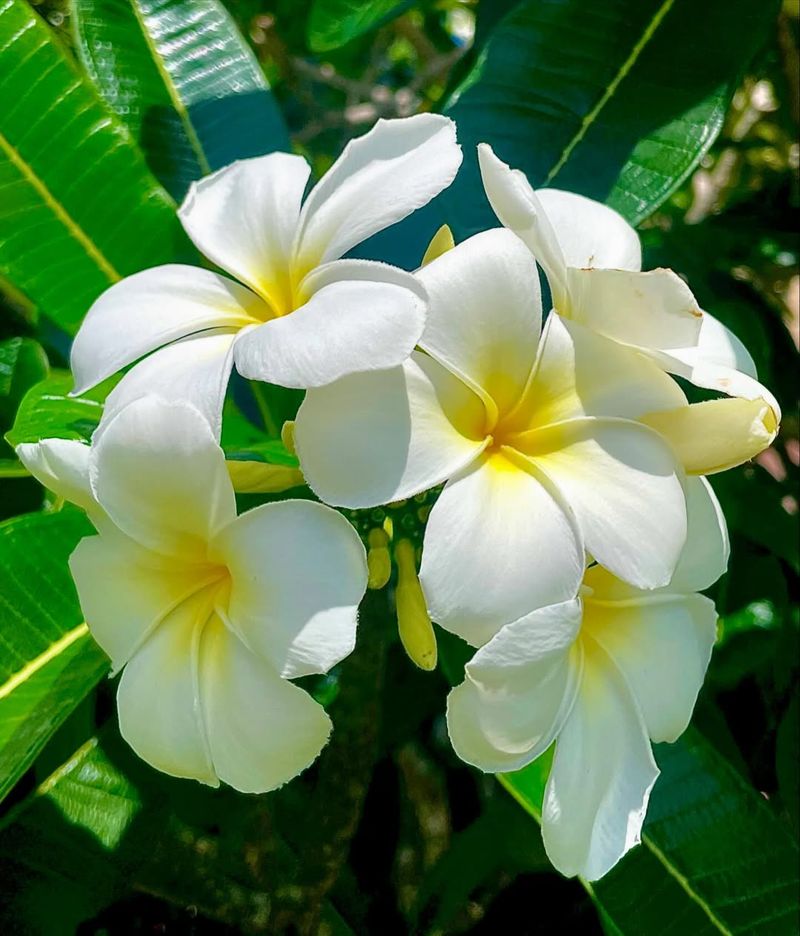
Ask any experienced plumeria grower in Arizona which variety holds up best through a brutal Phoenix summer, and Singapore White comes up fast.
It pushes through triple-digit temperatures without dropping its flowers or going into stress shock the way softer varieties do.
The thick, waxy petals seem almost built for intense sun exposure.
Singapore White is a Plumeria obtusa type, which means it tends to hold its leaves longer into the season compared to most deciduous varieties. In warmer parts of Arizona, it can stay semi-evergreen if winters stay mild.
That extended leaf period means more energy stored for the next bloom cycle.
Soil drainage is non-negotiable with this one. Planting in a raised bed or mounding the soil slightly helps water move away from the roots quickly, which matters a lot during Arizona’s monsoon season when unexpected moisture can accumulate.
A mix of cactus soil and pumice works well as a base.
Watering deeply once or twice a week during peak summer is generally enough. Letting the soil dry out between sessions encourages the roots to reach deeper, which improves stability over time.
Shallow, frequent watering tends to cause more problems than it solves.
Fertilizing with a low-nitrogen, high-phosphorus blend during the growing season supports strong bloom production.
Singapore White in a well-prepared Arizona garden can produce clusters of fragrant white and yellow flowers from late spring through early fall, making it one of the more rewarding choices for desert gardeners.
It also benefits from a bit of afternoon shade during extreme heat waves, which helps prevent leaf scorch without reducing bloom production.
2. Celadine Plumeria Stays Reliable In Full Sun With Consistent Watering
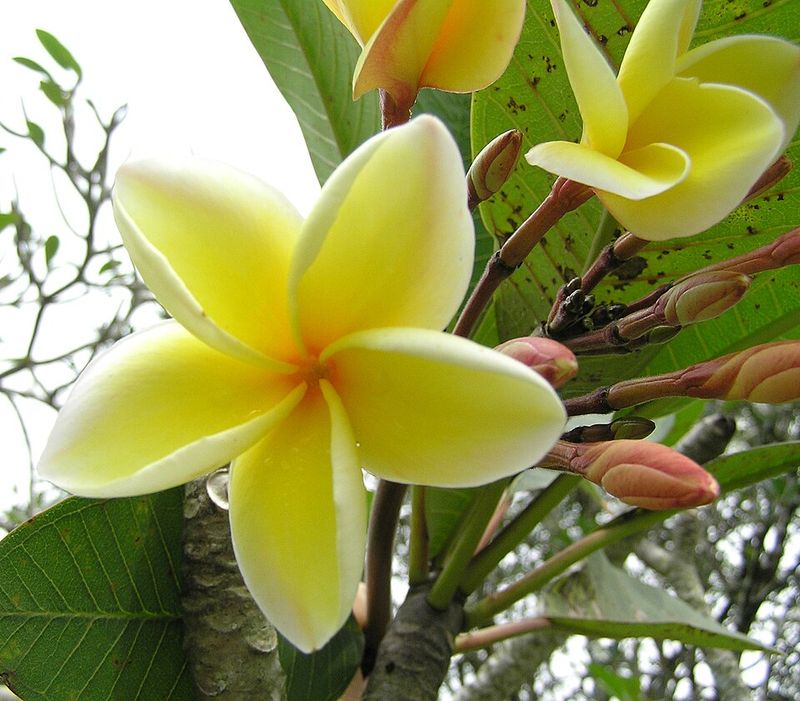
Celadine is one of those varieties that just gets the job done without requiring constant attention. It produces cheerful yellow and white blooms that hold their color well even when temperatures push past 110 degrees Fahrenheit in the Arizona lowlands.
The fragrance is strong and sweet, which makes it a popular pick for backyard plantings near patios and outdoor seating areas.
Consistent watering is where Celadine differs slightly from some other heat-tolerant types. It responds better to a regular schedule rather than the deep-and-neglect approach.
Your Arizona Garden Changes Every Week. Your Plan Should Too.
Gardening in Arizona changes quickly throughout the season. Every Friday you’ll receive a simple weekly plan showing exactly what to plant, prune, fertilize, harvest, and protect so you never miss the right timing.
During the hottest stretch of Arizona summer, watering two to three times per week keeps the plant producing blooms rather than conserving energy.
Full sun placement is ideal, though some gardeners in the Phoenix area have noticed that a bit of afternoon shade during July and August can reduce leaf scorch without affecting bloom output. East or southeast-facing spots that catch morning sun tend to work well for this variety.
Celadine is a Plumeria rubra cultivar, which means it goes dormant in winter and drops its leaves. In most Arizona locations, this happens between November and February.
During dormancy, watering should be reduced significantly to avoid root issues in cooler, slower-draining soil.
Spring is when Celadine really shows off. New growth emerges from the tips of the branches, followed quickly by flower clusters.
Getting the plant established in well-draining soil before the heat peaks gives it the best shot at a strong first bloom season in your Arizona garden.
Well-draining soil with added pumice or perlite helps prevent root rot during monsoon humidity spikes.
3. Aztec Gold Plumeria Thrives In Intense Sun With Strong Heat Tolerance
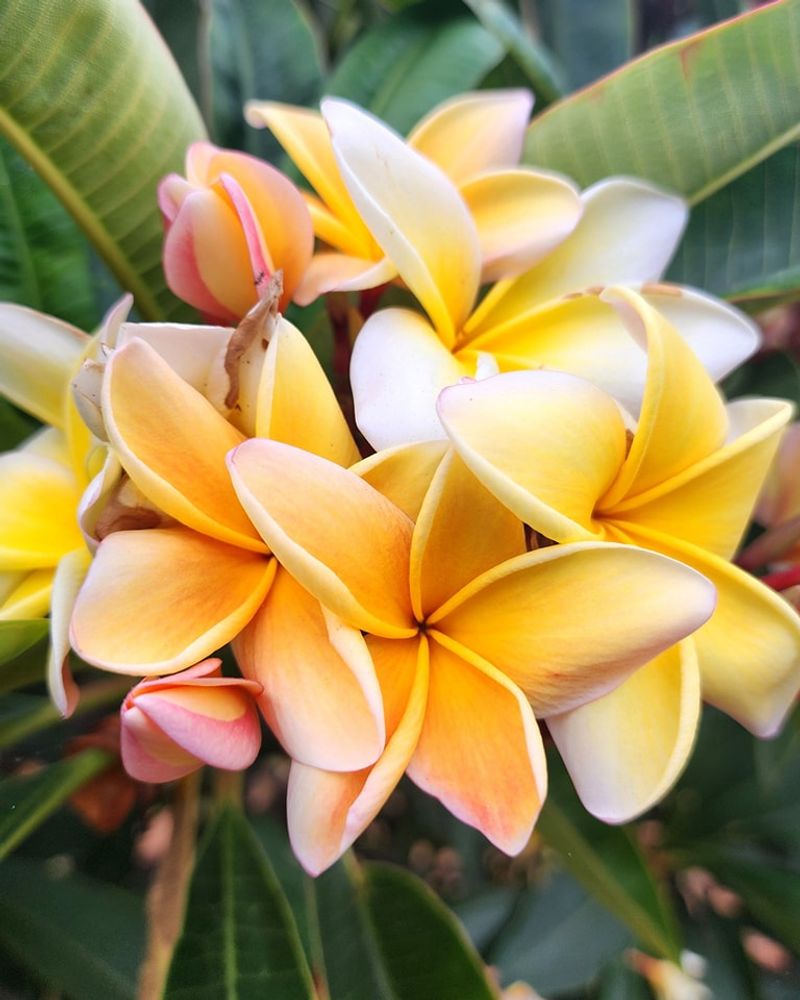
Aztec Gold earns its name in Arizona summers. The deep golden-yellow blooms are striking against the blue sky, and the plant handles intense radiation from the sun without flinching.
It is one of the more heat-resilient Plumeria rubra cultivars available, and growers in the Tucson and Phoenix areas have reported consistent performance through extended heat waves.
What sets Aztec Gold apart is how well it manages water stress. When soil moisture drops during dry stretches between monsoon rains, this variety slows its water use rather than showing immediate leaf stress.
That kind of resilience is genuinely useful in a climate where irrigation schedules do not always line up with the plant’s needs.
Planting in a spot with at least six to eight hours of direct sun daily gives Aztec Gold the energy it needs to sustain heavy bloom production.
Placing it near a south-facing wall in your Arizona yard can also provide a bit of reflected heat during cooler months, which helps extend the growing season slightly.
Fertilizing every three to four weeks with a bloom-boosting formula from April through September supports the plant through its peak growing period. Avoid heavy nitrogen applications, which push leafy growth at the expense of flowers.
Phosphorus and potassium are the key nutrients during bloom season.
Root establishment in the first season can be slow, so patience matters. Aztec Gold planted in spring typically spends its first summer building a strong root system before delivering its most impressive flower display in the following season.
4. Divine Plumeria Keeps Blooming In Heat With Proper Drainage
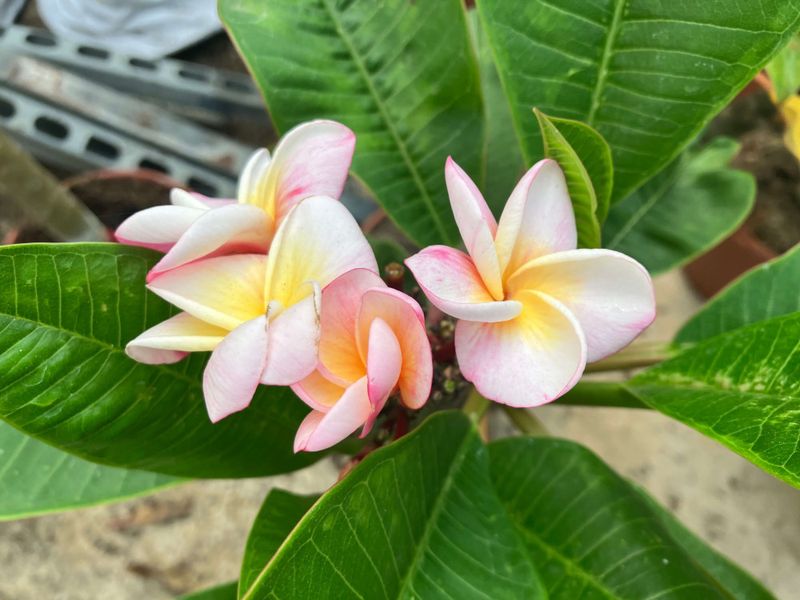
Not every plumeria variety looks delicate and performs tough, but Divine manages both.
The large pink and white blooms have an almost tropical resort quality, and yet this cultivar holds up through Arizona’s summer heat without much fuss when drainage is handled correctly.
That last part is the real key with Divine.
Poor drainage is where most plumeria struggles in Arizona, and Divine is more sensitive to waterlogged roots than some other varieties. Raised beds or containers with drainage holes are the safest options.
Mixing native desert soil with coarse perlite or decomposed granite helps keep moisture levels in check, especially during the monsoon months when surprise rain can saturate the ground quickly.
Bloom timing with Divine tends to run from late spring into early fall in most Arizona locations. The flowers appear in clusters at the branch tips and hold well even during hot, dry spells.
Afternoon temperatures above 105 degrees do not seem to cause significant bloom drop as long as the roots stay healthy and hydrated.
Watering deeply every five to seven days during summer is usually sufficient. Checking soil moisture two inches below the surface before watering helps avoid overdoing it.
If the soil still feels damp at that depth, waiting another day or two is the right call.
Divine responds well to light pruning after the bloom season ends. Trimming back overgrown branches in late fall encourages bushier growth and more bloom tips the following spring, which translates to a fuller, more impressive display in your Arizona garden.
5. Kauka Wilder Plumeria Adapts Well To Dry Heat Conditions
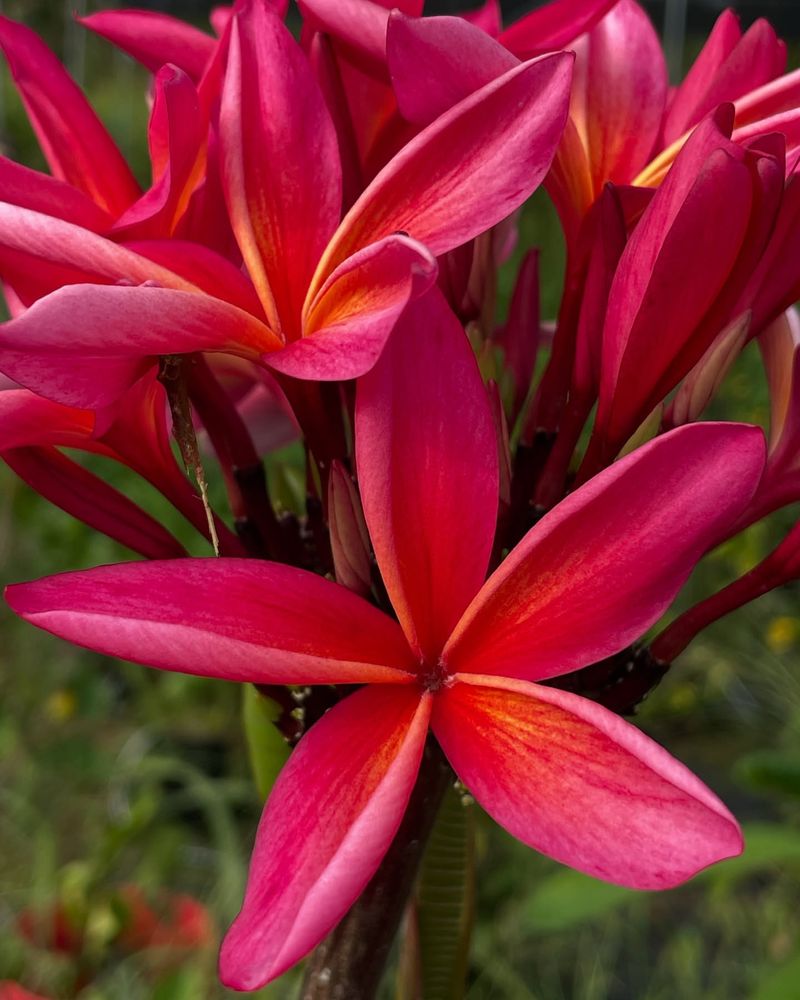
Kauka Wilder has a reputation among serious plumeria collectors for holding up in conditions that push other cultivars to their limits.
The warm orange and yellow blooms are visually bold, and the plant itself seems genuinely suited to the dry heat that defines Arizona summers from May through September.
It does not just survive the desert climate, it settles into it.
Dry heat is actually less damaging to Kauka Wilder than humid heat would be. Arizona’s low humidity reduces the risk of fungal issues that plague plumeria in wetter climates, and Kauka Wilder takes full advantage of those dry conditions.
Good air circulation around the plant helps maintain that dry environment at the leaf and branch level.
Irrigation should mimic the natural wet-dry cycles the plant prefers. Deep watering followed by a full drying period of five to eight days keeps the roots healthy and encourages deeper growth.
During the hottest weeks, checking the plant every few days for signs of underwatering, like slightly soft stem tips, helps catch problems before they affect bloom production.
Kauka Wilder grows at a moderate pace, reaching six to ten feet in the ground over several years under typical Arizona conditions. Giving it enough space to spread out pays off as the plant matures and produces larger flower clusters each season.
Feeding with a phosphorus-heavy fertilizer starting in March gives the plant a strong nutritional foundation before the heat ramps up.
Consistent feeding through August supports the long bloom window that makes Kauka Wilder such a rewarding choice for Arizona growers.
6. Scott Pratt Plumeria Performs Well In Heat With Some Afternoon Protection
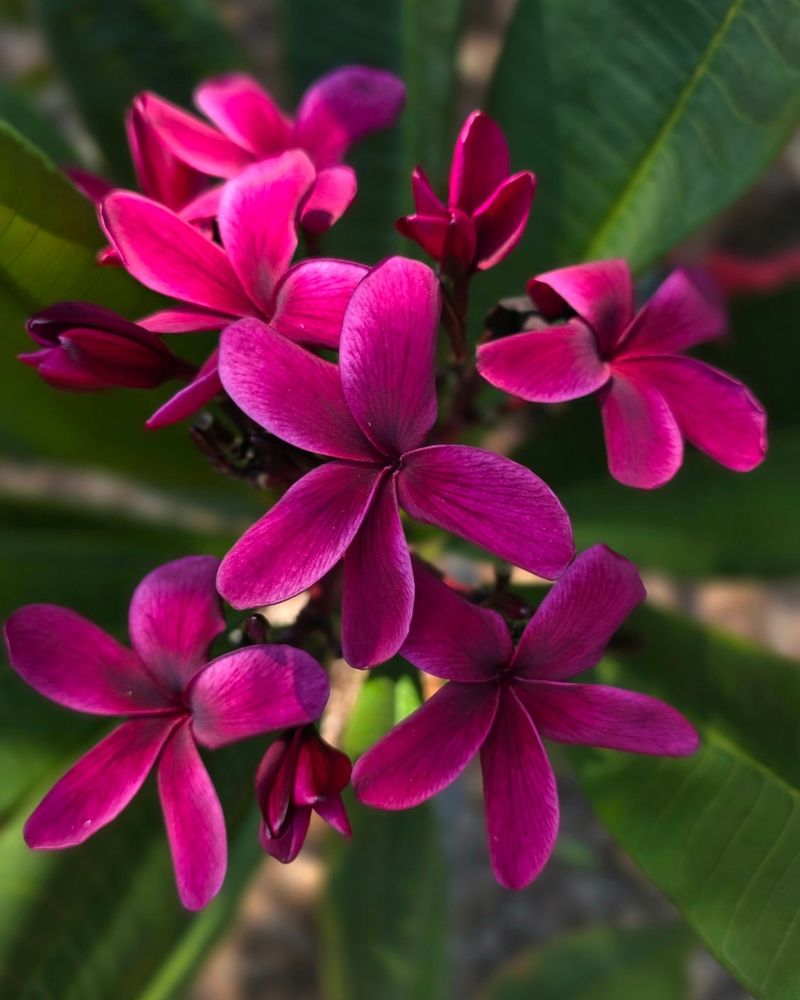
Scott Pratt turns heads with its vivid red and orange blooms, which stand out sharply against the pale tones of a typical Arizona landscape. It performs well through summer heat, but there is a small catch worth knowing upfront.
Extended exposure to direct afternoon sun in the hottest parts of Arizona can cause leaf scorch on this variety more than on some tougher cultivars.
Positioning Scott Pratt where it receives full morning sun but gets filtered or partial shade from about 2 p.m. onward tends to produce the best results in Phoenix and Tucson.
A pergola, a large patio umbrella, or even the shadow cast by a nearby wall can provide enough relief during the harshest afternoon hours without sacrificing overall sun exposure.
Despite that one placement consideration, Scott Pratt is genuinely heat-tolerant in the sense that its root system handles warm soil temperatures well and its bloom production does not drop off dramatically during hot stretches.
The flowers are large, fragrant, and long-lasting on the branch, which makes each bloom cycle feel worthwhile.
Soil preparation matters with this cultivar. Adding coarse sand or pumice to the planting hole improves drainage and prevents moisture from sitting around the roots after watering.
Arizona’s clay-heavy soils in some areas can retain too much water, which causes more problems than the heat itself.
Regular fertilizing from April through August keeps Scott Pratt producing its signature blooms consistently. Skipping the feeding schedule during summer often results in fewer flowers and slower recovery from heat stress, so staying consistent pays off noticeably.
7. Dwarf Plumeria Varieties Handle Heat Better In Containers
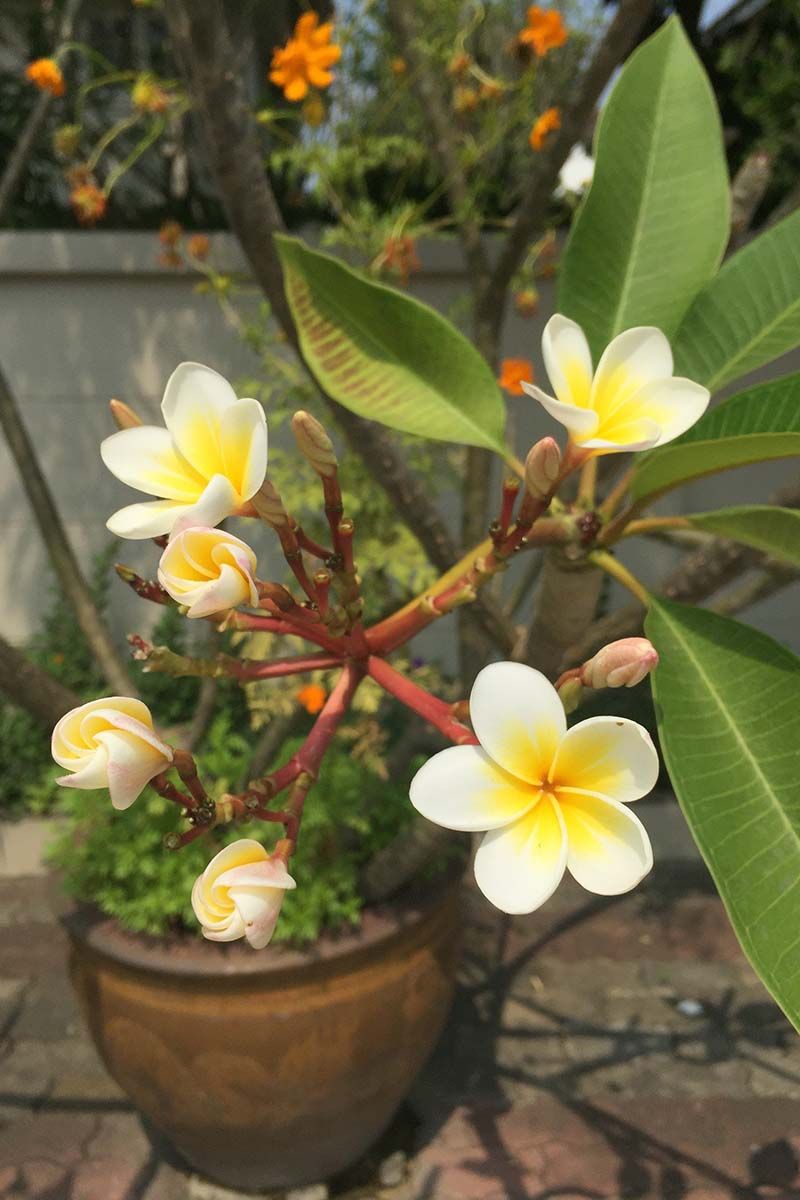
Container growing opens up plumeria to a whole different group of Arizona gardeners, especially those working with limited yard space, apartment patios, or problem soil.
Dwarf plumeria varieties are compact enough to thrive in large pots while still producing the fragrant blooms the plant is known for.
In containers, you also gain the ability to move the plant as conditions change through the season.
Heat management is actually easier in containers than in the ground in some ways. Pots can be shifted to catch morning sun and avoid the worst of the afternoon exposure during July and August.
Terracotta containers work particularly well in Arizona because they allow some air exchange through the pot walls, which keeps root temperatures slightly lower than plastic would.
Dwarf varieties like Dwarf Singapore Pink and Dwarf Yellow are well-suited for container life in Arizona. They stay manageable in size, typically reaching three to five feet tall, while still blooming reliably through the warm months.
Repotting every two to three years into fresh, well-draining mix keeps the root system healthy and productive.
Watering container-grown plumeria requires more attention than in-ground plants because pots dry out faster in Arizona’s low humidity.
Checking soil moisture every two to three days during peak summer and watering when the top inch feels dry is a practical routine that prevents both overwatering and drought stress.
Winter storage is straightforward with dwarf container varieties. Moving pots into a garage or covered patio when nighttime temperatures drop below 40 degrees protects the plant through Arizona’s brief cold spells and sets it up for a strong return in spring.