Native Michigan Wildflowers That Bloom Before Trees Leaf Out In Spring
Before Michigan trees fill in with leaves, the forest floor has a brief moment to shine. In early spring, native wildflowers rush to bloom while sunlight still reaches the ground, creating one of the most beautiful and easy to miss shows of the season.
These plants have adapted to a very small window of time, taking advantage of bright spring light before the tree canopy closes above them. That is part of what makes them so special.
They appear quickly, bloom beautifully, and then begin to fade back as shade takes over. Many gardeners never think to add these early natives to their landscapes, even though they bring soft color, woodland charm, and important value for early pollinators.
If you want a garden that feels more connected to Michigan’s natural rhythms, these spring wildflowers are a wonderful place to start.
1. Spring Beauty (Claytonia virginica)
Walk through almost any Michigan hardwood forest in early April and you will likely step around clusters of Spring Beauty without even realizing it.
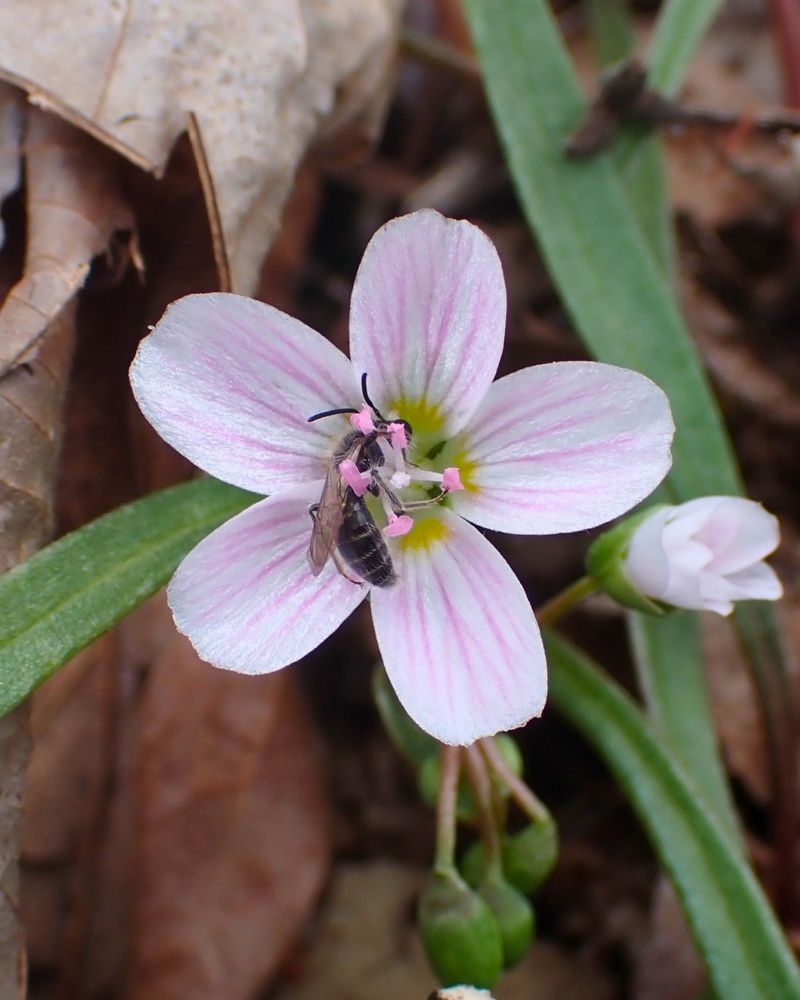
These tiny, cheerful flowers carpet the woodland floor in shades of white and soft pink, each petal traced with delicate rose-colored veins.
They are easy to overlook at first glance, but once you spot one, you start seeing them everywhere.
Spring Beauty thrives in rich, moist soil under deciduous trees, popping up while the branches above are still bare. That open canopy is exactly what this plant needs, since it depends on direct sunlight to fuel its early growth.
By the time the trees fully leaf out in May, Spring Beauty has already finished blooming and quietly retreats underground until next year.
Gardeners who want to attract early pollinators will love this plant. Small native bees and mining bees visit the flowers regularly for pollen and nectar.
Planting Spring Beauty along a shaded garden path or under mature oaks creates a naturalistic look that fits beautifully into any Michigan landscape. It spreads slowly on its own over time, filling in gaps and creating a lush, layered ground cover.
If you love low-maintenance native plants, Spring Beauty belongs in your yard.
2. Trout Lily (Erythronium americanum)
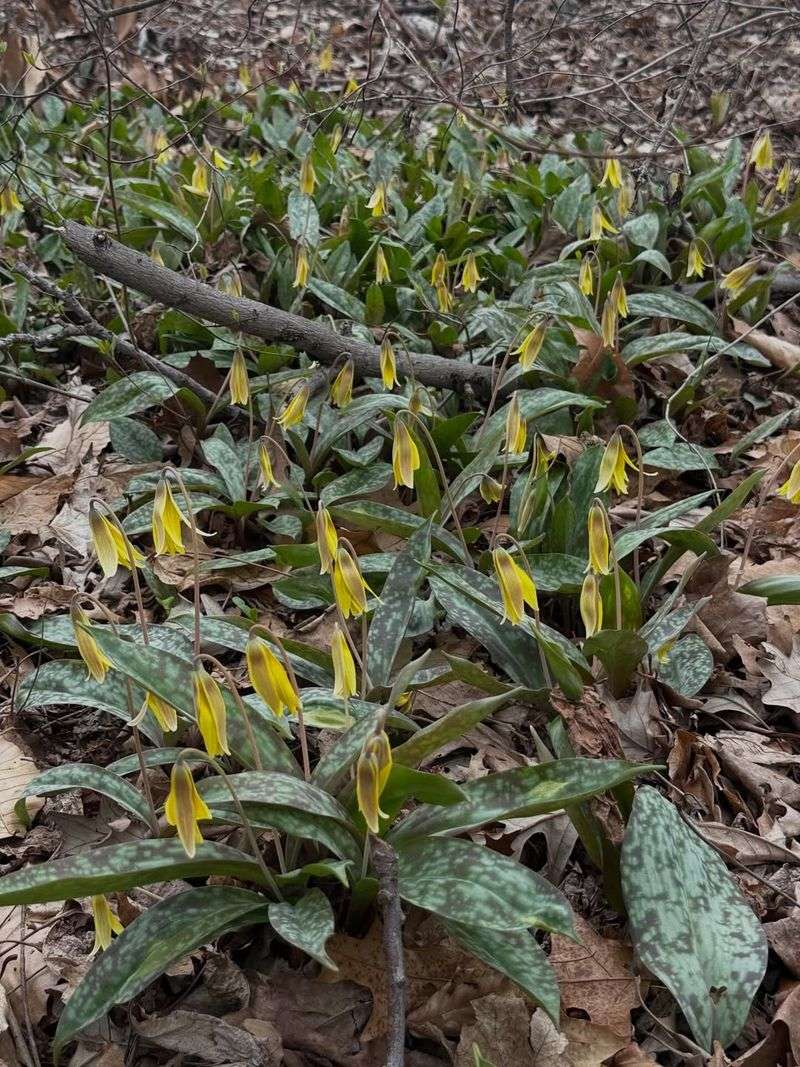
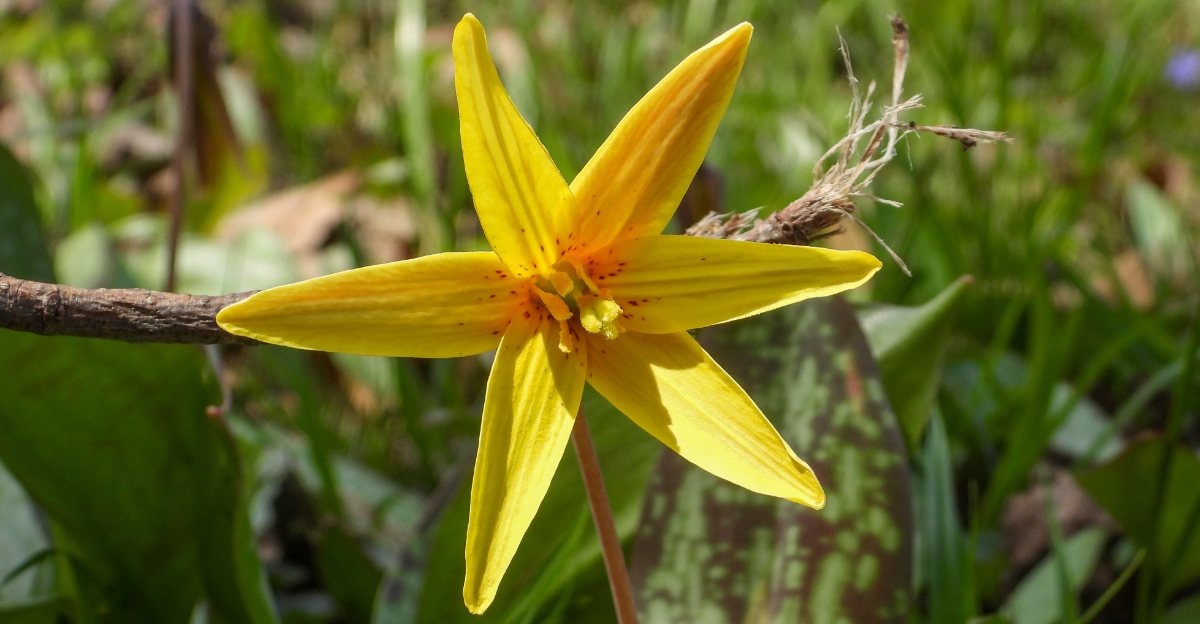
Named for the speckled, brown-and-green pattern on its leaves that looks almost exactly like the markings on a brook trout, Trout Lily is one of the most distinctive wildflowers in Michigan.
That mottled foliage alone makes it worth seeking out, even before the nodding yellow flower appears. The single bloom droops slightly downward, as if it is shyly peeking at the ground below.
Trout Lily forms dense colonies across Michigan’s forest floors, especially in areas with rich, moist soil and plenty of leaf litter. It is a true spring ephemeral, meaning the entire above-ground plant appears, blooms, and vanishes within just a few weeks.
Underground, the small corm continues storing energy for next year’s display, quietly waiting out the summer and winter months.
One fascinating fact about Trout Lily is that a colony can be extremely old. Some established patches are estimated to be over a century in age, slowly expanding just a few inches each year.
Your Michigan Garden Changes Every Week. Your Plan Should Too.
Gardening in Michigan changes quickly throughout the season. Every Friday you’ll receive a simple weekly plan showing exactly what to plant, prune, fertilize, harvest, and protect so you never miss the right timing.
This makes them one of the most patient plants in the Michigan forest. Early bumblebees and small native bees love visiting the flowers for pollen.
If you find a large colony while hiking in a Michigan woodland, you are standing in a piece of living history that has been growing in that same spot for generations.
3. Bloodroot (Sanguinaria canadensis)
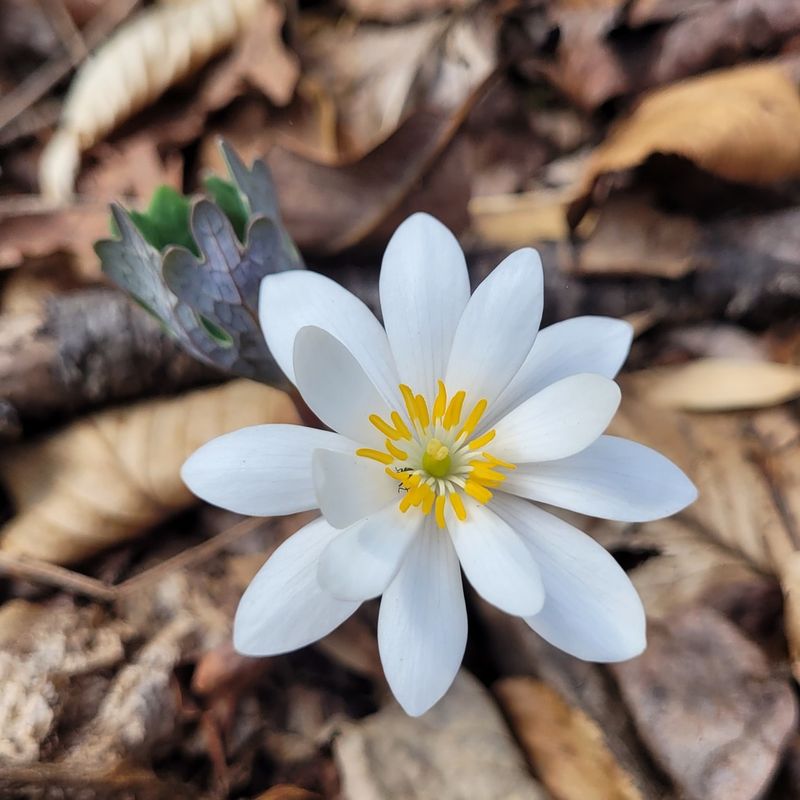
Few Michigan wildflowers make as bold a first impression as Bloodroot. The pure white flowers with bright yellow centers push up through last year’s leaf litter so early in spring that frost is still a real possibility.
Each flower lasts only a day or two before the petals fall, making it one of the most fleeting shows in the entire Michigan woodland calendar.
The name comes from the plant’s thick underground rhizome, which bleeds a vivid orange-red sap when cut or broken. Native peoples across North America used this striking pigment as a dye and for ceremonial body paint for thousands of years.
Even today, the root’s intense color is one of the most memorable things about this plant up close.
Bloodroot grows best in shaded spots with well-drained, humus-rich soil, making it a natural fit under mature hardwoods across Michigan. A single leaf wraps around the flower stem as it emerges, almost like a green cloak protecting the bud from cold air.
After blooming, the leaf continues to expand and flatten out, growing quite large before the plant goes dormant in summer.
Adding Bloodroot to a shaded native garden creates a dramatic early-spring focal point, and it pairs beautifully with Spring Beauty and Trout Lily for a layered, naturalistic woodland planting.
4. Large-Flowered Trillium (Trillium grandiflorum)
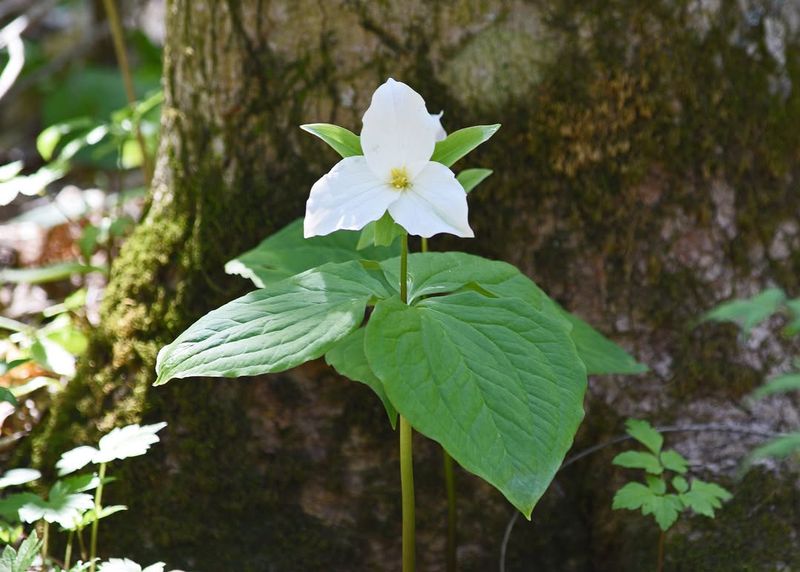
Michigan’s state wildflower is hard to miss when it blooms in May. Large-Flowered Trillium rises on a sturdy stem above a whorl of three broad green leaves, topped by a single brilliant white flower with three bold petals.
It is one of the showiest native wildflowers in the entire Great Lakes region, and seeing a hillside covered in them is genuinely breathtaking.
The flower opens white and gradually fades to a soft pink as it ages, so a single colony can display two different colors at the same time depending on which blooms are newer.
Trillium grows in rich, moist deciduous forests across most of Michigan, from the southern counties all the way up through the Upper Peninsula. It blooms in that important pre-canopy window when sunlight still reaches the forest floor.
One thing every Michigan nature lover should know is that picking Trillium is actually illegal in the state. Removing the flower or stem damages the plant’s ability to photosynthesize, and it can take years for the plant to recover.
Trillium is also famously slow-growing, sometimes taking seven years from seed to first bloom. That patience makes each flowering plant something special.
Planting Trillium in a backyard woodland garden is a long-term investment, but the reward of those gorgeous white blooms every spring is absolutely worth the wait.
5. Dutchman’s Breeches (Dicentra cucullaria)
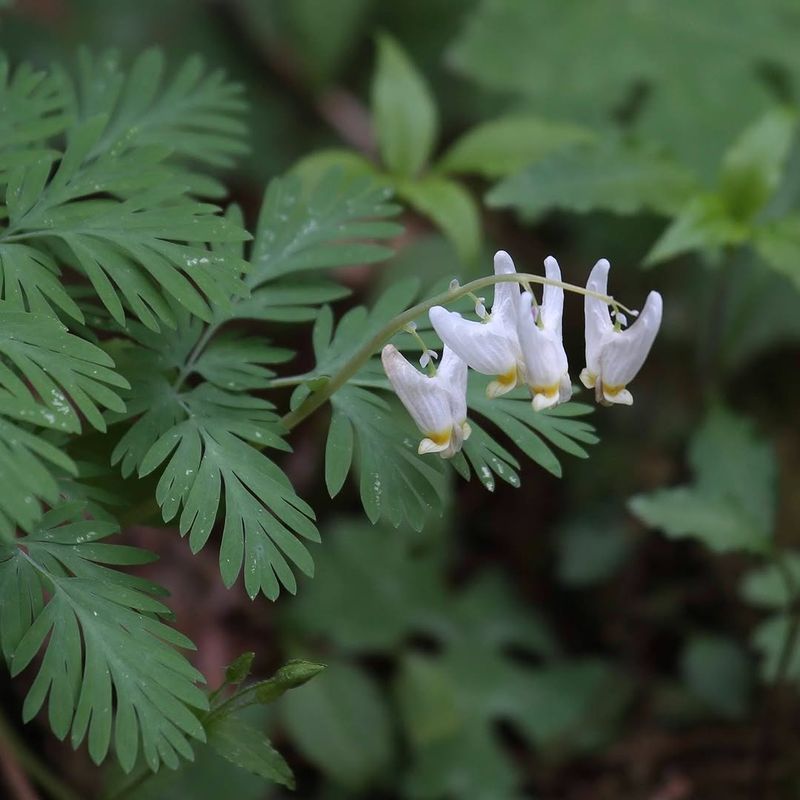
Imagine tiny pairs of white pantaloons hanging upside down from a thin arching stem, and you have a pretty good picture of Dutchman’s Breeches.
This wildflower has one of the most whimsical appearances in the entire Michigan forest, and its unusual blooms never fail to spark curiosity in first-time observers.
The finely cut, blue-green foliage adds an airy, delicate texture that makes the plant look almost fern-like before the flowers appear.
Dutchman’s Breeches blooms in early spring across Michigan’s beech-maple forests, taking full advantage of the bright light that filters through the bare canopy.
It prefers rich, well-drained soil with plenty of organic matter, and it often grows alongside Squirrel Corn and Spring Beauty in large mixed colonies.
By late spring, the entire plant disappears above ground, leaving no trace until the following year.
The unusual flower shape is not just decorative. Only long-tongued bumblebees have the reach to access the nectar hidden deep inside those spurred petals, making this plant highly specialized in its pollinator relationships.
Short-tongued bees sometimes cheat by biting through the spur to steal nectar without providing any pollination benefit. Watching bees work these flowers in a Michigan woodland is a genuine highlight of early spring.
Gardeners in shaded yards can grow Dutchman’s Breeches from bulb-like corms, and the plant rewards patience with a charming annual display.
6. Squirrel Corn (Dicentra canadensis)
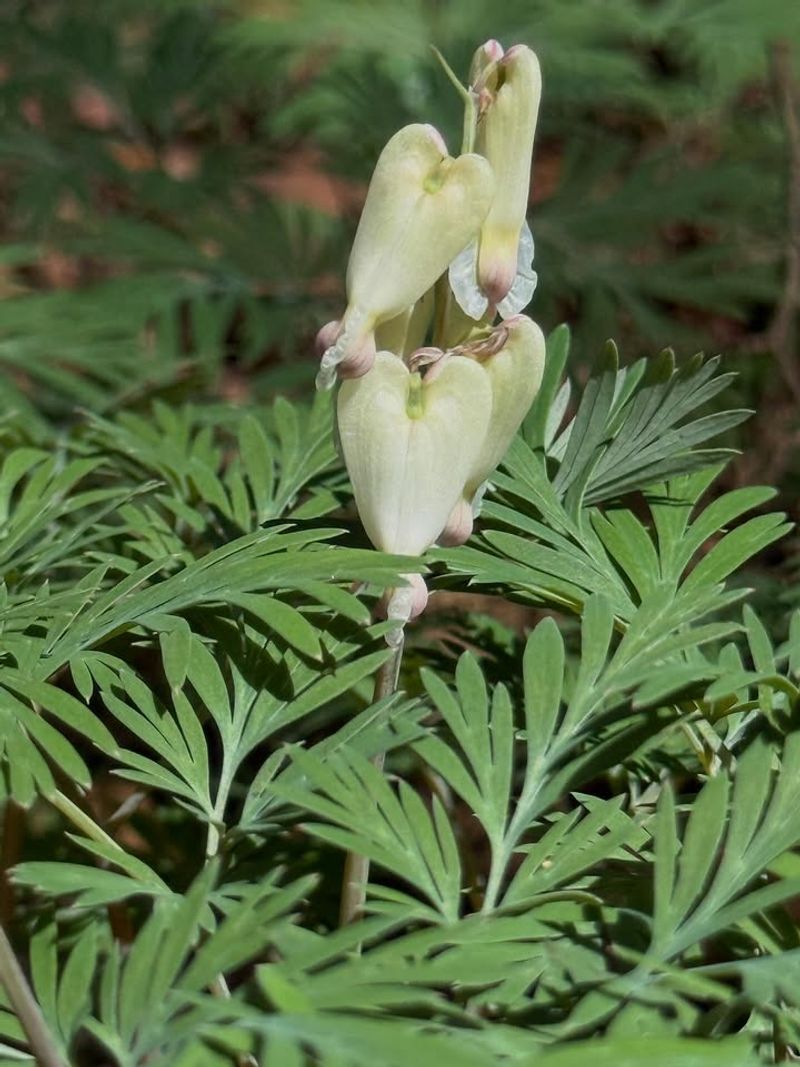
At first glance, Squirrel Corn looks almost identical to its close cousin Dutchman’s Breeches, and the two plants often grow side by side in Michigan’s hardwood forests. Look a little closer, though, and the differences become clear.
Squirrel Corn’s flowers are more rounded and heart-shaped at the base rather than forming those distinctive pantaloon tips, and they carry a light, sweet fragrance that Dutchman’s Breeches lacks entirely.
The common name comes from the plant’s underground structure. Beneath the soil, Squirrel Corn produces clusters of small, round, yellow corms that look remarkably like kernels of corn.
Squirrels and other small mammals sometimes dig them up, which is exactly how the plant got its charming nickname. These corms store the energy the plant needs to survive the long Michigan winter and spring back to life each year.
Squirrel Corn blooms a bit later than Dutchman’s Breeches, usually in mid to late April across most of Michigan, giving the two species a slightly staggered bloom time even when growing in the same patch.
Like all spring ephemerals, it fades quickly once the canopy closes and shade deepens on the forest floor.
Early bumblebees are its primary pollinators, drawn in by that gentle floral scent. Growing Squirrel Corn in a shaded native garden alongside ferns and Wild Ginger creates a rich, layered woodland planting that feels genuinely authentic to Michigan’s natural landscape.
7. Hepatica (Hepatica spp.)
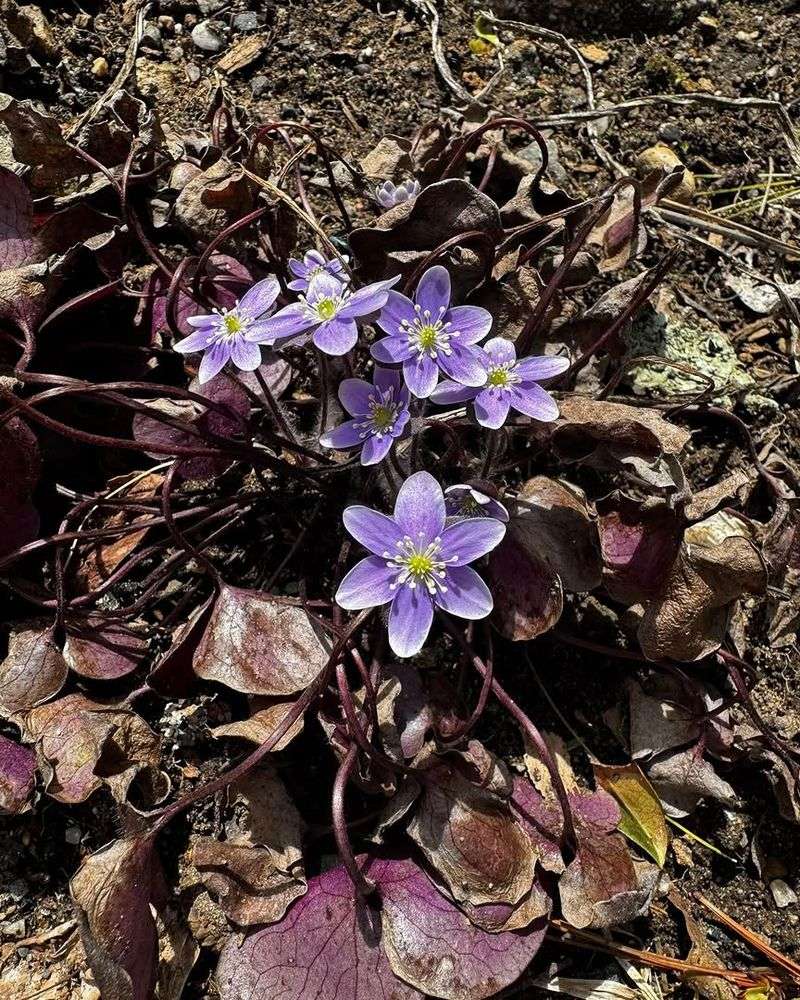
Hepatica might just be the bravest wildflower in Michigan. It pushes up its fuzzy-stemmed flowers so early in spring that snow is sometimes still on the ground nearby, making it one of the very first native plants to bloom each year.
The flowers come in shades of purple, lavender, pink, and white, and they rise on hairy stems above a cluster of three-lobed leaves that overwintered from the previous year.
Two species grow in Michigan: Round-Lobed Hepatica and Sharp-Lobed Hepatica. Both prefer well-drained, rocky or sandy slopes in deciduous forests, and both bloom before the canopy fills in overhead.
The lobed leaves are actually the previous year’s growth, still green and leathery through winter, protecting the crown of the plant from harsh Michigan cold. Fresh new leaves appear only after the flowers have already opened.
Hepatica is an important early nectar source for queen bumblebees just emerging from their winter rest. Those large, fuzzy queens need food quickly after waking up, and Hepatica provides exactly that.
Because it blooms so early, finding Hepatica in flower feels like a genuine reward for getting outside on a chilly Michigan morning in late March or early April.
It grows slowly and does not transplant well, so buying nursery-grown plants is the best approach for anyone wanting to add this remarkable early bloomer to a shaded native garden.
8. Virginia Bluebells (Mertensia virginica)
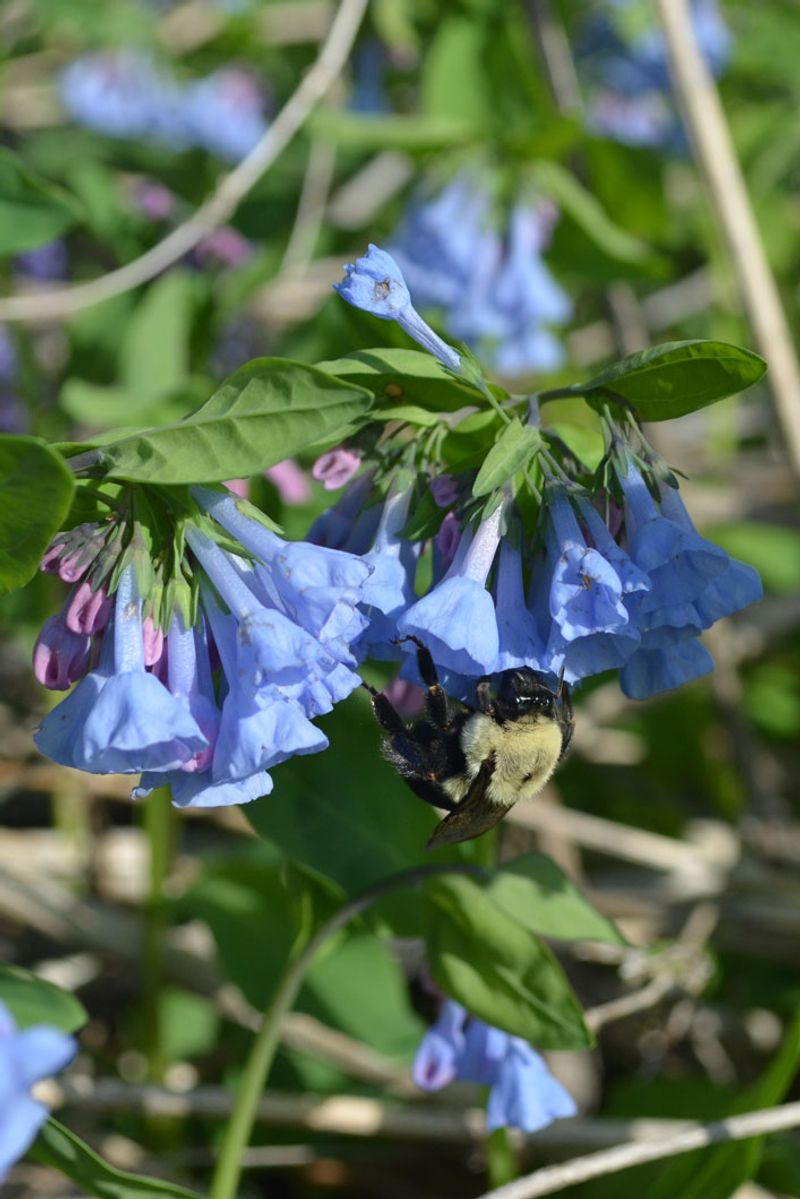
Few sights in Michigan’s spring landscape match a full colony of Virginia Bluebells in bloom. Those clusters of soft, sky-blue bell-shaped flowers hang in graceful arching bunches, glowing almost luminously in the cool, filtered light of an open woodland.
The buds start out pink before gradually shifting to that signature clear blue as they open, so a single stem can display both colors at once.
Virginia Bluebells loves moist, rich soil and thrives especially well along river floodplains, stream banks, and low-lying woodland areas across Michigan.
It is a true spring ephemeral, shooting up quickly in March and April, blooming brilliantly, and then vanishing completely by early summer.
The spot where a large colony bloomed will look totally bare and unremarkable just a few weeks after peak bloom, which is part of what makes catching them in flower so exciting.
Hummingbirds migrating through Michigan in spring are drawn to Virginia Bluebells for nectar, and long-tongued native bees also visit the tubular flowers frequently.
Planting Virginia Bluebells in a moist, shaded garden bed alongside ferns and hostas creates a beautiful layered effect, since the ferns and hostas fill in the space after the Bluebells disappear for summer.
For any Michigan gardener who loves bold, natural color in early spring, this is one native wildflower that absolutely should not be overlooked.
9. Wild Ginger (Asarum canadense)
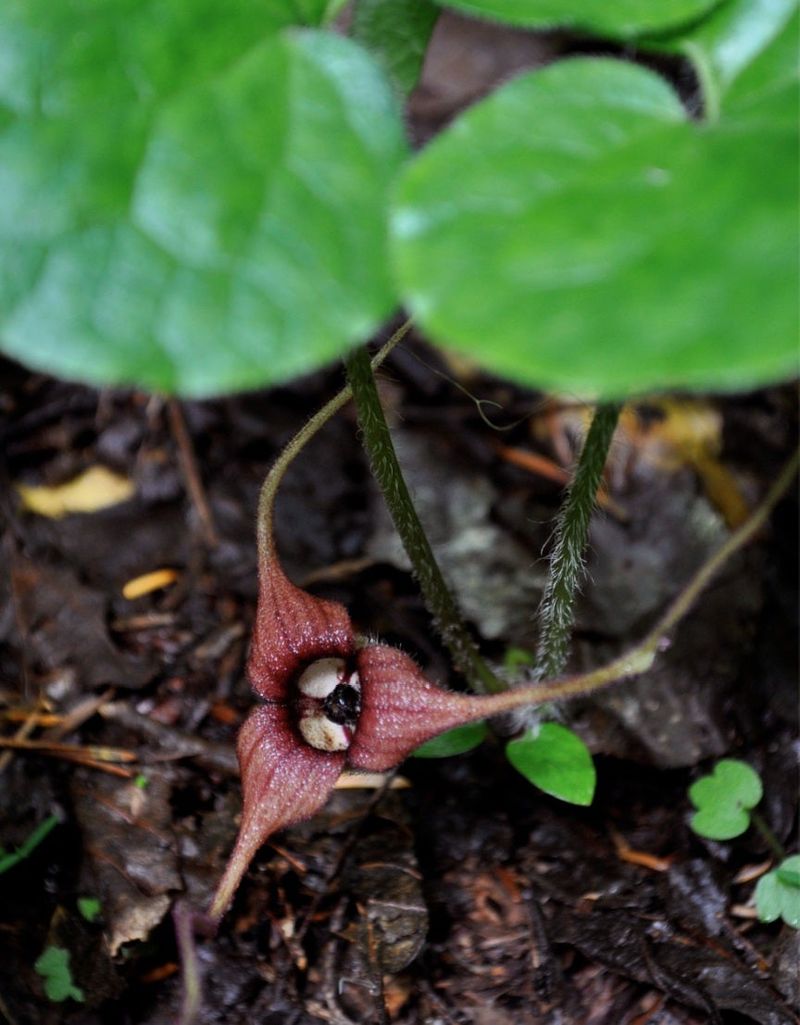
Wild Ginger plays a clever trick on visitors to Michigan’s spring woodlands. While most early wildflowers show off their blooms at eye level, Wild Ginger hides its unusual maroon flowers right at ground level, tucked beneath a pair of large, heart-shaped leaves.
You have to crouch down and gently lift the foliage to find the bloom, which looks almost alien up close with its three pointed lobes and deep burgundy color.
The plant spreads slowly by rhizome, forming dense, low mats of velvety green leaves that cover the forest floor under mature hardwoods.
Those attractive leaves persist through summer, making Wild Ginger one of the few spring ephemerals that actually stays visible and ornamental long after bloom time.
This quality makes it an excellent ground cover choice for shaded Michigan gardens where other plants struggle to fill in.
Despite sharing a name with culinary ginger, Wild Ginger is not related to the tropical spice plant. The roots do carry a sharp, ginger-like scent when bruised or broken, which is where the name comes from.
Ground beetles and fungus gnats are thought to be the primary pollinators, attracted by the flower’s earthy, slightly fermented scent rather than bright color.
Wild Ginger is also notably deer-resistant, which is a significant advantage in many Michigan landscapes where deer browsing can be a real challenge for native plant gardeners.
10. Cut-Leaved Toothwort (Cardamine concatenata)
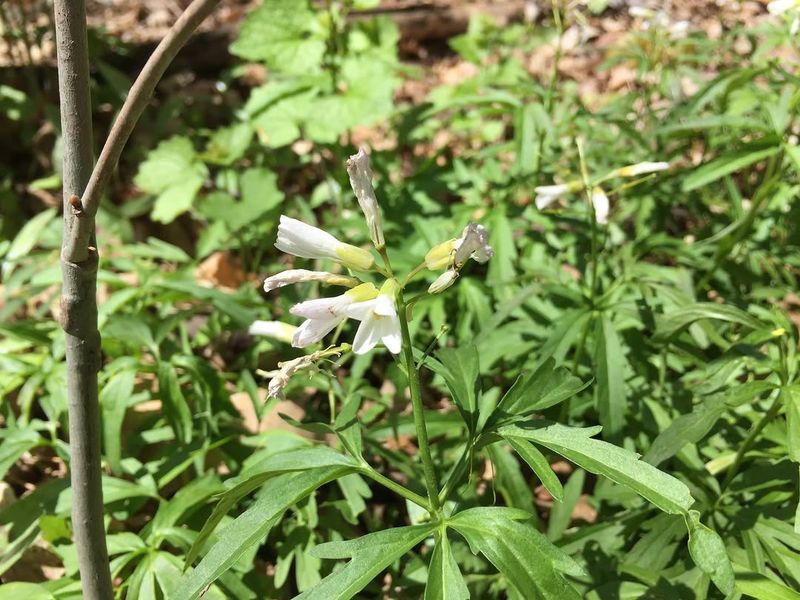
Cut-Leaved Toothwort is one of those wildflowers that rewards the observant hiker who pays attention to the details underfoot. The deeply cut, toothed leaves are eye-catching on their own, arranged in a whorl around the stem in a way that looks almost architectural.
Above them, clusters of small white flowers open in April, adding a clean, crisp brightness to Michigan’s still-brown woodland floor.
The plant grows across Michigan in moist, rich deciduous forests, often appearing in large drifts alongside Spring Beauty, Trout Lily, and Bloodroot.
All of these species share the same strategy of racing to bloom before the canopy closes, and they often grow as a community, creating colorful, layered displays that cover entire hillsides in the best woodland habitats.
Toothwort is a member of the mustard family, and its slightly peppery-tasting leaves were historically eaten as a spring green by both Native peoples and early European settlers in the Great Lakes region.
Early butterflies and native bees visit Cut-Leaved Toothwort for nectar during its brief bloom period. It is also an important host plant for the West Virginia White butterfly, whose caterpillars feed exclusively on plants in the toothwort family.
Planting it in a shaded native garden supports that butterfly’s survival in Michigan. The plant goes dormant by early summer, so pairing it with shade-tolerant ferns or Wild Ginger fills the gap it leaves behind and keeps the garden looking lush all season long.