Florida Invasive Plants That Can Get Homeowners In Trouble If They Are Not Removed
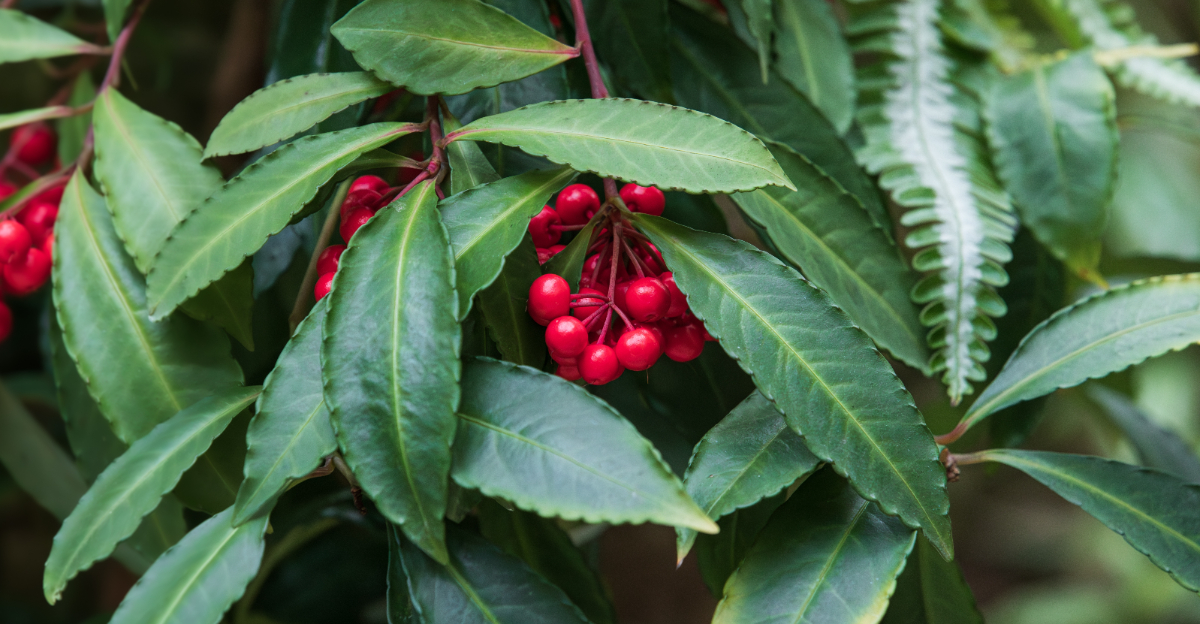
That plant in your yard might look harmless, even pretty, but it could land you in hot water faster than you think.
Across Florida, certain fast-growing plants don’t just take over gardens, they break rules, crowd out natives, and trigger serious headaches for homeowners who ignore them.
Ever noticed something spreading a little too aggressively along your fence or creeping into places it shouldn’t? That’s not just a nuisance.
It’s a red flag. Many people have no idea they’re growing problem plants until it’s too late.
Fines, removal orders, and costly cleanups can follow, and nobody wants that surprise. The tricky part?
Some of the worst offenders hide in plain sight, sold, shared, and planted without a second thought. Want to stay on the safe side and protect your yard at the same time?
It starts with knowing what shouldn’t be there in the first place.
1. Remove Brazilian Pepper Tree Before It Takes Over
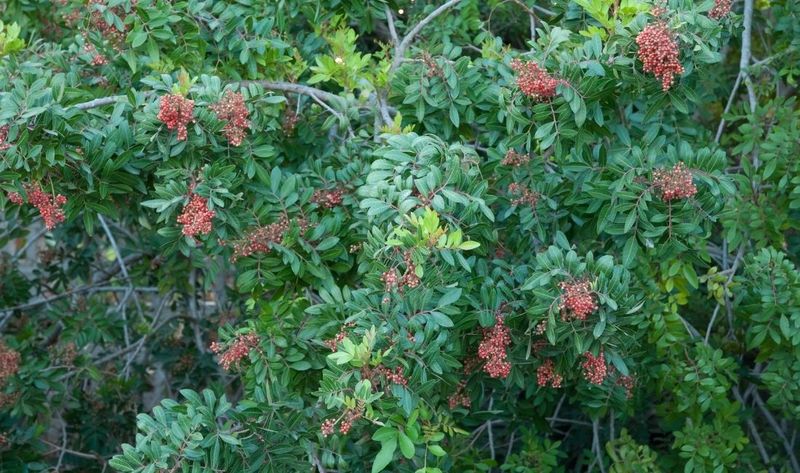
Imagine buying a Florida home only to discover that the lush, berry-covered shrub lining your fence is actually one of the most aggressively invasive trees in the state. Brazilian Pepper Tree, known scientifically as Schinus terebinthifolia, is exactly that kind of surprise.
Originally brought from South America as an ornamental plant, it has spread across millions of acres of Florida land since the 1800s.
This tree forms dense thickets that shade out native vegetation, reducing habitat for birds, pollinators, and other wildlife that Florida ecosystems depend on. It also releases chemicals into the soil that discourage native plants from growing nearby.
The Florida Department of Agriculture and Consumer Services has placed it on the noxious weed list, making it illegal to sell, plant, or transport this species in Florida.
For homeowners, removal is strongly recommended and sometimes required. Small plants can be pulled by hand when the soil is moist, making sure to get the full root system.
Larger trees often need to be cut and treated with an approved herbicide immediately after cutting to prevent regrowth. Brazilian Pepper spreads through bird-dispersed seeds, so acting quickly before berries form is especially important.
2. Cut Back Air Potato Vine Before It Climbs Everywhere
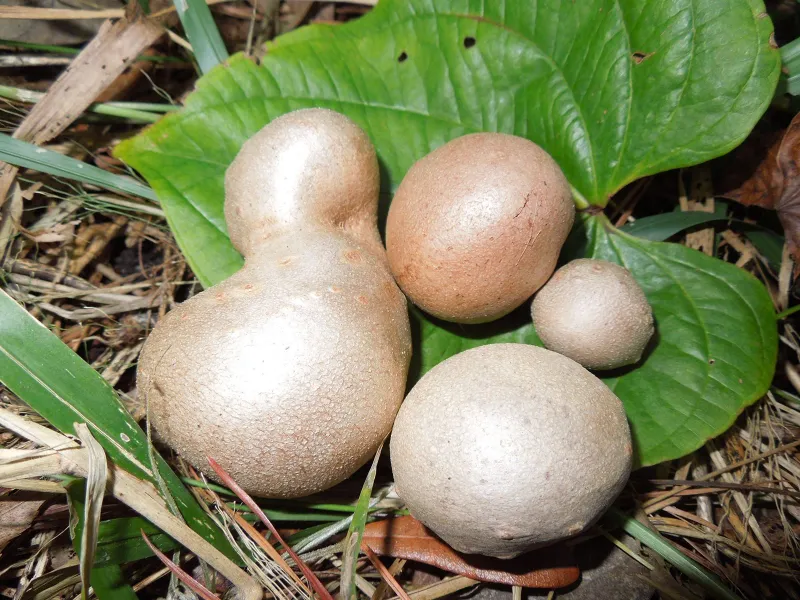
Walk through almost any Florida neighborhood during summer and you might notice a fast-climbing vine swallowing trees whole.
Air Potato Vine, or Dioscorea bulbifera, is one of the most recognizable invasive plants in Florida because of how dramatically and quickly it covers everything in its path.
A single vine can grow up to eight inches in a single day during warm months.
What makes this plant especially tricky is its production of aerial tubers, called bulbils, which look like small potatoes hanging from the stems. Each bulbil that falls to the ground has the potential to sprout a brand-new vine.
This means that even after you think you have cleared an area, new growth can pop up just weeks later from bulbils you missed.
The Florida Exotic Pest Plant Council lists Air Potato as a Category I invasive species, meaning it is already altering native plant communities in documented ways.
Your Florida Garden Changes Every Week. Your Plan Should Too.
Gardening in Florida changes quickly throughout the season. Every Friday you’ll receive a simple weekly plan showing exactly what to plant, prune, fertilize, harvest, and protect so you never miss the right timing.
Homeowners should collect and bag all bulbils before attempting to cut back the vine, since disturbing the plant without removing the tubers can actually speed up its spread.
A biological control using the Air Potato Leaf Beetle, approved by the USDA, has also shown promising results in Florida communities.
3. Get Rid Of Chinese Tallow Tree Before It Spreads Seeds
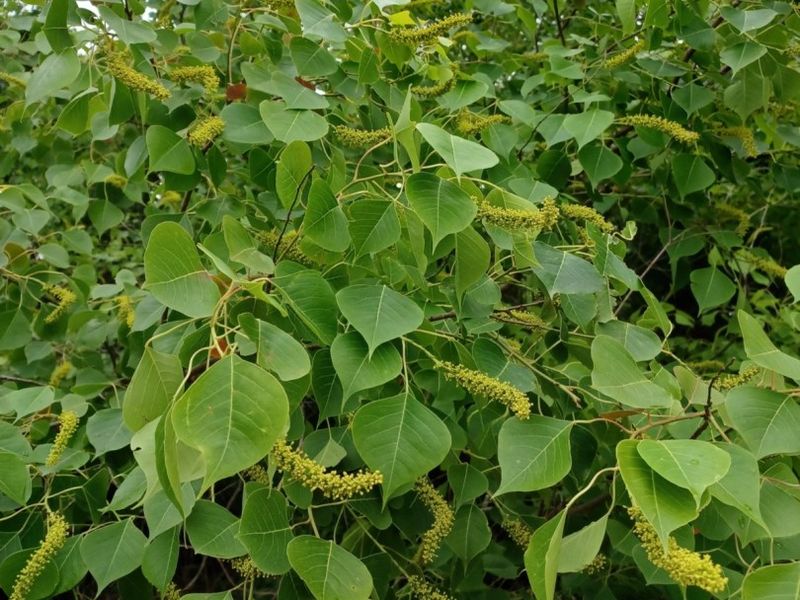
At first glance, Chinese Tallow Tree looks almost charming, with its heart-shaped leaves that turn brilliant shades of red and orange in cooler months. Many Florida homeowners have planted it thinking it was a harmless shade tree.
The reality is far less pleasant once you understand how aggressively this tree reproduces and spreads across natural areas.
Triadica sebifera, its scientific name, produces enormous quantities of white waxy seeds that birds love to eat and carry across wide distances. A single mature tree can produce up to 100,000 seeds per year.
Once established in a natural area, Chinese Tallow quickly forms dense stands that push out native species like wax myrtle and cabbage palm, drastically changing the character of Florida’s natural habitats.
Florida authorities, including the Florida Fish and Wildlife Conservation Commission, strongly discourage this tree and it appears on the Florida Exotic Pest Plant Council’s Category I invasive list.
Homeowners who spot young saplings should remove them while they are small, pulling the entire root to prevent resprouting.
Older, established trees often require professional removal combined with stump treatment using herbicide. Replacing removed trees with native shade trees like live oak or southern magnolia helps restore balance to the landscape.
4. Stop Cogongrass Before It Forms Dense Patches
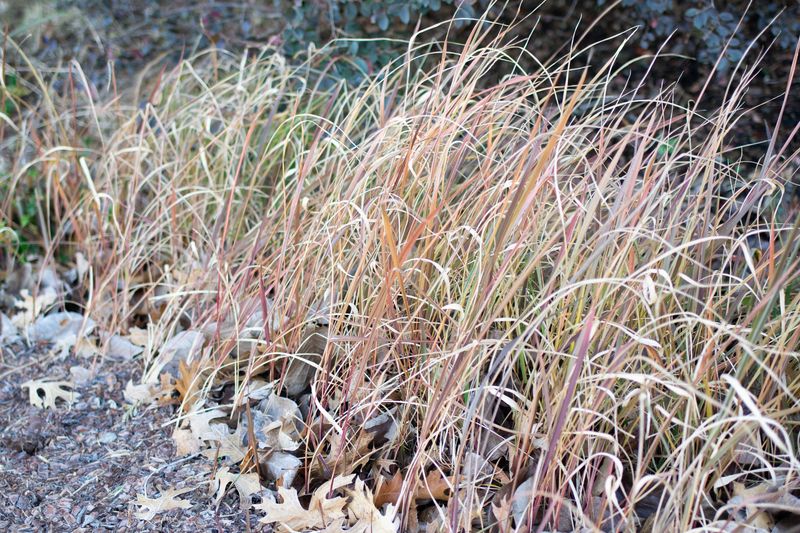
Cogongrass does not look dangerous at first. Its silvery-white seed heads sway gracefully in the breeze, and some people mistake it for ornamental grass.
But Imperata cylindrica is one of the worst invasive plants on the planet, and Florida has been fighting it for decades with serious effort and resources.
This grass forms dense mats that crowd out virtually every other plant around it. It releases compounds from its roots that suppress the growth of neighboring plants, a process called allelopathy.
Beyond crowding out native ground cover, cogongrass is highly flammable and burns hotter and faster than most native grasses, creating serious fire risks for nearby homes and woodlands, especially during Florida’s dry season.
Cogongrass is a federally listed noxious weed and a state-listed noxious weed in Florida, meaning landowners can face legal pressure to control it on their property.
The University of Florida IFAS Extension recommends a combination of repeated mowing and targeted herbicide applications, particularly with products containing imazapyr or glyphosate, applied during active growth periods.
Control almost always requires multiple treatments over one to three years. Homeowners dealing with large infestations should contact a licensed herbicide applicator to ensure safe and effective treatment without harming surrounding plants or water sources.
5. Clear Water Hyacinth Before It Covers Water Surfaces
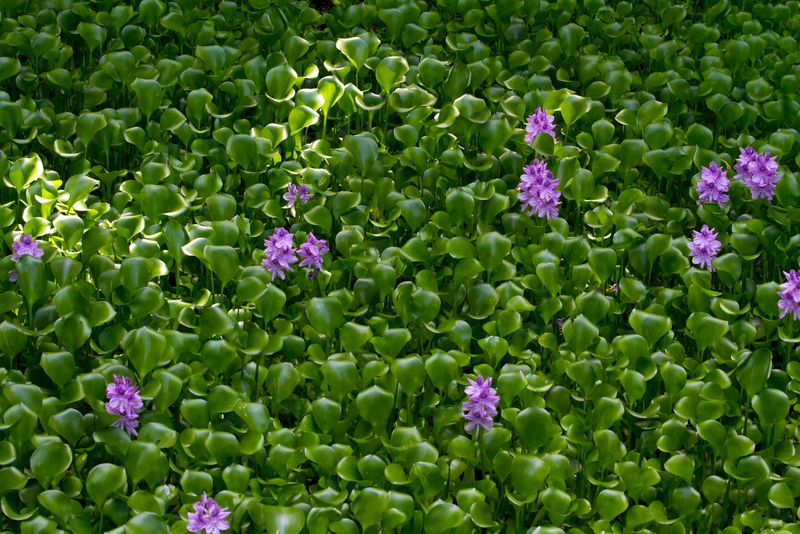
If you have a pond, lake, or any water feature on your Florida property, Water Hyacinth is a plant you need to know about immediately. Eichhornia crassipes looks stunning with its lavender-blue flowers and glossy green leaves floating peacefully on the water.
However, this aquatic plant doubles its population in as little as two weeks under Florida’s warm, nutrient-rich conditions.
Dense mats of Water Hyacinth block sunlight from reaching underwater plants and consume oxygen from the water, creating conditions where fish and other aquatic life struggle to survive.
The thick coverage also blocks boat access, clogs irrigation intakes, and can make waterways completely impassable.
On private ponds, this can significantly reduce property value and make recreational use impossible.
The Florida Fish and Wildlife Conservation Commission regulates Water Hyacinth and requires permits for its removal from public waterways.
For private water bodies, homeowners should contact the FWC or a licensed aquatic plant management company before attempting removal.
Physical removal by raking or netting is effective for small infestations, but all plant material must be properly disposed of on land, well away from any water body. Allowing removed material to wash back into the water will restart the problem almost immediately.
6. Control Old World Climbing Fern Before It Smothers Trees
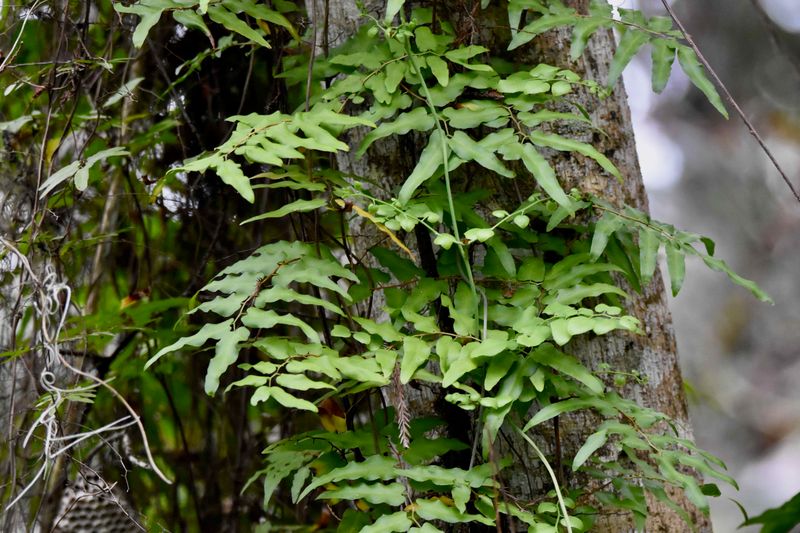
Old World Climbing Fern is one of those plants that sneaks up on you. Lygodium microphyllum starts as a delicate, lacy fern creeping up a tree trunk, and before most homeowners realize what is happening, it has formed a thick blanket over the entire canopy.
This fern does not just cover trees, it smothers them by blocking sunlight and adding so much weight that branches become stressed and weakened.
What makes this fern uniquely dangerous in Florida is how it spreads. It produces microscopic spores that travel easily on the wind, moving across great distances with no help from animals or water.
A single established plant can release thousands of spores, making containment extremely difficult once it gets a foothold on your property.
The Florida Exotic Pest Plant Council lists Old World Climbing Fern as a Category I invasive, and it is considered one of the most serious threats to Florida’s natural areas, particularly in wetlands and cypress forests.
Homeowners should not attempt to pull or cut the fern without careful planning, since disturbing the plant can release additional spores.
The University of Florida IFAS Extension recommends targeted herbicide treatments and consulting with a professional for infestations that have already reached the tree canopy.
7. Eliminate Melaleuca Tree Before It Crowds Out Natives
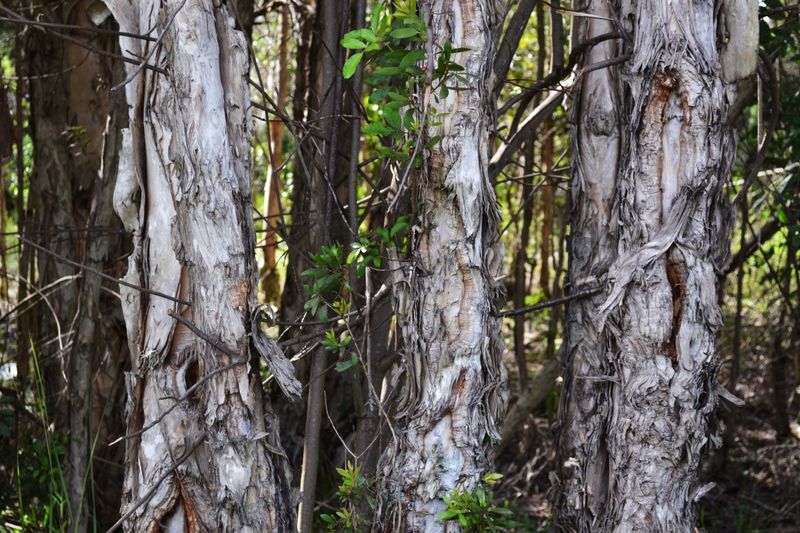
Melaleuca has one of the most dramatic invasion stories in Florida history. Originally planted in the early 1900s to help drain the Everglades, this Australian native quickly became one of the biggest ecological disasters the state has ever faced.
Melaleuca quinquenervia can grow in standing water, survive fire, and reproduce at a speed that overwhelms almost any removal effort if left unchecked for too long.
A single Melaleuca tree can hold up to three million seeds in capsules that remain attached to the branches. When the tree is stressed by fire, freezing temperatures, or physical damage, it releases those seeds all at once, blanketing the surrounding area with new seedlings.
This makes cutting down a Melaleuca without proper treatment essentially the same as planting thousands of new ones.
Florida authorities, including the South Florida Water Management District, have invested heavily in Melaleuca control across public lands. For homeowners, the key is to treat cut stumps immediately with a concentrated herbicide approved for this species.
Small trees can sometimes be removed by hand with root removal. The Florida IFAS Extension strongly advises against burning Melaleuca debris on your property, as heat triggers seed release.
Replacing removed trees with native species like pond cypress helps prevent reinvasion.
8. Pull Coral Ardisia Before It Spreads Through Shade
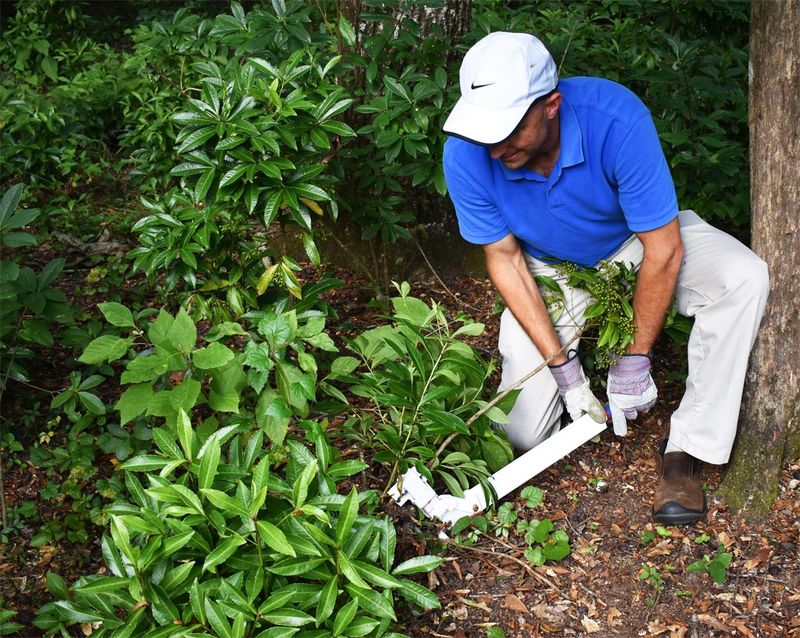
Shaded areas under large trees in Florida yards might seem like quiet, low-maintenance spots, but they can actually be prime territory for one of the state’s sneakier invasive shrubs.
Coral Ardisia, or Ardisia crenata, thrives in low-light conditions where most gardeners are not paying close attention, spreading steadily through bird-dispersed berries that drop and sprout in the leaf litter below.
This shrub forms dense colonies in forest understories and shaded yard edges, outcompeting native plants like beautyberry and wild ginger that Florida wildlife depends on for food and shelter.
Its glossy red berries are attractive to birds, which carry the seeds far beyond your property line into natural areas and state parks, making it a neighborhood-scale problem, not just a personal one.
Florida lists Coral Ardisia as a Category I invasive species, and its sale is prohibited in many Florida counties. Homeowners should remove plants before they produce berries, carefully bagging all plant material for disposal in the trash, not compost.
The root system is relatively shallow, so hand-pulling young plants is effective when done consistently.
For established colonies, cutting plants at the base and applying an appropriate herbicide to the cut surface gives the best results according to University of Florida IFAS Extension guidelines.
9. Remove Skunk Vine Before It Takes Over Fences
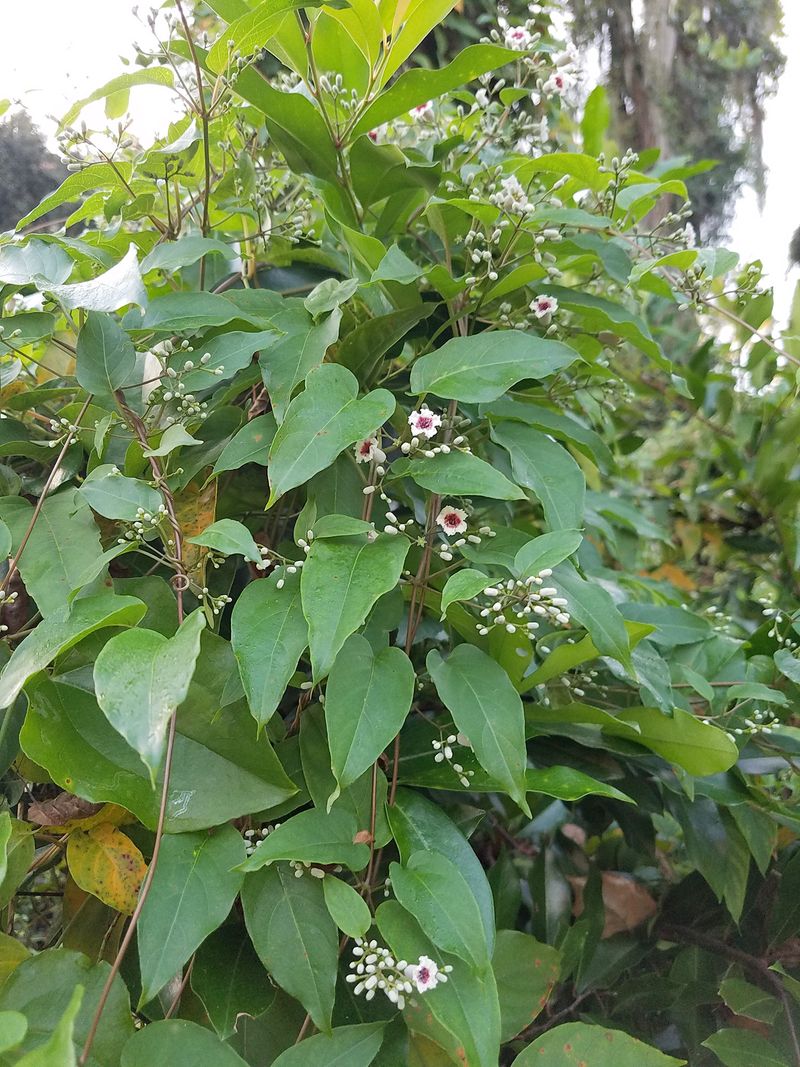
You will know Skunk Vine the moment you brush against it. Paederia foetida earns its name from the distinctly unpleasant sulfur odor released when its leaves are crushed or disturbed.
Beyond the smell, this twining vine is a serious invasive threat in Florida, wrapping itself around fences, shrubs, and trees with surprising speed and stubbornness.
Skunk Vine spreads both by seed and by stem fragments, meaning that even a small piece left behind after removal can root and start a new plant. It grows vigorously in both sunny and partially shaded areas, making it adaptable to nearly any yard condition in Florida.
Once it reaches the tops of shrubs and small trees, it shades out the host plant and can cause significant structural stress over time.
The Florida Exotic Pest Plant Council classifies Skunk Vine as a Category I invasive species. For homeowners, the most important rule is to remove it before it flowers and sets seed, typically in late summer.
Hand-pulling works for small infestations, but every root fragment must be removed and properly bagged for trash disposal.
Larger infestations may require repeated herbicide applications using products recommended by the University of Florida IFAS Extension, combined with consistent monitoring to catch any regrowth before it spreads again.