Why Florida Wildlife Gardens Are Built Around This Native Plant
A Florida wildlife garden should feel alive. Butterflies drift through, birds stop in, and every corner seems to have a purpose.
Yet plenty of yards never reach that point, no matter how many blooms go in the ground. Why?
Because the best wildlife gardens are not built on random color or whatever looks good at the nursery. They start with one plant that does the heavy lifting.
The right choice creates shelter, supports native life, handles Florida’s wild mood swings, and gives the whole garden a stronger backbone. That is the part many homeowners miss.
They chase flash, then wonder why their yard still feels empty. Gardeners who know Florida well tend to make a different move.
They build around a native plant with deep roots in the landscape and a quiet reputation for doing far more than most people realize. That plant is coontie.
1. Coontie Is The Native Plant Florida Wildlife Gardens Rely On
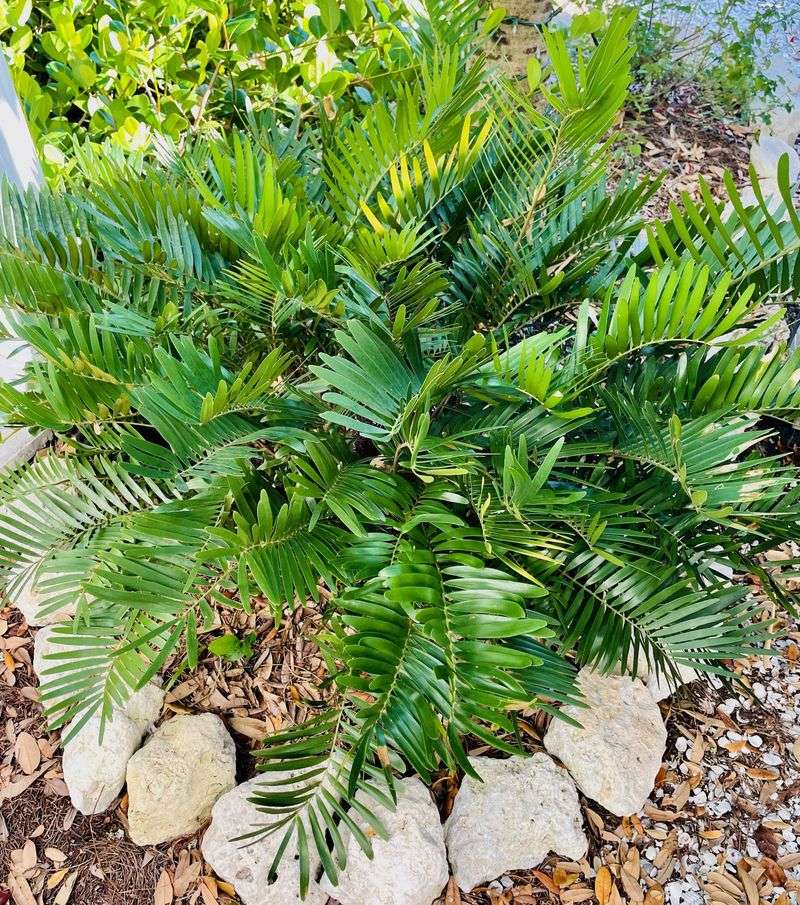
Long before Florida’s neighborhoods existed, coontie was already here. Known scientifically as Zamia integrifolia, coontie is Florida’s only native cycad and one of the oldest types of plants on Earth.
It has been growing in Florida’s sandy soils and pine flatwoods for thousands of years, making it as authentically Floridian as it gets.
The University of Florida IFAS Extension recognizes coontie as an excellent choice for Florida-Friendly Landscaping because of its deep roots in the local ecosystem.
Unlike ornamental plants brought in from other regions, coontie has spent millennia adapting to Florida’s specific conditions.
That history matters when you are trying to build a garden that supports real, local wildlife.
Most homeowners are surprised by how attractive coontie actually looks. Its arching, dark green fronds give it a lush, tropical appearance that works beautifully in both formal and naturalistic garden designs.
It stays relatively low to the ground, usually reaching one to three feet tall, which makes it easy to tuck into borders or use as a ground layer beneath taller native trees.
Coontie is also widely available at Florida native plant nurseries, so sourcing it is straightforward. Because it is so well established in the Florida gardening community, you can find solid growing advice through local extension offices and native plant societies.
Starting your wildlife garden with a plant that experts already trust is a smart move, especially for first-time native gardeners who want reliable results without guesswork.
2. This Plant Supports The Rare Atala Butterfly
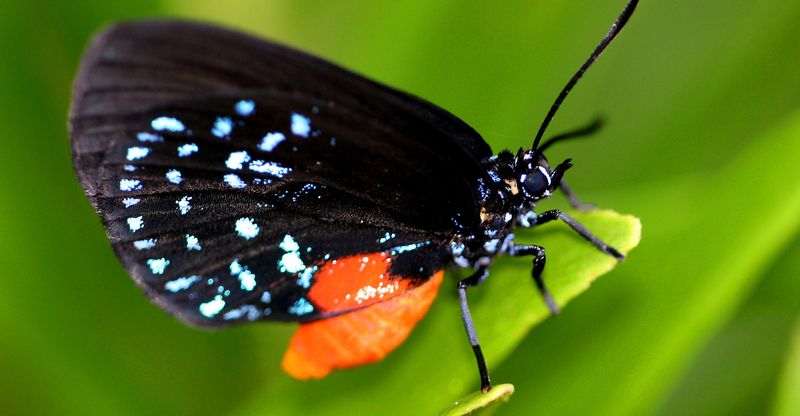
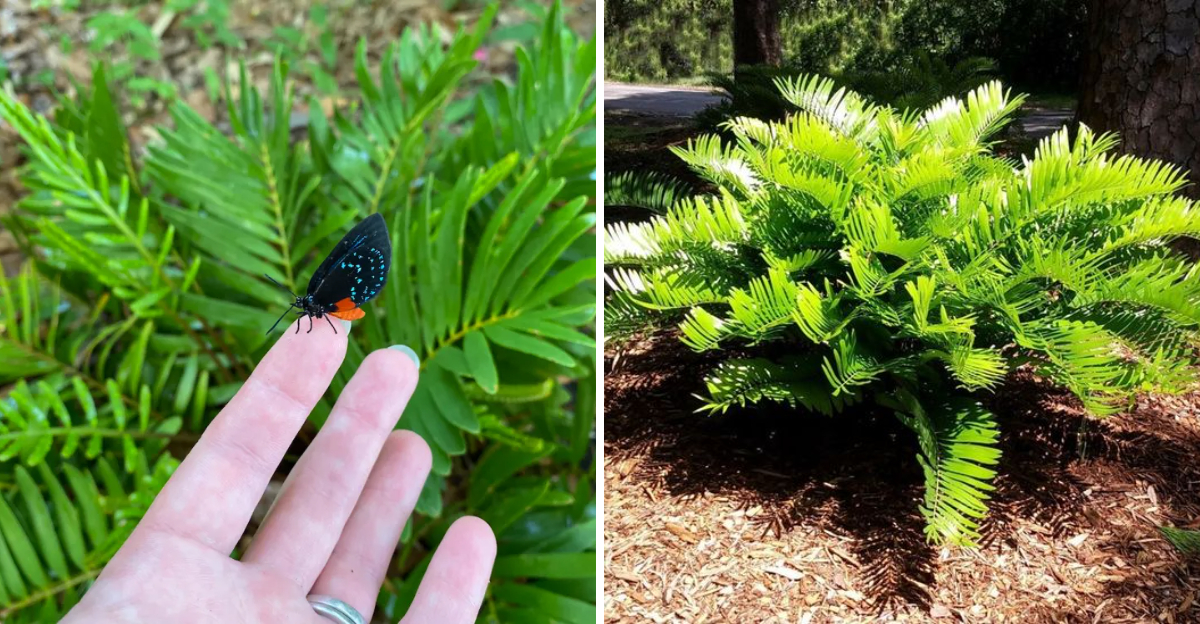
Few stories in Florida conservation are as remarkable as the comeback of the Atala butterfly. Once thought to be locally extinct in Florida, the Atala has made an extraordinary recovery, and coontie is the reason why.
Without this plant, the Atala simply cannot complete its life cycle.
Coontie serves as the sole larval host plant for the Atala butterfly (Eumaeus atala). That means female Atalas lay their eggs exclusively on coontie foliage.
When the caterpillars hatch, they feed on the leaves as they grow. No coontie means no Atala caterpillars, and no caterpillars means no adult butterflies.
Your Florida Garden Changes Every Week. Your Plan Should Too.
Gardening in Florida changes quickly throughout the season. Every Friday you’ll receive a simple weekly plan showing exactly what to plant, prune, fertilize, harvest, and protect so you never miss the right timing.
It is a relationship built over thousands of years of co-evolution.
What makes this especially significant is the difference between a host plant and a nectar plant. Many flowering plants attract adult butterflies looking for food, but host plants support the entire reproductive cycle.
Coontie does not just feed adult Atalas passing through. It gives them a place to raise the next generation, which is what truly sustains a butterfly population over time.
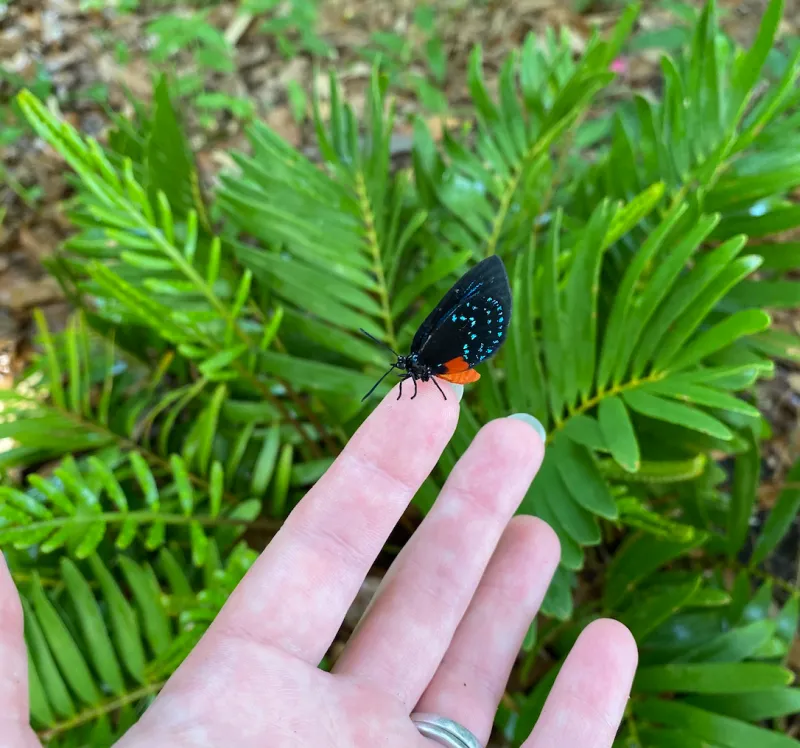
Atala caterpillars are striking, with bright red and yellow coloring that signals to predators that they are not good to eat. The adult butterfly is equally beautiful, featuring deep blue-green iridescent wings and a vivid red abdomen.
Planting coontie in your yard gives you a real chance of witnessing this rare and gorgeous butterfly up close. For Florida wildlife gardeners, that is one of the most rewarding experiences a native plant can offer.
3. Birds And Pollinators Benefit More Than You Expect
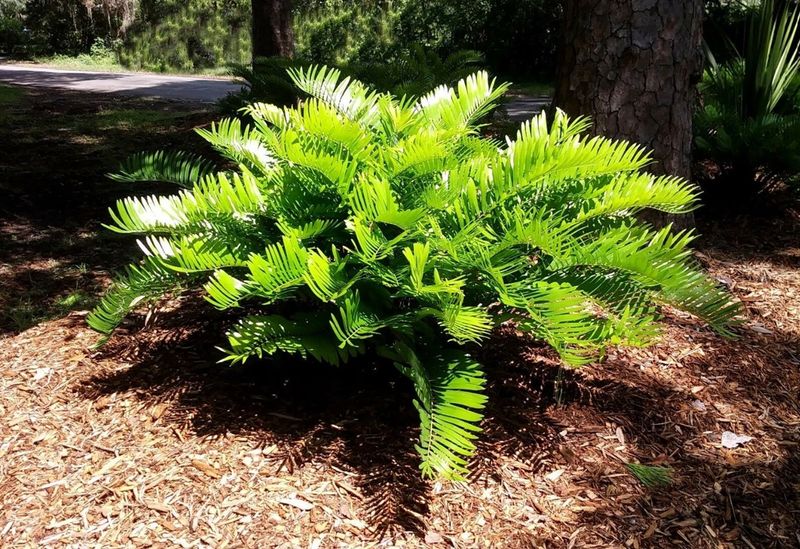
Coontie’s most famous contribution is hosting the Atala butterfly, but the benefits to your yard’s wildlife do not stop there. A well-designed Florida wildlife garden functions like a web, where each plant supports not just one species but an entire community of creatures.
Coontie plays a meaningful role in that web in ways that often go unnoticed at first.
The plant produces bright red seeds that are attractive to certain birds. While the seeds contain compounds that make them unsuitable for human consumption, some Florida wildlife species are adapted to handle them.
More importantly, the dense, low growth habit of coontie creates sheltered spaces at ground level where small birds, lizards, and insects can find cover from predators and harsh afternoon sun.
Pollinators also benefit indirectly. Coontie produces pollen-bearing cones, and while it is not a major nectar source, the broader garden ecosystem it anchors draws in a wide variety of pollinating insects.
When coontie is planted alongside native flowering plants like firebush, beautyberry, or blanket flower, the combination creates a layered habitat that supports bees, skippers, and native wasps throughout the year.
Florida wildlife gardening works best when you think in layers rather than individual plants. Coontie fills the low ground layer with structure and permanence.
That stability gives other plants and creatures a reliable base to build around.
Gardeners who add coontie to a mixed native planting often notice an increase in overall wildlife activity within just one or two growing seasons, which makes the effort feel genuinely rewarding.
4. It Thrives In Florida Without Extra Effort
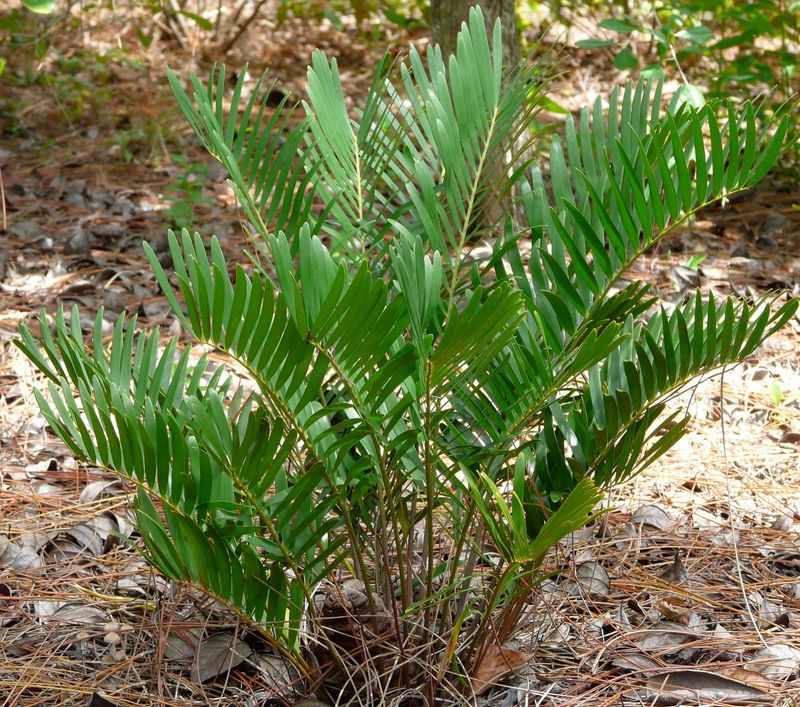
Florida gardeners deal with a unique set of challenges. The intense summer heat, heavy rainfall followed by long dry spells, sandy soil that drains quickly, and occasional cold snaps in the northern part of the state can make gardening feel like a constant battle.
Coontie handles all of it without complaint.
According to the University of Florida IFAS Extension, coontie is highly drought-tolerant once established. It can handle Florida’s sandy, nutrient-poor soils that would stress most other plants.
It grows naturally in pine flatwoods, scrub habitats, and hammock edges, meaning it is already built for the kind of lean, well-drained conditions that are common in Florida residential yards.
Establishing coontie does take a little patience. Like many native plants, it puts most of its early energy into developing a strong root system before showing a lot of above-ground growth.
During the first season, it may look slow. But once the roots are settled in, coontie becomes remarkably self-sufficient.
It does not need regular fertilizing, and it rarely requires supplemental watering after the first year.
Pests are not much of a concern either. The plant’s natural compounds deter most common garden insects, and its tough foliage holds up well in Florida’s humid conditions.
For homeowners who want a wildlife-friendly yard without spending every weekend on maintenance, coontie is a genuinely practical choice. You plant it, give it a little attention during the first growing season, and then largely let it do its thing year after year.
5. It Fits Easily Into Almost Any Landscape
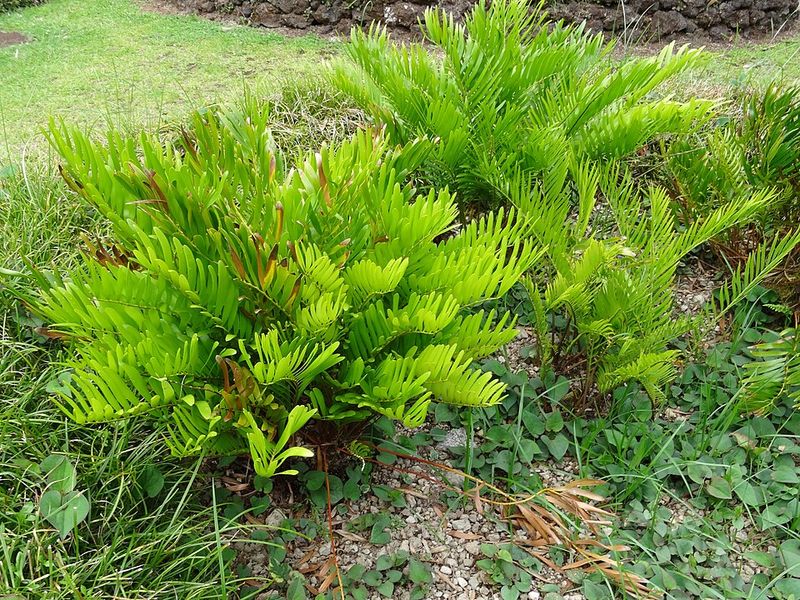
One of the quiet advantages of coontie is how well it plays with others. Not every plant adapts easily to different garden styles, but coontie is genuinely flexible.
Whether your yard leans toward a tidy, manicured look or a wild, naturalistic feel, coontie fits in without forcing you to redesign everything around it.
As a foundation planting, coontie works beautifully along the base of homes and buildings. Its compact size and tidy form keep it from overwhelming a space, and its evergreen foliage means it looks good year-round rather than going bare in winter.
It also works well in shaded spots under large oaks or pines where other plants struggle to establish.
In mixed native plant beds, coontie serves as a reliable ground layer that ties everything together visually.
Pair it with taller native plants like Simpson’s stopper, wild coffee, or beautyberry, and you create a layered design that is both attractive and ecologically valuable.
The contrast between coontie’s dark, arching fronds and the lighter textures of flowering natives creates natural visual interest without any extra effort.
Florida-Friendly Landscaping principles encourage homeowners to use the right plant in the right place, and coontie fits that guideline well. It handles both full sun and partial shade, which gives you flexibility when working around existing trees or structures.
Its slow, steady growth means it stays in proportion to its surroundings for years without constant trimming. For gardeners who want a dependable, attractive native plant that works across a range of settings, coontie consistently delivers exactly that.
6. Why Native Plant Lovers Always Include It
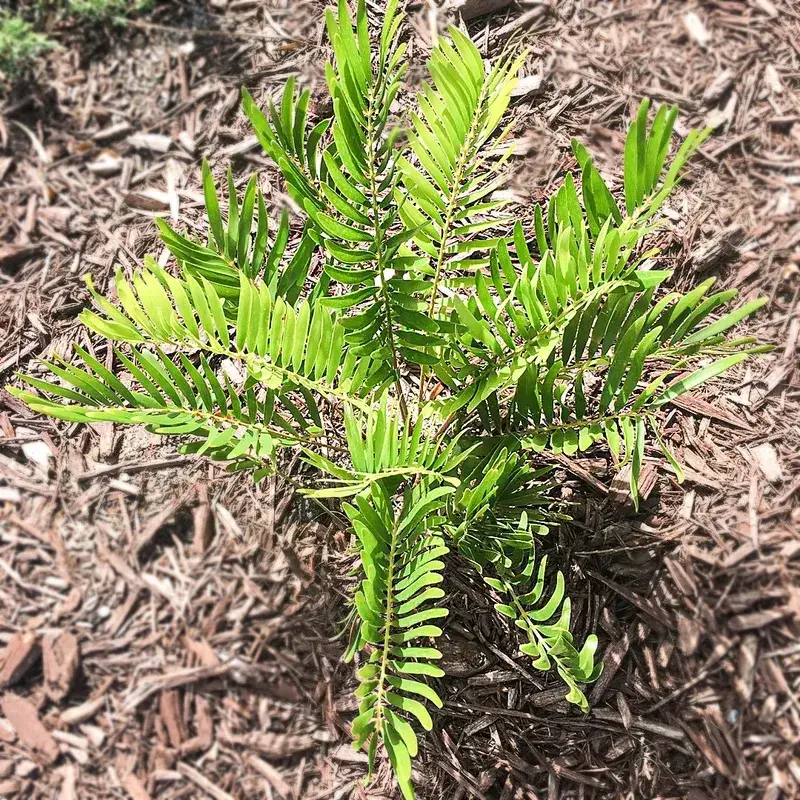
Ask any experienced Florida native plant gardener which plants they consider non-negotiable, and coontie almost always makes the list. There is a reason it keeps showing up in native plant sales, conservation landscapes, and wildlife gardens across the state.
Its reputation among serious Florida gardeners is built on decades of reliable performance.
The Florida Native Plant Society has long recognized coontie as a foundational species for Florida landscapes. Its ecological value, combined with its ease of care and visual appeal, puts it in a category that few other native plants can match.
For gardeners who are serious about supporting local ecosystems rather than just planting things that look nice, coontie represents exactly the kind of intentional, meaningful choice that defines native plant gardening at its best.
There is also a conservation angle that resonates with many Florida gardeners. Because coontie populations were heavily harvested in the early twentieth century for starch production, the plant became much less common in the wild.
Planting it in residential landscapes helps restore its presence in the broader Florida ecosystem and supports the Atala butterfly populations that depend on it.
That sense of contributing to something larger than your own yard is a big part of why native plant enthusiasts feel so strongly about including it.
Newer gardeners often discover coontie through native plant sales or recommendations from local gardening clubs. Once they plant it and see how well it performs, most of them end up adding more.
That cycle of satisfaction and enthusiasm is one of the clearest signs that a plant has truly earned its place in the Florida native gardening community.
7. It Creates A Strong Foundation For Wildlife Friendly Yards
Building a wildlife-friendly yard in Florida is not about planting one perfect plant and calling it done. It is about creating layers of habitat that work together to support a variety of species throughout the year.
Coontie earns its place in that system by doing something no other Florida native quite replicates: it anchors the ground layer with permanence, structure, and ecological purpose.
Think of coontie as the foundation of a house. Everything built above it, the flowering shrubs, the canopy trees, the seasonal wildflowers, stands more securely because the base is solid.
In a wildlife garden, coontie provides that same kind of stability. Its evergreen presence means there is always something at ground level offering cover and habitat value, even in the middle of winter when other plants have gone dormant or look sparse.
When combined with other Florida native species, coontie becomes part of a system that can support butterflies, birds, small mammals, native bees, and beneficial insects all at once.
Pairing it with native trees like live oak or southern red cedar, native shrubs like beautyberry or firebush, and seasonal wildflowers creates a yard that functions more like a natural Florida habitat than a conventional garden.
University of Florida IFAS Extension and Florida-Friendly Landscaping guidelines both emphasize the value of layered planting for wildlife support. Coontie fits naturally into that approach at the ground level, where it does consistent, quiet work year after year.
For any Florida homeowner who wants their yard to genuinely support local wildlife, starting with coontie is one of the most grounded and effective decisions you can make.