Hard To Find Native Michigan Trees Worth Planting Before Nurseries Sell Out
Some of Michigan’s most interesting native trees are not the ones you see lined up at every nursery. In fact, a few of the best choices can be hard to find once spring planting season gets busy.
These trees are worth searching for because they bring character, local value, and long term strength to the landscape.
They are already adapted to Michigan’s climate, which helps them handle cold winters, changing spring weather, and local soil conditions better than many common ornamentals.
Some offer unusual bark, standout foliage, spring flowers, or fall color that makes a yard feel more distinctive. Many also support birds, pollinators, and other wildlife in ways typical landscape trees often do not.
If you want something unique, useful, and rooted in Michigan’s natural beauty, these native trees are worth planting before nurseries sell out.
Beyond merely serving as aesthetic placeholders, these often-overlooked botanical treasures function as resilient, living anchors that bridge the gap between a standard suburban yard and a thriving, biodiverse ecosystem specifically calibrated to endure the unpredictable fluctuations of the Great Lakes climate.
1. Blue Beech / American Hornbeam (Carpinus Caroliniana)
Walk a frosty Michigan trail, and your hand reaches toward smooth bark shaped like flexed muscle. The American Hornbeam holds winter with quiet strength, every curve catching pale light through leafless branches.
You feel calm beside it, as if the woods pass a steady heartbeat into your palm.
Come spring, catkins dangle softly while new leaves unfold a tender blue green. By October, that same canopy burns with orange red tones that glow against gray trunks.
In neighborhoods across Michigan, it brings color and poise without stealing the stage from oaks and maples.
Choose a partly shaded site with evenly moist soil, then plant small and be patient. This tree grows slowly but forms dense wood and iron strong branches that shrug off ice.
Its compact size fits side yards, where roots stay polite and leaves filter hot western sun.
You will appreciate its resilience during stormy Michigan weeks, when calm structure matters most. Prune lightly in late winter, mulch the dripline, and underplant with ferns for a woodland feel.
A few thoughtful choices now give you a lifelong companion that anchors paths, patios, and quiet mornings.
Nurseries often stock limited numbers, so call ahead and reserve two or three. You will thank yourself in ten years, when neighbors ask about the sculpted bark and steady shade.
2. Common Pawpaw (Asimina Triloba)
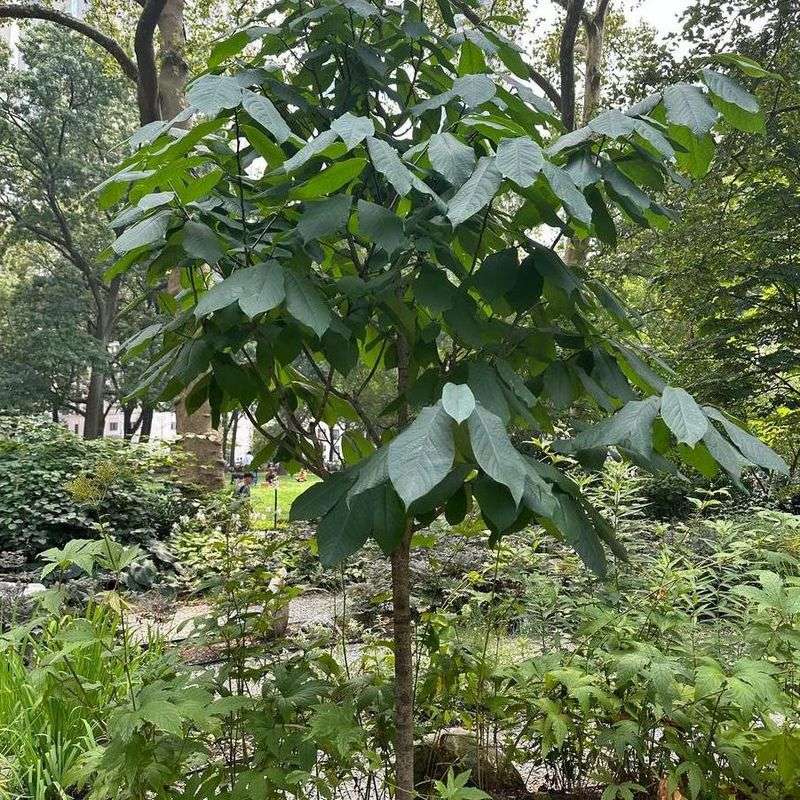
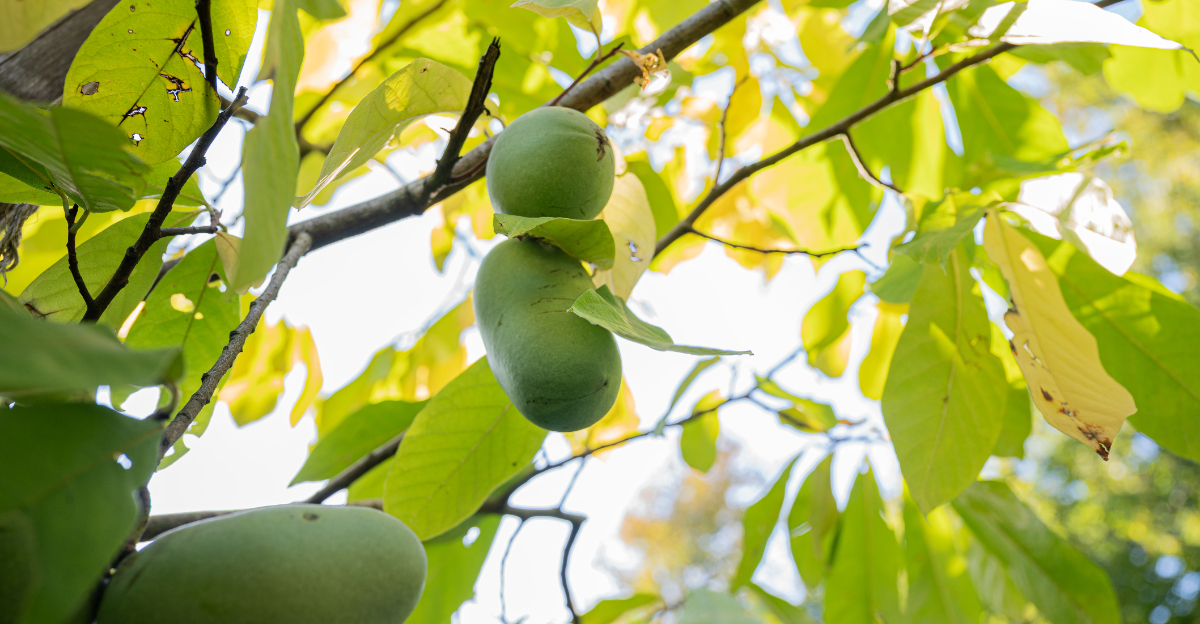
Step into a shady river bend in southern Michigan, and the air shifts toward summer sweetness. Broad, drooping leaves hang like green paddles, casting cool, dappled light that feels almost tropical.
Under that canopy, pawpaw trunks rise quiet and patient, building a hidden understory you notice only when you slow down.
Come back in September, and you catch the heavy, custard scent of ripening fruit along the trail. Plump clusters hide near the leaves, soft to the touch and promising banana vanilla flavors you will not forget.
Your Michigan Garden Changes Every Week. Your Plan Should Too.
Gardening in Michigan changes quickly throughout the season. Every Friday you’ll receive a simple weekly plan showing exactly what to plant, prune, fertilize, harvest, and protect so you never miss the right timing.
For Zebra Swallowtail caterpillars, these trees are home, and for you, they are a story you can taste.
Plant two for reliable pollination, and set them where morning sun meets rich, moist soil. Water deeply the first seasons, then let that taproot drive down while you enjoy shade and butterflies.
If space allows, tuck a small grove along a fence or creek, and watch your Michigan backyard turn quietly tropical.
Cold hardy selections handle Michigan winters well, especially with a windbreak and mulch over the root zone. Avoid moving them once established, because roots prefer peace and reward patience with consistent fruit.
Give neighbors a taste, trade seeds with friends, and turn a forgotten corner into a sweet, living landmark. You will hear bees hum, and you will feel summer linger a little longer.
3. Black Tupelo / Black Gum (Nyssa Sylvatica)
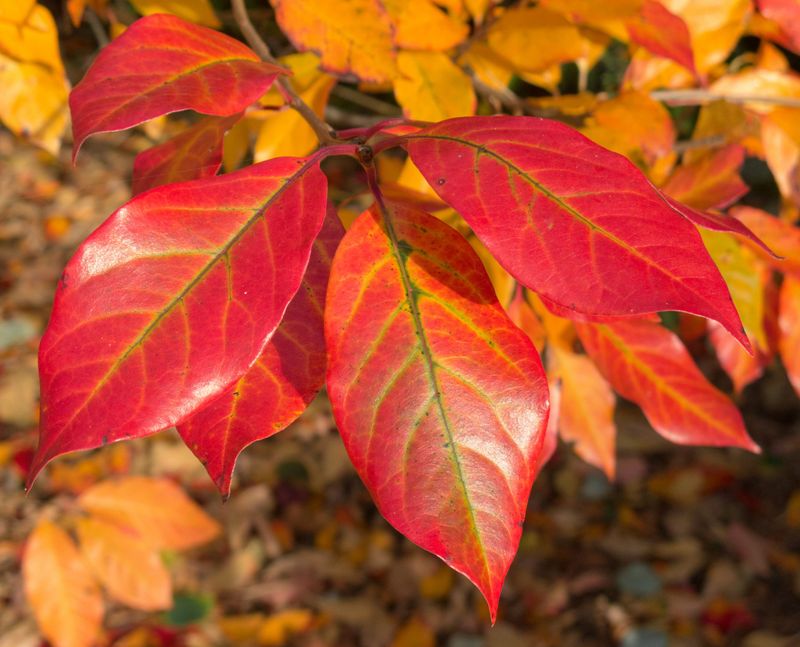
Picture a quiet Michigan street in October, and one tree burns brighter than every sugar maple. Black Tupelo flashes scarlet with hints of burgundy and orange, each leaf shining like polished glass.
The color holds your eye, then fades slowly, like embers settling after a perfect campfire.
In spring, small flowers offer early nectar that helps bees fuel busy flights between yards and parks. Summer brings neat, glossy foliage and a tidy shape that fits front lawns without fuss.
By fall, you own the crown jewel of the block, subtle from a distance yet stunning up close.
Plant in slightly acidic, well drained soil, and water deeply during the first summers. Tupelo grows slowly, so choose a good spot and give roots room away from pavement.
A light layer of mulch and patient care will reward you with fireworks every Michigan autumn.
Urban sites can challenge it, so aim for a lawn, rain garden edge, or parkway strip with care. You will notice birds visiting the fruit, and neighbors stopping for photos when sunset hits.
Plant one now, and October feels richer, warmer, and somehow more Michigan than ever.
Availability can be spotty in Michigan nurseries, so put your name on waiting lists early. The slow start pays you back for decades, with color that turns ordinary streets into quiet galleries.
4. Tamarack / Eastern Larch (Larix Laricina)
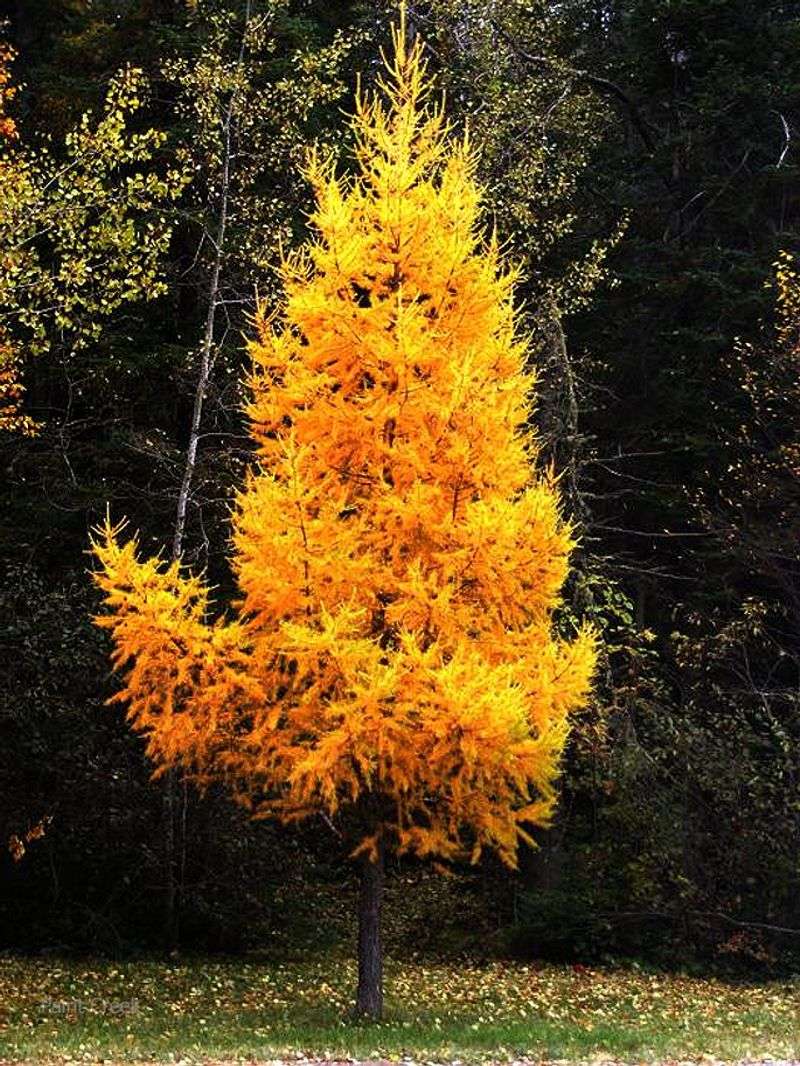
Step onto a Michigan boardwalk in late September, and feathery green softens under your fingertips. Tamarack needles feel like fine brushes, cool and flexible, arranged in gentle rosettes along the twigs.
The tree stands in open bog light, sharing space with pitcher plants, sedges, and clear reflections.
By October, the show begins, and every branch glows a lantern gold that warms the marsh. Sun slides low, and the whole grove turns into a floating ribbon of color across water.
You pause, breathe, and tuck the moment away for the long Michigan winter ahead.
Plant tamarack where soil stays moist and slightly acidic, such as rain gardens, swales, or pond edges. Full sun keeps growth balanced and steady, while mulch cools roots during hot spells.
Young trees appreciate regular watering, then settle into a reliable rhythm that suits northern Michigan weather.
Garden centers often skip it, so check conservation sales and native specialists across Michigan in early spring. You will love the seasonal drama, from soft green to brilliant gold to a sculptural winter silhouette.
Pair tamarack with red twig dogwood and marsh marigold, and your shoreline planting sings.
Prune only for form, and keep stakes loose so trunks flex with wind. That gentle movement builds strength, readies branches for lake effect storms, and protects the golden show you wait for.
5. Eastern Hophornbeam (Ostrya Virginiana)
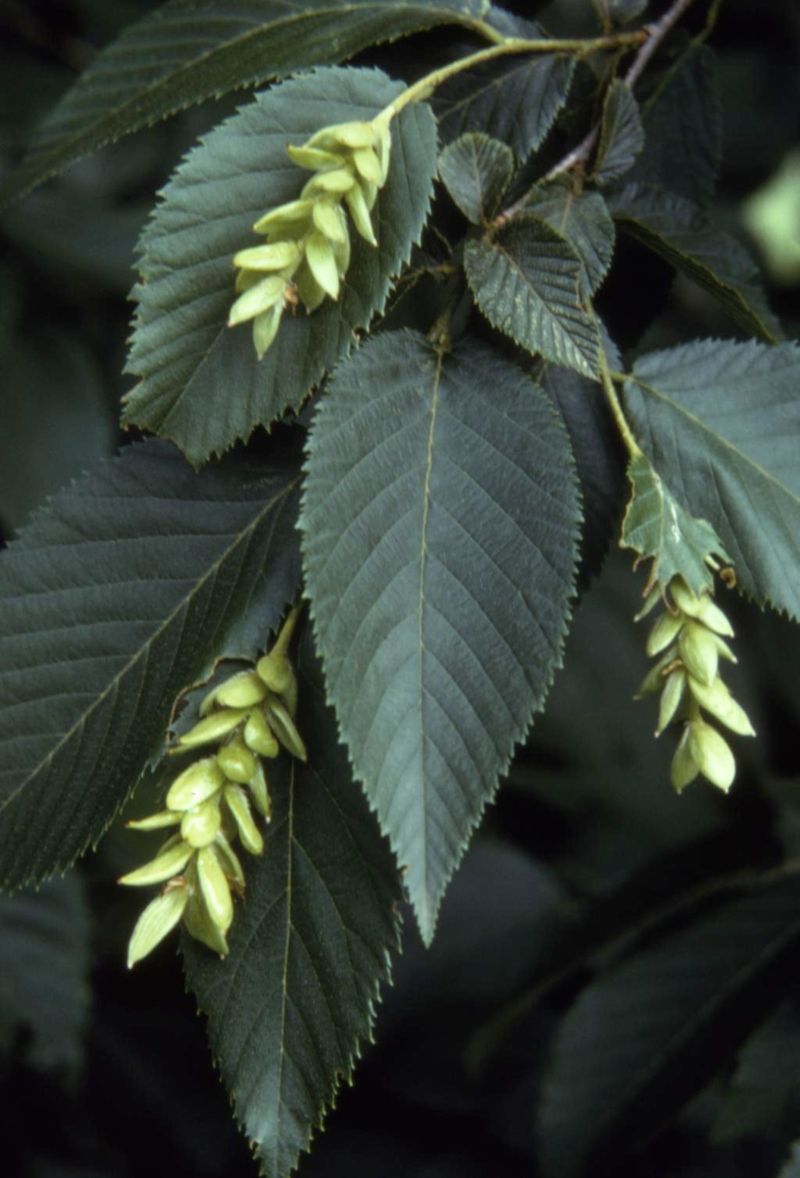
Scan a dry Michigan hillside, and a modest tree holds its ground with quiet grit. Eastern Hophornbeam wears shaggy, cat scratch bark that peels in thin ribbons and catches slanting light.
The look feels tough yet refined, like good work boots polished before a neighborhood walk.
Late spring brings hop like fruit that dangles in papery clusters and rustles softly in the breeze. Children notice first, then neighbors ask, and suddenly you are giving a friendly plant tour.
Through July heat and sandy soil, the tree keeps pace without fuss or floppy growth.
Choose a site with sun or high dappled shade, and expect slow, steady gains each season. Roots prefer staying put, so plant small, water weekly at first, and trust quiet progress.
The wood is famously hard, which means branches resist breakage and shape naturally into a pleasing oval.
Michigan gardeners hunting toughness find it here, along driveways, slopes, and forgotten corners that bake. Leaf litter breaks down into soft mulch, birds visit for cover, and sidewalks stay tidy.
Pair it with prairie dropseed and serviceberry, and you gain four season texture without watering marathons.
Stock vanishes early, so watch Michigan conservation sales and reserve seedlings fast. A small start becomes a trusted anchor, the kind you appreciate hot August afternoon.
6. Kentucky Coffeetree (Gymnocladus Dioicus)
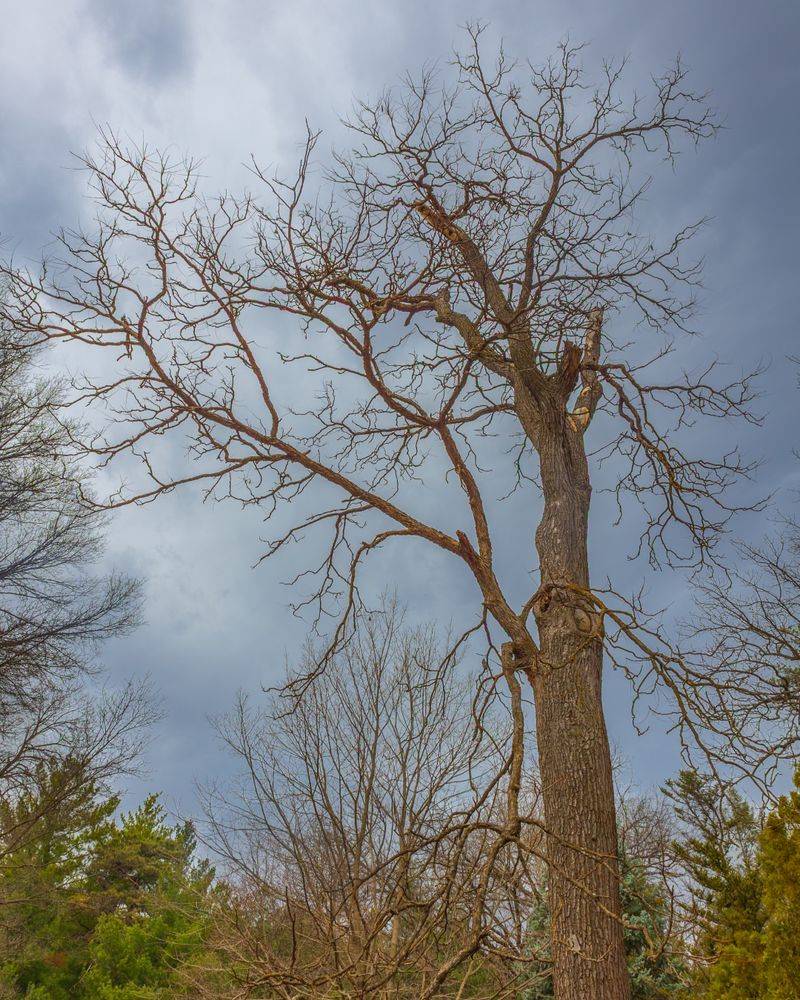
Stand in a snowy Michigan alley, and a bold silhouette crosses the sky with prehistoric confidence. Kentucky Coffeetree holds thick, architectural branches that point cleanly outward like rib bones of a giant canoe.
The trunk rises straight and pale, inviting you to imagine ancient forests and long vanished partners.
Late May flips a switch, and enormous double compound leaves unfurl into cool shade almost overnight. By July, each leaflet casts a soft pattern across patios and sidewalks, making heat feel manageable.
Urban grit hardly bothers it, and salt, drought, and pests usually give up the argument.
Plant in full sun with average soil, then wait patiently for the late spring reveal. Space it generously, because mature height and spread ask for room to breathe and shine.
In winter, the bold framework becomes art, guiding snowdrifts and framing Michigan sunsets like a handmade sculpture.
Nurseries often hesitate since leaf out comes so late, but that pause creates wonderful drama for you. Order ahead, tag a sturdy specimen, and be ready when shipments land in Michigan yards.
Neighbors will ask questions, and you will smile, because patience rewarded your landscape with something unforgettable.
Seed pods can rattle in winter winds, adding playful sound to a quiet sidewalk. Combine it with bluestar, coneflower, and little bluestem, and your Michigan garden feels modern and welcoming.