The Best Ornamental Climbers For Containers In Arizona
Hot patios and bare walls can make an outdoor setup feel unfinished, especially once Arizona sun starts reflecting off every surface. Containers help, but something still feels missing when height and movement are not part of the design.
Climbers change that fast. With the right picks, even a small patio or balcony starts to feel layered, softer, and more alive without taking up extra ground space.
Arizona conditions are not forgiving, and many plants struggle once heat builds up around pots and hard surfaces. Some climbers handle it better than expected and keep pushing growth even when conditions turn intense.
Choosing those reliable options makes all the difference between a setup that fades early and one that keeps looking strong.
Smart plant choices paired with simple support can turn containers into something far more interesting, creating a setup that keeps its structure and presence even as the heat builds.
1. Bougainvillea Thrives In Containers Under Intense Sun
Few plants put on a show quite like bougainvillea, and Arizona gardeners know exactly what we mean.
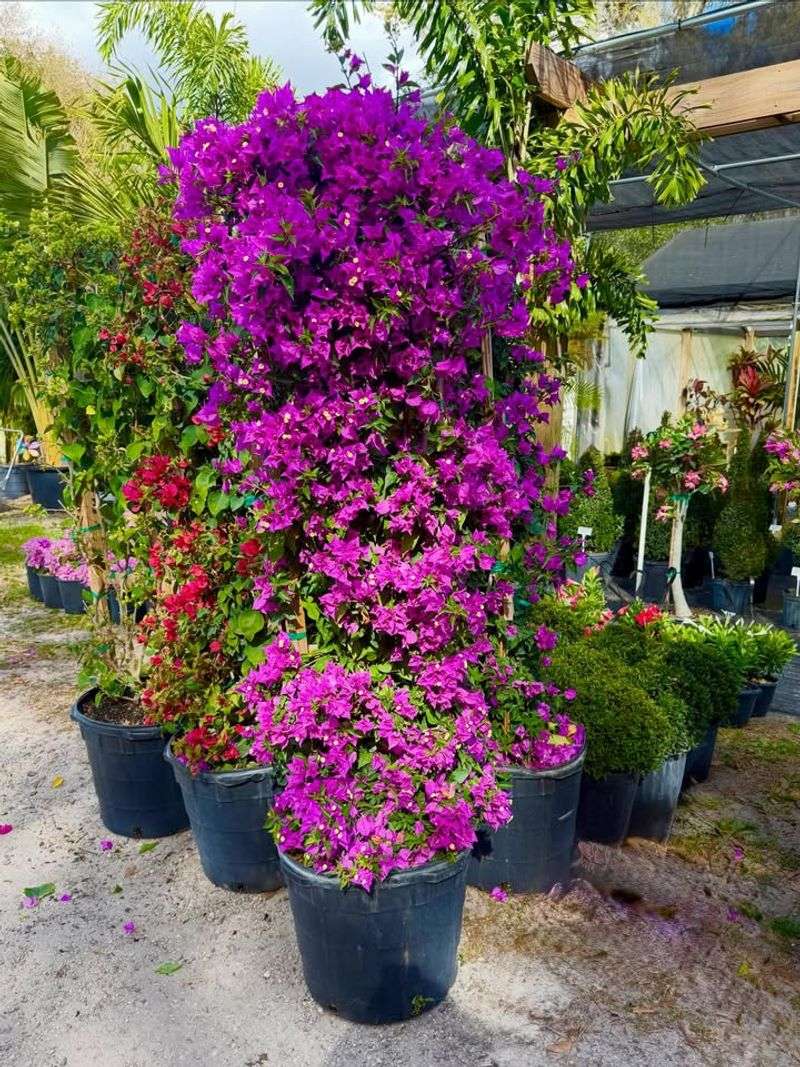
With its papery, jewel-toned bracts in shades of hot pink, orange, red, and purple, this plant is basically the life of the party in any container garden. It soaks up the blazing Arizona sun like it was born for it, because in many ways, it was.
Bougainvillea is native to South America, where hot, dry conditions are the norm.
That background makes it one of the most heat-tolerant ornamental climbers you can grow in a container across the Phoenix metro area or Tucson. Plant yours in a large, well-draining pot and set it somewhere that gets at least six hours of full sun daily.
One thing to keep in mind is that bougainvillea actually blooms more when it is slightly stressed for water.
Watering deeply but infrequently encourages the plant to push out more of those stunning bracts instead of leafy growth.
Avoid overwatering, which is one of the fastest ways to run into trouble with this plant.
Give it a sturdy trellis or obelisk to climb, and it will reward you with months of color from spring through fall. A slow-release fertilizer low in nitrogen but higher in phosphorus will keep the blooms coming strong.
In Arizona, bougainvillea is not just a garden plant; it is practically a statement of local pride and sun-loving spirit.
Light pruning after each major bloom cycle helps keep its shape controlled and encourages another round of strong color through the Arizona growing season.
2. Mandevilla Climbs Well In Pots With Regular Water
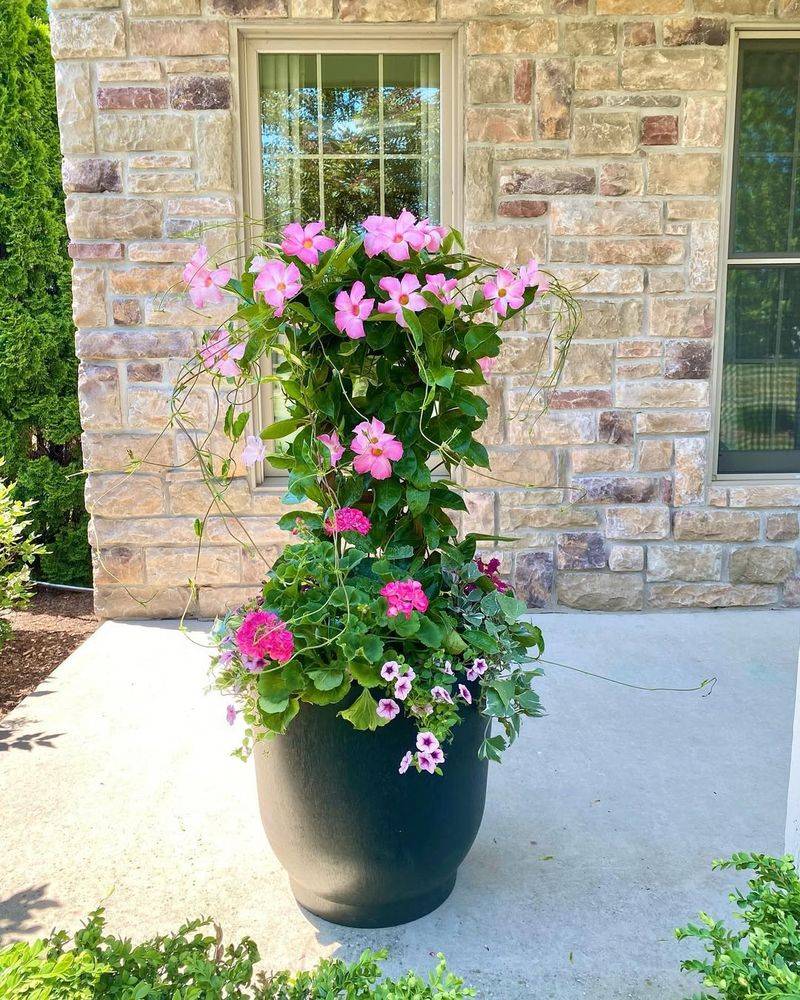
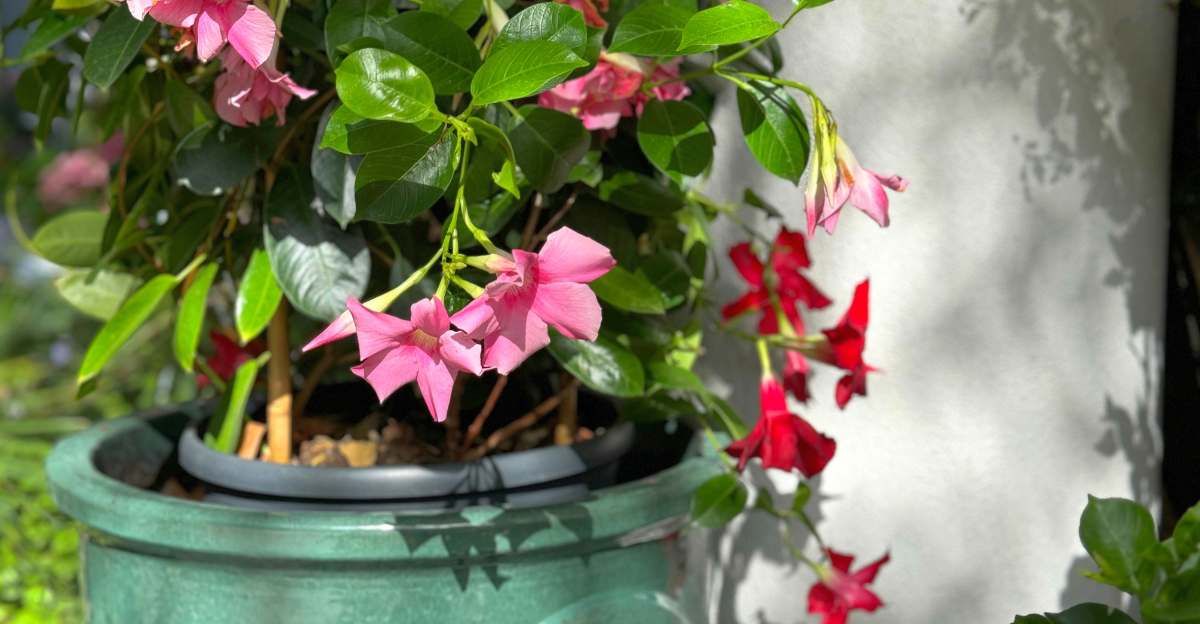
Mandevilla has a tropical personality that fits right in with Arizona’s warm climate, especially during the long, sun-drenched summers.
Its large, trumpet-shaped blooms in shades of pink, red, and white open up like little celebrations all season long.
Gardeners in the Scottsdale and Mesa areas especially love it for dressing up porch columns and patio railings.
Unlike some climbers that can handle drought, mandevilla likes regular watering to keep its glossy leaves green and its blooms coming in strong.
Your Arizona Garden Changes Every Week. Your Plan Should Too.
Gardening in Arizona changes quickly throughout the season. Every Friday you’ll receive a simple weekly plan showing exactly what to plant, prune, fertilize, harvest, and protect so you never miss the right timing.
Watering deeply two to three times a week during peak summer heat is a good rule of thumb. Make sure the container has excellent drainage so the roots never sit in soggy soil for too long.
Choose a pot that is at least 12 to 14 inches wide so the roots have room to spread out comfortably. A well-draining mix of potting soil and perlite works great for mandevilla in containers.
Feed the plant every two weeks with a bloom-boosting fertilizer to keep the flowers popping from spring through early fall.
Mandevilla is a vigorous twiner, meaning it naturally wraps itself around supports as it grows. A simple bamboo cage or a decorative trellis placed in the pot gives it exactly what it needs to climb.
In Arizona, it is best to move the container to a spot with afternoon shade during the hottest weeks of summer, which protects the blooms without slowing down the plant’s overall growth and energy.
Mandevilla is also sensitive to cold, so bringing containers indoors or to a protected spot when temperatures drop below about 50°F helps prevent damage in Arizona.
3. Dipladenia Stays Compact And Handles Container Heat
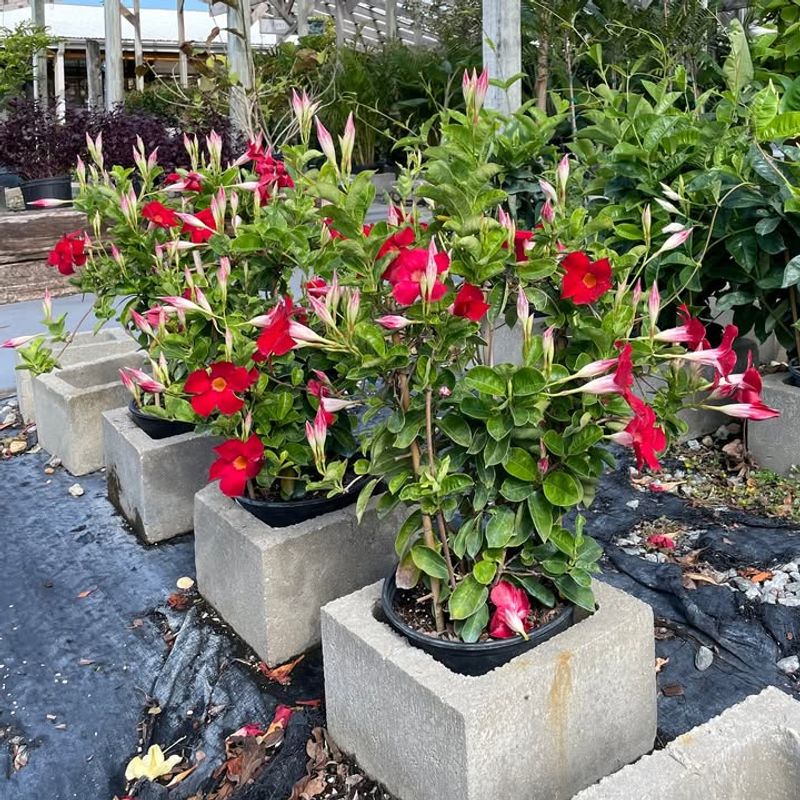
If you love the look of mandevilla but want something that stays a little more manageable in a smaller container, dipladenia is your answer.
Often sold alongside mandevilla at garden centers, dipladenia is actually a more compact, bushy grower that works beautifully in pots on Arizona patios and balconies.
It produces the same gorgeous trumpet-shaped flowers but keeps its shape without getting too wild.
Dipladenia handles heat extremely well, which makes it a natural fit for Arizona’s brutal summer temperatures. Plant it in a pot that gets morning sun and light afternoon shade to protect the blooms during the hottest part of the day.
Full sun is fine in spring and fall when temperatures are more moderate across the state.
Watering needs for dipladenia are moderate, meaning you want the soil to dry out slightly between waterings but never go bone dry for too long. A well-draining potting mix is essential to prevent root issues, especially in a container where heat can build up quickly.
Adding a layer of mulch on top of the soil can help keep the roots a little cooler during peak Arizona summer heat.
Dipladenia does not need a tall trellis since it tends to trail and mound rather than climb aggressively. It works great in hanging baskets, window boxes, and medium-sized pots placed near entryways or along patios.
With minimal fuss and maximum color output, dipladenia earns its place as one of the most reliable container bloomers for Arizona gardeners who want beauty without constant maintenance.
4. Coral Honeysuckle Adapts Well To Large Containers
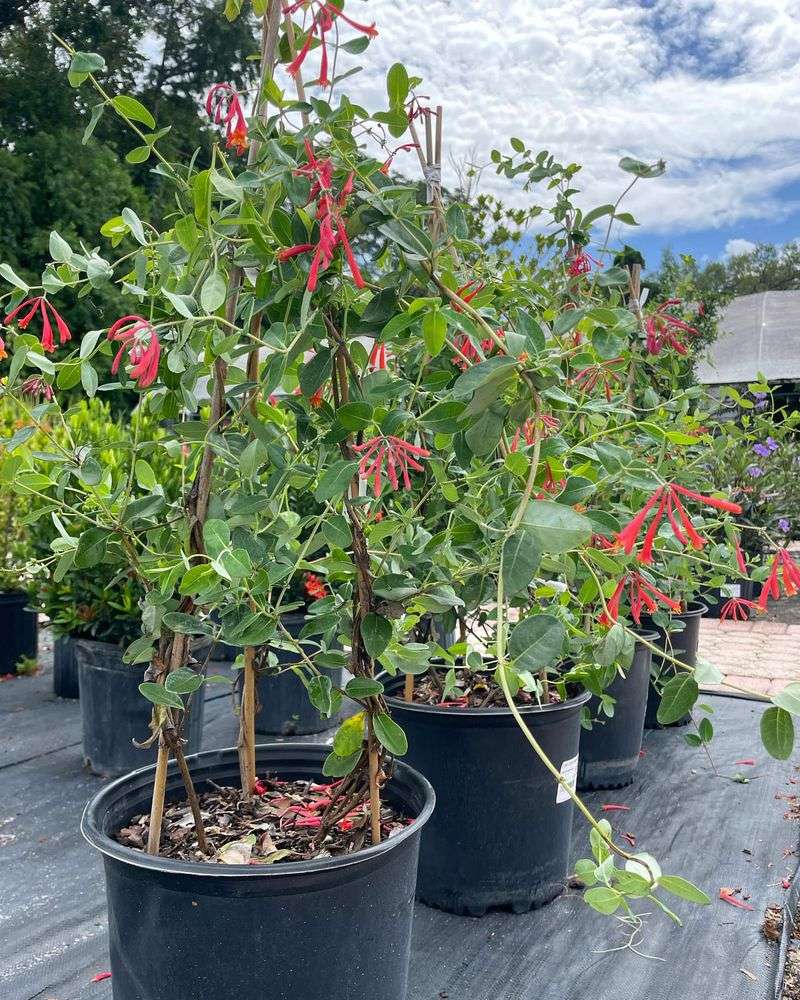
Coral honeysuckle is one of those plants that feels like a friendly neighbor, always showing up with color and charm without causing any trouble. Unlike its invasive Japanese cousin, coral honeysuckle is a well-behaved native vine that grows vigorously but stays in its lane.
Arizona gardeners with larger patio containers will find it to be a fantastic vertical accent that also attracts hummingbirds throughout the season.
This vine produces clusters of slender, tubular flowers in shades of coral red with soft yellow interiors. The blooms appear in spring and often continue into fall if the plant is kept well-watered and placed in a spot with good light.
In Arizona, placing the container where it gets morning sun and some afternoon shade produces the best results.
Because coral honeysuckle is a true climber, it needs a large, sturdy container of at least 15 to 20 gallons to support healthy root growth. A tall trellis, obelisk, or fence panel placed directly in or behind the pot gives the vine something to twine around as it grows upward.
Regular deep watering keeps it happy, and a balanced slow-release fertilizer applied in spring gets the season off to a strong start.
One fun fact about coral honeysuckle is that it is semi-evergreen in warmer parts of Arizona, meaning it may hold onto its leaves through mild winters. That makes it an even better investment for container gardeners who want year-round visual interest.
With its combination of color, wildlife value, and easygoing growth habit, coral honeysuckle deserves a spot on every Arizona patio.
5. Passion Vine Grows Strong In Big Containers With Support
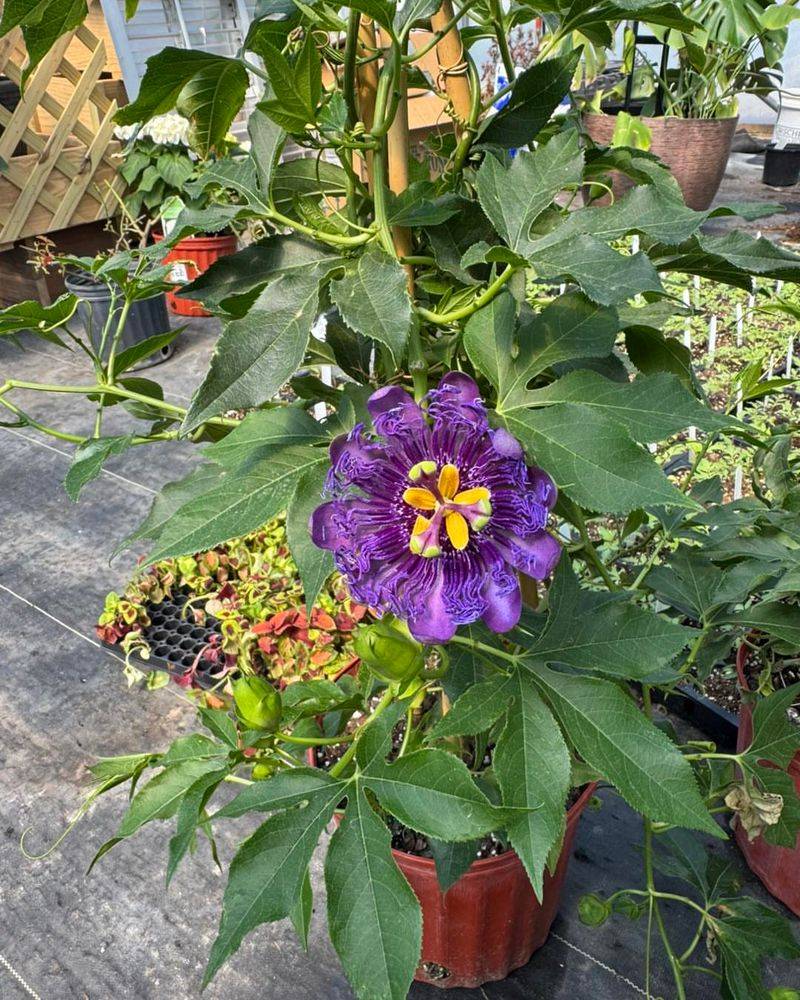
There is nothing quite like the first time you see a passion vine flower up close, because it looks almost too exotic to be real.
The blooms are layered, intricate, and wildly beautiful, with rings of purple, white, and sometimes red that seem designed by an artist rather than nature.
Gardeners in Arizona who want a true conversation starter for their patio have found the passion vine to be exactly that.
Passion vine grows fast and strong, which means it needs a big container to match its ambition. A pot of at least 15 to 20 gallons gives the roots enough space to anchor the plant and support all that vigorous top growth.
Pair the container with a tall, sturdy trellis or a section of lattice fencing so the vine has plenty of room to climb and spread.
In Arizona’s hot climate, passion vine does best with consistent moisture, especially during the summer months when the soil in containers can dry out quickly. Watering deeply every few days and checking the soil regularly keeps the plant healthy and blooming.
A layer of gravel or decorative rock on top of the soil helps slow moisture evaporation from the pot.
Some passion vine varieties also produce edible fruit, which is a fun bonus for gardeners who like getting something extra from their plants. The flowers attract butterflies, including the Gulf Fritillary, which uses the leaves as a host plant.
Across Arizona, passion vine is celebrated not just for its looks but for the life it brings to container gardens throughout the warmer months.
6. Mexican Flame Vine Performs Well In Warm Container Setups
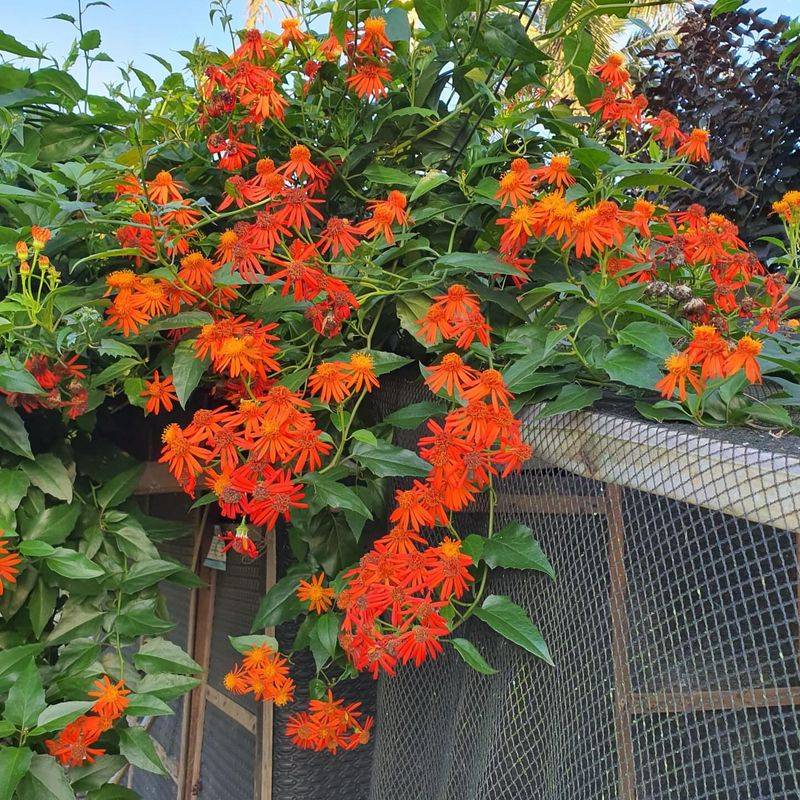
Picture a cascade of tiny orange flowers blazing across a trellis on a warm Arizona afternoon, and you have a pretty good idea of what Mexican flame vine looks like in full swing.
This fast-growing climber is named for its fiery clusters of blooms that appear in abundance from late summer through fall.
It is the kind of plant that makes people stop and ask what it is every single time they walk past it.
Mexican flame vine is a warm-season performer, which means it absolutely loves the heat that Arizona delivers so generously. It thrives in full sun and actually puts on its best show when temperatures are high, making it one of the most well-suited container climbers for desert landscapes.
Planting it in a large container with rich, well-draining soil gives it the foundation it needs to perform at its best.
Water needs are moderate to regular, and the plant appreciates deep watering sessions rather than frequent shallow ones. Feeding with a balanced fertilizer every few weeks during the growing season encourages heavier bloom production.
Mexican flame vine can grow quite tall, so a tall trellis or a sturdy arbor placed near the container is the best support option.
In frost-free parts of Arizona, this vine may behave as a perennial and come back year after year from the same container. In cooler areas of the state, treating it as an annual and refreshing the pot each spring is a simple solution.
Either way, the spectacular fall color it provides makes every bit of effort completely worth it for Arizona gardeners.
7. Yellow Orchid Vine Handles Heat And Grows In Containers
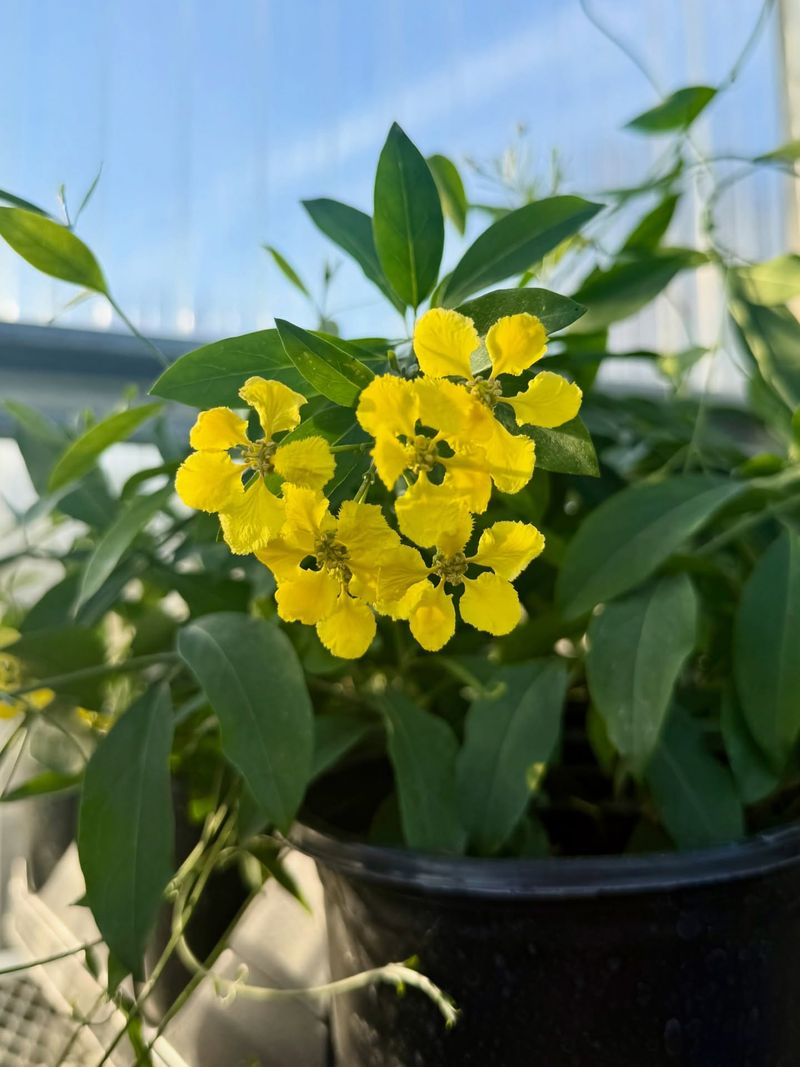
Not many gardeners outside of the Southwest have heard of yellow orchid vine, but Arizona gardeners who have grown it tend to become lifelong fans pretty quickly.
Also known as Mascagnia macroptera, this stunning climber produces clusters of bright yellow flowers that look remarkably like small orchids, which is exactly how it got its name.
After the flowers fade, it produces interesting papery, winged seed pods that add a second season of visual interest.
Yellow orchid vine is built for heat, and Arizona’s intense summer temperatures are no challenge for it at all.
It thrives in full sun and handles dry conditions better than most tropical climbers, making it an outstanding choice for water-conscious gardeners across the state.
Once established in a large container, it grows quickly and can cover a trellis or fence section in a single growing season.
For container growing, choose a pot that is at least 15 gallons to give the roots plenty of room to anchor the plant as it climbs. A well-draining cactus or desert potting mix works well for this vine since it prefers soil that does not stay wet for long periods.
Watering deeply once or twice a week during summer is usually enough to keep it thriving without overdoing it.
Yellow orchid vine is relatively low-maintenance compared to many other container climbers, which is a big plus for busy Arizona homeowners. It rarely struggles with pests and does not need heavy fertilizing to bloom generously.
For anyone looking to add a native-friendly, heat-loving showstopper to their Arizona container garden, this vine checks every single box.