The Smart Way To Grow Lemon Trees In Containers In Arizona
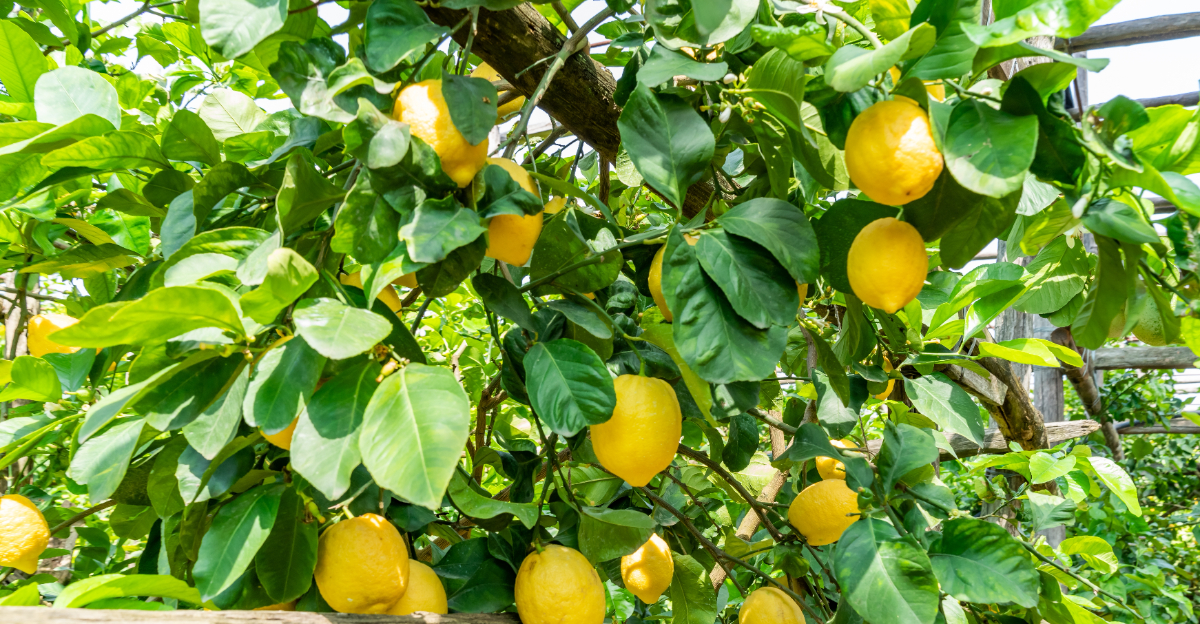
Container lemon trees can do well in Arizona, but they do not forgive the wrong setup for long. Leaves yellow, fruit drops early, and growth slows even when the tree looks fine at first glance.
Those issues often trace back to how the tree is planted, watered, and positioned in the heat. Root space, soil mix, and drainage all shape how well a lemon tree handles container life.
Arizona conditions put extra pressure on each of those, especially once temperatures rise and moisture disappears faster than expected. What works in the ground does not always translate to a pot.
Light exposure and watering habits also need a closer look.
Small changes in placement and care can help the tree stay balanced, hold onto fruit, and keep pushing steady growth instead of slipping into stress.
1. Choose Heat Tolerant Varieties That Perform Well In Containers
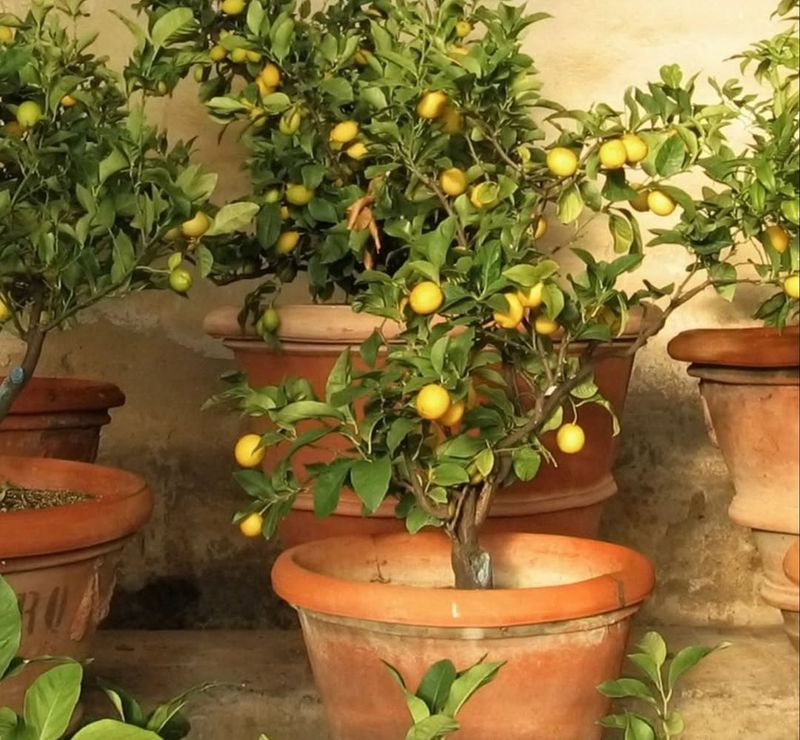
Not every lemon variety handles Arizona heat the same way, and choosing wrong can set you back an entire growing season.
Eureka and Lisbon lemons are two of the most popular choices for container growing in Arizona because both handle high temperatures with reasonable consistency.
Improved Meyer Lemon is another strong option, producing thinner-skinned fruit and staying compact enough for a large pot without constant pruning.
Eureka tends to produce fruit most of the year, which is a real advantage in Arizona where winters are mild enough to keep growth active.
Lisbon lemon is slightly more cold-hardy and handles the occasional temperature dip that parts of northern Arizona can experience.
Meyer lemon trees stay smaller by nature, making them easier to move when temperatures spike beyond what even a tough container tree can handle.
Dwarf rootstock matters just as much as variety selection. When shopping for container citrus in Arizona, look for trees grafted onto Flying Dragon or Trifoliate Orange rootstock because these keep the canopy manageable while maintaining strong fruit production.
2. Use A Fast Draining Soil Mix To Prevent Root Issues
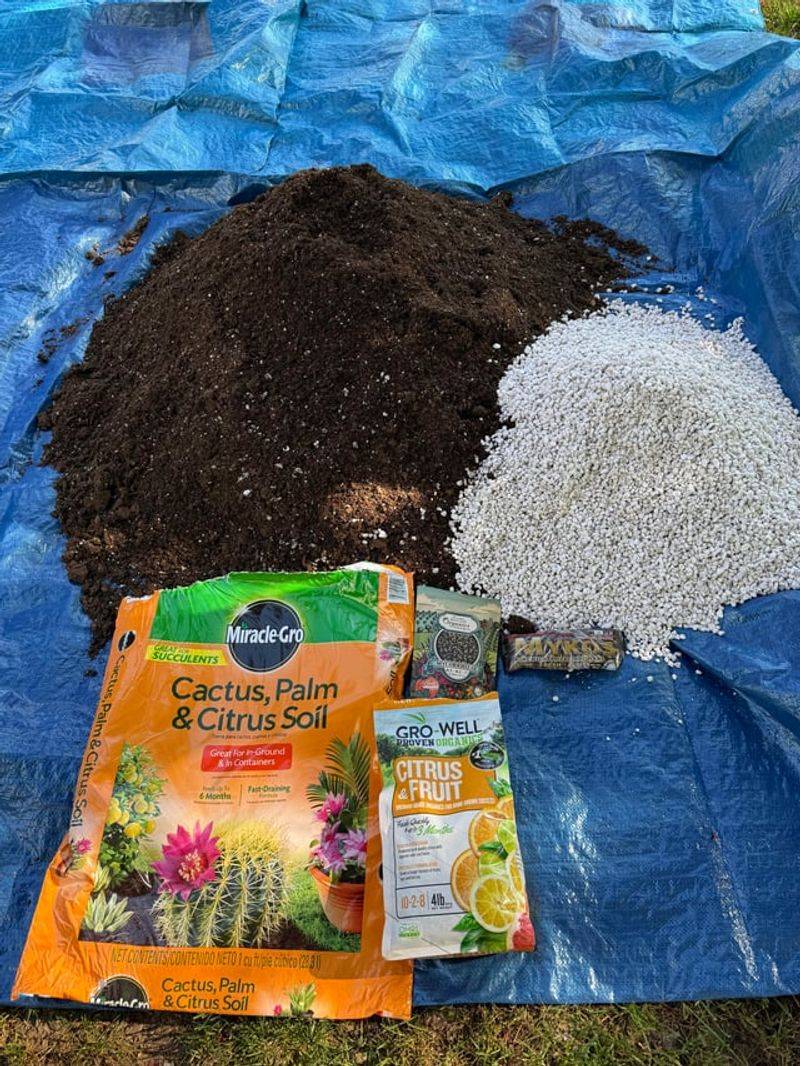
Regular potting soil will hold too much moisture for citrus roots in Arizona, especially during monsoon season when humidity spikes and drainage becomes critical.
Roots sitting in wet, compacted soil lose oxygen quickly and become vulnerable to fungal problems that are difficult to reverse once established.
A fast-draining mix keeps air moving through the root zone, which lemon trees genuinely need to stay productive.
A reliable mix for Arizona container lemon trees combines one part quality potting soil, one part coarse perlite, and one part coarse sand or decomposed granite.
Some experienced Arizona growers also add a small amount of pumice to improve drainage even further without adding weight.
Avoid mixes marketed as moisture-retaining because those formulas work against you in a hot desert climate where water management is already tricky.
Refresh the soil mix every two to three years because even good mixes break down over time, becoming compacted and less draining. When you repot, shake off as much of the old soil as possible from the roots and inspect for any soft or discolored root sections before replanting.
Your Arizona Garden Changes Every Week. Your Plan Should Too.
Gardening in Arizona changes quickly throughout the season. Every Friday you’ll receive a simple weekly plan showing exactly what to plant, prune, fertilize, harvest, and protect so you never miss the right timing.
3. Select A Large Container To Support Root Growth
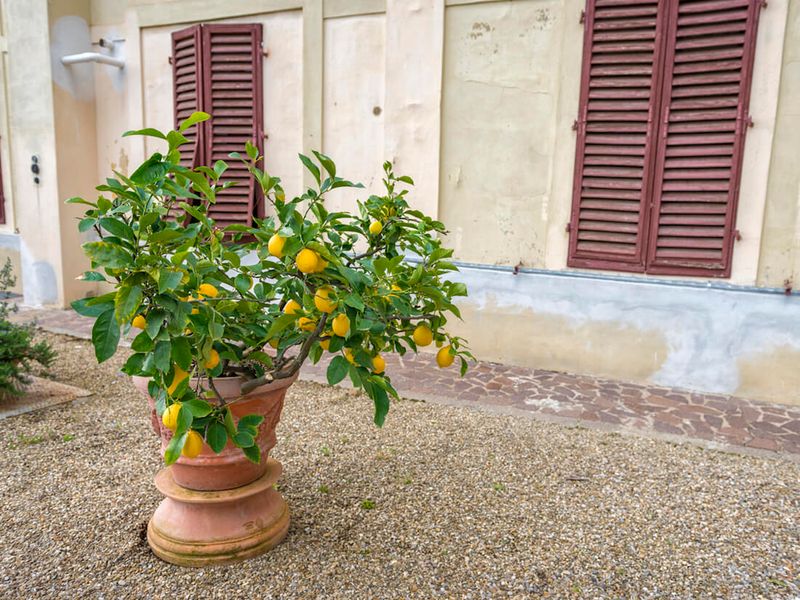
Container size is one of the most underestimated factors in growing healthy lemon trees in Arizona.
A pot that is too small restricts root development, leads to rapid moisture loss in Arizona heat, and forces you to water so frequently that managing nutrients becomes nearly impossible.
Starting with the right size from the beginning saves a lot of frustration down the road.
A minimum of 15 gallons is worth considering for a young lemon tree, but experienced Arizona container growers often go straight to a 20 or 25-gallon container to avoid repotting too soon.
Larger containers hold more soil volume, which buffers temperature swings and retains just enough moisture between watering sessions without staying soggy.
In Arizona summers where air temperatures regularly exceed 110 degrees Fahrenheit, that extra soil mass acts as a small thermal buffer for the roots.
Material matters too. Terracotta pots look beautiful but dry out faster than plastic or fiberglass containers, which can be a challenge during peak Arizona summer heat.
Dark-colored containers absorb more solar radiation and can heat the root zone significantly on hot afternoons, so light-colored or insulated containers are worth the extra cost.
4. Place In Full Sun But Protect From Extreme Afternoon Heat
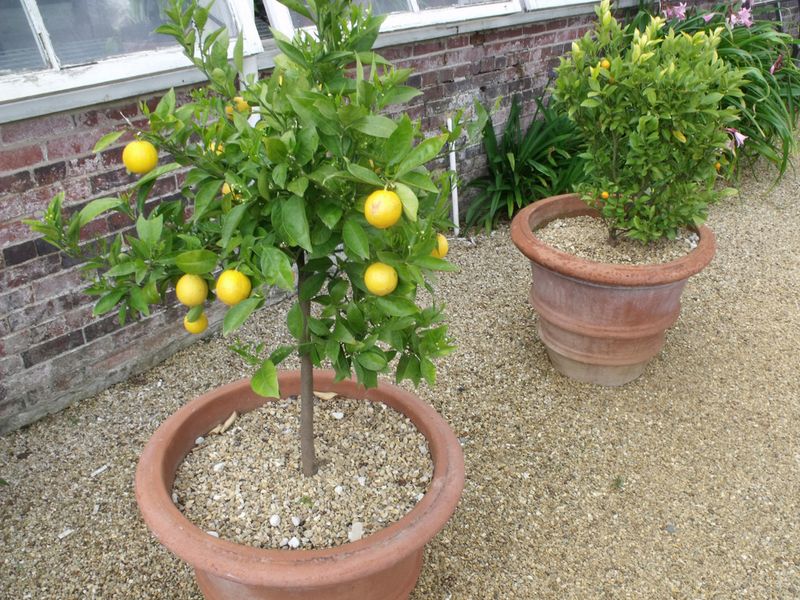
Lemon trees need full sun to produce well, but Arizona afternoon sun in July and August operates on a different level than most citrus guides account for.
Sustained exposure above 110 degrees Fahrenheit combined with reflected heat from pavement or stucco walls can scorch leaves, sunburn fruit, and stress even a well-established container tree.
Placement strategy makes a real difference in how your tree handles the hottest months. Morning sun is ideal in Arizona.
Positioning your container where it gets six to eight hours of direct sun from the east or southeast, then transitions into filtered or indirect light by early afternoon, gives the tree what it needs without the damaging intensity of western afternoon exposure.
South-facing walls can work well in winter when you want maximum warmth, but that same spot can become brutal in summer without some form of afternoon protection.
Shade cloth rated at 30 to 40 percent is a practical tool during peak summer weeks in Arizona, particularly for trees that cannot be moved.
Draping it loosely over the canopy during the hottest part of the day reduces leaf temperature noticeably without cutting off enough light to affect fruit development.
5. Water Deeply And Adjust Frequency As Temperatures Rise
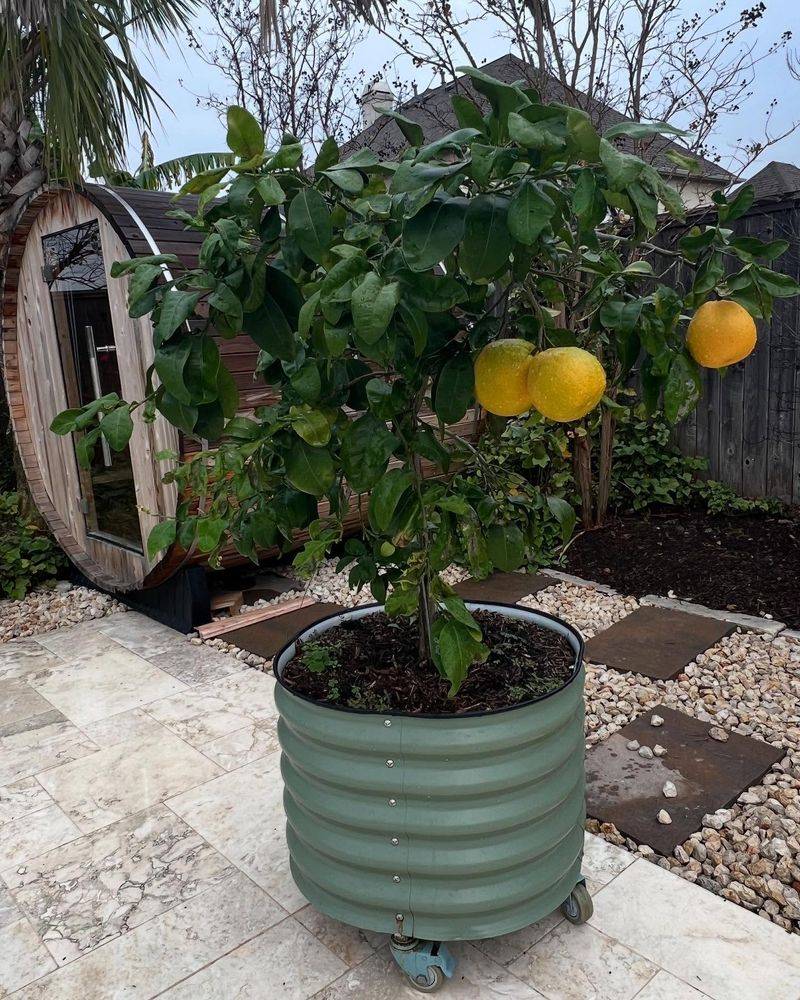
Watering container lemon trees in Arizona requires more attention than watering in-ground trees, and the rules change significantly as summer approaches.
Shallow, frequent watering encourages weak, surface-level root development and leaves the tree vulnerable to drought stress between sessions.
Deep, thorough watering that soaks the entire root ball and drains freely from the bottom is the approach that produces healthy, productive citrus.
During Arizona spring and fall, watering every five to seven days is often enough depending on container size and soil mix. Once summer heat arrives and temperatures climb above 100 degrees Fahrenheit consistently, that schedule can shift to every two to three days for smaller containers.
Checking soil moisture two to three inches below the surface before watering gives you a much more accurate read than following a fixed calendar schedule, since Arizona weather can vary significantly week to week.
Watering in the early morning works best in Arizona because it allows moisture to reach deep into the root zone before midday heat accelerates evaporation.
Evening watering is acceptable but can leave the soil surface damp overnight, which occasionally encourages fungal activity in humid monsoon conditions.
Mulching the top of the container soil with a thin layer of bark or gravel helps slow surface evaporation between waterings.
6. Feed Regularly With Citrus Fertilizer During Active Growth
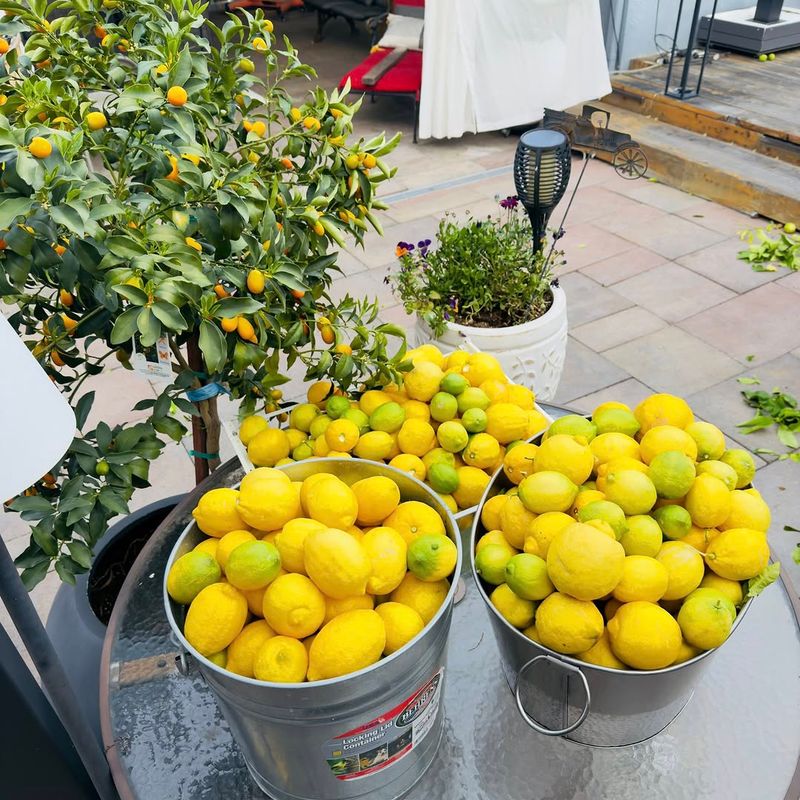
Container lemon trees in Arizona go through nutrients faster than in-ground trees because every watering session gradually flushes minerals out through the drainage holes. Without regular feeding, growth slows, leaves turn pale yellow, and fruit production drops noticeably.
Citrus trees are actually heavy feeders compared to many other fruit trees, so staying on a consistent fertilizer schedule pays off in visible ways.
A slow-release granular fertilizer formulated specifically for citrus works well as a base feeding applied in early spring, early summer, and early fall in Arizona.
These three feeding windows align with the tree’s active growth cycles and avoid pushing tender new growth during the most brutal heat of mid-summer or during any brief cold snaps in winter.
Fertilizers with a nitrogen-heavy formula and added micronutrients like iron, zinc, and manganese address the most common deficiencies seen in Arizona container citrus.
Iron chlorosis is particularly common in Arizona because the naturally alkaline water and soil raise pH over time, locking iron out of the roots even when it is present in the soil.
Applying a chelated iron supplement two to three times per year, separate from your main fertilizer application, helps keep foliage a healthy dark green.
7. Flush Soil Occasionally To Prevent Salt Buildup
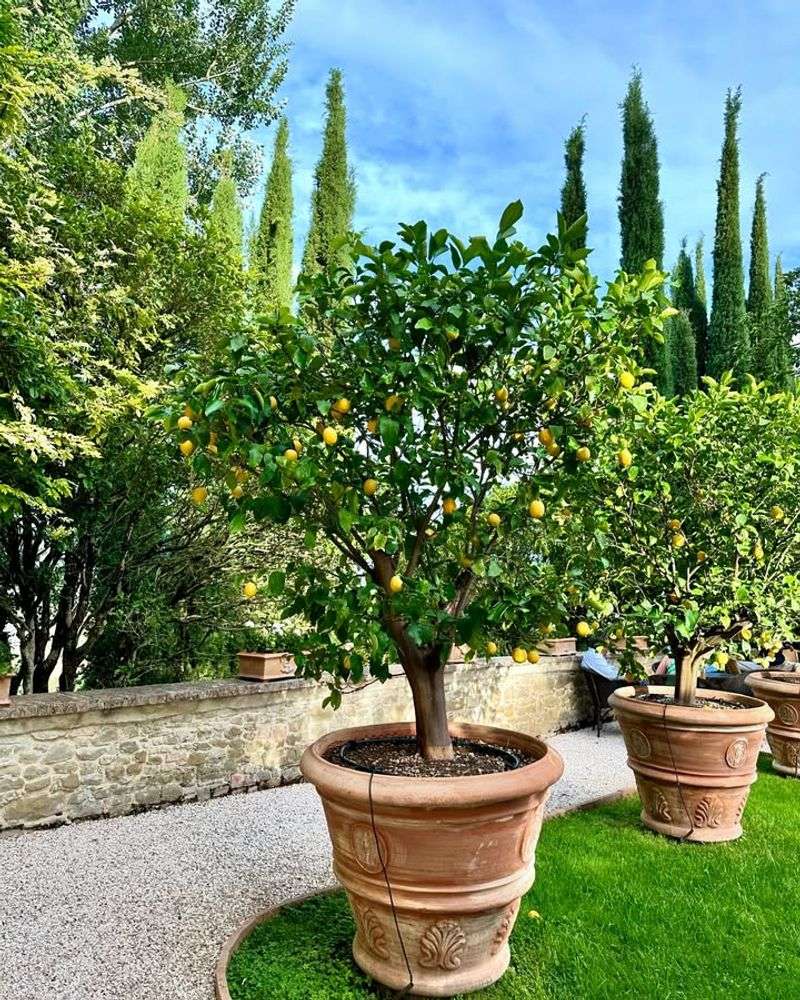
Arizona tap water is notoriously hard, carrying high levels of calcium, magnesium, and other dissolved minerals that accumulate in container soil over time.
Every watering session deposits a small amount of these minerals, and without periodic flushing, salt concentrations build up to levels that interfere with nutrient uptake and root function.
A white crusty residue on the soil surface or around the drainage holes is one of the clearest signs that a flush is overdue.
Flushing is simple but needs to be done deliberately. Set the container where drainage can flow freely, then slowly pour two to three times the container’s volume of water through the soil over the course of about twenty to thirty minutes.
Moving slowly allows water to carry dissolved salts down and out through the drainage holes rather than just finding the fastest path through and leaving salt pockets behind.
Doing this every two to three months during active growing seasons in Arizona keeps mineral concentrations at manageable levels.
Some Arizona gardeners use collected rainwater or filtered water for at least occasional watering to reduce mineral input, which is worth trying if tap water quality in your area is particularly high in dissolved solids.
Avoid using softened water because the sodium used in water softeners is harmful to citrus roots over time.