7 Native Pennsylvania Vines That Are Beautiful But Often Overlooked
Vines have a bit of an image problem. Mention them to most gardeners and the first thing that comes to mind is English ivy taking over everything in sight, or kudzu doing what kudzu does best, which is basically consuming entire landscapes without any shame whatsoever.
It’s enough to make anyone a little hesitant about planting anything that climbs. But native Pennsylvania vines are a completely different story.
These plants evolved right here, which means they grow with purpose rather than aggression, support local wildlife in ways that imported species simply can’t, and bring a kind of natural beauty to fences, trellises, and walls that feels genuinely effortless.
The problem is that most gardeners never give them a real shot because they just don’t come up in conversation.
They’re not flashy at the nursery, they don’t get the marketing push, and somehow they keep getting passed over. That’s a mistake worth correcting.
1. Virgin’s Bower (Clematis Virginiana)
Walk past a hedgerow in Pennsylvania in late August and you might catch a sweet, faint fragrance drifting through the air.
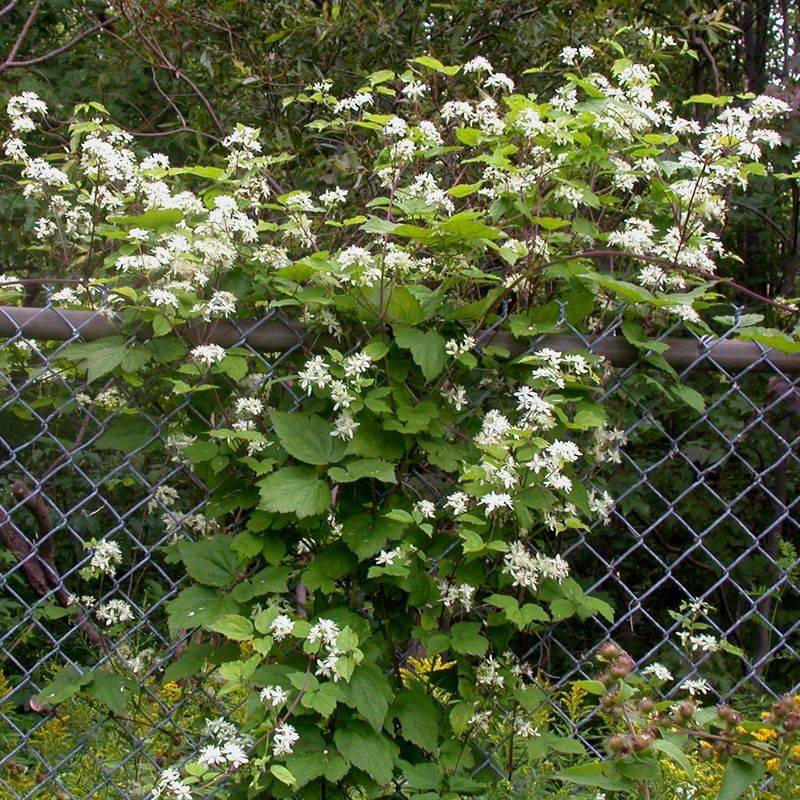
That scent often comes from Virgin’s Bower, a native clematis that bursts into bloom with thousands of tiny white flowers all at once. It can look like someone draped a lace tablecloth over an entire fence or shrub line.
This vine grows fast, sometimes adding several feet in a single season. It loves to climb over fences, old stone walls, and the edges of wooded areas.
You will often find it growing wild along stream banks and roadsides throughout Pennsylvania, where it thrives in both sun and partial shade.
Pollinators absolutely go wild for this plant. Bees, butterflies, and other beneficial insects flock to the blooms throughout late summer.
After the flowers fade, feathery seed heads take over, giving the plant a silvery, wispy look that is equally beautiful well into fall.
Planting Virgin’s Bower is a smart move if you want quick coverage without the headache of an invasive species.
Unlike some ornamental clematis varieties, this one is fully adapted to Pennsylvania’s climate and soil. It handles drought reasonably well once established and rarely needs fertilizing.
Give it something sturdy to climb, like a trellis or chain-link fence, and it will reward you with years of seasonal beauty. Just be sure to give it room because once it gets going, it really does not hold back.
2. Purple Passionflower (Passiflora Incarnata)
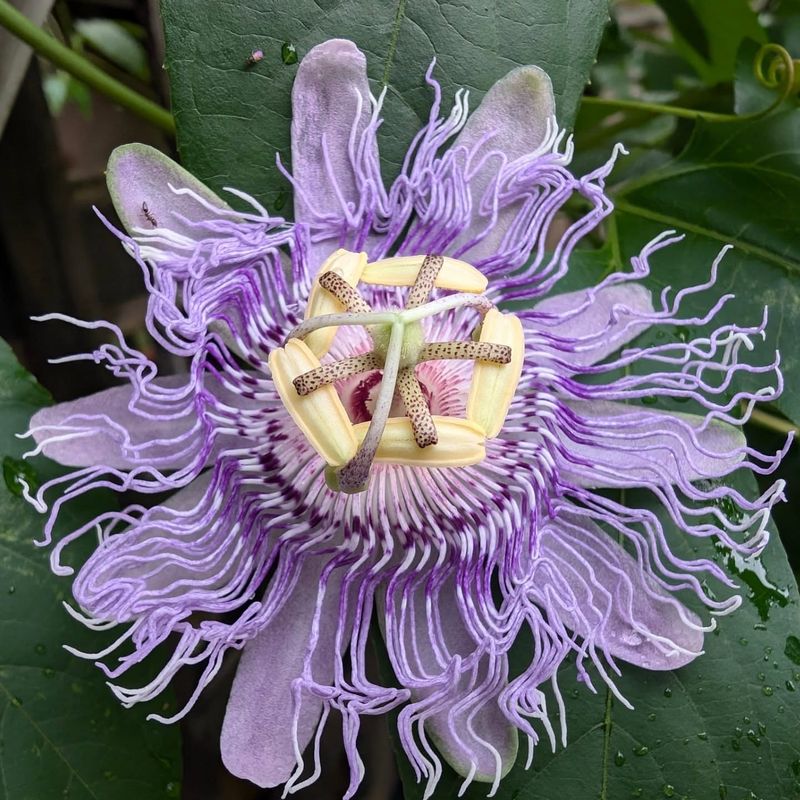
Few native plants in Pennsylvania stop people in their tracks quite like Purple Passionflower. The blooms look like something you would expect to find in a tropical rainforest, not climbing along a sunny backyard fence in the mid-Atlantic region.
Each flower has a wild, almost alien structure with fringe-like purple filaments that surround the central parts in a starburst pattern.
Passiflora incarnata is the only native passionflower that grows wild across much of the eastern United States, including parts of Pennsylvania. It prefers sunny spots with well-drained soil and can spread by underground runners over time.
Your Pennsylvania Garden Changes Every Week. Your Plan Should Too.
Gardening in Pennsylvania changes quickly throughout the season. Every Friday you’ll receive a simple weekly plan showing exactly what to plant, prune, fertilize, harvest, and protect so you never miss the right timing.
Once established, it is surprisingly tough and comes back reliably each year even after cold winters.
Beyond its stunning flowers, this vine also produces edible fruits called maypops. The oval, yellow-green fruits appear in late summer and taste somewhat like a mild, tropical fruit. Native Americans historically used both the fruit and the plant for food and medicine.
Purple Passionflower also serves as a host plant for certain butterfly species, making it a real powerhouse for supporting local wildlife in Pennsylvania. Planting it along a fence or letting it ramble over a trellis gives pollinators a reliable food source through the summer months.
If you want a conversation-starting vine that nobody else in the neighborhood is growing, this is it. The blooms alone will have visitors asking what on earth that beautiful plant is growing in your yard.
3. American Groundnut (Apios Americana)
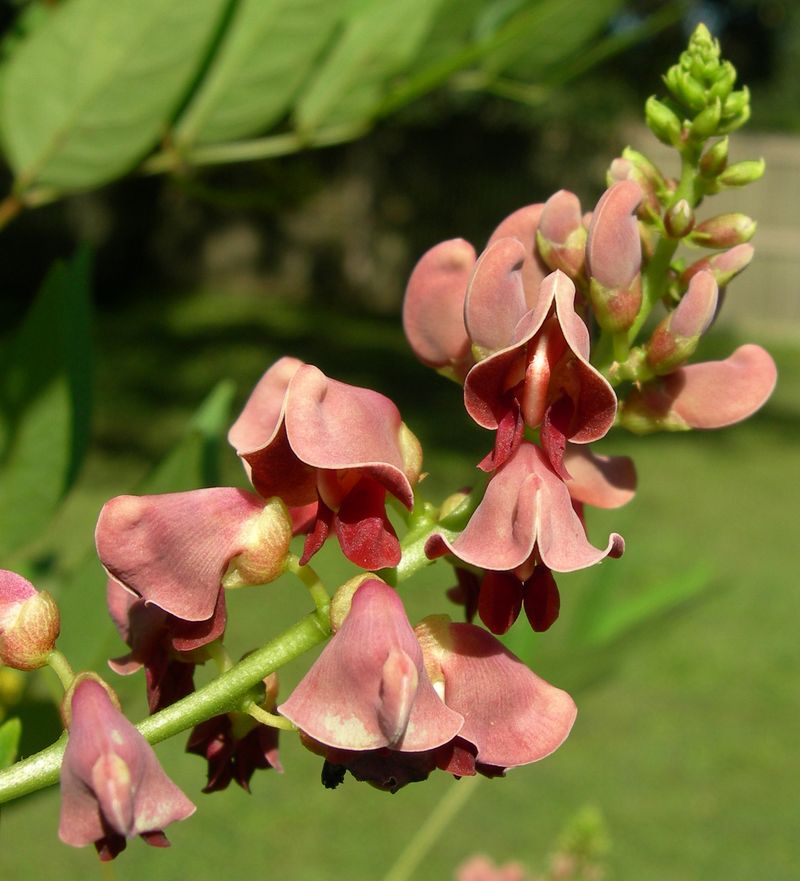
Not many native vines come with both good looks and a snack attached, but American Groundnut manages to pull off both. This twining vine produces clusters of small, reddish-brown flowers that have a sweet, almost vanilla-like fragrance.
They are not flashy in the way a passionflower is, but up close they are genuinely beautiful and interesting.
Underground, the plant forms a chain of starchy tubers that have been eaten by people for thousands of years. Indigenous peoples across the eastern United States relied on these tubers as a food staple long before European settlers arrived in Pennsylvania.
The Pilgrims are even said to have survived early winters partly thanks to American Groundnut.
In the garden, this vine works best in moist, partly shaded spots near streams, ponds, or low-lying areas.
It twines around other plants and structures rather than clinging with adhesive pads, so it needs something to wrap around. A fence post, shrub, or trellis all work well.
The foliage is clean and attractive, with compound leaves that flutter nicely in a breeze. It grows at a moderate pace and is not nearly as aggressive as some native vines can be, making it a manageable choice for most Pennsylvania gardens.
Growing American Groundnut connects you to a deep piece of natural and cultural history in this region. It is one of those plants that makes you feel like your garden is part of something much larger and older than just your backyard.
4. Coral Honeysuckle (Lonicera Sempervirens)
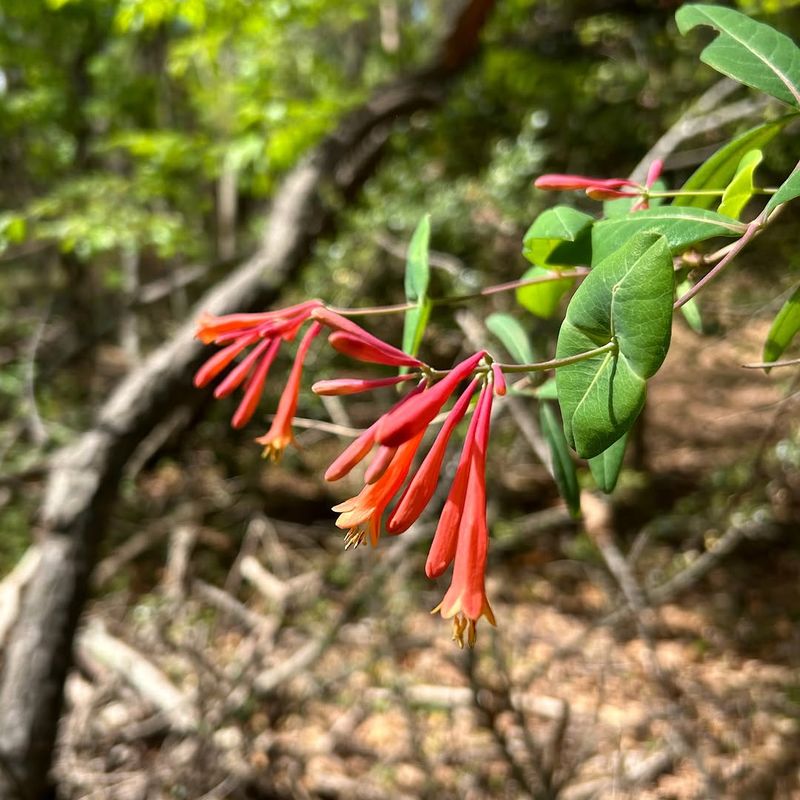
When most people hear the word honeysuckle, they immediately think of the invasive Japanese variety that has taken over roadsides and forest edges across Pennsylvania. Coral Honeysuckle is the native alternative that deserves all the attention instead.
It has everything gardeners love about honeysuckle, including the beautiful tubular flowers and the wildlife appeal, but without the aggressive spreading that makes Japanese honeysuckle such a problem.
The blooms are a vivid coral-red on the outside with a soft yellow interior, and they appear from spring all the way into fall in many Pennsylvania locations. Hummingbirds absolutely cannot resist them.
If you want to attract ruby-throated hummingbirds to your yard, planting a trellis full of Coral Honeysuckle is one of the most reliable ways to do it.
This vine is semi-evergreen in milder parts of Pennsylvania, holding onto its blue-green leaves well into winter before dropping them.
It grows at a moderate, manageable pace and rarely becomes a nuisance. You can train it along a fence, up a mailbox post, or over an arbor with very little effort.
Coral Honeysuckle also produces small red berries in fall that songbirds eagerly eat. So even after the blooms are gone, the plant keeps working hard for local wildlife through the colder months.
For a Pennsylvania gardener looking for a well-behaved, wildlife-friendly climber that puts on a long show of color, Coral Honeysuckle checks every single box. It is one of the most underused native vines in the state.
5. Virginia Creeper (Parthenocissus Quinquefolia)
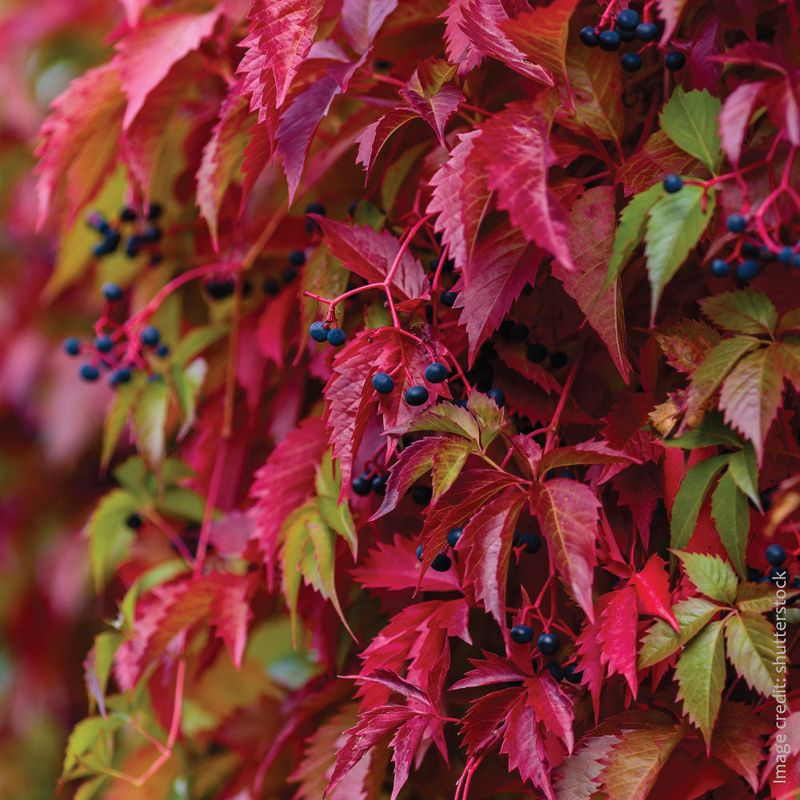
Most people in Pennsylvania have seen Virginia Creeper before and probably dismissed it as just another wild vine taking over a fence or tree trunk.
That is a real shame, because in autumn this plant transforms into one of the most breathtaking sights in the eastern United States.
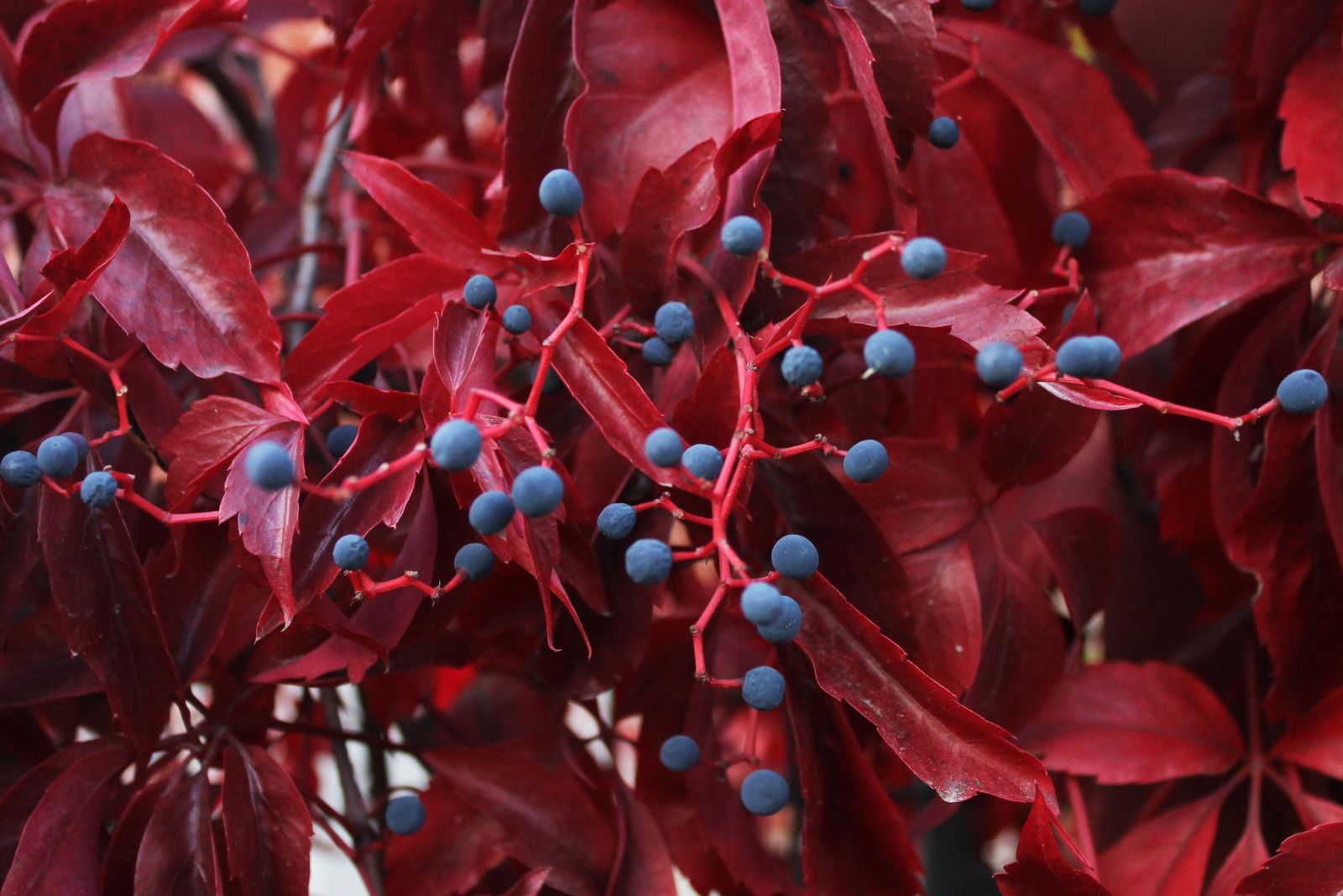
The five-leaflet leaves turn an intense, blazing red that rivals any ornamental plant you could buy at a nursery.
Virginia Creeper climbs using small adhesive pads at the tips of its tendrils, allowing it to scale brick walls, stone chimneys, wooden fences, and tree trunks without any help from you. It clings firmly and can cover a large surface area within just a few growing seasons.
This makes it an excellent choice for covering unsightly structures or adding a natural, layered look to a garden wall.
Birds love this vine in a big way. The small, dark blue berries that ripen in fall are a critical food source for migrating birds passing through Pennsylvania.
More than 35 bird species are known to eat Virginia Creeper berries, including woodpeckers, bluebirds, and warblers.
Growing this vine in full sun gives you the most dramatic fall color, though it tolerates shade reasonably well. It is drought-tolerant once established and practically maintenance-free once it finds its footing.
Virginia Creeper proves that sometimes the plants we overlook in the wild are the very ones that would shine the brightest in a thoughtfully designed Pennsylvania garden. Give it a structure to climb and step back.
6. Climbing Hydrangea (Hydrangea Anomala Subsp. Petiolaris)
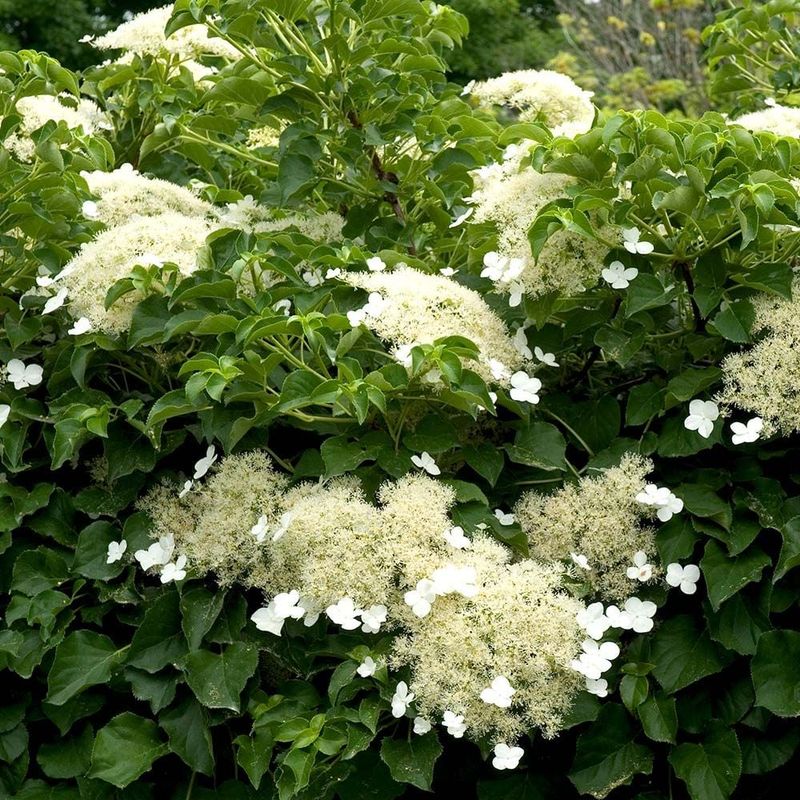
Patience is the one thing Climbing Hydrangea asks of you, and in return it gives you something truly spectacular. For the first few years after planting, this vine seems to do almost nothing.
It sits quietly, building up its root system underground while gardeners nervously wonder if they made a mistake. Then, seemingly overnight, it takes off and becomes one of the most elegant vines you have ever seen.
The flowers are the classic lacecap style, with a ring of showy white blooms surrounding a cluster of smaller, fertile flowers at the center. They appear in early to midsummer and have a lovely light fragrance.
The overall effect on a shaded stone wall or wooden fence is genuinely sophisticated and a little magical.
Climbing Hydrangea is one of the few flowering vines that actually thrives in shade. Most vines want full sun, which can make shaded spots in Pennsylvania gardens tricky to fill with something beautiful. This vine solves that problem beautifully and without complaint.
It clings to surfaces using small aerial rootlets, much like English Ivy, so it does not need a trellis. Over time it develops attractive, peeling cinnamon-colored bark that adds winter interest when the leaves are gone.
Worth noting: Climbing Hydrangea is native to Asia, not Pennsylvania, but it is widely used in native-style garden designs across the state because it is non-invasive and genuinely supports a natural aesthetic. For shaded spots where nothing else seems to work, it earns its place every time.
7. Trumpet Vine (Campsis Radicans)
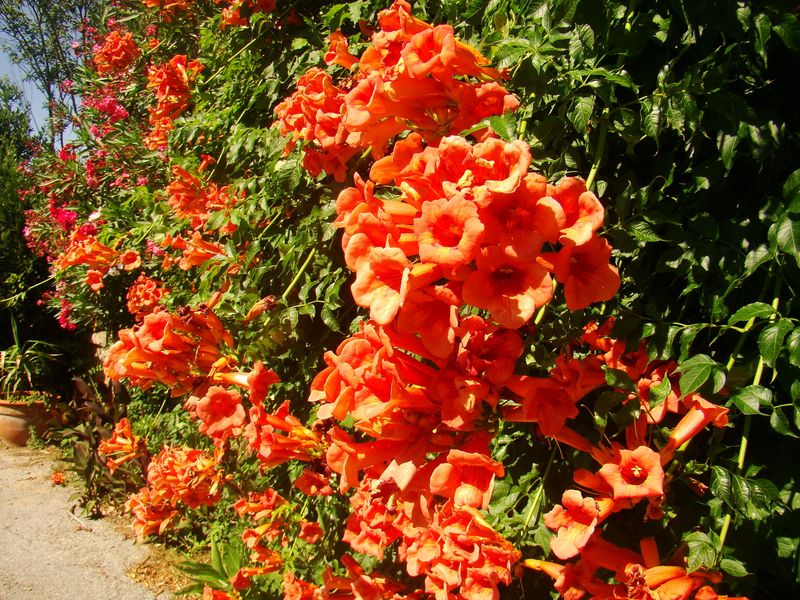
If you want a vine with serious personality, Trumpet Vine is ready to deliver. The flowers are enormous, bold, and orange as a sunset, shaped exactly like little trumpets flaring outward from the vine.
From midsummer through early fall, a mature plant in full bloom is genuinely hard to ignore, and hummingbirds treat it like their personal diner, visiting again and again throughout the day.
Campsis radicans is native to the eastern United States and grows wild in many parts of Pennsylvania, particularly along woodland edges, roadsides, and old fence lines. It climbs using aerial rootlets and can reach the tops of trees if left unchecked.
This is not a vine for small spaces or timid gardeners, but for the right spot it is absolutely unbeatable.
The key to success with Trumpet Vine is giving it a strong, permanent structure and being willing to prune it regularly. A sturdy pergola, a thick wooden fence post, or a large arbor all work well.
Without some management, it will spread enthusiastically and can become difficult to control over time.
One fun fact worth knowing: Trumpet Vine has been cultivated in American gardens since at least the 1600s, which means it has been delighting people in this region for a very long time. It is tough, heat-tolerant, and practically drought-proof once established in Pennsylvania soil.
For wildlife gardeners who want maximum hummingbird action and a bold summer statement, no native vine in Pennsylvania delivers quite like this one. Plant it, manage it, and enjoy the show every single year.