8 Arizona Entry Path Plants That Look Expensive But Need Little Water
First impressions matter, and an entry path sets the tone before anyone even reaches the front door.
In Arizona, that space has to handle intense sun, dry air, and long stretches without much water, which makes plant choice more important than it seems at first.
Some yards end up looking tired or sparse, while others manage to feel polished and thoughtfully put together without constant upkeep.
That difference comes down to smart plant picks that hold shape and color in tough conditions. When those choices come together, the entry feels more refined without extra work.
There are certain plants that create that clean, elevated look while still staying practical for Arizona conditions, and once they are in place, the whole path starts to feel more intentional.
1. Use Agave For A Sculptural Look With Minimal Water
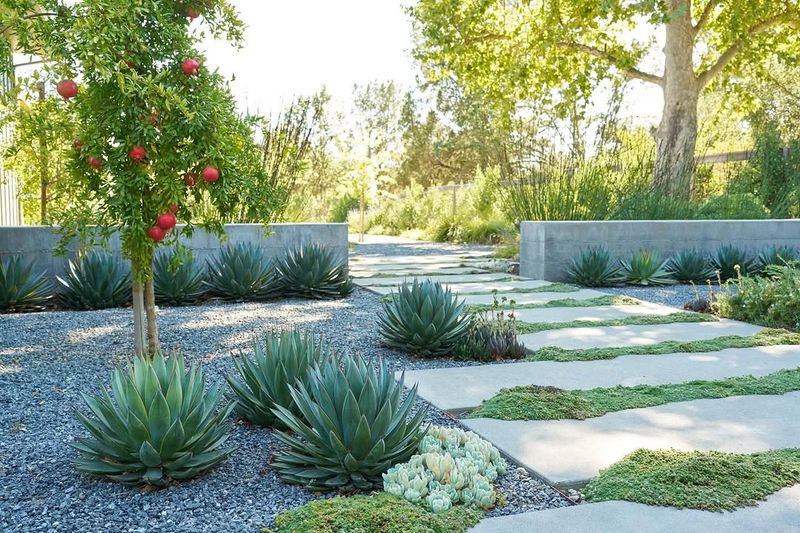
Agave plants look like they were designed by an architect. The tight, symmetrical rosette and sharp leaf tips give any Arizona entry path a polished, deliberate feel that most flowering plants simply cannot match.
Agave Parryi is one of the most reliable choices across central and southern Arizona. Its blue-gray color contrasts beautifully against tan gravel or flagstone, and it holds that look year-round without much help from you.
No deadheading, no frequent watering, no fussing.
Plant it about three feet from your walkway edge so guests do not brush against the leaf tips. A layer of decomposed granite around the base keeps moisture from sitting near the crown, which can cause rot during Arizona monsoon season.
Agaves grow slowly, so the one you plant this year will still look sharp five years from now. Young plants can handle some reflected heat from concrete or block walls, which is a real advantage in urban Arizona yards.
Spacing matters here. Give each plant enough room to reach its full spread, usually two to four feet depending on the variety.
Crowding agaves makes the whole entry feel cluttered rather than curated. One or two well-placed specimens can do more for your curb appeal than a dozen smaller plants crammed together.
In late spring, a tall flowering stalk may appear, adding a striking vertical accent to the landscape.
2. Plant Red Yucca For Color And Structure Without High Water Needs
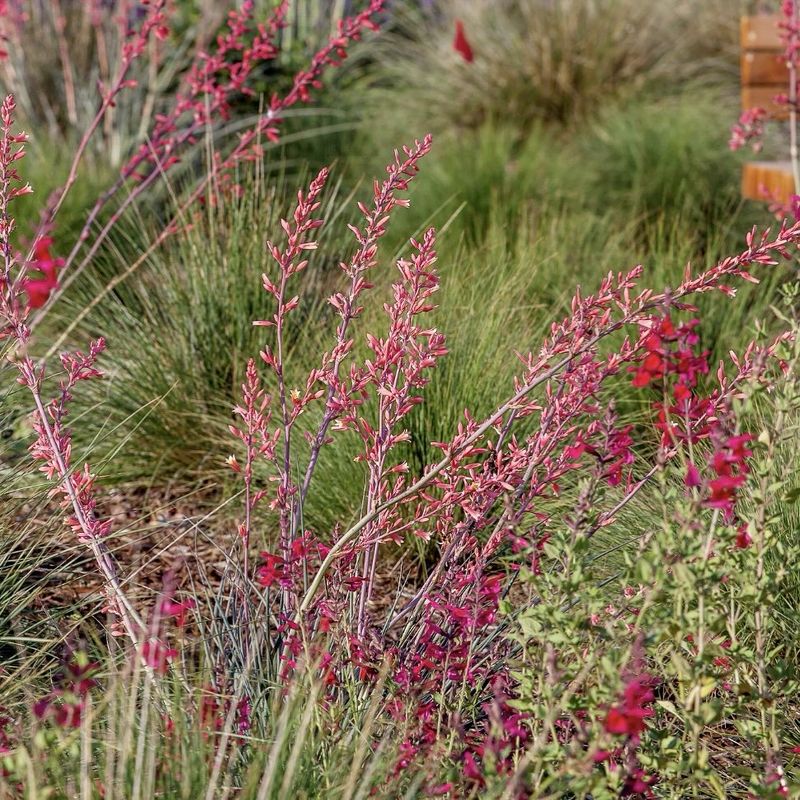
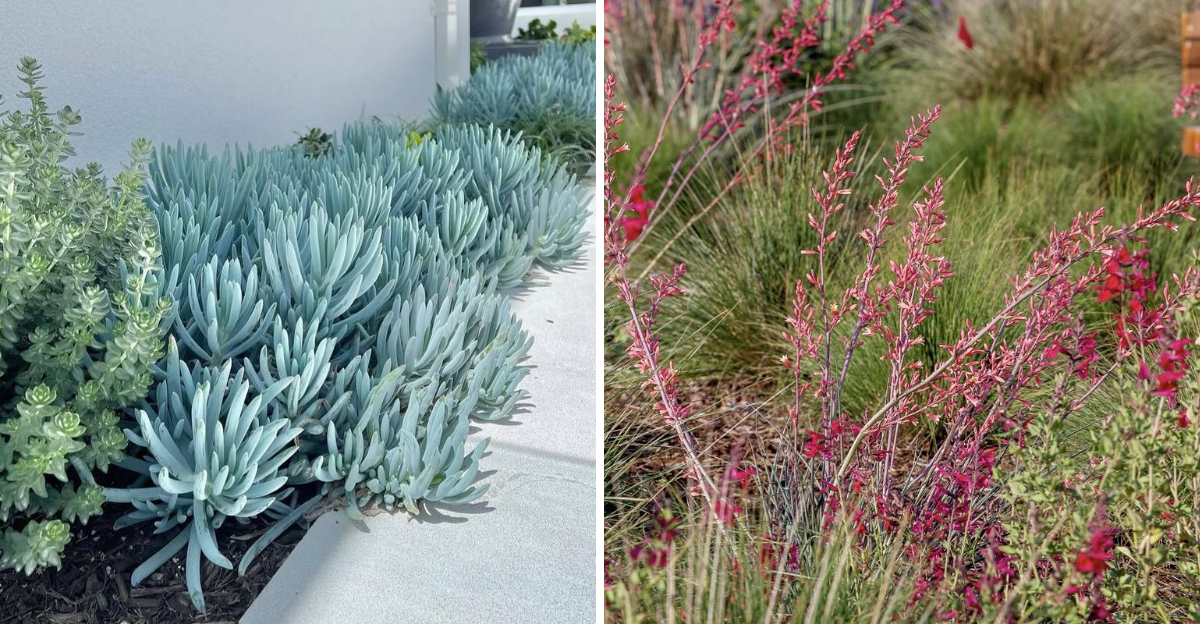
Coral-red flower spikes shooting up four to five feet in the air — that is what Red Yucca brings to an Arizona entry path in late spring and summer. The blooms last for weeks and hummingbirds show up regularly, which adds unexpected life to the front yard.
Despite the name, Red Yucca is not a true yucca. It belongs to the Hesperaloe family and has softer, grass-like leaves that arch gently rather than standing rigid.
That softer texture balances well next to hard surfaces like concrete borders or stone pavers common in Arizona landscapes.
Full sun is where this plant performs best. Tucson and Phoenix gardeners tend to place it in spots that get six or more hours of direct sun daily, and the plant responds with stronger color on those flower stalks.
Your Arizona Garden Changes Every Week. Your Plan Should Too.
Gardening in Arizona changes quickly throughout the season. Every Friday you’ll receive a simple weekly plan showing exactly what to plant, prune, fertilize, harvest, and protect so you never miss the right timing.
Watering deeply every two to three weeks during summer is enough for an established plant. Cut back to monthly or less once fall arrives.
The clumping base stays green through most of the year, even when temperatures drop into the low thirties at night.
Red Yucca looks especially sharp when planted in groups of three along a long entry path. Stagger the spacing slightly so the arrangement feels natural rather than perfectly lined up like a parking lot planting.
3. Choose Desert Spoon For A Clean, Architectural Entry Style
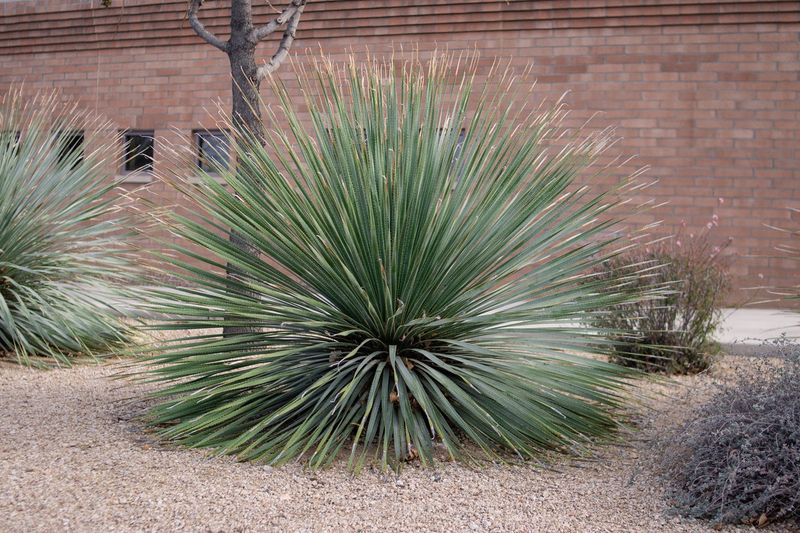
Dasylirion wheeleri, commonly called Desert Spoon, has a presence that stops people in their tracks. The dense fountain of narrow, serrated leaves creates a bold focal point without requiring any extra effort on your part.
What makes it work so well along an Arizona entry path is the contrast it creates. The silvery-blue leaf color pops against warm-toned gravel, red brick, or dark decomposed granite.
Pair it near a front gate or at the base of a post light, and suddenly the whole entry reads as intentional and well-designed.
Water needs are minimal. During the hottest months in Arizona, deep watering once every two to three weeks is usually sufficient.
In cooler months from November through February, you can cut back to once a month or skip entirely if rainfall has been decent.
Desert Spoon grows slowly and tends to stay between three and five feet tall at maturity. The scale works well for most residential entry paths without overwhelming smaller homes or blocking sightlines from the street.
One practical tip — plant it where foot traffic will not brush against it. The leaf edges have small teeth that can snag clothing or skin.
Position it just off the path edge where it reads as a design element rather than a hazard, and it becomes one of the most low-effort, high-impact plants in any Arizona yard.
4. Add Texas Sage For Soft Color And Drought Tolerance
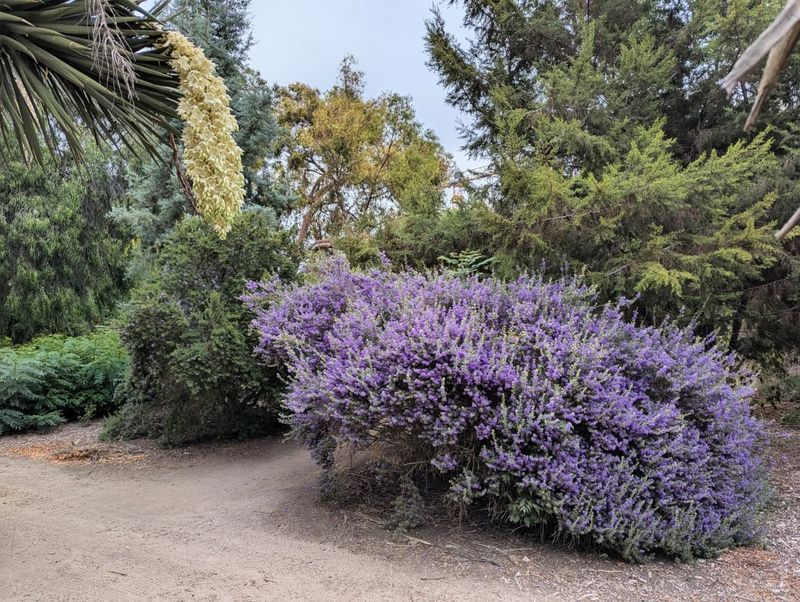
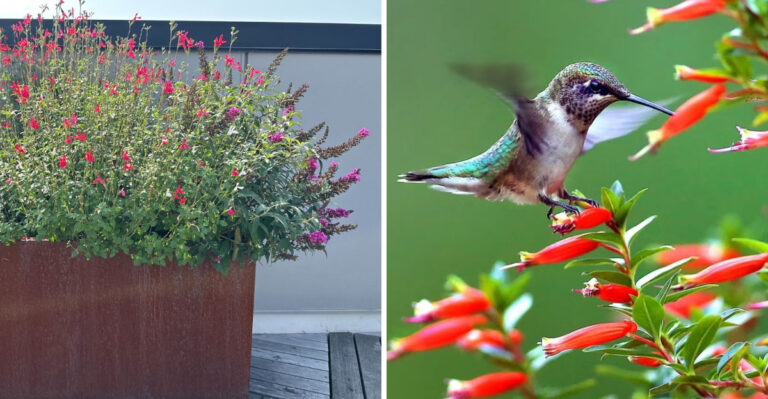
After a summer monsoon rain in Arizona, Texas Sage bursts into bloom almost overnight. Local gardeners sometimes call it the barometer plant because it flowers in response to humidity shifts — which means it rewards you without any extra work.
The silvery foliage holds its color even when the plant is not blooming, and that alone earns it a spot along an entry path. Silver and purple together read as sophisticated in a way that plain green shrubs rarely do.
Against a tan or white stucco wall, the contrast is genuinely striking.
Texas Sage handles reflected heat from walls and driveways without showing stress. Scottsdale and Mesa homeowners often tuck it into spots near block walls where other plants struggle, and it tends to thrive there.
Trim it lightly once or twice a year to maintain a rounded shape. Avoid heavy pruning in late fall since that can reduce flowering the following season.
Light shaping in early spring and again after the summer bloom cycle keeps the plant looking tidy without removing too much growth.
Watering deeply every couple of weeks during summer is enough. In winter, Arizona rainfall often handles the job on its own.
Texas Sage rarely needs supplemental irrigation from October through April in most parts of the state, which makes it one of the most practical choices for a water-conscious front yard.
5. Use Aloe For A Polished Look That Handles Dry Conditions
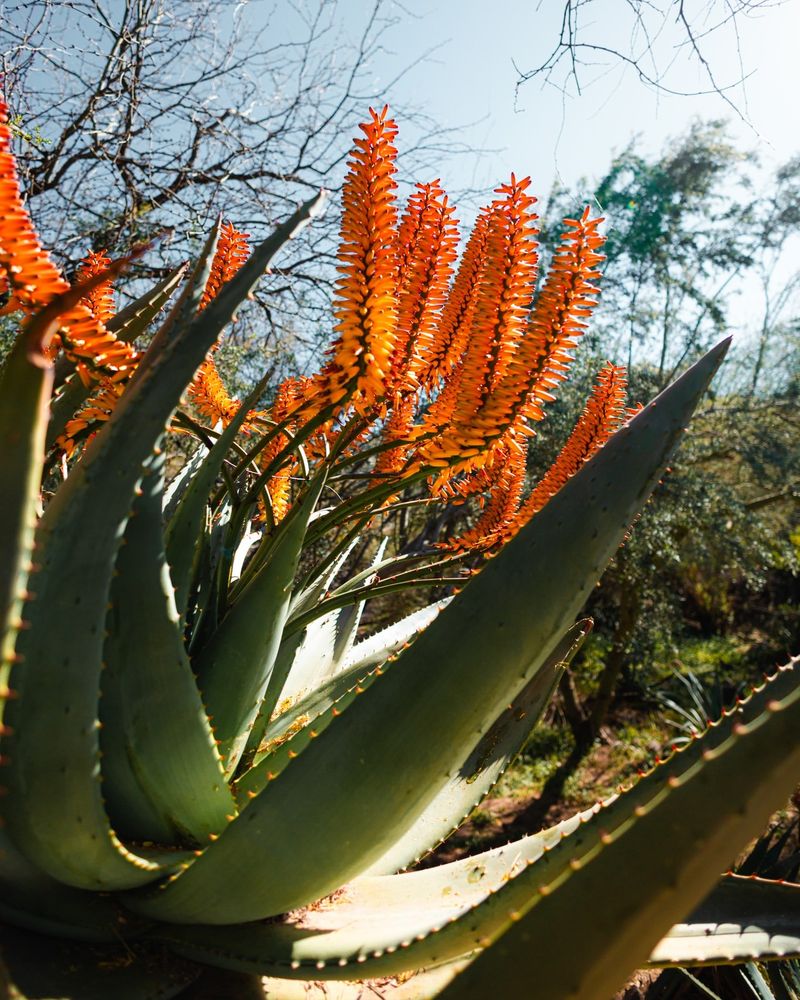
Aloe has a reputation as a houseplant, but in Arizona it belongs outside. The thick, fleshy leaves and upright form give it a polished, almost tropical look that reads as expensive even though the plants themselves are affordable and easy to find at local nurseries.
Aloe vera is the most common variety, but Aloe barbadensis and torch aloe both perform well across the Phoenix and Tucson metro areas.
Torch aloe in particular sends up tall orange flower spikes in winter and early spring, which adds color during a season when most other plants are quiet.
Full to partial sun works for most aloe varieties in Arizona. In areas with intense afternoon exposure, like south-facing entry paths in Phoenix, a little shade from a nearby wall or taller shrub can prevent leaf scorching during July and August.
Water every ten to fourteen days during summer, and pull back to once a month or less in cooler months. Aloe stores water in its leaves, so overwatering is actually more of a concern than underwatering in Arizona soil.
Group several aloe plants together in a cluster near a path entry point for maximum visual impact. Mixing two or three different varieties with slightly different heights adds depth and keeps the arrangement from looking flat.
Surround them with light-colored gravel to make the green and orange tones stand out even more.
6. Plant Blue Chalksticks For A Modern, Low-Water Groundcover
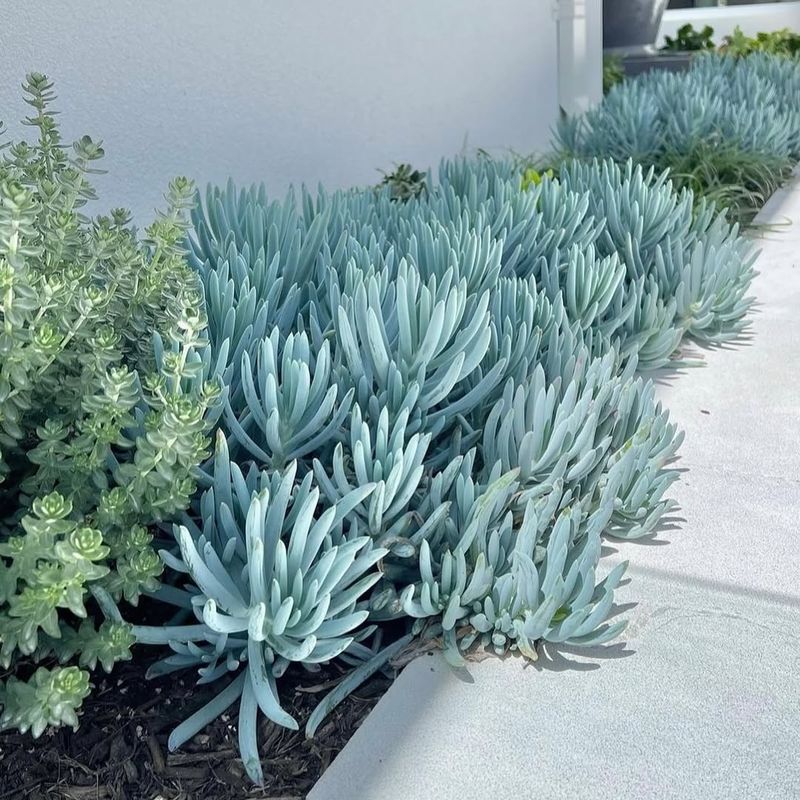
Few groundcovers pull off a modern look as effortlessly as Blue Chalksticks. Those pale, blue-gray cylindrical leaves spread low across the ground and create a color contrast that looks intentional and clean, especially against white or light-colored gravel.
In Arizona, Blue Chalksticks works well in the gaps between pavers or along the edges of a flagstone entry path. The low profile keeps sightlines open while still filling space that would otherwise be bare soil or gravel.
It softens hard edges without creating visual clutter.
One thing to keep in mind is drainage. Blue Chalksticks does not tolerate soggy roots, and Arizona clay soils can hold water longer than this plant prefers.
Amend the planting area with coarse sand or plant it in raised beds or mounded areas where water drains away quickly.
Watering every ten to fourteen days in summer is usually enough. During Arizona winters, natural rainfall often covers the plant’s needs entirely.
Cut back any leggy growth in early spring to encourage fresh, compact new growth closer to the base.
Blue Chalksticks spreads gradually by sending out new rosettes from the base, so a small initial planting will fill in over time. Start with several plants spaced about a foot apart for faster coverage.
The color payoff is strong once the planting fills in, and the water demand stays minimal throughout the year.
7. Add Ocotillo For Height And A Striking Desert Accent
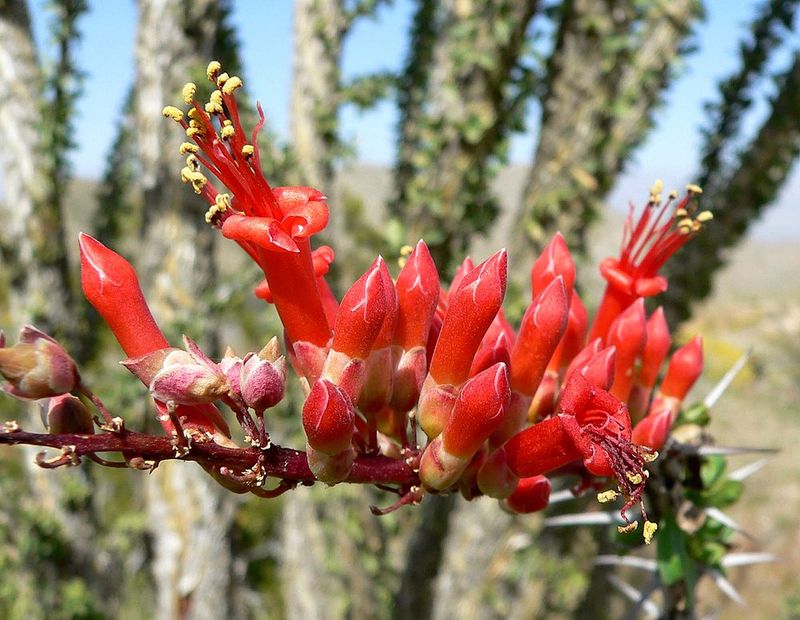
Nothing else in the Arizona plant palette looks quite like Ocotillo. Those long, spiny canes rising eight to fifteen feet in the air create a vertical element that draws the eye upward and makes an entry path feel like it belongs somewhere special.
Red flowers appear at the tip of each cane after rainfall or irrigation, usually in spring and sometimes again in summer. The display only lasts a few weeks, but the sculptural cane structure holds visual interest the rest of the year even when the plant appears dormant.
Ocotillo loses its small leaves during dry periods, which surprises people who are new to Arizona gardening. That leaf drop is a normal drought response, not a sign that something is wrong.
Leaves return quickly after rain or a deep watering session.
Plant Ocotillo in full sun with excellent drainage. Rocky or sandy native soil suits it well.
Avoid planting it near irrigation zones for other plants since excess water can cause the base to soften and weaken over time.
Position it as a corner anchor at the start of a long entry path rather than in the middle of a border. The height and open structure make it a natural focal point when placed intentionally.
Two Ocotillos flanking a gate or entry post create a dramatic framing effect that few other plants can replicate at this water budget.
8. Use Lantana For Long-Lasting Color With Very Little Water
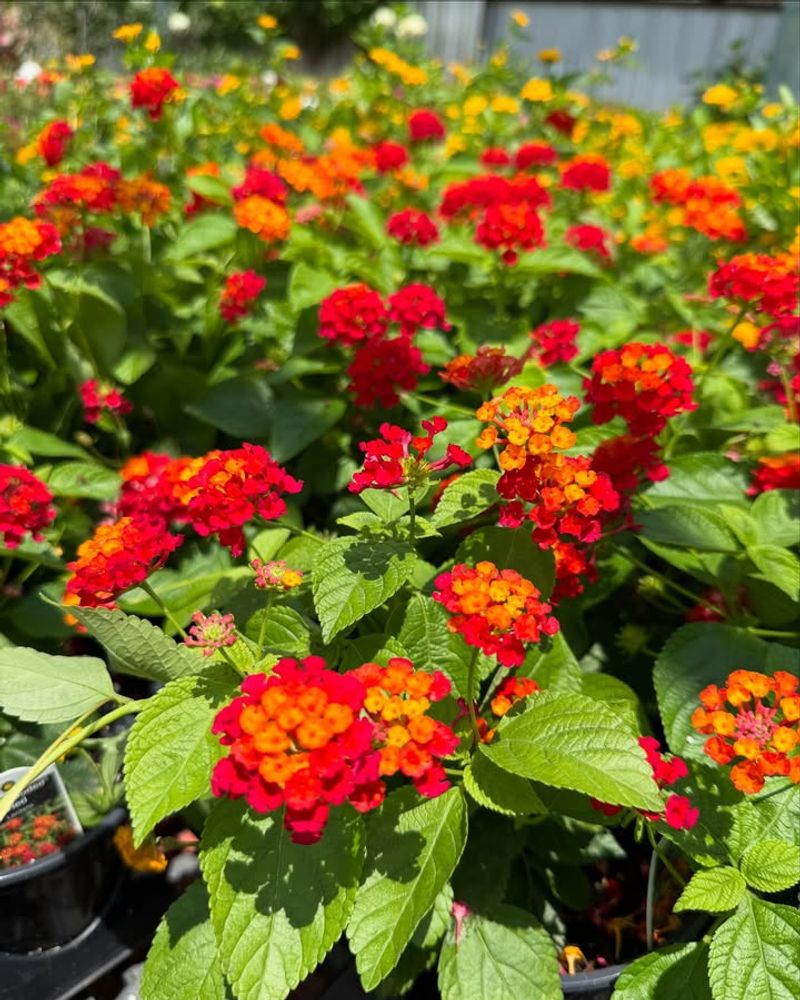
Lantana blooms from spring straight through fall in Arizona, and the color range is hard to beat. Yellow, orange, red, pink, purple — sometimes all on the same plant at once.
Along an entry path, that kind of sustained color signals a well-tended yard without demanding daily attention.
Heat is actually where Lantana thrives. Temperatures that stress other flowering plants tend to push Lantana into heavier bloom.
Phoenix summers that reach 110 degrees rarely slow it down, which makes it a reliable performer when other options have gone dormant or look ragged.
Trailing varieties work well as a low border along path edges, while upright varieties fill in as small shrubs that reach two to four feet tall. Mixing both forms along a longer entry path adds variety and keeps the eye moving from one section to the next.
Water deeply once a week during the hottest summer stretches, then reduce to every ten to fourteen days as temperatures cool in September and October.
Lantana handles brief dry spells without much visible stress, though consistent watering during peak heat produces the most flowers.
Cut plants back by about one-third in late winter before new growth starts. That light pruning encourages a fuller shape and stronger bloom production through the coming season.
Skip the pruning and Lantana tends to get leggy and open in the center, which reduces the impact along the path edge.