How To Propagate Rosemary From Cuttings In Michigan (Step By Step)
Rosemary is one of those plants that looks impressive in a garden but has a reputation for being finicky, especially in a state like Michigan where winters can be brutally cold. Here is something most gardeners do not realize though.
Propagating your own rosemary from cuttings is actually one of the easier herb projects you can take on, and it costs almost nothing.
Instead of buying new plants every season, you can multiply what you already have and keep fresh starts growing indoors through the colder months.
The process does not require any fancy equipment or special skills, just a healthy parent plant, a few basic supplies, and a little patience.
Michigan gardeners have a slightly shorter outdoor window to work with compared to warmer states, so knowing the right timing and technique makes a real difference.
This step by step guide walks you through exactly how to take cuttings, get them rooting, and grow rosemary plants strong enough to survive and produce all season long.
1. Take Your Cuttings In Late Spring After Last Frost Risk Has Passed
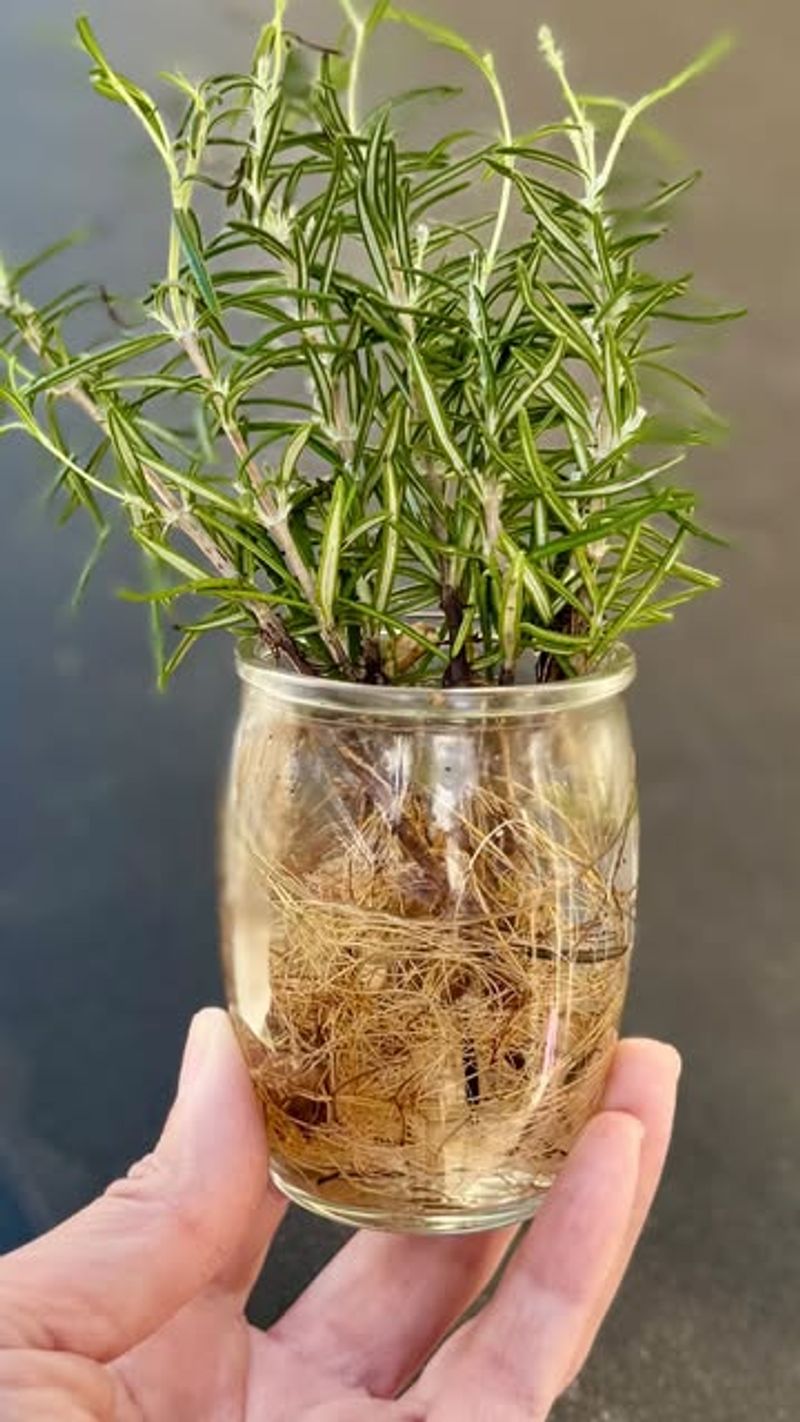
Memorial Day weekend in Michigan is the sweet spot for taking rosemary cuttings.
By this point in late May, frost risk has mostly passed across most of the state, and the rosemary plant has pushed out plenty of fresh, soft new growth that roots far more reliably than older woody stems.
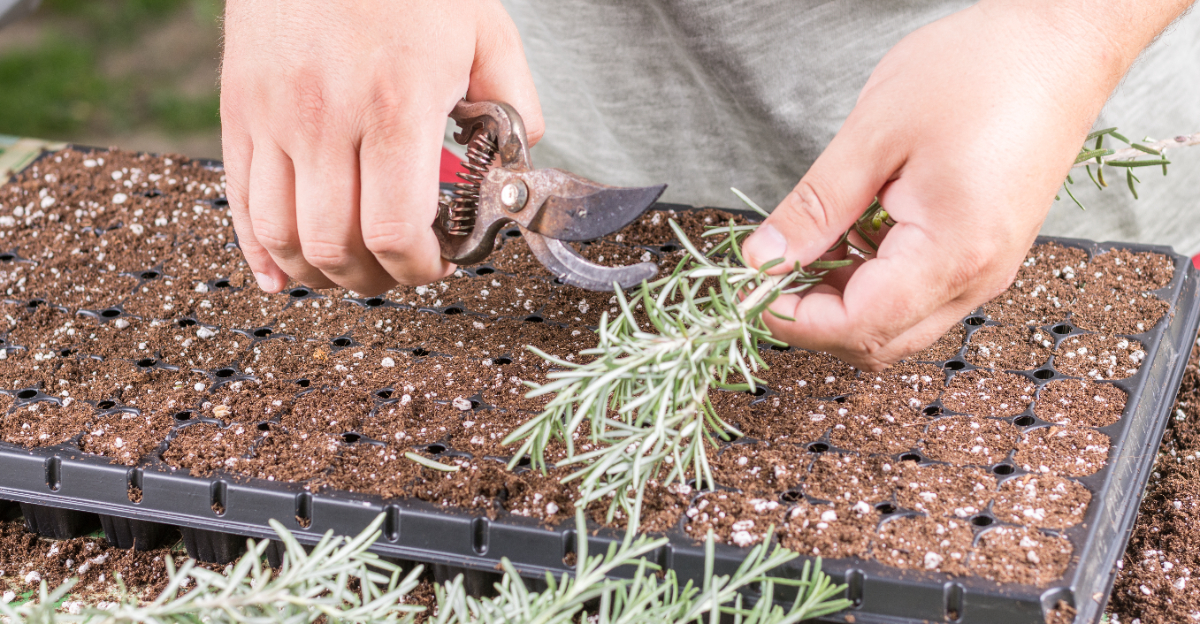
Timing this step correctly gives your cuttings the best possible start. Look for stems that are green, flexible, and about four to six inches long. Avoid anything brown and stiff, because woody growth roots slowly and inconsistently, even with hormone help.
The soft tips of the plant are where the rooting magic happens, so focus your cuts there and leave the older growth alone.
Use clean, sharp scissors or pruning shears wiped down with isopropyl alcohol before you cut. This simple habit prevents the transfer of any disease from blade to stem.
Make your cut just below a leaf node, which is the small bump where a leaf meets the stem, because roots tend to form most easily at these points. Michigan gardeners who nail this first step set themselves up for strong results through the rest of the process.
2. Strip The Bottom Two Inches And Leave Only The Top Leaves
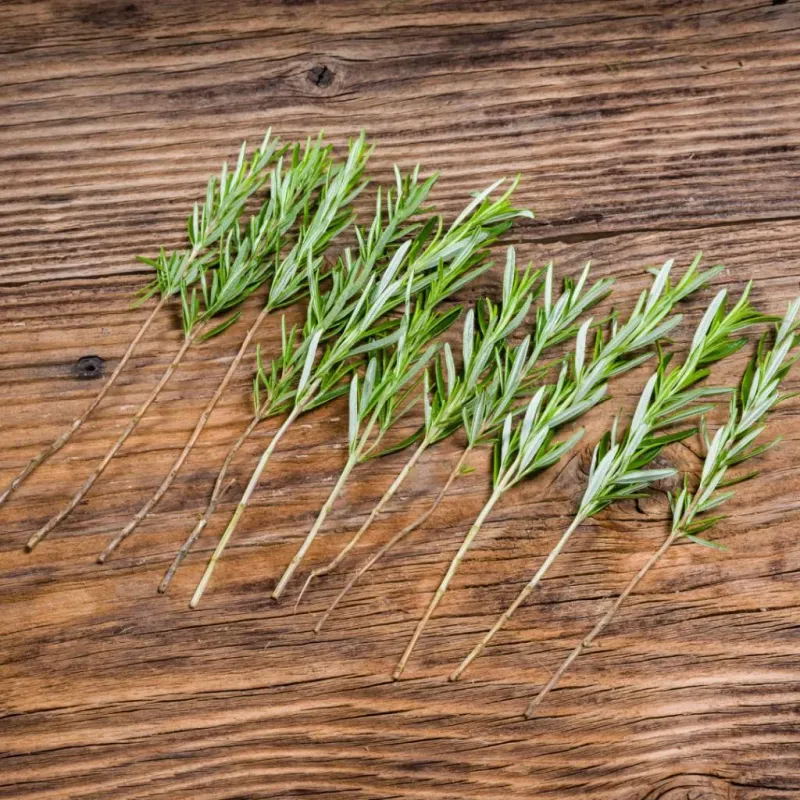
Right after you take your cuttings, grab each one and strip all the leaves off the bottom two inches of the stem. This step takes about thirty seconds per cutting, but skipping it causes real problems down the road.
Leaves buried in the rooting mix break down quickly, and that decomposing organic matter creates the perfect environment for fungal rot to spread through your mix.
Michigan summers are naturally humid, especially from late June through August, which means moisture management around buried plant material matters even more here than it would in a drier state like Arizona.
The combination of humidity and buried leaves can turn a healthy cutting into a rotted one within a week or two if you are not careful.
Your Michigan Garden Changes Every Week. Your Plan Should Too.
Gardening in Michigan changes quickly throughout the season. Every Friday you’ll receive a simple weekly plan showing exactly what to plant, prune, fertilize, harvest, and protect so you never miss the right timing.
Once you have stripped the bottom clean, you should have a bare stem below and a small cluster of leaves at the very top. That cluster is important because the leaves continue photosynthesizing and feeding the cutting while it works on producing roots.
Keep the top leaves intact and healthy. Handle the stripped stem gently so you do not bruise or crush the tissue, since any damage at this stage can slow rooting or invite disease. A little care here pays off in a big way later.
3. Use A Light Well-Draining Rooting Mix, Not Garden Soil
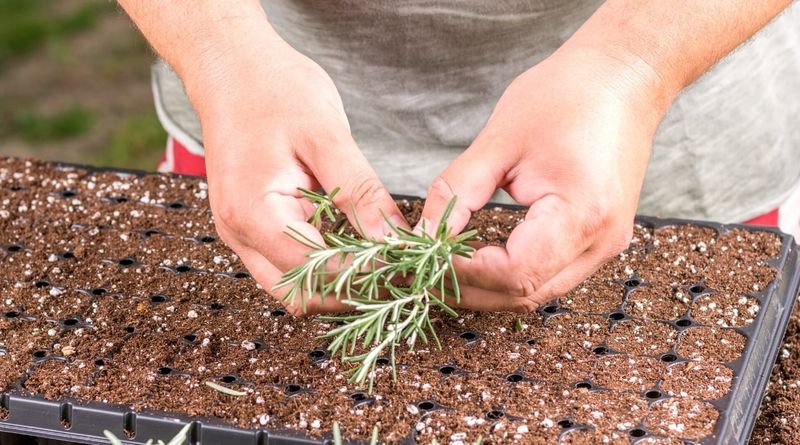
Rosemary roots need air almost as much as they need moisture, and heavy soil completely blocks that airflow. Michigan garden soil, even the best amended backyard mix, holds far too much water for unrooted cuttings.
Potting mix alone is also too dense and moisture-retentive at this early stage. Neither option gives the cutting what it actually needs to push out roots.
A 50/50 blend of perlite and coarse sand is one of the most reliable and budget-friendly rooting mediums you can put together at home. Commercial cactus and succulent mixes also work extremely well since they are designed for exactly the kind of fast drainage rosemary prefers.
Either option keeps the root zone airy, which is the key condition rosemary roots respond to during early development.
Fill small pots or cell trays with your chosen mix before inserting the cuttings. Moisten the mix slightly before you begin so it holds together around the stem without being soggy.
You want it to feel barely damp when you squeeze a handful, not wet. In Michigan, where summer humidity already adds ambient moisture, starting with a slightly drier mix is actually smarter than going in too wet.
Getting the medium right from the start removes one of the biggest variables that causes cuttings to fail.
4. Rooting Hormone Helps But Is Not Required
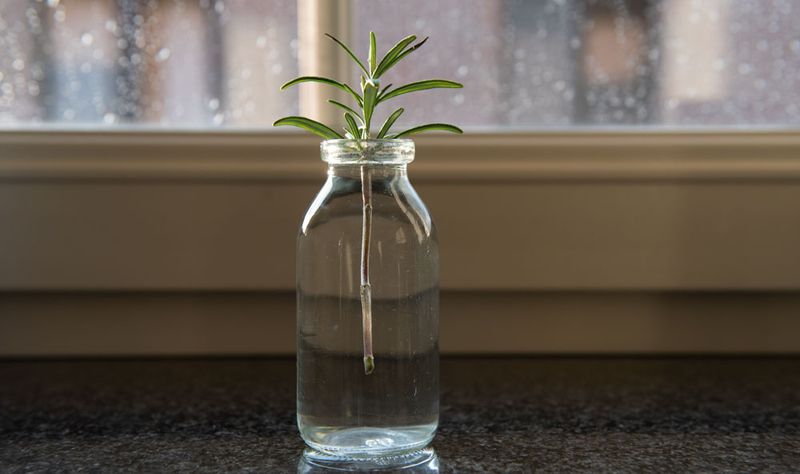
Powdered rooting hormone is one of those products that genuinely earns its place on the potting bench.
The active ingredient, indole-3-butyric acid, is sold under brand names like Rootone and Bonide, and it signals the cutting to begin producing root cells faster than it would on its own.
For Michigan gardeners, speed matters because the outdoor warm season is shorter here than in southern states.
Getting roots established quickly means your cutting has more time to grow strong before September rolls around and you need to think about bringing plants indoors.
A cutting that takes eight weeks to root instead of five weeks has noticeably less time to develop before Michigan’s first frost window arrives. That time difference is small but meaningful in a state where fall comes fast.
To use rooting hormone correctly, dip just the stripped tip of the stem into the powder and then tap it gently against the container to knock off any excess. Too much powder can actually slow rooting rather than help it, so a light coating is the goal.
Then immediately insert the dusted tip into your pre-moistened rooting mix. Rosemary will absolutely root without hormone, so do not stress if you do not have it on hand, but having it in your toolkit is a smart move for Michigan propagation success.
5. Keep Cuttings In Bright Indirect Light, Not Direct Sun, While Rooting
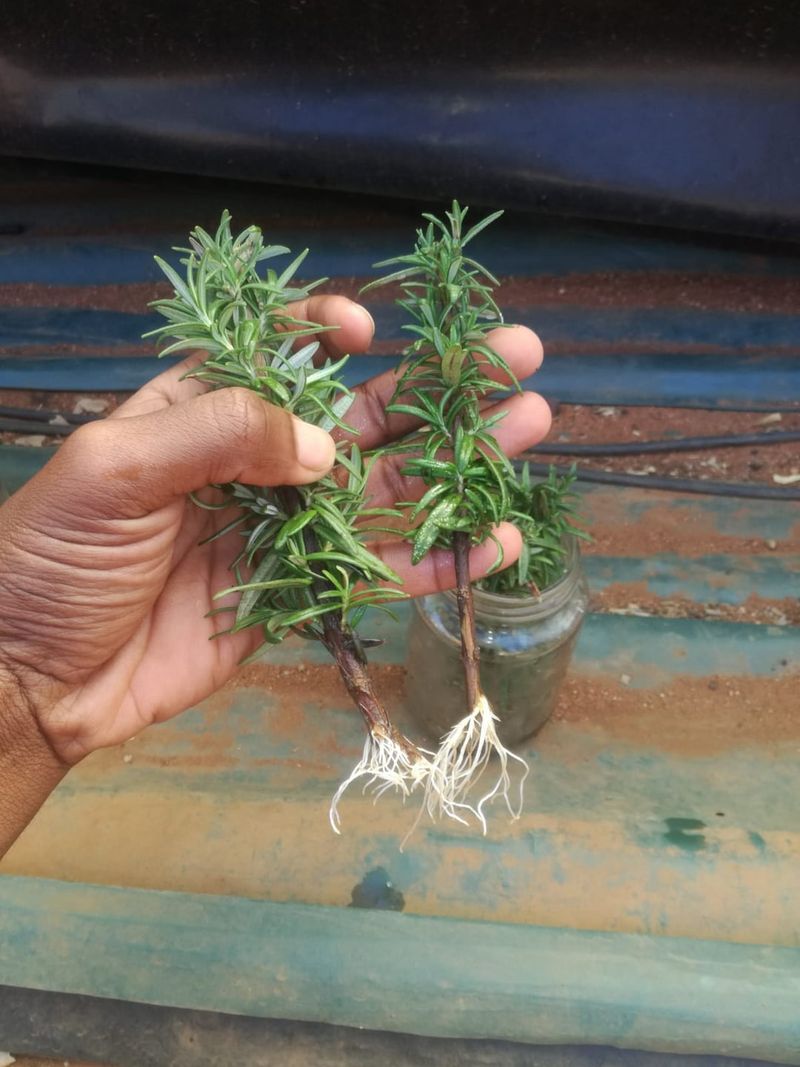
Unrooted cuttings are in a vulnerable spot, they have leaves that actively lose moisture but no root system yet to pull water up from the soil. Put that cutting in direct afternoon sun and the leaves will pull moisture out faster than the bare stem can supply it.
The result is a wilted, stressed cutting that spends its energy surviving rather than producing roots.
Bright indirect light is the sweet spot during the rooting phase. In Michigan during June and July, a covered porch, a north-facing window, or a spot that gets morning sun and afternoon shade all work beautifully.
These conditions give the cutting enough light energy to stay alive and photosynthesize without the brutal moisture drain that full direct sun creates during the hottest part of the day.
Once roots are established, usually around the four to six week mark, the plant becomes much more capable of handling stronger light. You can begin gradually moving it into more direct sun at that point, but do not rush it.
Think of the rooting phase as a quiet recovery period where the cutting is doing enormous work underground that you simply cannot see yet.
Give it the calm, bright conditions it needs and it will reward you with a strong root system that sets the stage for healthy growth through Michigan’s summer season.
6. Mist The Leaves But Do Not Waterlog The Rooting Mix
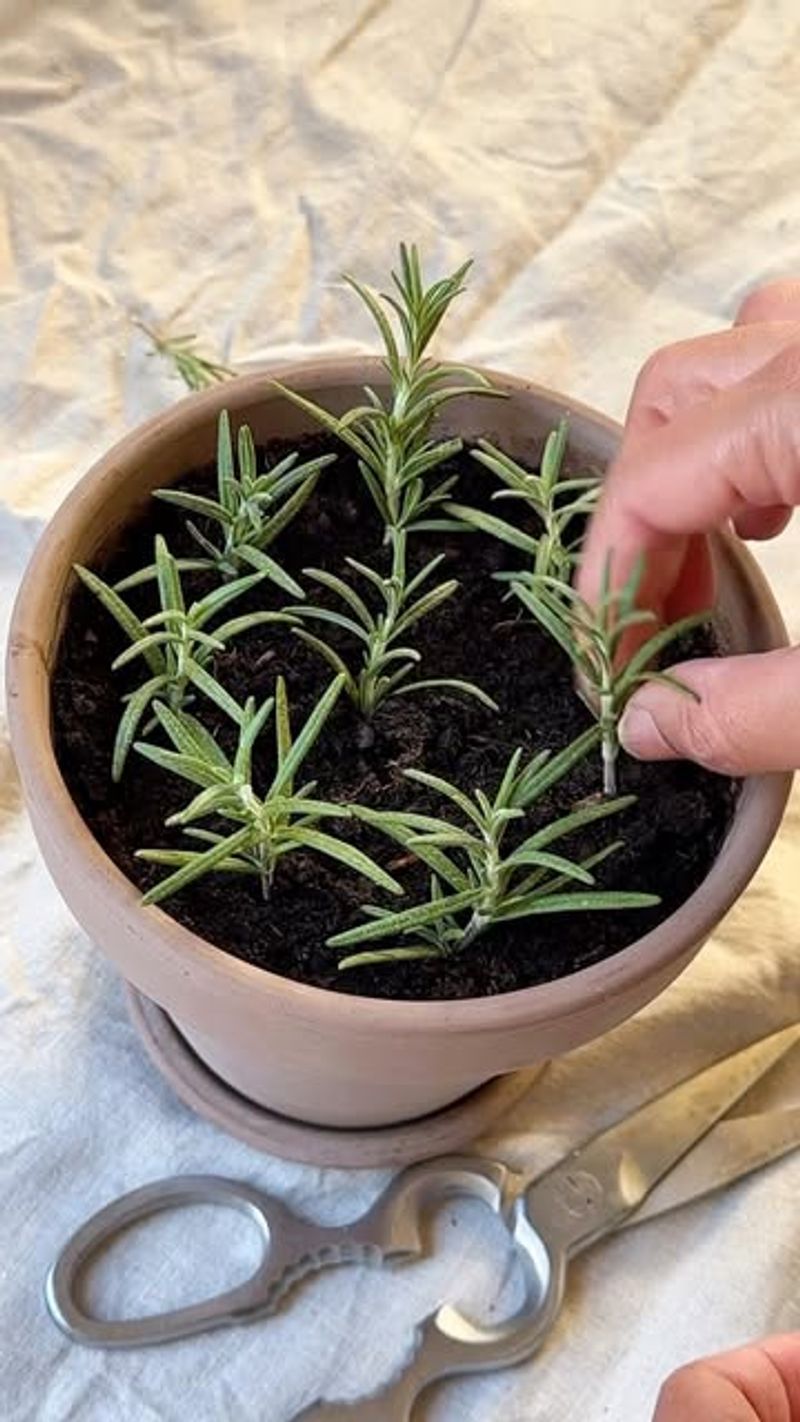
Watering rosemary cuttings is genuinely a balance act, and getting it wrong in either direction causes failure. Too dry and the cutting wilts and cannot sustain itself long enough to root.
Too wet and the stem rots before roots ever have a chance to form. Michigan’s naturally humid summer air actually helps here, because the ambient moisture reduces how quickly the leaves dry out between mistings.
Misting the foliage lightly once or twice a day with a small spray bottle is all you need to keep the leaves hydrated without soaking the rooting mix below. Think of misting as a supplement to humidity, not a substitute for proper soil moisture management.
Before you water the mix itself, stick your finger about an inch deep into the medium. If it still feels damp, skip the watering and come back tomorrow.
Overwatering is by far the most common reason rosemary cuttings fail, and it is an especially easy mistake to make in Michigan during July and August when the air feels heavy and moist.
That ambient humidity fools gardeners into thinking the mix is drying out faster than it actually is.
Trust your finger test over your eyes, because the surface of a rooting mix can look dry while the interior is still holding plenty of moisture. Stay patient and keep things just barely damp.
7. Check For Roots After Four To Six Weeks With A Gentle Tug Test
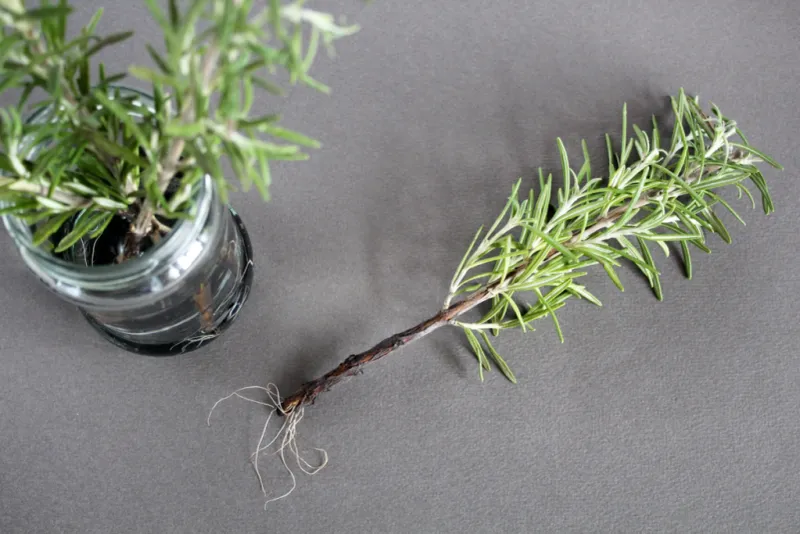
Four to six weeks after inserting your cuttings, it is time to check whether rooting has happened. The best way to do this without causing any damage is the tug test, which is exactly what it sounds like.
Grip the stem gently between two fingers and give it the lightest possible upward pull. If the cutting resists and holds firm in the mix, roots have formed and anchored it in place.
If the cutting pulls out easily with no resistance, it is still working on rooting or may not have taken at all. Set it back in the mix, firm the medium gently around the stem, and give it another week or two before testing again.
Some cuttings simply take longer than others, and Michigan’s summer temperatures can slightly affect rooting speed depending on where you have the pots positioned.
Never unpot a cutting to visually inspect the roots during this phase. Those early roots are extremely fragile, almost hair-like, and disturbing them can set the cutting back significantly or break them off entirely.
The tug test gives you all the information you need without any of the risk. Once you feel that reassuring resistance, move the cutting to a slightly larger pot with a standard well-draining potting mix and begin introducing it to more direct light over the next one to two weeks.
8. Harden Off Rooted Cuttings Before Full Outdoor Exposure

Rooted cuttings that have been growing in a sheltered porch or indoor spot have no experience with full outdoor conditions. Wind, direct sun, and temperature swings are all stressors that a recently rooted plant needs time to adjust to.
Skipping the hardening off step and moving cuttings straight from a protected spot to full outdoor exposure is a fast way to undo weeks of careful work.
Start by setting the pots outside in a protected location for just two to three hours on the first day. A spot with dappled shade or morning light only is ideal for these first outings.
Bring the pots back inside or under cover for the rest of the day. Over the following one to two weeks, gradually increase the time outside and the intensity of light exposure until the plants are spending full days outdoors comfortably.
Michigan’s summer wind is often underestimated as a plant stressor. Even on mild days, a steady breeze pulls moisture from leaves quickly and can physically stress stems that are not yet accustomed to movement.
Hardening off builds physical resilience in the stems alongside light and temperature tolerance.
The whole process takes less than two weeks and feels almost too simple, but it genuinely prevents the kind of setback that sends gardeners back to square one right in the middle of Michigan’s growing season.
9. Bring Them Indoors Before Michigan’s First Frost And This Is Non-Negotiable
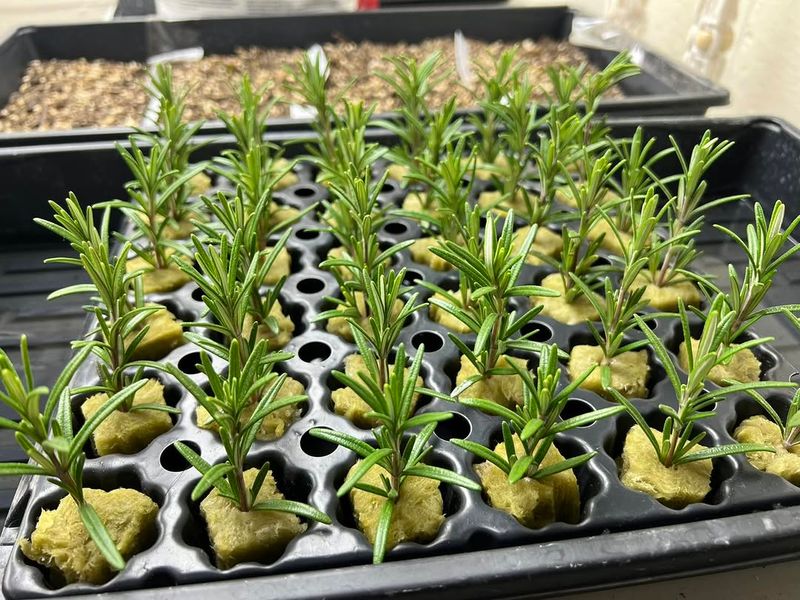
Michigan’s first fall frost typically arrives somewhere between late September and mid-October, depending on whether you are in the Upper Peninsula or closer to the Indiana border.
Rosemary is a Mediterranean herb that simply cannot handle freezing temperatures when grown in containers, and most Michigan planting zones are too cold for it to survive winter in the ground.
Getting plants inside before that first frost night is absolutely essential. Watch nighttime forecasts starting in mid-September and plan to move your rosemary indoors before temperatures drop below 40 degrees Fahrenheit at night.
A south-facing window that receives at least six hours of direct indoor light daily is the minimum requirement for keeping rosemary alive through a Michigan winter.
If your window situation is limited, a simple LED grow light set on a timer for 14 hours a day makes a dramatic difference in how well the plant holds up through the dark months.
Indoor winter care for rosemary means pulling back on watering significantly since the plant grows much more slowly in low light and cool indoor temperatures.
Let the top inch of soil dry out before watering again, but never let the entire pot go completely dry for extended periods.
Good air circulation around the plant also helps prevent powdery mildew, which is a common indoor issue during Michigan’s long winters. A small fan running nearby on low does the job perfectly.
10. Start New Cuttings Each Spring From Your Overwintered Plant And Build Your Stock
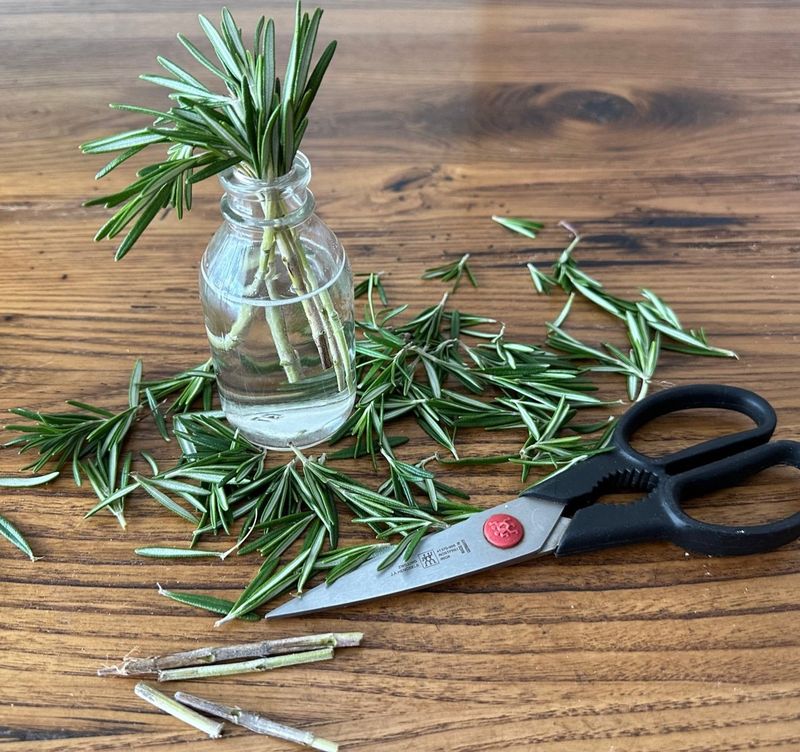
One overwintered rosemary plant is genuinely worth its weight in gold for a Michigan gardener. Every spring, right around Memorial Day, that same plant pushes out fresh soft growth that is perfect for taking new cuttings.
You can repeat the entire propagation process year after year from a single mother plant, steadily expanding your collection without spending a dollar on new plants from the nursery.
Over two to three seasons, a single overwintered rosemary can supply enough cuttings to fill multiple containers, stock a kitchen herb garden, and still have extras to share with neighbors or friends who want to try growing their own.
There is something genuinely satisfying about handing someone a rooted cutting you grew yourself, especially when they come back the following summer to tell you how well it is doing.
Taking cuttings in spring also benefits the mother plant by encouraging it to branch out and grow fuller rather than getting tall and leggy after its winter indoors.
Treat each spring cutting session as a light pruning and the plant responds with vigorous new growth heading into Michigan’s warm season.
This sustainable cycle of overwintering and re-propagating is one of the smartest habits a Michigan herb gardener can build. Once you start, you will never need to buy rosemary at the store or the nursery again.