7 Plants You Should Never Grow Near Rosemary In Ohio
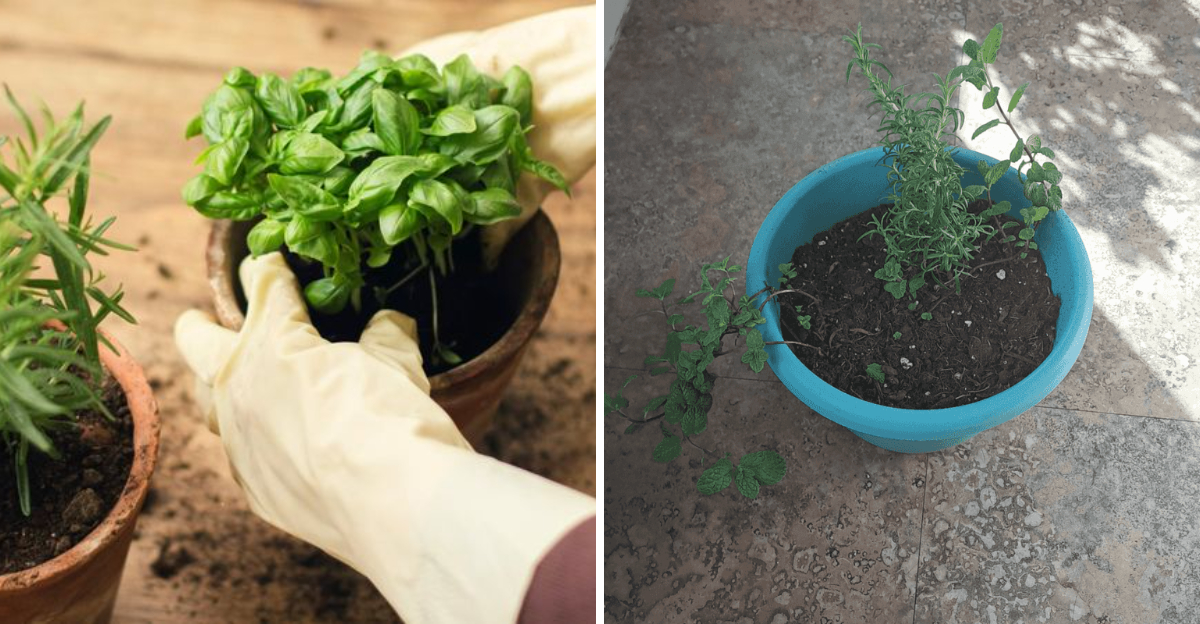
That cute mixed herb pot at the garden center can be a trap. Rosemary looks right at home tucked beside basil, parsley, mint, and dill, but the roots tell a different story.
One plant wants steady moisture. Another wants cool spring weather.
Mint wants the whole pot. Rosemary just wants sun, airflow, sharp drainage, and soil that does not stay wet for long.
See the problem? Ohio makes that mismatch even trickier.
Spring rain lingers, clay soil holds water, summer humidity slows drying, and winter can turn rosemary into a container plant that needs special treatment. Put it beside herbs that need richer soil or more frequent watering, and you are stacking the deck against it.
This does not mean rosemary has garden enemies. It means some plants belong nearby in separate pots, not shoulder to shoulder in the same container.
Get the spacing and watering zones right, and rosemary has a much better shot.
1. Keep Basil Away From Rosemary’s Dry Soil
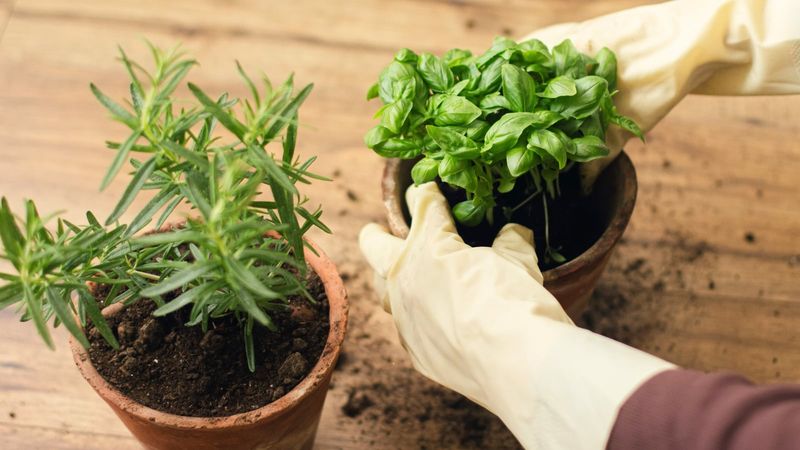
Buying a mixed herb pot at a farmers market feels smart and convenient, but tucking basil right next to rosemary in the same container is one of the most common mistakes Ohio patio gardeners make. Both herbs love a sunny spot, so it seems like a natural match.
The problem shows up the moment you try to water them together.
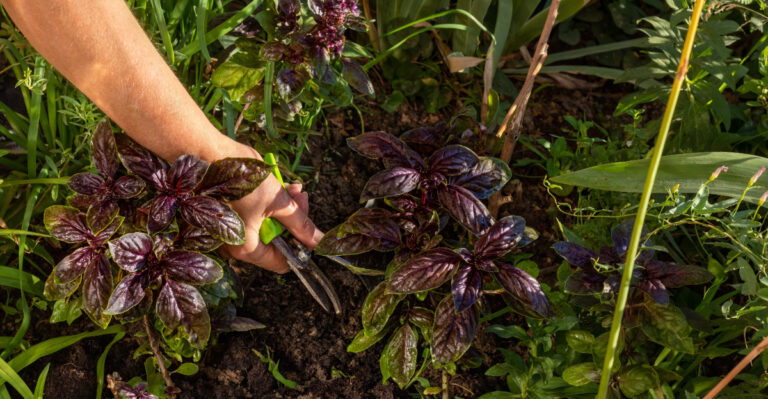
Basil is a warm-weather annual that wants consistently moist, compost-rich soil to stay lush and productive. Rosemary, on the other hand, prefers lean soil that drains fast and dries out between waterings.
If you water the pot often enough to keep basil happy, rosemary sits in soggy soil and its roots can suffer. If you hold back water to suit rosemary, basil wilts, stalls, and loses its flavor.
Ohio summers can be humid, which helps basil a little, but rosemary needs airflow and dry conditions around its roots and stems. Crowding them together in a container reduces that airflow and creates a damp microclimate that rosemary does not handle well.
Basil also benefits from regular feeding with a balanced fertilizer, while rosemary prefers lean conditions with minimal fertilizing.
The practical fix is simple. Grow basil in its own summer pot with quality potting mix, a little compost worked in, and steady moisture.
Keep rosemary in a separate container with a gritty, fast-draining mix. Both plants will do far better when their individual needs are actually met.
You can still set the pots side by side on the same patio shelf for a beautiful and functional herb display.
2. Do Not Pair Mint With Rosemary In One Pot
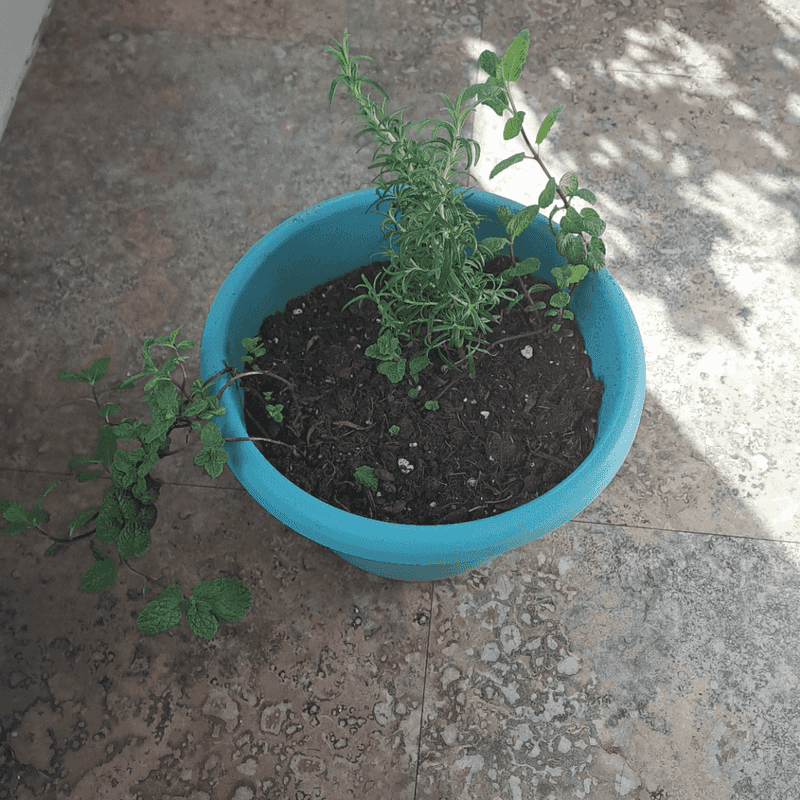
Mint has a personality that is hard to ignore. It smells amazing, it grows fast, and it will absolutely take over every inch of space you give it.
That aggressive spreading habit is exactly why mint and rosemary should never share a container in an Ohio garden.
In a shared pot, mint can spread its roots quickly, crowding out rosemary and competing for whatever nutrients and space are available. Beyond the root competition, the watering conflict is just as serious.
Your Ohio Garden Changes Every Week. Your Plan Should Too.
Gardening in Ohio changes quickly throughout the season. Every Friday you’ll receive a simple weekly plan showing exactly what to plant, prune, fertilize, harvest, and protect so you never miss the right timing.
Mint prefers consistently moist soil and actually does well near water features or in shadier, damper spots. Rosemary needs the opposite: lean, dry, well-drained conditions with full sun and good airflow around its stems.
If you water the shared pot often enough to keep mint thriving, rosemary ends up sitting in wet soil, which is one of the fastest ways to stress the plant in Ohio’s already humid summers.
The soil never fully dries out, and rosemary responds poorly to that kind of prolonged moisture around its root zone.
Mint is best grown in its own container in Ohio gardens, and that is actually great advice for a different reason. Planted directly in the ground, mint can spread far beyond where you originally put it, turning into a persistent garden management challenge.
Keeping it in its own pot gives you full control over where it grows and how much water it gets. Rosemary, meanwhile, gets the dry, sunny, well-drained home it needs to stay healthy through Ohio’s unpredictable spring and summer weather patterns.
3. Separate Parsley From Rosemary’s Sunny Dry Spot
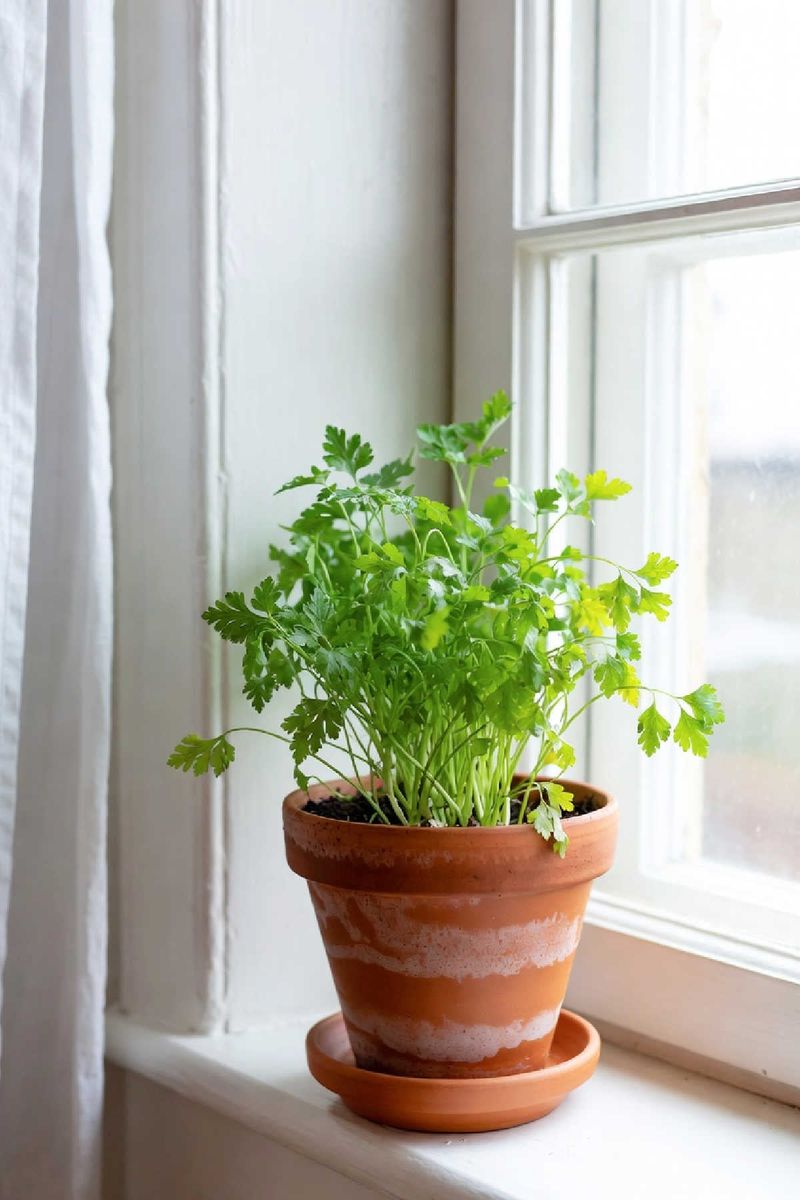
Parsley shows up in nearly every Ohio kitchen herb garden, and for good reason. It is versatile, easy to grow, and produces well from spring through fall.
The catch is that parsley’s growing preferences line up poorly with what rosemary actually needs.
Parsley grows best in rich, evenly moist soil. It appreciates consistent watering and benefits from soil that holds some moisture rather than draining away quickly.
Rosemary needs the opposite setup: lean, fast-draining soil that stays on the dry side between waterings. Planting them together in one pot or one cramped garden bed forces a compromise that usually works against rosemary.
Parsley is also a more flexible plant when it comes to light. It can handle some partial shade or cooler morning sun, especially in Ohio’s warmer months when afternoon heat can slow leaf production.
Rosemary, by contrast, wants as much direct sun as possible and does not appreciate shady or cool conditions around its base. Placing parsley nearby can create shade on rosemary’s lower stems if both plants are crowded together.
Another practical note: parsley is typically grown as a biennial or annual for its leaves, meaning it gets replanted regularly. Rosemary is a long-term woody plant that needs stable, consistent soil conditions.
Frequent soil disturbance from replanting parsley right next to rosemary can disturb rosemary’s root zone unnecessarily.
The straightforward solution is to give parsley its own container with richer potting mix and more consistent moisture, while rosemary stays in its own gritty, well-drained pot with full sun exposure all day.
4. Give Cilantro Its Own Cool Season Container
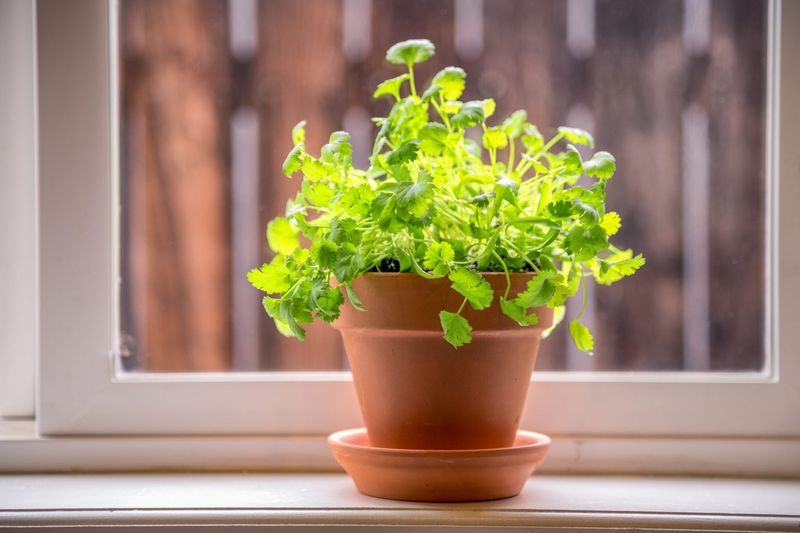
Cilantro is one of those herbs that does things on its own schedule, and that schedule does not match rosemary’s at all.
In Ohio, cilantro is a cool-season herb that performs best in spring or early fall when temperatures are mild and the air is not yet heavy with summer heat.
Rosemary, on the other hand, loves exactly the conditions that make cilantro bolt: warm temperatures, full sun, and dry air. When Ohio summers heat up, cilantro rushes to flower and go to seed, which is called bolting.
At that point, the leaves turn bitter and the plant stops producing usable foliage. Rosemary is just hitting its stride in that same summer heat, growing steadily and soaking up sun.
Putting cilantro and rosemary in the same container creates a short window of overlap in spring when temperatures are still cool, but it quickly becomes a mismatch. Cilantro prefers more moisture and cooler root temperatures than rosemary needs.
As spring turns to summer, you end up with one plant bolting and one plant that wants to keep growing in dry, warm conditions.
The smarter approach for Ohio gardeners is to grow cilantro from seed in its own dedicated container during spring and again in early fall. Succession sowing every two to three weeks keeps fresh leaves coming before the heat takes over.
This way, cilantro gets the cooler, moister conditions it needs, and rosemary gets to stay in its warm, dry, sunny setup without any seasonal conflict. Both herbs perform far better when grown on their own terms.
5. Keep Chives Out Of Rosemary’s Drier Mix
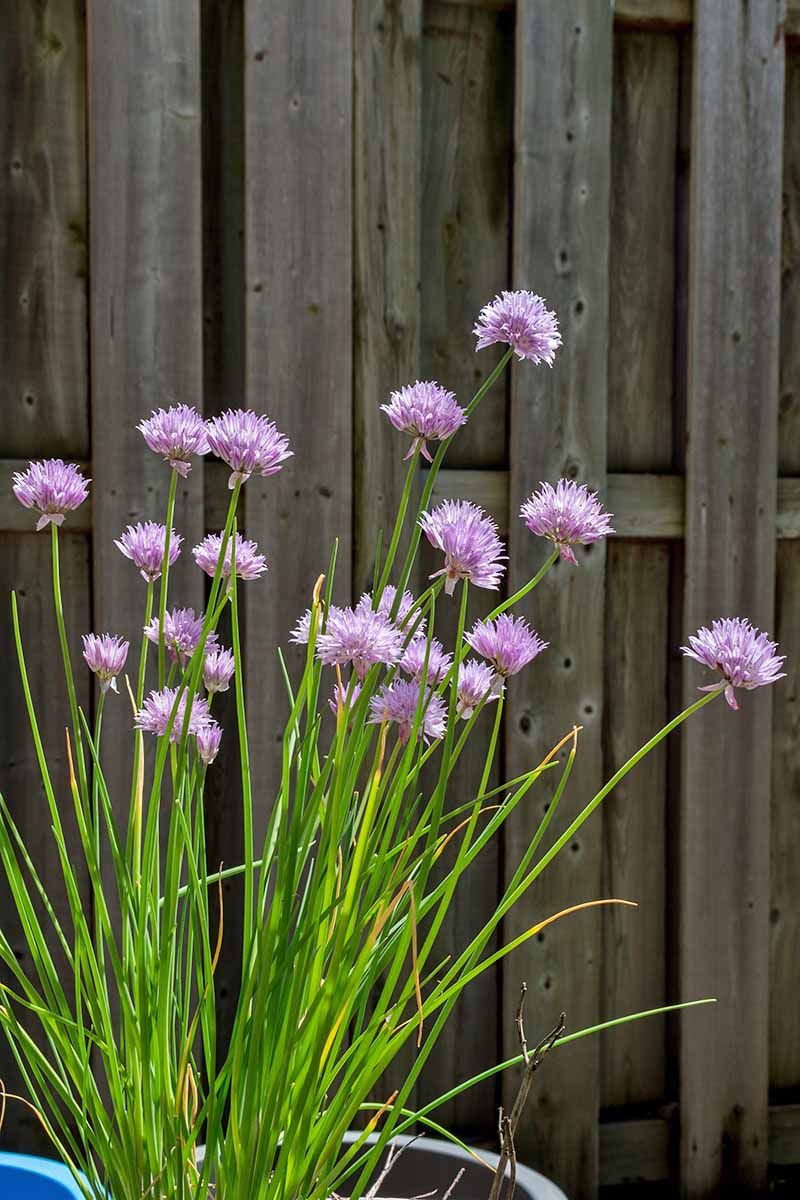
Chives are one of the toughest herbs you can grow in Ohio. They come back reliably every spring, handle cold temperatures well, and can thrive in a range of soil conditions.
That toughness is impressive, but it does not mean chives are a good close companion for rosemary in a shared container or tight garden bed.
Chives prefer soil that is a bit richer and holds more consistent moisture than rosemary tolerates well. They also do fine in Ohio winters as a hardy perennial, coming back from the roots year after year.
Rosemary, by contrast, is often treated as a tender perennial in Ohio. Many Ohio gardeners bring rosemary indoors for winter or grow it in containers that can be moved to a sheltered spot when temperatures drop hard.
Putting chives and rosemary in the same pot creates a watering mismatch over the long term. Chives need more regular moisture, especially during active growth in spring and early summer.
Rosemary needs that soil to dry out between waterings to stay healthy. Trying to meet both plants halfway usually means neither one gets exactly what it needs.
Chives can absolutely share a kitchen herb garden area with rosemary, just not the same container or the same cramped planting spot. Give chives their own pot with a quality potting mix and regular moisture.
They can sit right next to rosemary on the same patio or shelf if that is convenient for cooking. Keeping them in separate containers lets you adjust watering for each plant independently, which makes both herbs easier to manage through Ohio’s variable seasons.
6. Do Not Crowd Rosemary With Moisture Loving Dill
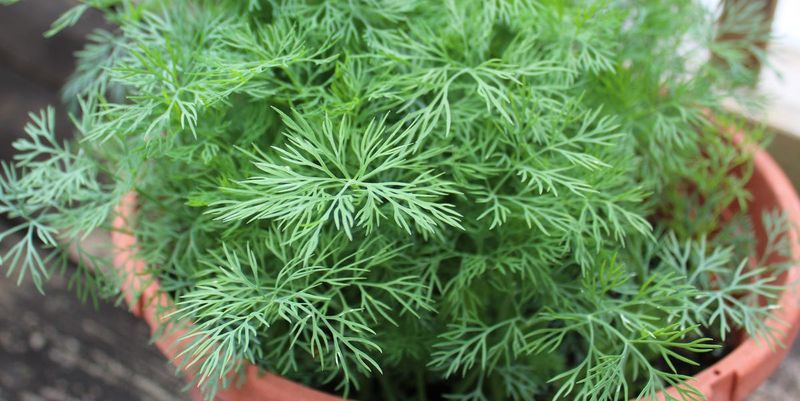
Dill grows fast. That is one of its best qualities for gardeners who want quick results, but it is also exactly why dill and rosemary make poor container companions.
In a shared pot or crowded bed, dill can shoot up quickly and start shading rosemary before you realize what is happening.
Rosemary needs as much direct sunlight as possible, especially in Ohio where cloudy spring days are common. Any plant that grows tall quickly and casts shade on rosemary’s lower stems and leaves works against that need.
Dill can reach two to four feet in height during a single growing season, which is a significant size difference when rosemary is still establishing itself in a pot or raised bed.
Beyond the light competition, dill prefers more even moisture than rosemary wants. Dill is typically grown as a cool-season or short-season annual in Ohio, often planted in spring for harvest before summer heat causes it to bolt and flower.
Its soil preferences and watering needs do not align with rosemary’s long-term, dry, well-drained setup. Trying to keep them in the same container means constantly navigating a watering conflict.
Dill is best started from seed directly in its own pot or garden bed, since it does not transplant well. Grow it in a separate spot with steadier moisture and room to stretch upward without crowding nearby plants.
Spring and early summer are the best windows for dill harvests in Ohio. Once dill flowers, let it go to seed for a second planting or harvest the seeds for cooking.
Rosemary does not need that kind of seasonal turnover, which is another reason they work better apart.
7. Pair Lavender With Rosemary Only In A Dry Raised Bed
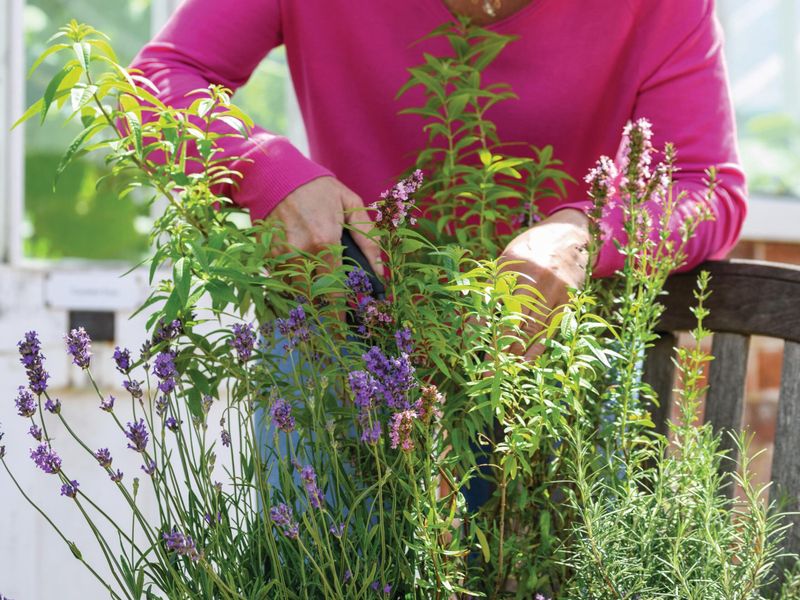
Lavender and rosemary look like a perfect pair on paper. Both are Mediterranean plants that love full sun, both prefer lean soil with excellent drainage, and both have woody stems that do not like sitting in wet ground.
In a dry climate or a well-built raised bed, they can actually grow near each other successfully.
The problem in Ohio is the soil and the weather. Heavy clay soil, which is common across much of Ohio, holds water far longer than either lavender or rosemary can handle comfortably.
Ohio springs bring extended wet periods, and summer humidity can stay high enough to slow the drying of soil around plant roots.
When you plant lavender and rosemary together in a standard Ohio garden bed with clay-heavy soil, both plants end up dealing with more moisture than either one prefers.
Poor drainage hurts lavender and rosemary in similar ways. Soggy roots, reduced airflow around the base of the plants, and lingering moisture can lead to root problems and stem issues for both.
Planting them together in a poorly drained spot just doubles the risk rather than spreading it out.
The good news is that lavender and rosemary can grow near each other in Ohio if the setup is right. A dry raised bed filled with a lean, fast-draining planting mix gives both plants the sharp drainage they need.
Perlite, pumice, fine gravel, or a cactus-style potting mix can help improve drainage in containers or raised beds. Separate containers with excellent drainage work well too.
Good airflow around both plants is essential, so avoid crowding them against fences or dense plantings. Get those conditions right, and lavender and rosemary can be genuinely good neighbors in an Ohio garden.