This Is Why Your Florida Tomatoes Split Before You Can Pick Them
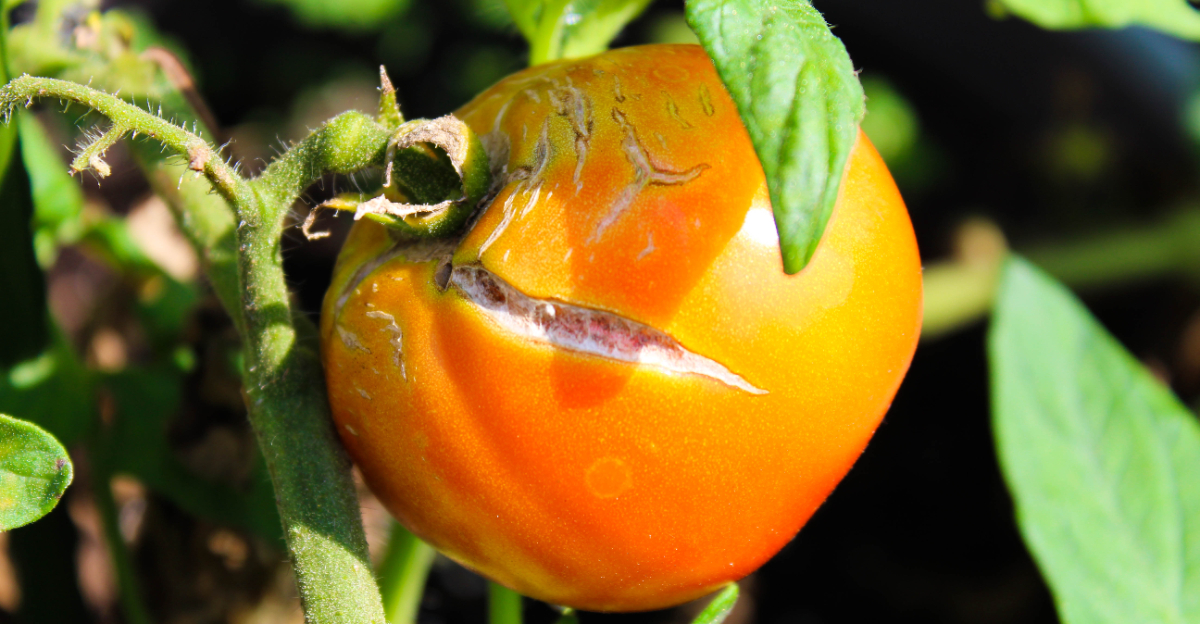
You wait, you watch, you brag a little too early, and then Florida weather pulls a fast one. That almost-perfect tomato cracks before it ever reaches the kitchen.
Sound familiar? Splitting is one of the most annoying tomato problems in Florida gardens, but it is not random bad luck.
It usually shows up right when the fruit looks ready, which makes the whole thing feel personal. One day the tomato is smooth and gorgeous.
The next day it looks like it lost a backyard brawl. Florida growers deal with this more than they should, especially in beds, pots, and summer gardens where conditions change fast.
The frustrating part is that the tomato often looks healthy until the damage appears. The helpful part?
Once you know the triggers, you can stop losing your best fruit at the finish line.
1. Heavy Rain Hits After Dry Weather
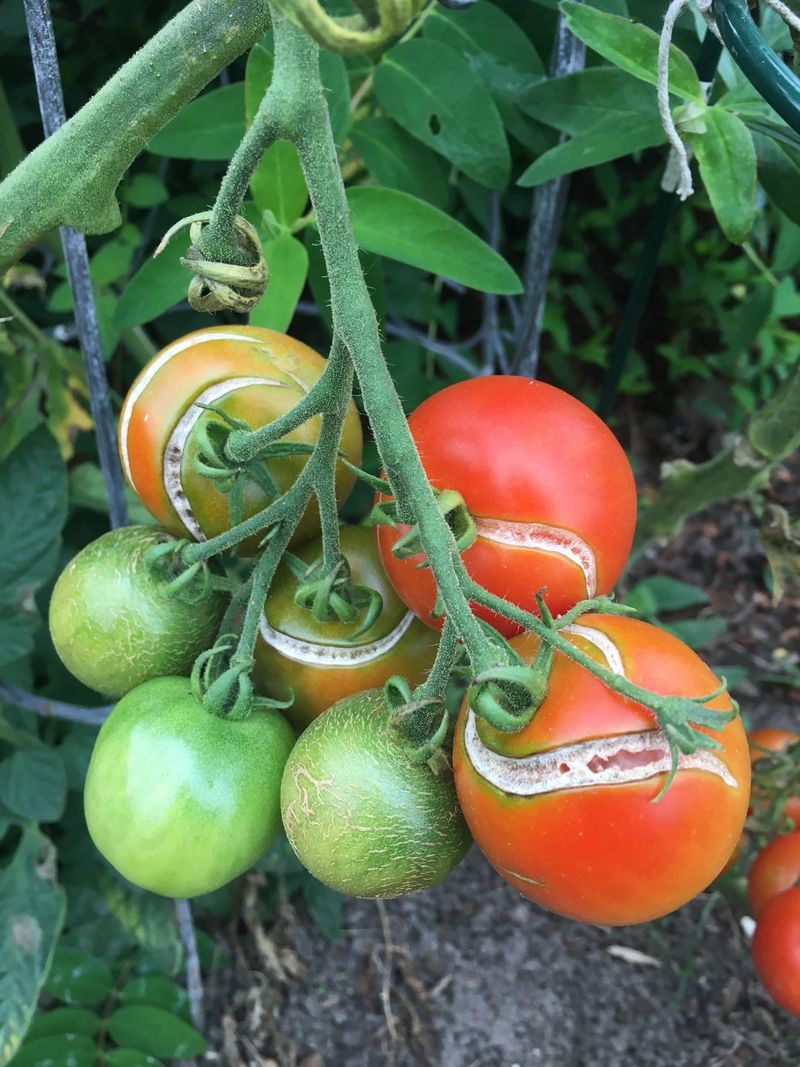
Picture this: your garden has gone a week without rain, the soil is dry and pulling away from the edges of your bed, and then a Florida afternoon storm rolls in and drops two inches of rain in an hour. That one event is enough to split nearly ripe tomatoes right off the vine.
According to UF/IFAS, sudden uptake of water after a dry period causes the inside of the fruit to expand rapidly, faster than the skin can stretch to keep up. The result is cracking, and it can happen overnight.
Florida’s weather makes this especially tricky. Dry stretches in spring and fall can fool gardeners into thinking the weather has settled, and then a strong storm system moves through and soaks everything.
Tomatoes that are already sizing up or starting to turn color are the most vulnerable at that point. The fruit is full, the skin is tight, and there is simply no room left to absorb a sudden surge of water.
Keeping soil moisture as steady as possible is your best defense. Mulch is one of the most effective tools for this.
A thick layer of straw, pine needles, or wood chips slows evaporation between waterings and softens the impact of heavy rain hitting the soil. UF/IFAS recommends mulching tomatoes to help regulate soil moisture in Florida’s sandy soils.
Improving drainage in your beds also helps by preventing water from pooling around roots after a storm. Check the forecast when your tomatoes are close to ripening.
If heavy rain is coming and fruit is nearly ready, consider harvesting early and letting them finish ripening inside.
2. Your Watering Schedule Is Too Uneven
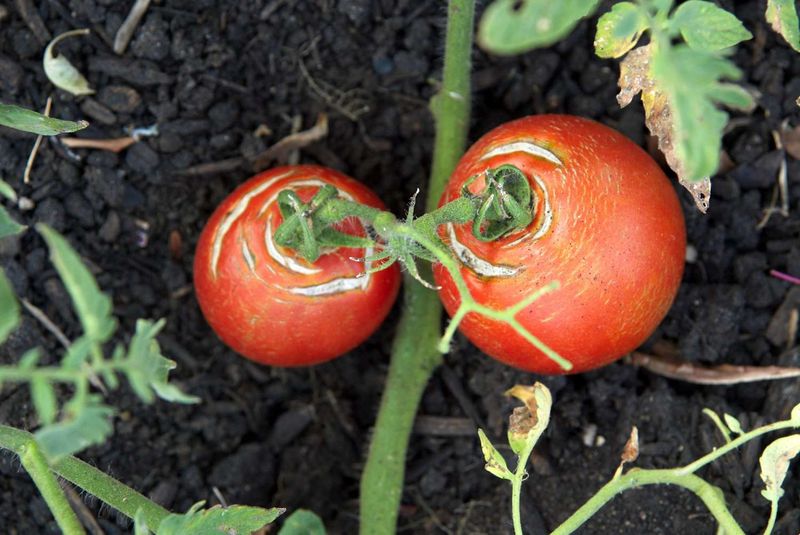
Hand-watering tomatoes a little on Monday, skipping Wednesday because you got busy, and then giving them a long soak on Friday is a recipe for cracked fruit. Inconsistent watering creates the same moisture swings that a dry spell followed by heavy rain does.
The plant roots pull in a large amount of water all at once after being stressed, and the fruit expands faster than the skin can handle.
UF/IFAS Extension guidance on tomato production emphasizes that consistent moisture throughout the growing season is critical for reducing fruit cracking.
Your Florida Garden Changes Every Week. Your Plan Should Too.
Gardening in Florida changes quickly throughout the season. Every Friday you’ll receive a simple weekly plan showing exactly what to plant, prune, fertilize, harvest, and protect so you never miss the right timing.
Florida gardeners growing in raised beds, grow bags, or patio containers face this challenge more than most. Those setups dry out faster than in-ground beds, especially during warm weather.
Checking soil moisture before you water, rather than watering on a fixed schedule or whenever you remember, makes a real difference. Stick your finger two inches into the soil.
If it feels dry at that depth, it is time to water. If it still feels moist, wait another day.
Drip irrigation and soaker hoses are worth considering if you are serious about growing tomatoes in Florida. They deliver water slowly and directly to the root zone, which keeps moisture levels more stable than overhead watering does.
If drip irrigation is not an option, watering deeply and less frequently is better than watering lightly every day. Deep watering encourages roots to grow further down into the soil where moisture is more consistent.
Steady, even moisture matters most while the fruit is actively sizing up, which is the window when splitting is most likely to happen.
3. Florida Heat Dries Out The Soil Fast
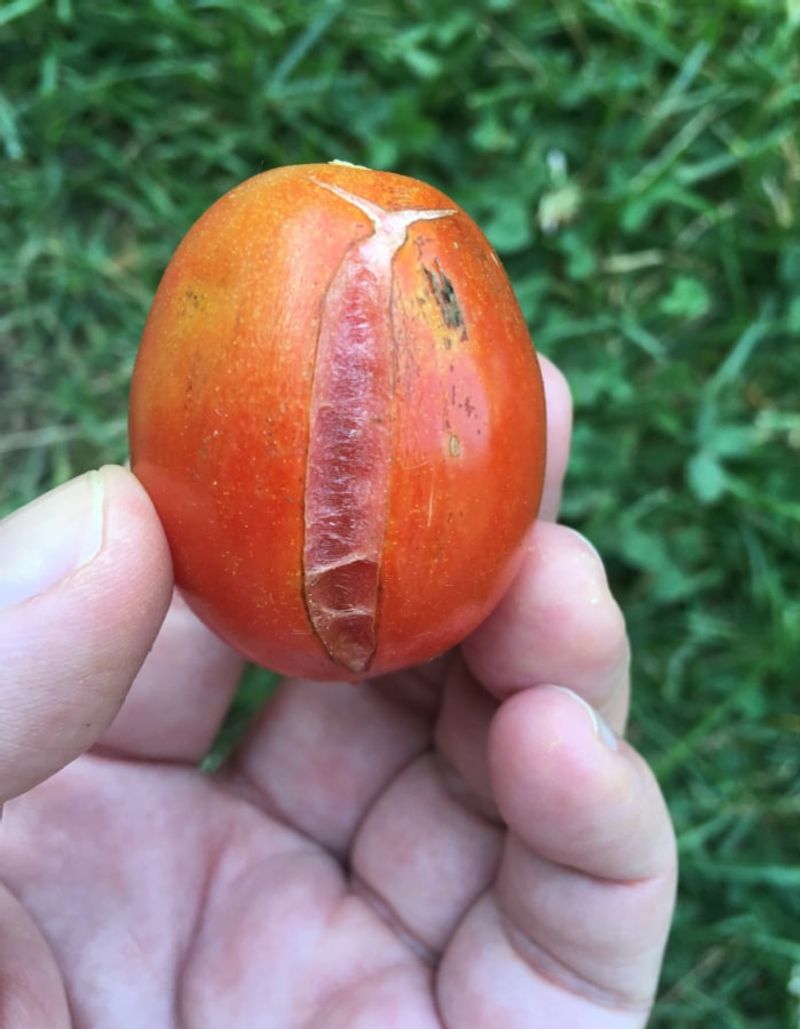
Florida summer heat is no joke for tomato roots. Sandy soil drains quickly and does not hold moisture well, which means the ground around your tomato plants can go from moist to bone dry within a day or two during a hot spell.
Add full sun exposure and a raised bed that heats up from all sides, and you have conditions that make moisture swings almost unavoidable. Heat itself does not directly split tomatoes, but it sets up the conditions that lead to cracking by making dry periods more extreme.
Mulching is one of the most practical things you can do. A layer of straw or pine needles two to three inches thick on top of the soil slows evaporation dramatically and keeps the root zone cooler.
UF/IFAS consistently recommends mulching tomatoes in Florida as a way to conserve soil moisture and moderate soil temperature. Watering earlier in the morning also helps because the water soaks in before the heat of the day pulls it out of the soil.
Larger containers and bigger in-ground planting holes hold more soil volume, which means they hold more moisture and buffer temperature swings better than small pots or shallow beds.
During the hottest stretches of the year, tomatoes may slow down or struggle to set fruit, especially large slicers.
UF/IFAS notes that cherry tomatoes may keep producing through Florida’s summer, unlike many larger-fruited types.
Watching your plants closely during heat waves and adjusting your watering accordingly can mean the difference between a cracked tomato and a perfect one.
4. Nearly Ripe Tomatoes Split More Easily
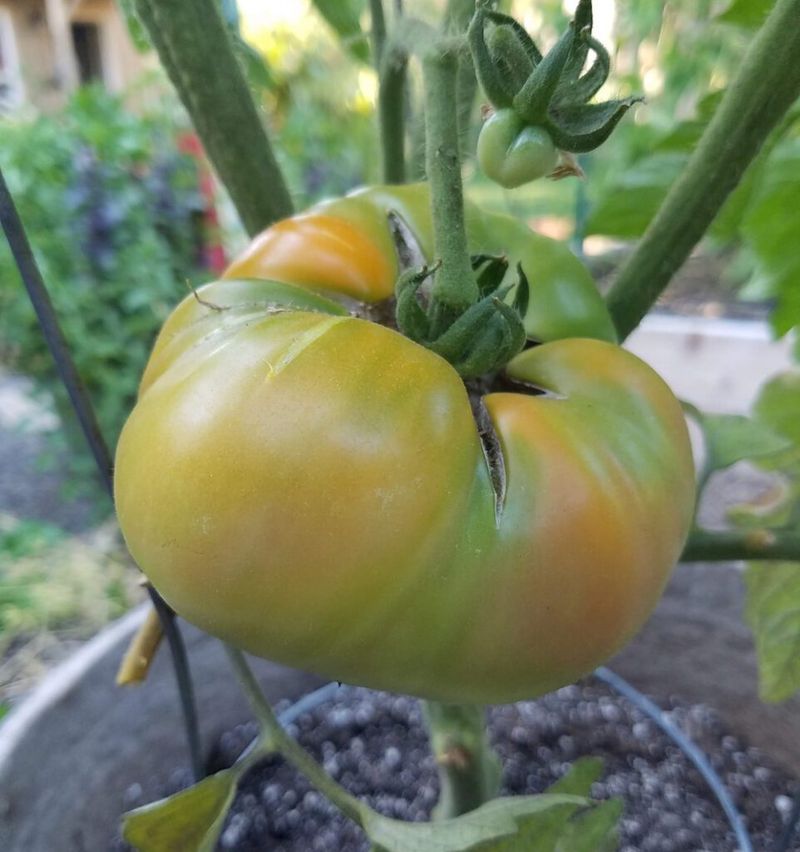
A tomato in its final days of ripening is actually at its most fragile point. The fruit is packed full, the skin has been stretched about as far as it can go, and there is very little buffer left if conditions change suddenly.
Any surge of water, whether from rain or a heavy watering session, can push the skin past its limit and cause it to crack.
Florida’s unpredictable weather makes this especially risky because a storm can roll in without much warning right when your tomatoes are days away from being ready.
Checking your plants every single day during the ripening window is one of the most effective habits you can build. Tomatoes do not have to be fully red on the vine to taste good.
UF/IFAS and other Extension sources confirm that tomatoes can be harvested at the breaker stage, which is when they first start showing a color change from green to orange, pink, or red, and they will continue to ripen off the vine with good flavor and quality.
Picking at this stage removes them from the risk zone before a storm or a dry-to-wet moisture swing can split them open.
Letting tomatoes finish ripening indoors at room temperature is simple and works well. Keep them out of the refrigerator, which can damage texture and reduce flavor.
Set them stem side down on a countertop or in a single layer in a shallow bowl. Most nearly ripe tomatoes will finish within three to five days indoors.
You protect the fruit, avoid the frustration of finding a split tomato the morning after a storm, and still end up with a fully ripe, flavorful tomato.
5. Big Or Thin-Skinned Varieties Are More Prone To Cracking
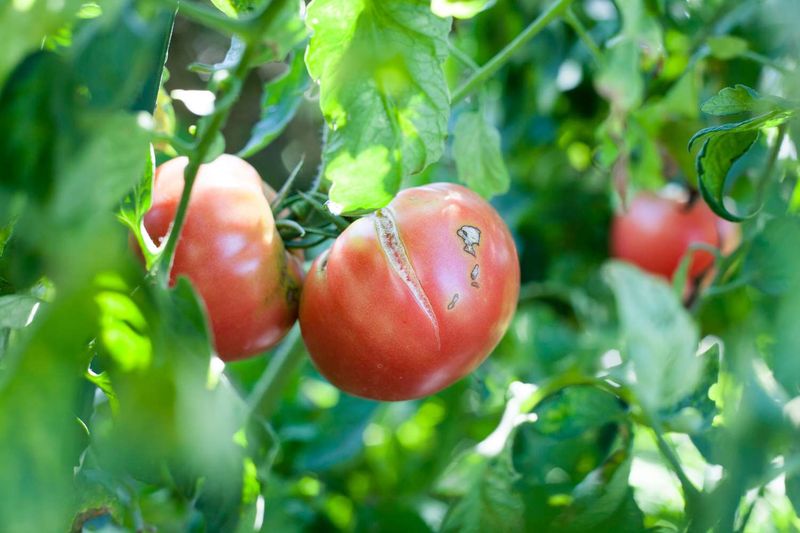
Not all tomatoes are built the same. Large-fruited slicers, thin-skinned heirlooms, and certain beefsteak types have skin that simply cannot handle big moisture changes as well as smaller or thicker-skinned varieties can.
More fruit volume means more internal pressure when water rushes in quickly, and thinner skin means less resistance before cracking starts.
Florida gardeners who love growing big heirloom tomatoes may deal with more splitting than those growing smaller-fruited types, and variety choice is a big part of why.
Choosing crack-resistant varieties when possible is a smart move, especially in Florida where heat, humidity, and heavy rain already make growing tomatoes challenging. Read seed packet descriptions and transplant tags carefully before you buy.
Some varieties are specifically bred for better crack resistance, and that trait will often be listed on the label or in the catalog description.
UF/IFAS recommends selecting tomato varieties that are adapted to Florida conditions, which includes considering disease tolerance, heat tolerance, and fruit characteristics like skin thickness.
During the hottest and wettest parts of the year, smaller-fruited tomatoes are often easier to manage. Their small fruit size means less internal pressure buildup, and many have tougher skins that handle moisture swings better than large slicers do.
That does not mean you have to give up on growing big tomatoes in Florida.
Planting large-fruited varieties during the cooler, drier months of fall and spring, when rain is less likely to drench nearly ripe fruit overnight, gives them a much better chance of making it to your kitchen without splitting.
6. Container Tomatoes Swing From Dry To Soaked
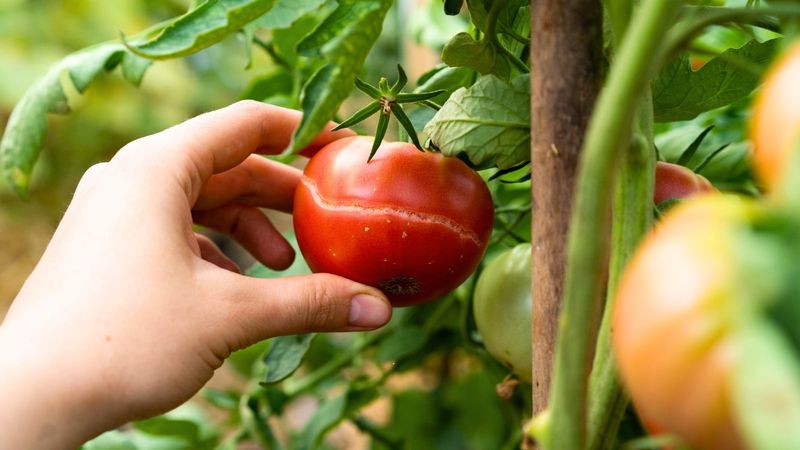
Growing tomatoes in pots or grow bags on a Florida patio sounds convenient, and it can be, but containers create one of the toughest moisture environments possible for tomatoes.
They heat up fast in the sun, dry out quickly, and then can go from bone dry to completely soaked during a Florida afternoon storm.
That swing from one extreme to the other is exactly the kind of moisture shock that splits tomatoes. Container gardeners may see more cracking when pots swing between dry and soaked.
Using larger containers makes a meaningful difference. A five-gallon pot holds far less soil volume than a fifteen-gallon pot or a large grow bag, which means it dries out much faster and gives roots less of a buffer during hot weather.
High-quality potting mix with good drainage and some moisture retention also helps. Make sure every container has drainage holes so water does not sit at the bottom and suffocate roots.
Adding a thin layer of straw or shredded mulch on top of the potting mix slows evaporation between waterings and helps keep the root zone more stable.
Checking containers daily is not optional during warm weather. A pot that feels moist in the morning can be completely dry by mid-afternoon in a Florida summer.
Consistent, deep watering is better than frequent shallow watering. If you know heavy rain is coming and your tomatoes are close to ripening, move the containers under an overhang or covered patio to protect them from a sudden soaking.
That one simple step can save a whole cluster of nearly ready fruit from splitting before you get a chance to pick them.
7. You Wait Too Long To Pick Before Storms
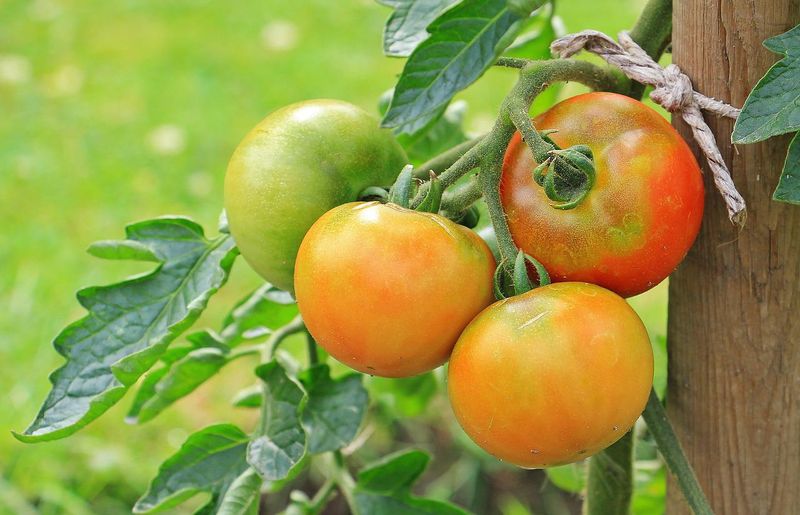
Leaving tomatoes on the vine until they are fully red feels like the right move, but in Florida it can cost you the whole harvest. Nearly ripe tomatoes sitting outside through a heavy rainstorm can swell quickly as the plant takes up a surge of water through its roots.
Storms that drop a lot of rain in a short time are especially damaging because the soil gets saturated quickly and the roots pull in water fast.
Harvesting tomatoes when they first show color change is a reliable strategy that Florida gardeners use to stay ahead of unpredictable weather.
UF/IFAS confirms that tomatoes harvested at the breaker stage, when color has just started to develop, can ripen fully at room temperature.
Picking at the breaker stage can still produce good eating quality while reducing the risk of splitting outdoors.
Getting into the habit of checking your plants before afternoon storms during wet season is one of the most practical things you can do.
Florida’s wet season, which generally runs from June through September, brings frequent afternoon and evening storms that can appear quickly.
If you have tomatoes showing any color change and a storm is in the forecast, pick them. Set them stem side down on your kitchen counter at room temperature and let them finish ripening over the next few days.
For best flavor and texture, avoid refrigerating tomatoes before they are fully ripe.