What To Do With Your Georgia Gardenias In May So They Bloom All Season
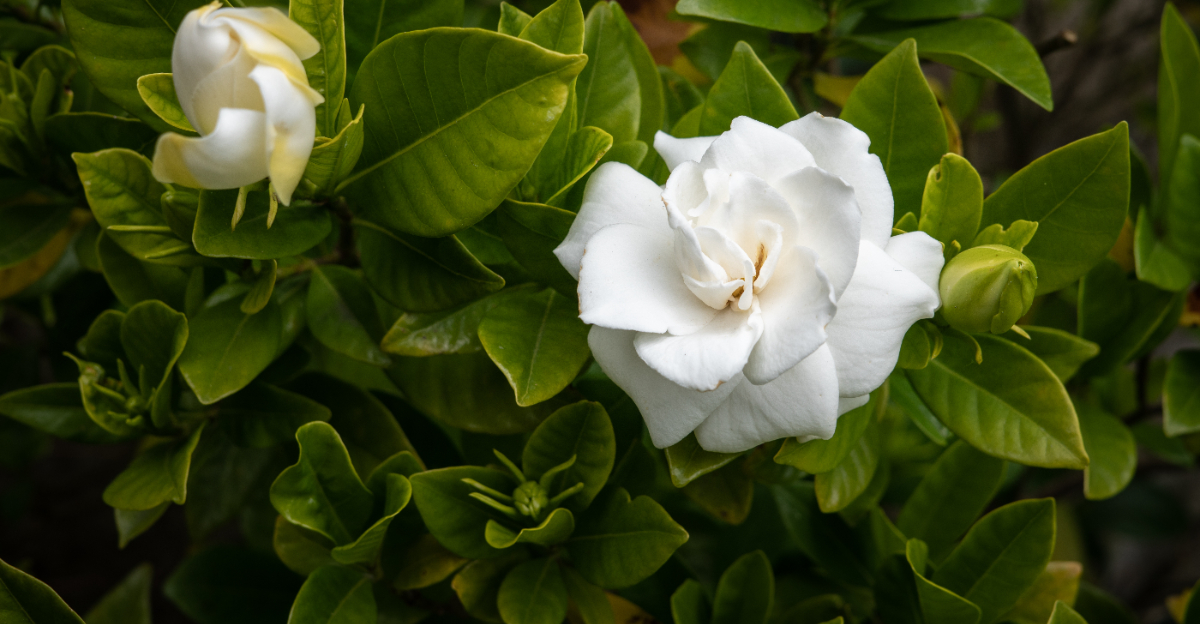
Gardenias in Georgia can look perfect going into May, full leaves, strong shape, everything in place. Then something shifts, and blooms slow down or never show up the way expected.
That moment catches a lot of people off guard, especially when the plant seemed fine just weeks before.
May is where things either stay on track or quietly start slipping. Heat begins to build, moisture levels change, and gardenias react fast to even small shifts in care.
What happens during this stretch has a direct impact on how long blooms actually last.
Georgia conditions can support steady flowering, but only when the timing lines up with what the plant needs right now.
A few simple adjustments in May can keep everything moving in the right direction and help gardenias hold onto that full, fragrant display much longer.
1. Keep Soil Consistently Moist Without Letting It Stay Soggy
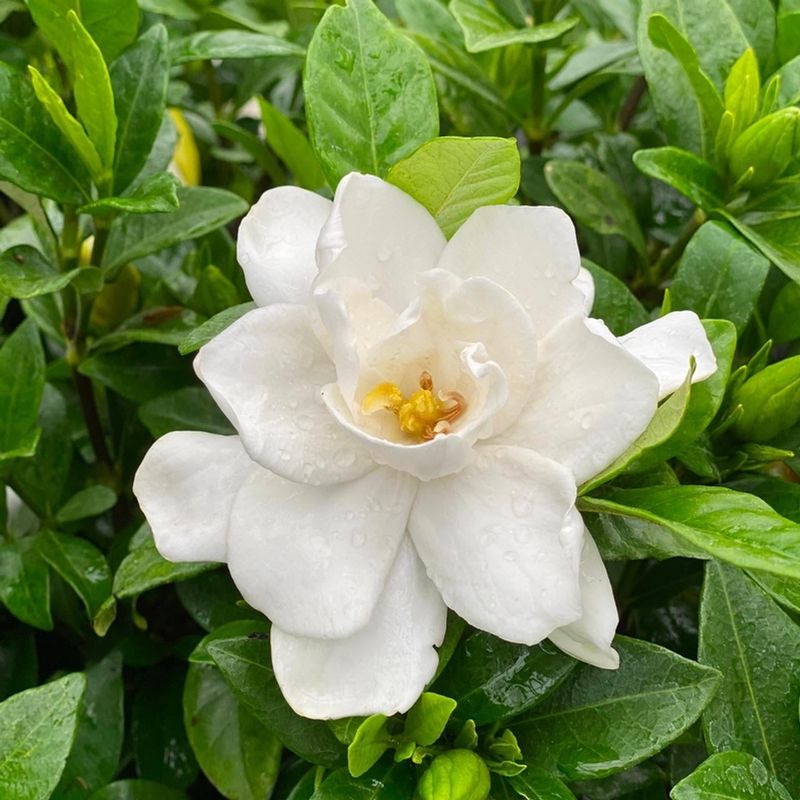
Watering gardenias sounds simple until you realize how easy it is to get wrong. Georgia summers heat up fast, and by May the soil can dry out faster than you expect, especially in sandy or well-drained beds.
Gardenias need steady moisture, but they absolutely cannot sit in waterlogged soil for long without their roots suffering.
A good rule of thumb is to water deeply two to three times per week, depending on rainfall. Stick your finger about two inches into the soil before watering.
If it still feels damp, hold off another day or two. Consistency matters more than quantity here.
Drip irrigation works really well for gardenias in Georgia because it delivers water slowly right at the root zone without splashing the foliage. Wet leaves in humid Georgia summers can invite fungal problems.
Morning watering is better than evening because the sun helps dry any moisture off the leaves before nightfall.
Container-grown gardenias dry out even faster than those planted in the ground, so check them daily during warm stretches. If your pot feels light when you lift it, that is a reliable sign it needs water.
2. Use Acidic Soil Or Fertilizer To Support Healthy Growth
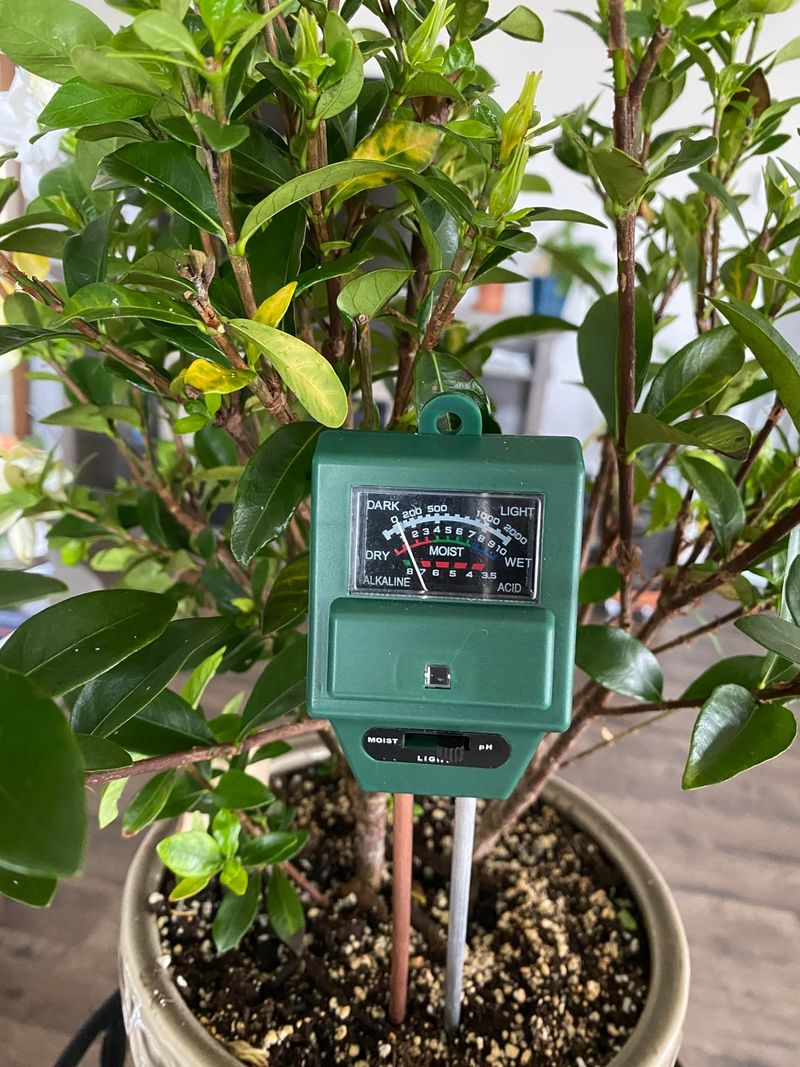
Gardenias are picky about soil pH, and that is not an exaggeration. They thrive in soil that sits between 5.0 and 6.0 on the pH scale.
Georgia soils vary a lot depending on where you live in the state, from the red clay of the Piedmont to the sandier soils of the coastal plain, so testing your soil before May is a smart move.
Yellow leaves with green veins on your gardenia are a classic sign of iron chlorosis, which usually means the soil pH is too high. When pH climbs above 6.5, gardenias cannot absorb iron and other nutrients properly no matter how much fertilizer you apply.
Lowering the pH is the actual fix, not just adding more fertilizer on top of the problem.
Sulfur granules worked into the soil can gradually lower pH over several weeks. For a faster approach, aluminum sulfate lowers pH more quickly but should be used carefully to avoid overdoing it.
Always follow label directions and retest your soil after a few weeks to track the change.
Your Georgia Garden Changes Every Week. Your Plan Should Too.
Gardening in Georgia changes quickly throughout the season. Every Friday you’ll receive a simple weekly plan showing exactly what to plant, prune, fertilize, harvest, and protect so you never miss the right timing.
Fertilizers formulated specifically for acid-loving plants like azaleas, camellias, and gardenias are widely available at Georgia garden centers. Products containing ammonium sulfate naturally acidify the soil a bit as they break down.
3. Apply Mulch To Help Hold Moisture And Regulate Soil Temperature
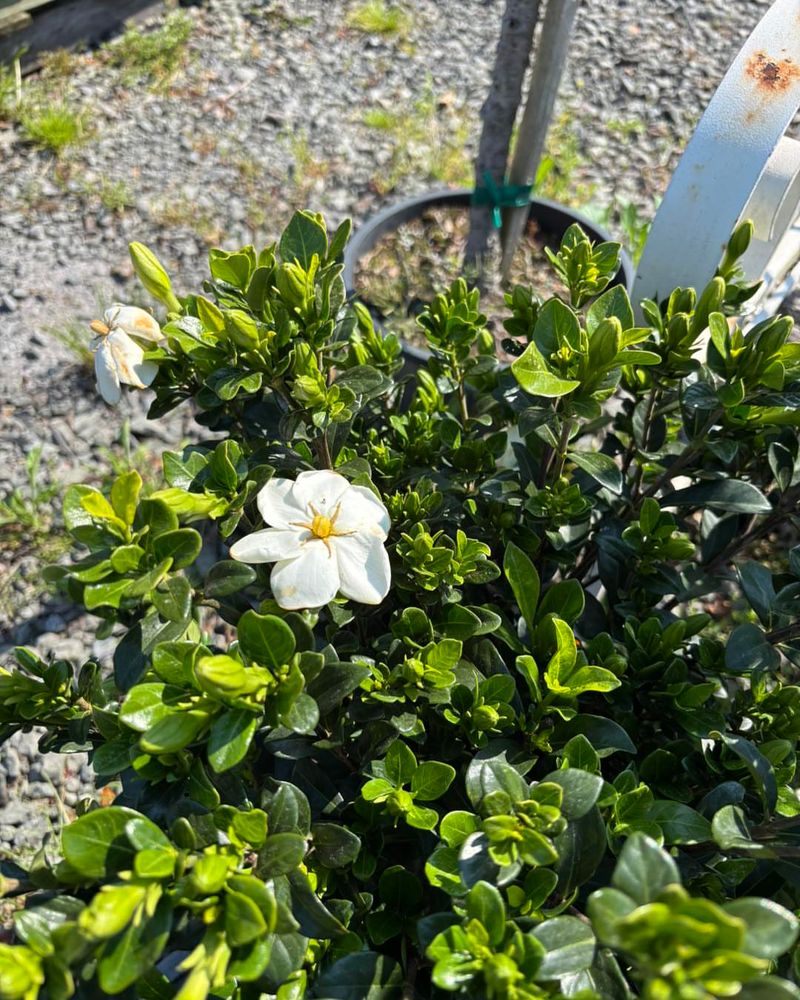
Mulch might be the single most underrated tool in a Georgia gardener’s toolkit. A fresh layer applied in May does several jobs at once, and none of them are complicated.
It slows down water evaporation from the soil, which means you water less often while still keeping roots happy.
Pine bark mulch and pine straw are both excellent choices for gardenias specifically because they break down slowly and add a slight acidity to the soil over time. That slight pH contribution can work in your favor if your soil tends to run a little alkaline.
Georgia gardeners who already use pine straw in their landscape have a natural advantage here.
Apply a layer about two to three inches deep around the base of your gardenia. Keep the mulch pulled back a few inches from the main stem to avoid trapping moisture against the bark, which can cause rot or invite pests.
Think of it like a donut shape around the plant, not a volcano piled up against the trunk.
Mulch also helps moderate soil temperature, which matters a lot in Georgia where May temperatures can swing from mild mornings to hot afternoons. Roots that stay at a more stable temperature are less stressed and better able to support flower production.
4. Place Plants Where They Get Morning Sun And Afternoon Shade
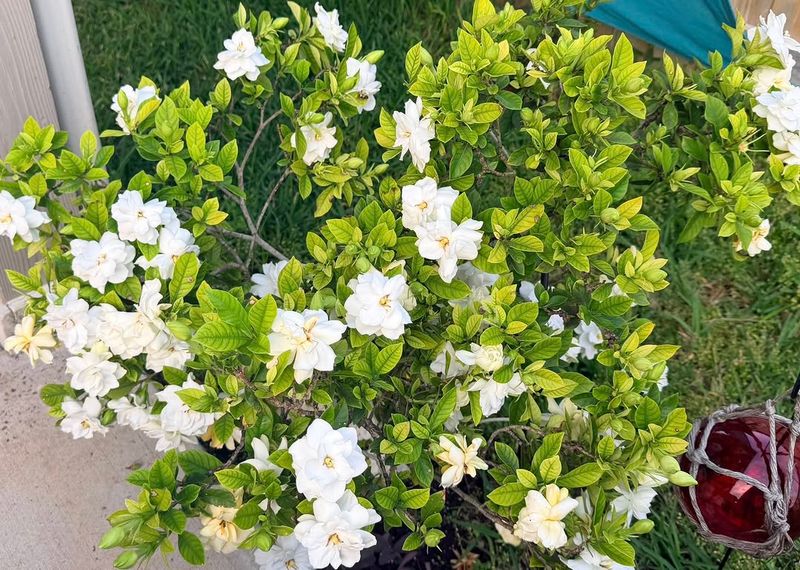
Sunlight placement is one of those decisions you cannot easily undo once a gardenia is established, so getting it right from the start pays off for years.
In Georgia, full afternoon sun during summer months is intense enough to scorch gardenia leaves and stress the plant right when it should be focused on producing blooms.
Morning sun is ideal because it provides the bright light gardenias need to produce energy and set buds, without the brutal heat of a Georgia afternoon in June and July.
Even in May, afternoon temperatures in central and south Georgia can push into the upper 80s, which is already tough on a plant trying to hold its flower buds.
East-facing beds or spots on the east side of a house or fence are naturally perfect for this. Gardenias planted under the canopy of a large deciduous tree can also work well, especially if the tree allows dappled light through in the morning and casts fuller shade in the afternoon hours.
Just make sure root competition from large trees is not too intense, as gardenias have shallow roots that do not compete aggressively.
North Georgia gardeners generally have a bit more flexibility because temperatures are cooler, and gardenias there can sometimes handle more direct sun without as much stress.
5. Feed With A Balanced Fertilizer During Active Growth
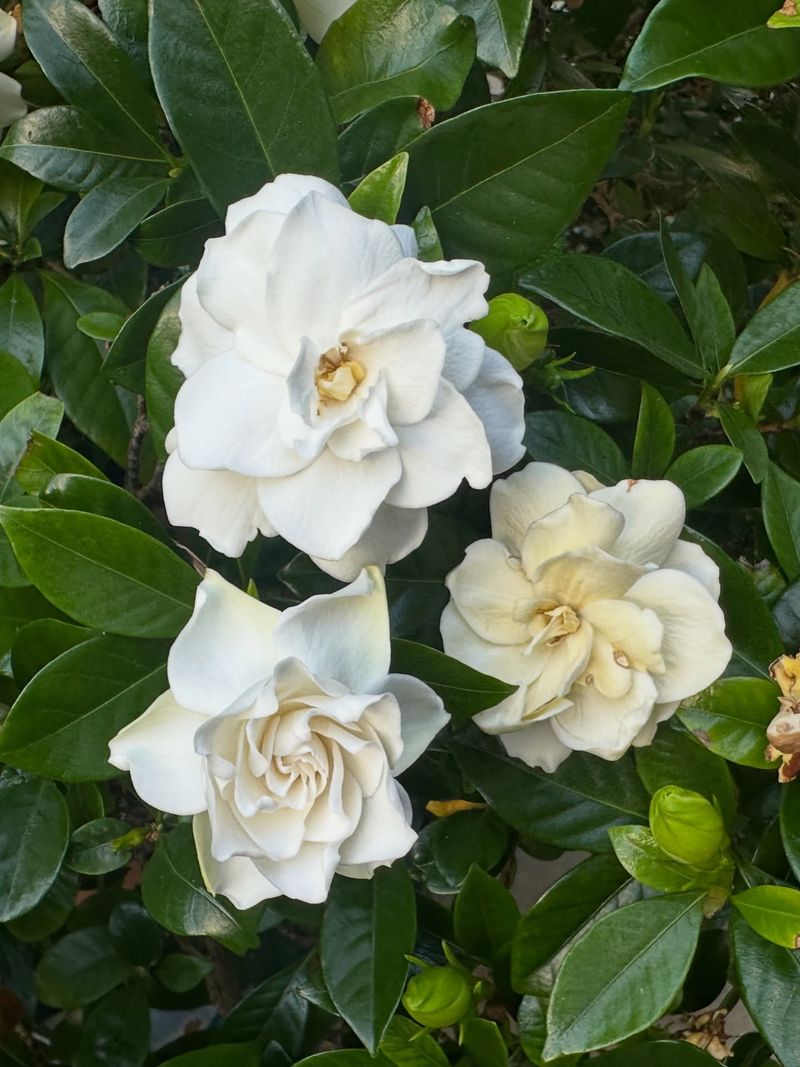
May is prime feeding time for gardenias in Georgia. Active growth is underway, buds are forming, and the plant has a real appetite for nutrients right now.
Miss this window and you could be looking at a season of sparse blooms and lackluster foliage.
A balanced fertilizer with an NPK ratio like 10-10-10 works well at this stage, or you can use one formulated specifically for acid-loving plants. Slow-release granular fertilizers are convenient because you apply them once and they feed the plant steadily over several weeks.
Liquid fertilizers work faster and can give a quicker response if your plant looks like it needs a boost right now.
Avoid over-fertilizing, which is a real risk with gardenias. Too much nitrogen pushes lush green leafy growth at the expense of flowers.
If you apply more than recommended, you may end up with a beautiful bush that produces almost no blooms, which is the opposite of what anyone wants from a gardenia in Georgia.
Fertilize in the morning and water the fertilizer in well after applying. Never apply fertilizer to dry soil because concentrated nutrients can burn surface roots.
6. Avoid Disturbing Roots To Prevent Stress
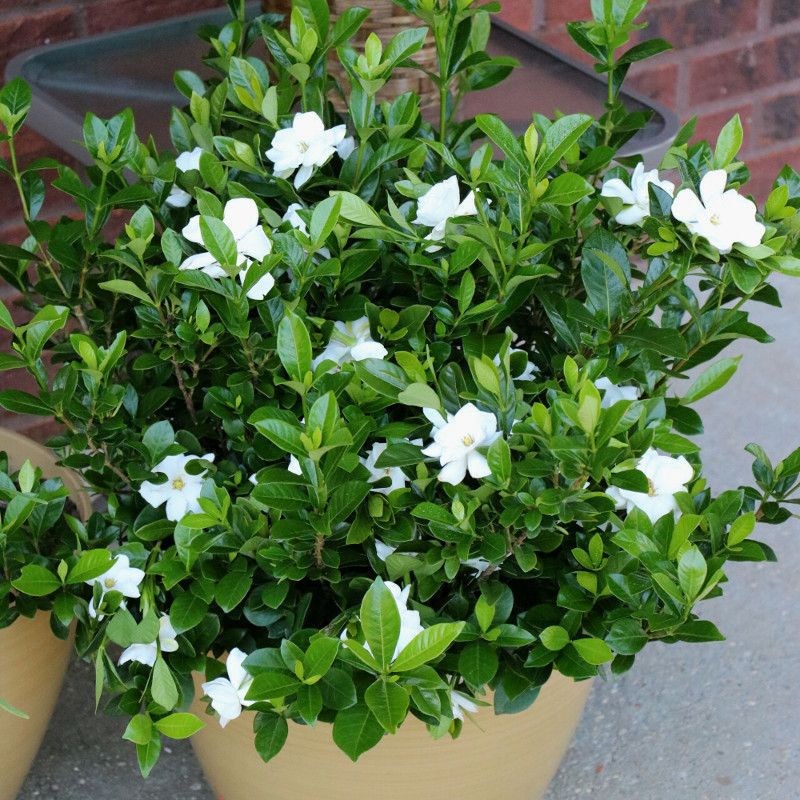
Gardenias have a reputation for being dramatic, and a lot of that drama starts underground. Their root system is shallow and surprisingly sensitive to disturbance.
Even well-meaning activity like aggressive weeding, deep cultivation, or planting nearby annuals can stress an established gardenia more than most people realize.
Bud drop is one of the most frustrating things that can happen to a Georgia gardenia grower in May. You see buds forming, you get excited, and then they fall off before opening.
Root disturbance is one of several causes of bud drop, along with temperature swings, inconsistent watering, and low humidity. Keeping the root zone undisturbed removes at least one variable from that equation.
Hand-pulling weeds close to the base of a gardenia is much safer than using a hoe or cultivator. Keep tools away from the drip line of the shrub when possible.
If weeds are a persistent problem, a thick layer of mulch is your best long-term strategy because it suppresses weed germination without requiring you to dig around the roots repeatedly.
Transplanting an established gardenia in May is generally not a good idea in Georgia unless absolutely necessary.
Spring transplanting can work, but it is stressful for the plant right when it is trying to set buds and bloom.
7. Prune Lightly After Blooming To Maintain Shape
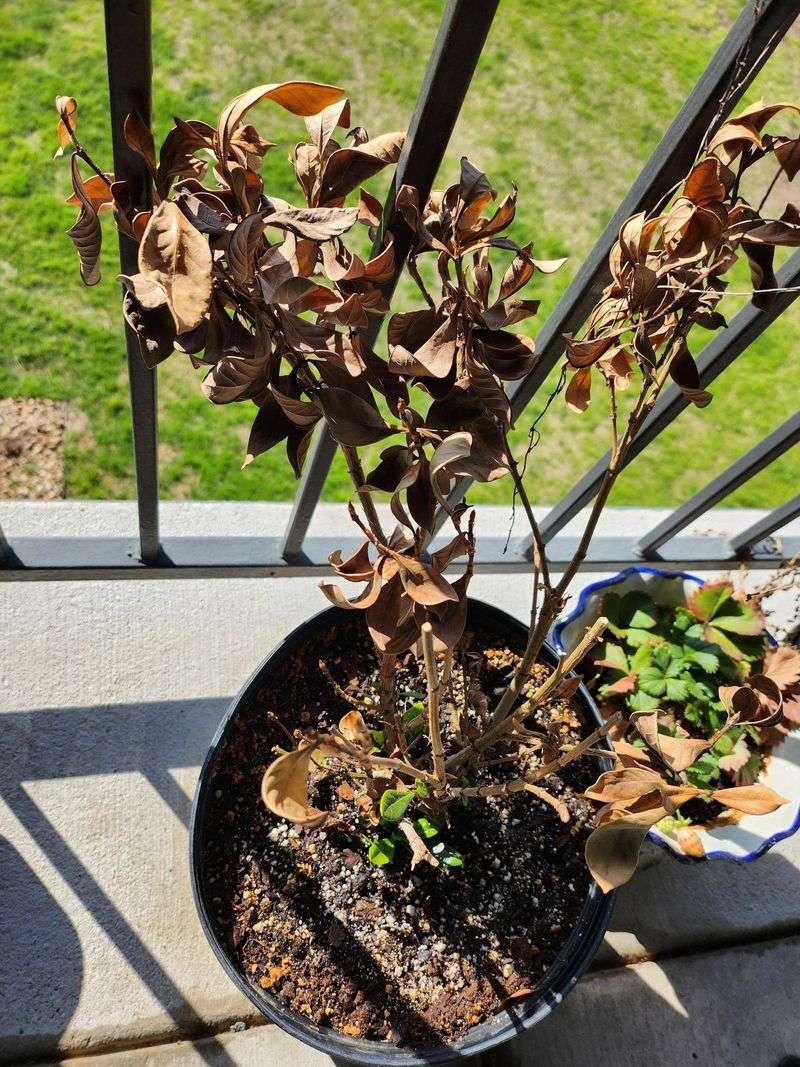
Pruning gardenias at the wrong time is one of the most common mistakes made by well-intentioned Georgia gardeners. Heavy pruning in late summer or fall removes the very buds that would have opened the following spring.
Timing matters, and May gives you a clear window if you do it right after the first flush of blooms finishes.
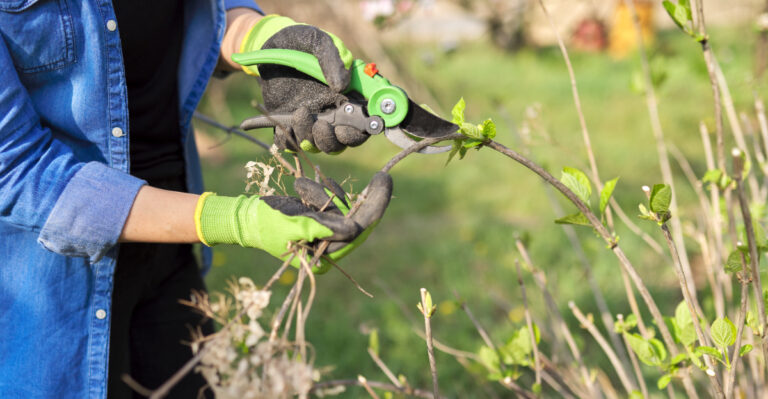
Light shaping is the goal here, not a dramatic cutback. Remove spent flowers by snipping just below the bloom to keep the plant looking tidy and to prevent seed formation, which diverts energy away from future blooms.
Clip back any leggy or awkward branches that are throwing off the shape of the shrub.
Sharp, clean pruning shears are essential. Dull blades crush stems rather than cutting cleanly, which slows healing and can invite disease.
Wipe your blades with rubbing alcohol between plants if you are working on multiple shrubs, especially in humid Georgia conditions where fungal pathogens spread more easily.
Resist the urge to prune heavily even if the plant looks overgrown. A hard cutback in May could remove buds for the next bloom cycle.
If your gardenia genuinely needs a significant reshape, plan that for immediately after the main bloom period ends, which in most parts of Georgia falls sometime in June or early July.