7 Fruit Tree Problems That Show Up In May In Georgia
May in a Georgia backyard orchard feels a bit like a race against the clock. Trees are pushing out fresh growth, tiny fruits are starting to take shape, and everything looks full of promise.
Then the heat and humidity settle in, and suddenly it is not just your trees that are thriving. Pests get busy, diseases find their moment, and leaves can change almost overnight.
One quick walk through the yard can turn into a full inspection once you know what to look for. A few spots here, a curled leaf there, it all adds up fast.
The good news is that catching these early can make a big difference in how your trees perform later on. Think of May as your orchard’s checkup month, with a few surprises along the way.
1. Plum Curculio Damage Appears On Developing Fruit
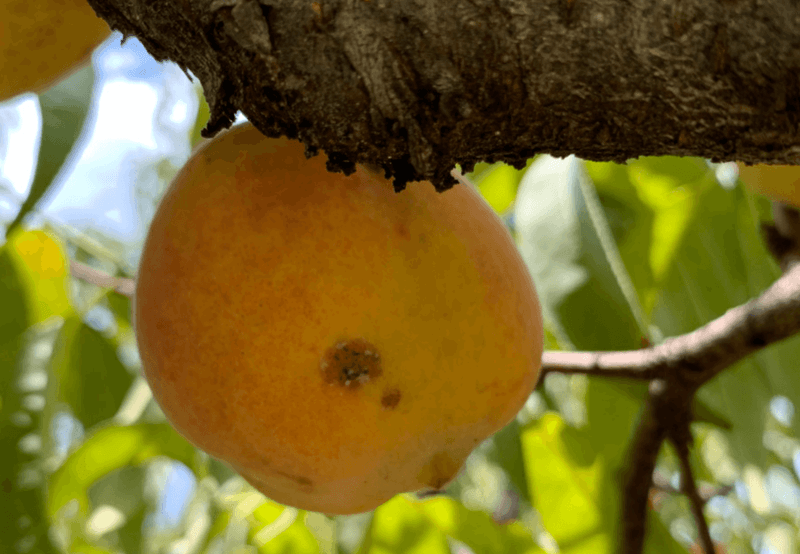
Walk up to a young peach or plum tree in a Georgia orchard during May and you might notice something unsettling on the small, developing fruits.
Tiny crescent-shaped scars and small puncture wounds on the fruit skin are often the first sign that plum curculio has been active.
This small weevil is one of the most common and frustrating fruit pests for home gardeners across Georgia.
The adult weevil feeds on young fruit and lays eggs beneath the skin, leaving behind that telltale curved scar.
Fruits that have been heavily damaged may drop from the tree early, while others may show misshapen growth or surface scarring as they continue developing through the season.
Peaches, plums, nectarines, and apples are all vulnerable to this pest.
May is a critical window because the weevil is most active once petal fall occurs and small fruits begin to form.
In Georgia, warm spring temperatures speed up this process, so gardeners should start checking their trees carefully around that time.
Look closely at fruit surfaces, especially near the stem end, where damage tends to show up first.
Keeping fallen fruit cleaned up from the ground around the tree can help reduce the number of weevils that complete their life cycle nearby.
Monitoring regularly during May and staying consistent with any spray program recommended for your area gives backyard orchards the best chance of producing undamaged fruit through the rest of the season.
2. Brown Rot Shows Up During Warm Humid Conditions
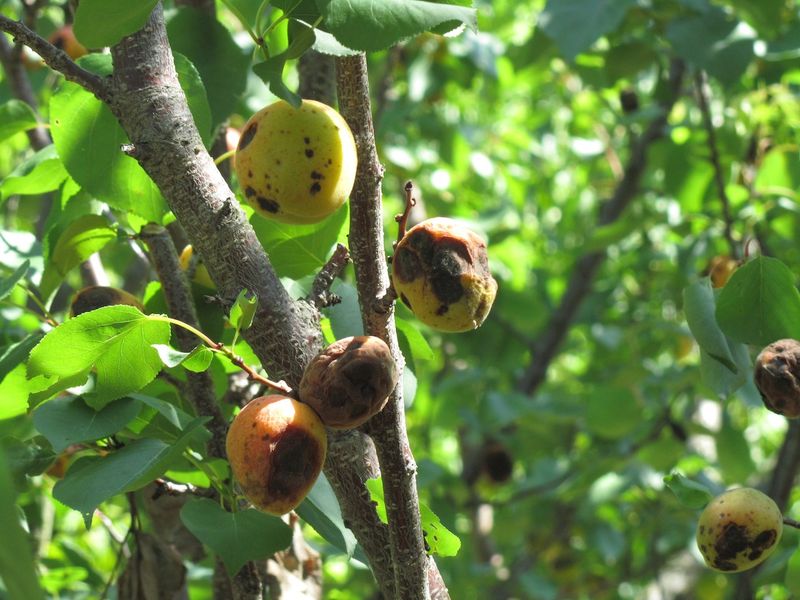
Few fungal diseases move as fast as brown rot when Georgia weather turns warm and humid in May. What starts as a small, tan-colored soft spot on a developing fruit can spread across the entire surface within just a couple of days.
Gardeners who check their trees after a stretch of rainy, muggy weather may be surprised by how quickly the damage can appear.
Brown rot is caused by a fungus that thrives in the kind of wet, warm conditions that Georgia springs are known for delivering. Peaches, plums, cherries, and nectarines are especially susceptible.
The infected areas become soft and brown, and you may notice a powdery gray or tan coating on the surface, which is actually the fungal spores spreading to nearby fruit.
Your Georgia Garden Changes Every Week. Your Plan Should Too.
Gardening in Georgia changes quickly throughout the season. Every Friday you’ll receive a simple weekly plan showing exactly what to plant, prune, fertilize, harvest, and protect so you never miss the right timing.
Beyond developing fruit, the disease can also affect blossoms and small twigs earlier in the season.
Infected blossoms may look water-soaked and wilted, and the fungus can linger in those areas, creating what gardeners sometimes call mummified fruit that stays on the tree through winter.
Good air circulation through the tree canopy is one of the most helpful things a Georgia gardener can maintain. Thinning dense branches and removing any infected or fallen fruit promptly can slow the spread significantly.
May is the time to stay watchful, because catching early signs of brown rot before it gains momentum in the orchard makes the rest of the growing season much easier to manage.
3. Peach Scab Causes Spots On Young Fruit
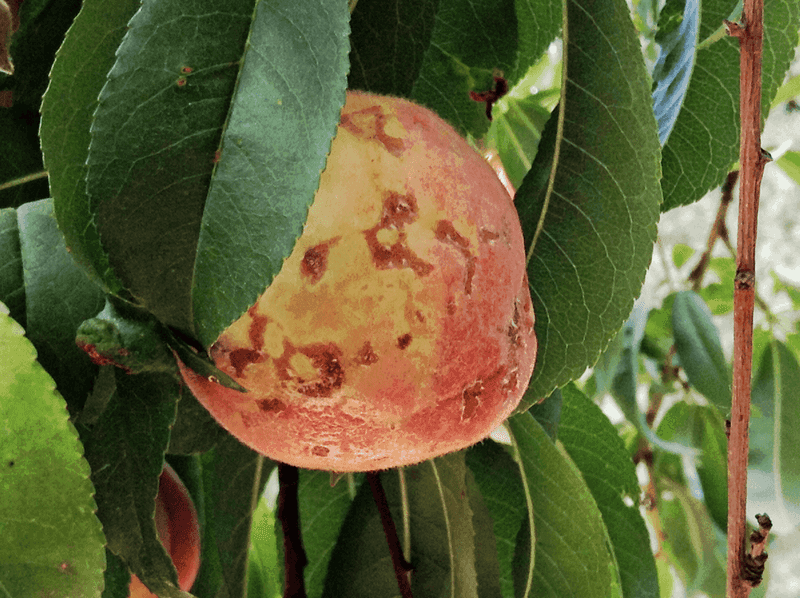
Scattered across the surface of young peach fruits, small dark spots that look almost like smudges or freckles are a recognizable sign of peach scab. The spots are usually olive-green to black, circular, and may appear clustered near the stem end of the fruit.
As fruits grow larger, the spots can crack or cause the skin to look rough and blemished, even though the flesh underneath may still be perfectly edible.
Peach scab is caused by a fungus that overwinters in infected twigs and bark on the tree. In spring, spores are released and spread to young fruit during periods of warm, wet weather.
Georgia orchards are particularly prone to this disease because of the combination of spring rain and rising temperatures that arrive in April and May.
Symptoms on fruit usually become visible about six weeks after petal fall, which means infections that happen in early May may not become fully obvious until later in the growing season.
That delay can fool gardeners into thinking their trees escaped the problem, only to find spotted fruit as summer arrives.
Keeping trees pruned so air moves through the canopy freely helps reduce the humidity around developing fruit. Removing infected twigs during dormant pruning can also reduce the amount of fungal material that is present when spring growth begins.
For Georgia home gardeners, paying attention to conditions in May and staying consistent with a monitoring routine gives trees a better chance of producing cleaner fruit through the rest of the season.
4. Bacterial Spot Affects Leaves And Fruit Surfaces
On a warm Georgia afternoon in May, it is worth taking a close look at the leaves and young fruit on peach and plum trees.
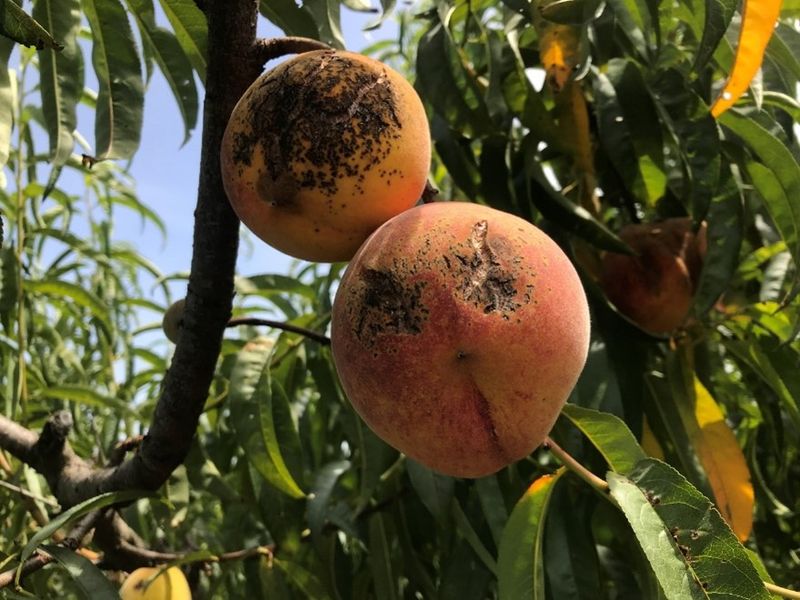
Small, water-soaked spots that later turn brown or purple on the leaves, along with sunken, dark lesions on fruit surfaces, are often signs of bacterial spot.
This disease is one of the more common challenges that Georgia fruit tree growers deal with during the spring and early summer months.
Bacterial spot is caused by a bacterium that spreads through rain splash, wind-driven water, and contact between plant surfaces.
Warm temperatures combined with frequent spring rains create conditions where the disease can spread rapidly across a tree.
Leaves that are heavily infected may develop a tattered, shot-hole appearance as the damaged tissue falls out of the lesions over time.
Fruit infections tend to show up as small, raised spots that later become sunken and rough. Severely affected fruits may crack or become misshapen.
While mild infections may not ruin the harvest, heavy bacterial spot pressure can lead to significant fruit quality problems by the time peaches and plums ripen later in summer.
Choosing resistant varieties when planting new trees is one of the most effective long-term strategies for Georgia gardeners.
For trees already in the ground, keeping foliage dry where possible, avoiding overhead watering, and maintaining good canopy airflow can help slow the spread of this disease.
Monitoring carefully in May, when conditions are most favorable for bacterial spot, helps gardeners stay a step ahead of the problem.
5. Fire Blight Causes Wilting Shoots On Apples And Pears
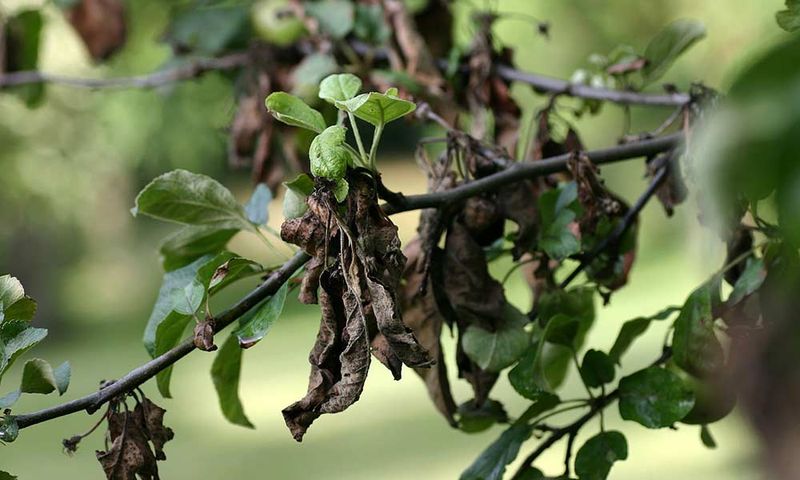
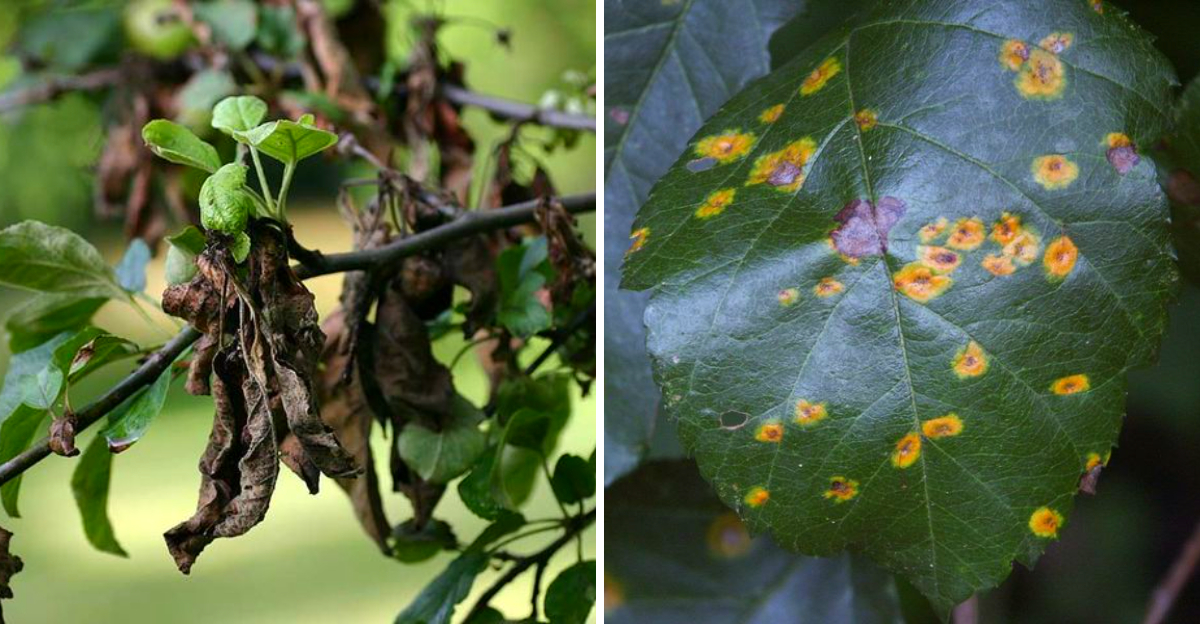
Something about the way fire blight looks on an apple or pear tree makes it hard to miss once you know what to look for.
The tips of new shoots bend downward in a curved shape that many gardeners describe as a shepherd’s crook, and the affected leaves and stems turn brown or black as if they were scorched by heat.
In May, when Georgia apple and pear trees are putting out vigorous new growth, fire blight can spread quickly through the canopy.
The disease is caused by a bacterium that enters the tree through blossoms, wounds, and actively growing shoot tips.
Warm temperatures and wet spring weather create ideal conditions for the bacterium to spread, and Georgia’s unpredictable May weather can create those conditions more than once in a single week.
Young, fast-growing shoots are especially vulnerable during this time.
Once established in a shoot, the infection can move down into the branch and eventually reach the main scaffold branches or trunk if left unchecked.
Gardeners may also notice a water-soaked or oozing appearance on infected bark, which is another sign that the disease is active in that area of the tree.
Removing infected shoots by cutting several inches below the visible damage is a commonly recommended step, though tools should be sanitized between cuts to avoid spreading the bacterium to healthy wood.
In Georgia, where spring weather can shift quickly, staying alert during May and acting promptly when symptoms appear gives apple and pear trees the best chance of staying healthy through the growing season.
6. Cedar Apple Rust Forms Bright Spots On Leaves
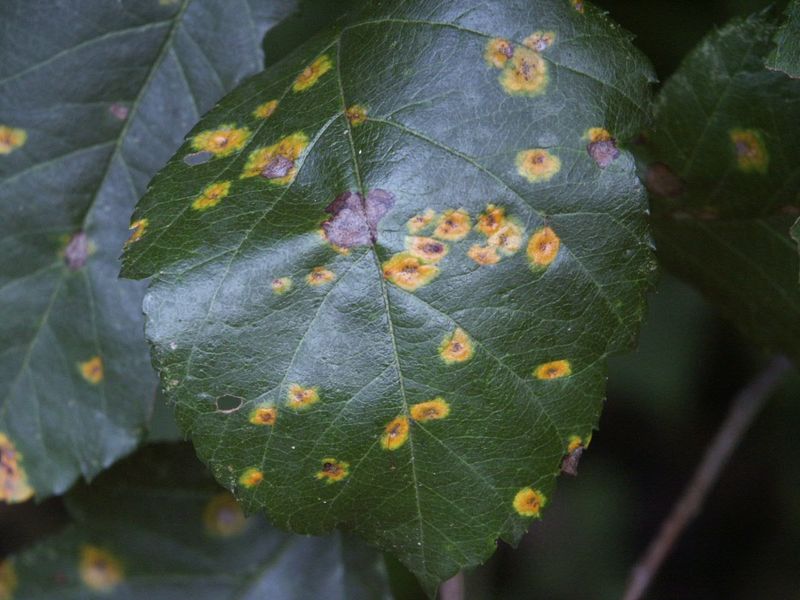
Bright orange or yellow spots appearing on apple leaves in May can catch a Georgia gardener’s eye from several feet away.
Cedar apple rust is a fungal disease with a striking appearance, and it tends to show up reliably in areas where both apple trees and Eastern red cedar trees are growing within a few miles of each other.
Georgia has plenty of both, which makes this disease a regular visitor in many home orchards.
The disease has an unusual two-host life cycle. Spores produced on Eastern red cedar galls travel through the air during spring and land on apple or crabapple leaves.
Once they take hold, the fungus produces those vivid orange spots on the upper surface of the leaf, along with small tube-like structures on the undersides that release additional spores later in the season.
Heavily infected leaves may drop from the tree earlier than normal, which can put some stress on the tree if the infection is widespread. Young fruit can also develop rust lesions, though fruit infections tend to be less dramatic than what shows up on the foliage.
The disease is most active during wet spring weather when temperatures are mild to warm.
For Georgia gardeners, May is typically when cedar apple rust symptoms become most visible on apple leaves. Choosing rust-resistant apple varieties is one of the most reliable long-term approaches.
For existing trees, fungicide applications timed around the period of spore release can help reduce infection levels. Staying observant during May makes it easier to catch and respond to this disease before it spreads widely through the canopy.
7. Mites Increase During Hot Dry Weather
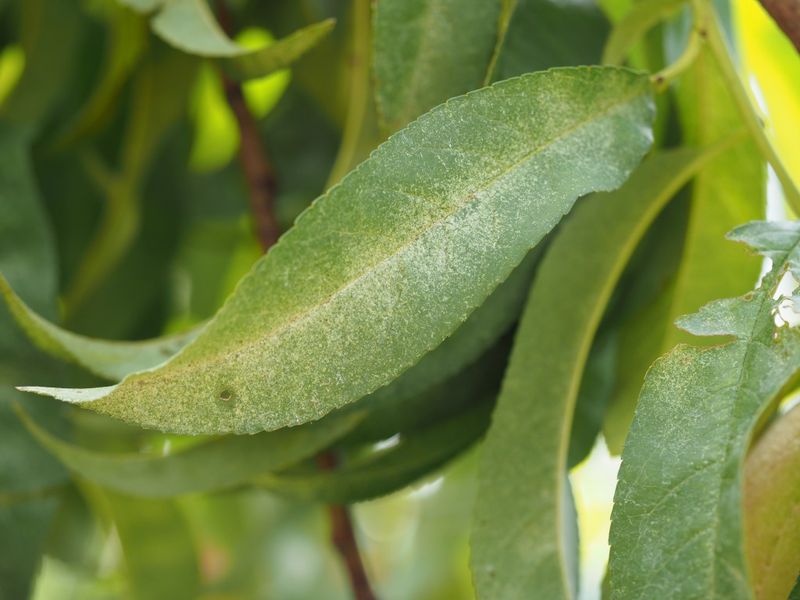
A stretch of hot, dry weather in May can set the stage for spider mite populations to build up fast on fruit trees in Georgia. These tiny pests are barely visible to the naked eye, but the damage they leave behind on leaves is easier to spot.
Leaves that look pale, dusty, or stippled with tiny yellow or white dots are often showing the effects of mite feeding, and a fine webbing on the undersides of leaves is a reliable confirmation.
Spider mites feed by piercing leaf tissue and drawing out the contents of individual plant cells. Over time, heavy feeding causes leaves to look bronzed or faded, and in serious cases, defoliation can occur later in the season.
Peaches, apples, and plums are among the fruit trees in Georgia most likely to show mite problems during warm, dry spring spells.
Natural predators such as predatory mites and certain insects help keep spider mite populations in check under normal conditions.
However, when broad-spectrum insecticides are used frequently, those beneficial insects can be reduced, allowing mite populations to grow more quickly without natural checks in place.
Georgia gardeners who rely heavily on sprays may sometimes notice mite problems worsening as a result.
Checking the undersides of leaves regularly in May is a smart habit to develop. A simple hand lens or magnifying glass makes it much easier to spot mites before their numbers grow too large.
Keeping trees well-watered during dry spells can also help reduce the stress that makes trees more vulnerable to mite damage in the first place.