7 Climbing Plants That Stay Compact In Pots In Florida
A small Florida patio can turn into a vine jungle faster than you think. One cute plant grabs the railing, another races across the fence, and suddenly the “little trellis moment” needs a machete.
That does not mean climbers are off the table. The trick is choosing vines that behave better in pots, then giving them a sturdy support and regular trims before they get big ideas.
Some bring tropical color. Some feed hummingbirds or butterflies.
A few are Florida natives with real wildlife value. None should be treated like plastic patio decor, though.
Containers help slow things down, but pruning still matters. With the right match, a climbing plant can add height, flowers, shade, and movement without swallowing the balcony whole.
These picks prove vertical gardening can stay beautiful, useful, and under control.
1. Mandevilla Climbs Without Taking Over The Patio
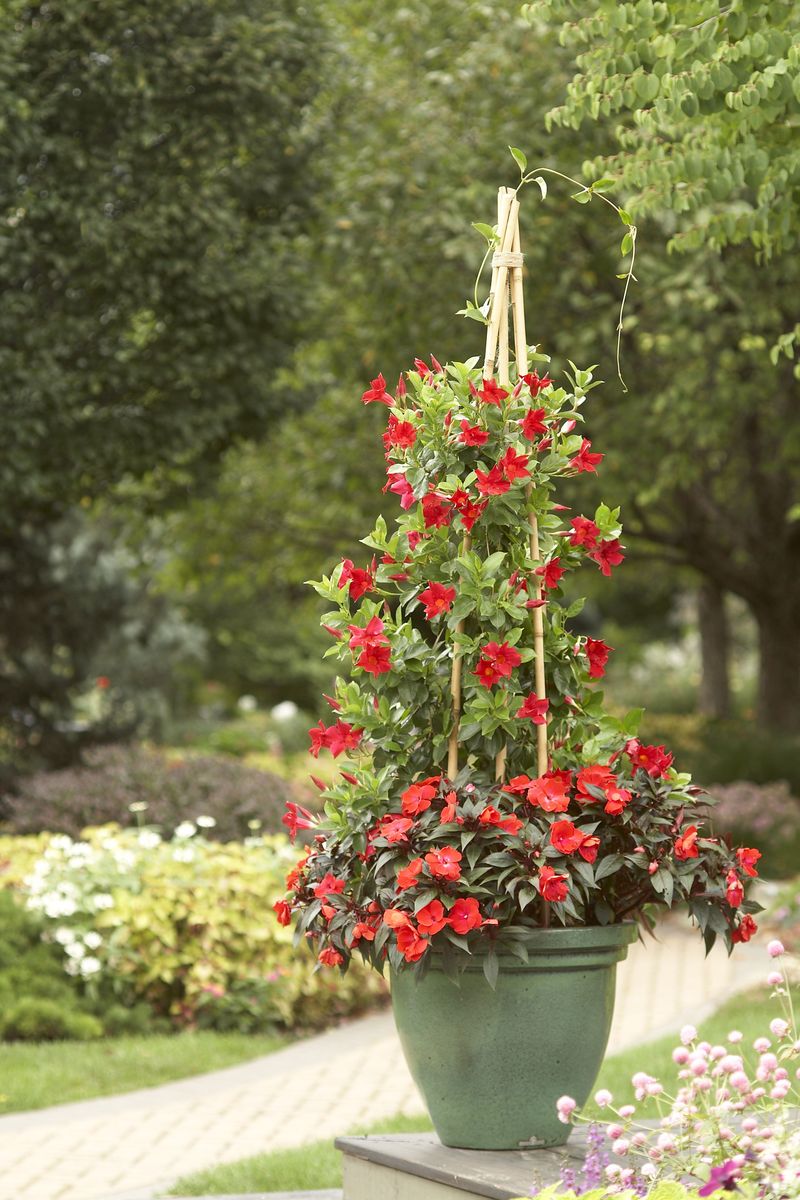
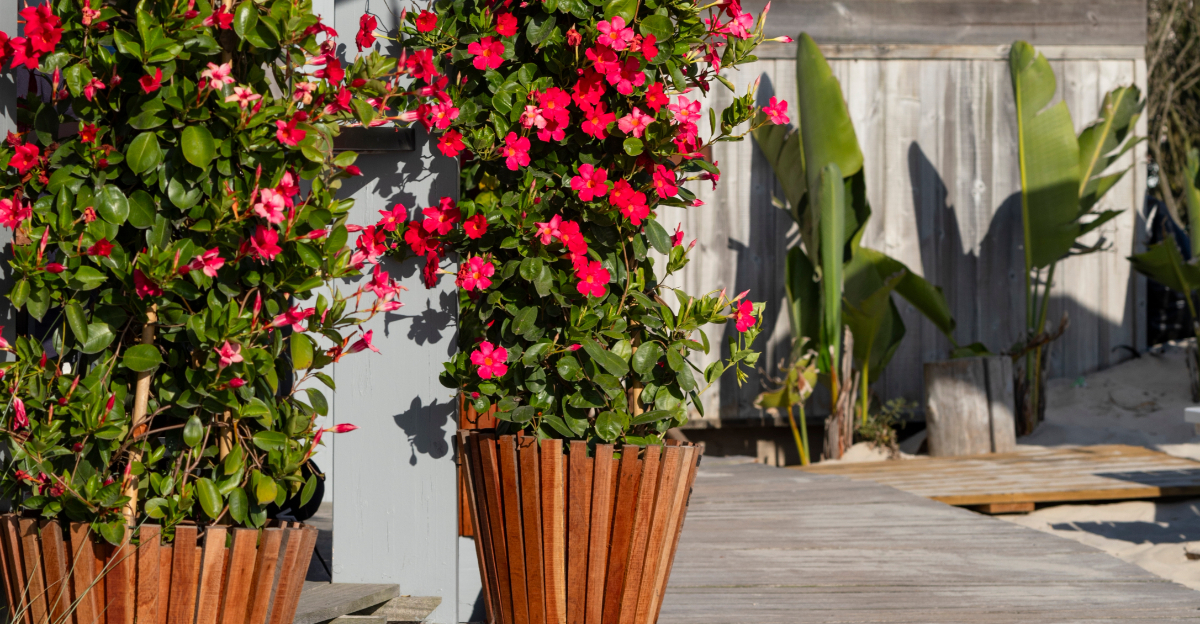
Picture a sunny Florida patio with a pot bursting in hot pink blooms from spring straight through fall. That is exactly what mandevilla delivers, and according to UF/IFAS, it performs beautifully on trellises, pergolas, arbors, and similar supports throughout Florida.
It is not a Florida native, but it has earned a solid reputation as one of the most reliable ornamental vines for warm-climate container gardening.
Mandevilla works well in a pot because container culture naturally limits root spread and slows overall growth compared to planting it directly in the ground. However, the pot alone does not keep it tidy.
You still need to prune it regularly to shape the plant and remove stems that wander too far from the support. A sturdy small trellis or obelisk placed inside the container keeps the vine growing vertically instead of flopping across nearby furniture.
For best results, place the pot in full sun to part sun. Mandevilla needs strong light to produce its signature blooms consistently.
Use a well-drained potting mix and water regularly during the hot Florida summer, allowing the top inch of soil to dry slightly between waterings to avoid root rot. Fertilize monthly through the growing season with a balanced slow-release fertilizer.
Gardeners in North and Central Florida should plan ahead for cooler winters. Move pots indoors or to a protected space before freezes or extended winter chill in colder parts of Florida.
South Florida growers can often leave mandevilla outside year-round, though growth may slow during the cooler months. With consistent care, this vine rewards you with months of color without demanding more space than you can give it.
2. Skyblue Clustervine Stays Graceful On A Small Trellis
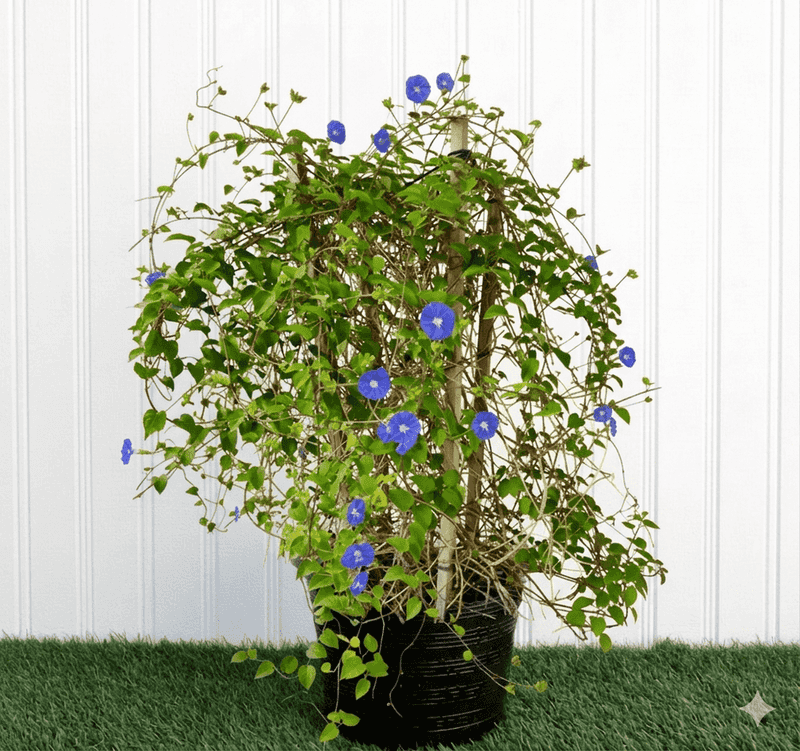
There is something quietly stunning about a vine covered in clusters of sky-blue flowers swaying in a coastal breeze.
Skyblue clustervine, known botanically as Jacquemontia pentanthos and sometimes called Key West morning glory, is a Florida native with exactly that kind of understated charm.
Unlike many large tropical vines, it has a more graceful, open habit that suits a small trellis without overwhelming the space around it.
One important fact every Florida gardener should know before sourcing this plant: skyblue clustervine is listed as endangered in Florida. That means you should never collect it from the wild under any circumstances.
Your Florida Garden Changes Every Week. Your Plan Should Too.
Gardening in Florida changes quickly throughout the season. Every Friday you’ll receive a simple weekly plan showing exactly what to plant, prune, fertilize, harvest, and protect so you never miss the right timing.
Only purchase nursery-propagated plants from reputable native-plant nurseries or trusted Florida native growers. The Florida Native Plant Society and regional native nurseries are good starting points for finding responsibly grown specimens.
Skyblue clustervine thrives best in South Florida and warm coastal areas where temperatures stay mild year-round. It prefers full sun and excellent drainage, so choose a pot with multiple drainage holes and use a well-drained potting mix.
Avoid heavy soils that hold moisture for too long, as soggy roots can cause problems quickly in Florida’s humid climate.
Place a small trellis in the pot and guide new stems onto it as the plant grows. Light pruning after flowering helps maintain a neat shape and encourages fresh growth.
Growing nursery-propagated plants helps create appreciation for this rare native without putting pressure on wild populations.
Choosing nursery-propagated plants is the responsible way to enjoy this rare Florida native without putting pressure on wild populations.
3. Corkystem Passionflower Fits Small Spaces And Feeds Butterflies
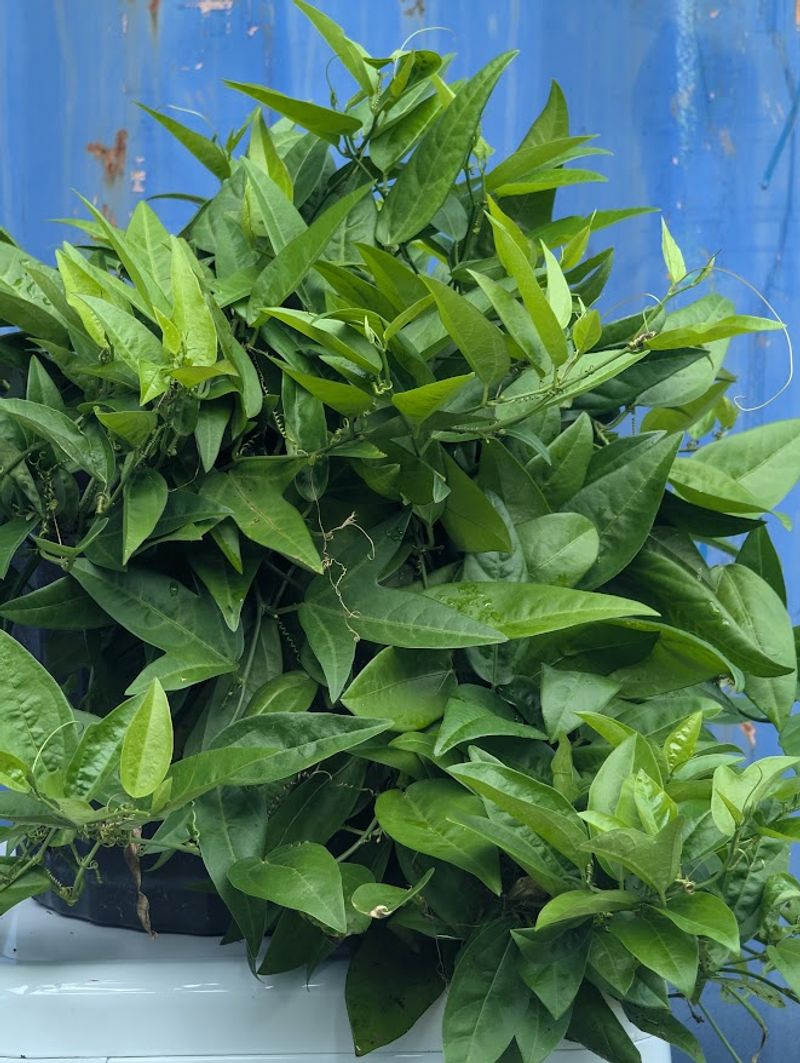
On a warm Florida morning, watching a zebra longwing butterfly hover over a passionflower vine feels like something worth designing your whole patio around.
Corkystem passionflower, Passiflora suberosa, makes that moment possible even in a modest container.
UF/IFAS identifies it as the smallest of Florida’s native passionflower vines, which makes it a more realistic candidate for pot culture than its larger, showier relatives.
The flowers are smaller and less dramatic than species like Passiflora incarnata, but the wildlife value is exceptional.
Corkystem passionflower serves as a larval host plant for several Florida butterflies, including the zebra longwing, Gulf fritillary, and Julia heliconian, all supported by reliable Florida butterfly and native-plant sources.
Hosting caterpillars means leaves may look chewed at times, but that is a sign the plant is doing its job beautifully.
Container culture suits this vine reasonably well because it naturally grows with a more slender, twining habit compared to aggressive tropical vines.
Use a pot with good drainage, a well-drained potting mix, and place a small trellis or wire cage inside for the stems to climb.
Partial sun, filtered light, or bright shade can work well, especially in containers that dry out quickly during summer.
Water consistently to keep the potting mix evenly moist but never waterlogged. Trim back stray stems as needed to keep the plant tidy and within the boundaries of its support.
Sourcing from a reputable Florida native-plant nursery ensures you get a locally adapted plant. Growing corkystem passionflower in a pot is a practical and rewarding way to support Florida’s native butterfly population from a small balcony or porch.
4. Coral Honeysuckle Gives Pots A Native Hummingbird Vine
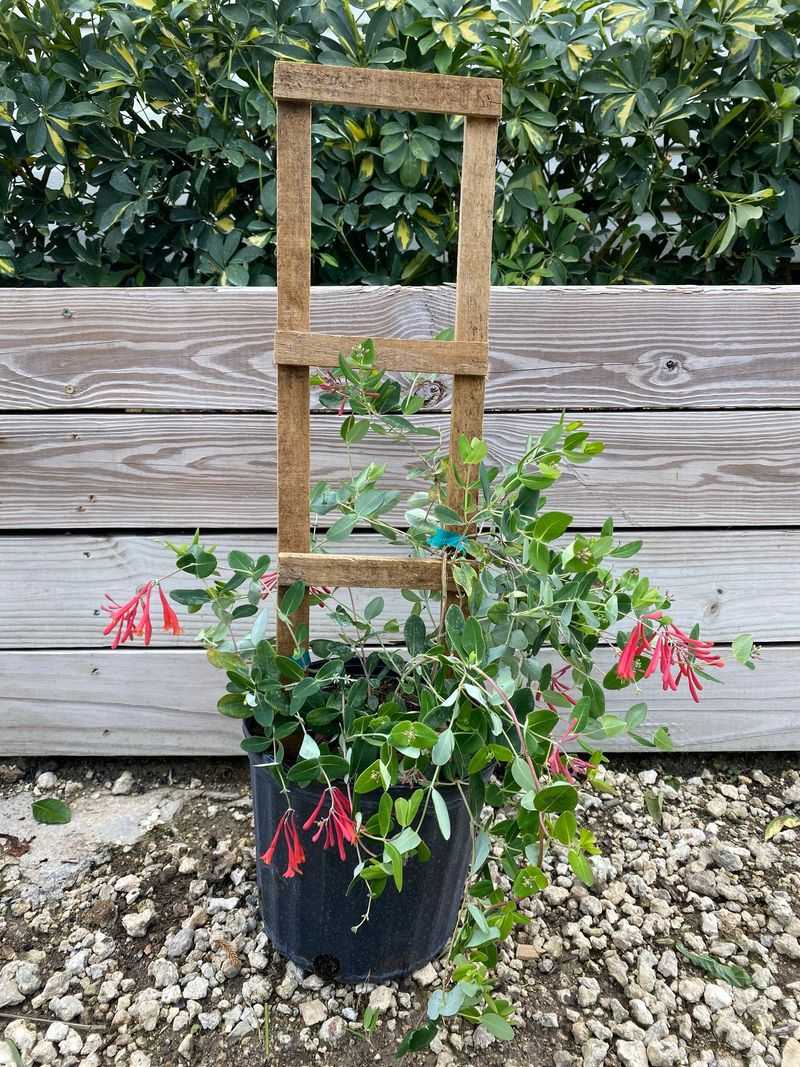
Few things stop a Florida gardener in their tracks faster than a ruby-throated hummingbird hovering at eye level right on the patio. Coral honeysuckle, Lonicera sempervirens, makes that scene possible.
UF/IFAS supports it as a Florida native vine suitable for trellises and fences, and its tubular red to orange flowers are practically designed for hummingbird beaks.
Unlike the invasive Japanese honeysuckle that plagues many landscapes, coral honeysuckle is a responsible choice that supports local wildlife.
Honesty matters here: coral honeysuckle can grow quite long if left unchecked, so calling it naturally compact would be misleading. In a container, it stays more manageable than it would in the ground, but it still needs regular pruning to remain pot-friendly.
Plan to trim it after bloom cycles to guide the growth and prevent stems from becoming a tangled mass on the trellis.
Choose a large pot, at least 14 to 16 inches in diameter, with excellent drainage. Use a quality well-drained potting mix and place a sturdy trellis or obelisk inside the container before planting.
Coral honeysuckle grows well in full sun to partial shade, though flowering is most abundant with more sun. Water moderately and allow the soil surface to dry slightly between waterings.
In Central and North Florida, this vine is generally cold-hardy enough to stay outside through winter without pot protection. South Florida gardeners may find it grows more vigorously year-round and needs more frequent trimming to stay tidy.
With a little consistent maintenance, coral honeysuckle earns its spot on any Florida patio that welcomes wildlife and wants real native color climbing toward the sky.
5. Carolina Jessamine Wraps A Pot In Early Yellow Blooms
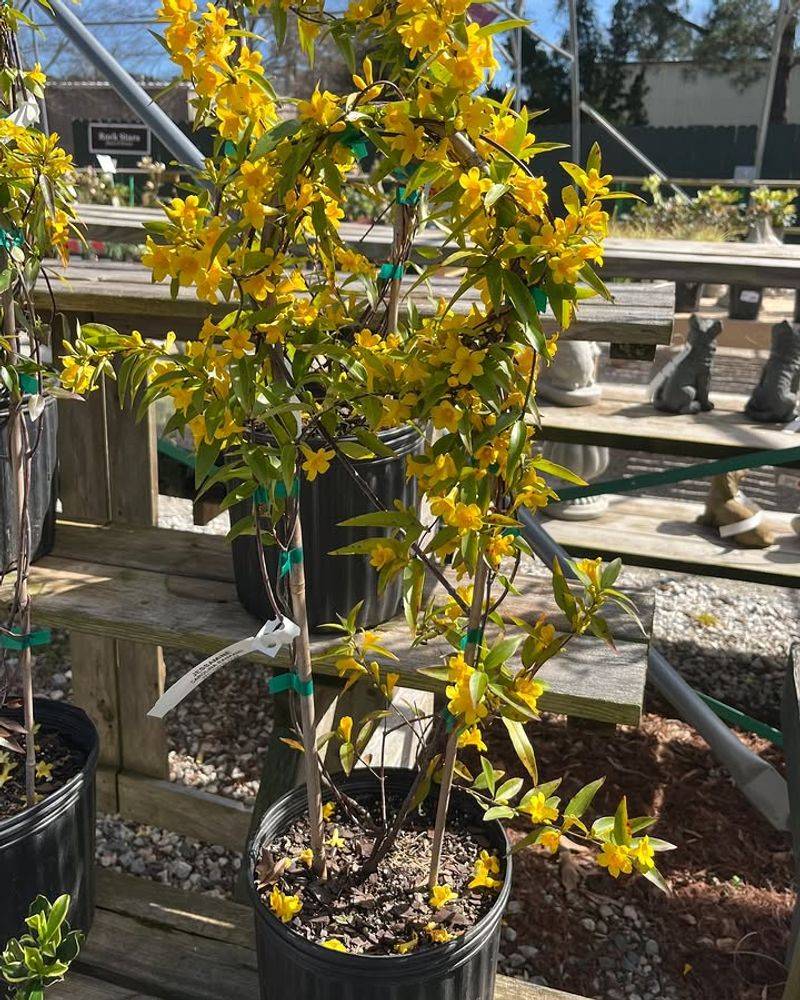
Late February in Florida can feel gray and restless, and then Carolina jessamine opens and suddenly the whole porch smells like something worth waking up for.
Gelsemium sempervirens is a Florida native vine that UF/IFAS recommends for arbors, fences, pergolas, and trellises, and its fragrant yellow flowers typically appear from late winter through early spring when almost nothing else is blooming.
That timing alone makes it a standout in any container garden.
Growing Carolina jessamine in a pot is absolutely doable, but it requires a large container and a small trellis or obelisk for support. The vine is a twiner, meaning it wraps its stems around whatever structure you provide.
Full sun produces the most flowers, so place the pot in the sunniest spot on your patio or porch. Well-drained potting soil and moderate watering keep roots healthy without promoting overly aggressive growth.
Prune Carolina jessamine right after it finishes blooming to shape the plant and encourage denser growth for the following season. Waiting too long to prune can reduce next year’s flower display.
The vine can grow several feet in a season, so do not skip this step if you want it to stay within a reasonable pot-sized footprint.
One clear caution worth sharing: all parts of Carolina jessamine are poisonous if swallowed, and UF/IFAS notes that its sap can irritate some people’s skin.
Most adult gardeners handle it without concern, but households with pets or young children who put plants in their mouths should think carefully before placing this vine at low levels.
Kept out of reach and properly labeled, it remains a beautiful and uniquely timed Florida native climber.
6. Dwarf Bougainvillea Keeps Big Color In A Smaller Footprint
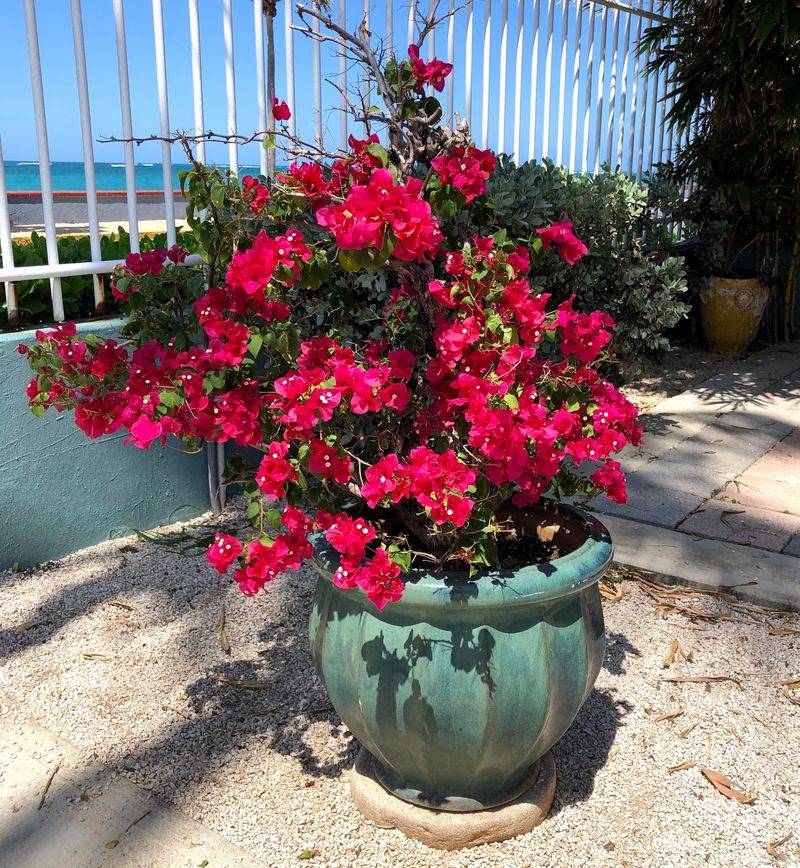
Standard bougainvillea in a Florida yard can reach the roofline before you have finished your morning coffee. Dwarf and miniature bougainvillea varieties are a completely different conversation.
Compact selections such as ‘Pink Pixie,’ ‘Helen Johnson,’ and ‘Juanita Hatten’ are better fits for pots and hanging baskets than full-size bougainvillea.
The key word with any bougainvillea in a pot is management. Full sun is non-negotiable.
Without at least six hours of direct sunlight daily, bougainvillea sulks and produces far fewer of the colorful bracts it is known for. Use a sturdy container with excellent drainage and a gritty, fast-draining potting mix.
One of the most common mistakes Florida container gardeners make is overwatering bougainvillea. Let the soil dry out noticeably between waterings, as these plants actually bloom more reliably under slight moisture stress.
Prune dwarf bougainvillea after each bloom cycle to encourage the next flush of color and to keep the plant from sprawling beyond its container. New growth is what triggers flowering, so light but consistent trimming pays off in repeated color through the warm months.
A small trellis or sturdy stake gives stems something to lean against without requiring a full climbing structure.
In North and Central Florida, move pots to a protected area or indoors when freezing temperatures are forecast.
Bougainvillea is not a Florida native, but well-managed dwarf selections are among the most eye-catching container plants available for Florida’s long, sunny growing season.
Handled properly, they deliver months of spectacular color without turning into a landscape takeover project.
7. Climbing Aster Brings Fall Flowers To A Pruned Trellis
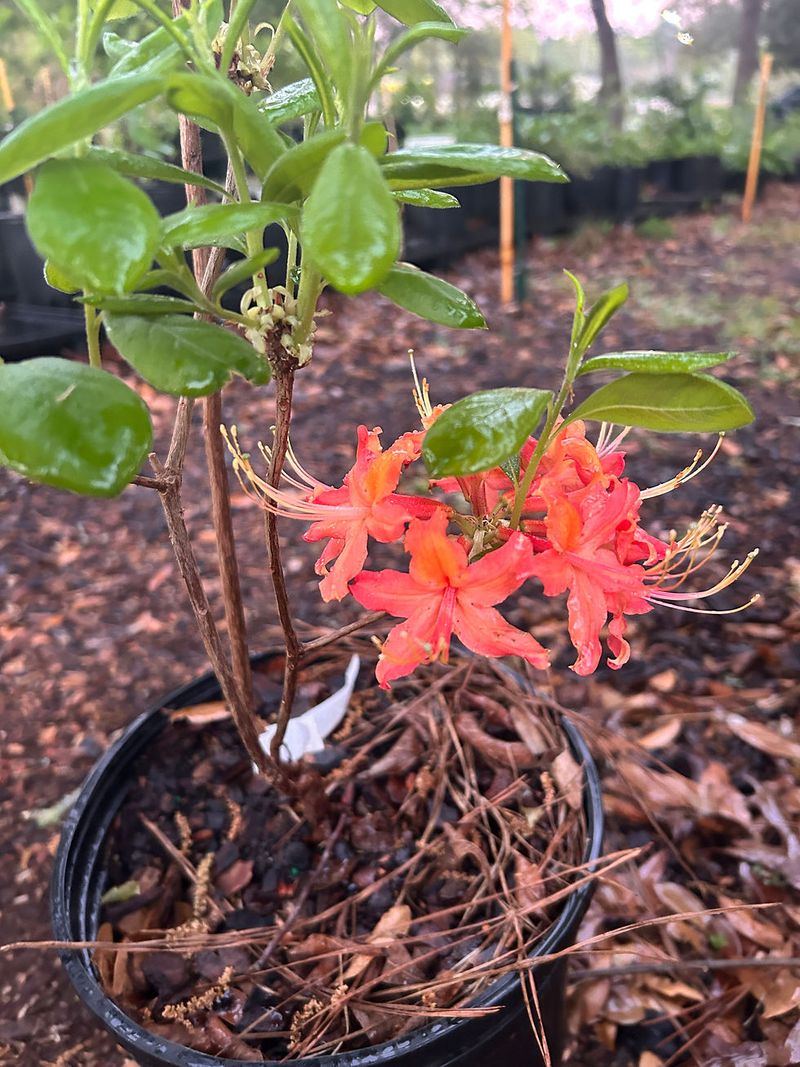
Most Florida container gardens peak in spring and summer, so finding a vine that saves its best performance for fall is genuinely exciting.
Climbing aster, Symphyotrichum carolinianum, is a Florida native vine that blooms in autumn when many other plants are winding down.
Its small lavender to pink daisy-like flowers attract bees, butterflies, and other pollinators at a time of year when nectar sources are becoming harder to find across the landscape.
Straightforward honesty is needed here: climbing aster can get rangy and tangled when ignored. It sprawls aggressively without guidance, which means it only earns a spot in this article when grown on a support and pruned consistently throughout the season.
A trellis, fence panel, or wire cage inside a large pot gives the stems somewhere to climb and keeps the plant looking intentional rather than chaotic.
Choose a large container, at least 14 inches wide, with reliable drainage. Climbing aster grows well in full sun to part sun, and consistent moisture matters more for this plant than for some of the drought-tougher vines on this list.
Water regularly in containers, especially during hot spells, but avoid leaving the pot constantly soggy. Trimming throughout the growing season shapes the plant and directs energy toward fall flowering rather than endless stem production.
Climbing aster fits naturally into informal patio setups, wildlife-friendly container gardens, and naturalistic outdoor spaces. A very formal or manicured patio might find it too loose in habit.
For gardeners who want to feed pollinators into October and November while growing something genuinely Florida native, it brings real seasonal value that few other climbing container plants can match.