These Native Michigan Ground Covers Are So Dense Weeds Simply Cannot Break Through
Weeding is one of those garden tasks that never really ends, unless you change what you are growing.
Dense ground covers are one of the most effective long term solutions for keeping weeds out, and native Michigan varieties do the job better than most imported options ever could.
They are already adapted to the soil, the winters, and the specific growing conditions found across the state, which means they establish faster and fill in more aggressively than plants that are working against the local climate.
Once a true native ground cover gets going, it creates a living layer so thick that most weeds simply never find the light or the space to get started.
Michigan has a strong lineup of native ground covers that fit this description, and they come with an extra benefit that non native options usually cannot offer. They support local insects, pollinators, and wildlife while they work.
These are the varieties that serious Michigan gardeners turn to when they want a weed problem handled for good without the constant upkeep.
1. Pennsylvania Sedge (Carex pensylvanica)
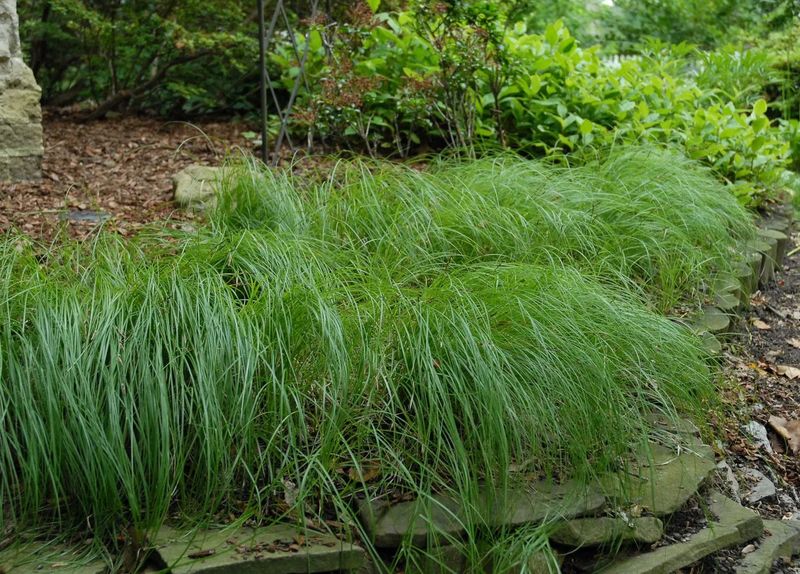
Forget the traditional lawn under your trees. Pennsylvania Sedge is one of Michigan’s most underrated native plants, quietly doing big work in dry to average shaded spots where grass simply refuses to grow.
It forms a soft, flowing green layer that looks almost like a natural carpet, and once it gets going, it really fills in beautifully.
This plant spreads slowly but steadily, creating a thick enough ground layer to block weed seeds from getting the sunlight they need to sprout.
It thrives in the kind of dry shade found under mature oaks and maples, which are super common across Michigan landscapes. Unlike aggressive spreaders, Pennsylvania Sedge stays manageable and polite in the garden.
Planting it is straightforward. You can start with plugs spaced about a foot apart, and within two to three seasons, you will notice real coverage forming across the soil.
It stays low, rarely exceeding about a foot tall, so no mowing is needed in most situations. Michigan gardeners who try it often say they wish they had planted it years earlier.
It is evergreen in mild winters too, giving your yard year-round color and texture without much effort on your part at all.
2. Wild Ginger (Asarum canadense)
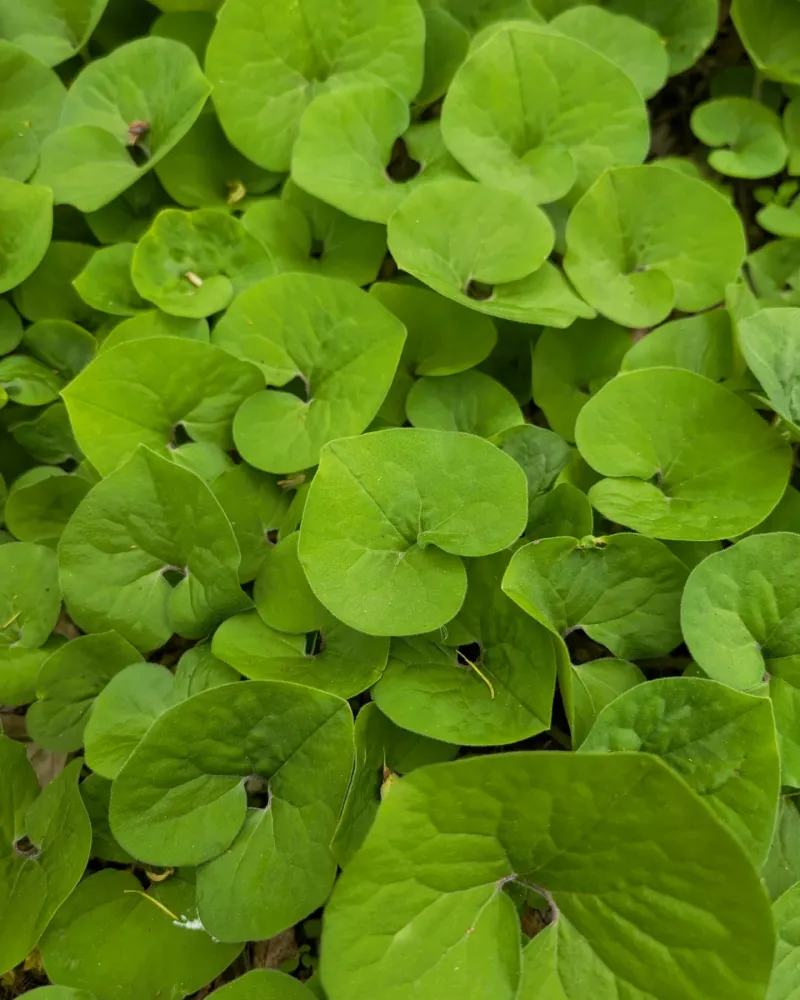
There is something almost magical about the way Wild Ginger grows. Its broad, heart-shaped leaves overlap each other so completely that the soil beneath them stays cool, dark, and shaded all season long.
Weeds simply cannot get a foothold under that kind of dense, living canopy, which is exactly why Michigan gardeners love it so much.
Wild Ginger spreads by underground rhizomes, slowly expanding outward year after year into a solid, beautiful mat. It prefers moist, rich soil in full to partial shade, making it a natural fit for woodland-style Michigan gardens or shaded backyard beds.
The leaves can reach several inches wide, and when they overlap, the coverage becomes impressively tight.
One fun detail most people do not know is that Wild Ginger produces small, hidden flowers right at ground level in spring, tucked beneath the leaves where only curious eyes will spot them. It is not the fastest spreader, so patience pays off here.
Your Michigan Garden Changes Every Week. Your Plan Should Too.
Gardening in Michigan changes quickly throughout the season. Every Friday you’ll receive a simple weekly plan showing exactly what to plant, prune, fertilize, harvest, and protect so you never miss the right timing.
Plant it in groups and give it a couple of seasons to establish, and you will be rewarded with one of the most attractive and functional ground covers in Michigan gardening.
It pairs wonderfully with ferns, trillium, and other native woodland plants for a layered, natural look that feels truly effortless.
3. Barren Strawberry (Geum fragarioides)
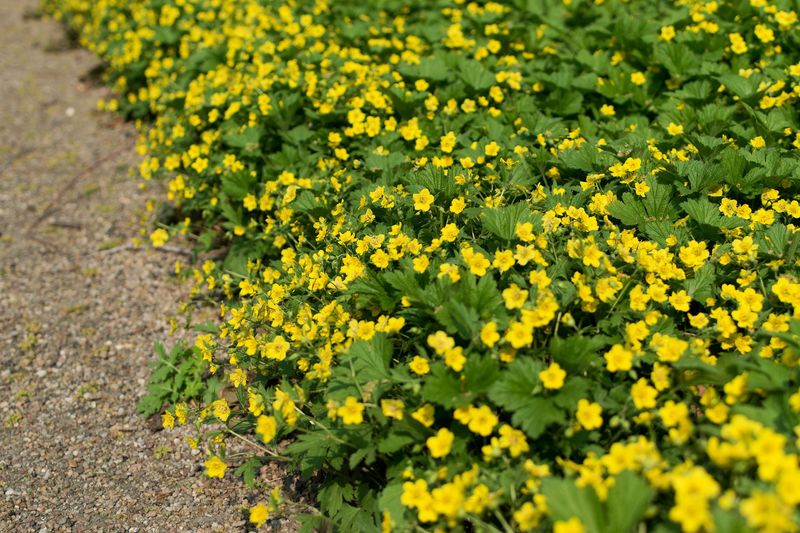
Do not let the name fool you. Barren Strawberry is anything but boring. This compact, cheerful native plant spreads by runners across the soil surface, building a tight mat of glossy green leaves that stays low and dense through the growing season.
In spring, it bursts into small yellow flowers that brighten up shaded Michigan garden beds in a really charming way.
It works well in part shade and handles average, even somewhat dry soils, which gives it a wide range of usefulness across different Michigan garden situations. Once it establishes a solid mat, smaller weeds simply get crowded out before they can take hold.
The foliage is semi-evergreen in many parts of Michigan, adding some winter interest when most other plants have gone completely bare.
Spacing plants about twelve inches apart gives them room to spread naturally without overcrowding too fast. Within two seasons, you can expect noticeable coverage across your bed.
Barren Strawberry works especially well along pathways, under shrubs, and at the edges of wooded areas where other plants struggle.
It is also a great pollinator supporter during its spring bloom period, attracting small native bees that are important to Michigan ecosystems. For a low-effort, high-reward ground cover, this plant genuinely delivers on every promise.
4. Wild Strawberry (Fragaria virginiana)
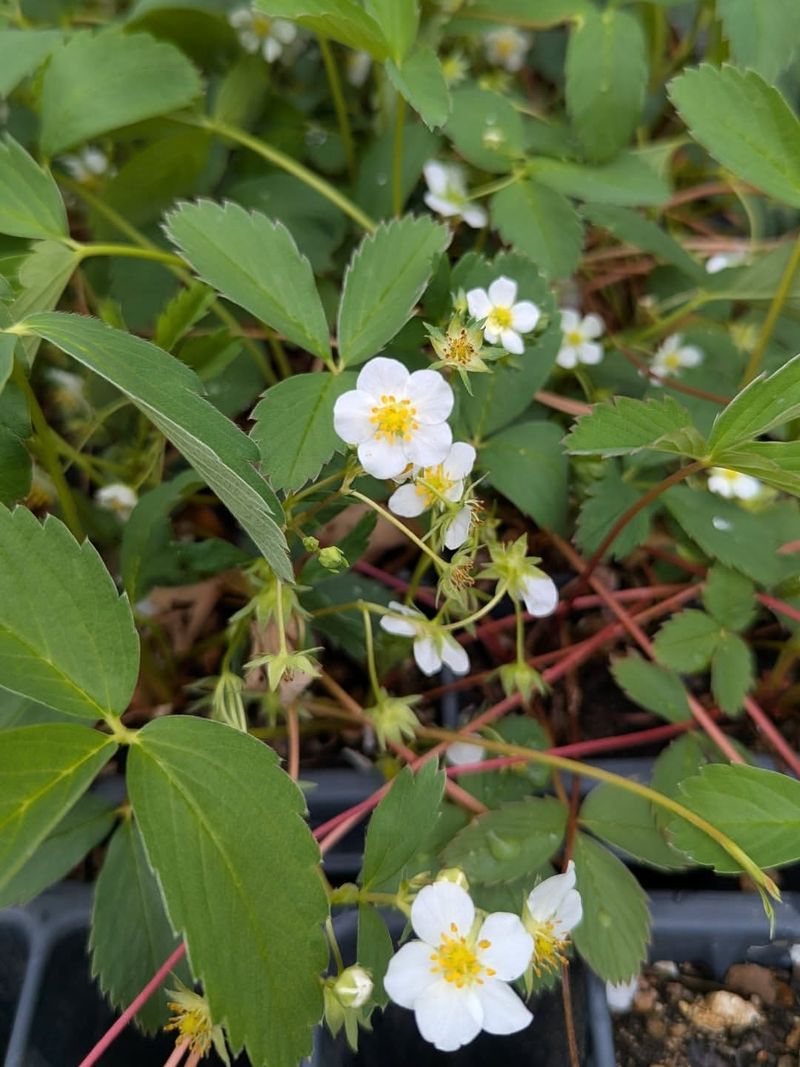
Wild Strawberry is the speedy one of this group, and Michigan gardeners who want quick coverage will appreciate that energy.
It spreads by runners that root as they travel across the soil, knitting together a low, dense patch of bright green leaves that competes aggressively with weeds in sunny to partly shaded beds. It is tough, cheerful, and genuinely productive.
In spring, it produces pretty white flowers, and by early summer, tiny but flavorful red strawberries appear. Birds, pollinators, and even people enjoy them, making this plant a genuine wildlife magnet right in your Michigan backyard.
The dense leaf layer shades the soil enough to prevent most weed seeds from germinating successfully beneath it.
Wild Strawberry thrives in full sun but handles part shade with ease, and it tolerates a range of Michigan soil types from sandy to loamy.
It is an especially smart choice for sunny slopes or open garden beds where erosion can be a problem, since its runners anchor the soil nicely.
Planting it in groups helps it establish faster, and once it gets rolling, very little maintenance is needed to keep it healthy and spreading.
It is one of those plants that rewards you far beyond what you put into it, which is always a wonderful thing in any Michigan garden.
5. Canada Anemone (Anemone canadensis)
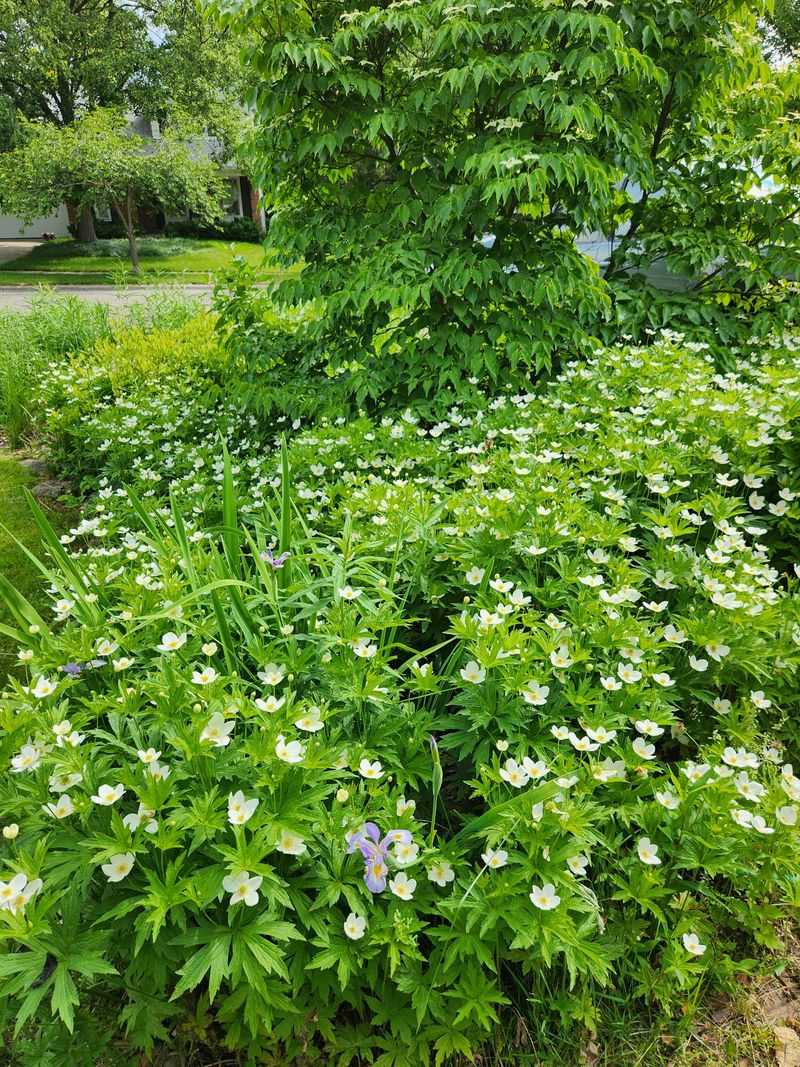
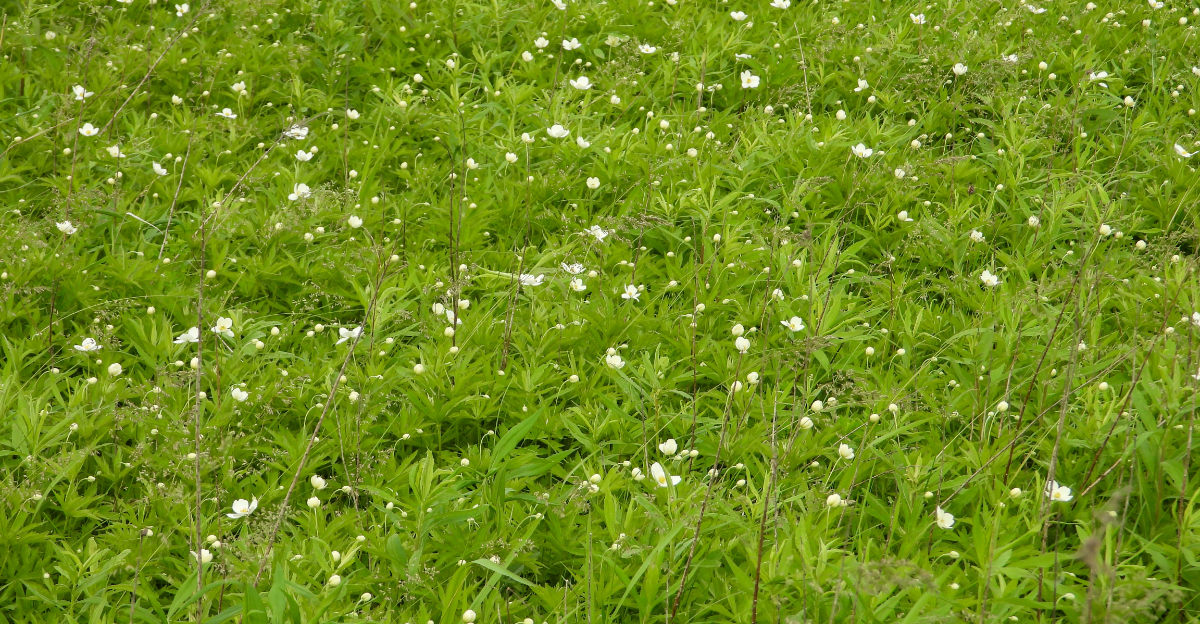
When Canada Anemone decides to grow somewhere, it really commits. This vigorous native plant forms broad, dense colonies in moist Michigan soils, spreading by rhizomes with impressive determination.
Its bright white flowers appear in late spring and early summer, creating a stunning display that stops people in their tracks when it is in full bloom.
Because it spreads so enthusiastically, Canada Anemone works best in larger garden areas, naturalized spots, or along Michigan pond edges and stream banks where there is plenty of room to roam.
In those kinds of spaces, it becomes a powerhouse weed suppressor, shading the soil with its deeply lobed leaves and out-competing most common garden weeds without any help from you.
Gardeners who have tried it in smaller, contained beds sometimes find it a bit too energetic, so placing it thoughtfully matters. A buried root barrier can help keep it in bounds if needed.
But in the right spot, it is truly one of Michigan’s most rewarding natives. It supports a wide range of native pollinators during its bloom period, and its lush summer foliage remains attractive long after the flowers fade.
If you have a moist, open area in your Michigan yard that weeds seem to love, Canada Anemone may be exactly the solution you have been searching for all along.
6. Foamflower (Tiarella cordifolia)
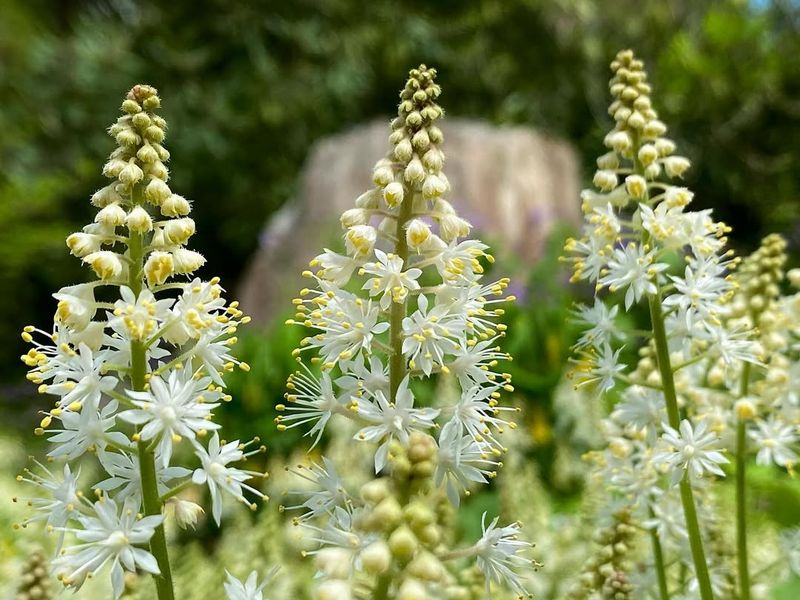
Foamflower earns its name every spring when it sends up feathery, foam-like spikes of white to pale pink flowers above its richly patterned leaves.
It is one of Michigan’s most beautiful native ground covers, and it happens to be an excellent weed suppressor at the same time.
The combination of good looks and practical function makes it a favorite among Michigan gardeners who care about both beauty and low maintenance.
It spreads by runners in rich, moist, shaded soil, gradually thickening its coverage over several seasons into a dense, attractive mat.
The leaves are attractive even without the flowers, often showing deep burgundy markings along the veins that give the plant a decorative, almost artistic quality.
Under trees or along shaded pathways, Foamflower creates a refined woodland feel that looks intentional and polished.
Foamflower pairs beautifully with Wild Ginger, ferns, and Trillium in Michigan woodland garden designs. It prefers consistent moisture and does not love dry soil, so adding some organic compost at planting time helps it settle in comfortably.
Once established, it holds its ground well against weeds and fills in gaps over time without becoming invasive or unruly.
Michigan gardeners who plant it in the right conditions often describe it as one of the most satisfying native plants they have ever added to their yard, and it is easy to understand why.
7. Bigleaf Aster (Eurybia macrophylla)
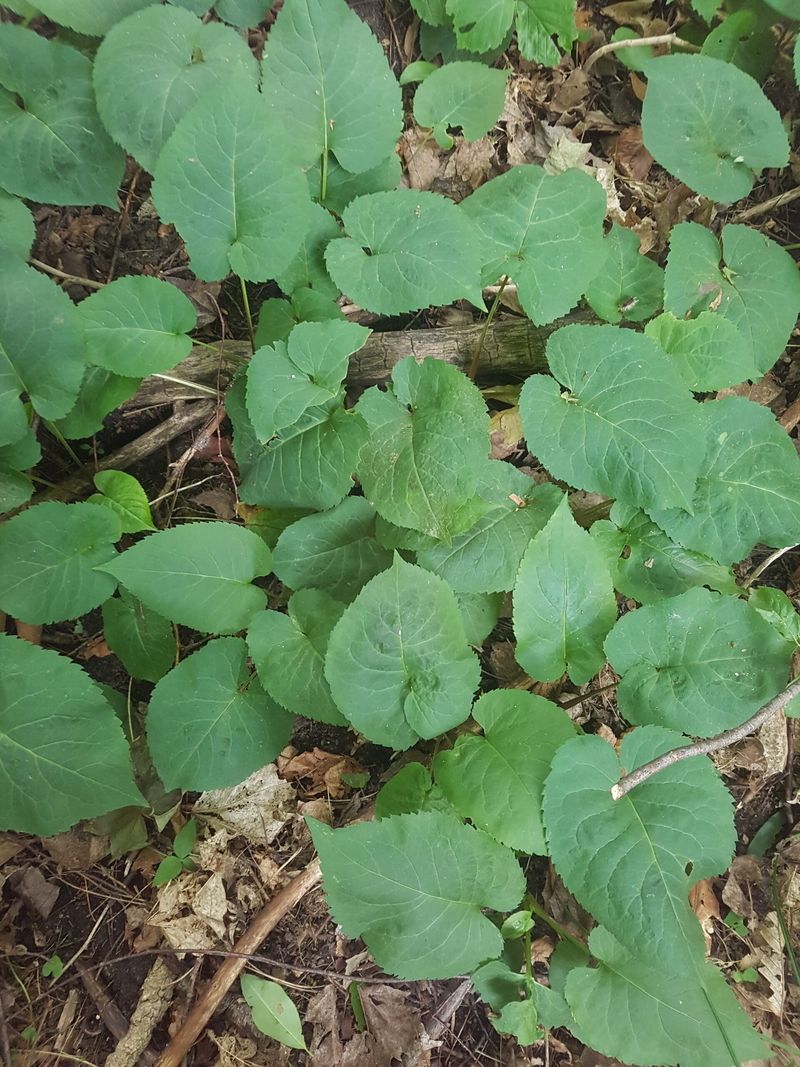
Walk through almost any mature Michigan forest in summer and you are likely to spot Bigleaf Aster carpeting the ground beneath the trees.
Its enormous, heart-shaped leaves are unmistakable, and they do an outstanding job of shading the soil surface so thoroughly that most weeds simply cannot compete.
It is one of those plants that looks like it was made specifically for the tough, shaded conditions found across Michigan woodlands.
Bigleaf Aster spreads by rhizomes, slowly but reliably expanding into broad colonies over time.
In late summer and early fall, it produces clusters of small lavender-blue flowers that support native bees and butterflies during a critical time of year when many other blooms have already faded.
That late-season color is a real bonus in Michigan gardens that can start looking tired by August.
It handles dry to medium moisture levels in shade, making it one of the more adaptable choices on this list for Michigan gardeners dealing with challenging spots under dense tree canopies.
Planting it alongside other native woodland plants creates a layered, natural look that mimics what you would find on a forest floor.
It is also quite drought tolerant once established, which is helpful during Michigan’s occasionally dry late summers. For a shade garden that practically takes care of itself, Bigleaf Aster is an excellent and deeply rewarding choice worth planting this season.