Now Is The Time To Thin Oregon Fruit Trees For Healthier Fruit (This Is How To Do It)
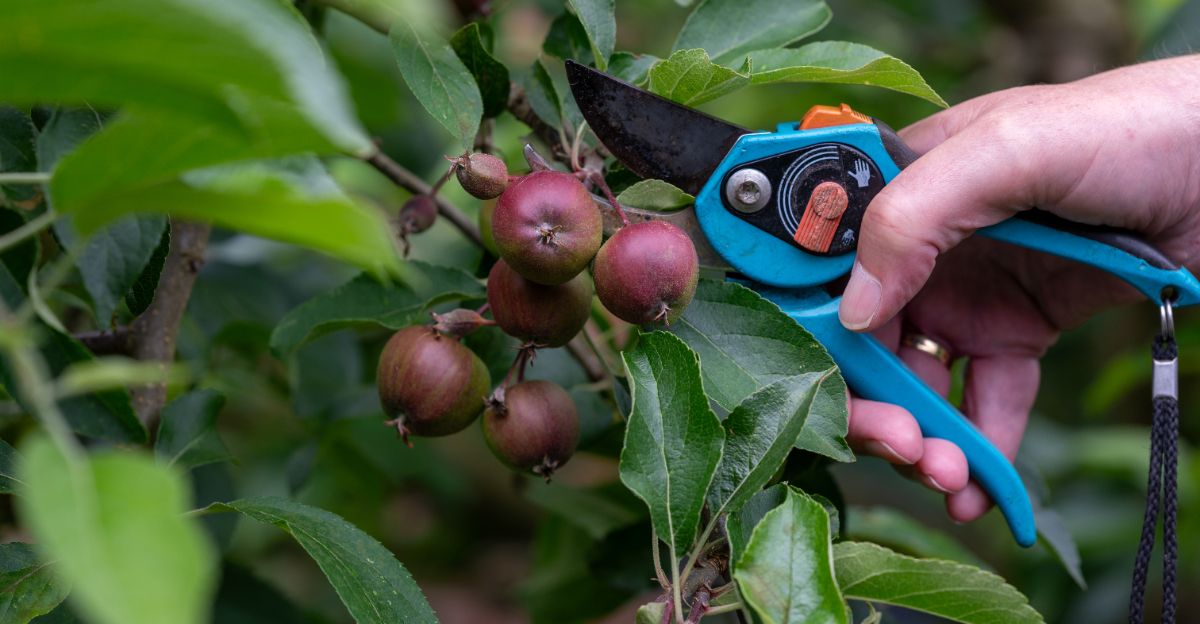
Here’s something that feels completely wrong the first time you do it: standing in your Oregon garden in late spring, deliberately pulling off perfectly healthy baby fruit from your trees.
It goes against every gardening instinct you have. You grew those! They were doing great!
But this one slightly counterintuitive task is the difference between a tree that produces dozens of sad, small, flavorless fruits and one that delivers big, juicy, absolutely incredible fruit that makes you look like a total pro.
Thinning fruit trees is one of those old-school orchard secrets that experienced Pacific Northwest growers swear by, and once you see the results, you’ll wonder why you waited so long to start.
Oregon’s growing season gives fruit trees plenty of energy to work with, and thinning tells the tree exactly where to put it. The timing right now is perfect, the process is simple, and your harvest is going to be so much better for it.
1. Thin Fruit After Natural Drop
Every year, fruit trees do something pretty amazing on their own. After the blossoms fall, the tree naturally drops some of its young fruit.
This is called the “June drop,” and it happens in Oregon usually in late May or early June. The tree is basically telling you it has more fruit than it can handle.
Wait for this natural drop to finish before you start thinning by hand. If you start too early, you might remove fruit the tree would have dropped anyway.
Patience here pays off. Once the drop is done, you can clearly see what the tree has decided to keep.
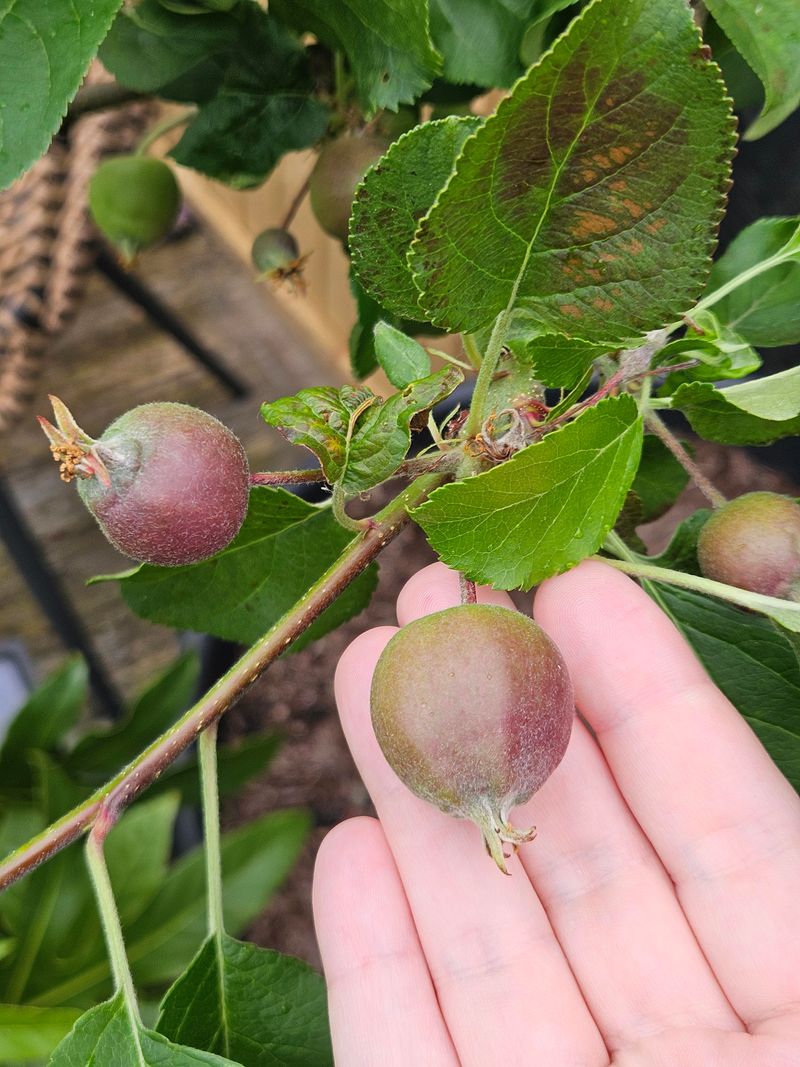
After the natural drop, take a good look at each branch. You will likely still see clusters of three, four, or even five small fruits bunched tightly together.
That is too many for one spot. The tree cannot send enough water and nutrients to all of them.
Most will stay small, get tough, or fall off before they ripen anyway.
Thinning after the natural drop gives you a head start on a great harvest. Oregon growers who skip this step often end up with lots of small, disappointing fruit at the end of the season.
2. Remove The Smallest Fruits
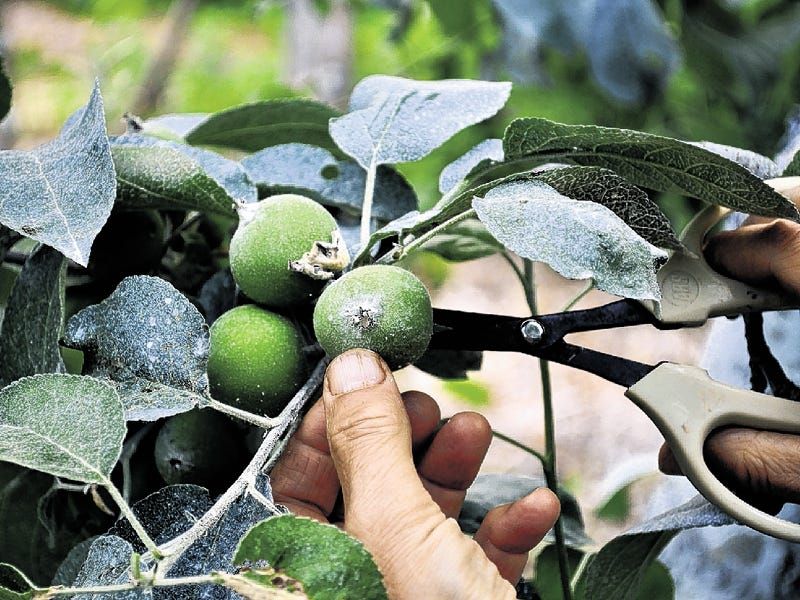
When you look at a cluster of young fruit, not all of them are created equal. Some are already bigger and rounder, while others look tiny, pale, or oddly shaped.
Those small ones are the first to go. Removing the weakest fruit gives the strongest ones a real chance to shine.
Smaller fruits in a cluster are usually less developed and less likely to grow into anything worth keeping. They often have blemishes, irregular shapes, or signs of early pest damage.
Getting rid of them early is one of the smartest moves an Oregon fruit grower can make.
When removing small fruits, use your fingers or small pruning snips. Be careful not to yank the whole cluster or damage the spur, which is the short woody stem that holds the fruit.
Your Oregon Garden Changes Every Week. Your Plan Should Too.
Gardening in Oregon changes quickly throughout the season. Every Friday you’ll receive a simple weekly plan showing exactly what to plant, prune, fertilize, harvest, and protect so you never miss the right timing.
Spurs are valuable because they produce fruit year after year.
Focus on keeping the largest, most evenly shaped fruit from each cluster. That one fruit will receive all the energy the tree was sending to five or six smaller ones.
The result is a noticeably bigger and better-tasting apple, pear, or peach come harvest time in Oregon. Quality always beats quantity in the orchard.
3. Space Apples And Pears Apart
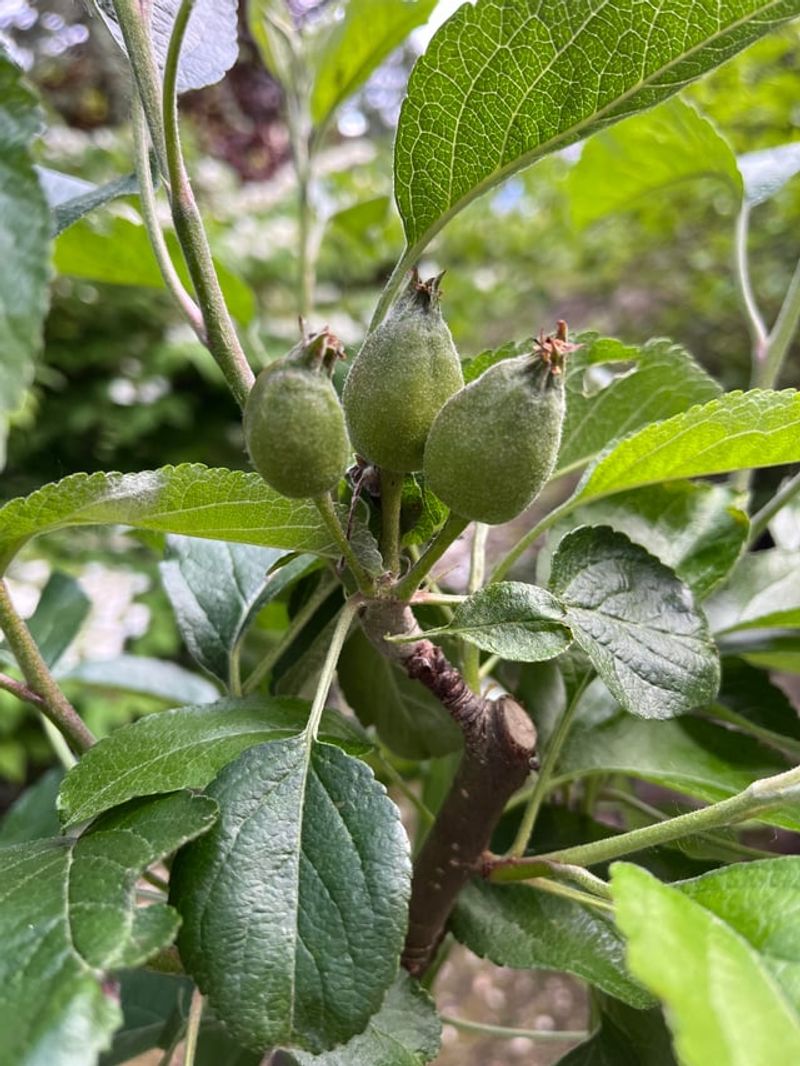
Spacing is everything when it comes to growing great apples and pears in Oregon. A common rule among experienced growers is to leave about six inches between each fruit on a branch.
That might seem like a lot of empty space, but trust the process. Each fruit needs room to swell up to its full size.
When fruits grow too close together, they compete for the same water and nutrients. They can also rub against each other as they grow, causing skin damage that leads to rot or pest problems.
Proper spacing prevents all of that.
For apples, aim for one fruit every six inches along the branch. For pears, you can go slightly closer, around four to five inches apart, but more space is always better.
Oregon’s Hood River Valley is famous for its beautiful pears, and proper spacing is one reason those fruits look so perfect at the market.
Walk around each tree and check every branch. It takes time, but the effort is worth it.
Well-spaced fruit develops better color, better flavor, and a firmer texture. Shoppers at Oregon farmers markets will notice the difference right away.
Your trees will also feel less stressed going into the hot summer months ahead.
4. Leave Peaches Room To Grow
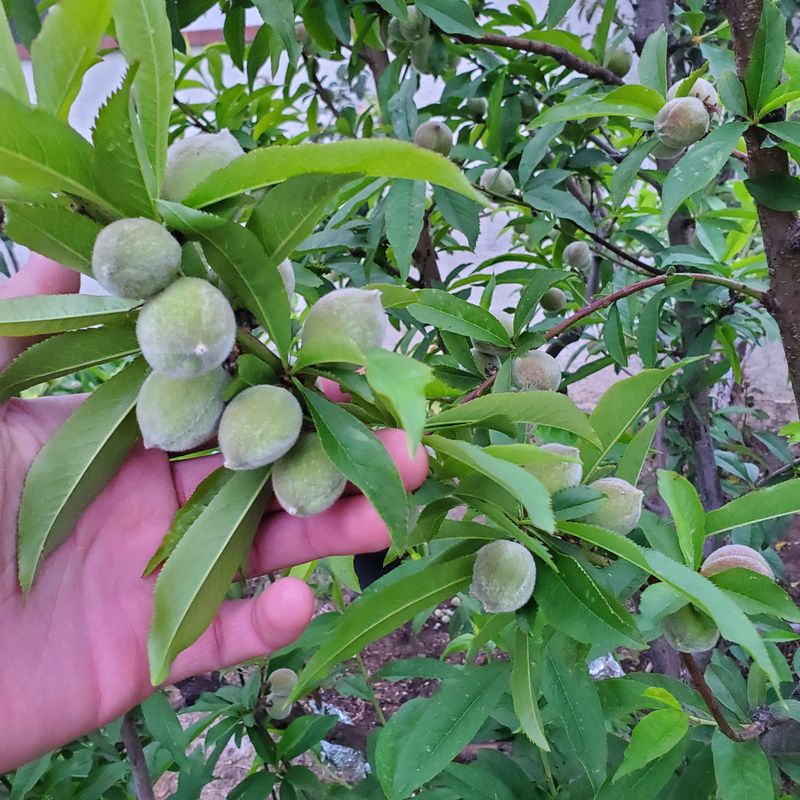
Peaches are one of the most rewarding fruits to grow in Oregon, especially in warmer areas like the Rogue Valley and Southern Oregon. But peach trees are notorious for setting way too much fruit.
Left unthinned, you end up with dozens of golf ball-sized peaches instead of a smaller number of large, juicy ones.
For peaches, the magic number is about eight inches between fruits. Some experienced growers even go as far as ten inches apart.
That extra space lets each peach grow to its full potential. A crowded peach tree is a stressed peach tree, and stressed trees are more likely to have problems with pests and disease.
Thinning peaches also protects the branches. A fully loaded branch can snap under the weight of too much fruit, especially during summer thunderstorms or wind events that roll through Oregon.
Losing a major branch sets the tree back by years.
Start thinning your peaches when the fruits are about the size of a marble. At that stage, they are easy to remove with a gentle twist or small snip.
Do not wait too long. Once peaches start sizing up, thinning becomes harder and less effective.
Early action leads to the sweetest results come August.
5. Use Clean, Gentle Cuts
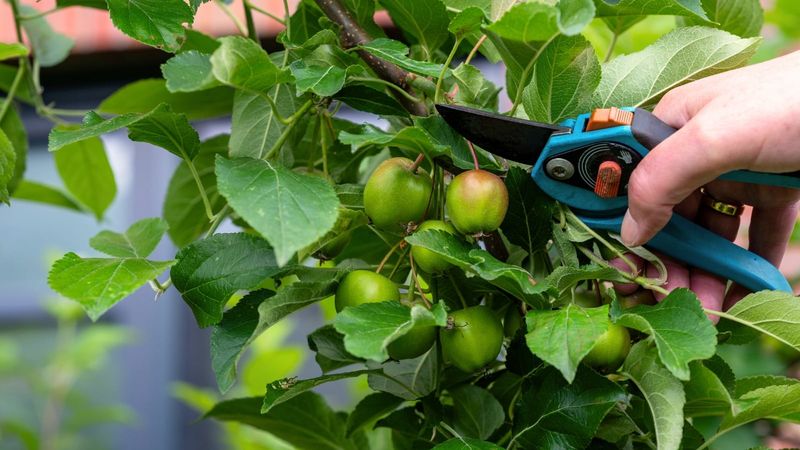
How you remove fruit matters just as much as which fruit you remove. Yanking or twisting fruit off aggressively can damage the spur or even strip bark from the branch.
That kind of damage opens the door to disease and can hurt next year’s crop too.
The best tool for the job is a small pair of pruning snips or even sharp scissors. Clean them before you start with a little rubbing alcohol or a diluted bleach solution.
This prevents spreading any fungal or bacterial issues from one tree to another, which is a real concern in Oregon’s wetter spring climate.
When you make a cut, snip the stem of the fruit you want to remove, not the spur it is attached to. Leave the spur completely intact.
Those little woody nubs are the fruit-producing powerhouses of the tree. Protecting them now means a better harvest for many seasons to come.
Work slowly and carefully, especially on older trees with more brittle wood. Take breaks if your hands get tired.
Rushing leads to mistakes, and one bad cut on a healthy spur can cost you several years of fruit production on that spot. Clean, careful work is always worth the extra few minutes it takes.
6. Protect Branches From Breaking
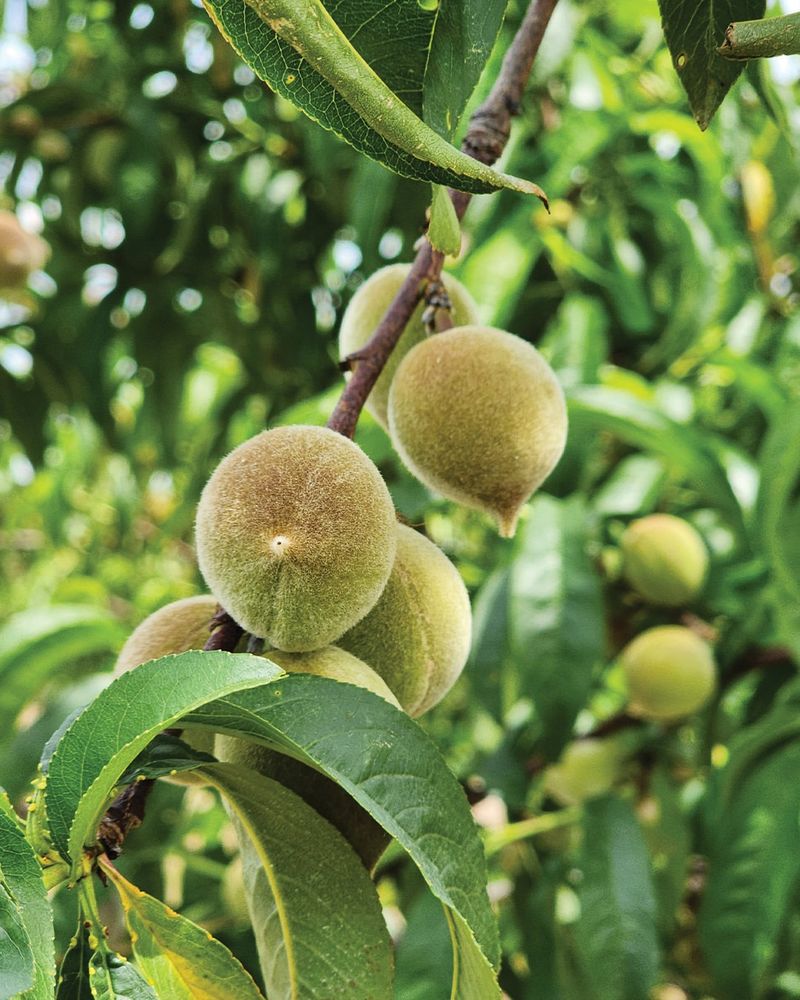
Even after thinning, some branches in Oregon orchards can still carry more weight than they should. Heavy crops on long, horizontal branches are a recipe for breakage, especially during the warm, breezy days of July and August.
Protecting those branches now saves a lot of heartache later.
One easy method is to use soft ties or strips of old fabric to gently support heavy branches. Tie them to a nearby upright branch or to a wooden stake driven into the ground.
The goal is to reduce the downward pull without restricting the branch’s natural movement.
Another option is to install props under sagging branches. A forked stick or a piece of lumber with a notch cut into the top works great.
Oregon orchardists have used this trick for generations. It is simple, cheap, and very effective at preventing losses.
Check your supports regularly throughout the season. As fruit grows heavier, you may need to adjust the ties or props.
Also keep an eye out after windstorms, which can shift supports out of place. A little maintenance goes a long way.
Strong, healthy branches that survive the season intact will reward you with great fruit year after year in your Oregon garden or orchard.
7. Compost Damaged Fruit
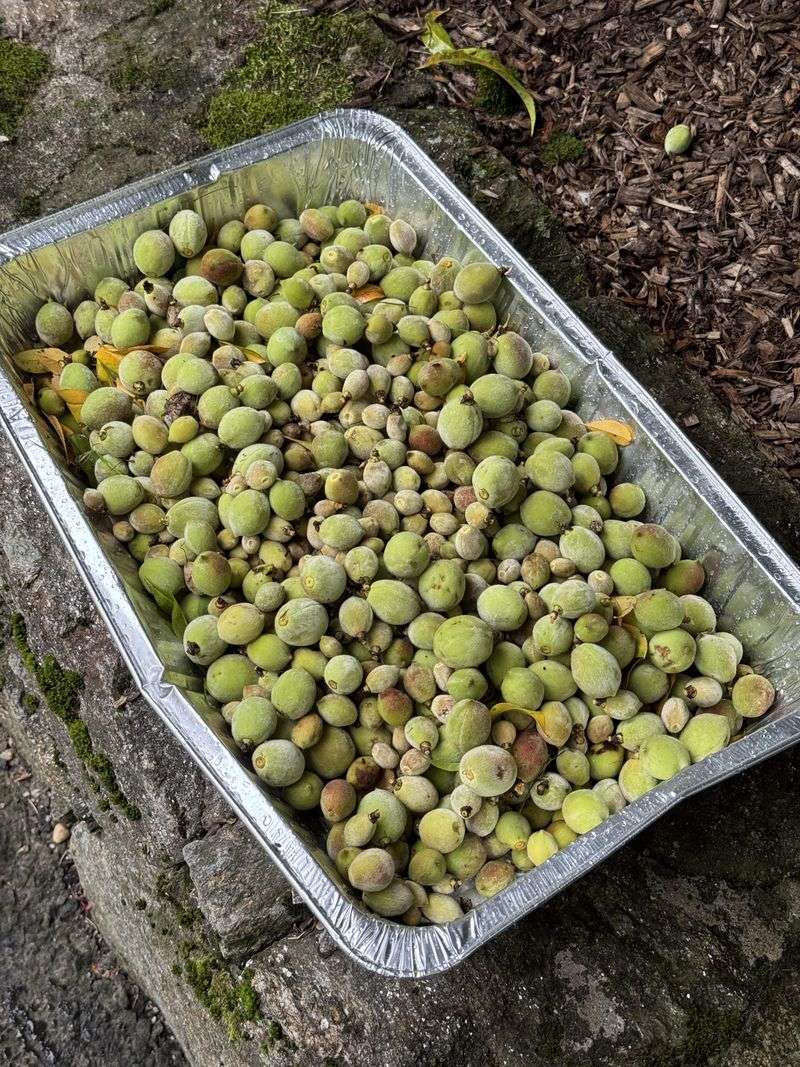
Once you have finished thinning, you will have a pile of small, underdeveloped, or damaged fruit on the ground or in a bucket. Do not just leave it lying around under the tree.
That discarded fruit can harbor pests and disease spores that will cause problems later in the season.
The best thing to do with healthy thinned fruit is to toss it into your compost pile. In Oregon, where composting is practically a way of life, this is a natural fit.
The young fruit breaks down quickly and adds good organic matter to your compost. Over time, that compost feeds your soil and your trees.
However, if any of the removed fruit shows signs of fungal spots, mold, or insect damage, do not compost it. Those issues can survive the composting process and spread back into your garden.
Instead, bag that fruit and put it in your curbside yard debris bin if your Oregon city offers that service.
Keeping a clean orchard floor is one of the most underrated parts of good fruit tree care. Fallen and discarded fruit left to rot under trees attracts wasps, rodents, and fungal problems.
A tidy garden makes for healthier trees, cleaner fruit, and a much more enjoyable harvest season across Oregon.