The Native Michigan Trillium Species You Can Plant In May And What They Need
Michigan springs know how to put on a show, and trilliums are a big part of the magic.
Tucked into shady woods and leaf-covered corners, these native wildflowers bring a quiet kind of beauty that feels right at home in Michigan.
They are not flashy in the usual garden-center way, but that is part of the charm. Trilliums have a graceful, woodland look that makes you want to slow down and stare for a minute.
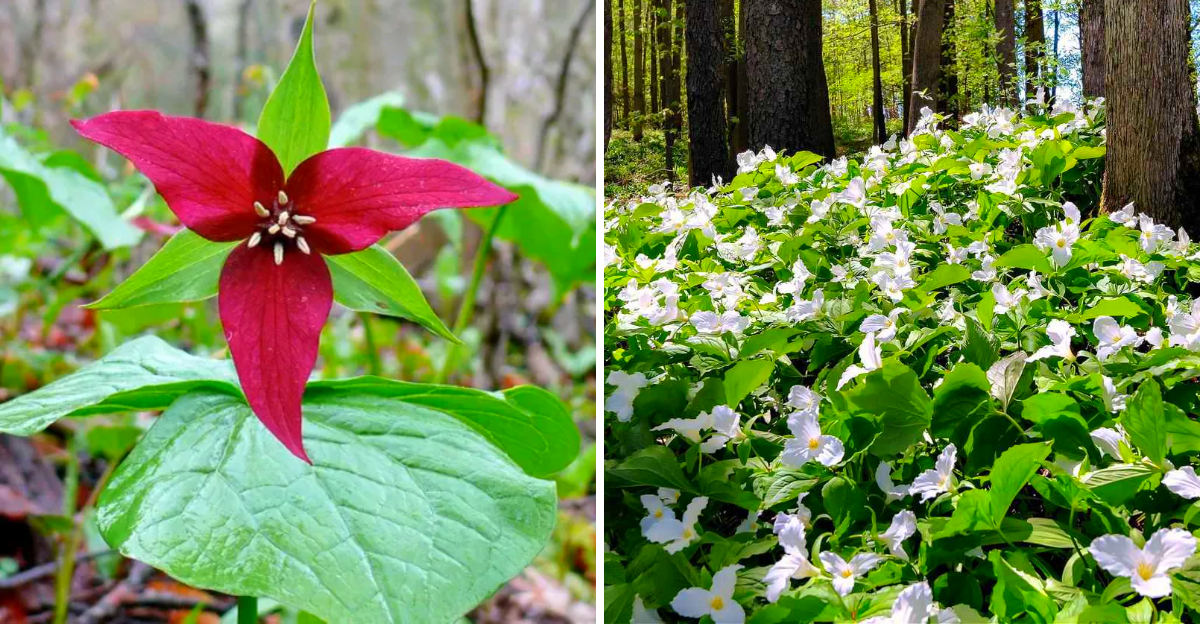
Fair warning, they are very good at that. White Trillium and Red Trillium are two favorites that catch the eye fast, especially if you have spotted them on a spring walk or found them at a native plant sale and instantly fell in love.
It happens. These plants can be rewarding in a home garden, but they are not looking for a hot, sunny flower bed and a lot of fuss.
Give them rich soil, cool shade, and a setting that feels like a little piece of Michigan forest, and they can settle in beautifully over time.
1. Large White Blooms Make White Trillium A Spring Standout
Few spring wildflowers stop Michigan gardeners in their tracks quite like White Trillium.
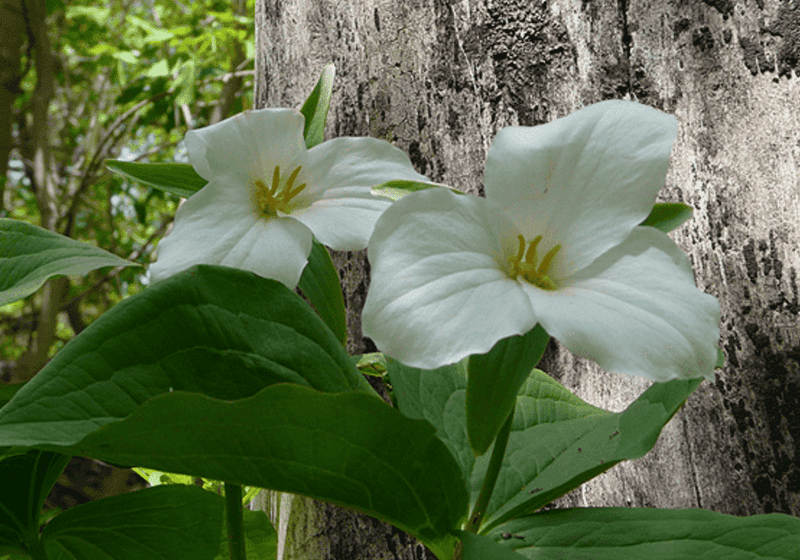
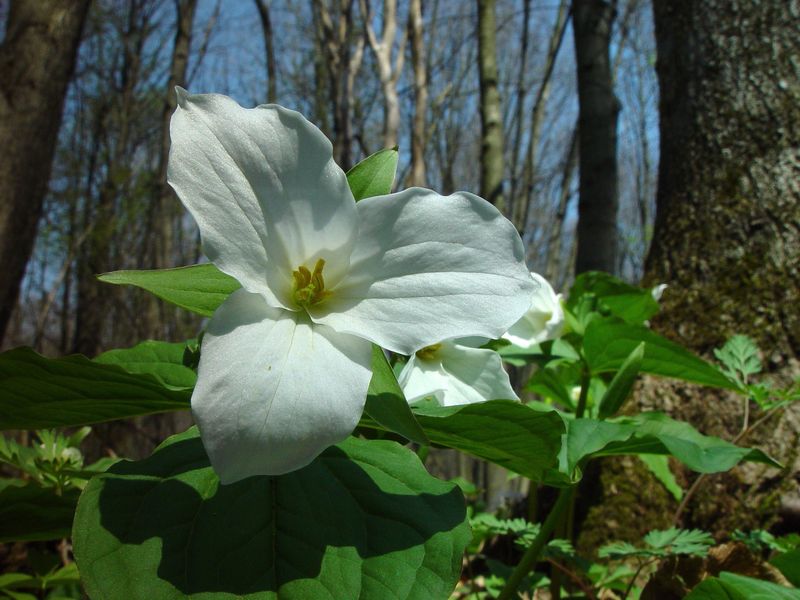
Known botanically as Trillium grandiflorum, this native species produces large, three-petaled white flowers that can stretch up to three inches across, making it one of the most visually striking native plants in the region.
When a healthy colony blooms in mid to late spring, the effect is genuinely breathtaking.
The flowers open bright white and may gradually shift toward a soft pink as they age, which adds a subtle seasonal charm to shaded garden beds.
Each plant carries a single bloom held above a trio of broad, rich green leaves, giving it a clean and architectural look that feels right at home in a woodland-inspired Michigan landscape.
White Trillium typically blooms from late April through May across much of Michigan, though timing can shift slightly depending on location and seasonal temperatures.
Gardeners who have planted it in the right conditions often describe the bloom as one of the true highlights of the spring garden.
It pairs naturally with other native woodland plants like wild ginger, trout lily, and bloodroot, creating a layered spring display that reflects Michigan’s forest understory.
Because it takes several years to reach blooming size from seed, sourcing nursery-grown plants is the most practical approach for home gardeners looking to establish it sooner.
2. Moist Humus-Rich Soil Helps White Trillium Settle In
Soil quality matters enormously for White Trillium, and getting it right from the start gives this plant the best chance to settle in and eventually thrive.
In Michigan’s natural forests, White Trillium grows in soils that have been enriched by decades of falling leaves breaking down into soft, dark, moisture-retaining humus.
Recreating that kind of soil in a home garden is one of the most important steps a Michigan gardener can take before planting.
Amending a planting bed with composted leaf mold, aged compost, or well-rotted organic matter can help bring a heavy clay or sandy soil closer to what this species prefers.
Your Michigan Garden Changes Every Week. Your Plan Should Too.
Gardening in Michigan changes quickly throughout the season. Every Friday you’ll receive a simple weekly plan showing exactly what to plant, prune, fertilize, harvest, and protect so you never miss the right timing.
The goal is a soil that holds moisture without becoming waterlogged, drains reasonably well after rain, and stays consistently cool and rich through the growing season.
White Trillium does not do well in compacted, dry, or nutrient-poor soils.
A layer of shredded leaf mulch applied over the planting area after establishment can help maintain the cool, moist conditions the plant appreciates.
This mulch also gradually breaks down over time, continuing to feed the soil with organic matter in the same way a natural forest floor would.
Michigan gardeners working with sandy or clay-heavy soils may need to invest a bit more effort into soil preparation, but the payoff of watching White Trillium establish and slowly spread through a woodland bed is well worth the work involved.
3. Part Shade To Shade Suits White Trillium Best
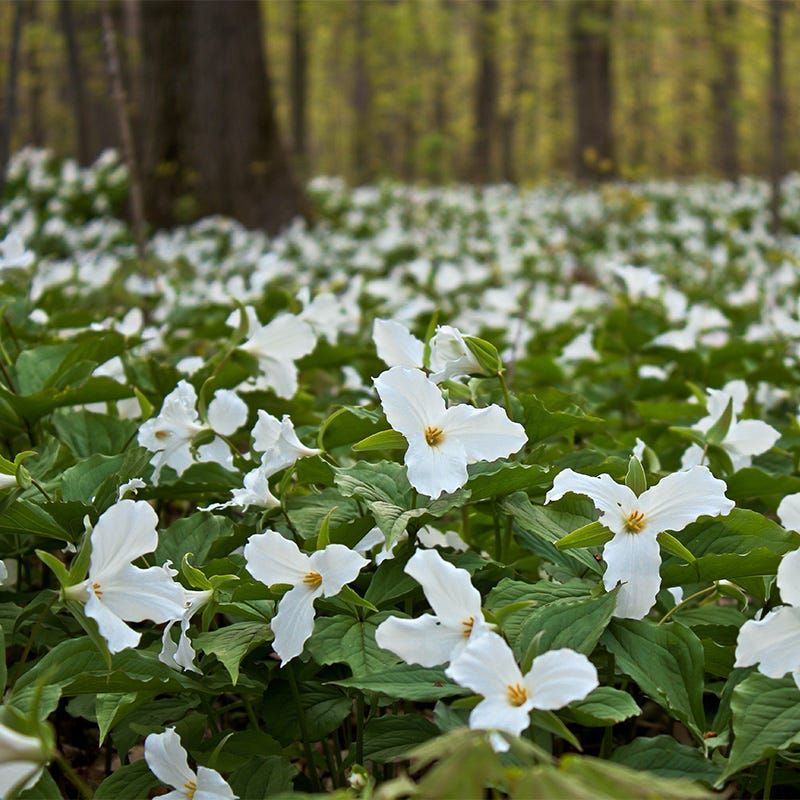
Walk through almost any Michigan hardwood forest in spring and you will notice White Trillium growing beneath the canopy where sunlight filters through the branches in soft, shifting patterns.
That kind of dappled light is exactly what this plant is adapted to, and it is one of the most important conditions to match when choosing a spot in the home garden.
Part shade to full shade works well for White Trillium, with the ideal being the kind of bright indirect light found beneath deciduous trees.
In Michigan, where oaks, maples, and beeches create natural shade canopies, many backyards already have areas that could suit this plant.
Spots that receive morning sun and afternoon shade can also work reasonably well, as long as the soil stays consistently moist and temperatures do not become too extreme.
Direct afternoon sun is generally too harsh for White Trillium and can cause the foliage to scorch or the plant to struggle, especially during Michigan’s warmer summer months.
Even in the right light, the plant will go dormant by midsummer, which is completely normal behavior for spring ephemerals and woodland perennials.
Planting it alongside other native groundcovers or ferns that fill in later in the season is a good way to cover the bare spots left behind after White Trillium foliage fades.
Choosing the shadiest, coolest corner of the garden is usually a strong starting point for this species.
4. Woodland-Style Plantings Are A Natural Fit For White Trillium
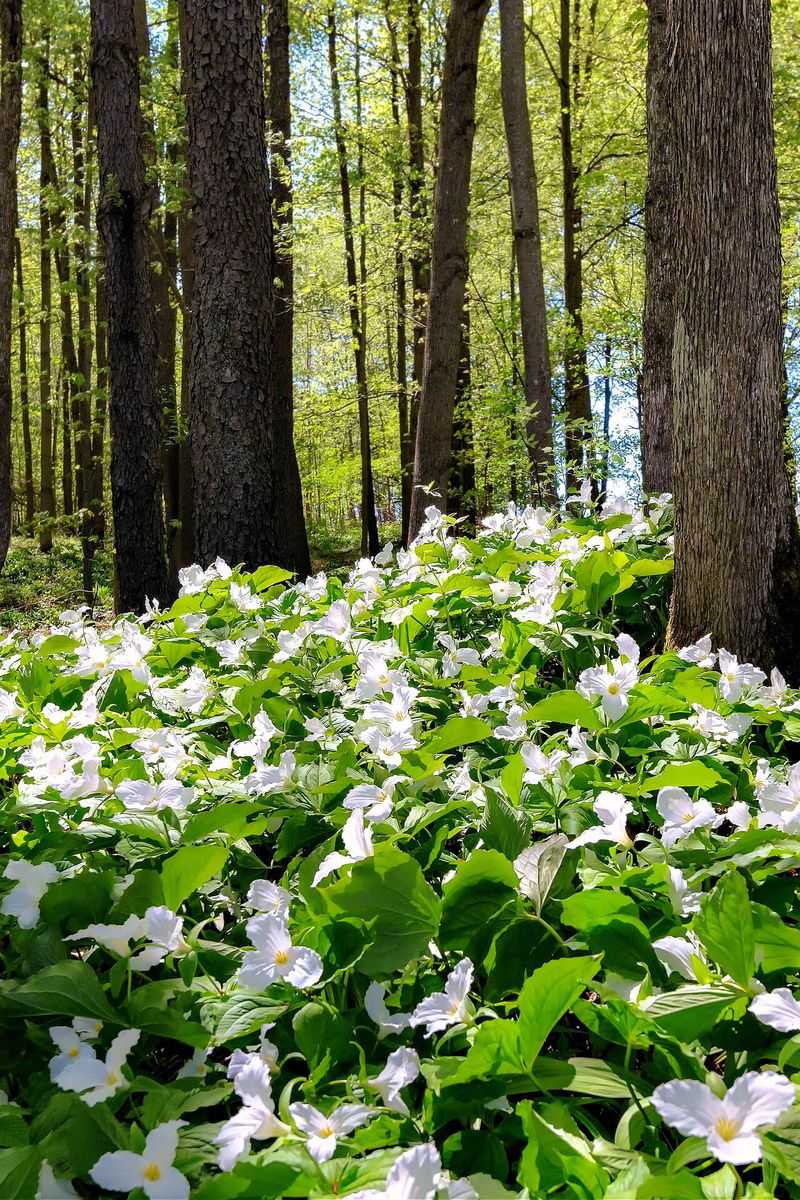
Gardeners who have spent time in Michigan’s state forests or nature preserves often come home inspired to recreate a little of that woodland magic in their own backyards.
White Trillium fits naturally into that kind of planting scheme, where native plants are layered together to mimic the structure and feel of a real forest understory.
It belongs in the same bed as wild ginger, Solomon’s seal, Jack-in-the-pulpit, and native ferns rather than in a traditional flower border.
Woodland-style plantings in Michigan tend to work best when the gardener thinks less about formal arrangement and more about naturalistic groupings.
Planting White Trillium in small clusters rather than single specimens gives it room to slowly expand over time, and the effect of a spreading colony is far more visually rewarding than a solitary plant tucked into a corner.
Leaving the leaf litter in place each fall also supports the soil conditions these plants depend on.
Because White Trillium is a slow-growing perennial, patience is genuinely part of the process. A newly planted nursery specimen may take two or three years before it blooms consistently, and even longer before it begins to naturalize across a wider area.
That slow pace is part of what makes it feel so special when it does establish well. Michigan gardeners who commit to the right setting and let the plant develop on its own timeline are usually the most satisfied with the results over the long run.
5. Deep Red Blooms Help Red Trillium Stand Out In Spring
Red Trillium brings a completely different mood to the spring woodland garden compared to its white-flowered relative.
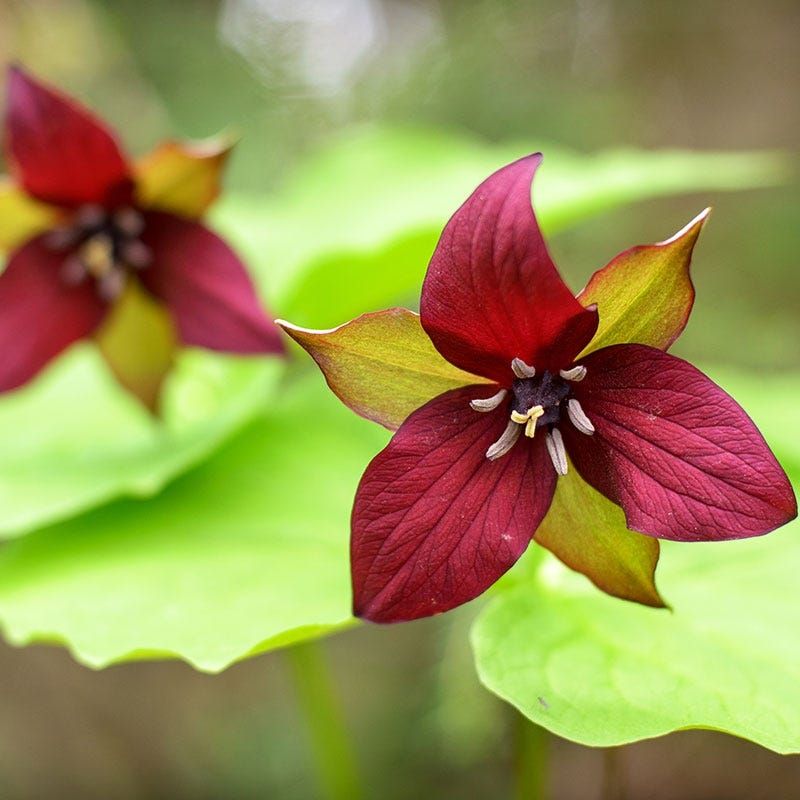
Known botanically as Trillium erectum, this native Michigan species produces deep maroon to dark red flowers that sit upright above a set of three broad leaves, creating a bold and dramatic look against the soft greens of the spring understory.
For gardeners who love rich, moody color in shaded spaces, Red Trillium is genuinely exciting.
The blooms appear in mid to late spring across much of Michigan, often emerging around the same time as White Trillium. Unlike the bright, airy quality of white flowers, the deep red of Trillium erectum gives the garden a sense of depth and richness that feels very much at home in a woodland setting.
Some flowers lean toward a brownish-red or burgundy tone, adding variation even within a single planting.
One quirky detail worth knowing is that Red Trillium flowers carry a faint unpleasant scent that attracts carrion flies for pollination, which is a fascinating piece of natural history even if it is not exactly a selling point for close-up sniffing.
The plant is also sometimes called Wake-Robin, a name that connects it to the arrival of spring.
For Michigan gardeners building a native woodland planting with real character and ecological value, Red Trillium is a species that adds genuine interest and a sense of wildness to the shaded garden floor.
6. Rich Woodland Soil Supports Strong Red Trillium Growth
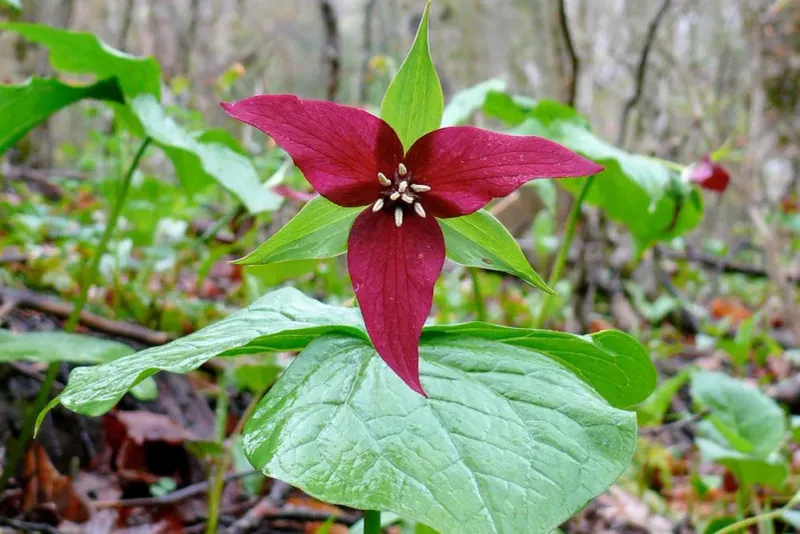
Red Trillium shares many of the same soil preferences as White Trillium, which makes sense given that both species naturally grow in Michigan’s deciduous forest understories.
Rich, humus-laden soil that retains moisture while still draining adequately is what this plant is adapted to, and providing those conditions in a home garden is the foundation of successful establishment.
Sandy soils that dry out quickly or heavy clay that stays soggy after rain are both less than ideal.
Working organic matter into the planting area before introducing Red Trillium gives the roots something nutrient-dense to grow into.
Composted leaves, aged bark compost, or well-broken-down garden compost can all improve soil structure and moisture retention in ways that benefit this species.
Michigan gardeners who already maintain a leaf-mold pile have a ready-made soil amendment that closely mimics the natural forest floor material Red Trillium grows in across the state.
Keeping the soil consistently moist, especially during the plant’s first season or two, supports early root development and helps reduce transplant stress.
Mulching with shredded leaves after planting is a practical way to hold moisture, moderate soil temperature, and continue improving the soil as the mulch breaks down over time.
Red Trillium is not a fussy plant once it is well established in the right soil, but getting the soil conditions right from the beginning is the single most important factor in whether a newly planted specimen settles in successfully or simply struggles through its early years.
7. Damp Shady Spots Can Suit Red Trillium Well
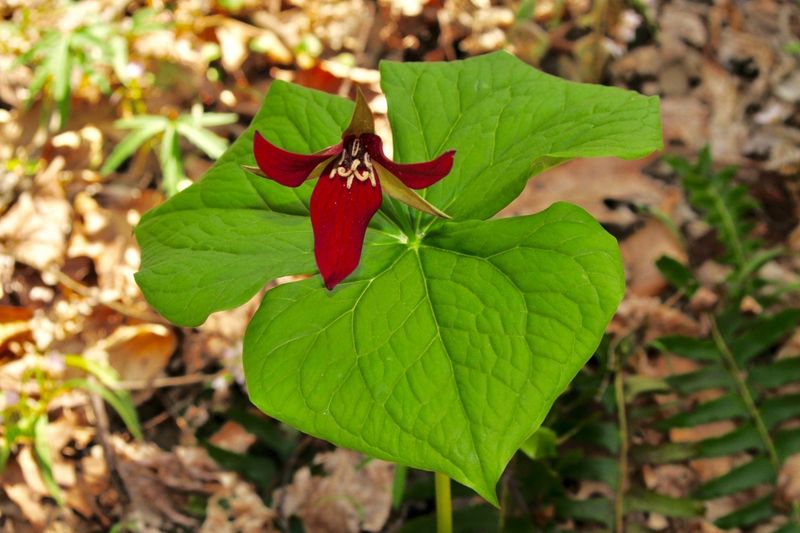
One of the qualities that makes Red Trillium a slightly different planting option than White Trillium is its tolerance for somewhat damper conditions.
In Michigan’s natural landscapes, Trillium erectum is often found growing in low woodland areas, along stream edges, and in spots where moisture lingers a bit longer after rain.
This makes it a useful choice for Michigan gardeners who have a shaded, naturally moist or low-lying corner that other plants sometimes find challenging.
A spot that stays consistently moist without becoming a standing-water area can actually suit Red Trillium quite well. The key distinction is between soil that holds moisture and soil that becomes genuinely waterlogged for extended periods.
Prolonged saturation is not something this plant handles well, but a reliably damp woodland setting with good organic matter is very much within its natural range of conditions.
Michigan gardeners with properties near natural drainage areas, seasonal wet spots beneath trees, or shaded low beds that tend to stay cooler and moister than the rest of the yard may find that Red Trillium fits into those spots more naturally than many other native plants.
Pairing it with other moisture-tolerant native woodland plants like marsh marigold, blue cohosh, or native sedges can create a cohesive planting that feels genuinely connected to Michigan’s native plant communities.
Choosing plants that share similar moisture and shade needs makes the whole planting easier to maintain over time.
8. Part Shade To Shade Gives Red Trillium The Setting It Likes
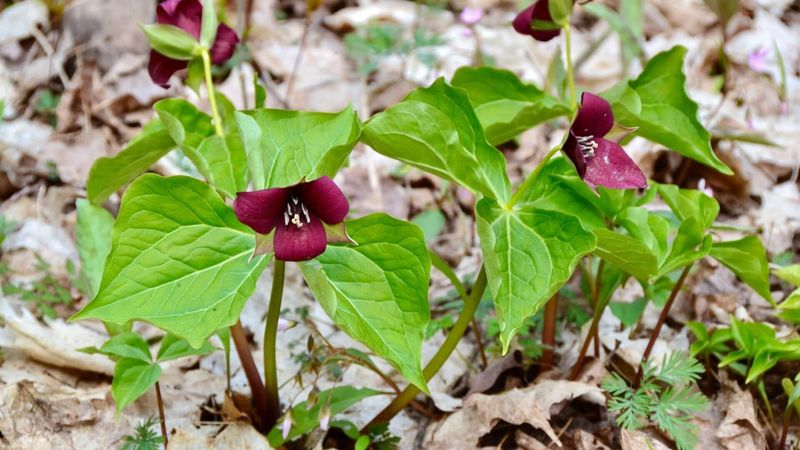
Shaded garden spaces in Michigan backyards are sometimes seen as a challenge, but for Red Trillium, that kind of environment is exactly what the plant is looking for.
Like White Trillium, this species is adapted to the light conditions found beneath Michigan’s deciduous tree canopies, where sunlight filters through leaves rather than falling directly on the ground.
Part shade to full shade is the range that suits it best.
Spots beneath mature oaks, maples, or beeches where the soil stays cool and leaf litter accumulates naturally are genuinely good candidates for a Red Trillium planting.
Morning light with afternoon shade is another workable option, especially if the soil stays consistently moist.
What this plant does not appreciate is prolonged direct sun, which can stress the foliage and make the plant less likely to return reliably from year to year.
Red Trillium, like most spring-blooming woodland perennials, will go dormant by midsummer after its foliage begins to fade. This is a natural part of its growth cycle and not a sign that anything is wrong.
Planting it alongside native ferns, wild ginger, or other summer-persistent groundcovers helps fill in the space as the trillium rests underground.
Michigan gardeners who plan their shaded beds with this seasonal rhythm in mind end up with plantings that look full and healthy from early spring all the way through the warmer months without leaving bare patches behind.