What To Do With Your Florida Firebush In May To Bring More Hummingbirds To Your Yard
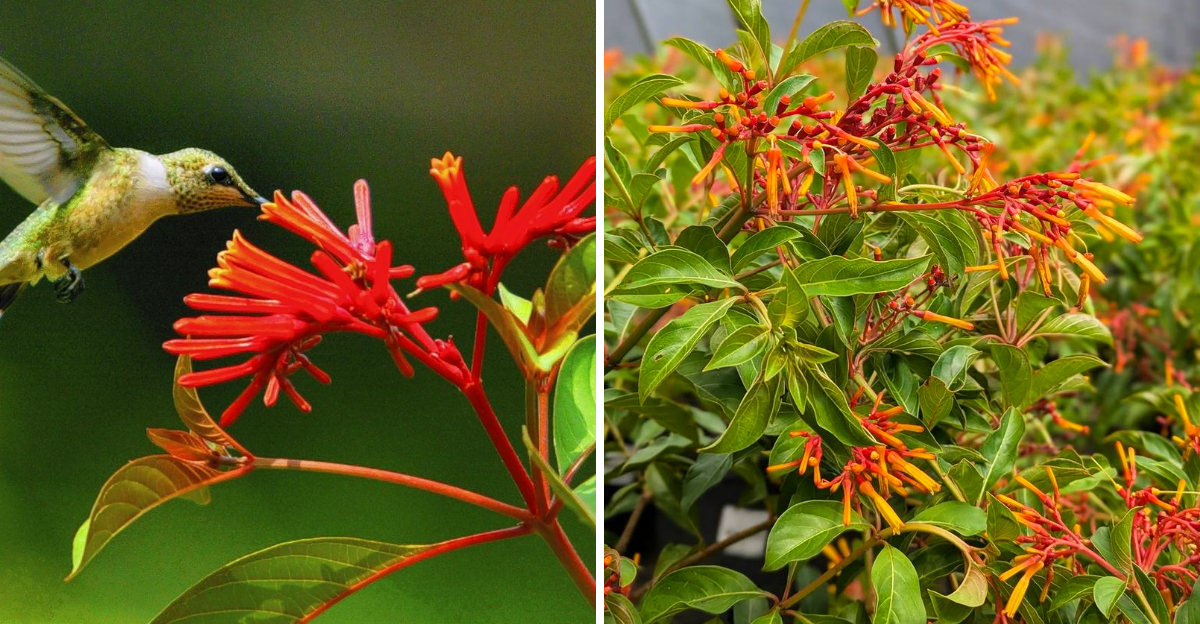
May is when Florida firebush starts acting like it knows the hummingbirds are watching. The days stretch longer, the air warms fast, and those bright tubular flowers begin to glow like tiny garden traffic signals.
Hummingbirds notice. Oh, they notice.
Before Florida’s summer heat fully cranks up, this is a smart time to give your firebush a quick checkup.
Does it have enough sun? Is a young plant getting steady water? Does it have room to grow without bumping into every neighbor plant like a crowded grocery aisle?
A few simple May care moves can help your firebush grow fuller, bloom better, and turn your yard into a more inviting stop for those speedy little visitors with wings.
1. Give It The Sunny Spot Hummingbirds Notice
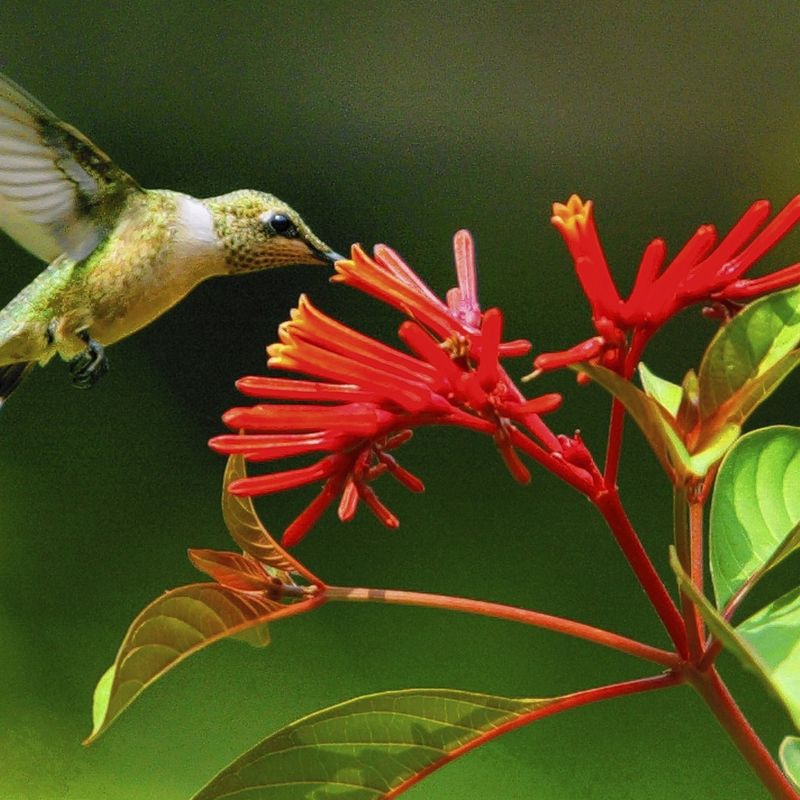
Sunlight makes a real difference when it comes to how well firebush blooms in a Florida yard. Planted in full sun, firebush tends to produce more of those bright, tubular flowers that hummingbirds are drawn to during their travels through Florida neighborhoods.
A spot that gets at least six to eight hours of direct sun each day gives the plant what it needs to grow strong and flower well through the warmer months.
May is a good time to step back and honestly look at where your firebush is sitting. Has a nearby tree grown taller and started blocking more light than it used to?
Have fences or structures shifted the shade patterns in your yard? Even a small change in light exposure can affect how much the plant blooms by midsummer.
If your firebush is sitting in too much shade, you have a few options.
You can prune back nearby plants to open up more light, or you can consider transplanting a younger firebush to a sunnier border before the heat of Florida summer makes moving plants stressful.
Spots along south or west-facing fence lines often work well in Florida yards because they catch long hours of direct afternoon sun.
Hummingbirds tend to notice plants that are healthy, well-lit, and blooming freely, so giving firebush the sunniest available spot is one of the most practical things a Florida gardener can do in May.
2. Water Young Firebush Before Summer Heat Builds
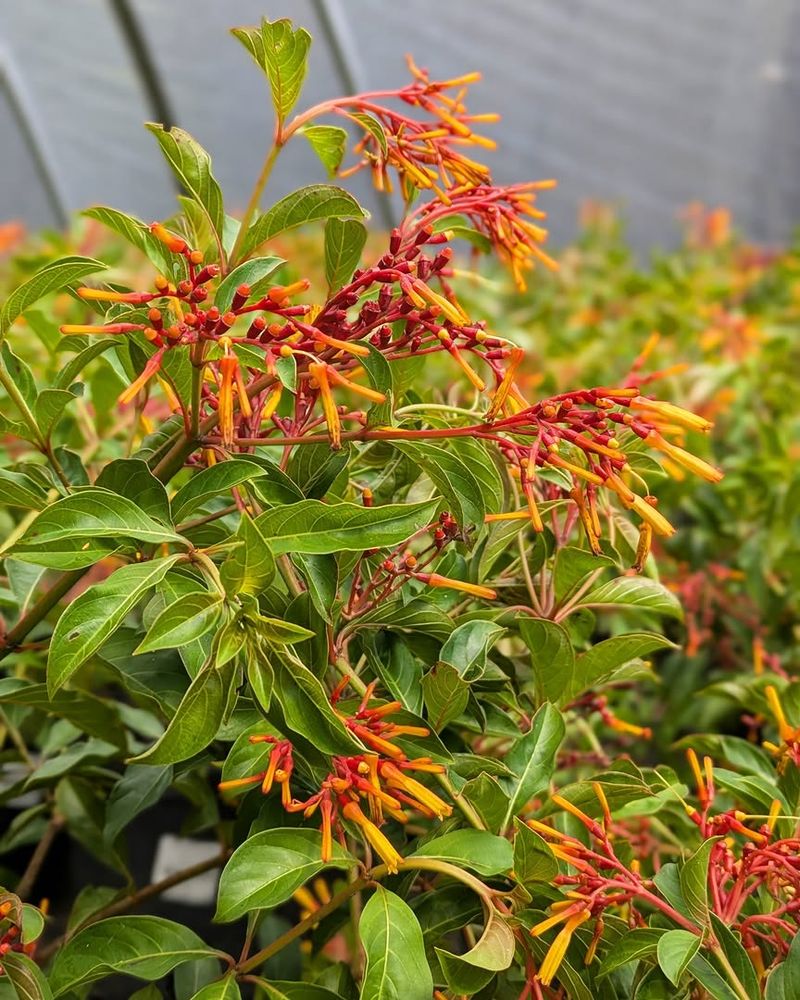
Young firebush plants in Florida have not yet developed the deep root systems that help established shrubs handle dry spells on their own.
May sits right at the edge of Florida’s wet season, and rainfall can still be unreliable during the first few weeks of the month.
Watering young plants consistently during this window helps them build the root strength they will need once summer heat and humidity fully arrive.
A good rule of thumb is to water deeply a few times a week rather than giving light daily sprinkles. Deep watering encourages roots to grow downward into the soil, which makes the plant more stable and better at finding moisture on its own over time.
Sandy Florida soils drain quickly, so checking the soil moisture an inch or two below the surface can help you decide when the plant actually needs water versus when the surface just looks dry.
Your Florida Garden Changes Every Week. Your Plan Should Too.
Gardening in Florida changes quickly throughout the season. Every Friday you’ll receive a simple weekly plan showing exactly what to plant, prune, fertilize, harvest, and protect so you never miss the right timing.
Once firebush is well established, it tends to handle Florida’s warm, wet summers without needing much extra irrigation.
But pushing a young plant through May without enough water can slow its growth and reduce blooming at a time when hummingbirds are actively moving through Florida yards.
Mulching around the base of the plant with a few inches of organic material can also help hold soil moisture between waterings and keep roots cooler as temperatures climb through late spring.
Getting this step right in May sets the plant up well for the rest of the growing season.
3. Skip Heavy Pruning If You Want More Blooms
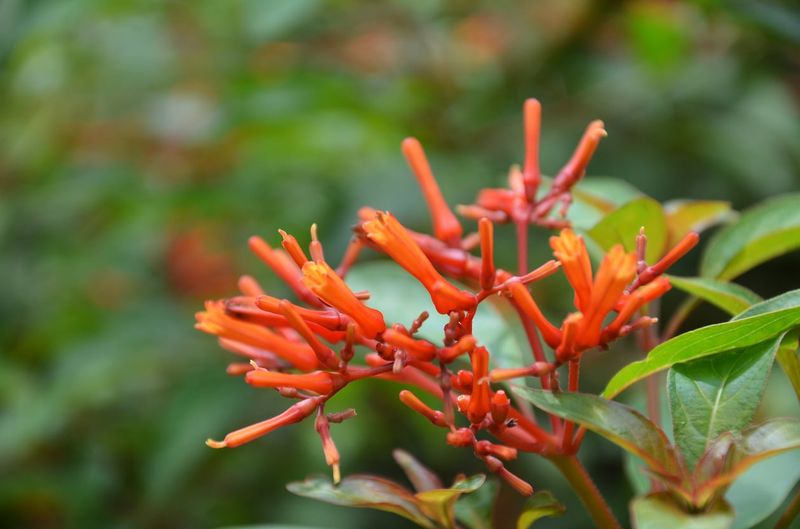
Reaching for the pruning shears in May can feel tempting, especially when a firebush has put on a lot of new growth after winter. But cutting the plant back hard right now could remove the very branch tips where most of the new blooms are forming.
Firebush tends to flower on new growth, and by May in Florida, that growth is already well underway.
Heavy pruning in late spring can push the plant into producing lots of leafy stems while delaying or reducing the flowers that hummingbirds are looking for.
If the goal is to bring more hummingbirds to the yard, keeping as many blooms on the plant as possible through May and into early summer makes more sense than cutting things back significantly at this point in the season.
If the plant went through a rough winter or has some damaged or crossing branches, removing just those specific problem areas is reasonable and will not set back flowering much.
The key is to be selective rather than giving the whole plant a heavy trim.
Florida gardeners who have skipped aggressive spring pruning often notice more consistent blooming through the summer months, which keeps the yard looking lively and gives hummingbirds a reason to return.
Saving any major reshaping for late winter or very early spring, before new growth really gets going, tends to work out much better for bloom production and overall plant health.
4. Shape It Lightly For A Fuller Florida Shrub
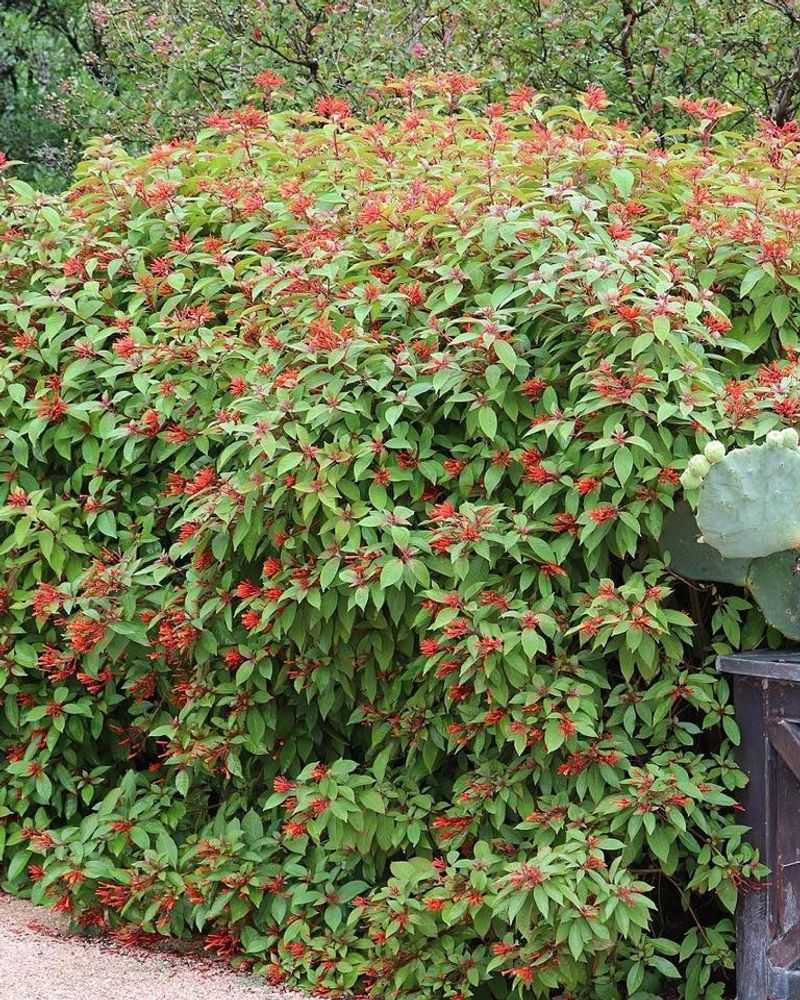
While heavy pruning is best avoided in May, a light shaping session can actually encourage firebush to fill out in a fuller, more attractive way.
Pinching back the very tips of long, leggy stems by just a few inches prompts the plant to branch more, which means more stem ends and, eventually, more flower clusters.
This kind of light touch keeps the shrub looking tidy without sacrificing the bloom potential building up through late spring.
In Florida yards, firebush can grow quite vigorously once warm weather arrives, sometimes sending up tall, fast-growing shoots that make the plant look uneven or top-heavy.
Trimming those tall shoots back just slightly in May helps redirect the plant’s energy into side branches rather than height alone.
The result over the following weeks is usually a shrub that looks denser and more balanced from all angles.
When shaping, it helps to step back frequently and look at the whole plant rather than focusing on one section at a time. This makes it easier to spot where the shrub needs a little more volume and where it is already filling in well.
Using clean, sharp hand pruners reduces the chance of tearing or bruising the stems.
A lightly shaped firebush that holds its natural form tends to look more inviting in a Florida landscape and can support more blooms across a wider surface area, giving hummingbirds more spots to visit when they pass through.
5. Let The Tubular Flowers Do The Hummingbird Work
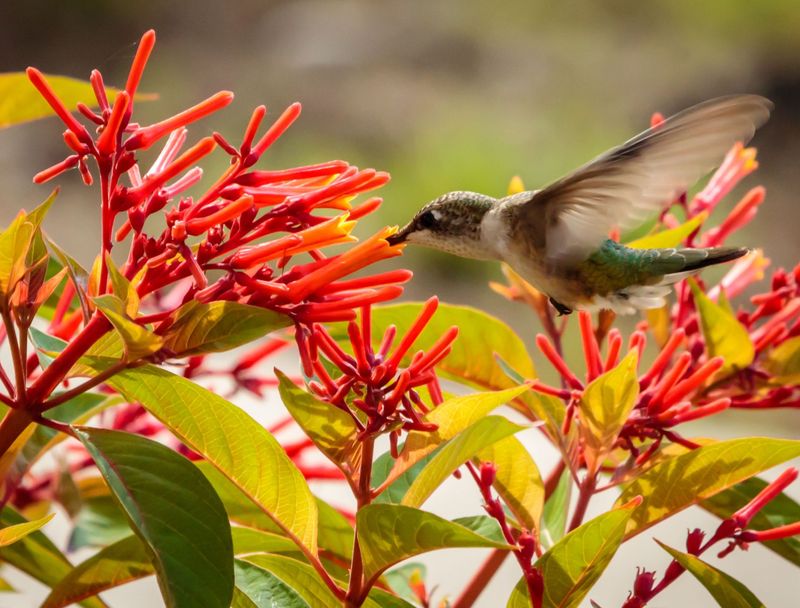
One of the most interesting things about firebush is the shape of its flowers. Those long, narrow tubes are not just decorative.
They are shaped in a way that works well for hummingbirds, whose long bills and even longer tongues are built for reaching nectar deep inside narrow blooms.
Bees and butterflies also visit firebush, but hummingbirds are especially well-suited to make use of what the plant offers.
By May in Florida, firebush is often already producing clusters of these tubular blooms at the tips of its branches.
The bright orange-red color is another draw, since hummingbirds tend to notice warm, vivid colors from a distance while moving through a neighborhood or along a tree line.
A firebush that is healthy, well-lit, and actively flowering has a reasonable chance of catching the attention of a hummingbird passing through the area.
Keeping the plant in good condition through May helps make sure those flowers keep coming. Removing spent flower clusters occasionally can encourage the plant to push out fresh blooms rather than putting energy into seed production.
However, leaving some seed heads in place is also fine if attracting a wider range of birds is a goal.
The tubular flowers are really the plant’s main contribution to a hummingbird-friendly Florida yard, so anything that supports consistent blooming through late spring and summer is worth doing.
Healthy flowers on a well-cared-for plant speak for themselves.
6. Use Native Firebush For The Best Florida Fit
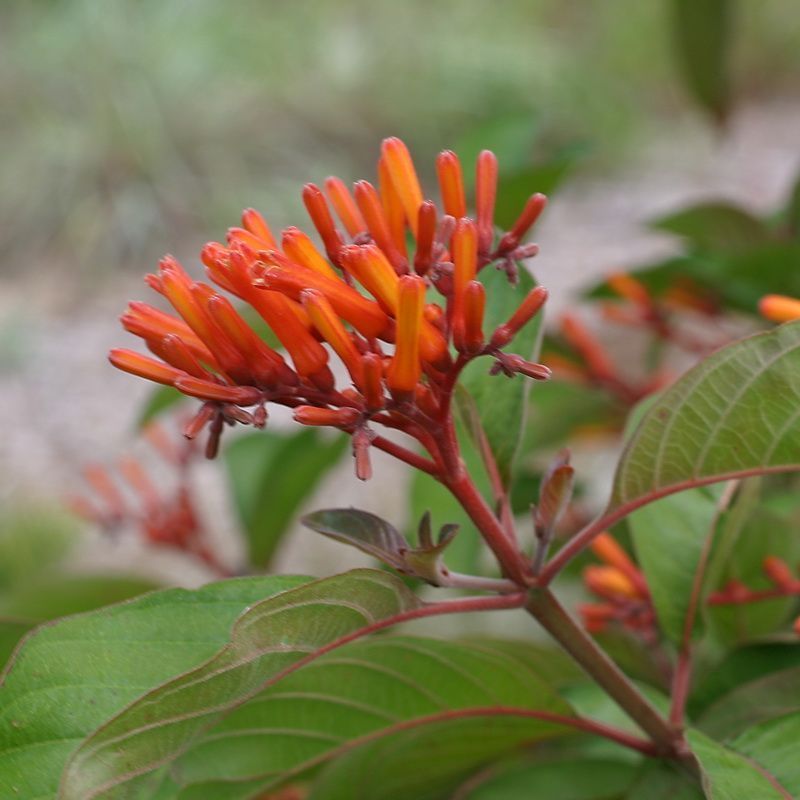
Not every firebush sold at garden centers in Florida is the same plant. There is a native Florida firebush, known botanically as Hamelia patens var. patens, and there is also a tropical variety that looks similar but is not native to Florida.
The native form tends to be better adapted to Florida’s specific soil conditions, seasonal rainfall patterns, and temperature swings, including occasional winter cold snaps in northern and central parts of the state.
Native firebush also tends to support local wildlife more effectively than non-native varieties. Because it evolved alongside Florida’s native insects and birds, it fits into the local food web in ways that introduced plants sometimes do not.
For gardeners who want to create a yard that genuinely supports hummingbirds and other wildlife, choosing the native form is a meaningful step in the right direction.
When shopping for firebush in May, it is worth asking at the nursery whether the plant is the Florida native variety or the tropical form. Some nurseries carry both, and the labels do not always make the distinction obvious.
Native plant nurseries and Florida-focused garden centers are often the most reliable places to find the true native form.
Planting a variety that is well-suited to Florida’s climate means less intervention over time, healthier long-term growth, and a better chance of consistent blooming through the seasons when hummingbirds are most active in Florida yards.
7. Give It Room To Grow Before It Gets Big
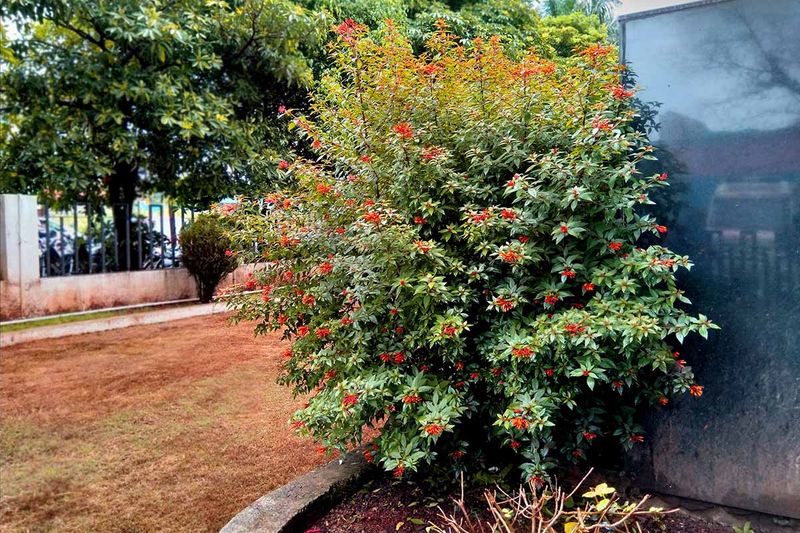
Firebush can grow surprisingly large in a Florida yard, sometimes reaching six feet tall or more under good conditions.
Planting it too close to walkways, structures, or other shrubs can create crowding problems down the road that are harder to fix once the plant is fully established.
May is a useful time to look at spacing if you are adding new plants or if an existing firebush is starting to crowd its neighbors.
Good air circulation around firebush also helps the plant stay healthier through Florida’s humid summer months. When shrubs are packed too tightly together, moisture gets trapped between them, which can encourage fungal issues on leaves and stems.
Giving firebush a little breathing room from the start reduces that risk and lets each plant develop its natural form without competing for light and space.
For most Florida landscapes, spacing firebush at least four to five feet from other large shrubs or structures gives the plant enough room to spread comfortably without becoming a maintenance problem.
If you are planting firebush as part of a mixed pollinator bed or wildlife-friendly border, think about how the plants will look and function together when they are all at full size, not just at planting time.
A firebush that has enough room tends to develop a fuller, more rounded shape with branches extending in multiple directions, which gives hummingbirds more entry points and more flowers to visit on a single plant.
8. Pair It With Other Florida Hummingbird Plants
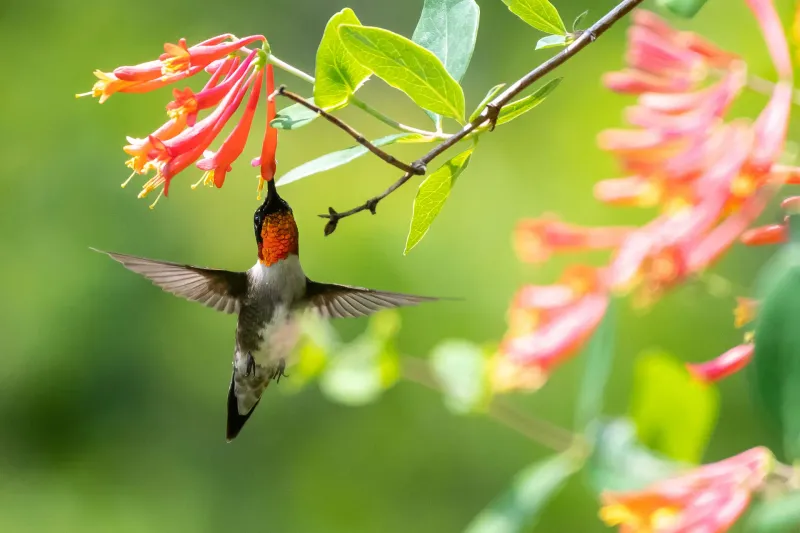
Firebush works well on its own, but pairing it with other Florida-friendly plants that attract hummingbirds can make a yard even more appealing to these small birds.
When multiple plants are blooming at different times or offering different flower shapes, there is more reason for a hummingbird to linger rather than just pass through.
Building a small cluster of hummingbird-friendly plants in one area of the yard tends to be more effective than spreading individual plants far apart across a large space.
Some Florida native plants that pair well with firebush include coral honeysuckle, native salvia species, and pentas. These plants offer tubular or nectar-rich flowers and tend to do well in Florida’s warm, sunny conditions.
Mixing plant heights and textures also adds visual interest to the garden while giving birds more ways to move through the space comfortably.
May is a practical time to plan these combinations because nurseries are well-stocked and many companion plants are already blooming or close to it.
Walking through a local Florida native plant nursery in May can give you a clear idea of what is available, what is actively flowering, and what might work well alongside your existing firebush.
Keeping the planting area relatively open and sunny, rather than shaded by large trees, gives the whole grouping the best chance of flowering consistently through summer.
A thoughtfully planted mix of hummingbird-friendly Florida natives can turn a single shrub into a small destination worth visiting again and again.