The Native Michigan Groundcover That Spreads Aggressively (In A Good Way)
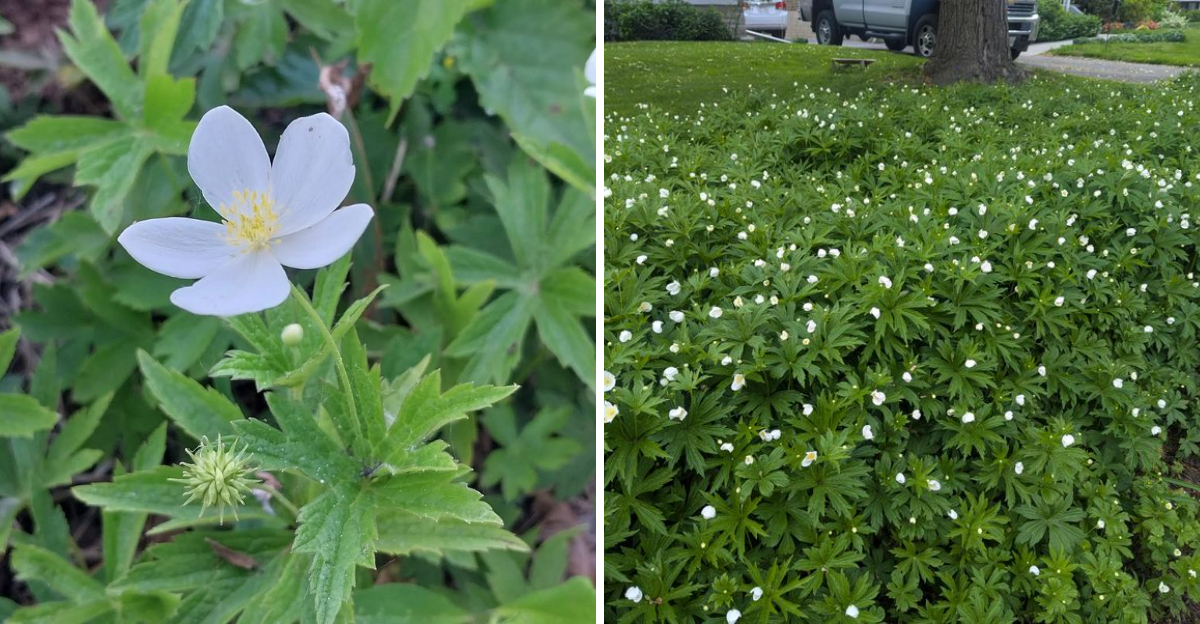
Canada anemone is not a plant that asks for much attention, but it more than earns its place in a Michigan garden once it gets going.
This native perennial has a reputation for spreading with serious confidence, and for gardeners dealing with large bare areas, erosion prone slopes, or shaded spots that seem impossible to fill, that reputation is exactly what makes it worth planting.
What sets Canada anemone apart from aggressive spreaders that cause headaches is that this one actually belongs here. It has been part of Michigan’s native plant communities for a very long time, which means it works with the local ecosystem rather than against it.
Pollinators visit the bright white blooms consistently throughout late spring and early summer, and the dense mat of foliage it creates underneath keeps weeds from finding any foothold.
If you have struggled to find something that genuinely takes over a difficult area without becoming a problem itself, Canada anemone is the answer a lot of Michigan gardeners did not know they were looking for.
1. Native To Michigan And Widely Adapted (Anemone Canadensis)
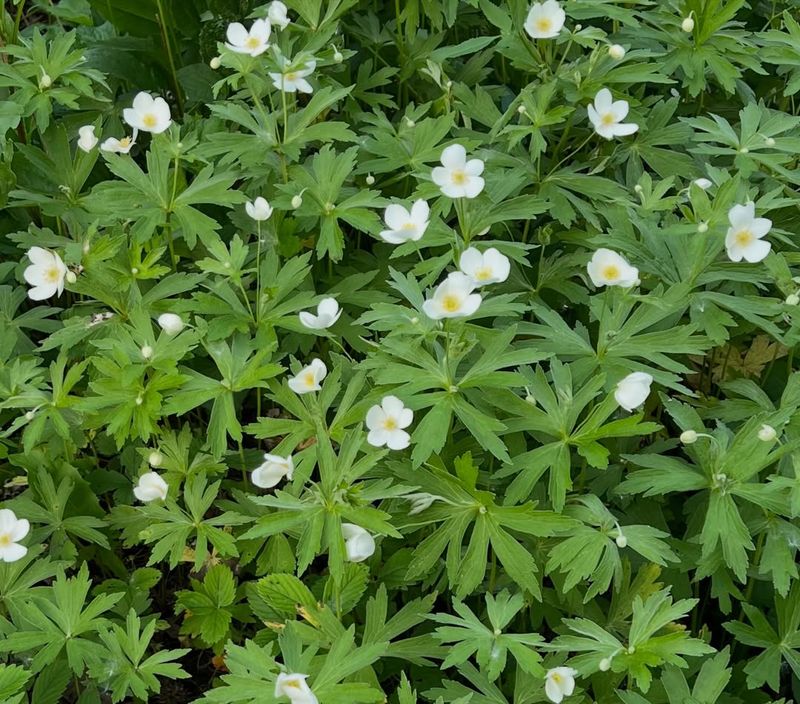
Some plants just belong to a place, and Canada anemone belongs to Michigan. Anemone canadensis grows naturally across the state in moist meadows, along streambanks, and in open areas where the soil stays consistently damp.
It has evolved alongside Michigan’s climate for thousands of years, which means it handles the cold winters, heavy spring rains, and humid summers without any fuss at all.
Because it is a true native, it fits right into local ecosystems. Pollinators recognize it, native insects rely on it, and it works in harmony with other Michigan wildflowers rather than competing against them aggressively.
That kind of ecological compatibility is something non-native plants simply cannot offer, no matter how pretty they look in a catalog.
Gardeners in Michigan who choose Canada anemone are making a smart, low-maintenance decision. The plant does not need babying, does not need special fertilizers, and rarely struggles with local pests.
It already knows what to do because Michigan is its home. Whether you are restoring a natural area, filling a rain garden, or just looking for a tough native groundcover that actually works, Anemone canadensis is a plant worth knowing.
Its wide adaptability across the state makes it one of the most practical and rewarding native plants available to Michigan gardeners today.
2. Spreads Rapidly By Rhizomes
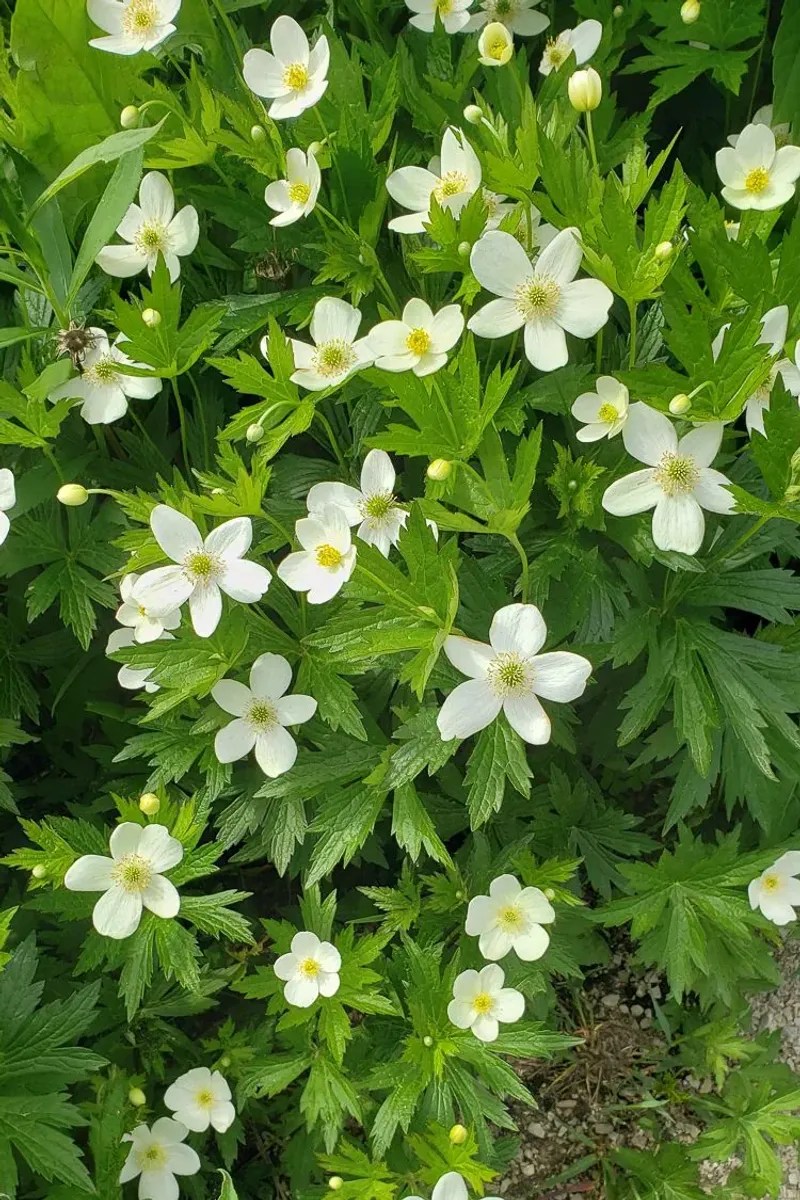
Here is something that surprises most first-time Canada anemone growers: the plant does not spread by seed alone. It sends out underground stems called rhizomes that travel horizontally through the soil, popping up new shoots as they go.
This is exactly how it forms those impressive, dense colonies you see along Michigan roadsides and natural areas in late spring.
The rhizome system is genuinely efficient. Once the plant gets settled in after its first growing season, it starts moving outward at a steady pace, filling in bare ground faster than many other native groundcovers.
In moist, fertile Michigan soils, this spreading habit can be surprisingly quick, covering several square feet within just a couple of seasons.
Your Michigan Garden Changes Every Week. Your Plan Should Too.
Gardening in Michigan changes quickly throughout the season. Every Friday you’ll receive a simple weekly plan showing exactly what to plant, prune, fertilize, harvest, and protect so you never miss the right timing.
That speed is mostly a good thing, especially if you are trying to stabilize a slope, fill a large naturalized bed, or cover an area where nothing else wants to grow. The challenge comes when Canada anemone is planted near smaller perennials or in tight border spaces.
Without some kind of boundary, it will cheerfully move into neighboring plants. Physical edging, buried root barriers, or simply planting it in open areas where spreading is welcome are all easy ways to enjoy its energy without losing control of your Michigan garden bed.
3. Performs Best In Moist Soils
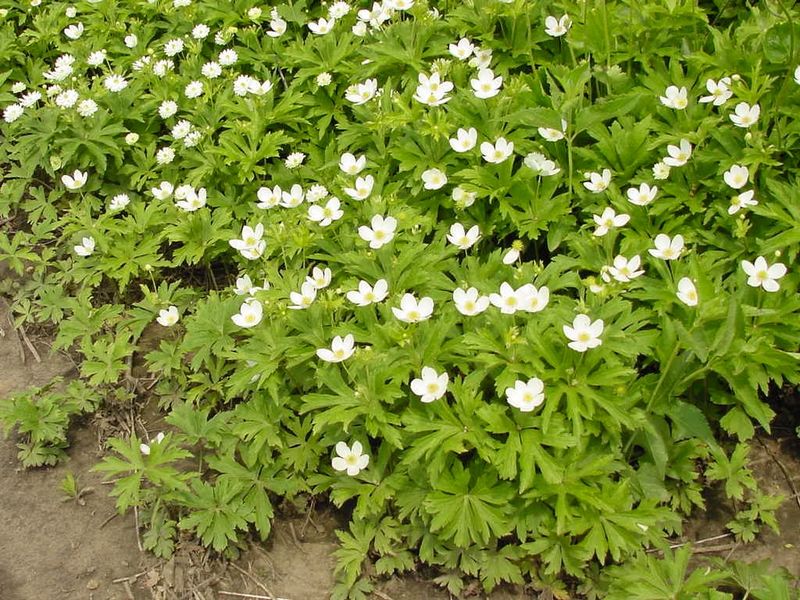
Water is this plant’s love language. Canada anemone performs at its absolute best when the soil stays consistently moist, and it genuinely thrives in spots that other plants find too wet.
Rain gardens, low-lying areas, streambanks, and the edges of ponds are all perfect homes for this tough Michigan native.
In heavier Michigan soils that hold moisture well, Canada anemone settles in quickly and spreads confidently.
It appreciates that the ground does not dry out between rain events, and it rewards that consistent moisture with vigorous, healthy foliage that stays green and attractive well into the growing season.
Planting it near a downspout, in a bioswale, or along a drainage channel are all smart ideas that put its water-loving nature to great use.
Dry, sandy, or drought-prone spots are a different story. Canada anemone can technically survive some dry periods once it is well established, but it will not thrive, and it will not spread the way it does in ideal conditions.
In drought-prone areas of Michigan, the foliage may look stressed and the plant may struggle to form the dense colonies it is known for.
If your garden leans dry, pairing Canada anemone with consistent watering or choosing a naturally low spot will make a real difference in how well it performs season after season.
4. Tolerates Clay Soil Well
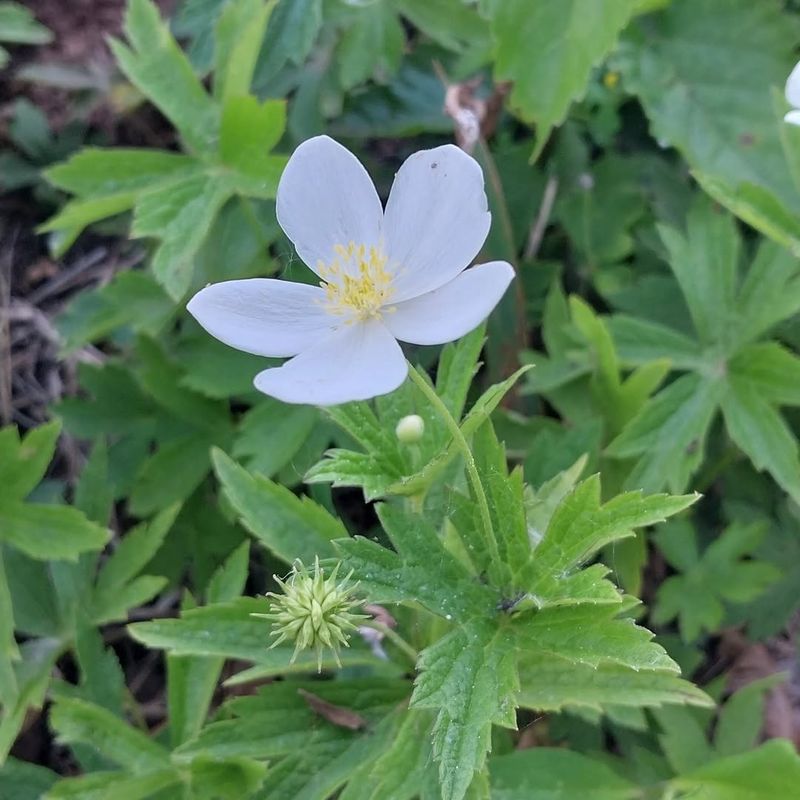
Clay soil gets a bad reputation, and honestly, most of it is deserved. It compacts easily, drains poorly, and frustrates gardeners who are trying to grow almost anything.
Canada anemone, though, is one of the rare plants that actually handles Michigan clay without much complaint, which makes it incredibly useful for homeowners dealing with that sticky, heavy ground.
The key is that Canada anemone is built for the conditions it naturally encounters in the wild. Michigan’s native soils are often clay-heavy, especially in the lower peninsula, and this plant has adapted to grow right through them.
When organic matter like compost or leaf mulch is worked into the soil before planting, Canada anemone establishes even faster and spreads more reliably through the first season.
You do not need perfect drainage or a perfectly amended bed to get good results. The plant is forgiving and practical in a way that many ornamental perennials are not.
If you have a section of your Michigan yard where clay has defeated every other groundcover you have tried, Canada anemone is worth a genuine shot.
Give it a moist, partly shaded to full-sun spot with decent organic content, and it will start filling that clay-heavy area with lush green foliage in a way that will honestly impress you by the end of its second growing season.
5. Forms Dense Colonies That Suppress Weeds
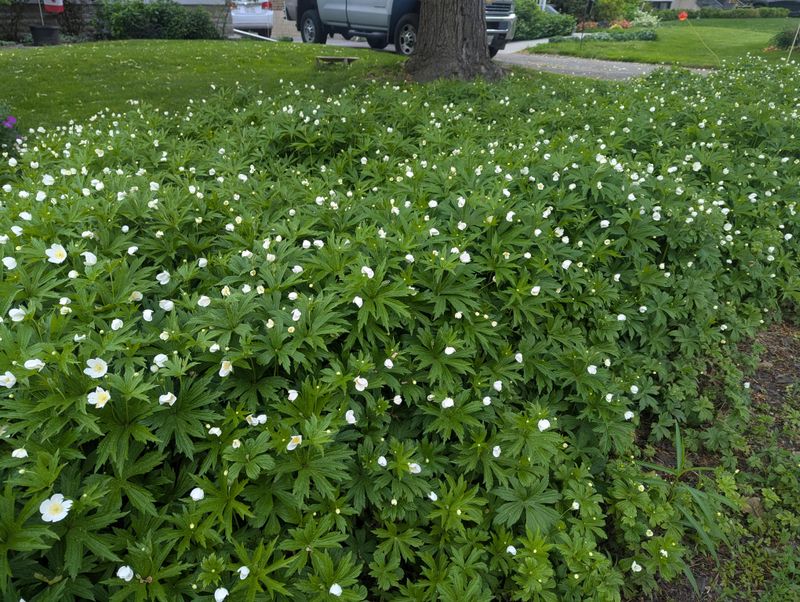
Weeding is one of the least enjoyable parts of gardening, and Canada anemone offers a genuinely useful solution. Once it establishes a strong colony, the foliage grows thick and overlapping, creating a leafy canopy that blocks sunlight from reaching the soil below.
Without light, most weed seeds simply cannot germinate, which means less hand-pulling and more time actually enjoying your Michigan garden.
The weed suppression does not happen overnight, and it is worth being honest about that. During the first season, especially, the plant is still filling in, and weeds will try to move into the gaps.
Staying on top of weeding during establishment is important, because once Canada anemone gets a full head of steam, it becomes much harder for opportunistic weeds to sneak in.
By the second or third year, a well-established patch can cover ground so thoroughly that maintenance drops dramatically.
Gardeners who use it along slopes, woodland edges, or large naturalized areas in Michigan often report spending far less time managing those spaces once Canada anemone takes hold.
It is not completely weed-proof, and persistent weeds with deep roots can still push through, but the overall reduction in weed pressure is real and noticeable.
For anyone tired of battling invasive weeds in difficult spots, this native groundcover is one of the most practical tools available.
6. Produces White Flowers In Late Spring To Early Summer
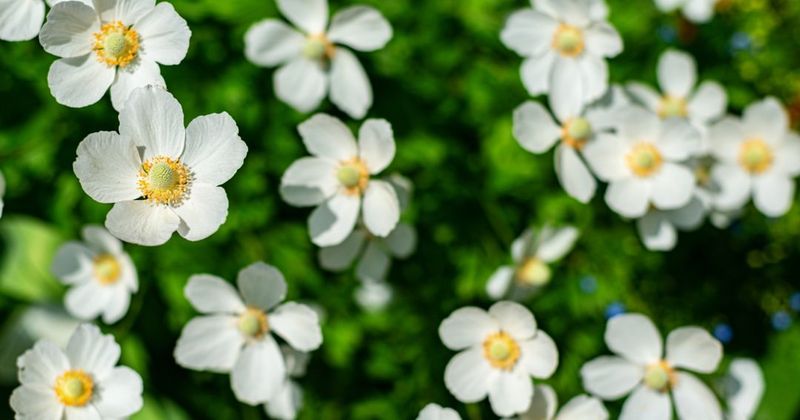
Every late spring, Canada anemone puts on a show that is simple, clean, and genuinely lovely. The flowers are bright white with five rounded petals and a cheerful yellow center, held above the foliage on slender stems.
They are not dramatic or oversized, but there is something honest and refreshing about their straightforward beauty that fits perfectly in a Michigan native garden.
The bloom period runs roughly from late May through June, depending on your location and the season. It is not an exceptionally long bloom window, but while it lasts, a large colony in full flower can look absolutely stunning.
Pollinators, including native bees and early butterflies, visit the flowers regularly, which adds even more life and movement to the planting during those weeks.
After the flowers fade, the foliage takes over and carries the planting through the rest of the growing season. The leaves are deeply lobed and attractive in their own right, staying green and full well into fall.
Pairing Canada anemone with later-blooming Michigan natives like wild bergamot or black-eyed Susan helps ensure that the area stays visually interesting long after the white flowers are gone. The short but sweet bloom season is a small trade-off for everything else this plant brings to a garden, and most Michigan gardeners find it more than worth it.
7. Works Best In Larger Or Naturalized Areas
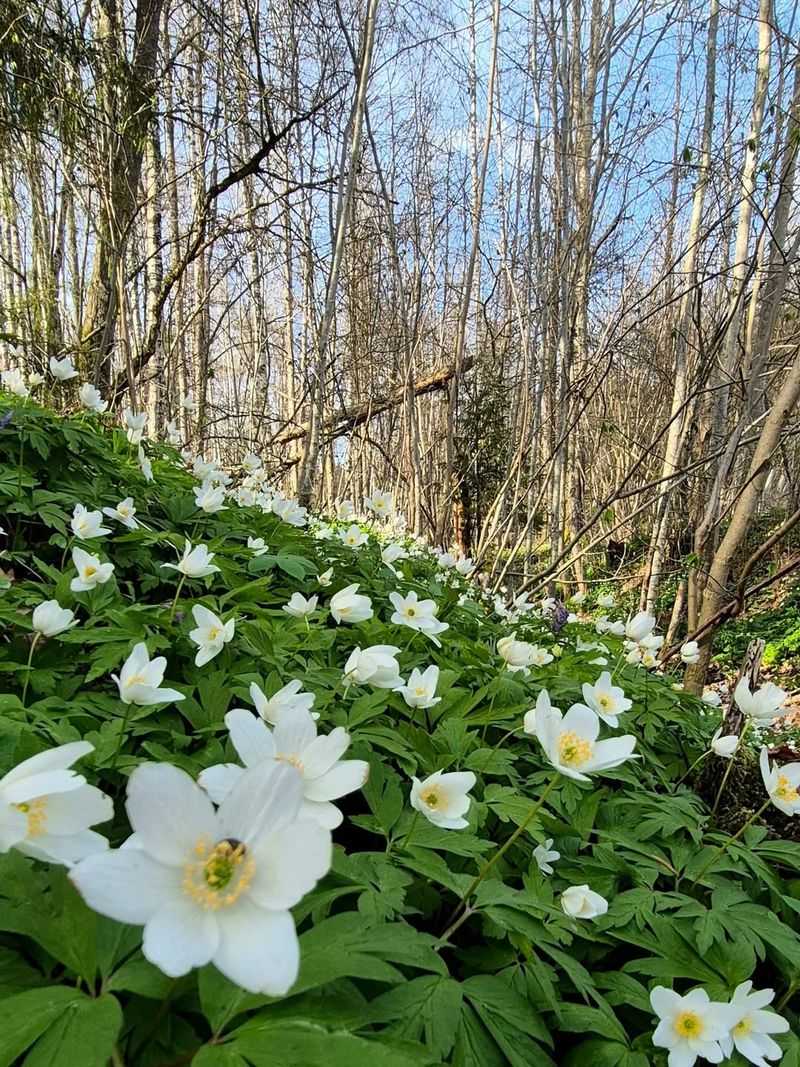
Canada anemone has a big personality, and it needs space to match. Tucking it into a small, tidy mixed border is a recipe for frustration, because this plant wants to move and will not stay neatly within tight boundaries.
The gardeners who love it most are the ones who give it room to do what it does naturally, which is spread wide, fill space, and create a lush, living carpet across large areas.
Open slopes are one of the best places to use Canada anemone in Michigan landscapes. Its rhizome network helps hold soil in place, which makes it genuinely functional for erosion control on grades that are hard to mow or maintain.
Edges along natural areas, woodland borders, and the banks of ponds or rain gardens are equally great fits for this enthusiastic spreader.
Naturalized areas where a more informal, wild aesthetic is the goal are where Canada anemone truly shines. You are not fighting its nature in those spots.
You are working with it, letting it do what it was designed to do over millions of years of evolution in places exactly like Michigan. Large beds, open corners, and low-maintenance zones all benefit from its coverage.
The more space you give it, the more impressive and useful it becomes, turning problem areas into thriving, low-care native plantings that look great season after season.
8. Requires Occasional Control In Managed Beds
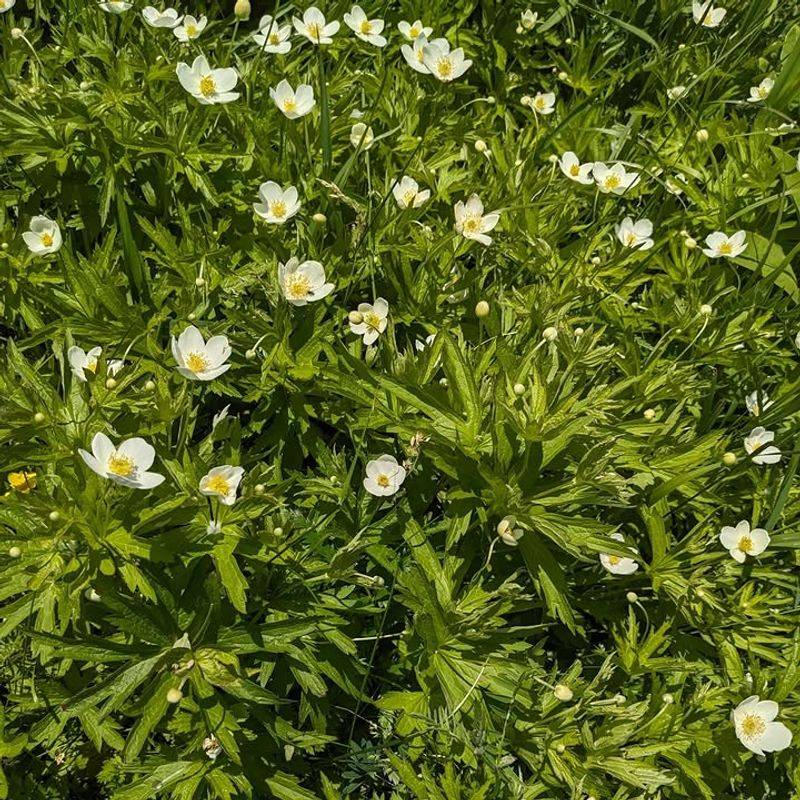
Canada anemone’s spreading habit is one of its greatest strengths, but in a managed garden bed, that same energy needs a little direction.
Without any boundaries, it will gradually move into neighboring plants, especially slower-growing or less vigorous perennials that cannot hold their ground against an enthusiastic rhizome network.
A bit of seasonal management keeps everything balanced and the garden looking intentional.
Physical edging is the simplest and most effective tool. A spade or sharp edging tool used along the perimeter of the planting once or twice a season cuts through the rhizomes and keeps the colony from creeping into places you do not want it.
Buried root barriers made from heavy plastic or metal work well for longer-term containment, especially along garden bed edges in Michigan yards where the plant is growing next to lawn or mixed perennials.
Division is another option that serves double duty. Digging up sections of the colony every few years keeps it from getting overcrowded, refreshes the planting, and gives you extra plants to move elsewhere in your Michigan garden or share with neighbors.
The divisions transplant easily and establish quickly in new spots. Managing Canada anemone is not a heavy lift, and it does not require constant attention.
A few focused sessions each year are all it takes to keep this enthusiastic native groundcover right where you want it, thriving beautifully without overstepping its welcome.