The 8 Plants Ohio Gardeners Grow Under Cucumbers And Why It Changes Everything
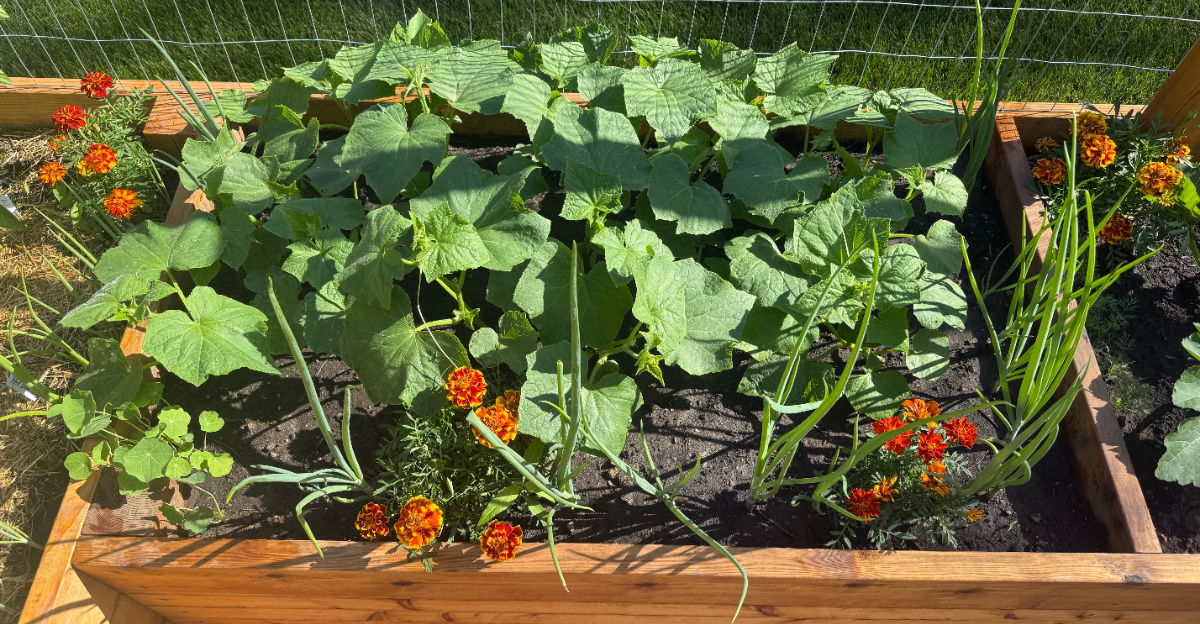
Cucumbers are one of those plants Ohio gardeners think they have figured out. Get them in the ground, give them something to climb, water them through the dry stretches, and wait.
It is a formula that produces results, which is exactly why most people never look any further than that. The space underneath the vines is where things get interesting.
That patch of ground most gardeners ignore or cover with mulch and forget about is actually doing something, whether you manage it or not. The question is whether what it is doing is working for your cucumbers or quietly working against them.
Ohio gardeners who pay attention to that space can make the bed work harder without crowding the cucumber vines. That kind of planning is not a coincidence.
1. Tuck Lettuce Under Trellised Vines For Cooler Leaves
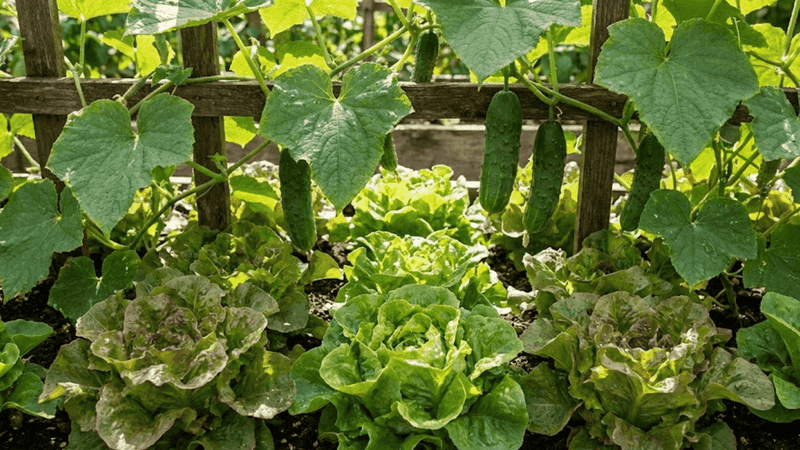
Late May in Ohio can flip from comfortable to blazing fast, and lettuce is one of the first crops to suffer when that happens. Planting loose-leaf lettuce along the outer edge of a trellised cucumber bed gives those leaves a fighting chance against early summer warmth.
The filtered shade from vertical cucumber vines may slow bolting slightly, buying you a few extra harvests before the heat wins.
Varieties like Black Seeded Simpson or Oak Leaf work well because they grow quickly and handle light shade better than crisphead types. Keep plantings small and positioned where you can reach them easily without stepping into the bed.
Lettuce roots are shallow, so small edge plantings are less likely to compete heavily with cucumbers for space and moisture.
Be realistic about the timeline. Lettuce is a cool-season crop and even the shade trick has limits once Ohio summer heat settles in for good.
Plan to harvest all of it by late June or early July and then pull the plants before they turn bitter and tough. Cucumbers still need full sun above the trellis, fertile well-drained soil, and steady watering regardless of what grows below.
Good airflow around cucumber stems matters too, so avoid planting lettuce so close that it bunches up against the base of the vines and traps moisture.
2. Sow Radishes For A Fast Crop Before Vines Spread
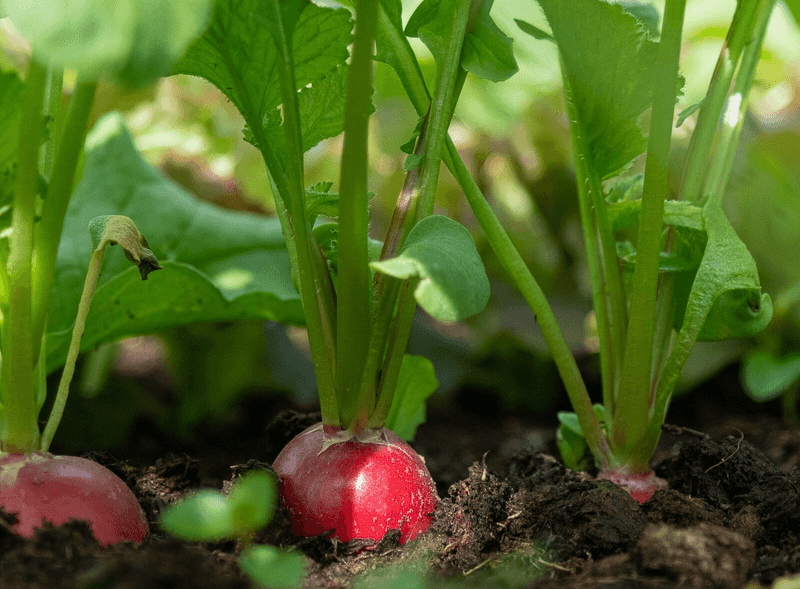
There is a narrow and satisfying window in early May when young cucumber transplants are just getting settled and the trellis still looks mostly empty. That gap is exactly where radishes shine.
Sow a short row of radish seeds right alongside the young cucumber plants and you will have something ready to pull in as little as three to four weeks, well before the vines fill in and shade everything out.
Cherry Belle and Easter Egg types are popular with Ohio gardeners because they mature fast and hold their quality for a short window before turning pithy. The key is timing.
Radishes need to be in the ground early enough to finish before cucumber canopy growth shades them out completely. Waiting until June is usually too late, and radishes that sit too long in warming soil turn hot and woody quickly.
Your Ohio Garden Changes Every Week. Your Plan Should Too.
Gardening in Ohio changes quickly throughout the season. Every Friday you’ll receive a simple weekly plan showing exactly what to plant, prune, fertilize, harvest, and protect so you never miss the right timing.
Some gardening sources suggest radishes confuse certain pests, but the evidence for that specific claim around cucumbers is not strong enough to count on.
The real benefit here is pure practicality: you get a fast, edible crop from space that would otherwise sit empty while cucumbers are still getting established.
Keep rows thin so you are not crowding cucumber roots or blocking airflow at soil level. Pull and compost the radish greens when you harvest so they do not mat down and hold moisture against the vines.
3. Plant Green Onions Where Roots Stay Shallow
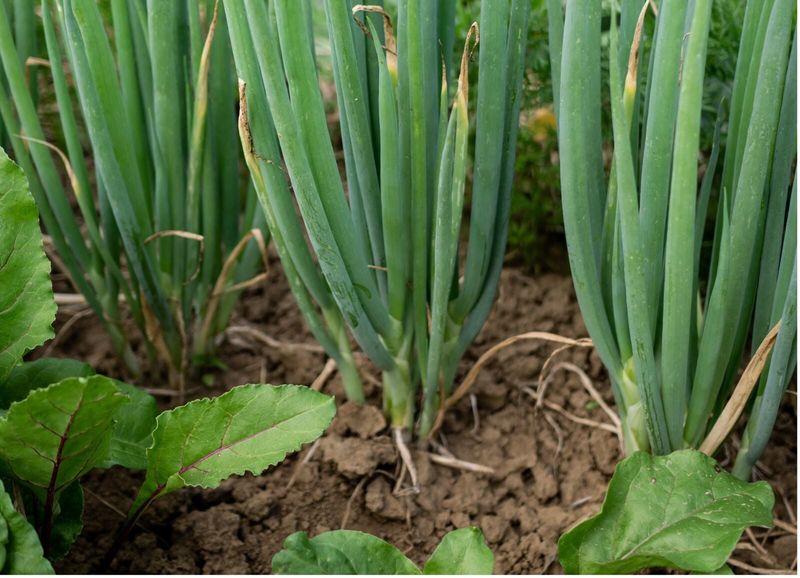
Bunching onions are the kind of crop that earns their spot without making a fuss. Their roots stay shallow and tidy, they do not sprawl into neighboring plants, and you can snip leaves from them multiple times throughout the season without pulling the whole plant.
For Ohio gardeners working with narrow raised beds or tight in-ground rows, that kind of low-drama behavior is genuinely valuable.
Plant green onions along the outer edges of your cucumber bed or in any open pocket that still gets decent light. They are not shade lovers, so avoid tucking them directly under the thickest part of the canopy where the cucumber vines block most of the sun.
The goal is to use the surrounding space efficiently, not to crowd the bed so tightly that airflow suffers.
Skip any claims about green onions repelling cucumber beetles or boosting vine production.
There is no solid Ohio Extension evidence backing those promises, and chasing them could lead you to over-plant and end up with a crowded, humid bed that invites disease instead.
Leave a clear zone of a few inches around each cucumber stem for watering access and airflow. Harvest green onions regularly so they stay fresh and do not flop over onto nearby plants.
A small patch of bunching onions in a cucumber bed is a practical, space-saving move that pays off all season long.
4. Add Dill To Bring In More Beneficial Insects
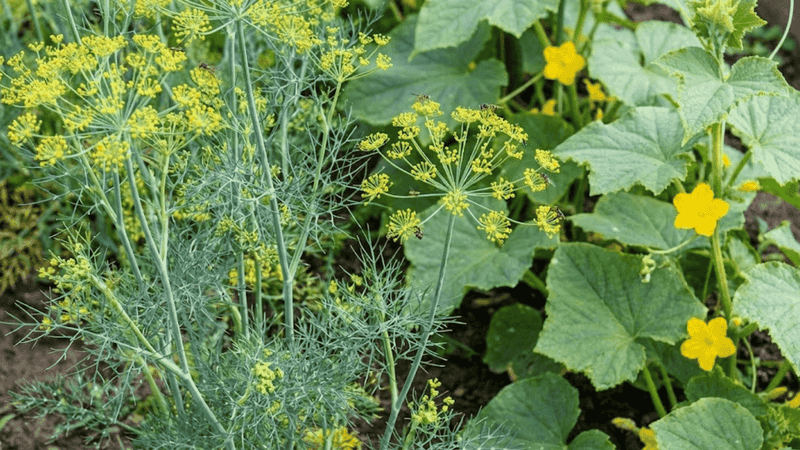
Watching a dill plant bloom in an Ohio garden is a little like flipping on a welcome sign for beneficial insects. The flat yellow flower clusters, called umbels, attract small parasitic wasps, hoverflies, and other insects that feed on pests or pollinate nearby plants.
Letting dill go to flower near your cucumber bed adds that kind of activity to the garden without much effort on your part.
Place dill where it gets enough sun to grow well but will not shade out young cucumber plants during their critical early weeks. Dill can reach three to four feet tall in Ohio summer conditions, so positioning matters.
A spot at the end of the trellis row or just outside the bed works better than planting it directly underneath the cucumber canopy where it may struggle for light and lean awkwardly toward the sun.
Do not expect dill to control cucumber beetles or eliminate pest pressure on its own. Supporting beneficial insect diversity is a long-game strategy, not a quick fix.
Dill is also a host plant for black swallowtail butterfly caterpillars, which is a bonus for Ohio gardeners who enjoy seeing native wildlife in their yards. If you grow dill for cooking, harvest leaves before the plant flowers heavily.
Once it bolts and sets seed, the flavor of the leaves changes, but the flowers and seeds are useful in pickling, which pairs nicely with a cucumber harvest anyway.
5. Grow Nasturtiums Along The Edge For Pollinator Color

Few plants are as cheerful and easy as nasturtiums, and Ohio gardeners who grow them near cucumber beds get a double reward: vivid color and a steady stream of pollinators working the area.
Cucumbers need pollination to set fruit, and having flowering plants nearby keeps bees and other pollinators moving through that part of the garden more consistently.
The trick is placement. Nasturtiums need real sunlight and room to sprawl, so plant them along the outer edge of the cucumber bed rather than directly beneath the densest part of the canopy.
Varieties like Jewel Mix stay compact enough for raised beds, while Trailing types can fill in larger spaces along a garden border. Both flowers and leaves are edible, with a peppery flavor that works well in salads.
Resist the idea that nasturtiums will trap all aphids away from your cucumbers or repel cucumber beetles entirely. You may see aphids on nasturtiums, but treating that as a guaranteed sacrifice crop is an overstatement.
Manage any serious pest pressure with Ohio Extension-recommended methods rather than relying on flowers alone. Nasturtiums grow quickly from seed sown directly in the garden after Ohio’s last frost date, typically around mid-May depending on your county.
They prefer lean soil and actually bloom more freely when you do not over-fertilize them. A little neglect suits them fine once they are established and growing well.
6. Use Marigolds Nearby Without Crowding The Roots

Marigolds have been a fixture in Ohio vegetable gardens for generations, and for good reason. They bloom reliably through the heat, they attract pollinators and beneficial insects, and they add a warm burst of color to any bed.
Planting them near cucumbers can support overall garden diversity without asking much in return.
The word nearby matters here. Marigolds planted too close to cucumber stems will compete for root space, moisture, and light, which is the opposite of helpful.
French marigolds, which stay compact at about six to twelve inches tall, are a better fit for tight raised beds than the tall African types that can easily top two feet and block airflow.
Place them along the bed edge or in gaps between widely spaced cucumber plants where they still get full sun.
Be cautious about pest-repelling claims. Marigolds do produce compounds that can affect certain soil pests over time, but that benefit comes from growing them as a dense cover crop for a full season, not from tucking a few plants beside your cucumbers in June.
For one-season vegetable gardens, the practical value of marigolds is pollinator support and visual appeal, which are both real and worthwhile. Avoid planting them so densely that the bed feels cramped.
Cucumbers need good airflow to reduce disease pressure, especially during Ohio’s humid July and August stretches when fungal issues can move fast.
7. Slip Cilantro Into Light Shade Before Summer Heat
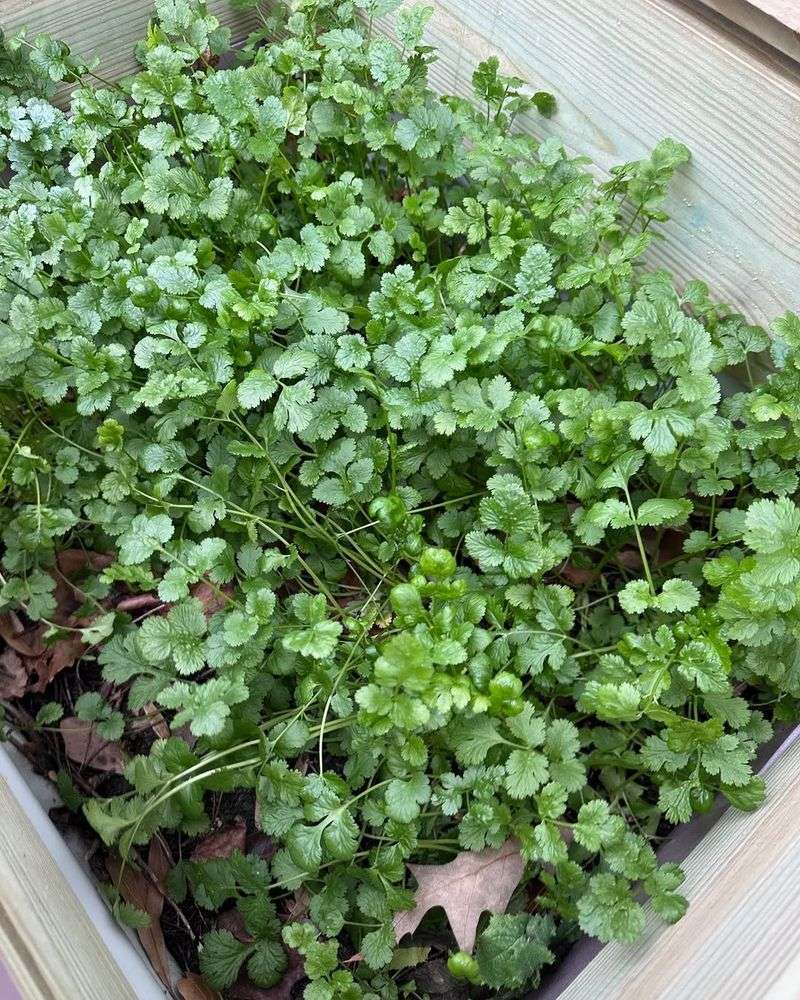
Cilantro is one of those herbs that Ohio gardeners either love or ignore, but it deserves a second look as an early-season underplanting. In cool spring soil it grows quickly and produces lush, flavorful leaves.
The problem is that cilantro bolts fast once temperatures climb, sending up flower stalks and turning bitter almost overnight in June heat.
Planting cilantro near trellised cucumbers gives it a slight buffer. The filtered shade from the lower cucumber canopy can take the edge off afternoon heat just enough to extend your harvest window by a week or two.
That is not a dramatic transformation, but for a gardener who wants fresh cilantro for summer salsas made with homegrown tomatoes, a couple of extra weeks matters.
Keep expectations honest. Cilantro is not a long-season crop for Ohio summers no matter where you plant it.
Small succession plantings every two weeks from late April through mid-May give you more total harvest than one large planting.
Harvest leaves early and often, cutting stems just above a leaf node to encourage branching.
Do not let plants sit unharvested once they start to stretch upward, because that signals bolting is close.
Cilantro has no proven effect on cucumber yield or pest resistance, so grow it for what it is: a fast, useful herb that can share space productively before summer heat fully takes over the bed.
8. Plant Bush Beans Where They Will Not Tangle The Vines
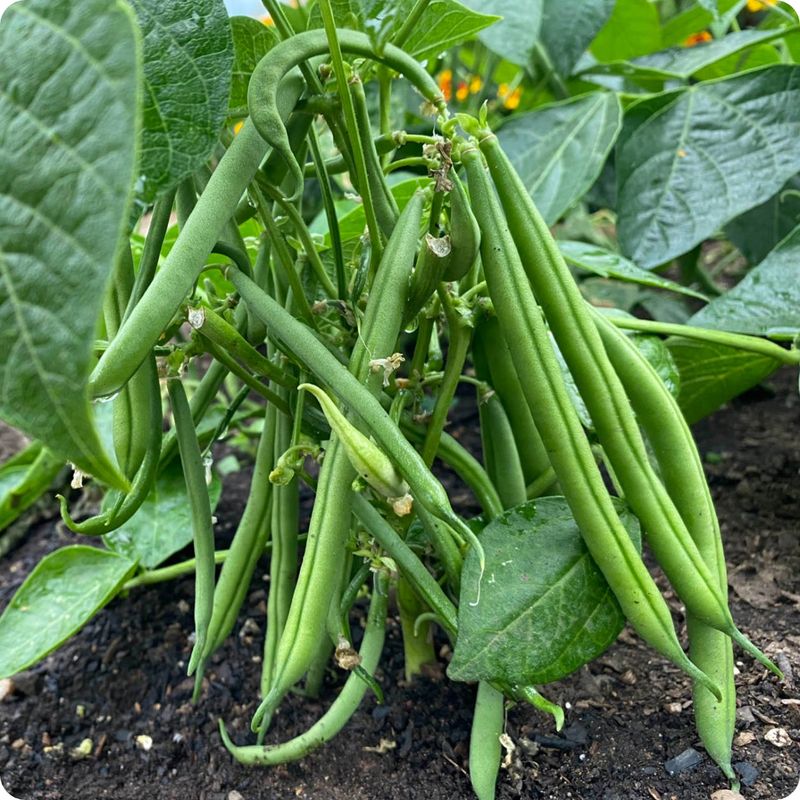
Mixing bush beans into a cucumber bed sounds simple, but it takes a little planning to pull off without creating a tangled mess.
Unlike pole beans, bush varieties stay low and compact, which means they are far less likely to climb into your cucumber trellis and create the kind of knotted chaos that is frustrating to sort out mid-season.
Bush beans need full sun and decent airflow to produce well and stay healthy. Plant them on the sunniest side of the cucumber trellis, not underneath it, where canopy shade could reduce their yield and invite fungal problems.
Varieties like Provider or Contender are commonly grown bush beans that fit this kind of planting better than pole beans and produce over a couple of weeks once they hit their stride.
One important note for Ohio gardeners who follow crop rotation: mixing beans and cucumbers in the same bed makes next-year rotation planning more complicated.
Cucumbers are in the cucurbit family and beans are legumes, so they have different disease and pest histories to manage.
Keep records of what grew where so you can rotate both plant families properly in future seasons. Also, do not count on beans to fertilize your cucumbers through nitrogen fixation in a single season.
That process takes time and does not replace a soil fertility plan. Feed your cucumbers as you normally would and let the beans simply share the space as a productive neighbor.