How To Attract Eastern Bluebirds To Your Ohio Yard This Spring
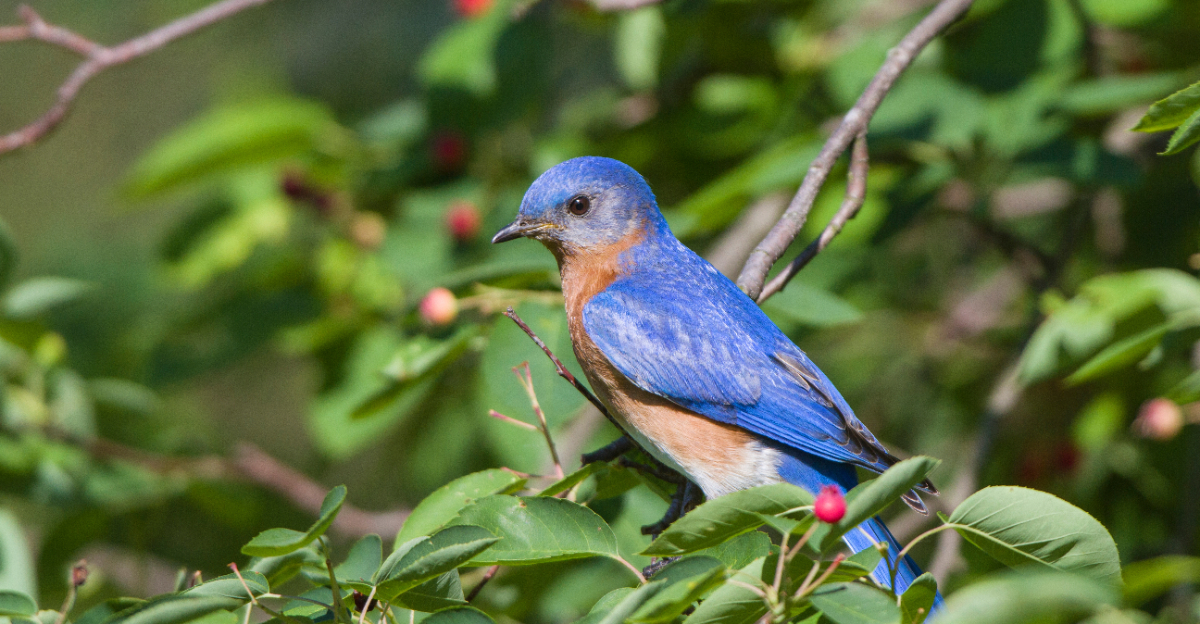
One flash of blue can change the whole mood of a yard.
That is the magic of Eastern bluebirds in spring. They do not just pass through unnoticed.
They light up a fence post, sweep across the lawn, and suddenly the whole space feels brighter, calmer, and full of life. In Ohio, that moment is hard to beat.
It feels like spring finally means business.
But bluebirds do not land just anywhere. A yard can have flowers, feeders, and plenty of green space and still miss the mark.
These birds are picky in the smartest way. They want open ground, safe nesting spots, good perches, and the kind of setup that makes them feel at home without too much noise or chaos.
That is where things get interesting. A few thoughtful changes can turn an ordinary Ohio yard into the kind of place bluebirds actually choose.
Once you know what catches their eye, you stop hoping for a visit and start giving them a reason to stay.
1. Open Space Gives Bluebirds Room To Hunt
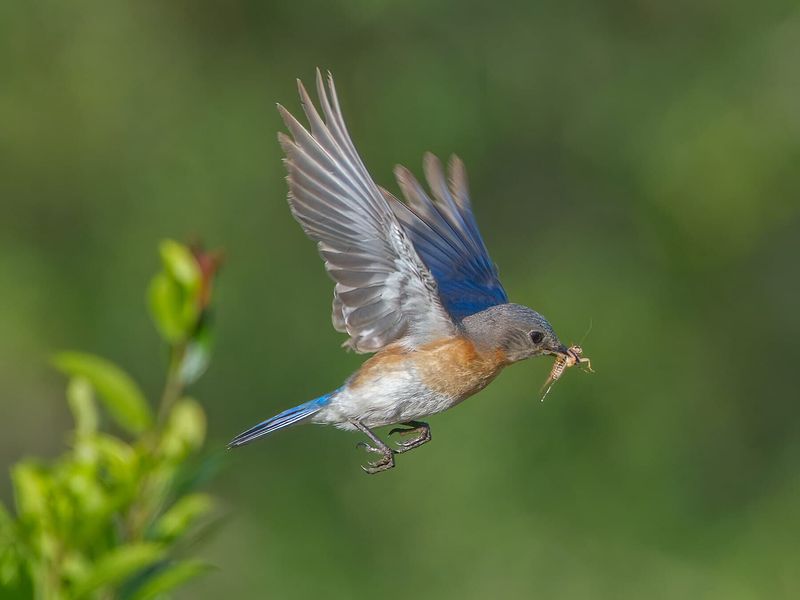
Watch a bluebird hunt for even a few minutes and you will quickly understand why open space matters so much to them. They work by scanning from a low perch, dropping down to snatch an insect from the ground, then returning to their lookout spot.
That hunting style depends entirely on being able to see clearly across a patch of open ground.
In Ohio, yards that mix short-mowed lawn areas with nearby shrub edges or meadow patches tend to attract bluebirds more reliably than those packed with dense, layered plantings everywhere.
The North American Bluebird Society notes that Eastern Bluebirds strongly favor open or semi-open habitats, including pastures, parks, and open woodlands with scattered trees.
For a typical home landscape, this does not mean you need to tear everything out. Keeping part of your yard lightly managed, maybe a stretch of shorter grass along a fence line or an open edge near a garden bed, can be enough to catch a hunting bluebird’s attention.
Avoid letting thick ground cover or tall weedy patches take over the areas you want them to use.
Even a modest open corridor through your yard can serve as a foraging lane during the busy spring nesting season. Bluebirds are practical birds.
Give them clear sight lines and accessible ground, and they will put that space to work.
2. A Well Placed Nest Box Makes All The Difference
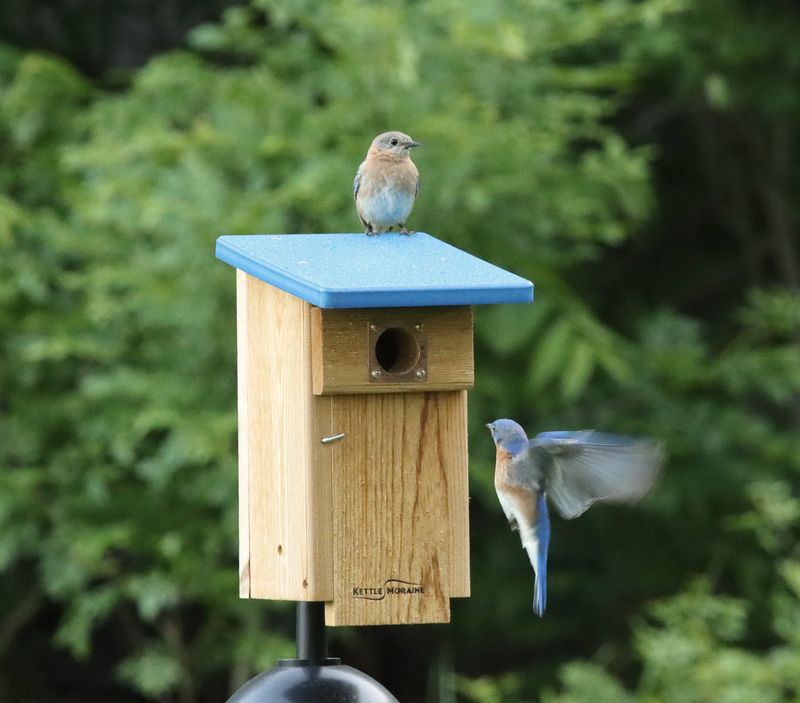
Putting up a nest box is probably the single most direct action you can take to bring bluebirds into your yard. But placement matters just as much as having a box at all.
A box stuck in the wrong spot, too close to heavy foot traffic, buried in shade, or facing into prevailing winds, is far less likely to attract a nesting pair.
According to NestWatch from the Cornell Lab of Ornithology, bluebird boxes work best when mounted on a smooth metal pole roughly five to six feet off the ground, in an open area with a clear flight path to the entrance.
Your Ohio Garden Changes Every Week. Your Plan Should Too.
Gardening in Ohio changes quickly throughout the season. Every Friday you’ll receive a simple weekly plan showing exactly what to plant, prune, fertilize, harvest, and protect so you never miss the right timing.
Facing the box east or southeast helps shield the interior from harsh afternoon heat and strong westerly winds, which is especially relevant during Ohio springs that swing between warm and cold days.
The entrance hole should measure 1.5 inches in diameter. That size is specifically suited to Eastern Bluebirds and helps reduce entry by larger non-native species like European Starlings.
Keeping the box away from dense brush and active play areas also improves the chances that a pair will accept it.
Spacing matters if you plan to put up more than one box. Bluebird pairs are territorial, so boxes placed too close together can create conflict.
The North American Bluebird Society recommends placing boxes for bluebirds at least 100 yards apart in open habitat.
3. Low Pesticide Yards Offer Better Spring Feeding

Spring is when Eastern Bluebirds shift almost entirely to an insect-based diet, and that shift lines up almost exactly with when most Ohio homeowners are reaching for lawn and garden sprays.
Caterpillars, beetles, grasshoppers, and earthworms make up a huge portion of what bluebirds feed to their chicks during nesting season, and a yard treated heavily with pesticides offers far less of that food.
The Ohio State University Extension has long encouraged homeowners to consider the broader effects of pesticide use on wildlife and beneficial insects. When insecticides are applied broadly across a lawn or garden, the impact goes well beyond the target pest.
The food web that supports cavity-nesting birds like bluebirds gets quietly disrupted, sometimes for longer than most people realize.
Reducing or eliminating pesticide use in the areas where bluebirds are likely to hunt does not require giving up on lawn care entirely.
Spot treatments for specific problems, manual removal, and choosing pest-resistant native plants are all practical alternatives that keep more insects in the yard where bluebirds can find them.
It is also worth noting that herbicide use can reduce the ground-level plant diversity that supports insect populations. Keeping a few unmowed or lightly managed patches, even small ones, tends to support more insect activity than a uniformly treated turf.
A less chemically managed yard is simply a richer feeding ground for a hungry bluebird family.
4. Native Plantings Bring More Insects To The Menu
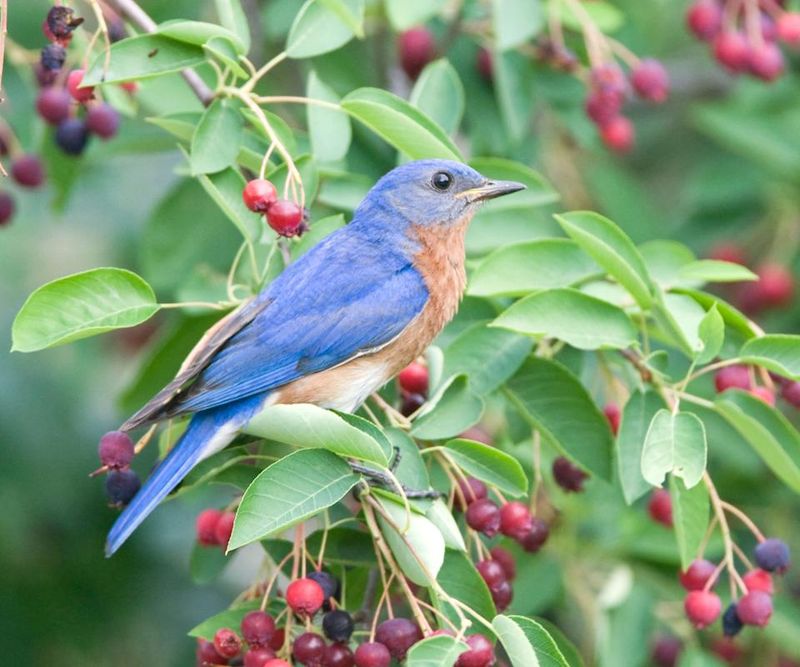
Native Ohio plants do something that most ornamental varieties simply cannot match.
They have co-evolved with the local insect community over thousands of years, which means they support a far richer variety of caterpillars, beetles, and other invertebrates that bluebirds depend on during the nesting season.
Entomologist Doug Tallamy’s research, widely referenced in conservation and wildlife gardening circles, found that native oaks alone support hundreds of caterpillar species, while many common non-native ornamentals support almost none.
For bluebirds raising a brood of hungry chicks, that difference in insect availability is not a small detail.
In Ohio, native shrubs like serviceberry, native dogwoods, and viburnums are particularly useful because they support strong insect activity in spring and also produce berries later in the season.
Native grasses and perennials like wild bergamot, coneflower, and little bluestem add structure to the yard while supporting the ground-level insect activity that bluebirds actively hunt.
You do not need to replant your entire yard to make a difference. Even a modest border of native shrubs and perennials along a fence or property edge can meaningfully increase the insect life available to foraging bluebirds.
The Ohio Department of Natural Resources and local native plant societies offer region-specific planting guides that can help you choose species well-suited to your county and soil type.
5. Clean Water Helps Turn A Yard Into A Stop They Remember
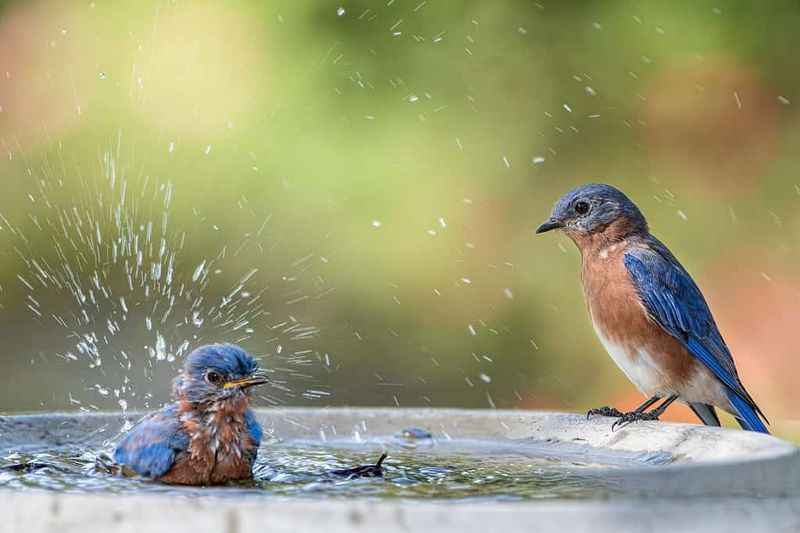
There is something almost magnetic about the sound of moving water in a quiet yard. Birds pick it up from a surprising distance, and Eastern Bluebirds are no exception.
A clean, shallow water source can pull them in during spring migration and keep resident pairs returning throughout the nesting season.
Bluebirds prefer shallow water, typically no more than one to two inches deep at the center, which allows them to bathe and drink without difficulty. A traditional birdbath works well as long as it is cleaned regularly and kept free of algae and debris.
Adding a small dripper or recirculating pump creates gentle movement that makes the water more visible and appealing from a distance.
Placement matters here just as it does with nest boxes. A birdbath set in a wide open area with nearby perching spots, like a low shrub or fence rail within ten to fifteen feet, gives bluebirds a place to land and scan before approaching.
Avoid placing it directly under dense tree canopy where cats or other predators can hide close by.
During dry spring stretches, a reliable water source can become a genuine draw for bluebirds that might otherwise pass through without stopping.
Pair it with open habitat and good insect availability nearby, and the yard starts to feel like a place worth coming back to.
Consistent cleanliness is the real key, so plan to refresh the water every couple of days.
6. Safe Nesting Conditions Keep Bluebirds Coming Back
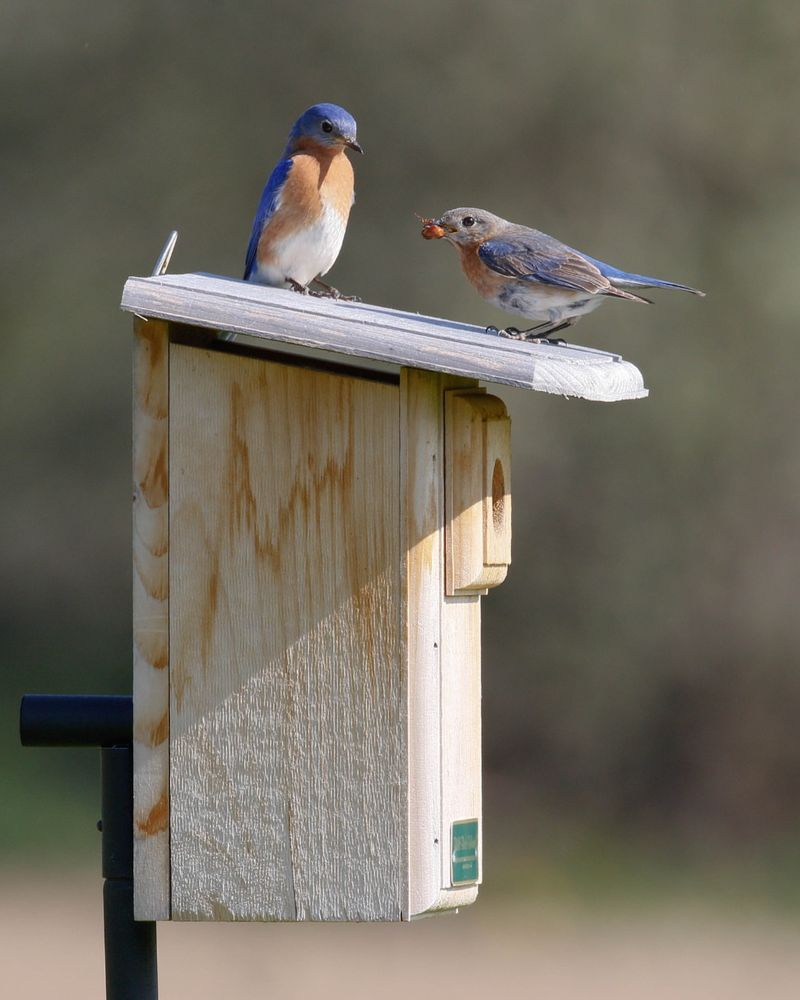
Getting bluebirds to nest is one thing. Keeping them comfortable enough to return season after season is a different challenge, and it starts with understanding what makes a nesting site feel secure to them.
House Sparrows and European Starlings are the two most common nest competitors for bluebirds in Ohio. Both are non-native species that can quickly take over a nest box if left unchecked.
NestWatch and the North American Bluebird Society both recommend regular monitoring during nesting season, typically a quick check once or twice a week, to catch signs of competition early.
The correct entrance hole size of 1.5 inches helps exclude starlings, but House Sparrows can still fit through and will aggressively displace bluebirds.
Monitoring should always be done carefully and briefly. Bluebirds tolerate gentle nest checks reasonably well, but frequent or prolonged disturbance near an active nest can cause stress.
Keep visits short, avoid handling eggs or chicks unless you are trained to do so, and always follow current guidance from organizations like NestWatch before intervening in any nest situation.
Predator guards on the mounting pole are another layer of protection worth adding. A smooth metal pole already discourages climbing predators, but a cone-style baffle below the box adds extra security.
Reducing nearby disturbances during the active nesting period, like limiting lawn equipment use directly around the box, also helps bluebirds feel settled enough to complete a successful brood.
7. Simple Perches Make Foraging Easier In Open Ohio Yards
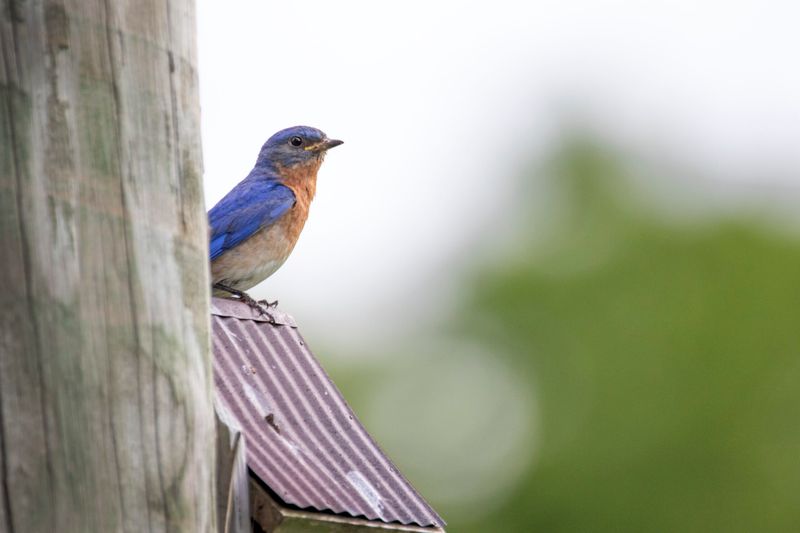
Few birds make better use of a fence post than an Eastern Bluebird.
That low, patient perch-and-drop hunting style they use relies on having a good vantage point just a few feet off the ground, close enough to spot a beetle or caterpillar moving in the grass below and close enough to catch it before it disappears.
In yards that have been heavily landscaped or where mature trees are the only vertical features, bluebirds sometimes struggle to find the right kind of perch. Tall canopy branches are not particularly useful for hunting ground-level insects.
What bluebirds actually want is something low and open, a fence rail, a wooden post, a small withered branch, or even a sturdy garden stake placed in a clear area of the yard.
Adding a simple wooden post or two in an open part of the lawn costs almost nothing and can noticeably improve how often bluebirds use that area for foraging. Some birders install T-shaped perch posts specifically for this purpose, and they do get used.
The key is keeping the area around the base of the perch open and short so the bird can actually see what it is hunting.
During spring when bluebirds are working hard to feed themselves and eventually a nest full of chicks, efficient foraging really matters. A yard that offers both open ground and good low perches is one they will visit more consistently throughout the season.
8. Mealworms Can Supplement Natural Food During Cold Spring Snaps
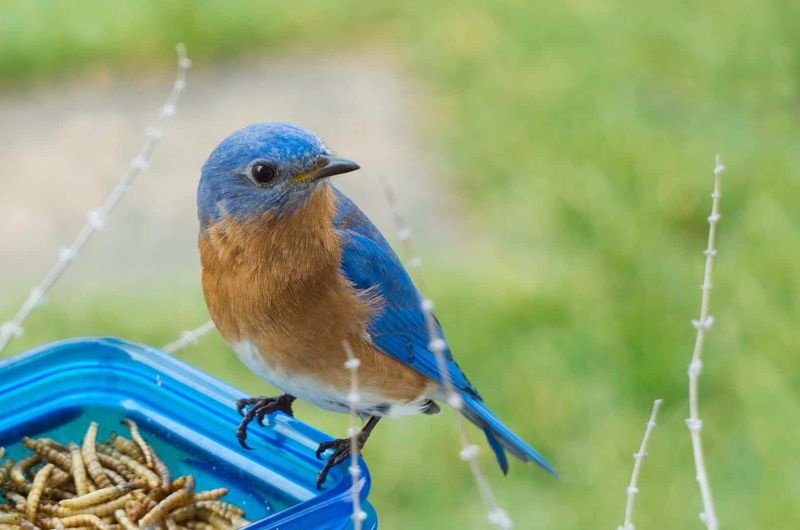
Ohio springs have a habit of turning cold without much warning. A stretch of warm April weather can flip overnight into a week of rain and near-freezing temperatures, and during those cold snaps, the insects bluebirds depend on go quiet.
That is when a supplemental food source can genuinely help a nesting pair get through a rough patch.
Live mealworms are widely recognized by birding organizations including the Cornell Lab of Ornithology as one of the most effective foods for attracting Eastern Bluebirds to a feeder.
Dried mealworms work too, though bluebirds tend to respond more quickly and reliably to live ones.
A shallow tray feeder or a small dish placed near a nest box or regular perching area is usually enough to get their attention once they associate the spot with food.
Starting the feeder in early spring and offering mealworms consistently for a few days helps bluebirds learn where to find them. Offering too many at once is not necessary.
A small daily amount is more practical and reduces waste. Once bluebirds become comfortable visiting, they will often return to the feeder even when natural insect activity picks back up.
Keep the feeder clean and sheltered from heavy rain if possible. Wet mealworms spoil quickly and can attract unwanted pests.
A simple roof or cover over a tray feeder helps extend the food’s freshness and keeps the setup low-maintenance for the rest of the nesting season.